Antonia
“Ma’am! Are you alright?”
Someone was slapping Annie’s cheeks, sharp and stinging. Her head lolled helplessly from side to side. Her once neatly brushed hair hung in tangled wisps, and the mascara she’d forgotten to take off last night now streaked in black rivers down her face, warping her delicate features.
“Are you with me? Open your eyes! I’ve rung for an ambulance, but itll be a bit yet!”
The anxious voice verged on panic, and Annie tried with all her will to respond. Nothing… Her fingers twitched feebly, quickly enfolded by anothers handswarm, almost burning.
“Good heavens, what am I meant to do with you? Someone, help!”
“Leave her alone! Let the ambulance sort it out. Always sticking your nose in, aren’t you?” came the sarcastic voice of Annie’s stall neighbour, sharp in the icy morning air, punctuated immediately by a wave of shouting from the bystanders.
A deeper, perpetually irritable bass voice cut through, one Annie recognised at once. Strong hands lifted her.
“Put her jacket under her head, idiot! Like that. Let her lie down. Colds goodit’ll wake her faster. Annie! Do you hear me? Open your eyes, you cant sleep now! You wont wake up!”
She tried again to open her eyes. Weakness spread over her like a tide, heavy and dull, soothing her limbs and lulling her mind. Just let go, sleep now All will be quiet, gentle. No one, Annie, will hurt you again
No one will hurt me The sting of those words rippled through the gloom inside her, spinning a whirlpool of pain, squeezing the breath from her chest. How could they? After all she’d done for them, every last crumb, and now?
The low winter sun peeked from behind a heavy cloud promising snow, and Annie wrenched her eyes shut against the glare.
“I dont want this. I dont want this world. I dont want people. I want nothing, and need no one!”
Fred, as everyone called him in the market, grunted as he propped the suddenly heavy Annie up, bellowing across the square.
“Oi! Over here! Where the devil are you, man?”
Annie felt hands fumbling with the zip on her coat, gently easing her arm free.
“Not to worry now! Youre alright. Maam, can you hear me? Whats her name?”
“Antonia.”
“Annie, open your eyes for me? Thats it, well done! Are you allergic to anything?”
Annies lips moved, bloodless and soundless, but the young paramedic seemed to understand all the same.
“Right, just a minute. Things will be easier. Bear with me!”
Annie remembered nothing more: not Freds roar as she finally lost consciousness, nor how Alice, her stall neighbour and once-upon-a-time friend, snickered behind the men hustling her through the crowded market to the waiting ambulance. Nor the ride to hospital, siren screeching, passers-by craning their necksurgent business, it had to be.
She came to in a hushed and sterile ward.
“Heart attack,” intoned the doctor, kindly but reproachful.
“My dear, what have you done to yourself? All this strain?”
She turned away. How could she possibly begin to explain? He was a stranger, and the truth too heavy to speak aloud.
Fred, she might have told. She just hadnt realised hed come back from his daughters.
A good man. Attentive, with a hard fate of his own, yet never hardened. Hed raised two children alone; his wife died in childbirth, leaving their eldest daughter and a baby boy behind. Both he and his wife were orphans, raised in care. There was never any help coming.
And still, he managed. He saw both kids grown, worked every job to keep themhis daughter a nurse in a nearby city, his son a sailor. Three grandchildren now, one from his son and two from his daughter. Hed just returned from helping her, leaving his market job for a spell.
All these years, doing the heavy lifting at the market, everyone knew Fred. And he knew them, not just their names, but truly. He kept order, sorted out squabbles, didnt so much demand respect as inspire it. He saw right through people.
He knew Annie inside out, understood what was eating her away, pitied her eventhough she never told him the half of it.
Shed never told anyone. How could you? These were the wounds you carried in silence. Alice, her former friend and now rival at the market, only found out by accident, coming early one morning.
Annie shivered at the memory of the freezing night spent in her stall. She had a heater, but outside, when it’s cold enough to draw blood from your lungs, nothing helps. Shed followed her husband up North, thirty years agoa foolish, eager young girl whod never imagined things would turn out this way.
A fleeting smile tugged at her weathered lips.
Walter
If only hed lived, none of this would have happened. He loved her so much Annie bit the corner of her pillow to hold in the keening cry.
Was she not the happiest woman then?
Strong, quick, light as a feather. What had become of that girl? In the mirror now, she hardly recognised herself. No face, no figure. Illness after her first son, time devoured her. Then with the youngest, she had no time for her own pains: two boys were her world, she couldnt afford selfishness. Those years were toughher wages as a teacher, his as a driver, always just enough to scrape by.
Walter never just sat back, though. He worked extra, unloading lorries, fixing bits and pieces for neighbours. Every penny counted. Annie never grumbled nor complained. Maybe that was why their home had peace? Shed never know now; you cant ask the dead.
She remembered him rising early to help with the washing, before they had a machine. Later, he gifted her one, and Annie cherished that miracle, laughing with delight.
Had she known shed lose him in six months, the illness would consume him before she was strong enough to face it. His pain cut into her too, irreversibly, and when he was gone, the children were all she had to keep her standing.
She left the school after all those yearsthe pay couldnt keep them fedand found work at the market. It was barely enough, but at least there was food for her boys.
At first, they didnt protest. But as they grew up, Annie heard for the first time that she was a disgrace.
How? Why? She couldnt understand. Was work a shame? She never cheated, never lied to customersher upbringing wouldnt allow it. At first, her manager at the market thought her honesty naive, but gradually he came to trust her with another stall, put her in charge. Annie was gladuntil it hit her: what did it matter if strangers valued her, if her own sons didn’t? What had she done so wrong? Why did they treat her so?
A nurse wandered in, changing her drip, and gently patted Annies hand.
“Feeling better?”
That fleeting kindness hit Annie with such a force that she wept bitterly and uncontrollably, like a little girl. The nurse hurried out, and, returning, administered something that made the world soft-edged and slowbut calm, at last. Her thoughts drifted sluggishly, chasing each other, but the relief was real.
“Try to sleep now.”
That was all Annie wantedbut how could she tell the sweet, young nurse that shed stopped sleeping long ago? She only drifted for minutes at a time, always waking exhausted, thinking and thinking.
Where had she lost her boys? When had their hearts grown so cold? What warmth had she failed to give, that they were as hard as stone?
Her sons never wanted for anything. While Walter was alive, then after, Annie refused to deny her boys, thinking it wrong to deprive them of anything, after losing their father. She never saw herself as enougha woman could clothe and feed, but give wisdom, share a man’s advice? Not her role. It was only now she realised how misguided that was.
Her eldest, Michael, was thirteen when Walter died; Alex, only ten. Now, neither resembled the thin, clinging boys she used to know. Michael grew up quickly; Alex stayed soft for longer, until military service changed him. He came back colder, more unyielding. Annie tried not to blame himhe was a man now. Maybe it was for the best.
But Alex soon brought home a fiancée, Lily. Annie welcomed herwell-spoken, polite, raised by a grandmother whod spent her life in teaching. Surely the right sort. Only nineteen, like a child herself. Annie hoped to be a good mother-in-law, support them but keep out of the way.
She never imagined how wrong she could be. She did everythingbrought food, little gifts, helped where she could. Lily’s morning sickness made it impossible to cook, and Alex was frustrated at coming home to bare cupboards. Annie filled the gap. She provided for Lily’s dietary needs, careful to bring what she could eat, avoiding fish, anything that disagreed.
But none of it mattered.
Lilys gran, Mrs Mildred, laid it bare when she visited.
“You neednt bother, Mrs Taylor. Everything you bring goes straight to the bin. Its quite inedible.”
Annie was stunned. Lily always complimented her pies; never a word of complaint.
“What else could the poor girl do? Shes too well-mannered to refuse. Youre her husbands mother after all.”
Annie had no reply, only took her offerings outside, looking for a stray cat or dog. Instead she found a homeless man by the bins. He eyed her with shrewd, cold-blue eyes.
“Lost something, love? Or looking for someone?”
“No, just I’d some fish and stew. For the animals.”
“A treasure trove, that, shoved in the rubbish! Out of your mind? Give it here, love, please…”
She handed it over and while he ate, learned his story: kicked out by his family when illness left him useless, unable to work. The little he had from his disability couldnt pay even a shared flat, friends sheltering him when possible; otherwise, hostels and rough sleeping. No complaints.
“What about your medicine?”
Those clear blue eyes locked with hers. “Cant afford it. So whats the point? Sooner dead. Who cares?”
Annie snapped. No one should be cast aside, made worthless by illness. Fred helpedthey found him work as groundsman at the church, food and shelter provided, a parish doctor sorting out his needs. Annie brushed off his thanks. “No need for gratitude. Were not beasts. Even wolves look after their own.”
After that, Annie no longer visited Alex and Lily. The grandmother moved in to help with the baby; Annie brought a gift at Lily’s suggestion, gritted her teeth at the criticism about the wrong sort of pram, and left, keeping her grief private, confiding only in Walters portrait that all shed wanted was suddenly beyond reach.
Then, fresh blows: Michael came home unannounced, not alone but with a woman and her two daughters from a previous marriage. Annie was taken aback, then dismissed her worrieschildren are rarely the problem. The girls were easy, quiet. Their mother, Sarah, found her feet swiftly: enrolled the girls in school, secured a job in a hair salon, earning good money. Annie relinquished her bedroom to the girls, moved to a little fold-out bed in the kitchen. When Fred questioned her, she only shrugged.
“Theyre children. And Sarah asked me to.”
“And how is it for you?”
Annie said nothing. It wasnt easy. Sarah sometimes pursed her lips if she found Annie still in bed in the morning. Annie worked weekends and took on extra shifts to cover the increased costs, and she liked spoiling the girls who called her granny in secret. But with her own son and his partner, relations felt cool.
“Im in the way,” shed sigh to Fred, topping up his mug with hot water and honeythe only treat he truly cared for.
“Hows that, in your own flat?”
“Michael’s names on the deed as well. Its his home too. Id leave, but I’ve nowhere to go.”
Fred would frown, clink his spoon restlessly, and storm out, leaving Annie bewildered at her supposed offence.
Inevitably, after a year, when Michael finally made it legal with Sarah, Annie was asked to leave.
Shed never been one for arguments, especially with her own children. The night it happened, Michael came to her in the kitchen, ushered the girls away from their milk and buns, sat in silence before working up the courage.
“Mum, it’s just youre in the way. Theres barely any space as it is, and with you on the sofa, its chaos in the morning. We want to make improvements for the girls, for Sarah, you see? And Sarahs pregnant.”
That was all Annie needed to hear. She kissed her son gently on the forehead.
“I understand.”
And that evening, Annie left home.
The ache battered her chest like a trapped bird. She longed to set it free, but the key was lost, long ago. She retreated to her stall, locked herself in, letting the tears come in thick, ugly torrents, scolding herself, the world, even Walter for dying early. She whispered apologies to his picture that she’d failed to raise their sons as he would have hoped.
“I just didnt have your strength, Walter. Forgive me. The boys grew up well, but somethings gone missing in them. You know how far Id go for our children. Now what now? Im not needed by anyone. Alone in the world. Why? Walter, why did you leave me?”
The tears eventually spent themselves, and a numb calm settled over Annie in the tiny stall. She stared at the little table, at the untouched cold tea shed made, unthinking.
Moments from her life paraded before her eyes a girl of thirteen, playing with a neighbours new bicycle, the sharp thrill of escape in the wind; the fear and joy of her first days in a new town; meeting Walter, a modest wedding, children
Annie shuddered with cold, closed her eyes, but the ache never dulled. It was her faultthey were blameless. Shed failed to explain, to teach, to show them how to care.
Tears threatened again, but she scolded herself. What use now? Let them livemaybe at least they would find happiness, if not her.
She needed little, really. Shed rent a room somewhere, get on with life.
But oh! How it hurt…
By morning, Annies heart finally rebelled. Alice, arriving early for work, rapped sharply on the stall door.
“Annie! Are you in there? Have your precious kids kicked you out then? Cat got your tongue? Guessed it, didnt I? Its your own fault, always letting people walk all over you! Fat lot of good being a teacher did you!”
Alices words fell like paving stones onto the last fragile bits of Annies soul. And when there was no more space for the stones, Annie stood, brushing past Alice without a word, and collapsed onto the steps outside, eyes closed in weary surrender.
Annie spent over a fortnight in hospital. The doctors shook their heads at the strange, silent patient.
She was in no hurry to go. She lay turned to the wall, eyes closed, barely touching her meals. She showed flickers of life only when Fred visited.
“Come on, Annie, you need to get up again. You have to live.”
“For what?” Annies once-bright eyes had faded to the colour of spent dishcloth. “For who, Fred?”
Fred had no answer. Anyone asked him, and hed saychildren, grandchildren. But for Annie, there were no words.
It maddened him. How could anyone leave their mother homeless, after all shed sacrificed? How could people do such things?
He knew it wouldn’t be him. His children begged him to move in, to join their families. But he refused. These days, his thoughts were elsewhere entirely. He waited for the right moment to approach Annie, knowing a headlong conversation might spook her.
She didn’t recover quickly. She dwindled, and Freds helpless love turned to frustration.
At the end of her first week, the ward welcomed another patient, a small but significant change.
Mary, all bones and wisdom, adored a good chat. After two heart attacks, she could barely hold her spoon. Watching her struggle with her meal, Annie eventually got up to help, and when Marys food was done, Annies own plate wasnt quite so full anymore.
“I could out-talk anyone, love! Doubt me? My gran was a herbalistno, not a witch! Just knew her way around a remedy, really felt people. She taught me a bit. I can tell you, youre in pain, soul ready to flee. Dont let it. Hang on, love, hold tight. Its not your time yet.”
“How do you know?”
“You can always tell when it is. For you, theres more good ahead, I see it.”
“What good?”
“That I cant say. Onlyits not over. Youve work left here, that means no crossing to the other side, you hear? Not yet. Everything in its own time, love!”
Annie listened, spooning food gently to Mary, half-disbelieving anything good could truly happen again.
Another week flew by, and Annie was finally being prepared for discharge when Fred poked his head in, gestured her out into the corridor.
“Whats wrong?” Annie searched his face for signs of trouble. “The children?”
“No, nothing like that. Havent heard from them.”
“Then what is it?”
And then it came, so unexpectedly Annie almost fell back, waving her hands in alarm.
“Come now, Fred! Marriage? At our age? Dont be daft!”
“Whats daft about it?” Fred twisted his cap in his earthy hands. “You know meI dont waste words. Will you marry me, Annie? Ill take you away from here. I bought a place, not far outnear the hills, close to a rivera bee garden. Well keep bees together. Say yes, Annie. Ive thought about this a long while. Were no longer young, our lives are more than half over, but cant we spend the rest as we choose? No more explanations or apologies to anyone!”
Annie pressed herself against the wall, silent.
“I know Im no youth, but I can still look after you. What do you say?”
The silence stretched, and Freds head drooped lower, sure shed refuse. What could he offer her? She was so young, so vibrant still, her warmth like the sunhe felt it even now.
Just as hope flickered out, Annie reached out, brushing her hand across his cheek.
“I will. But no more of this Mister business, Ill call you Alex from now on.”
At that, Alex released such a breath that the nurses at the desk burst out laughing, and Annie blushed and disappeared back into the ward.
* * *
Two years later, nestled in a small cottage of white brick in a hilly village in Cumbria, a woman stepped out onto the porch. She stretched, deftly tied her long hair up with neat pins held between her teeth. A large stripy cat twined about her ankles, and a shaggy dog waddled out from its kennel to greet its mistress.
Draping a scarf round her head, Annie picked her way down the steps, scanning for her husband.
“Annie! Im here!”
The smoke curling up from the grill drew her nose.
“Lovely! Why didnt you wake me? The children will be popping in soon and look at the state of me!”
“You were sleeping so sweetly I couldnt bear it!”
A car honked by the gate and Annie smiled.
“Thats them!”
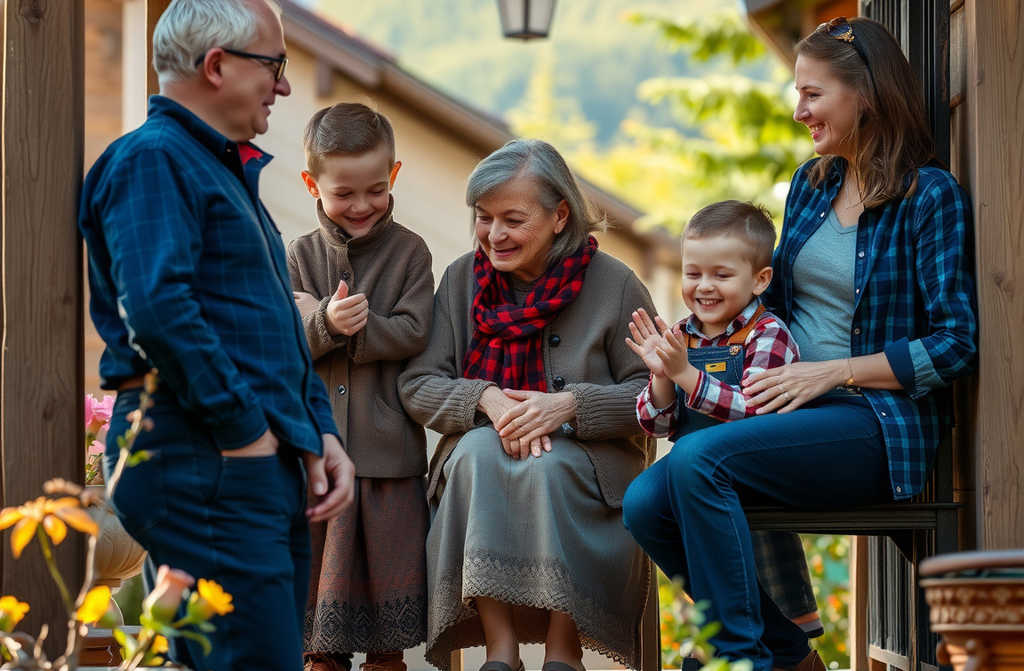
Laughter and childrens voices filled the yard. Annie whirled about, hugging her stepson, stepdaughter, and kissing all the children, finally scooping up the youngest grandchild.
“My, how youve grown! Wasnt it only yesterday when I last saw you?”
“Careful, Mum Annie, he bites!” Irina, Alexs daughter, slipped a dummy into her youngests mouth and laughed. “Teething nightmare! Its his bottom ones coming throughit’s hopeless some days.”
“Well soon fix that!”
Annies homespun bunny, long ears and all, the product of a week’s quiet sewing, was instantly tugged into a gummy mouth and much approved of.
“Ive bought him teething rings galorenothing like this!”
“A bit of clean cloth does wonders! Sometimes a hankie is all you need.”
“Live and learn!” Irina gave Annie a quick kiss, suddenly nervous, glancing at her husband by the gate. “Mum Annie”
“What is it, darling?”
“Promise me you wont worry? Were all here, whatever you decide. Nothing to be afraid of.”
Annie stopped short, watching as Alex approached, his eldest son in tow. For a moment, emotion caught in her chestreminding her of old woundsbut the feeling faded in the warm tide of happiness. The boy looked so like his father, for a second Annie felt she was young again, her own son skipping across the yard.
Irina gently took her baby back from Annie, squeezing her arm.
“Whatever you choose, its alright. Well always be here, Mum Annie”
“Ive nothing left to fear at all,” Annie replied, touching Irinas cheek, then stepping to meet her son and grandson.
“Good to see you, Alex,” she said softly, her voice echoing with hope.