Porridge Instead of Truffles
I was standing at the stove, watching the sauce in the pan fall apart after Id spent two hours fussing over it. The creamy truffle sauce for the wild mushroom risotto was meant to be smooth and glossya living thing all on its own. Instead, it had split completely. The butter floated on top, the thick base sank to the bottom in lumps.
I turned the heat down, started stirring in bits of cold butter, slowly, moving in small circles. My hands moved automatically, muscle memory. It was getting dark outside, the streetlamps had just flickered on, and down below on Charlotte Street the cars whispered past. Just another October evening in London.
Laura, are you going to be much longer? I havent eaten since two.
James stood in the kitchen doorway. He always did thatnever actually stepping in, as if the kitchen was foreign territory. Hands in pockets, that expression on his face I never quite learned to name, not impatience, something else.
About twenty minutes, I said, without turning. The sauce is being fussy.
Twenty minutes. Right.
He left. I heard him sink into the sofa, the TV switched on loud, then down to almost mute straight away. That was a signal too. Id learnt them all.
In the end, the sauce came together. Not perfectclose enough. The risotto was just right, sticky and creamy the way it was meant to be. I put everything on a plate, shaved some truffle over the topthe piece Id bought three days ago from an old market trader in Borough, spending what would have covered a nice lunch out with my oldest friend.
I laid the table. Lit a couple of candlesnot for romance, but because everythings softer in candlelight. I look better too. The lines under my eyes dont show as much.
James sat down, took a fork, studied the plate carefully.
Long and silently.
Risotto again, he finally said.
You asked for something with mushrooms.
I asked for mushrooms. You didnt have to do risotto. I had risotto at that place with Eddie last weekthe chef theres a professional. Hard to compare.
I sat opposite, picked up my fork.
Just try it.
He took a mouthful, chewed slowly, as if conducting a forensic examination.
The rice is a bit overcooked.
Noits exactly how it should be. Al dente.
According to you. Fine.
We ate in silence. I stared at the candles. He stared at the plate, with that same unnameable expression. The city outside kept moving, as if it didnt care about risotto at all.
The sauce is too rich, he added, almost finished.
I didnt answer.
You want to know why I say these things? Im just honest, Laura. If you want to improve as a cook, you cant expect constant praise.
I didnt ask, I said calmly.
Well, you should have.
He went to watch football, and I cleared the table, washed up, scraping what was left of the sauce from the bottom of the pan. That truffle sauce, costing as much as expensive perfume and which Id remade three times to get it right. Id even studied a French cookbook from culinary schoolcost me seventy quidfor advice on texture. Id carried the sauce all the way across central London in a special container so it wouldnt split.
Too rich.
I leaned against the sink, hands braced on the edge, watched the water swirl down the plughole. Then dried my hands, switched the kitchen light off, went to bed.
Another ordinary evening.
***
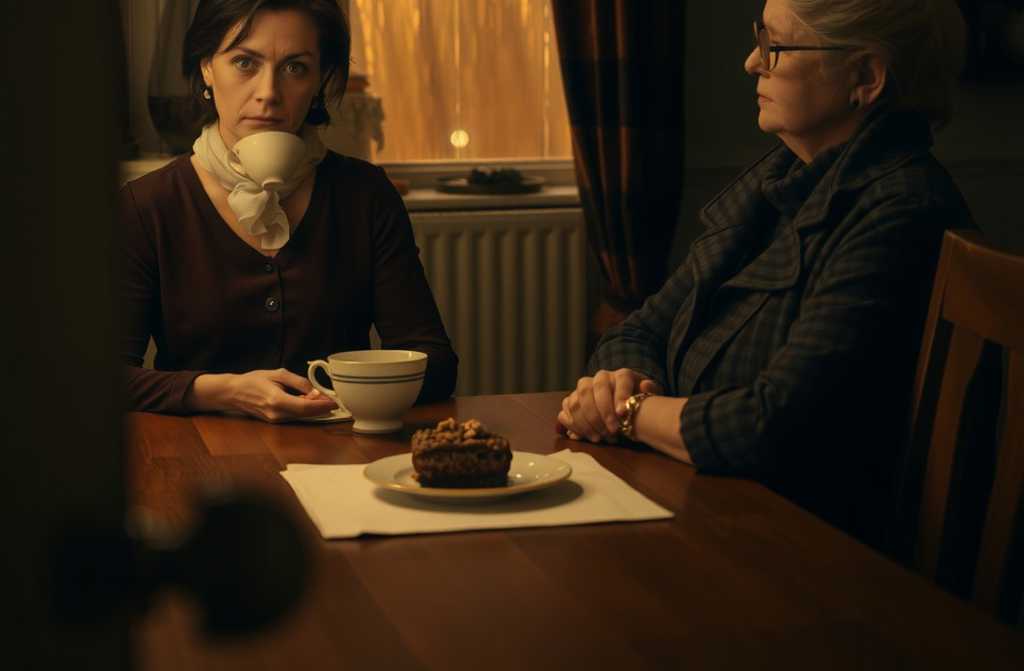
Mrs. Dorothy arrived at three on Saturday. She always called about forty minutes before, giving me just enough time to tidy the lounge and bake something. My mother-in-law was one of those people who notice the smallest speck of dust, though shed never mention itjust glance along the windowsill.
She was seventy-eight. Small, wiry, stood with her back perfectly straightposture that women half her age would envy. She lost her husband six years ago and had lived alone in her flat in Hammersmith ever since, declining every offer James made to move in with us. I never suggested it. We both knew, neither ever said it aloud.
That Saturday, she looked paler than usual. I noticed as I opened the door.
Come in, Mrs. Dorothy. I baked a walnut cake.
Thank you, Laura. Is James in?
Hes gone to Eddies. Hell be back later.
She nodded, headed for the kitchennot her usual. She preferred the lounge, where there was an armchair set by the window that she liked.
I poured the tea, cut us some cake. We sat facing each other.
How are you feeling? I asked.
Fine. Blood pressure up a little. Nothing much.
She took a sliver of cake and bit into it delicately.
Tasty, she said, just like thatsimple and warm. My throat constricted for a moment.
We sat quietly. Mrs. Dorothy sipped tea in tiny sips, looking out at the near-bare trees at the tail end of October.
Laura, can I ask you something? she said eventually. You wont mind?
Ill try not to.
She looked at me for a long time.
You remember you used to be a designer?
The question caught me off guard.
Yes, of course.
A good one?
So people said.
I know you were. I saw your projects. You remember the flat you did for those doctors in Bloomsbury? I visited it once. It was beautiful. I thought: heres someone who can see a rooms potential.
I watched her.
Whats this about, Mrs. Dorothy?
Gently, she put her cup down. The gesture of someone whos done everything carefully her whole life, not a single unnecessary sound or movement.
I feel ashamed, she said, very quietly.
I didnt know what to say. In all the years Id known her, shed never spoken like that. She was of a generation that kept the most important things inside.
I should have told you sooner. Maybe ten years ago, when you left your job. But I said nothing. Thought: not my business. Thought, maybe she wants it this way. Maybe its for the best.
She looked down at her handshands still elegant, even now, with long, tidy nails.
James doesnt like complicated food.
I thought Id misheard.
Sorry?
He doesnt. He never has. Ever since he was a boy, his stomachs been delicate. The doctor told him years ago: eat simple foodporridge, soups, plain boiled meat. His favourite dinner since childhoods been porridge and a meat pattyweek in, week out. Could eat it every day.
The kitchen was suddenly very quiet. The fridge hummed in the distance, like a life not ours.
Then why, I started, my voice somehow strange, why did he ask for duck confit and truffles? Say my sauces werent silky enough?
She finished my thought for me.
Mrs. Dorothys eyes met mine, and there was something ancient and heavy in them, nothing like anger. Not even pity. Harder than both.
Because he liked the spectacle. He liked watching you try so hardspending your time and money and effort and then hanging on his verdict. He liked pointing out your mistakes. It made him feel in control.
I set my cup down, too.
Do you realise what youre saying?
She nodded. I do. Ive given this a lot of thought. Thats why I decided to speak up.
And you didnt say a word for ten years.
I kept silent for thirty-eight years. Since Colin started doing it to me.
Colin. Mr. Dorothy, Jamess father. I barely knew himhe passed on a year after our wedding. I remembered him as broad, full of presence, always outwardly courteous.
He was a gourmet too, she said, and there was bitterness neatly folded into her calm tone. Id cook. Try hard. Get, too rich or overdone. Then I saw him at his mothers in the villagehe ate porridge as if finally at home, three helpings, with butter and bread, quiet and smilingnot a single complaint. Just happy to be home.
I listened. Outside, a light rain had started.
I understood, but I didnt leave. It was another time. And James grew up seeing it, learning itthe way you keep someone close by keeping them uncertain. He learned it was a tool. And he used it.
So it was all deliberate, I saidnot a question. Not anymore.
I doubt he sat down and planned it, Laura. Its not conscious, not really. Its justhow hes learned he matters, at someone elses expense.
I stood up, not because I wanted to go anywhere. I just couldnt stay sitting. I walked to the window and looked at the rain, Charlotte Street glimmering, umbrellas hurrying past.
Ten years.
Ten years of cookery classesbeginner, advanced, regional. I read recipes, watched videos, traded messages with chefs on the internet. Searched the markets for the right ingredients. Matched wines. Lay awake sometimes, thinking Id cracked a tricky sauce at last.
Id thought it was my new calling, after I stepped away from designa new life.
And all along, he just wanted porridge. Secretly. Inside.
Why now? I asked, still facing the street.
Im old now, Mrs. Dorothy answered simply. Youre still youngfifty-two isnt old, not nowadays, Laura. Its almost a beginning.
I turned back. She met my eyes, without a hint of pitythe thing that mattered.
And also, she added softly, because Im partly to blame. Not because I meant harmjust, I brought him up that way. I didnt show a better way. I lived as I was taught, and he saw it as normal. Thats on me. The least I can do is tell you the truth.
I returned to the table, sat, picked up my tea.
He wont change, she said. Im not telling you what to do. But you need to know.
We finished our tea, almost in silence. Then she put her coat on, I fastened her buttons, her knuckles sticking as they sometimes did now.
That was a lovely cake, she said at the door.
Thank you.
Simple. Homely. Best one youve ever made for me, love.
She left. I shut the door and lingered in the hall, staring at Jamess coats on the hooks.
***
For the next fortnight, I cooked as always. Momentum carried meduck terrine, lobster bisque that meant a special trip, and a Japanese dessert Id learned in the spring.
James ate. Critiqued. I listened and said nothing.
But inside Id changed. It was as if something glassy slid between me and those everyday routines. I saw myself from the outside: stirring zest, adding saffron, setting out a plate and waiting for… what? Waiting. Hed lift his fork; Id watch his face, not yet speaking, just looking at the food.
Then I saw what Id never really noticed before.
Enjoyment.
Not in the foodbut in the anticipation. That moment just before a fault was named, when, for a split second, his eyes gleamed like a child with a string to pull.
I remembered the design work I used to dohow Id walk onto a new site and see the finished room in my head, the way it could all come together. How Id listen to clients, hear not what they said, but what they wanted. The elation when they walked into the finished space and stood amazed.
I had a tiny studio on Old Street, sharing with a couple of designers. Wed argue deep into the night over wall colours, drinking terrible instant coffee.
James had called it unserious. Choose, hed said: family or endless project management. He made enough, provided for us; he said I didnt need the stress of difficult clients. Someone had to be home, after all.
I chose family. I was forty-two. Told myself Id have time to go back.
Ten years gone.
I picked up my phone and messaged Kate Morrison. Wed worked together; shed kept her own agency going. Wed exchange the odd festive greeting. Nothing more.
Hi Kate. Been meaning to get in touch. Fancy meeting up?
She replied within half an hour.
Laura! Of coursehavent seen you in ages. Tomorrow?
***
We met at a café near Cavendish Square. Kate looked almost unchangedhair cropped a bit shorter, some silver threads she wore with pride. It suited her.
You look well, she said.
You dont lie well, I said.
She laughed.
Alright. You look tired. But still good.
We ordered coffee. I didnt know how to begin. Just sat, looking at the street.
Kate, do you have any work? For me, I mean.
She gave me a long look.
Seriously?
Completely.
Youve been out of the game ten years.
I know. I dont think Ive forgotten as much as I feared.
She spun her cup, thinking.
Ive three projects on. Ones a big house outside Guildfordcould use another pair of hands and a head, but to be honest, itll feel entry-level at first, Laura. Not that youre a juniorbut software, standards, and clients have changed. Will you be alright with that?
Ill manage.
And pay?
Whatever you thinks fair for now.
Kate looked at me for a while longer, then seemed to decide something.
Come Monday. Lets see how we go.
So I started Monday. For three weeks, I was there, nine to six, learning new tools, relearning old skills. Making stupid mistakes, getting frustrated, but some things came backlike swimming, as if my hands remembered even when my head faltered.
At home, I made porridge now.
It happened almost by accident. I came home late, exhausted. The fridge held only leftovers from last weeks over-ambitious soufflé. I shut it, opened the cupboard. Porridge oats. Tin of corned beef. Butter.
I cooked the porridge, mixed in the beef, dropped a knob of butter on top. Set the plate on the table. Called James.
He looked at the plate like Id brought in a cryptic puzzle.
Whats this?
Porridge and corned beef.
I can see its porridge. You alright?
Im tired. Its late. Ill do something fancy tomorrow.
He sat down, spooned some in. I waited.
He ate in silence. Finished his plate without a single remark.
I watched. Remembered what Mrs. Dorothy had told me about him as a childthree bowls full at his mums, smiling, completely at home.
He finished, left the room, and didnt say a wordgood or bad.
That, too, was an answer.
***
Two weeks later, the conversation came. I was heading home from work, thinking about a colour scheme for the Guildford project. Kicked off my shoes, heard the television murmuring in the lounge.
Whereve you been? James said, without looking up. Its almost eight.
I was working.
With that Kate woman again.
Its my job, James.
He switched off the TV and turned.
Laura. This isnt what we agreed.
What exactly didnt we agree?
Youd be gone all hours. This is meant to be a home. Theres nothing to eatfridge is empty.
There are eggs, potatoes, a pack of sausages. You could fry them up.
He looked as though Id spoken Swahili.
Are you being funny?
No, Im just telling you whats there.
And your fancy stuff? The truffles, your saucesdo you even remember how to make proper food?
I took my bag off my shoulder, hung up my coat.
James, Id like to talkproperly, calmly. Can we?
He tensed, drew himself up a little, eyes narrowing ever so slightly.
What is there to talk about? I work, youre meant to take care of things here.
Im not just at home anymore. And I wont be.
So thats it, then. Head made upno discussion.
Im trying to have that discussion now.
He stood, wandered to the window, back again.
I dont understand you, Laura. We had a normal life. You cooked, I gave feedbackthat was our world. Ours.
Yours, James. Not mine.
Oh, here we go. My mothers been interfering? I knew it! Came over and filled your head with rubbish.
I gazed at himthe man Id lived with for over twenty-three years. A flat that had always belonged to him, one that never fully felt like mine. The ceilings, the furnitureall chosen before I even walked in. Id never redesigned a thingthough I saw a dozen ways I could have improved it. I was a designer, after all.
She told me the truth, I said. Just the truth.
What truth, Laura? That shes old and likes to make drama?
That youve always liked simple food. Youve got a dodgy stomach. Your favourites always been porridge and a meat patty.
There was a minute pause.
Then, Rubbish.
You ate it silently two weeks ago.
I was hungry.
Jamesplease. Stop. Just for a second.
He did, watching.
I dont want a fight. I want a real conversation. Can we live differently? Not like the last ten years?
He hesitateda flicker of something real.
Differently how?
As equals. You work, I work. Sometimes dinners simple, sometimes its not; but its never an excuse to wound. We both speak honestly. No hidden games.
Long silence.
I never put you down, he whispered. I just say what I think. Im an honest man.
James
What?
Youre an honest man who pretended not to like porridge while I spent money and time on truffles.
Silence.
That wasnt honest, I said. Matter-of-fact.
He gave no reply. He walked to the bedroom and shut the door gently. No slamminghe never slammed, that would seem childish.
I went to the kitchen. Fried some potatoes, ate alone at the table. Sat for ages with my tea, hearing him pace behind the closed door.
***
The following months felt like thawing after a deep winter. No fireworksnot like in films, where you have one spectacular row and everythings resolved in tears. It was a slow disintegrationeach day, another bit of the shape wed slotted ourselves into fell away.
James tried a bit of everything.
First, wounded pridehe walked around for days as though mortally offended, waiting for me to fuss, to coax, to make peace. I didnt. I cooked plain foodsoup, chops, potatoes. Tidied up. Went to work. Came home late.
Then came a bout of forced affection. One day he brought flowerstulips, probably from the corner shop. Said he missed me. Suggested we go outdinner together, like old times. I agreed. We had a pleasant evening; he was lively, funny, asked about work, laughed a lot. I thought, maybe things could change.
The next day, he asked why I hadnt laid on something special for his mates at the weekend. Ordinary question, as if by habit.
Ill do pasta and salad, I told him.
Pasta?
Yes. Pasta.
He pulled that same expression. Didnt even know I saw it now.
Then there were the rowshis voice up, pacing, listing everything hed done for me. The flat, the money, the chance to chase my cookery dreams. All as if they were investments Id failed to pay dividends on.
You invested, I answered quietly during one such scene. But Im not a business, James. Im a person. People dont work like that.
He didnt understand. Or chose not to.
Mrs. Dorothy called every weekbriefly, never overbearing. Asked gently how I was. Sometimes just keep going or youre doing brilliantly. Once she said:
Hes angry with me, isnt he?
A bit, I admitted.
Hell get over it. Remember: Im on your side. For the first time in my life, Ive chosen a sideand its yours.
I understood.
In December, Kate gave me my first solo project: a little flat in Islington, a young couple just starting out. I had to create the concept, see it through. I didnt sleep for a couple of nightsnot because I didnt know what to do, but because I did, and was scared Id forgotten how to do it well.
But I hadnt.
The clienta woman of about thirtystood in her new lounge, just looking around, silent. After half a minute, she turned to me.
Youre a magician, she smiled.
I remembered exactly what that felt like.
***
In February, I realised it was beyond fixing with James. Not for want of trying. I gave him space. Talked things through. Never stayed away overnight, never rang a lawyer, though the internet kept serving up articles about toxic marriage that I read with painful accuracy. I stayed, honestly trying to build something new from the ruins.
But he didnt want new.
He wanted me to go backnot to myself as I am, but the old me who stood at the stove awaiting his approval. It wasnt a wife he neededit was a mirror that made him feel important.
How do you know your husband is a manipulator? I suppose, when you realise he needs not your happiness, joy, or successbut your constant hope for his thumbs-up. And without that hope, hes lost.
James wasnt a bad sort in many ways. He didnt drink, never raised a hand, always provided for me, didnt cheatat least as far as I knew. In his way, he probably cared.
But I couldnt live with him. Not because of daily agony, but because, little by little, almost invisibly, I was shrinking. Forgetting who Id ever been.
I filed for divorce in March.
He didnt believe it at first. Then came persuasion. Then anger. Then more persuasion. Mrs. Dorothy visited, spoke to himI dont know what she said, but after that he seemed to collapse. Not resigned, but withdrawncold and remote.
The flat was his, always had been. I moved in with my friend Liz, stayed in her spare room for three months while I found a place to rent. In June, I moved into a small flat near Bethnal Greena two-bed that overlooked a scruffy old London streetnot as smart as Charlotte Street, but brimming with life.
I did up the place myselfa modest refurb, but I chose every detail with such joy that I often laughed at myself. Turns out, I knew what I liked all along, just had never asked.
***
A years passed.
Its April now. Im fifty-three. Outside my flat, white blossoms blooming on the street treesI dont even know what its called, but every morning I stare out at it while my coffee brews.
I make it simply now, in a pot. Good beans, but no fuss.
In January, Kate made me a full partner in her agency. Weve got four projects at the momentI manage two myself. I sleep properly again. Sometimes I wake thinking about a tricky corner of someones flat; its a good kind of waking. Thats my brain working, not anxiety.
Mrs. Dorothy still calls weekly. The other day I visited her in Hammersmith, brought a cake. We drank tea, chatted about everything and nothing. She told me about her marriage, those years of unsaid things. I thought about generational hurthow one unhappy life trains the next until someone finally calls time and says, No, enough.
She couldnt do it, but she helped me to. Thats worth something.
James lives in the old flat. We only message on practicalities. Rumour has it hes joined a local cookery class. Maybe its truepeople sometimes change once theres no one left to play power games with.
I dont think about him much. Sometimes I do. Sometimes, in a shop, Ill spot a little jar of black truffle and pause, a pang thats not quite laughter, not quite regret. Ten years doesnt vanish easily.
But I refuse to get stuck in it.
I first met Andrew last September. He came as a clientwanted his flat redone after his wife died. Shed passed two years earlier, cancer, quite quickly. The place was old, lived-in, her photos everywhere. He said, Leave them, but I want it lightereasier to breathe.
I understood instantly.
Hes fifty-four, an engineer at a bridge design firm. I thought about ithe builds bridges, I create spaces. Theres something there.
Hes calm. Not quiet, but truly steady. Talks normally, makes eye contact, laughs when things are funny, doesnt try to be impressive.
After our second project meeting, he asked me for coffee.
We went. Walked a bit. Had coffee again. Another time, he took me to the cinemaa French film, not bad. He laughed softly in the right places, and I realised Id forgotten how pleasant it was to be next to someone simply alive.
Weve been seeing each other for several months now. No rush. We both know theres no hurryboth of us have been through something.
He comes round on Fridays.
***
Todays Friday.
I got home at six, unpacked the groceries: chicken thighs, potatoes, onions, carrots, dill, crème fraîche.
With chicken and veg you can make a good oven bakenot really a pie, more a casserole. Just potatoes sliced, chicken, onions, carrots, spoon of crème fraîche over the top, then into the oven for an hour. Dill at the end.
Its my go-to when I want something homely. Not a showpiecejust comfort.
While it baked, I changed. The flat gradually filled with the smell of onion and chicken, a bit of garlic. The most ordinary scent. Smelled like my grandmothers house when I was little. I hadnt thought about that for years.
Seven oclockentry phone buzzed.
I opened the door. Andrew came in, set a bag down in the hall. I spotted a bottle of wine poking out the top.
Evening, he said.
Hi. Smell anything?
He sniffed.
Something good. Potato?
Oven bake. Nearly ready.
Brilliant. He shrugged off his jacket. Brought some wine. Also he rummaged in the bag these.
He produced a little box of chocolate-covered nuts, ordinary supermarket sort.
You like them with nuts, right?
I took the box.
How did you know?
You mentioned it oncewhen we walked past that sweet shop in September.
I stood there holding the chocolates, thinking of a feeling too large to name.
You remember things like that.
I try, he said, matter-of-fact.
We went through to the kitchen. I opened the oven to checknearly there. He opened the wine, poured two glasses, sat himself on the stool at the table.
Hows the project? he asked. That one in Soho?
Tough client, I admitted. Wants everything, but on the cheap.
Happens sometimes.
Yeah. Itll be fine in the end. Five-metre ceilingsyou cant waste those.
He nodded, watching me stir a pan.
Laura, he said.
Hmm?
Are you happy? Not foreverright now.
I looked at him. He was serious, no games.
Right now? I listened to myself. Yes. I am, right now.
Good, he said, leaving it at that.
The bake was done. I took it from the oven, let it rest, chopped dill, sprinkled over. Set it on the table. No candles, just the light above.
Andrew looked at the dish.
Looks great.
Just a casserole.
Smells amazing. Looks amazing. Are you even capable of making ugly food?
I laughed.
Never tested that.
We ate. He asked for secondsjust held out his plate, barely a word. I served more. We chatted gentlyabout his job, plans to see his daughter in Brighton later in spring, my ideas for a summer getawayhe mentioned maybe somewhere like Cornwall or Scotland.
Later, we drank tea and ate those simple chocolates.
Outside, London was alive and rain-clean and budding. The street trees along the lane bobbed in the wind.
I thought: this is it. Not a grand event, not a holiday. Just an evening. Just a living, warm presence beside me, and dinner that smells like childhood, with no weighing on a verdict.
Sometimes I think of those lost yearstruffle sauces, lobster bisque, the endless striving for a word of approval. I feel sadmourning that wasted effort, mourning a younger self who didnt see. But theres no point lingering in regretlifes too brief for that.
I used to think self-worth was something you just had, or didntlike eye colour. But its not. Its built, sometimes rebuilt. Sometimes you start again, at fifty-two, at a borrowed desk in Kates office, cursing a confusing bit of software but not quitting. You stay. You begin to see space again.
Boundariesanother modern term people throw around. I used to roll my eyes, but now I understand. Its not a wallits just knowing where you end and someone else begins. Thats it.
The recipe for happiness is simple, really. Do what youre good at. Stay with those who see you. Cook what you like. Dont wait for approval.
What are you thinking about? Andrew asked.
I looked across at himhis calm, open expression, the tea cupped in his hands.
My casserole, I said.
He laughed.
Good thing to be thinking about.
The best, I agreed. Want more tea?
Sounds lovely.
I poured him another, filled my cup too, set the pot back down, and looked out at the white-blossomed trees along the street.
Andrew.
Hmm?
Youll never tell me its oversalted, will you?
He grinned.
It wasnt. Perfect.
And if I ever do overdo the salt?
He thought a moment.
Ill say, bit less next time and still eat every mouthful.
I nodded.
Good answer.
I try, he replied, reaching for the last chocolate. Mind if I…?
Be my guest, I smiled.
Outside, the trees swayed and London hummed steady and low, a living machine indifferent to truffles or porridge, to years lost or yet to come. The city moved on. And so did I. The tea stayed hot, the aroma of baked potatoes and chicken lingered in the tiny kitchen, and on the window-ledge a little potted plant caught the evening light just because I liked the colour of its leaves.
Just because I liked it.
Thats how I live now.





