Silence for Two
“Susan, why are you shouting? I told you, I’ll bring it in a minute.”
Richard stands in the doorway, hand on the frame. His T-shirt is stained with yesterdays stew, his old tracksuit bottoms are sagging at the knees. He looks at his wife with exasperation, as if shes just being difficult.
“Ive been asking for an hour,” Susan says, struggling to turn her head on the pillow. “It hurts lying like this. I need turning over. I cant do it myself.”
“Yeah, yeah, hold on,” he waves a hand and vanishes into the hallway.
She hears the heavy front door slam. Hes gone. Just left. Didnt help. Susan shuts her eyes and starts counting to ten, as the doctor showed her in hospital. She cant afford to get upset. Her back needs to mend, any tension could ruin everything. But the tears surge anyway, hot and awkward. She lies like that for another twenty minutes before Richards footsteps return. He walks in carrying a bottle of milk and a loaf, dumps them in the kitchen, then comes back.
“Right, then, you need turning over?” he asks heavily, as if its too much effort.
She nods silently. He fumbles with her shoulders. Pain shoots through her spine with the sharpness of a razor, and Susan cries out.
“Whats wrong?” Richard panics. “I’m being careful.”
“Not like that,” she whispers through clenched teeth. “You have to put your hand under my back, like the nurse showed.”
“What nurse? I didn’t remember all that. If you know what to do, just tell me!”
He tries again. This time its slightly better. Susan ends up on her side, and the pain eases a little. Richard sighs, perches on the beds edge.
“How long is this going to last?” he asks. “It’s been a month already.”
“The doctor said, at least three,” Susan answers quietly.
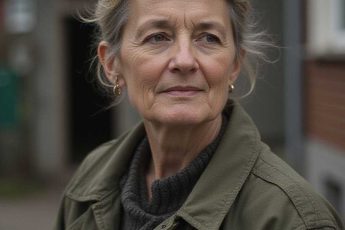
He gets up and heads to the kitchen. She listens to the rattle of plates, the blare of the TV. He cranks the volume up, and the flat fills with the voices and music of some game show. Susan gazes out the window. The November day is dreary, wind tossing leafless sycamore branches in the communal garden below. She remembers them, forty years ago, when they first moved inhow the two of them planted those little trees with the neighbours. Richard lugged watering cans, she steadied the saplings. Afterwards, hed carried her over the threshold, despite it not being their first flat. He did it for luck. Now, he can barely turn her over in bed.
Two weeks go by. Susan learns to shuffle about, gripping chair backs and walls. The doctor allows her five minutes up each day, no more. Richard cooks but poorly. He boils pasta and opens a tin of beans, fries eggs that are either half-raw or burned. Susan eats in silence, knowing he tries, but the old ache gnaws at her from inside. She used to cook decent, varied meals, bake pies, toss saladsnow food is a duty for him, a chore for her.
One evening, Richard sleeps in the loungeher bed needs peace and quietand Susan asks for water. No reply. She calls louder. Silence. She tries to get up, gripping the bedside table. She makes it to the bedroom door and sees him sprawled on the sofa, snoring, the TV still on, lights blazing. She knows she can’t make it to the kitchen; she crawls back to bed and waits for sunrise, throat parched but soul hurting most. He forgot her. Simply forgot.
Morning. Richard wakes near ten, pops in: “Howd you sleep?”
“Badly,” Susan says. “You didn’t bring the water.”
He shrugs. “I must’ve nodded off. Sorry. I’ll get it now.”
He hands her a glass and she gulps it down. He watches, puzzled.
“Why are you in a mood?” he asks.
“I’m not. Im just tired,” she says softly.
“Tired? So am I! It’s not easy looking after you, you know. Im a pensioner, Im seventy-two!”
Theres nothing to say. Susan turns towards the window, listens as he rattles pans. Breakfast is porridge, slimy, overcooked. She tastes one spoonful, feels her stomach twist with disgust.
“Is it not nice?” Richard asks, wounded.
“No, just not hungry.” She lies.
He fetches his coat. “Im off down the park to see George. Sit for a bit, get a breather.” He leaves.
Susans alone again. She pushes herself up, lobs the porridge in the bin and finds a yoghurt in the fridge, eats it standing. Too scared to walk back to bedher legs might give way. She sits by the window, watching the garden. There on the bench, under bare trees, are Richard and his friend George, chatting and laughing. He looks lively, cheerful. She realises: hes happier there than he is with her.
A week later, the thing shes most afraid of happens. One evening, Susan develops a feverfirst 37.5, then higher. By midnight, it flares to 38.7. She shivers, head pounding, her spine aching so much she wants to scream. Richard gives her paracetamol, tucks her in and says he’ll call an ambulance if it gets worse. Then he goes back to the lounge, flicks on the telly. She can’t sleep. At two in the morning, she calls for him. Silence. Louder. Nothing. She realises hes fallen asleep again. Her throat tightens in terroris it post-op complications? An infection? The doctor warned this could happen, you need to call immediately. She tries for her phone on the bedside. She stands, staggers, collapses onto the floor. The pain blacks her out; she screams. No one comes.
In the morning, their neighbour Maureen finds her, popped in to check on them. Richard left the front door on the latch again. Maureen hears groaning, finds Susan on the carpet, calls 999, then notifies Susans daughter, Julia, whose number she finds in the phone book. Richards sleeping in the lounge; paramedics wake him.
Julia arrives, pale with fury. She storms past her father, kneels by her mother, now in bed after a shot. Susan is white and weak but the fever has passed.
“Mum, are you all right?” Julia squeezes her hand.
“Im fine, love. Dont worry,” Susan whispers.
“How can I not? You were on the floor all night!”
“It wasnt all night. Just a few hours.”
“And where was he?” Julia glances at the doorway, where Richard stands, awkward and guilty.
“I was asleep,” he mumbles. “I didnt hear anything.”
“You didnt hear your wife, ill and in pain, calling for help?”
“Im tired,” he tries to excuse himself. “Im an old man, its hard for me too.”
Julia stands. Shes tall, strong, 45, an accountant, brings up two kidsher youngest is only ten. She stares at her father.
“Do you know what tiredness is, Dad?” she asks, voice steely. “Do you know what its like to get up at six, take the kids to school, then work, then pick them up, cook, check homework, clean, and then worry about Mum lying here, alone, with you, when you can’t even manage a glass of water?”
“Mum, leave it,” Susan begs, weak.
“No, Mum,” Julia doesnt break her gaze. “He needs to hear this. Dad, youre not coping. You cant care for a sick person, and you dont want to learn.”
“I try!” he protests.
“No. You pretend to. Mum, youre coming home with me.”
Susan wants to argue, but Julia lifts a hand.
“Dont argue. Its settled. Ill have your old room readyremember, when you stayed, waiting for Tom to be born? Theres a bed there now. Youll stay till youre back on your feet.”
“But youve your own lifekids, job” Susan feels the tears again.
“Youre my life too, Mum. And Im not letting you stay here alone and neglected.”
Richard says nothing. Julia begins to pack Susans things: clothes, medicines, documents, framed photos from the bedside. Susan just lies and watches her daughter, calm, brisk, unflinching. Shame, gratitude, a hollow in her chest. Shes leaving her home, this flat of forty years. Leaving her husband of almost fifty. She knows its right. Still, the pain is sharp.
When Julias finished, she books a special taxi for patients. The driver and Julia help Susan down, settle her in the car. Richard watches from the stairs, says nothing.
Those first days at Julias are tough. The rooms smallonce used for her elder sons computer and now everyones a little squeezed. Julia rises at six, rouses the kids for school, then dashes to work, checking on Susan mid-day, bringing tablets, warming lunch. In the evenings, tired though she is, she helps Susan wash, change, do the exercises the doctor prescribed.
Julias husband, Mark, quiet and kind, works as an engineer. Always pops in to see how Susan is, brings a mug of tea. At first the grandsons, James and Tom, are waryshes weak, mostly in bedbut after a while, they get used to her. James, a fourteen-year-old, helps her to the bathroom when Julias at work. Tom, ten, brings her books, tells her about school.
Gradually, Susan improves. Julia finds a good physiotherapist who comes twice a week. She buys Susan a walking frameSusan has to learn to walk all over again. Its humiliating, painful, but Julia sticks by her, always encouraging, never letting her slip into despair. They talk, about life, the past, Julias childhood, how Susan met Richard. Theres so much they never said. Julia speaks of her worries, how hard it is to juggle work and family, how sometimes shes at the end of her tether. Susan listens, realising just how much her daughter has sacrificed.
After three months, Susan is walking with her frame. Shes able to reach the kitchen, even the bathroom, alone. The doctor says her recoverys good, but shell never be quite the same. Her back will always hurtshe must be careful, avoid strain. But crucially, shes alive and mobile.
Richard phones several timesat first daily. He asks how things are, says he misses her. Then, less often. Julia answers, curtly, refusing to put him through. She hasnt forgiven him. Susan hears her daughter’s clipped conversations and each time her heart aches. Julia is right, but Richard is still her husband. Nearly fifty years together. She remembers when they were young, how they laughed, raised Julia, got through the deaths of their parents. Does none of it matter now?
One evening, after Julias put the boys to bed, theres a ring. Mark opens the doorRichards there, clean-shaven, hair carefully brushed, wearing a new jumper and holding a box of cream cakes, Susans favourites.
“Evening, Mark,” he says quietly. “May I see Susan?”
Mark hesitates, unsure. “I dont know, Julia doesnt let him in.”
“I understand,” Richard nods. “Just five minutes, please. I want to see my wife.”
Mark steps aside. Richard walks into Susans room. She sits by the window, reading. At the sight of him, she freezes. The book falls.
“Rich,” she breathes.
“Sue,” he kneels beside her, handing over the cakes. “Brought your favourite.”
She takes the box, hands trembling. They both fall quiet. Richard looks up at her, tears in his eyes.
“Im sorry,” he says hoarsely. “Sorry for everything. I never knew how to look after anyone. You always did it all. I got used to it. When you got ill, I panicked, didnt know what to do. I was a coward. A bad husband, bad man.”
She runs her hand over his head, now thin and grey.
“I know you cant forgive me,” he says. “But I needed to say it. I miss you, Sue. The flats empty without you. I’m like the living dead.”
They both cry silently. He takes her hand and presses it.
“We havent much time left,” he says. “Were old. Who else do we have? Julias brilliant, but shes got her life. Youll wear her out. Sue, we belong together. Were used to each other. Im yours; youre mine. Thats how it is.”
Susan realises hes right. Beneath her dread of loneliness, theres a deeper dreadshe doesnt want to die alone, in some strange room, after Julia grows weary. Richard is her husband. Their bond is stronger.
“Ill think about it,” she says quietly.
He nods, stands, kisses her forehead, and slips away.
When Julia comes in, face tight, “He was here?”
“Yes,” Susan replies.
“What did he want?”
“He apologised,” Susan says.
Julia sits, tense. “Youre not thinking of going back, Mum?”
Susan doesnt answer immediately. She looks out at the blackness and distant lights.
“I dont know, Julia.”
“What do you mean, you don’t know?” Julias voice rises. “He abandoned youleft you helpless! You were on the floor, and he was snoring! I gave up my life for you! Did the nights, paid for doctors, put up with Marks patience running thin! And now you think of going back because he brought some cakes?”
“Its not that simple, love.”
“Its dead simple, Mum! He wants a maidsomeone to cook and clean. Thats it.”
“Hes my husband,” Susan says softly.
“So? That doesnt give him the right to treat you like this!”
“We were together nearly fifty years. That’s my whole life. Without him, I dont know who I am.”
Julia paces, fists clenched.
“I love you, Mum. But I don’t get it. You pick him over your daughter, after all I did for you. Feels unfair.”
“Im not choosing between you,” Susans voice is tight with tears. “I just want to go home.”
“Home?” Julia snaps. “To where you suffered? Where you shouted for help, and no one came?”
“Thats my life, Julia. My things, my memories. Hes there. I know youre right. But Im frightened of being alone. I dont want to die like that.”
“Youre not alone!” Julia shouts. “Youre with me, my kids, Mark!”
“Thats your family, love. Not mine.”
The words hang. Julia turns away, hurt.
Weeks later, Susan returns to her flat. Julia helps her pack, calls the taxibut all with a set, hard face. At the door, she hugs Susan, but its cold and stiff.
“If you need anything, call,” she says.
“Thank you for everything,” Susan grips her hand. “Forgive me.”
“Nothing to forgive,” Julia mutters and turns away.
Susan knows her daughters not forgiven, and maybe never will.
Richard meets her, flat cleaned, windows washed, artificial flowers in a vase. He helps her in, sits her in the best chair, makes tea. She stares at him, wondering what she feels. Shes home, with her husband. It should be relief, joy. Yet inside, only exhaustion and sadness remain.
Richard tries to be helpful. He cooksnot well, but at least he tries. Brings her medicine on time, helps her about. But slowly, things return to their old patterns. He starts to forget the shopping, buggers off to the bench for hours, leaves her alone. Susan doesn’t complain. She does what she can herself; when she cant, she waits. She has learned, above all, how to wait.
A month passes. Julia doesnt ring. Susan calls a few times; her replies are cool, clipped. Shes busy, everythings fine, shell ring when she can. She never does. Susan realises shes lost her daughter. The thought is suffocating.
One evening, Susan sits by the window. Richard watches some shouty chat show, laughing. She watches him in his threadbare T-shirt, scratching his belly. They barely speak, except to exchange news about dinner. She remembers the conversations she shared with Juliabooks, work stories, family, laughter. Here, theres only the telly and silence.
She gets up, makes her wayfrail but independent nowto the living room cabinet. Family photosJulia in her school uniform, on her wedding day, pictures of the grandkids, James and Tom, at the seaside. When did she see them last? Two months ago. They must have grown. She knows nothing about their lives. She chose Richard. She lost them.
“Su, come here, something funnys on,” Richard calls from the lounge.
She ignores him, sets the photo back and lies on the bed. The ceiling has a crack, lightning-like, from water damage years ago. She stares at it, thinking her life too fracturedbefore the illness, she was someone: wife, mum, gran. The centre. Now, just a burden. First for her husband, then for Julia. Now, simply existing. Waitingfor what, she no longer knows.
Next day, she tries ringing Julia again. No answer. She leaves a message.
“Julia, darling, its Mum. Give us a ring, let me know how you and the boys are. I miss you.”
No reply. A week passes. Silence. She accepts that Julia has let go of her at last.
Several more months pass. Susan adjusts to life with a walking stick, can manage the shop downstairs herself. Richard is relievednot that he needs to help any more. He spends his days in front of the TV or chatting outside; Susan goes about her chores, taking the pain as fate. She has learned to endure, as the doctor said she must.
One morning, there’s a ring. Susan opens the door to find Julia there, drawn and hollow-eyed, coat still on, holding a bag.
“Julia,” Susan says, stunned. “Youve come.”
“Can I come in?” Julia asks.
“Of course. Come insit down.”
Julia heads for the kitchen. Richard comes from the lounge, hesitates.
“Hi, love,” he says uncertainly.
Not even a glance. Julia sits at the table. Susan brings tea. They sit in silence for a moment.
“Mum,” Julia begins. “I need to talk to you.”
“Yes, love.”
“I havent called in two months. I was angry. I couldnt forgive you, going back to him after all that.”
“I know, sweetheart. Im sorry.”
Julia holds up her hand. “No, listen. I felt betrayed, like you chose him over the person who cared. I was hurt. But then, I realisedyoure afraid. Afraid of being alone, a burden, afraid of old age and death. You chose what felt safest. Him. Even if its not good. And I pitied you.”
“Julia” Susan’s eyes sting.
“But then I stopped. Something else dawned. You chose him knowing exactly what he is. That he wont care for you properly. Hes selfish. You did it anyway. And I love you, but you threw my efforts awaysix months of running ragged for you.”
“I didn’t mean” Susan whispers.
“You did. It was a choice. And now, you need to live with it. Im here to sayI wont step in any longer. You want him, have him. But dont expect me to rush back when you decide you need me. Im tired, Mum. Tired of always being rescue and never being chosen.”
“Dont say that,” Susan gets up, wanting to embrace her. Julia moves away.
“I say it because its true. You betrayed me, Mum. I dont know if I can forgive that. Not now.”
Richard loiters in the doorway but Julias look stops him. “And as for you,” she says coldly, “you have no right to speak. You dont deserve her. But she picked you. Enjoy your peace and lies.”
Julia stands and draws from her bag a plain white envelope. “Moneyfor medicine, doctors. Ill make sure youre not in need. But thats it. Goodbye, Mum.”
She leaves, fast, not looking back. The door slams; Susan listens to the vanishing footsteps. Richard tries to put his arm around her; she shrugs him off.
“Dont,” she says, flatly.
“Shes upset,” Richard soothes. “Shell come round.”
“No,” Susan looks at him, heart vacant. “Ive lost her. Forever.”
She goes to the bedroom, shuts the door, weeping into her pillow. Julia is right, she thinks. I chose fear over love and must pay the pricelosing my child.
Months roll on. Susan lives the old way. Breakfast, then Richard’s off to the bench or his friends, she cleans, cooks, gazes at the garden. Occasionally, she rings Julia, but its always Mark who answers”Julias busy, everythings fine, Ill tell her you called.” She sends birthday gifts and cards to the boys; theres no reply.
One warm August evening, Susan sits in her chair at the window. Richard dozes on the sofa, telly low. Children play in the fading light below. Susan remembers Julia as a childcycling with friends, learning with Richards hand on the saddle, whooping for joy as he let go. In those days, they were a family. Now? She and Richard, old and adrift in a silent flat.
She stands, fetches a photoJulia and the boys taken at the seaside, three years ago, their last happy trip. She strokes Julias photographed face.
“Forgive me, darling,” she whispers. But Julia cant hear. And wont forgive.
She puts the photo away, returns to her chair. Richard stirs, looks at her.
“Sue, whats up? Youre ever so quiet.”
“Its nothing,” she says.
“Shall I pop the kettle on?” he asks. “Fancy a brew?”
“If you like.”
He perks up, shuffles off. Soon, hes back with two mugs. They drink in silence before he returns to his show, volume up. Susan stares at the TV but doesnt see anything. Richards present, but shes still alone. Alone in this familiar flat, with so many memories, but nothing warm left. She chose him out of fear for solitude. But it didnt help. Loneliness came anywayit sits beside her every day, mocking her, ever-present despite his company. Thats the worst sort of loneliness.
Richard finishes his tea. “Sue, what do you saylets do the Saturday market tomorrow! Tomatoes, cucumbers, make pickles like before?”
“I cant lift much,” she reminds him, softly. “Back hurts.”
“Ill carry them! Ill help.”
He beams, pleased with himself. He hasnt the slightest idea what shes lost, what she feels. Hes contentsomeone cooks, cleans; change is unnecessary. Hes settled.
“Alright,” Susan says.
“Good old girl. We need to get out, bit of fresh air.”
He goes back to the TV. Susan does the washing up. Then, she stands at the kitchen window. Beyond is the August night, warm and dark. In other flats, lights shine, laughter and music drift. Life goes on. Six months back, she looked out the same window in Julias house, surrounded by a living family. She returned here, scared to be a burden, scared to lose Richard, scared of life shifting. Now shes here. Is she happy? Nojust existing, day after day, waiting. For what, she doesnt even know now. Will someone care at the end? Richard? Or will he simply sigh in relief?
She stares at her reflectiona tired old woman, face lined, eyes empty. Once, she was young, beautiful, strong; loved and loving. Now? A shadow in a flat with no life.
She checks on Richardhes already asleep, snoring softly in the lounge, TV on. She covers him, shuts off the telly, and retreats to her own cold bed. Separate rooms since she was illa practical arrangement. Each alone, together.
In the dark, Susan lies and listens to the silence. A dog barks somewhere, a door slams. Life goes on, elsewhere. Here theres only silence. The silence she chose. The silence for two.
Next morning they go to market. Richard carries the bag, she follows with her stick. Neither says much. They buy tomatoes, cucumbers, parsley. Back home, Susan cuts the veg for pickling; Richard watches, then loses interest, wanders to the telly. As she slices the cucumbers, she remembers: Julia is probably doing the same, somewhere, with the boys, laughing, bickering over fruit, alive. A real family.
Susan wipes away tears and keeps cutting. This is her life. Her choice. And now, she must simply go on. In the silence. For two.