Divorce Is Cancelled
Helen set her teacup on the table a little too firmly, making it clink against the saucer. Not on purposeher hands lately seemed to have a life of their own, going through the motions while her mind drifted somewhere nearby, watching her life as if it belonged to someone else.
Octobers rain rolled steadily down the kitchen window, the kind of drizzles that seem gentle but soak everything and sap your energy more than a proper downpour ever could. For three days, the grey weather had pressed in. The trees in the communal garden outside were stripped bare, their tangled branches glistening with cold rain.
Are you going to be late again? she asked, not turning round.
David was standing in the hall, fiddling with the zip of his raincoat. That zip had been catching at the same place for a month. Helen always meant to remind him to buy a new one, but she kept forgetting. Or she didnt see the point. Or perhaps, she simply couldnt be bothered to say unnecessary words anymore.
Probably until eight. Theres a problem with the substation, and it needs sorting before Friday.
I see.
That phrase’I see’had become her catch-all these past years. It meant nothing, and everything all at once. I see youre leaving. I see you wont be here. I see Im not expecting anything different.
Did you have breakfast? he asked.
Yes.
She hadnt, really. Shed just sipped at her coffee, already cooling, and watched the rain. But there was nothing more to say.
The front door slammed. She heard the lift groan into action through the wall. Silence, the peculiar, waiting kind that filled their flat, descended. A silence that seemed to be waiting for something too, though Helen didnt know what.
She was fifty-three. Twenty years with David Harrisan engineer, a quiet man with practical hands and a direct gaze; someone steady but not given to the words she sometimes needed to hear.
In twelve days, it would be their twentieth anniversary. China, the wedding websites called it.
She thought about this, and felt nothing. Absolutely nothing. And that chill frightened her more than any tears could have.
***
The conservatory had been added to the house seven years ago, back when life seemed differentor perhaps she only remembered it that way. David built it himself over the summer, spread out blueprints on graph paper across their kitchen table for weeks. Helen remembered carefully placing plates around piles of his notes, glancing down at his diagrams with no clue how to read them, but touched by the seriousness he brought to the project.
He’d asked her just one thing: how high did she want the ceiling? For the light, you know.
High, shed said. So he built it high.
A glass roof, metal support frame, live-edged wooden shelves. There were automatic mist-spays, a thermostat, special grow lights for the fussy plants. David had wired and installed it all, then, one evening, wiped his hands and said, All set. You can move your lot in.
So she had.
In seven years, the conservatory had become her own small world. Eighteen types of orchids lived there, along with two gardenia bushes that filled the room with scent every spring, stealing her breath in the best way. There was a massive rubber plant that she privately had named Albert, though shed never told anyone. Succulents lined three full shelves, each with its own story behind its purchase, its own little biography. She had a bench in the corner, wooden and scuffed, with a cushion shed sewn herself one winter from an old coat.
She came here every morning with her first tea. Shed slip in at night if she couldnt sleep. Here, shed talk to the plants, thinking nothing of itif anyone found that odd, well, they didnt need to know.
David rarely entered the conservatory. Hed check the thermostat, mend something if needed, and leave. He never said if he liked it there or not. Just checked and left.
Helen became used to that, too.
***
Helen, love, you can see you and David dont really talk, her friend Maureen had said, sipping Earl Grey at Helens kitchen table the previous Sunday. Maureen had been divorced for six years and spoke about marriage with an expertise that was sometimes helpful and sometimes grating.
Its called emotional unavailabilityeveryones talking about it nowadays, Maureen continued.
Everyone is, Helen agreed.
Dont smirk. Im serious. People should talk. They should share what theyre feeling. Otherwise its not a marriage, is itjust being housemates.
Housemates. Helen carried that word home with her like a heavy stone in her pocket. It was unpleasant but, from the outside, it was accurate: two people in the same space, eating at the same table, occasionally watching the same film, but each wrapped up in their own life. Like bedsit neighbours who had simply learned not to bother one another.
Yet, deep down, something inside Helen objected to this neat summary. Not because it was unfair, but because something vital was missing from it. She just didnt know what.
Perhaps shed simply never learned to name it. Or perhaps she was afraid to try.
***
David Harris was a tall, slightly awkward man of fifty-six. His hair had gone almost entirely silver within the last two years, and it suited him, though Helen doubted hed noticed. He never gave a thought to his looks, wore whatever was pressed and hanging on the rail, shaved every morning at the same time, in the same steady way. His strong tea was always without sugar. He read technical journals in the evening or thick history books, marking long passages with slips of paper.
Theyd met when she was thirty-three and he thirty-six. He came to inspect the pipework in the old converted house where she was renting a flatnot to fix them, she reminded herself, he was the site engineer, just there to check the state of things. Shed opened the door in her dressing-gown, book in hand, and he looked at her as though hed seen something wholly unexpected.
He hadnt said anything extraneous. Hed checked the pipes, written up his notes, paused at the door and told her: Youll need your water off for a routine check in a month. Ill let you know in advance.
He did let her know. He came himself.
For a long time, Helen wondered whether this had been by chance or not. Shed decided it hadnt. But David never confirmed or denied it.
They saw each other for a year and a half. He wasnt one for romantic speeches, didnt write verses or bring unexpected flowers. But one freezing February, when her car broke down on an empty road, he came within forty minutes, got it started in silence, drove her home, and fixed it completely the next day. And then shed felt something, not knowing what to call itbut it had been enough, for a while.
Over time, perhaps it was not enough. Or perhaps she just didnt notice it anymore. She couldnt say which, and that was part of the exhaustion.
***
Three days before their anniversary, she sat in the conservatory, repotting a young cactus. It was uncomplicated, almost meditative work. Her hands moved automatically, her mind wandering.
She rehearsed the conversation she knew she ought to have. She ran through various words, tested different tones. Not an argument, not a list of complaintsjust the talk shed put off for too long because, really, she feared his reaction. Not that she expected shoutingno, she feared that hed take it all in his stride, as he always did, nodding and saying, I understand, and that calmness would be the final proof that there was truly nothing left.
In twenty years, hed not once said, I love you. Not once. It was astonishing and yet, for them, entirely believable. Hed say other things You look tired, go have a lie down; Ill fix it; Ill sort it; but not that.
Not the one thing she longed to hear.
Perhaps it was ridiculous, asking for words at fifty-three as if she were a teenager. Maureen would say so: Helen, grown people dont need declarations. Its actions that matter. Shed always agree; still, she couldnt quiet the quiet, stubborn longing deep underneath her ribs, which never really went away, no matter how many years passed.
The cactus settled perfectly into its new pot. Thats a good metaphor, thought Helen. Thats our marriage. It sits. It doesnt fall over. Its alive. But when did it last bloom? Who remembers?
***
The next morning, Helen decided shed speak to him that evening.
She woke early, as usual, made coffee, picked up her cup and walked through the chill house to the conservatory. The sky outside hung heavy and grey. She ignored the forecast, but that sky warned of something more than drizzle.
She sat on her bench, sipped coffee, and studied the gardenia bush. The leaves had deepened and thickened, ready for winter. She touched one leaf with a fingertip, the way mothers check their sleeping childs cheek.
Its all right, she whispered. Well survive.
Then she realised she was speaking as much to herself as to the gardenia, and she gave a small, rueful laugh.
David appeared in the kitchen round half past seven. He poured his coffee, opened the fridge, peered in, then shut it. Sat down with his tablet and began scrolling. Helen re-entered with her mug, rinsed it in the sink.
Will you be home this evening? she asked.
Probably. As long as the site holds up.
I need to talk to you.
He looked up, and she wiped her hands on the towel, avoiding his gaze.
About what?
In the evening. Its not urgent.
He nodded and turned back to his tablet. Helen put on her coat and went out, just for the sake of leaving the flat, to avoid that patient, silent waiting.
***
Around lunchtime, the weather worsened.
Rain pelted down, fierce and wintery now, not autumns gentle soak. The wind picked up, rattling their windows. By four oclock, Helen could feel the house shuddering. The news on the radio began mentioning an icy storm, a warning that now sounded more like an inevitability.
She checked the conservatorys thermostateighteen degrees, steady. She pressed her hand against the glass; cold to the touch outside, warm inside. She adjusted the grow lights, watered two plants, repositioned the dowel under the gardenia.
At five, David texted: Delayed. Storms playing havoc at the substation. Dont wait for dinner.
Helen set her phone down and, again, felt not anger, not even disappointment. Just the familiar, quiet void. Of coursework. Of coursehes late. Of course.
She reheated some soup, ate alone and cleaned up. It was already dark; the wind battered the windowpanes so hard it seemed to be trying to speak.
At seven oclock the power went out.
As always, it was sudden. A moment ago, the world hummed comfortablylights, fridge, ordinary lifeand then darkness fell, total and a little shocking.
Helen found candles by touchshe always knew where they were. She lit three, setting them on the kitchen counter. Next, she grabbed the torch and headed to the conservatory.
The thermostat was dead.
She stood there in the half-dark, torch beam on the unlit screen, and felt the air, still warm but noticeably cooling. The wind howled around the glass, and she knew the warmth wouldnt last.
Orchids can’t survive a chill. Nor could the gardenia. Nor could the little mandevilla vine shed coaxed to flower this very year. Most of her plants had come from milder climates and would die overnight if the temperature dropped.
Helen started shifting what she could into the housesmaller pots, the succulents, the most delicate. She walked back and forth, arranging them on window ledges and in the hallway. Her phone chimed several timesit was Maureen, naturally, checking if she still had power. Helen replied, No, but its okay, Ill ring back, and hung up.
By half past eight, the conservatory was growing colder by the minute.
Helen pulled on a thick jumper, fetched a blanket, went back out and sat on her bench, watching the rain and hail pummel the glass overhead. The black sky pressed close; icy gusts banged the panes.
She thought of Davidwhere was he, was he all right on the roads?then caught herself, surprised at the question. Not that she thought about him, but that she was surprised to. As if, underneath all the years of tired resignation, something alive remainedjust lying dormant, like seeds waiting for their moment.
Her phone flickered to 9:15 pm as she heard the first crack.
***
She would later remember the moment in different ways, sometimes describing it as a crack, sometimes a feeling that something had shifted. All there was, really, was her sitting on her bench with the blanket, eyes on the gardenia, thinking she ought to call David, when the metal struts of the roof gave a sound somewhere between an exhale and a groanloud, dry, unexpected.
She stood. Lit the roof with her torch.
One section in the left corner was buckling. The wind pressed relentlessly from outside, and a single glass panel had split, running a fine crack from corner to centre.
No, she said aloud. Just that. No. It was the only word she had.
She flung the blanket aside and lunged for the orchids, scooping up pots and carrying them inside. One droppedshe didnt stop. Two at a time, into the hallway; back out, another two. The gardenia was huge and heavy, nearly impossible to lift; she dragged it in the pot, scraping across the floor.
The cracking above grew louder.
Helen found herself in the centre of the conservatory, breathing hard, staring upward. The glass held on. From inside, she could see the wind beating at it, flexing the pane. She knewwhen it broke, the cold would flood in, and anything left would die by morning.
She couldnt save them all. It was obvious.
The mandevilla. Three years of care. Burgundy flowers, finally blooming.
She stepped toward it, and in that moment the glass broke.
Not all at oncejust a section shattered inward, and a wave of frozen air swept through, accompanied by a chunk of hail that bounced off a shelf, toppling a small cactus. The wind now roamed the room, lifting leaves and toppling pots.
Helen stood, frozen for two heartbeats. Then she grabbed the mandevilla, cradled it to her, and hurried inside, setting it down carefully in the corridor.
Her phone vibrated. David.
Helen, he saidjust that. Her name, but different somehow.
Im here, she replied.
You all right?
The roofs been damaged. The glass broke. She kept her voice steady. I saved what I could. Theres a lot left out there.
There was silencea short, tense silence.
Where are you now?
In the flat.
Stay there. Im on my way.
Theres an ice storm! The roads
Im on my way, he repeated, no fuss. Just fact.
***
He arrived an hour and forty minutes later.
Helen sat in her armchair, pretending to read her phone, listening to the storms rage. The battered glass in the conservatory sometimes rattled and chimed; she tried not to imagine what was going on there.
She didnt get up right away when the front door clattered open. She closed her eyes for a brief moment.
David strode in, soaked to the boneice on his sleeves, his boots white with slush. He dropped a big bag of tools and looked at her.
Are you cold? he asked.
No. How was the drive?
Managed. His eyes were already on the conservatory. Show me?
They went in together. Helen shone her small torch, David flicked on a heavier one; he cast it over the roof. There was a gap in the left corner, snow and ice had formed a drift across the floor, and many pots stood awash in water.
He studied the damage for a long, steady minute. Then said,
Theres heavy gauge polythene in the box room. And tapemasking stuffI put it there last autumn. Can you grab it?
David, its freezing. Maybe just
Find the polythene, Helen.
She found ita proper roll of industrial plastic. She hadnt even known hed bought it; she never did know what was in that box roomit was his domain.
The next ninety minutes were exhausting and, in some odd way, exhilarating. David worked up a ladder in the freezing draught; she fed him the polythene, shone the torch, held the edges for him with numb fingers. He rarely spoke, except to grunt, Hold this. Here. Okay.
At one point the ladder wobbled, and he swore as he caught his hand on some edge of metal. Helen saw bloodjust a scrape, but nasty all the same.
Hang on, Ill get a plaster
No need. Hold the sheeting.
David
Hold.
So she held it.
They patched the holenot beautifully, not forever, but snug and sealed. The wind dropped in the room, and it grew a little quieter.
He climbed down, pulled off his gloves, inspected his bleeding hand in the torchs beamjust a shallow cut.
Lets get to the kitchen, Helen said.
He didnt argue.
***
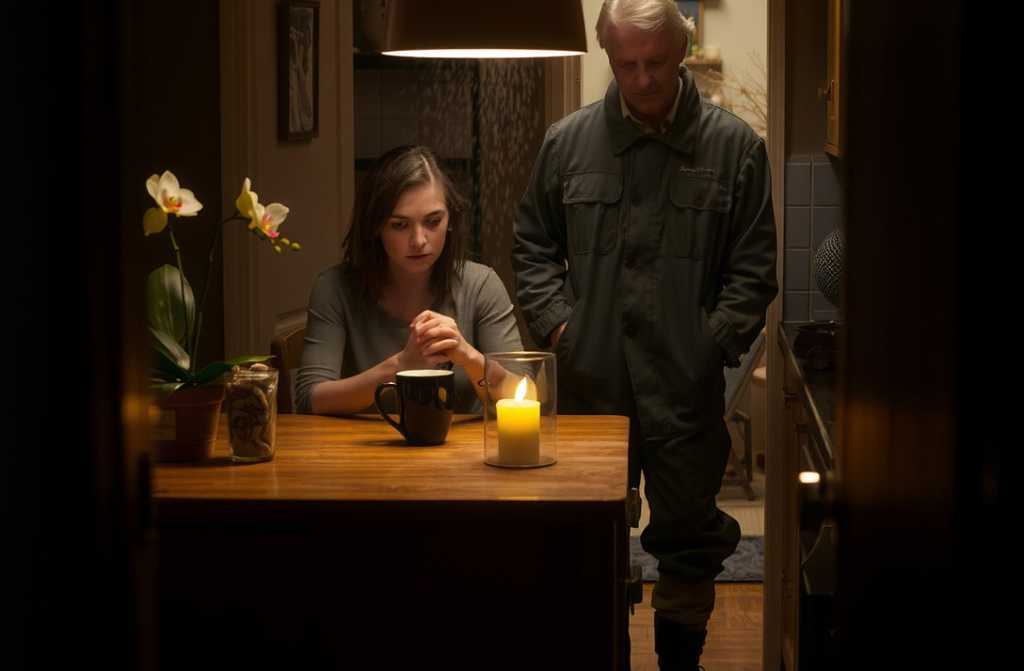
The kitchen glowed with candlelight. Helen rinsed his cut, fixed a plaster over it. He watched her hands as she worked, silently.
She set the kettle on the gasit still worked. Sat opposite him.
Theres a generator in the car, he said finally. Picked it up from work. Its industrialenough juice for the thermostat and the lights.
You fetched it for the conservatory?
I didnt come home for supper, did I?
Helen regarded him. He looked at the tabletop.
I’ll hook it up in the morning, he said. Its too dark and Im knackered. The plants will make it one nightthe temperature has stopped dropping.
The kettle whistled. Helen made them both tea.
Outside the storm still howled, but in the hallway there stood rescued orchids and the mandevilla shed carried last.
I wanted to say something to you, she began. Yesterday. I said I needed to talk.
He looked up.
I remember.
I was thinking about divorce.
The word landed between them like a stoneno crash, just weight.
He stared at her. His face didnt change, but something was different, something just under the surface, the sort of subtlety shed learned to read over twenty years, even if she didnt always understand its meaning.
Why was thinking? he asked, with an emphasis on was.
Because of the storm?
You said you were thinking.
Helen wrapped her hands around her mug for warmth.
I dont know, she said, honestly. Ive been thinking about it for weeks. Maybe months. I feel alone in this marriage, David. Living beside someone whowho doesnt seem to care, if were honest.
Doesnt care, he echoed. Not as a question. Just repeated.
You never say anything. Never say what you feel. Twenty years. I dont know why I matter to you anymore.
He was quiet. But not with the usual stony silence. This was differentsearching for words in a part of himself he never used.
Do you think I built this conservatory because I was bored? he asked, after a while.
You built it because I asked you.
You didnt ask. You once mentioned youd love to grow orchids but there wasnt enough light in the flat. It was just once. At supper. Then you changed the subject.
Helen had forgotten that completely.
You remember those things? she said quietly.
I remember everything you say. He said it matter-of-factly, no accusation, no complaint. I just rarely mention it.
***
They sat with their mugs, candles burning between them. The storm outside was finally starting to calm, though the wind still whipped the trees.
I cant do it the way you want, David said. I know you want words. I get that. It just doesnt come naturally. Not because I dont care. Im simply not built that way.
Like a mechanic, Helen said, without teasing.
Maybe. He paused. Three years ago, when your back was bad, I replaced the mattress. Remember?
I do.
You never asked. I just overheard you telling Maureen your back hurt. A week later, new mattress. Did you think it was a coincidence?
She had. It had never occurred to her.
And five years back, you werent sleeping because of all that at work. You thought youd get the sack after the reorg. You never said much to me, but I noticed you werent sleeping. I started staying up later, so you wouldnt be left lying awake alone. Remember that?
Helen remembered. Shed thought he just had a busy time at work, nothing to do with her.
I had no idea, she said softly.
I didnt explain it. There was no excuse in his voice, just confession. I thought it was obvious. That actions spoke for themselves. Maybe I was wrong.
Helen set her mug aside and stared at the candle, watching the flame flicker in the draught.
Why did you drive back tonight? The roads were deadlyI watched the reports
Because you were here. In the conservatory. He said it simply. Youre alive in that place. When youre among the plants, you have a whole different look about you. I couldnt leave it.
You hurt your hand for my orchids?
For you, Helen. He looked her straight in the eye. Not the orchids.
She didnt reply, because there really werent words that felt adequate. Or perhaps, she realised, shed heard all the words she needed years agojust not in a language shed ever learned, even after living with its speaker for two decades.
The wind faded at last. Nearly silence. Just the candles crackling.
I dont want to get divorced, she said finally. Not out of fear, not habitbecause, in that moment, it was true. But I need you to sometimes say something. Even if just a little. Anything.
Ill try, he said. And, for him, that was the most important thinghed never promised what he couldnt give. Just, Ill try.
***
When day dawned, they went out together to the conservatory.
It was changed. The floor in the left corner was still damp, signs of the nights chaos everywhere. Some pots knocked over, a shelf leaning. The polythene sheeted over the roof looked makeshift, tidy but not prettya bandage over a wound.
Helen hesitated at the door, surveying the room.
That sheet needs removing before the weather warms up, David said. Ill order the new glass today. Week, maybe ten days. Meanwhile Ill put up proper polycarbonate.
Youll do it yourself?
Yes. At the weekend.
She went to the gardenia shed left in the corridor overnight. Its leaves were a little droopy, but the roots were fine, the pot upright.
Shall we bring her back in? she asked.
The thermostats running. Plugged in the generator at six. Eighteen degreesabsolutely fine.
She lifted the pot, and David took anotherthe big ficus, the one he called that plant in the corner. To her, it was Albert, though shed never told him.
While they ferried pots inside, Helen said, out of the blue,
Hes called Albert.
Who? David asked.
The ficus. This one. She nodded at the plant he carried.
He looked at it, then at her. Something almost like a smile flickered on his face.
Good name, he said.
And she laugheda proper, sudden laugh, the way she hadnt in so long.
***
Their twentieth anniversary was a quiet affair. No restaurant, no guests. Helen didnt even recall them agreeing to thatit just happened. Their morning was spent fetching replacement glass for the conservatory, which wasnt part of the plan, but the supplier David had found was available that day.
Lunch at homesimple soup and pies, with David surprisingly pitching in to peel potatoes as they talked. Nothing deep, just gentle chattermaybe fix the leaky tap, how the neighbours dog barked every morning, maybe take a short break to the seaside in spring.
Where would you like to go? he asked.
I dont know. Somewhere by the coast, just for a change.
All right. Well find something.
It was just a phraseWell find somethingbut it included ‘we’, and that was important.
Afterwards, they went to the conservatory. The glass wouldnt be in until next week, so a sheet of polycarbonate let in a softer, milky light. Helen rearranged her plants; David checked the frame.
Needs more support here, he said, pointing out a join. Weak spot. I noticed beforeI should have reinforced it. Didnt expect that much ice.
You couldnt have known thered be a storm like that.
I still should have planned for more strength. Thats my mistake.
She watched him, the same focused look shed always read as detachment. But now she saw it differently. It was his way of workingidentifying the weak spots, admitting fault, making repairs.
You always do that, she said.
Do what?
Fix things when they go wrong. You dont look for someone to blame. You just repair them.
He paused, considering that. How else would you do it?
Some people look for whos at fault.
And then what? You find the culprit, but the problems still there.
Helen nodded. That was itfind the culprit, but the trouble remains.
She pondered this while setting succulents back on their shelves, each to its proper place. For twenty years, shed looked for the fault in their marriagehe didnt speak, she didnt know how to receive what was offered. And while she searched for blame, the issues endured.
She could have just asked what his silences meant.
Could have just said: please, teach me your language.
***
Back in its place by the east wall, the mandevilla looked healthy. Helen set it so morning light would touch the leaves first, as she liked. She pressed a stemstill strong, very much alive. A pair of burgundy flowers lost a petal in the cold, but the rest remained.
Will it survive? David asked, coming up behind her.
It will. Its bloody persistent, Helen replied.
Three years growing it?
She nodded. Didnt flower for ages. I thought I was doing something wrong. But then this year, finally…
He gazed at the flowers, thoughtful. It happens like that. Some things just wait for the right time.
Helen wasnt sure if he meant the mandevilla.
***
That evening, when darkness returned and the conservatory glowed with lamplight, Helen sat on her bench, book in handnot reading, just holding it. David brought in two mugs of tea, sitting beside her this time, shoulder to shouldernot across the table, as usual, but together. It felt unfamiliar, but not unwelcome.
Can I ask something? she said.
Go ahead.
Did you ever think this marriage made you unhappy?
He took his time, and she realised now that with David, a quick answer was always routinethe real ones took time.
No, he said, finally. I wondered sometimes if you were unhappy. But I didnt know what to do about it. I thought: Im working, the house is sound, you have your conservatory. I thought it was enough. Seems not.
It is a lot, Helen said. Honestly, its a lot. I just needed to know you were doing it for me, not just for neatness.
It was for you, he said. Always for you.
She believed him. Not because she needed to, but because the night with the storm, and his scraped hands, the generator dragged through the snowall that said more than any words could.
Though the words mattered too. She would keep asking for them when she needed to. She wouldnt say she didnt care.
Say something to me, sometimes, she asked. Doesnt have to be poetic. Just say something.
Ill try, he replied, and after a pause, added, I like it here. Right now. With you.
Simple words, a little clumsy, said by a man who wasnt used to saying them, but true. Helen felt the warmth, after such a long cold spell. Not immediately, but gradually, as all true warmth comes.
She said nothing, but took his handthe one with the little plasterand held it gently.
The rows of orchids, the gardenia breathing in its corner, Albert dignified by the window; the polycarbonate roof still capped with the last snow, ready to thaw.
Everything was still a little battered. But everything was alive.
***
Two weeks later, the glass was installedDavid, with an apprentice he’d found through a friend, did the work. Helen made lunch, brought them coffee. Once, she carried in a tray; the apprentice thanked her, David took his cup and, when his helper was out of earshot, said quietly,
Youre good at supervising other people working, arent you?
She burst out laughing.
Thats called quality control, actually.
Mmm. There was a gentle, new tone in his voicemaybe it had always been there, or maybe she was only noticing it now. In that case, carry on.
That evening, after the apprentice left, they stood together under the sparkling new glass, watching the night sky and the first winter stars. The rich smell of earth and leaves filled the air.
Thats better, David said.
For him, better meant what another person might call beautiful or good. Just a different language.
She hadn’t learned all the words yet. It would take more than a fortnight, or even twenty years, if you didnt try. But now, she heard things differently, watched some gestures for what they were.
The next morning, when David quietly set a mug of tea in front of her, she didnt think hes silent again. She thought, He made me tea. Because he knows I like it in the morning. He’s always known.
It wasn’t everything she wanted. She wasnt about to pretend that words didnt matter to her. They did, and shed keep asking. But it was more than nothing. It was real, just bundled in a kind of wrapping shed never noticed before.
***
On Sunday, Maureen phoned.
All right, then? she asked.
Im fine, Helen replied. Better than fine, actually.
You spoke to him?
I did.
And?
Helen was quiet for a moment.
You know, he told me something. That I once mentioned orchids over dinner, just the once, ages ago. He remembered, and built the conservatory.
And? Maureen wasnt sure where this was going.
Id thought he never listened. Turns out he didjust answered with actions, not words.
A short pause.
That sounds like an excuse to me, Helen.
Maybe. Or maybe it’s understanding. Im not sure yet.
Helen finished the call and went to the conservatory. She stood by the gardenia, sniffing its winter-dull leavesnot as fragrant as in spring, but still fragrant, still living.
Albert stood as solidly in his corner as everthe quiet, practical observer. Helen thought: rubber plants live for years, if you care for them. They never demand, never fuss; they just grow. And that, she realised, is still a kind of life.
She didn’t know what the future held. No one ever does. Thats perhaps the truest thing you can say about any marriage, or any pair living side by sideyou don’t know. You keep going.
The important thing is, the conservatory’s warm.
And she isnt alone in it anymore.
***
A month later, the mandevilla sent up a new shoot. Helen noticed it in the morninga tiny, bold-green sprout, insistent. She stood a moment watching, then pulled out her phone and texted David:
Mandevillas come alivea new shoot!
He replied from work, just a few minutes later.
Thats good.
And after a pause: How are you?
She smiled. Just two wordsbut they meant something.
Im well, Helen wrote.
It was true. Not the whole answer, not a grand certaintyjust an everyday, quiet and real truth.
Outside, November pressed in. The conservatorys panels held the warmth. Orchids prepared for their next blooma long way off, but Helen recognised the signs, knew what they meant.
She knew what new beginnings looked like.






