What She Saw from the Kitchen Window
David, have you folded your clean shirts yet? I noticed two still in the pile after ironing.
Helen, let me handle it, dont worry so much.
Im not worried, just asking. When are you leaving today?
After lunch, probably around three.
Helen stands at the cooker, stirring porridge she no longer even wants. Her hands move automatically while her mind is elsewhere. Cold April air drifts in from the open window; somewhere in the street below, water drips from a roofdrip, drip, dripand for some reason, that measured sound is more irritating today than usual.
How many days will you be gone?
The usual. Four or five days. Maybe a bit longer if the meetings drag out.
Alright.
She spoons the porridge into bowls. She puts Davids favourite big mug in front of him, pours coffee, adds milkwithout asking, shes known for seven years how he takes it. Two sugars, lots of milk. Nearly beige.
David is at the table, eyes fixed on his phone. He always looks at his phone during breakfast now. Helen used to try and make conversation, sometimes taking offence, but its become routine: morning coffee with the phone, and nothing will change that.
Listen, David she starts, sitting across from him. Youre off again. I wanted to talk.
Yeah? He glances at her, but keeps the phone in hand.
Ive booked an appointment. With Dr. Bartonyou know, the gynaecologist I told you about. I want a proper chat again. About children.
David sets the phone on the table, screen-side down. Thats always a bad sign. Whenever he dislikes a conversation, he does exactly that.
Helen. Weve talked about this a hundred times.
I know. But I want to talk again.
Talk about what, exactly? You know how old you are? I dont mean that in a bad way, you look wonderful, but
Im fifty-two. Its not a life sentence.
Helen. He says her name softly, like you would to a child, to gently end a conversation. But it is final.
She gives a small shrug. Alright. Fine.
She starts eating her porridge, which is now warm rather than hot, and altogether flavourless. But she keeps eating. That eternal drip of water from the roof continues outside. David picks up his phone again.
Afterwards, David thanks her, finishes getting ready in the bedroom. Helen is left washing up, thinking how often shes broached the subject of a child in the past seven yearsmaybe twenty times. Every time, she gets the same answer, only phrased a little differently: Lets wait until things are more stable, or Nows not the best time, works a mess, or, Youre no spring chickenthink of your health. Seven years. She married at forty-five, and it seemed there was still timetheyd manage it, gentle, dependable, steady David would want a child, he just needed time.
She dries her hands on the tea towel hanging from the cookerits had embroidered cockerels for three years and now its almost finished.
David appears in the hallway, a small suitcase in hand.
Thats me nearly ready. Have you seen my grey jumper?
In the wardrobe, second shelf, right side.
Ah! Right. He disappears and the wardrobe door clatters. Found it!
He dresses, zips his jacket. She helps him straighten his collar, same as always. He gives her a peck on the cheek.
Ill ring you tonight.
Alright. Travel safe.
Always.
The door closes. She stands in the hall, alone, hearing the lift hum, the clunk as the main door closes below. Then quiet.
Helen heads back to the kitchen, tops up her coffee, then leans at the window. It overlooks a side street, not the courtyarda few parked cars, the battered blue Fiesta belonging to the chap upstairs, someones ancient Mini, another couple of cars. The sky is overcast, some vague clouds making the light flat, without shadow.
Davids grey car is parked by the neighbouring house.
Helen blinks. Looks again. No, not a mistakeshe knows the number plate by heart. Its definitely his. But hes only just leftif hes going on a business trip, why stop at the neighbours?
Maybe hes popping in on someone? To say goodbye? But they havent befriended the neighbours, really. Just polite hellos in the lift.
She sets down her mug. Keeps watching.
Ten minutes pass. The car doesnt move.
Then, from the neighbours front door, a woman steps out. Mid-thirties, no more. Navy anorak, dark hair in a ponytail. A child in her armsquite little, three or so, maybe a tad older, red coat, bobble hat. The woman is speaking softly to the child, pressing him close; the child is reaching for her face.
Helen just watches. At first, she doesnt understand, just keeps watching.
Then the car door opens. David gets out.
He walks over to the woman. Takes the child, lifts him high; the boy laughsHelen cant hear but sees his head thrown back in delight. David hugs the child, buries his cheek against the little bobble hat, then returns him to his mother. He says something. She replies. He takes her hand, brings it to his lips.
He kisses her hand.
Helen stands there, still at the window, feeling something slow, so very slow, lowering inside hernot breaking or collapsing, but descending, as if theres a shelf in her chest and everything she kept on it is gently sliding down, one thing after another. Quietly, without a crash.
She keeps watching. David hugs the boy again, the woman adjusts the childs hat, they say their goodbyes. He gets in the car and drives off.
The woman and child linger a moment on the pavement, watching after the car. Then the child pulls her hand and they walk on together.
Helen finally moves away from the window, sits at the kitchen stool, looks down at her hands, ring still on her fingerordinary hands, a little tired.
She thinks: the coffee in her mug has gone completely cold.
She stands, tips the coffee into the sink, runs the hot tap.
She needs to think. But first she has to deal with that sensation, the falling shelf inside. Because if she allows herself to break, to cry, ring David right now, or scream, itll be wrong. Not because tears arent allowed, but because she doesnt know everything yet. Shes seen something. But not everything.
Although, to be honest, she does know. She knows enough.
She slips on her blue mac, takes her keys and bag, and leaves the flat. She needs air. She needs to walk, just walk as long as she can.
Its damp outside. The pavements gleam from the recent rain, puddles mirror the white sky. Helen walks, not looking where shes goingjust onward. Past a shop with a bright sign, past the hairdressers, past the chemist. Outside the chemist, an elderly woman is feeding her tiny terrier from her handthe dog eats with delicate care, almost tender.
Seven years.
Thats what Helen thinks as she walks. Seven years spent beside a man, not knowing. Or refusing to know? She asks herself honestlywere there signs? Or had she brushed them aside?
The work tripsmonthly, practically. Shed always believed he worked, honestly. That was Davids job: procurement, negotiations, travel. Shed never doubted. Not once.
His phone he always kept closeshe thought nothing of it, just a habit.
The subject of children, shut down gently, politely, but firmly, every time. Shed told herself: age, tiredness, hesitance about new responsibilities. Shed thought shed be patient, understanding.
But he already had a child.
A little boy, about three. So it started around four years ago, when theyd been married three. Three years.
Helen stops at a bench in a small green square, among lime trees just bursting their buds. She sits, takes her phone from her bag, holds it for a moment, then puts it away.
What will she do when he returns? In four, five days, as alwayswith some token gift, a story about meetings, a tired face. Hell sit, put on the telly, say: Howve you been?
How shes been, indeed.
She sits and gazes at the bare branches. The buds are swollen, about to burst with leaves. Another warm week and everything will be green.
She isnt thinking of betrayal, or about the other woman and the child in red. Shes thinking about herself: the Helen who spent seven years waiting, making allowances, telling herself that love was patient and steadfast, that you mustnt push, just wait.
So she waited.
She shivers. Buttons her mac and heads home.
The flat is quiet. More than quiet without David around. Though he wasnt a boisterous man, there was always some soft presencea feeling of life, of warmth. Now it feels far away.
Helen stands in the living room, surveying it. Books on the shelfhers and Davids. His slippers by the armchair. That blue and green checked blanket over the armshe picks it up; soft wool, her gift for his last birthday.
She sets it back down.
Then she goes to the cupboard. On the top shelf are old boxes, never unpacked after they moved in togetherthree years theyve sat untouched. She gets the steps, takes down the first box. Inside: old books, folders, the box of photos.
Helen sits on the floor, legs tucked underneath.
Here she is, thirtyish, slim, laughing, looking away from the camera, surrounded by friends she doesnt even quite recall now. Her mum and dad at the seaside, both young, happy, with the sea behind. Her with her friend, Saraharms round each other, laughing in a park. Sarah was forty then, Helen a bit youngerSarahs fifty-six now.
Sarah. She should call Sarah. Later.
She puts the photos away and closes the box. Gets up, washes her face in the bathroom. Catches her own eyes in the mirrortired, but kind, good skin (shes always been told so), first wrinkles at eyes and mouth, dark hair peppered with grey, shoulder-length. Just a woman of fifty-two.
The shadow of her husbands betrayal doesnt mark her straight away. First, you just look at yourself and thinkso, thats who you are. The wife fooled for seven years. The woman who waited for a child, while her husbands real child was growing up elsewhere.
She switches off the tap and heads to the kitchen to make lunch. Anything, just to keep going.
For the next four days she lives in a strange daze. Outwardly, everything seems normalshe cooks, she tidies, goes shopping, rings her mum. David calls each evening, true to his word, speaking calmly about meetings, asking how she is. She says shes fine, the weathers taken a turn, shes bought a new tea towel for the kitchen. He laughs. She laughs tooand that is the oddest part: how easy that comes.
But inside, life is different.
She thinks. Systematically, methodically, more than ever beforepiecing things together, remembering. Those evenings when David came back from business trips a little altered: softer, or slightly absent-minded. Shed thought, he must be exhausted. Now she knows he was coming from them.
She thinks about the woman with dark hair. Youngishthirty-five, no more. Pretty? Probably. Confident, sure of herselfa woman who knows her place. That place beside David.
And the child. Boy or girl? She couldnt tellsmall, in red. David held him high, the child laughed.
David had never held a child like that in front of Helen. Ever. Hed always claimed, Honestly, Im not great with little kids. She had believed him.
On the third day she rings Sarah.
Sarah, can you come round?
Of course. You sound not yourself. Whats happened?
Just come by, Ill make coffee.
Sarah arrives within the hourshe lives only a few streets away, sharing the same walk to the shops. Theyve been friends for twenty years; they worked together once, then life took them separate waysSarah married and moved, Helen changed jobs. But the connection never broke: calls, meet-ups, coffee together.
Sarah takes her coat off in the hall, looks at Helen.
Whats happened?
Lets sit in the kitchen first.
Helen tells her everything. Calmly, without embellishment. Sarah listens in silence, only once reaching for Helens hand. When Helen stops, Sarah stares at the table.
Oh, Helen. Thats all.
Yes.
Youre certain? You saw David?
Ive known that car seven years. Im certain.
What will you do?
Im still thinking.
Maybe talk to him? Up front?
I will. When hes back.
Youre brave, Helen. But you cant shoulder all this alone
SarahIll cope. Im not asking you to pity me, just to be here. And you are. Thanks.
Sarah hugs her tightlylike only old friends do, no words needed.
Im right here, she says. Whatever you need, whenever. Promise?
Helen nods.
Sarah leaves at dusk. Helen washes the cups, turns off the kitchen light, and walks to the bedroom. Lies on the bed, on top of the coverlet, still dressed, staring at the ceiling.
She thinks about this: seven years shes been building something she believed was real. Not perfectshe was never naive. But genuine. Shared routines, those small, quiet mornings together. She thought it was the foundationa steady, enduring togetherness, not the storms of passion, but this. Shed built usonly to discover her husband had built us elsewhere, five minutes walk away.
Five minutes.
She closes her eyes. Outside, gentle spring rain fallsnot mournful, just soft.
David returns on the fifth day, late afternoon. He rings the bell, though hes got a key. Helen answers.
Im home, he says, offering a tired, familiar smile, reaches for her.
She stops him with her voice.
Hold on.
Something in her tone freezes him.
What is it?
Come into the lounge. We need to talk.
They sithe on the sofa, she in the armchair, the coffee table between them, with the little homemade bouquet of paper tulips she folded ages ago when bored one evening.
David, the day you left, I saw you from the window. By the neighbours house. There was a woman with a child. You held the child in your arms.
He looks at her, silentneither denying nor about to explain. Just silent.
David.
Helen
I dont want a scene, she interrupts, calm, very calm, although inside she feels like a high-voltage wire is humming. I dont want tears or demands. I only want one answer. Is that your child?
A pause.
Yes, he says.
She nods. Of course. Shed known, but now she knows for certain.
How old?
Three.
How long have you been together?
Helen, please
Im asking.
He lowers his head.
Five years.
Five years. So, two years before the child, when theyd only just married.
I see, Helen says softly.
Helen, I never meant to hurt you. I never planned this, it just
It just happened, she repeats, not bitter. So, for five years, it just happened.
I understand what you must think
I doubt that.
Helen, I
Dont, David. She stands. No explanations. I saw enough. The way you hold him. How you look at her.
Shes surprised. She doesnt cry. Doesnt want to, either. Something heavier fills hera crystal-clear air, the kind that comes after a thunderstorm.
Ill pack a few things, she tells him. Just essentials. Ill get the rest later, when we sort things.
Where will you go?
To Mums. After that, Ill think.
Helen, wait. Lets talk. Let me explain.
Youve already explained.
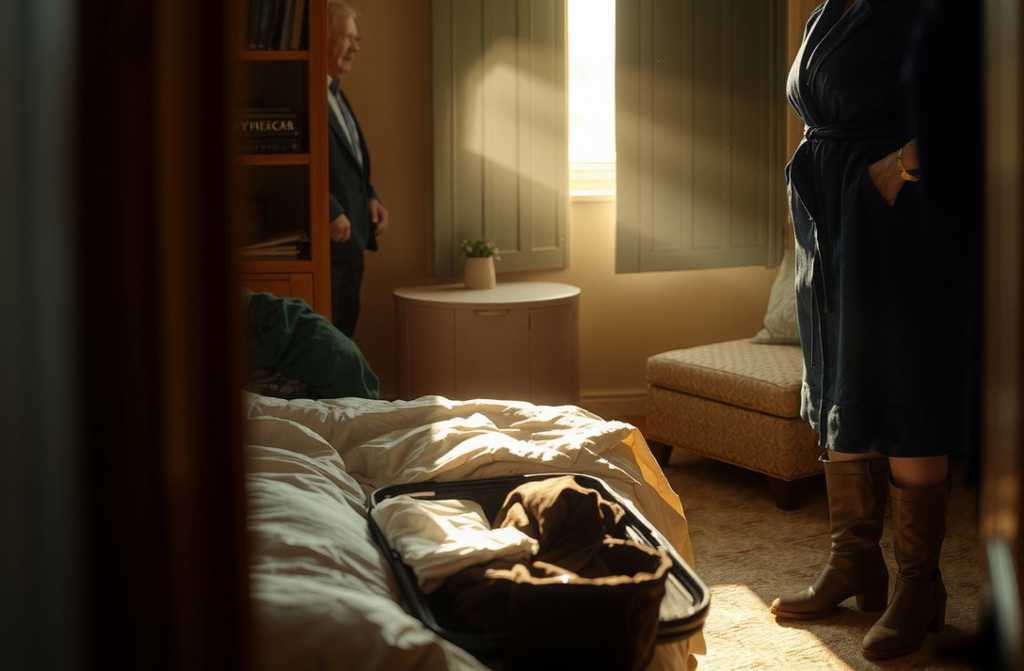
She goes to the bedroom, pulls out the small suitcase from under the bed, starts packing: clothes, documents, make-up, underwear, socks, a warm jumper just in case. The book from the nightstand. A photo of Mum and Dad in its wooden frame. Her favourite perfume. Phone charger.
David stands in the bedroom doorway, watching.
Helen, talk to me. You cant just go like this, in silence.
How should I go?
He says nothing.
She zips the suitcase. Walks past him into the hall, dressesthe blue mac, the comfy bootstakes her suitcase.
She returns for a second, removes her wedding ring, sets it by the paper tulip vase. Carefully, not thrown.
Back in the hall, she removes her house keys, places them on the table.
Helen David starts.
Goodbye, David. ReallyI wish you well.
And she leaves.
In the lift, she catches her reflectionblurred, barely recognisablein the metal door. The lift hums. Ground floor. Doors open.
Its brisk outside. She stands on the pavement with her suitcase, adjusts, then heads for the bus stop. Her mum lives in another part of town, forty minutes by bus.
No rows, no screaming. She doesnt know now, but later, months after, that is what will stay with her: how she left quietly. Not because she forgave or submitted, but because leaving quietly was her own act. Not a reaction to him, not a retort. Her decision. Her choice. Her dignity, kept for herself, not for him.
At the stop, a sharp wind tugs her mac collar.
A year passes.
The town feels untouched by time. Limes on the High Street, now thick with dark green leaves. Same shops, same chemist at the crossroads. The old lady still walking the terrier from time to time. The quiet life in small English towns moves slowly, and Helen has learnedthat isnt a bad thing.
She now rents a little flat on the other side of town. Two rooms, third floor, windows overlooking a gardenher landlady, who lives below, grows strawberries and phlox. Helen loves the phloxs summer scent, opens the window early just to breathe it in.
She has a small business now: shes opened a craft workshop. It didnt happen straight away. At firstjust confusion, long talks with her mum, phone calls with Sarah, solicitor meetings for the divorce. By autumn, when all of that faded and peace returned, she remembered the paper tulips.
Shed always been good with her handsknitting, sewing, clay, once even a basketweaving course. Just a hobby, shed thought. But why not take it seriously now?
She calls Sarah.
Sarah, I want to open a workshop.
A what?
A studiohandmade things. Home décor, ornaments. You know I can do lots. I could rent a tiny space, just me, nothing fancy.
Thatll cost, Helenrent, materials
I know. Ive got some savings. Id start smallone room, just me.
Are you serious?
Deadly.
Sarah pauses. Im not even surprised, honestly.
She finds a spot quicklya small room on the ground floor of an old building in the centre, the landlord happy with a low rent just to have it occupied. Helen paints the walls white, adds a few shelves, a big worktable, some decent lighting. She names it simply: Helens Workshop. No fuss.
At first, friends and local ladies drop by. They buy dried flower wreaths, wall plaques, handmade candles, crocheted plant-pot mats. Then someone posts on the neighbourhood Facebook group, then someone else. Helen sets up a page and posts photos. Orders dont flood inbut enough. Enough that the rent pays for itself. Enough that money worries dont keep her awake.
But thats not the best part.
The best bit is every morning, she wakes and knows: the day is hers, entirely hers. She decides what to make, when to open, whom to talk to, what to create. That simple, immense feelingher own morning, her own coffee, her own timetablecant be explained to anyone who hasnt felt it. Hers. Entirely hers.
David is seldom in her thoughts now. Sometimes, something will bring him backthe cut of a raincoat, the scent of his old tobacco. She notes it, lets it pass, goes about her day. She feels no anger, almost no bitterness. Just a steady, subdued sadness for what never happenedfor the child she never had, the years spent waiting.
But it is a gentle sadness she can live with.
One evening, late April, exactly a year on, she is heading home from the workshop. Its early evening; the air softens, smelling of poplar and remnants of rain. Shes carrying craft supplies and thinking about a new commissiona young woman has requested a mobile for a nursery, made of wood and wool pom-poms. Helen already pictures it: pale wood, pastel-coloured pompoms, gently swaying over a babys crib.
Outside a little café she always passes, a man standsmid-fifties in a good jacket, greying hair. He watches her.
Helen? Helen is that you?
She stops, peers closer. Richard?
Well, of all things! he laughs. Twenty years or so, isnt it?
Richard Bennetttheyd worked together, in that other life, when she did something quite different. Hed been young, lively, a bit of a joker. Then their paths split.
About twenty, she nods. How are you?
Not bad. Came back here three years agothe city wore me out. Have you been here long?
I never left.
Right, of course. Are you in a rush? He glances at the café. Fancy joining me for a coffee? Its quite good in here.
She hesitatesthe bag of supplies is heavy, an order waiting at home, the landlady probably watering her phlox below.
Why not? she says.
They sit by the window. She orders a cappuccino, he takes his black. Richard tells her about years elsewhere, a marriage and divorce, marrying again. Didnt stick! he laughs, but with no bitterness.
And you? Still married?
No. Split up.
How long ago?
A year.
Was it hard?
She holds her coffee; the cup is warm, patterned with leaves.
It was, she admits. But you know some things are hard to bear, but afterwards you realiseyoure glad it happened. Not that things were awful before. Just that its better now.
Have you changed?
She thinks.
Not really. I think Im just more myself, maybe.
Richard nods. Looks at her with kind curiosity.
What do you do now?
I run a studio. Home décor, ornamentsmy own place.
Really? Hes genuinely impressed. You were always making things. I rememberthere was always something handmade on your desk.
You remember?
I do. A tiny glass vase, coloured stones didnt you?
It was an old perfume bottle! she laughs. I painted it with window paints.
Thats it! Everyone used to ask where it was from.
They sit quietly, companionably.
Are you happy, Helen? Richard asks, straight to the point.
She glances out the window. Evening has almost fallenlamplight glows warmly onto the pavement. People walk past, shopping bags, holding childrens hands, just living.
You know, happy doesnt quite fit. She pauses. Happy is for small things, like a nice soup or comfy shoes. Ive got something else now, hard to explain
Try.
She considers.
Every morning, I go to the workshopsometimes with orders, sometimes just to make for myself. And when Im there, something takes shape in my handssomething from nothing. Mine. Not a gift, not on loan. No one can give it or take it from me. That feeling I dont have a name for it. Maybe thats what it means to live.
Richards smile lingers.
Yes, he says. I think youre right.
Outside, lamplight glows softly; old music plays quietly at the café counter. Her coffee is nearly finished, just cold dregs left.
Richard, Id best go. Early start tomorrow.
Of course. He stands as she does, hands her bag of materials. Im glad we bumped into each other.
Me too.
What do you call your place?
Helens Workshop.
Straightforward name! he chuckles.
Im straightforward, she grins.
Ooh, I wouldnt say that.
They part at the café door. She walks one way, he anothershe never looks back.
Its quiet at home. The landladys phlox in the flowerbed below has closed for the night, the scent gone, but she opens the window anyway. April air, damp, cool, fresh.
She puts the kettle on, unpacks her bag. Wool in pastel pink, beige, and mint, wooden rods of different lengths. She arranges them on the table, picturing the mobile, the pompoms gently bobbing in the breeze from an open window, above a little ones cot.
The kettle boils.
Helen makes tea, picks up her mug, stands at the window. She looks out onto the gardentrees in dark silhouette, a warm golden rectangle of light in the neighbours window where someone is still awake. A distant car rolls past.
She realises nowlife after divorce, the way hers turned out, isnt about collapse or failure. It just is. Fifty-two, a new beginning after fifty, a modest business, a small flat, the little town she knows and loves. Modest, perhaps. Not a lot, some might say.
But wholly, entirely hers.
Every morning cup of coffee hers. Each days plan, her own. Each mint-green pompom crafted by her hands.
Outside, the trees stirgently, softly, wind flicking through the new leaves. Far away, fresh rain begins to fall.
Helen cradles her warm mug, gazing into the night, already making a list for tomorrow: more beige wool is needed, theres a shortage and orders are coming in.
Shell buy more beige wool. And perhaps a new tea towel for the kitchenthe old one is quite faded.





