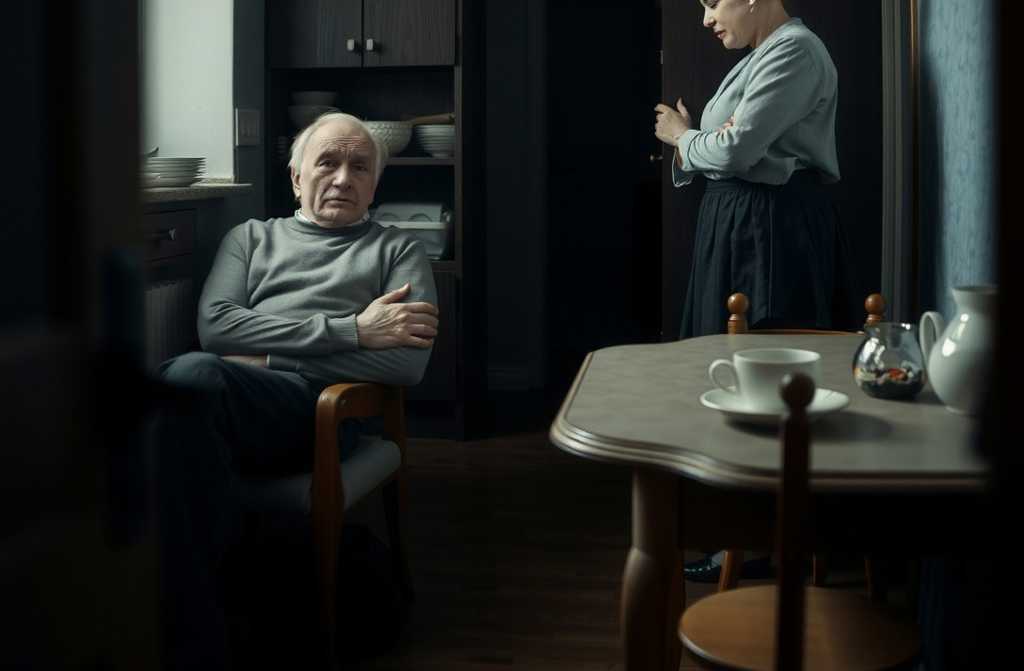
Do you know what I was thinking about today? asked Elaine as she stood in the kitchen, scrubbing a plate as though determined to scrub away the pattern entirely. That in truth, youre not really needed by anyone.
Richard, sitting with his newspaper at the kitchen table, slowly lowered it as her words hung in the air. There was no venom, just a matter-of-fact delivery, as though she were simply talking about the weather.
What? he managed to whisper.
Think about it. They replaced you at work in a week. Our daughter rings once a month, out of a sense of duty. Your friends live their own lives. And do you know whats most ironic? I dont really need you either. Its just habit.
He felt his world shift beneath him. The room blurred. Her words sliced through him like a blade, severing the final rope holding him above the abyss. Now, he was falling.
Elaine slotted the plate into the cupboard, left the kitchen, and her heels clicked away across the laminate towards the bedroom. The door closedquietly, no drama. Richard sat, the newspaper melting into gibberish in his hands. He stared at the window, where dusk gathered, seeing his reflection. A stranger with drooped shoulders and faded eyes gazed back at him. When did he become this man?
Sixty years old. Forty of those spent working at Regency Engineering, starting as a fitter, rising to senior foreman for Factory 3. Hed known every machine, every screw, every man by name. They respected him, turned to him for advice. In a crisis, it was, Ask Mr. Ward, hell sort it. He remembered that phraseit had been a source of pride and comfort through the years.
Three months ago, they gave him a certificate and waved him off into retirement. The director shook his hand, said the standard words of gratitude. Colleagues gave him a clock for the wall. How typical. Now, he had oceans of timebut nothing to fill it.
Richard drifted from the table, his legs feeling leaden. He entered the tiny room they whimsically dubbed the studyreally just a glorified storage cupboard with a desk. Here were his commendations, photos from work functions, folders of blueprints. He opened the drawer and took out his certificate: For Long and Faithful Service and Exceptional Professionalism. The paper rustled. Forty years. Did any of it mean anything now?
He remembered calling the factory five months ago, hoping to speak to the lads, maybe drop in. A young voice he didnt recognise answered.
Sorry, who is this?
Richard Ward. I used to be the lead foreman.
Oh, right. Sorry, but Mr. Bennett is busy right now. Hes the senior foreman nowadays.
Mr. Bennett. Thirty-five, a lad Richard had once taught to use a lathe. Now he had Richards old job. Just as Elaine had saidreplaced in a week. And she was right. Nobody rang, nobody sought his advice. The factory ticked on without him, as though hed never been there.
He replaced the certificate, hands shaking. Emotional abuse in the family, he thought absently. Funny, that phrase coming now. Hed heard it somewhere, on the telly, perhaps. Back then, it felt like something distant, nothing to do with him. Abuse was about violence. Yet all shed done was tell a truth. A brutal one.
He went back to the kitchen and poured himself a glass of water, his throat dry. Elaine didnt return from the bedroom. Silence pressed in upon the flat, heavy and expectant as a thunderstorm. He tried to recall the last time theyd spoken properlynot about bills or shopping, but really talked about life, dreams, feelings. He couldnt remember.
Once, thirty-five years ago, theyd met at a dance in the social club by the factory. Elaine was in accounts at a neighbouring firm, vibrant, laughing, dancing so the whole hall turned to stare. Richardquiet, serious engineerfell in love on the spot. He courted her, awkward but sincere, brought her flowers, took her to the cinema. She said yes after six months. A modest wedding, but a happy one.
Then Sophie was born. Elaine took maternity leave; Richard buried himself at the factory, saving for a proper home, for their daughters future. He worked long shifts, overtime. Elaine complained he wasn’t helping with the baby, but he was earning for them! Didnt that count as help? Wasnt that his way to care?
Sophie grew up, finished university, got married, moved to Bristol. Now she rarely called. Elaines rightonce a month, never more. Richard tried to recall their last conversation. Sophie asked after his health. He said he was fine. She replied theyd visit soon, work permitting. Five minutes, nothing more. Routine, duty.
Richard checked his phone. The last call from Sophie had been twenty-three days ago; hed rung her, she hadnt picked up, then later texted: Sorry Dad, manic at work, will call back soon. She hadnt.
Verbal aggressionthat was another phrase which surfaced in his mind. In recent years, whenever Elaine spoke, her voice was tinged with irritation. If he suggested going out, she waved him off: Why drag me out? Just stay in. If he forgot something at the shop: Of course, you cant do anything right. Hed grown used to it, wrote it off as temperament, the way all wives are, surely. Everyones wife has a go at them sometimes. Its normal.
But todays words were different. They werent a nag, but a statementcalm, cold, final as a diagnosis. No one needs you. Not even me. The words lodged inside him, sharp as splinters of glass.
Richard lay on the living room sofa. He wasnt tired, but he had no energy to move. He stared at the ceiling, tracing the cracks hed always meant to fix. Why bother now? Who cared?
He didnt sleep that night. Elaines snoring came through the door; he turned restlessly, replaying his whole life back and forthschool, where hed been an average lad; technical college, again unremarkable; the factory, where he thought he belonged; the family, which hed thought was his ultimate purpose. And now? It seemed the house he built was founded on sandall it took was one phrase, and it collapsed.
In the morning, Elaine got ready for work, drinking coffee by the window, scrolling her phone. Richard tried to force down toast.
Elaine, he ventured softly. What you said yesterday
She didnt look up.
What?
Did you really mean it?
Rich, Im exhausted. Dont start first thing.
But
I said what I said. No need to moan. She washed her cup and placed it in the sink. Were out of hamget some tonight, will you?
The door shut behind her. Richard was alone. The flat was deafeningly quiet. He wandered to the mirror in the hall, studying his reflection. Grey hair, deep lines, sagging mouth. When did he get this old? He remembered being full of energy and hope. Where was that man?
He put on his coat and walked outside. November bit cold, the wind slicing through him. He drifted past shops, bus stops, people hurrying aboutthey hardly noticed him. He was a shadow, passing through their lives, leaving no trace.
Hed read somewhere about the crisis men face after retirement. Hed always imagined it wouldnt happen to himhe was going to keep busy, do some odd jobs, maybe act as a consultant, go fishing with friends. But the consultancy never materialised, the factory didnt need his advice, and as for friends
There was Georgeold mate from college, close for forty years. Theyd worked together, fished together, got drunk at Christmases. When Richard retired, George promised theyd see more of each other. Yet calls were rare. Richard found himself ringing every week, but George was always occupied: Lets catch up soon, Rich. Eventually, Richard stopped calling. George never called back.
He reached the park and sat on a bench. Cold. The wind tugged at his jacket. Around him, old folks walked their dogs, mothers pushed pramslife carried on, and he watched through glass.
Post-retirement depressionthat must be it. Hed read of it, thought he was ready, that he would not just rot away at home. But each day now felt pointless, the future grey and empty.
In the evening, he remembered the ham and stopped at the shop. As he hovered at the counter, the shop assistant waited impatiently.
Have you decided, sir?
Sorry, he murmured, and pointed to something at random.
Elaine was home by then, bustling about with pans and pots. Richard left the shopping on the table.
Thanks, she muttered, not turning round.
They ate in silence. Richard tried to speak, but the words strangled in his throat, as Elaine ate quickly and left for TV in the front room. He stayed at the table, staring at his cold plate.
A week passed. Richard barely left the flat. He rose when Elaine left for work, drank coffee, sat in front of the telly, uncomprehending. Later, hed lie down again. The sense of uselessness felt suffocating. Again and again, his mind circled back to that phrase No one needs you. Not even me.
He tried to prove her wrong. He rang Sophie.
Hi Dad! Is something wrong? she asked, anxiety in her tone. He called so seldom.
No, I justwanted to see how you were.
Fine. Just the usual, work and home. Sorry, Im actually in a meeting. Can I call you back tonight?
Of course.
She didnt. Richard waited until midnight, then texted, Good night, love. She replied in the morning with a smiley face and a heart emoji. Nothing more.
Elaine had been right. Sophie called out of duty. She didnt truly care; he was now just another item on her to-do list. Call parentsdone.
Existential crisisanother article he’d skimmed online searching for meaning. Thats when people lose the point, the things that made life meaningful crumbling, nothing new to replace it. Seemed apt. For years, Richard saw himself as necessaryto his family, job, friends. But now he realised it was all an illusion.
He thought of his marriage to Elaine. Yes, theyd drifted. Hed come home exhausted; she met him in silence. He ate, she cleared up. He watched telly, she read. On Sundays, he’d go fishing or tinker in the shed; she met friends for a cuppa. They coexisted rather than lived together.
When had it started? Maybe when Sophie moved away, maybe earlier. Elaine once wanted a change of job, something more fulfillinghed talked her out of it, citing the importance of steady income. Shed been hurt but stayed silent. Or perhaps it was when she wanted to study for something new, but he said there was no money, and their family came first. She gave up, remained at her accounting job, though she could have done more.
Richard shut his eyes. Emotional abuse in marriage. Was he to blame? Had he ignored her dreams, her needs, focused only on work and money, under the guise of providing? Hed prided himself on being dutiful. But what if hed just been selfish, hiding behind the excuse of care?
Elaine returned late. Richard sat in darkness in the kitchen.
Why don’t you turn the light on? she said, flicking the switch. Sitting there like a ghost.
Elaine, we need to talk.
About what?
About us. About what you said.
She sighed and sat opposite him.
Look, Rich. I didn’t mean to hurt you. I’m just exhausted. Its not all easy for me either I hold the house and work together on my own, you know.
But you said you don’t need me.
What do you want to hear? That I love you? She looked at him, not unkindly, but with no warmth. Weve been together thirty-five years. That’s not love now, its habit. Im used to it. So are you. Why pretend otherwise?
But it used to be different.
We were different people then. She stood. I want to sleep. Dont drag this up again, please. Were not unique; other couples muddle through too.
She left for the bedroom. Richard sat at the table. Other couples muddle through too. Is that all? Is that the legacy of their marriage?
The next evening, he went for a walk. He ended up in the old neighbourhood, where they’d rented their first flat. The building still stood, battered, grey. Richard remembered them moving in young, full of hopes. Elaine laughed, embracing him, certain theyd manage anything. He believed it too.
Where had it soured? When had love become resentment? Closeness decayed into distance. Maybe love has a shelf-life, and theirs had run out.
He wandered the streets; the city felt foreignnew shops, new faces, new cars. The world moved on, and he’d become stuck in the past, clinging to fading memories and old certificates and pictures of a man who mattered. But it was all meaningless now.
How to get over feeling betrayed by your wife. Late at night, he typed the question into Google. Advice varied divorce, therapy, forgiveness, self-discovery. But was this betrayal? Elaine hadnt cheated, merely told an ugly truth. Can you call that treachery?
Another month slipped away. Richard stopped caring for himself shaving once a week, doing laundry only when nothing clean was left. He barely ate, hardly slept. Elaine ignored him completely. They had become flatmates, nothing more.
One day, searching for something, he unearthed an album of old photos. Their wedding. Elaine in her white dress, Richard in a rented suit. They grinned, held each other, radiant. He traced a finger over the photo. These people were strangers now. Where had they gone?
Sophies birthElaine cuddling her, Richard standing awkwardly, bouquet in hand, beaming with pride. Those were the days hed felt truly needed. His daughters dependence was unconditional, her love guaranteed.
But children grow up. They dont need you. Thats normal; intellectually, Richard understood. But his heart still wanted Sophie to ring more often, visit, show she cared. But she had her own life now, and he couldnt ask for more.
Factory photos. Him in overalls and hard hat by a great machine. Young, strong, sure of himself. That man had a place in the world. The one leafing through the album now had nothing.
How to rebuild self-worth. Another online search. The tips were all the same: pick up a hobby, get active, socialise, set goals. Richard gave it a go. He joined the library, borrowed a novel. Didnt get past the first page; words blurred, meaning vanished. Tried swimmingwent once, watched the other men glide effortlessly while he floundered, feeling pathetic. He didn’t go back.
Goalswhat goals exist for a sixty-year-old retiree who isnt wanted? Survive the day? Not be a burden? The idea made him laugh bitterly. It all seemed pointless.
One evening, the doorbell rang. It was Bill, the pensioner from flat three.
Evening, Rich! I borrowed your drill a month ago. Thought I ought to return itthanks a lot.
Oh, yes, of course. Richard had forgotten.
You alright? You look a bit peaky, mate.
Im fine.
Well, let us know if you ever need anything. Were neighbours, after all. He hesitated. You know, I struggled after retirement too. The first year was rough. Grandkids helped, and I picked up chess at the club. It helps to keep busy, you know?
Thanks, Bill.
Bill gave him a friendly nod and left.
GrandkidsRichard had none. Sophie insisted she wasnt ready: focusing on her career, paying off the mortgage, too uncertain. Maybe she never would be. A chess clubhed never cared for chess. Hobbies might help, but how to muster the will when you felt so hollow inside?
Another fortnight passed. The weather grew even more dismal, rain pelting down most days. Richard sat inside, watching water trail down the glass like tears. He never criedhe felt too empty for tears.
Elaine caught a cold. Fever and the sniffles. Richard tended to her: brought her tea and pills. She accepted all of it silently, as if it was no more than his due.
Why are you looking at me like that? she asked, as he brought her some soup one day.
Im just trying to help.
You want me to apologise for what I said? I wont. Because its true. I know youre hurt, but ask yourself: were you any different? Did you ever take an interest in memy feelings, my dreams? Youd get in from work, eat, sit in front of the telly, and bed. Thirty years, the same. I said I wanted to travelyou said, No money for that. I wanted to learn something newyou told me, What for? Youre working as it is. I said I felt suffocated in this marriageyou didnt hear. So I stopped talking, stopped hoping. I resigned myself. And now weve got what weve got.
Richard said nothing. His voice failed him.
Im not cruel, Rich. Im just too tired to pretend its all alright, Elaine finished her soup and put the bowl aside. Thanks for it.
He took the bowl out. His chest seemed to be crushed by invisible hands. She was rightall of it. Hed stopped listening. Hed lived in a world of work and money, believing thatd be enough. It wasnt.
That night, he couldnt sleep, rolling about, catatonic, staring up at the cracked ceiling. Could such words be forgiven? Her harsh truthfulness, her icy manner. Her indifference. But if he himself had dug this gulf between them, what was left to forgive? Himself?
He rose before dawn. Elaine still slept. He dressed and stepped outside, wandering aimlessly, eventually returning to the bench in the chilly park where hed sat after those painful words. He sat in the cold and drizzle, not feeling it.
Rich? a familiar voice called.
Richard looked up. It was George. Older now, hair white but still robust. In his hand, a lead attached to a little terrier who bounced circles around his legs.
George? Richard stared in disbelief.
In the flesh, George said, dropping onto the bench beside him. Youll freeze, mate. What are you doing out here?
Just walking.
George eyed him carefully. You dont look yourself. Bit peaky, truth be told. Whats going on?
Richard almost gave the standard brush-offNothing, all finebut the words stuck. George’s worried face, after all these years, was too much. Richard felt something inside him snapthe wall of silence he had built against pain finally cracked.
I he faltered. How to voice what remained unspoken? How to confess his utter uselessness?
Tell you what, George said, tying his dog to the bench. Lets go for a cuppa, or maybe something stronger. Youre blue with cold.
No, Im alright.
Rich, youre scaring me now. Youre not yourself. Whats happened?
The silence stretched. The dog whined softly, tugging at its lead. Somewhere in the distance, children laughed.
It turns out Richard exhaled, Im not needed by anyone.
The words tumbled out quietly, flat and broken. As he uttered them, he felt something inside loosenthe pain, finally surfacing, condensed into that short, simple verdict.
George sat wordlessly, just listening. Richard continued:
Elaine said it outright. That Im not neededthe jobs gone, Sophie only calls out of duty, not even her Shes right, George. I checked. Sophie calls out of responsibility. The factory forgot me in a week. Even youwe havent seen each other in ages, have we?
Rich
No, let me finish. My whole life I thought Id done what was right. Worked like mad, provided for the family. I thought that would be enough. But while I slaved away, life carried on without me. Elaine suffocated in our marriageI never noticed. Sophie grew up, and now I dont even know who she is. Younone of you called, and I never noticed when the distance started. Now I sit here, and I dont know why I bother getting out of bed.
George put a hand on his shoulder.
Dyou know why I didn’t call? Ashamed. Retirement hit me hardhonestly, six months of feeling useless. Got drunk, argued with the wife. Figured that was thatGeorge was done, nobody wanted me. Dyou know what helped? This silly mutt he gestured to the terrier. Wife brought her home and said, Here, thisll give you something to do. I cursed, didnt want her. But having to walk her, feed her, play, she depended on me. Made all the difference.
So you felt just as lost?
Rich, it happens to all of us after the factory. It wasnt just a jobit was our life. Then, one day, its over, and its like something inside you dies. People dont talk about it, but its true.
Richard nodded. For the first time in months, someone understood. No trivialising, no Buck up, man, no brushing aside. Just understanding.
And your wife? Richard asked.
Were working on it, George smiled. I even went to see a counsellor. Go on, laugh.
Im not laughing.
She explained wives arent made of stone. They get tired too. They wanted us as husbands, not just as breadwinners. We thought providing was everything, but what they needed was our presencetruly, not just in body.
Richard was silent. The simple truth stung as revelation.
So what now? he managed.
I dont know, Rich. Each of us finds our own way. Maybe have a real talk with Elaine. No blame or justificationjust honesty, feeling. Maybe shes already made up her mind, and if so well, life goes on, even without her. Not the end of the world.
But Im sixty, George.
So? My granddad married again at seventy-fiveten happy years with his new wife. Tell you what: come here tomorrow, ten oclock. Ill introduce you to some of the chaps from the club. We walk the dogs, chata good bunch. Might help.
Ill think about it.
Dont think, just turn up. George gave his shoulder a squeeze. You matter. To me, for one. Ive missed you, truly. I was an idiot not to call, but Ill make up for it. Ring me, any time.
He strode off, the terrier yapping happily ahead. Richard lingered on the bench. The cold seeped through his bones, but still he sat, watching people pass by.
For the first time in months, his thoughts werent about how ruined everything was, but about the faintest possibility of something more. Maybe the end marked by Elaines words was actually the beginning of something entirely differentraw and scary, but new.
He had no idea what tomorrow heldwhether he would talk to Elaine, whether forgiveness, for either of them, was possible; whether they would remain together. But for the first time, he dared consider there might be another wayeven without her, without the factory, without the shape of the life hed left behind.
It wasnt hopenot yet. Just a tiny fracture in the wall of despair where a sliver of light crept in. He didnt know if it led anywhere. But for the first time in a long while, he wanted to find out.
Richard stood, his legs stiff, but he began to walk, faltering and slow, yes, but moving nonetheless. Home, where Elaine waited; where he had to chooseto stay in this silent hell or try to change, or even to leave. He didnt know.
But now, at least, he knew he had a choice. And that was something.





