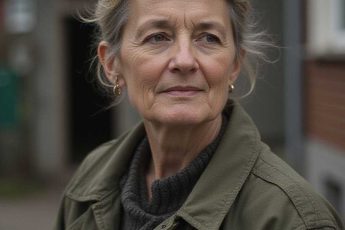
Flee to the Ends of the Earth
Evelyn! Evelyn, are you even listening?
The voice drifted in from the kitchen, piercing Evelyn Margaret Whitmores thick morning slumber like a sharp pin through cloth. She opened her eyes and stared up at the ceiling. The crack above the far corner was slightly longer than before. Shed noticed that crack for at least twenty years. Once, shed thought: I ought to fix it. She never did.
Evelyn! Am I supposed to make my own tea, or what?
Fifty-three years. It mattereda number that needed to be kept at the forefront in the mornings, for otherwise how could one possibly understand how so much had come to pass or come to nothing? Fifty-three years, with thirty of them filled, first thing in the morning, by that same voice from the kitchen. It hadnt always been this hardat the very beginning, shed get up lightly, with a smile, taking comfort in the fact that someone was waiting for their cup of tea, that someone needed her.
Now she simply lay there another moment, studying the crack.
Coming, she said to the ceiling.
The linoleum beneath her feet was cold. October, and the radiators had yet to fully come to life, so her toes met that well-known morning chill: first the right foot, then the left, then the short shuffle to her slippers. They always stood beside the bed, just where she placed them, methodically, every night.
Philip sat in the kitchen, wearing nothing but his old vest, scrolling through something on his phone. Large, thickset, with thinning hair brushed determinedly over his bald spot. His mug, empty, waited expectantly before him.
The Summertons are coming over this evening, he said, eyes never leaving the screen. At six. Iron the pale blue shirtthe one with the extra buttons. And make a proper meal; dont just throw something together. Julia Summerton always notices whats being served.
Evelyn took the kettle from the rack, spooned loose leaf tea in, and set it to boil.
Did you hear me?
I heard, Philip.
Youre always silent. I never know if it goes in one ear and out the other.
The water began to tremble. She watched the ring of steam rising and remembered the dream from last night: the sea. Not any particular place, just the seawide, green-grey, with white foam streaking the tips of waves. And the smell, too. That childhood scent from her one trip with Aunt Edith to Lyme Regis, a little town by the coast. Damp, iodine, brine, and something elsesomething nameless but clean, opening the lungs as if youd never really breathed until that moment.
Dont let the tea stew in there, Evelyn.
She poured out the tea, set Philips mug before him.
Ill iron your shirt after breakfast.
No, now, while I have a shave. So its ready.
He got to his feet, mug in hand, and disappeared into the bathroom. In a minute, the familiar buzzing of his electric razor filled the flata relentless sound, lasting exactly seven minutes. Shed timed it once, out of boredom.
Evelyn stood by the hob.
On the wall above the fridge hung a page-a-day calendar. October eighteenth. She stared at the date, unable to recall a single October eighteenth from recent years. They all bled together: tea, shirts, dinner, guests, cleaning. Tea, shirts, dinner, guests, cleaning. Somewhere at the bottom of that endless circle, like a coin at the base of a well, lay something of her ownsomething she hadnt fished out in ages.
In her youth, shed painted. Shed been good, people said. Her instructor at the local college, the stern and terse Mr. Anthony Graham, once lingered over her watercolour before declaring, You have an eye for colour, Whitmore. Thats rare. She nearly went on to art school. Nearly. Then she met Philip, and suddenly there was always something else. No time for classes. Then Abigail was born, then the move, then renovations, then more renovations. The paints got packed away to the loft, the brushes dried up and were thrown, and eventually, the loft became a store for things that never got used but never got tossed.
The razors drone continued.
Suddenly, Evelyn noticed a weariness so sharp, so physical, that it surprised her. Not the tiredness following a long day, but a deeper exhaustionone living under her ribs, never banished by sleep, holidays, or even laughter with friends. Mrs Barrow from upstairs had told her once, Evelyn, you never look after yourself, do you? But what did that even mean? Evelyn had just laughed and said there was never time.
No time. Thirty years of no time.
She fetched the iron, found the blue shirt in the wardrobe, on the second shelfPhilip always kept his good clothes there. She spread it on the board, plugged in the iron, and waited for it to heat up. Outside, the October morning light was dull and grey. Down in the courtyard, the caretaker swept the tarmac, his brooms sound merging with the whirr of Philips razor and that silent hum inside Evelyn, the one shed long since learned to ignore.
Aunt Edith had died three years back, leaving her that tiny cottage at the edge of Lyme Regisa small wooden place with a porch that looked straight out to sea. Philip had scoffed, Rotten old thing. Would cost more to fix than its worth. Might as well sell. But there were no buyers, and Evelyn could never quite bring herself to put it on the market anyway. Something kept her bound. Maybe it was the smell from the dreamthe sea. Or Ediths voice, There, Evelyn, is a kind of stillness thatll scare you at first. But then you realise, all your life thats what you were missing.
The iron was ready. Evelyn swept it down a sleeve, then paused.
The razor still buzzed. Seven minutes. She had seven minutes.
The idea came not as a decision, but as something fully formed, already existing deep within, surfacing like a cork tossed in watersuddenly up, demanding air. She set down the iron, pauseda second, tuning in to what had just floated to the surface.
Then she walked to the bedroom.
Her old overnight bag, the one for visits to her mum in Shrewsbury, was hidden at the back of the cupboard. She pulled it outquickly, quietly. A change of underclothes. Her warm jumper. Important documents from the top drawer: passport, deed to the Lyme Regis cottage (which shed long ago tucked among her papers, never mentioning it to Philip). Her bank cardthe one with her own money, squirrelled away for years from the shopping money Philip handed over without keeping track. Not much, but it would do.
Her hands didnt shake. Odd. She’d half-expected them to.
She grabbed her phone, summoned a taxi to the station in the app, and pressed confirm. Itd arrive in eight minutes. She dressedquickly, without noise. Coat. Boots. The navy scarf shed knitted herself, striped through with grey. The bag slung over her shoulder.
In the kitchen, she stopped for a moment. Looked at the shirt on the board. The cooling iron beside it. Philips empty tea mug and one unwashed plate from last night.
She didnt leave a note. She considered it, then didnt.
The front door clicked shut behind her. The lift carried her to the ground floor. The taxia pale Ford, chequered sign on the sidewaited outside. Its driver, a quiet man in his forties, didnt ask questions. Just drove.
The view from the window was all half-asleep city: amber lights at crossings, shops opening, a woman in red hauling a market trolley. Evelyn watched the world shed passed through thousands of times, these streets, these signalsand found them at once both foreign and achingly familiar.
At the airport, she bought a ticket to Exeterclosest for the Lyme coast. It was expensive. She paid without blinking.
As the plane rose, the city shrank and disappeared into mist. Evelyn at her tiny window imagined she ought to visit the loo or should have packed sandwiches or at least, she thought, ironed that shirt.
Then her phone vibrated.
Philip. Two calls in a minute.
She answered.
Where are you? He sounded like he always did when things slid awrysharp, aggrieved, seething like an engine on the verge of overheating. The shirts not ironed. Where the devil are you?
Im on a plane, Philip.
Silence. Not long, but dense.
What do you mean, on a plane? Where? You do realise the Summertons are coming early nowJulia just texted. Wheres dinner?
I havent made dinner. Ive left.
Evelyn. His voice turned cold, with the thin, dangerous edge shed learned to recognise. This isnt funny. Tell me where youre going and when youll be back.
Evelyn looked through the oval window at the creamy clouds sailing beneath the wing. Shed never flown above clouds beforenever realised they were so white.
Philip, Ive gone. Im not coming back. Live your own life. I want to finally live mine.
The silence stretched. Then he started talkingshe heard it all: the anger, the confusion, and, perhaps even unbeknownst to him, a wobble of childhood fear. Ranting about the flat, about money, her nerves, his poor health, and Abigail and how shed ruined everything.
She listened calmly. Strangeno fury, no tears. Just a slow, deep certainty that his words could no longer reach her, raining useless against a closed window.
Philip, she said as he drew in breath for another tirade. I hear you. Forgive me. But I wont be coming back.
She hung up. Fished out her SIM, that tiny square. Held it a moment, slipped it between the seats.
The man beside herelderly, with a newspaperglanced, then went back to reading.
Evelyn leaned back and closed her eyes. Something in her chest softened, as if a tension long held finally unwound.
***
Lyme Regis welcomed her with rain. That fine Dorset drizzle which clings in the air instead of falling, dampens scarves and smells of seaweed and salt. She took a rattling little bus from Exeter, windows steamed, then walked the cobbled lane with her bag slung over her shoulder.
Aunt Ediths cottage was tucked at the very endsmall, timbered, its green paint faded to a pale, weathered grey. The gate groaned; the porch sagged on one side. The key resisted a little in the lock, but Evelyn coaxed it through.
Inside, the air held the scent of vacancy: damp, old wood, a sweet musty note like an opened trunk of old letters. She stepped into the sitting room. There was a table, two chairs, a brass bed, and a striped mattress. Linen curtains Aunt Edith had left behind hung at the window. Through the trees and rain was something vast and silverthe sea, just beyond the pines and the road.
She stood watching for a long time.
Then she opened the sash window. Salty damp filled the room with the presence of an old friend. Breathing it in, Evelyn felt a quiver in her throatnot tears, exactly, but something like the moment when, after trudging for miles, you sit down and realise youve arrived.
She wept after all. Standing by the window, tears sliding silently down her cheeks, not out of grief, but for something she could not, and need not name.
Outside, boots thumped on the porch. Then a knock.
Evelyn wiped her face and went to the door.
A man in his sixties, sturdy, wearing wellies and an oilskin, stood under the eaves. In his hands, something wrapped in newspaper.
Afternoon, he said. You must be Ediths niece? Im Richard Chapman, next door. Fed your aunts cat after she passed. Dont worry, shes with a good home now. Brought you some fishcaught this morning, local.
Thank you, Evelyn managed. Her voice was rough.
Edith always said shed come back one day. People do, in these parts. You staying for good, or just seeing the place?
She paused.
For good.
Richard nodded, as if this was nothing remarkable. Well, the stove’s old fashioned, but good. Woods in the shedI stacked it in the summer. Shout if you need a hand.
She knew how to light a wood-burner, or nearlyshed watched her grandmother at it years ago. It took her half an hour, but she coaxed a steady, orange warmth from the ancient stove. The heat was realalive, prickling her cheeks, inviting her nearer.
That night, under a thin blanket on the gridwork bed, Evelyn listened to the sea. It spoke with a deep, even breath just beyond the pines and road. Swell, pause, withdraw. Swell, pause, withdraw.
She didnt think of Philip, nor Abigail, nor the flat, nor the neighbours, nor what Julia Summerton would say. She just listened to the sea and considered the day ahead: airing out blankets, mending the porch, and that, yes, Richard Chapman seemed a good sort.
***
Days in Lyme took on their own rhythmnot slow, not rushed, something entirely their own, beyond alarms and agendas. Evelyn would rise when the light crept in, make tea on the camping hob Richard had lent her while she waited for the mains. Shed sit by the window, tea steaming, watching the changing light on the Channel.
The first week she scrubbed, aired, stripped wallpaper to discover dark but sturdy boards beneath. She bought plain fare at the Thursday marketpotatoes, onions, oats, tinned pilchards, and a loaf with caraway from the little baker on High Street, so fragrant she found herself lingering outside, just to breathe.
Richard popped by; he fixed the porch, replaced a warped board, straightened the gate. He talked little, but concisely, which Evelyn appreciated after years with someone whod never mastered the art of brevity.
One day, he left a bundle on her table: a canvas and some tubes of paint.
Edith said you were a painter, once. These were lying about. Take them.
Evelyn stared at the blank rectangle. Paints, brushessoft, slightly ragged, but alive. The smell of turpentineso long forgotten it knocked her breathless, carrying her straight back to college and those airy studios with sun-lit windows.
I havent painted in decades, she said.
So pick it up again, he replied. And left.
For two days, she circled the canvas. Rearranged nearby things, pretending not to notice. On the third day, she squeezed a little paint onto a saucer, picked up a brush, just to see how it feltfine, soft, slightly yielding.
She started with a quick study. Just the sea, strip of water through the pines, grey sky. It came out wrong: the sky all off, the sea too flat. But there was something there, something that held her at the table till dusk, hunger forgotten, legs gone numb.
Soon she was walking the beach with a sketchpaddrawing pebbles, gulls, a battered fishing boat turned upside-down. Her hands remembered on their own, as feet remember well-worn paths at first hesitant, then surer, easier.
Once, Richard glimpsed her sketchbook.
Not bad, he offered. You have a sense of shape. Thats rare.
You know about these things, do you?
A little. I paint now and thenjust for myself.
May I see?
One day, he smiled. You show me yours first, though.
Conversations followedabout painting, books, and then all sorts, unhurried and free of obligation. She couldnt remember the last time she spoke to anyone like that. With Philip, talk had long since flattened to exchanges of necessitiesgroceries, repairs, logistics. With Abigail, the rare phone call was always more report than talk.
One bright morning, Evelyn fetched the largest canvas and began to paint for real. She didnt think, merely mixed blues and greens and greys, overlaying strip with strip, often abandoning the brushes to work with her fingers, rubbing the colour straight into the texture. Cold and alive. Rough at the edges, smooth at the centre. Finally, near the horizona hint of gold, as if by accident.
She lost track of time until rain tapping the window startled her. It was three in the afternoon; shed started at nine.
She studied the finished painting: the sea, not as a photograph or a postcard, but as something breathing; sky shaded with the colour she felt, not saw. At the horizon, a band of warm yellow, glowing from within.
Richard came in with two mugs of tea just then.
He set them on the windowsill, spent a long time looking at the painting.
You see? he said at last, softly.
She took up the mugstrong, sweet tea, not her usual, but just right.
***
Abigail arrived three weeks later. Evelyn spotted her from the window, walking the cobbles, city shoes ill-equipped for this terrain, tall and dark-haired, with Philips upright stride and that same determined glint.
Evelyn stepped onto the porch.
Hello, Abby.
Mum. The voice hummed like an electric line before a storm. Do you have any idea what youve done?
Come in.
Mum, Dad cant cope. His blood pressure shot through the roof. I cant keep rushing downwork, Tom, the twins, you know that.
I know. Come in, have some tea at least.
Im not here for tea. I want answers! Abigail pressed into the cottage, glancing at log walls, the cast-iron stove, the plain table. Are you really going to live in this?
Yes.
Mum. She dropped her bag. Her voice crackedless anger, more lost and childlike. Mum, are you ill? Just tell me and let me help.
Im not ill. Im fine. Truly.
Fine? You abandoned your husband, your home, flew off God knows where, ditched your phone. Dad rings me every day, half-crazed…
Abby.
He says hell file for divorce, youve got no right to the flat. If he sellsMum, I dont know the legal ins and outs, but if I lose my mind over this…
Abby. Evelyns voice was calm, but something halted her daughter. Let him sell it. I don’t need the flat.
Abigail stared. A long pause.
What is this, playing at independence, Mum? At your age? What will people say, what will the neighbours think?
Evelyn didnt answer. She took her daughter by the hand, led her through the narrow rooms to the window, where her new painting stood on an easel.
Both looked.
The light, side-on and dull, made the painting alive in a new way: heavy, Novemberish sea; sky nearly white with just a streak of glowing amber at the far edge.
Abigail said nothing for a long time. Evelyn didnt look at her, only at the painting.
Look, Abby. Her voice was low, even. This is me. Not your cook or your housemaid. Me. Please, take the flatI want nothing.
Abigail stayed silent, studying the painting. Gradually, her face shifted, like cloud moving across the sunsubtly, edge first, then centre.
You painted this? she murmured.
I did.
I dont remember you ever painting, not while I was…
I didbefore you were born. I stopped, after.
Abigail stepped back, then again. She was looking now as if realizing shed missed something extraordinary.
Its beautiful, she said, quietly, unwillingly.
I know.
A gull cried beyond the window. The breeze shifted the curtain.
I have to go. Ive a coach at five.
Ill walk you there.
They left, side by side. At the stop, Abigail turned, her hard look gone, replaced by something Evelyn had rarely seen in her daughter.
Mum, she said, Dadll never get it, maybe. But Ill… try to explain.
Dont. Hes a grown man.
He cant cope on his own.
Then hell learn, said Evelyn. Not unkindly, simply.
Abigail hesitated, then awkwardly, suddenly, hugged her. Evelyn hugged back, recognising the familiar scent of her daughters haironly the perfume changed, not the person.
Forgive us, said Abigail softly. She didnt say who; Evelyn understood. For everything, I suppose.
Evelyn stroked her back.
Go, or youll miss the coach.
Abigail climbed aboard and vanished into the shadowy bus, gone down the lane. Evelyn watched the taillights disappear into the drizzle, the sea air biting and realgood, living cold.
***
November was fierce and splendid. No tourists. The little town shrank into itself, private and secret. Fishermen left at dawn, returned at noon. The bakery scented the air with cinnamon and bread. Yellow light pooled in windows at night, a sight Evelyn hadnt seen for yearsother peoples living windows, peaceful lives behind glass.
She painted daily. There were five canvases now, each better than the last. Richard stopped in, spoke little but well. Once, he brought her an old colour theory book, full of pencil notes. In the evenings by the stove she studied it, making new ones of her own. It was strange and oddly thrilling to learn in her fifties, not because she had to, but because she wanted.
Shed bought a lump of clay at the market, just to try. She worked it with her handscold, stubby, slow to yieldtill finally it softened, became pliable. A shape emerged: a little boat, crooked and heavy, like the old one beached on the sand.
She laughed at her crooked boatset it by the window, looked at it sometimes, proud of its imperfection.
When Richard next called and spied it, he was silent for a while.
Its better than you think.
Its a lopsided boat.
Its an honest boat, he replied. Crookedness isnt failure.
Getting philosophical?
Just a bit. Got more clay?
It turned out, years back at college, Richard had sculpted too. They sat together, confiding in the silence. It wasnt awkwardthat pause between people who are simply glad to share a warm, wordless space.
Evelyn reflected that all her life, shed never really known what it was to have such quietperhaps shed forgotten its value, or never noticed it was what shed longed for.
The solicitors letter arrived in early December. Philip was filing for divorce. Evelyn tucked the paper in a drawer and called a local lawyer. Youre entitled to half, the woman explained. Evelyn replied, No, thank you. Let him have it. I dont want a scene.
Pause. Youre sure?
Absolutely.
It was odd. Everyoneeven Richardurged her to reconsider. But she had. The flat belonged to another life. To keep it would be to stay partly in that life. She wanted none of it.
Abigail rang after Christmas. She sounded quiet, not confrontational.
How are you, Mum? Are you warm enough? The house alright? Dads a little calmer. I spoke to him. Hes angry but different, somehow.
Abby, said Evelyn when she asked, Could you paint me another? Something of the seadoesnt have to be exactly the same. I want to hang it in our hall.
Evelyn smiled.
I will.
Really?
Really. Come spring, you can take it.
A silence, then a small voice:
Im glad youre there. I couldnt admit it, but I am.
Evelyn paused. Then, simply:
Me too.
***
Winter crept in softly. One day, snow lay on the pines and sills, and the sea was a blue shed never knowna colour with no rightful name, between indigo and steel, lit from within.
She painted ither best. She knew that, though said nothing.
Richard studied it. Said nothing for a while. Then:
You ought to show this.
Do me a favour.
Im serious. Theres a gallery in Exetersmall but reputable. I know the fellow who runs it. He takes local artists.
Im hardly an artist.
Evelyn, youve made six paintings in two months. Two are good. One is outstanding. Youre a local artist now. Own it.
It took time, but she agreed. She travelled to Exeter with three canvases. The gallerys ownera small, elderly man with a shrewd lookstudied the work a long while. He took all three.
On the coach back, Evelyn thought, This doesnt feel like triumph. No magazine will write about it, no heart-warming video produced. Just a fifty-three-year-old taking three pictures to a small West Country gallery.
And yet, at home, with the smell of timber, the briny air, her sketches and that wonky boat on the sill, she felt a peace so wholesome, so certain. A peace from knowing she was precisely where she belonged.
***
February blew in wild, with gales. The Channel battered the shore for days, shaking the cottage at nightthe pounding like some enormous heart. Evelyn wasnt afraid; shed grown used to it.
She was used to much: no one shouting from a kitchen, the pace of her days chosen by herself, getting up, working, eating as she liked. Quiet, welcomingnot the silence of defeat, but of contentment, unlike the old flats silence, which had always hummed with unspoken things.
She grew used to Richards company, too. He called daily, sometimes for minutes, sometimes for long evenings. They spoke of painting, the sea, books, childhood. He talked of his late wife, five years departed. She spoke of Aunt Edith. Sometimes they simply sat on the porch when it wasnt raining, sipping tea, watching the horizon. That was enoughmore than enough.
She painted his portrait, unasked. The likeness was imprecisesofter than realitybut his look, that gentle, observant humour, was true.
She hid it away for now. Not with shame, but because some things need to rest a while.
The divorce came through in March. Abigail rang.
Hes signed. The flats his. Still sure you dont…
Quite sure, Abby.
You dont regret it?
Through the window, dusk blushed over the pines, and a bright pale band stretched across the Channelalmost like amber.
Not at all, she said. And meant it.
***
March waned. The snow melted, the Channel grew bluer, and the air changedacquiring that chalky green note that means spring. Gulls returned, squawking raucous joy over the shore.
Evelyn sat on the porch, a mug of hot lemon tea before her, sketchbook in her lap unopened. Beyond the rail, the pines, the road, the coast, and then the horizon where sunset worked its slow magic, gold bleeding through blue.
A chair scraped back. Richard sat beside her, picking up the sketchbook shed passed him the other day.
This one, he said, tapping a page. See how the horizon tilts to the left? Did you notice?
I didnt. I was looking more at the water.
Is it bad?
No. Its yours. Some do it deliberately. Yours just does it of its own accord.
She took the sketchbook, saw the little slantsomething she rather liked, without knowing why.
Sunset burned. The sky pinked, then orange, then that rare, living yellow shed been huntingamber through a candle flame.
Richard put aside his pencil.
Evelyn, he said gently. Do you regret it? The old life, the flat, any of it?
She watched the dying light.
The rush of the tide answered for her, low and deep. Far off, a gull cried. Somewhere, a dog barked and fell silent.
Look, she said, nodding seaward. See that stripe on the horizon? I’ve searched all my life for that paint.
Richard studied the water. He was quiet a while, then said seriously, Theres a shade for that. Light ochre with a touch of white. But yours could use a hint of cadmium.
Cadmium, she echoed, thoughtful.
Just a drop. Too much and youll lose the heat.
She noted itlight ochre, white, drop of cadmiumin the corner of her sketchbook. Looked at the sunset again. Then at her little note. Then, the faintest smile.
The sea was growing dark. That stubborn, glowing line held on over the horizon. Evelyn wrapped her hands around her mug, feeling its warmth, and knew that come morning shed start a new, big canvasthe one shed been saving. Shed paint it now, just as it was, while it was vivid in her mind.
And the right shadeshed find that too.