Unforgiven Silence
Theyve called from that care home of yours. They say shes barely eating.
Victor, what do you want me to do? I cant get there every other day, I have work, and I have the kids.
Shes your mother.
Shes yours too. Have you even visited once in the last year?
Victor fell silent. Galina could hear his breathing growing heavier on the line, and she knew hed come up with something she couldnt argue against.
I went in March. And I send money every month.
Money. Marvellous.
Come on, Gail. Just go and see her, would you? Talk to the staff. Find out whats going on. Youre closer.
Gail closed her eyes. Closer. She lived forty minutes from The Laurelsthat elegiac care home with a beautiful name and pale yellow curtains down its corridors. Victor lived in another city; that much was true. But distance was never simply about mileage, and this she knew in her bones.
All right, she said at last. Ill go this Saturday.
She hung up and sat at her kitchen table for a long time, staring at the fridge with her son Michaels baby photo on it. Michael was twenty-three now, but the photo was from when he was five, kept there because his laughter in that imagethe way his head is tossed back in pure gleesounded in her memory.
Her mother hadnt laughed like that, with her head thrown back, in perhaps twenty years. Maybe more.
Edith Anderson had moved to The Laurels a year and a half ago, in October, after Gail finally came round following a third neighbours call about her mother not answering the door. They found her in the hallway, not fallen, simply sitting with her back against the wall, staring at a fixed point. It looked alarming, but the doctor later said it wasnt a stroke, just exhaustion or age. Just seventy-eight and living alone in a three-bedroom flat.
Just. As if that word explained everything.
Gail didnt sleep much for several nights. Shed visit, bring shopping, ring Victor, and theyd look at options together. Victor wanted to hire a carer. Gail had wanted that toountil her mother, calm and dry-eyed, said: No need for a carer. Id rather go there. And named a care home shed already researched herself.
Of everything, this was hardest for Gail to accept: that her mother had drawn up her own exit plan in anticipation, knowing one day her children would be unable to care for her, and seeking solutions alone to make it easier on them.
It was too much to bear, so Gail tried not to think about it.
The Laurels stood at the edge of the borough, near a park. In summer, people said, it was pleasant: trees, footpaths, benches. Gail visited on a Saturday morning in late November when the trees were bare, and the sky so white it hurt her eyes.
At the entrance, a youngish woman in a blue jacket with the homes logo greeted her, friendly but tired.
Who are you here for?
Mrs Anderson. Edith Anderson.
Oh, Edith. Of course, come with me. Im Claire. Im the weekend nurse.
They walked the corridor, Gail registering the pale yellow curtains shed noted last time. It was clean, and the smell wasnt institutional and stuffy, but neutral, like the old school canteen she remembered as a child. A TV murmured behind a shut door.
How is she? asked Gail.
Claire hesitated, and the pause said more than words. Physically stable. Blood pressures normal, shes compliant with medication. But shes eating less. And she barely leaves her room. She used to sit in the lounge with the others, but not for weeks now.
Why?
She doesnt say. Maybe you can talk to heryou know her best.
Gail wanted to say she wasnt sure she did. She stayed silent.
Her mothers room was at the end of the corridor, third from the window. The door was ajar. Claire knocked, poked her head in.
Edith, your daughters here.
Then she left.
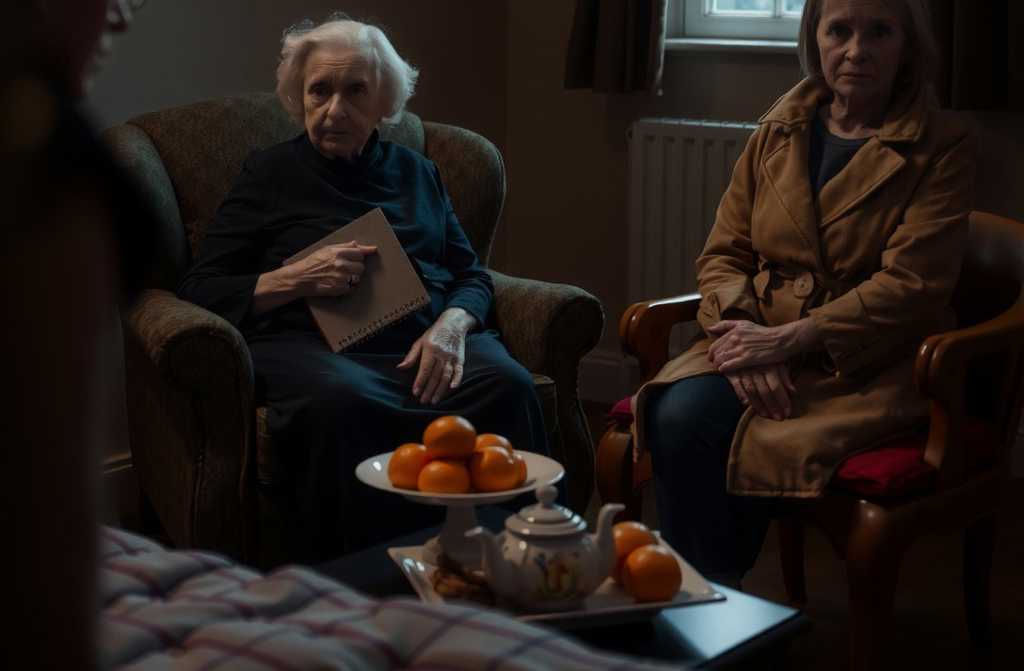
Gail entered. Her mum was in an armchair by the window. Dressed, her hair brushed, feet in the house slippers Gail had bought her ages ago. A book on her lap, closed, no bookmarkso she hadnt been reading.
Mum.
Youve come, she saidnot with reproach or joy, simply a statement of fact.
Gail approached, kissed her mums cheek. Cool and dry, like an autumn leaf.
Are you cold? Want me to turn the radiator up?
No. Sit down.
Gail sat on the bed, facing the armchair. Between them: a metre of space, and their entire life.
Edith Anderson, born 1946, small village, engineer father, librarian mother, teacher by professiontwenty years teaching maths in the local comp. Married at twenty-four to Stanley Anderson, quiet, gentleworked at the plant, could fix anything: taps or toys. Two childrenGail, then Victor. Stanley died of heart failure quietly in his sleep, when Victor was just twenty-eight. Kindness and cruelty, both.
Edith then spent twenty-three years alone. First truly alone. Later, with the phone the kids bought her, then the smartphone she never really got the hang of. She visited on holidays, helped with grandkids, never lectured, never complained first about her health. She could do things others couldnt: bear pain quietly, take joy in other peoples happiness, leave gracefully when her presence began to weigh.
This talent cost her dearly. But no one knew the price, because she never sent the bill.
Victor rang, said Gail. Hes worried.
Let him come then, replied her mum, wearied, but not angry.
Mum, you know hes far away.
I know.
A pause. A branch tapped the window.
Do you want anything? I brought you Gail put a bag on the table. Biscuits you likewith sesame. And satsumas.
Thank you.
Claire says youre hardly eating.
Her mother looked at her, her gaze clear, not old at all, with the wry, slightly sad smile Gail had known since childhood.
Claire is young. For her, hardly eating means leaving a bit of fish pie.
Mum
Gail, dont start. Im fine. My appetites not what it was, thats all. Normal for my age. Im not starving, I just dont want as much as they put on my plate.
Fair enough. Gail wrung her hands in her lap. And why arent you going to the lounge anymore?
Her mum looked out the window.
Mrs Hamilton goes on and on about her children. When they visit, what they bring, her grandchildren’s antics. Shes a sweet woman, don’t get me wrong, but it makes me uncomfortable sitting there.
Gail didnt understand right away. Then she did.
Mum, I
No need, Gailhonestly. Youve your life, Michael, work. I understand.
That I understand was worse than any reproach. Gail had always known itsince childhood. Her mother never shouted, never complained, never said you abandoned me or I gave you everything. She just said I understand, and that quiet, steadfast voice pricked like a needle and stayed with you.
Ill come again next week, said Gail.
Theres no need, unless you have time.
Ill come. Not ifI will.
Her mum nodded. She picked up her book, opened it, but Gail could see her eyes werent readingthe unsettled surface of water held still.
Gail drove home in silence, radio off.
At home, Michael didnt look up from his laptop.
Hows Gran?
Shes fine.
Good.
He asked nothing else. He was twenty-three, busy: work, friends, a girlfriend he hadnt introduced yettoo soon, hed say. Gail didnt press. Shed learnt from her mother the art of not pressing; not crowding, honouring whatever distance the other required. Sometimes, she thought that was a good trait. Sometimes just a fear of rejection.
That night, Gail dreamt of her mothers old flatthe three-bed she and Victor grew up in. In the dream, it was empty, the furniture all there but with that cold, uninhabited echo. A little grey notebook lay on the kitchen table. In the dream, Gail knew she shouldn’t open it, but her hand reached out to do so.
She woke before her alarm, staring at the ceiling.
The notebook was real. Gail had seen it on her mother’s desk many times, never asking about it. Out of respect, shed said. Truthfully, perhaps out of fear: shed learn something that would change her beliefs about her mother, herself, their relationship. Some things are easier not to know.
She rang her mum on Wednesday. Her mum answered after two rings.
Hello.
Mum, its me. How are you?
All right. Weathers better. Went out in the garden for a bit today.
Oh, good, Gail was genuinely relieved. Did you talk to anyone?
A little to Mrs Hamilton. Showed me photostheir granddaughter was christened last week.
And?
Nice girl. Redhead.
They lapsed into a familiar silence. It wasnt uneasy, just a pause between words in which both could rest.
Mum, quick question. Do you still have that small grey notebook? Is it with you?
Pause.
Yes. Why do you ask?
I just remembered it. What was in it?
Numbers. Addresses. Odds and ends.
Thats all?
Gail, what are you getting at?
She didnt know.
Nothing really. It popped up in a dream.
Her mother chuckleda soft, genuine sound.
Dreams about notebooks! You must be after my fortune.
Mum
All right. Its just odds and ends. Yes, I brought it with me. Always have done.
Would you show me?
Long pause.
Yes. Next time you come, I will.
The next Saturday, as promised, Gail returned. This time, her mum met her in the corridor, not her room. She stood by the window, perhaps a bit thinner, or perhaps Gail was imagining. But she stood straight-backed, as alwaysalmost military, though there was no army in her past.
Hello, Mum.
Hello. Come on, the lounge is empty. Lets have some tea.
They sat in the lounge. Someone had left a vase of faded dried flowers on the table. An old checked blanket, orange and brown, lay on the sofaa style that reminded Gail of her own grandmother, or maybe this was just how these places always looked.
Her mother took the grey notebook from her dressing gown pocket, laying it on the table between them. She didn’t open it herself.
There you are.
Gail looked at the faded cover, its corners worn. Inside the front cover was pencilled her mothers looping, right-slanting hand.
May I?
Go on.
On the first page: E. Anderson. Begun 1987. Then names and numberslots Gail didnt knowbirthdays, addresses. In the middle, something changed: no more phone numbers, but small notesthoughts to self, dated and undated.
Michael got his first F in chemistry. Upset. Dont say its nothingshe really minds. Just be there.
Victor argued with Lee again. Not making up. Best let him sort it himself. Dont interfere.
Stanley home latetired. Dont nag.
Gail writes from London, says she’s fine and not homesick. She is homesick. Wants to seem grown up. Write backsay Im proud.
Gail stopped. Shed moved to London for a year at twentyto do her teacher training. She remembered sending rushed postcards home, keeping them short because she didnt want to think about home. Her mothers notes to her, likewise, were short and complaint free. Gail thought her mum simply wasnt emotional.
But her mum wrote: Gails not homesick. Good. Let her be.
Gail turned a few more pages.
Victor getting married. Lisa seems nice. Looks at him well. Dont interfere with their lives, even if advice is asked. They must make their own way.
Gail called again, things are bad with Andrew. She wont say, but I hear it. Dont pressure, let her decide. Just be there.
Andrew was Gails first husband. They split after six years. Her mother had never said a word against him nor offered any sidesjust listened. Gail used to get angry: at how neutral she seemed, how little advice she offered.
Yet her motherd written: Just be.
She closed the notebook.
Mum, she saidher voice oddly altered.
Dont cry, said her mother simply.
Im not.
I can see youre about to.
Gail smiled, despite the prickling behind her eyes.
Why did you write it all down?
So I wouldnt say too much, her mother replied. Id notice myself wanting to say or do something that youor Victordidnt need. So Id write it instead of speaking.
For us?
For you, and for your father, when he was alive.
Gail looked at the grey cover.
Mum, do you think its right to keep all that bottled up?
Its normal, her mum said gently. Just not common. People keep things in. I just had my notebook. Its better than saying things you cant take back.
And if you needed someone to listen?
Her mother turned the vase in her hands, set it down.
Then I called my friend Muriel. Known her since university. She died three years ago.
I know.
After that, there was no one left to call just for the sake of it. Thats the hard bitnot children being far, or living here. Its not having someone you can ring for no reason, and talk about nothing with.
Gail felt something tighten in her chestnot pain, but unmistakable.
You can ring me. Just for nothing.
Youre busy.
Mum
Gail, its not reproach. I know you are. You have enough: job, Michael, the house. When I called last Thursday, you had to ask three times what I said, there was something boiling over in the kitchen.
I could have taken a break
No need to explain. Muriel was someone I didnt have to explain to. She was just there. Thats rare.
They sat in silence. Outside, an old man walked the park path, cane in hand, determined if slow.
Mum, the notebook. Many pages left?
Not many, her mum said. I dont write as quick now. I think differently now. Or just about different things.
About what?
Her mother gazed at her for a long moment.
If I did the right things. Not was I a good parentbut did I keep too quiet? Maybe youd have understood me better, and Id have understood you.
You understood us perfectly, Gail said.
I did, her mum agreed. But maybe you didnt fully understand me. I didnt give you the chance.
Strange to hear her say it aloud. Not because it wasnt true, but because her mother never said such things aloudshe put them in her notebook.
Youve changed, Gail said.
You change here, her mum nodded towards the corridor. When you live among people who have nothing left to lose in honesty, you become more honest yourself. Mrs Hamilton told me recently, I used to think Id be strong forever. Now I wonderwho for?
Gail grinned.
And? What did you reply?
I said, Exactly.
They laughed togethera laughter lighter than either had expected.
From December Gail visited more oftennot quite every week, but reliably every ten days or so. Sometimes they just walked together, down the park paths if it wasnt cold, her mum holding her arm, as she had when Gail was small, leading her down the street.
One day on such a walk, her mum asked:
Remember when you refused to go to the school Christmas party in Year Three? You said it would be boring.
No, Gail admitted.
I made you go in the end. You came back happy, with a satsuma and a little cotton rabbit. You never said a word, just put the rabbit on the shelf.
And?
Nothing, her mum smiled. Just remember it.
That rabbits still somewhere, Gail blurted. In a box in my wardrobe. Could never throw it out.
Her mum stopped and looked at her.
I see.
I dont know why. Couldnt bring myself to.
They stood on the path surrounded by bare trees, and there was something very quiet and very important about what neither said out loud.
Victor phoned mid-December, sounding upbeat but a little sheepish.
Gail, were off to Spain in Januarytickets already booked. I know its over New Year, but it was a bargain and Lizas always wanted to.
Victor, Mum
Ill ring her. Send a present. Money for a gift.
Shell be spending New Year here. At the care home.
Well, its not so bad, is it? You said they do celebrations and all that.
Victor
What? Should I give up the trip for this? Will you go see her?
I will.
There you go then. All sorted.
Gail ended the call. She looked at her cold cup of tea. Victor was not a bad person, she reflected; he loved their mum in his way, rang, sent money, visited in March. Theres always a distance between people that cant be measured in miles.
She rang The Laurels and heard they were doing a New Years party for the residents and any guests. Visitors were welcome.
On New Years Eve, she went with Michael. Hed resistedhad plans, friends, promisesbut shed said simply:
Michael, shell be alone. Victors in Spain.
He sighed, grimaced, all right, all right, and joined her. He even put on a smart shirt, and brought chocolatesa big, posh box, clearly picked to be festive.
Edith answered her door wearing her navy dressone too big now, but her posture was proud, hair done, the pearl necklace her late husband had given.
Michael, she said, her face bright in a way Gail hadnt seen in years.
Hi, Gran, he hugged her gently, and Gail saw her mums arms tighten around him for a second before she let go.
They ate together in the lounge. Mrs Hamilton turned out to be warm and jovial, insisting Michael have some of her pie. An old gent in a tie told jokes. Someone put on music from old British comedies.
At midnight, they toasted with bubbly; her mum sipped a little. Michael said,
Gran, make a wish.
I have, she replied.
Whats your wish?
I wont tell. Or it wont come true.
Just a hint?
She looked from Michael to Gail, back again.
All right. I wished for your health and happiness. Thats it.
Nothing for yourself?
That is everything to me.
Michael nodded and looked away, and Gail saw him swallow, and knew he understoodperhaps for the first time.
They left after one. Outside, snow fell, thick and steady. Edith saw them off at the homes door, standing straight in her dress and shawl.
Drive safe, said her mum.
Inside with youits cold, Gail replied.
Her mum waved and went indoors. Gail watched the door close, snow melting on her lashes.
Michael was quiet as they drove. Then, on the bypass, he asked,
Mum, is she really all right there?
She is, said Gail.
She misses us.
She does.
We should visit more, shouldnt we?
Yes.
He paused again. I will. Next time, Ill go by myself.
Gail said nothingnot because she doubted him, but to avoid scaring off his resolve while it was still fresh.
January flew. Victor came back tanned, rang his mum, told stories about Spain. Edith listened, said how lovely, and asked after Liza. Victor said she loved it. Edith replied, thats wonderful.
In February, Michael actually did visit. Alone. He called Gail that evening.
Mum, we talked for two hours. She told me stories about Grandad. I never knew half of it.
Like what?
That he made wooden toys. On her birthday, he made her a box with a secret lock he designed himself. He never raised his voicenot once, even when angry. She said she used to find him too quiet, but later realised it was just patienceand love.
Gail listened, realising shed never heard about the box, or had forgotten. Family memory is odd: some things stand out painfully; others slip away unnoticed until theyre nearly gone.
Im glad you went, she said.
Yeah Mumcould we have her here for my birthday in March? Just a few days?
She could. Ill check with the home.
Please do.
They organised it. Edith stayed three days, sleeping on the sofano spare room, but she said she liked hearing people moving about at night, not waking to silence.
Those three days went in a blur. Edith helped in the kitchen, peeled potatoes no one asked her to, rearranged jars in her fashionand this time, Gail left them as they were. Michael came in from work and always joined his Gran in the kitchen, the two of them talking through the open doorwayGail listened from the next room, not intruding.
On the last night, her mum took out the grey notebook.
Id like to read you something, she said.
Gail sat opposite her.
Her mother opened to the middle and began: voice steady, almost like the old bedtime reading from years ago.
Gail said today that I cant possibly understand what its like being young today. Shes right. But each time she leaves, it feels shes going a little further than the last. Thats lifechicks must fly. Sometimes, in the night, I hear the wind and wonder: what if theyre cold?
Her mother closed the notebook, watched Gail.
Gail said nothing, just stared at her mumher square shoulders, the pearl necklace, the grey book in her lap. She thought of all the years her mother listened to the wind at night, thinking of her, never saying it aloud, just writing it down.
Mum
Yes?
I was never cold. I want you to know that. I was always warm, even if I never noticed it.
Her mother considered her for a long moment.
Thats good, she said at last. Thats the best thing youve ever told me.
Why did you never ask?
Because I was scared youd say otherwise.
It was the sort of honesty Gaild never expected from her. Not because her mother wasnt honest, but because she always seemed so calm, steady, so certain in her silence. But she was afraid, too. Afraid of a plain answer to a simple question.
You neednt have been, Gail told her.
I know, her mum said softly. A lot I neednt have done. But some things I did right.
A lot of things.
They sat in silence. Out the window, Marchs daylight fadedwintry, but with a different light, the heaviness of February gone.
Mum, asked Gail. Would you rather stay here, or go back?
Her mum raised her brows.
Are you serious?
Serious.
Gail, theres no room here long-term. The sofas fine for a few days, but
We could make it work.
No need. Im settled there. Claires there, Mrs Hamilton, my routine. I wouldnt want to be a burden.
You wouldnt be.
I would. Im a realist. Id be up at night, in your way, worrying if you were lateyoud feel it too. It isnt life for either of us. Im more at ease there.
Youre really all right there?
I am. Im content here, with you, for a few days. But after, I need my own peace.
Gail understood: home now meant the care home. It wasnt sadnessjust truth. Her mum had always accepted things as they were; now, it shielded her from things Gail, in her place, might not bear.
Victor rang in April, wanting to visit that summer, with Liza and the kids, see Gail, see their mum. Warn me in advance, said Gail. Of course, he said.
She didnt mention the grey notebook. That belonged between her and her mum, not because Victor didnt deserve to know, but because some things only really exist between two peoplethey shrink when you try to explain them to a third.
In May, when Gail arrived, her mum was in the park, sitting on a bench, feeding sparrows breadcrumbs. The grey notebook rested beside her.
Writing? asked Gail, sitting.
No, her mum replied. Reading.
Old entries?
Yes. Sometimes it feels like looking through glass at the past. It doesnt hurt anymoreits just there.
And what do you see?
Her mother scattered more crumbs. The sparrows squabbled, then perched.
I see a woman afraid of doing too much. Who thought leaving her children alone would make them stronger, like trees: the less you disturb, the firmer the roots.
That makes sense.
It does. But only in part. Roots need water, not just air.
Gail watched the sparrows.
Do you regret anything?
So many things, her mum sighed. I regret not asking more questions, being so afraid of meddling. Sometimes, the people we love never hear the good things we think about them, because we never say so. I thought you just knew. But people dont always know what isnt said.
I knew, said Gail.
Knew, perhaps. But hearing it matters too.
Mum, Gail took her mothers handwarm, sun-kissed, lightly roughenedyoure a wonderful mum. I want you to know that.
Her mother didnt reply right away. She watched the sparrows. Then quietly,
And youre a good daughter, Gail. I want you to know that too.
There was no fuss, no grand emotionprecisely why it went straight to the heart.
In June, her mum told her something new. Back in 97, when Gail and Andrew were falling apart and she stopped answering the phone for days, her mum had taken a train unannounced, turned up with a suitcase.
Mum, Im fine, Gail had said, opening the door.
I see. Mind if I stay? Wanted to see your city.
Gail had thought nothing of it at the timejust a visit, surely. Now she saw: her mother had come not because shed been asked, but because shed sensed her daughter needed help without asking for it. She found a way to be near, without naming it help.
You spent two days round town, said Gail. We went to the museum.
And the gardens.
Yes. At the time, I thought you were just interested.
I wasbut something else, too.
I know, said Gail, softly. Now I know.
The grey notebook sat beside them. On the last page, Gail saw, something was writtenjust a few uneven lines, as her mothers hand had grown less steady.
Whats on the last page? she asked.
Ill write it when the book is done, her mother replied.
And will you finish it?
Maybe. Or maybe Ill start another.
Gail smiled.
And write thoughts to yourself instead of telling us?
No, her mum said, her voice suddenly carrying a note Gail had never heard before. Not any more. Perhaps latebut now, Ill speak up.
They sat on the park bench outside The Laurelswith those pale yellow curtains and the scent of school canteens; where Mrs Hamilton shows off photos of her ginger granddaughter, and Claire in her blue jacket walks the halls. It was May, the trees thick with leaves, the sun almost summery. The sparrows finished off the crumbs and flew away.
They chatted about nothing significant for twenty minutes. About Michael wanting a dog (and Gail uncertain about pets in flats); about Mrs Hamilton teaching her mum a new knitting trick; about whether the park needed another bench.
Just an ordinary conversationquiet, almost trivial. But in that ordinariness lived all that had never fitted into the grey notebook.
Afterwards, her mum said she was tired and wanted to lie down before supper. They stood. Once again, her mum took Gails arm as they walked inside.
At the door, her mum stopped.
Gail, she said.
Yes?
Did Michael phone me yesterdaydid you tell him to?
Gail was caught off guard.
No. Not me. I didnt know.
Her mother nodded, hand on the door handle.
Hes a good lad, she said.
He is.
Takes after his grandfather. Quiet, but deep.
Yes.
Her mother stepped inside, then glanced back.
Youll come next Saturday?
I will. Ill bring sesame biscuits. And myself.
Bring both.
Her mum went in. The door closed softly.
Gail paused at the entrance, checked her phone, put it away again. There was nothing to phone about, nothing to explain. Just Saturday, just sesame biscuits, just herself.
She walked towards her car, thinking of the grey notebook and its unread last page. She didnt know what was written theremaybe something mundane, maybe a memory, maybe something about her, about them both. Maybe it was only now, after years of silent misunderstanding, that the most important things were at last spoken.
Her phone buzzed. A message from Michael.
Mum, where are you now?
She stopped and typed: Just leaving Grans. All fine. Why did you call her yesterday?
The reply came promptly.
Just wanted to hear her voice. Thats odd?
She smiled at the screen, messaged back: Not odd at all.
She got into the car but didnt start it yet. Through the windscreen: the park, the May sky, new leaves stirring in warm wind. Deep inside, her mum would be making her way past yellow curtains to her window, sitting down, maybe picking up the grey notebook, maybe just looking out and thinking private thoughts too tangled for words. All those quiet choices, made alone.
Gail finally started the car.
She thought of next Saturday, the biscuits, the bench, the sparrowsand her mum telling a story shed never heard, or about Dad, or something so old it seemed legend now. This time, she would truly listennot distracted, not half an ear while something boiled over. Really listen.
A small intentionlike a grey notebook. But it was in such small things that true closeness growsand, before its too late, builds what in the end we call being close.
And while it isnt too late, one can try again.
Next Saturday.
Right now.
In her mothers room, the grey notebook lay by the bed, beside the satsumas Gail had brought. The last page was nearly full, the handwriting a bit shaky but clear. Three lines written in March, when her mum stayed those few days and woke at night to the comfort of not being alone.
Three lines Gail hadnt read.
Maybe one day her mum would read them out. Maybe not. Maybe Gail would askmaybe she wouldnt.
That too was part of their story.
Her phone buzzed againher mother calling.
She answered before the first flicker of surprise.
Mum, everything alright?
All fine. I just wanted to sayIm glad you came today. Thats all. Get home safe.
A lifes closeness, sometimes, is built not by the words we dont say, but by those we finally do.