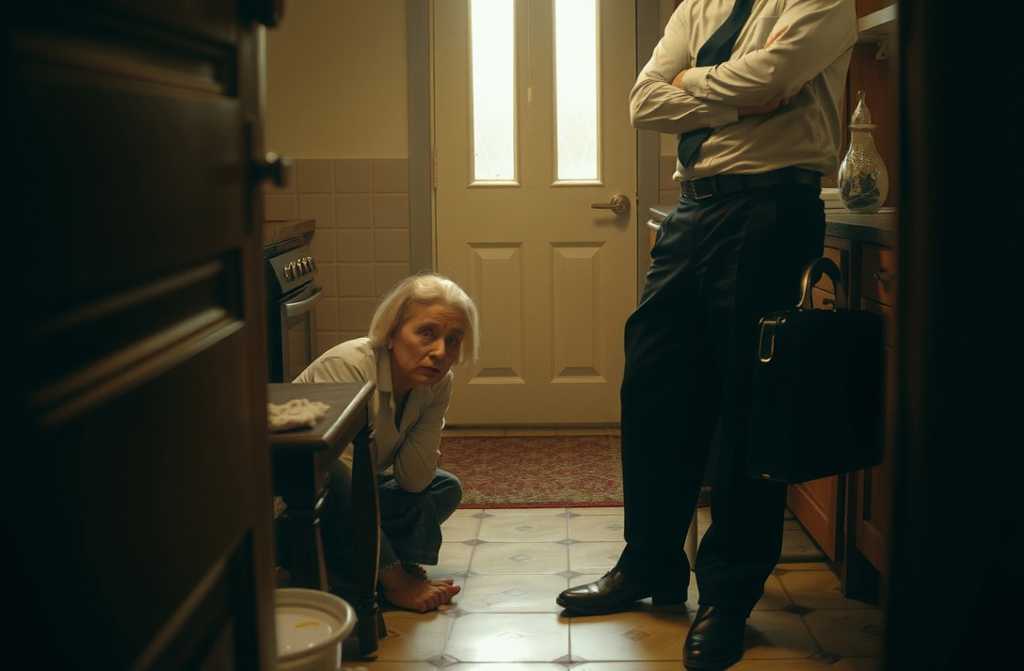
In my time, I ought to be thinking only of grandchildrenbut I met him in the park
“You do you even realise what youre doing?” James looked at his mother as though he were confronted by a stranger. “At your age, Mum, you should just be thinking of your grandchildren, not not traipsing around cafés with men!”
Martha Bennett stood in the middle of her small kitchen, cheeks burning. Her son had found outsomehow he knew about George. Now he stared at her with such contempt that she wished for the linoleum to swallow her whole.
“James, please let me explain”
“Whats there to explain?” His voice was rising, bristling. “Mum, youre sixty-three! Youre meant to be baking cakes for the kids on weekends, not not making a spectacle of yourself!”
Martha slumped onto a chair, her hands trembling on the Formica tabletop. Shed played this scene over in her head a hundred times, but never imagined it could hurt quite so much. Her boyher only boywhom shed raised alone since Tom died, now called her a disgrace.
Only three months ago, she would have laughed at the suggestion that her life could change. Ten years a widow. Ten years spent living for her son and her grandson, for the house. Each morning she rose, cooked a bit, tidied, picked up groceries, nattered with a neighbour. In the evening shed watch television or knit quietly. One day blurred into another, years stacking up soundlessly like old mail in the hallway.
Tom had gone suddenlyhis heart just gave out one evening. Martha was fifty-three and it felt as if everything inside her had frozen. That first year, she hardly ventured outside at all. James visited every Sunday with Harry, her grandson. Martha made sausage rolls, played happy grandmother, watched their backs as they left. The silence in the flat after it pressed on her until she thought shed shatter.
Her friend Helen told her
“Martha, darling, youre still young. You cant go on like this. Theres so much more to life, even now.”
“What life, Helen?” Martha laughed, not doing a stitch of believing. “Im an old boot.”
“Nonsense! Sixty these days isnt old. Look at you. Lovely complexion, sound as a bell. Why shouldnt you be happy?”
But Martha didnt believe it. The idea of romance for the old felt like a punchline, a thing whispered about behind curtains. What feelings could a woman her age possibly have?
She met George in Oakwell Park, a maze of wintry trees and squabbling pigeons. He was feeding them breadcrumbs, tall and white-haired, laughter grained deep about his eyes. Martha happened past and tripped over a sly root. He caught her arm just in time.
“Careful, these roots have a mischievous streak,” he said, smiling.
They got to talking, no more than that. He was a widower, retired engineer, solitary as she was. His wife been gone five years; his daughter lived in Manchester, son in Bristol.
“Lives alone, I do,” he said. “Dreadfully dull most daysI might go the whole day without a real conversation. Just the cashier in Sainsburys for company.”
Martha knew how suffocating that silence could be, how it buzzed around empty rooms, how it turned the world to dust.
So began their gentle routine, these meetings in Oakwell Park. At first “by chance,” then arranged, then steady as the seasons. They wandered the muddy paths, reminisced about work, children, old holidays. George spoke fondly of his wife and their travels; Martha found herself talking about Tom with a tenderness shed long shut away.
“Do you know, Martha,” George confessed one morning, “I havent felt truly alive in years. You make me feel alive again.”
She went red as a girl.
“Its its lovely, being with you too,” she stammered.
A month after they met, George took her to Cosys Café. Martha fussed for hours over her outfit, refastening her hair countless times. Helen, ever the troublemaker, laughed when she heard about George.
“Martha! You romantic. Youve fallen for him, havent you?”
“Dont be silly, Helen. At my age?” But her heart was jumping like a startled rabbit.
“Why not? People love at any age, silly thing. You deserve a bit of happiness.”
Cosys glowed drowsily with fairy lights, toast-scented and warm. George ordered tea and Victoria sponge, and they lost track of hours. With him, Martha felt unguarded. No masks, no performancesjust herself.
When he walked her home, he paused at her door and took her hand, fingers warm in the dusk.
“May I call you just Martha?” he asked softly.
She nodded, whispering, “Of course.”
“Martha, Im truly happy with you. Its been so long since I felt this way.”
Her fingers curled round his. Inside her, strange flutteringslike a moth under a lampshade.
After that, their meetings grew frequent. George came over for Sunday lunch, Martha baked for him. They saw plays and films, took day trips, held hands under autumn trees. For the first time in ten years, she didnt feel invisible. She could laugh again, be silly, plan days out.
Yet she never breathed a word of George to James. She dreaded how hed reactJames, always so uptight, allergic to surprises even as a lad. What would he make of his mother suddenly dating? Unthinkable.
“You must tell him,” Helen said when Martha confessed her secret. “Hell get over it. Best he hears from you, not the grapevine.”
“But he wont understand, Helen. Hell be mortified.”
“Dont you dare wait for permission. This is your one life. Youre entitled to happiness, its not some kind of reward you must earn!”
Still Martha put it off, and by then it was too late.
James glimpsed them together at Cosys. Leather briefcase in hand, just back from work, he saw his mother and George laughing at a corner table, fingers entwined like teenagers. He stopped, turned on his heel, left without even a hello.
That evening, Martha knew something fearful was coming. James stormed into the flat, face red and jaw set.
“Who the hell is that bloke?”
She hesitated. “Thats George. Weve weve been seeing each other.”
“Seeing? Oh, Christ, Mum. Youre sixty-three! What are you thinking?”
“For the first time in years, Im thinking about me. For years I thought only of everyone else.”
“Yourself?” He paced the kitchen, fists clenched. “And you shame the family? Swanning about with a man?”
She recognised what he left unsaid in the contempt flickering through his eyes.
“Say it, James. Go on.”
“Like a foolish old woman who ought to put her feet up instead of playing at bloody romance!”
Martha felt tears threaten, but she didnt break. She steadied her voice.
“I have a right to happiness. At any age.”
“Happiness? You have a grandson! You should focus on the family, not your love life!”
“I lived for the family for ten years. Ten years, James. Cant I live for myself, just for a little while?”
“No, you cant!” he roared. “Not at your age! What will people say? What will my mates think? My mother, sixty-three, playing at being lovestruck!”
“And whats wrong with that?” she fired back. “Why can only the young love, and not the old? Why cant I be happy?”
“Its indecent,” he snapped, grabbing his keys. “Stop this nonsense, Mum. Now.”
He slammed the door behind him. Martha broke down at the kitchen table, sobbing harder than when shed lost Tom.
For days, the silence stretched. James didnt call, didnt respond. Martha rang, left messages. Once, her daughter-in-law Emily answered:
“Martha, James is really upset. Try to understandhes always seen you as proud, respectable. Now well, this is a shock.”
“Emily, Im just seeing a good man. Im not doing anything wrong.”
“Not wrong, exactly, but odd. You know conflict with children over ones lovelife is hard perhaps you should think of the family?”
She hung up, the words circling in her skull. Always for the family. And what about for herself?
George noticed the sadness straight away.
“Martha, love, whats wrong?”
Hed cooked her fish pie, and she toyed with her fork, appetite gone.
“My boy knows. About us.”
He nodded, quietly.
“And how?”
“Badly. He wont speak to me.”
“My daughter was shocked too when I mentioned you,” George admitted. “Thought I was losing my mind. But she came round, after a bit.”
“And if James never does?”
George squeezed her hand. “I dont want to put you through all this, Martha. If its too much, we can”
“No!” She gripped him tight. “I dont want to lose you. I just dont know what to do.”
He held her, and for a moment Martha stopped pretending, simply letting herself be held. Was she supposed to give up all this comfort?
She met Helen that week, pale and thinned by worry.
“Whats going on, love? You look dreadful.”
“James knows about George. Wont speak to me.”
Helen sighed. “Stubborn. Just like his dad. You remember how Tom always had to have things his way?”
“I dont know what to doJames is everything. But I cant lose George either.”
“Listen to me,” Helen said. “We spend our whole lives for othersfor parents, husbands, kids, grandkids. We forget were people too, entitled to feelings. You were on your own ten years, Martha. Surely you deserve this?”
“I do,” Martha whispered. “So why does it hurt so much?”
“It hurts because you love your son. But when children condemn their parents happiness, thats selfish. James is thinking about himself, not you.”
Helen was, as always, uncomfortably right.
“Tell him again, Martha. Calmly this time. He may see that loving at our age isnt shameful at all.”
Summoning her courage, Martha went to Jamess house. After a long wait, Emily let her in. James sat, eyes glued to the TV, refusing to look her way.
“James, please. Try to listen.”
“I have nothing to hear.”
“You dont know what its like. Ive been alone ten years. You came, what, once a week, if that. You got on with your life, and I was proud. But I woke and slept alone, day after day. No one to talk to, no one to share thoughts with. Can you possibly imagine that?”
Still he said nothing, knuckles white.
“George is a kind man, James. Hes on his own too. We help each other. Surely theres nothing wrong with that?”
“Mum,” he said at last, “I just cant accept it. Youre my mum, youre supposed to be not like this. Not like a lovesick girl.”
“Why?” Martha challenged. “Why must I only ever be a mother? Why cant I just once be a woman who wants love?”
He shot up from the sofa.
“Because youre old! Dont you see? Sixty-three! Its shameful!”
“Shameful to love? Shameful to want happiness?”
“Shameful to act like a senile fool!”
The words were a slap. Martha recoiled, and Jamess face fell, the regret instant.
“So thats it,” Martha whispered. “To you Im a fool. For you, my life ended with your father. I shouldve sat at home, knitting, just in case you deign to visit.”
“Mum, I didnt mean”
“No, you meant it. You want me to live quietly, obediently, never causing trouble.”
“Mum”
“James, I gave everythingfirst my parents, then Tom, then you. I raised you alone after Tom left us. Gave up every dream for you. And now, the one time I choose for myself, Im a fool.”
She left before he could say more. At home she sat, mind whirring with painshe might lose James forever. Would never see red-cheeked Harry again, Emily would stop calling. But without George, shed lose herself. Go back to endless silent days, the clock ticking mercilessly.
The phone rangGeorge again.
“Martha, how are you?”
“Not great. I tried with James. He refuses to listen.”
“Give him time, maybe hell come around.”
“And if he doesnt?”
Long pause. “I dont want to be a wedge in your family. If its too hard”
“Dont, George. Please. Youre all I have thats bright now.”
“But youre hurting.”
“Yes, because James cant understand. Thats not your fault.”
She hung up, realising her mind was made up. She wouldnt give up George. She wouldnt return to her old ways. She had earned this right, even if her son couldnt see it.
A month rolled by. James stayed silent. Martha phoned, but he spoke little and coldly; once she visited but was told by Emily that Harry was poorly. A lie. She saw it in Emilys gentle eyes.
She grew thinner, older. Helen worried over her.
“Try again, love? Try to make up?”
“Its no use. Hes made up his mind.”
“And George?”
“Im happy with him. But sometimes it feels poisoned. Even while were together, I think of James, of his anger.”
“Darling, conflict over love is always hard, but dont give up your life for others. You already sacrificed enough years. Dont throw away the rest.”
Martha didnt have an answer.
One evening, she and George sat on their usual bench in Oakwell Park. Night pressed in, gentle and blue. He squeezed her hand, quiet.
“I see youre in pain. Should I move? Go stay with my daughter? Would that help you mend things?”
“No. Pleasedont go,” she begged. “I cant stand being alone again.”
“But youre suffering.”
“Im suffering because my son is selfish. But thats not reason enough for me to give you up.”
He wrapped her in his arms.
“I love you, Martha. I never thought, at my age but youve changed everything.”
“And youve changed me.”
They sat quietly, wrapped together. Martha knew she could never give up this comfort, even if it meant losing James.
Two weeks later, the thing she feared happened. James called.
“Mum, we need to talk.”
They met at Cosys, that little café where their lives had veered. James looked haggard, lines etched deeper than shed ever seen.
“Ive thought a lot,” he began. “Talked to Emily, to mates. I was out of line.”
Martha waited, breath caught.
“I shouldnt have said those things. Youre my mum. I should respect your choices.”
“James”
“But,” he pressed on, “I cant accept this man. I cant bear you and him together. Soyou must choose.”
“Choose?”
“Me, or him. Either you stop, or I wont see you. Thats it. Im sorry, but I cant do otherwise.”
Martha felt something tearing inside. He was asking her to choose between her son and her happiness. Between family and love.
“James, you cant”
“I can. Im your son, I have the right. You must behave appropriately.”
“Appropriately.” Her voice quavered. “I am appropriate. I only want happiness.”
“Happiness isnt just about you. Its about family, reputation, duty”
“What else am I meant to sacrifice, James?”
He stood. “A week, Mum. Thats all. You must choose.”
He left her there, alone and shaking, tea growing cold.
All week, she suffered, turning round and round the same old doubts. George visited; she couldnt find words. Helen called, but Martha ignored it.
She thought of James, her whole life raising him, every sick night and proud moment. Hed been her orbit, her everything.
But with George was the self shed left behind. With George she laughed, hoped, felt her heart stirring.
At the weeks end, she went to Jamess door. He answered, his face set.
“Well?”
Martha straightened, meeting his eyes.
“No, James. I wont choose. I wont leave George. But Ill never stop loving you. You are my son, my dearestbut its time for me to live for myself. I hope, one day, youll understand.”
“So youre picking him?”
“No,” Martha replied evenly. “Im choosing myself. For once, only myself. And if you cant accept that, Im sorry. But I wont trade my happiness for your prejudice.”
James paled.
“Then were no longer family.”
“We always will be. Im your mum. Youre my son. Thatand only thatnever changes. Goodbye, James.”
Tears spilled, but she did not look back.
George waited for her in the chill streetlight. She fell silently into his arms.
“He wont forgive you?”
“No.”
“Does it hurt?”
“Terribly. But I dont regret it.”
Hand in hand, they drifted through the city, streetlights blinking and winking, as if the pavement underfoot bent and breathed. Ahead, the future was a fog of sadness and hope, all muddled together.
Winter tumbled suddenly down on Oakwell, burying it under white drifts. Martha and George strolled through deserted parks, feeding pipe-smoking pigeons, clutching each others crooked arms. She learned to live anewwithout her son, pinched by the loss.
Every child she passed reminded her of Harry; every toy shop triggered memories of birthday treats. The ache dulled but deepened, like colours in a painting left too long in sunlight.
Helen visited often to keep her company.
“You did right, darling. You fought for yourself, at last.”
“But at such cost, Helen. Ive lost my boy.”
“You havent. He simply cant see senseyet. Give him a year, maybe two. Time softens a lot.”
“Or never,” Martha said. Helen hugged her and Martha let the tears run only then, in that safe space.
With George, she tried always to be strong. He even suggested more than once that he move away to let her make peace with James; Martha always refused.
“If I give you up now, Ill only lose myself as well. James will never forgive; too much has already happened.”
They sat together, drinking tea. Outside, snow fell. Inside, all was warm and close. Martha saw George with a depth shed never known in her first marriage. It was a different love nowsteady, companionable, grateful for every moment.
“Do you ever think Im selfish, George?” she murmured once. “Maybe I should have given in for James sake?”
“No, never. You want to live, Martha. Thats not selfishness, its survival.”
“James thinks it is. That the family comes first, always.”
“Youve done nothing but family your whole life. Is it so much to ask the last few years for yourself?”
She was silent. Her heart warred with itselfright and wrong, love and duty. How could she be happy if her boy was unhappy? Yet was he truly hurting, or just angry he couldnt control her?
And then, a few days before the New Year, the phone rang. It was Emily.
“Hello, Martha. How are you?”
“Im here, Emily. Hows James? And Harry?”
“Were all right. Martha, would you meet with me? I think I should say something.”
They met at Cosys. Emily looked tense, tired.
“Ive thought a lot, Martha. And I want you to know Im on your side.”
Martha stared. “On my side?”
“Yes. James is wrong. You deserve your own life, your own happiness. I tried to tell him, butwell, you know what hes like. Stubborn as his father.”
“Thank you, Emily. Truly.”
“You mustnt give in. Maybe hell come around, maybe neverbut you mustnt let his pride rob you of joy.”
That New Years Eve, Martha and George sat by candlelight, glasses of sherry in hand. No raucous crowd, just the two of them as Big Ben chimed from the telly.
“Happy New Year, Martha.”
“And to you, George.”
He toasted her, kindly eyes crinkling. Martha reflected how life snatches away and then surprises: Tom gone, George found; son gone, but peace and understanding in its place.
Spring snuck up early, the city suddenly blossoming. Martha and George resumed their park walks, scattering crumbs that became seeds, and seeds that became birds with old mens laughter. Love in later life was not as shed imaginedit was subtle, gentle, shaded by memory and gratitude.
Though not a day passed without the ache of James, time gave her the knack of living with it. Sometimes shed spot him across the high street. Harry had grown taller, all knees and elbows. Their eyes met once; James turned quickly away, shepherding Harry with unnecessary urgency.
Martha stood unmoving among shouty market vendors, clutching a bag of parsnips, feeling like a girl lost among giants.
That night she told George all about it.
“Saw them in town. Harrys so grown. James wouldnt let me say hello.”
George wrapped her gently. “Im sorry, love. I know how much it hurts.”
“Some days I think I made a mistake. If Id bowed to James, Id still have him, my grandson”
“But youd be unhappy. You cant buy one kind of love by throwing another kind away. It wouldnt be realit would be misery dressed up as loyalty.”
He was right. Not that it made the pain lighter.
A year turned since Jamess ultimatum. Martha stopped expecting his call. She accepted things as they were: her world now contained George, Helen, and herself.
That hard-won right to be happy had cost her dearlybut she did not regret it. For the first time since girlhood, she lived for herself.
She and George merged routines blissfully: cooking together, dusting together, watching quiz shows, arguing over crossword clues. A simple, ordinary joy.
Helen delighted in Marthas newfound fire. “See? You did it, love. You stood up for yourself!”
“But at what cost, Helen?”
“A high one, maybe. But you are alive. You are happyisnt that what matters?”
Martha chewed that over. What truly matters: family, giving, tradition? Or claiming a small, stubborn piece of the world for oneself? She decided there was no answereach soul finds its own truth.
For Martha, the truth was this: you must be yourself, even if the price is heartbreak.
One gentle evening, Martha sat with George on their tiny balcony, sharing tea. The city stretched, dreamlike and trembling below, streetlights gleaming in puddles like golden coins tossed for luck.
“Martha,” asked George, “are you happy?”
She thought deeply. “I dont know what real happiness is, George. Theres always a sore spot. But Im alive. I feel everything. That seems enough.”
He kissed her brow softly.
“Youre a wise woman.”
“Not wise,” she smiled sadly. “Just tired.”
Hand in hand, gazing out at rippling rooftops and far-off sirens, they sat quietly. Martha understood at last: life continues, even through bitter arguments and burned bridges. The right to happiness can cost everything, but some dreams are worth the price.
Perhaps, somewhere across this strange dreaming London, James thought of her too. Perhaps not. Perhaps hed always see her as a traitor to the life he believed in. But his choice was his ownas was hers.
Love in later years brought Martha not a storybook ending, but something far more rare: the right to be a human being, complete, flawed, and real.
And she would never, ever give it upno, not even for her darling son.