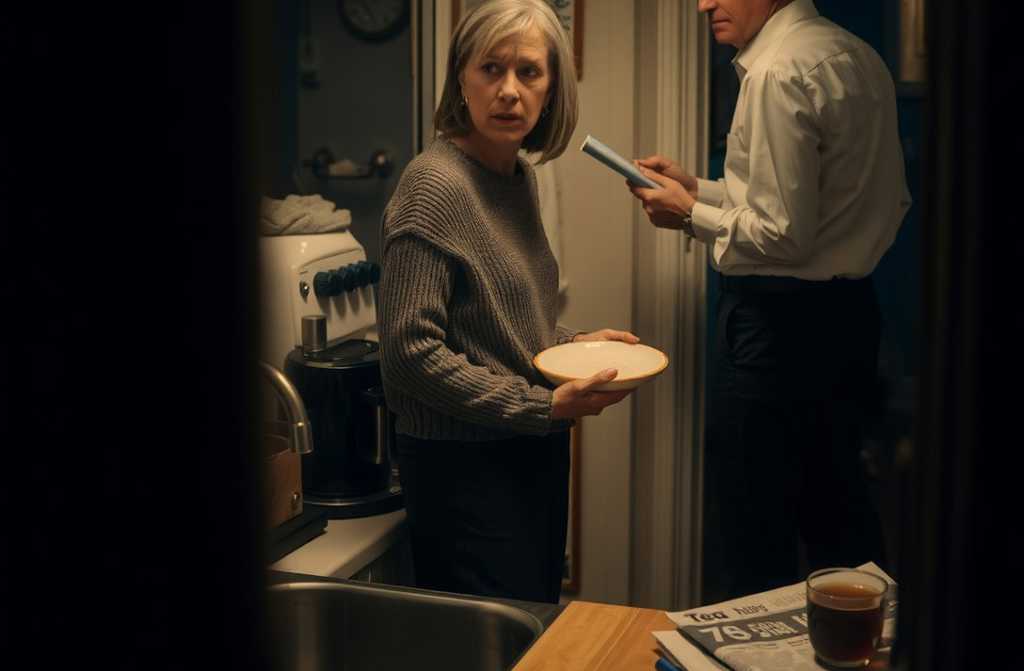
David, lets get a divorce.
Sarah spoke quietly, her voice as steady and calm as the way she wiped the last dinner dish clean, avoiding her husbands eyes.
David lowered the newspaper hed been reading. The clock in the hallway ticked, filling the silence between them.
Yes, he replied after a long pause. Yes, I think thats for the best.
No tears. No anger. Only that short, exhaled admission. Sarah felt an icy emptiness run through her veinsa hollow coldness mixed with something unfamiliar. Twenty-three years of marriage, two grown children, the family house, a Ford, the little cottage in Dorset. And the only question running through her mind was not why, but why didnt we do this sooner?
She placed the plate in the sink. The hiss of hot water was the only sound. David neatly folded his paper, just the way he always had, rose from his chair, and crossed the kitchen without touching or looking at her. His office door closed quietly behind him.
Sarah stood at the sink, staring at her faded reflection in the darkened window. Fifty-four years old. Grey streaks in her hair, long since abandoned to dye. Wrinkles at her eyes. And a strange, almost weightless sense of release tangled with fear.
The next day, they discussed practical matters. They sat in the kitchen with a notepad and pen between them. David took notes.
Well sell the house, he said, scribbling. Split the money fifty-fifty.
All right.
The cottage. You want it?
No. You keep it.
Fine. Ill keep the cottage, you have the car.
I dont drive anymore.
Sell it, if you like.
The end of a long marriage was being negotiated as dryly as the time theyd bought a fridge. Splitting property in a divorce was dull arithmetic. Sarah glanced at Davids hand as he wroteremembering when that hand circled her waist on their wedding day. Back then, she was thirty-one and he thirty-four. Shed worked as a proofreader at a publishing house called Page & Quill, he as an engineer for London Development Group. Theyd met at a mutual friends birthday party; shed thought him steady, solid, serious. Hed found her gentle, homey, clever. They married six months later. No fireworksjust a solid certainty that it was the right thing.
We should tell the kids, David said, lifting his gaze.
Yes.
Ring them tonight?
Ring them.
Their daughter, Emily, twenty-five, lived across the city with her boyfriend. She worked in advertising, was always bustling, always late. Ben, their youngest, was twenty-two and finishing his final year at university, sharing a flat with mates. The children had long since flown the nest. It was this, Sarah realisedthat sudden release from motherly dutiesthat had exposed the emptiness between her and David. While the children were little, thered been a purposehomework, school runs, after-school clubs, illnesses, holidays. Theyd spoken through the children. When the children left, they were left with nothing but each other. Only then had she realised they had nothing to talk about.
That evening, David rang Emily and put her on speaker.
Em, we have news. Your mum and I are divorcing.
The silence on the line stretched.
What? Are you having me on?
No, love.
But why? Whats happened?
Nothings happened. Weve just decided.
Just like that? Dad, youve been together twenty-three years! Mum, whats going on?
Sarah took the phone.
Darling, its just happened. We weve just worn each other out.
Worn out? After all these years youve suddenly had enough? Thats absurd. Its just a long-marriage crisis, it happens! Talk it through, see a counsellor!
We have spoken about it.
But youre always so calm, so normal! You never argue!
Thats exactly it, Em.
Her daughter didnt understand. To her, her parents were a constant, a safe, featureless backdrop. Dealing with adult children through divorce was even harder than Sarah thought. Emily took it as a betrayal, as if her very world was crumbling.
Bens reaction was different. He arrived the next day, sitting quietly at the kitchen table.
Maybe you should think again, he said at last. Maybe a break, or a holiday, apart?
Ben, weve made up our minds. David was firm.
But why now? Why not sooner?
Because you were here before.
Ben looked from father to mother. Sarah saw confusion and pain in his eyes and wanted to explain, but how could she? How could she describe the soul-numbing loneliness of living beside someone who made her feel utterly alone? How each night, when David retreated to his office and she sat in the lounge with the television, she felt her life seeping away, day by day?
Mum, Ben asked softly, do you really want this?
I dont know what I want, she answered honestly, but I know I cant go on like this.
He left, upset. Sarah sat remembering the day they brought him home from hospital, remembering Davids anxious smile when he first saw his son. Back then, twenty-two years ago, shed really believed that children would pull them together, would make them a real family.
They didat least on paper, in others eyes. But not in their hearts.
The first crack, perhaps, appeared four years in. She was thirty-five, David thirty-eight, Emily was three and Ben wasnt born. David spent ever more time at workpromoted, swamped, exhausted. Hed return home late, barely speak, eat in silence, watch the news, go to bed. Sarah tried to talkabout her day, about a manuscript, about her work at Page & Quill. He nodded, not really listening. His head was always somewhere else, lost in blueprints and budgets.
She bottled her resentmentsaid nothing, just carried on. Then came Ben, and she drowned her hurt in nappies and fatigue. Thats how the cracks in a long marriage begin: tiny fractures you fill over with children, chores, habit.
They put the house on the market. The estate agent, a bright young woman, led couples about, showing them round. Sarah left each time, wandering the streets, unable to bear strangers sizing up her life. There was the photo of her and David at Brighton Beach. There, the cot had stood. There, theyd eaten every night for twenty-three years. How do you start again at fifty-four when your life fits inside a three-bedroom semi?
Sarah met her friend Gillian at a café, sipping coffee, sunlight creeping across their table. Gillian listened in silence, then said,
You know, I understand. I think about it every single day. I just dont have your courage.
Its not courage, Gill, Sarah said. Its desperation.
Maybe. But youre doing something. Im just fading, bit by bit.
Gillian had been married for twenty-eight years. Her husband was similarly distantsilent, inward. They, too, lived parallel lives. Sarah looked into her friends eyes and saw the same hollow loneliness.
Are you scared? Gillian asked.
Yes, Sarah whispered. Terrified.
How did you finally decide?
I realised if I didnt do it now, Id die like thisnever having truly lived.
What if it gets worse?
Worse than this? I doubt it.
They paused. The waitress brought the bill. Gillian gazed out the window. Sarah knew Gill would never leave her husband. Shed keep fading away, counting the days to retirement. That was her choice. But it wasnt Sarahs any more.
A young couple bought the house. Filled with noisy optimism, they planned renovations. Sarah watched them and remembered herself at their age: full of hope, never imagining shed be the woman, fifty years on, looking back and wondering if things might have been different.
The sale proceeds were split evenly. David took the cottage, Sarah kept the car. She hadnt driven in years, not since a minor accident; shed sell it. Or maybe, she thought, shed find a refresher course. Life after divorce started with small thingslike a car.
She rented a one-bed flat on the edge of townsmall, bright, empty. She stood among her boxes, trying to picture a new life, alone, at fifty-four. It seemed ludicrous. But also right.
The move was quick. David rented a room from a mate until he found his own place. They sorted things in silence. You take this? No, you. That frying pan for you. These books for me. Twenty-three years of marriage condensed into a few cardboard boxes in a day.
Emily never accepted their decision. She called rarely and spoke with terse, clipped phrases. Ben tried to keep in touch with both, but Sarah knew it was hard for him. Her children couldnt understand why anyone would dissolve a family without scandal or affairwithout drama, without reason. To them, if there were no screaming rows, no betrayals, all must be well. They didnt realise the most corrosive poison can be silence and indifference.
Sarah lay awake in her narrow bed. The new silence was of a different kind. In the old house, she could always hear David shifting in bed, his office chair squeaking, the kettle in the night. Now, nothing but the hum of the city outside her window. She wondered if this post-divorce emptinessthis achewould ever fade. Perhaps it had always been there, only crowded out before by children, work, daily bustle.
She remembered a family holiday fifteen years ago when Emily was ten and Ben seven. They’d rented a cottage in Cornwall. It seemed, on the surface, a happy break. The children were joyful; Sarah cooked, they walked the cliffs, collected shells. But in the evenings, as the children slept and she and David sat out on the veranda, a heavy silence hung between them. He read. She gazed at the dark sea. It struck her, even then: were strangers. Complete strangers. But she dismissed the thoughtblamed it on tirednessit would pass.
It never did. It only deepened with time.
She’d left her job at Page & Quill years before. The publisher had foldedbookshops were closing, everyone went digital. For a while she tried to find similar work, then she let it go. Became a housewife; David earned enough for them all. She grew obsolete. The children went, David didnt need her, there was no job. She read, watched dramas, met Gillian for coffee. Life simply drifted.
You realise your mistakes only too lateand theres no way now to retrace the path. No way to tell the younger version of yourself, Dont do ithes not right for you. All thats left is to accept and go on.
One Saturday, sorting through old photos in her flat, Sarah paused over her wedding picture. She in her simple white dress, he in his rented suit, both tense but smiling. There, Emily as a baby. Bens first steps. Days in the cottage, tan and happy. When did it all end? Did it end? Or did it just slowly wear awayresentments unvoiced, sighs not understood, pleas unheard, habit replacing love?
Ben called that Sunday.
Mum, how are you?
Im fine.
You on your own?
Yes.
Shall I come over? Just a chat?
Yes, love.
He arrived with a box of cakes and proper tea bags. They sat at her small kitchen table. He chatted about uni, friends, plans. He was trying to cheer her upshe felt warmed by his care, and at the same time painfully aware that it shouldnt be for her son to carry her through this.
Mum, he said, when theyd finished the tea, do you really believe its better this way?
I dont know, Ben, she replied softly. But I know I couldnt do it anymore.
And Dad?
Hes all right too.
Do you speak to him?
Sometimes. Just about practical things.
And properly?
I dont think weve spoken properly for ten years, Ben.
He went quiet. You know, I always thought you and dad were the perfect couple. Calm, no drama.
Yes, Ben. No drama. But no real life, either.
He didnt get it. How could a twenty-two-year-old boy understand loneliness beside another? How could he grasp the dread of waking each day with nothing to hope, nothing to fear, just another blank stretch of time?
Gillian rang the next week.
How are you?
Im living. Getting used to it.
Shall we meet for a coffee?
Lets.
She looked older, more drained.
I envy you, Gillian confessed.
What for?
For doing it.
You could, too, Gill.
No. Im fifty-six. Where would I go?
Youd live for yourself.
I dont know how. Ive forgotten.
Sarah saw the same defeat in her friends eyes shed seen in her own last yearthe resignation, the weariness, the fear. The fear of being alone, of what people would say, of the future. Divorce at their age wasnt just a legal transactionit was a reckoning with every choice ever made, an admission that youd wound up somewhere you never meant to be.
Days passed slowly. Sarah learnt to be alone. She woke when she wanted, ate what she pleased, watched the shows she liked. She read late into the night, never worrying that the light bothered anyone. It felt unnatural at firstunnerving. But there was something else, too. Relief. As if a vast weight had slipped from her shoulders, a burden shed carried so long shed stopped noticing.
She began taking walkssimply walking, nowhere to go, along parks and the canals. Observing London, the people, the shifting sky. She thoughtof before, of what could have been, of what might come. That last was always the scariest.
She was fifty-four. Six years till state pension. The children were grown. David had gone on with his life. Her friends were married. She had no job. Her half of the house money would only last so long. What next? Live out her years in solitude? Find someone new? At fifty-four?
She bumped into David at Tesco. Both stopped, nodded awkwardly.
Hi, he said.
Hello.
All good?
Yes. And you?
Ive found a flat at last.
Good.
They stood in the frozen aisle while people hurried round themtwo people whod shared twenty-three years, now nothing left to say.
Well, see you, he said.
Yes. Take care.
He walked away. Sarah watched him vanish and felt an unexpected lifting in her chest. She didnt feel hurt. Not sad. Just empty. Like looking at a former classmate you barely remember.
Autumn surrendered to winter. The first snow fell. Sarah sat by her window, watching fat flakes drift to the ground. She smiledshed loved snow as a girl. Later shed come to dread wintercold, dreary, months spent waiting for spring. But now, in the hush, she realised she felt something close to peace.
Ben visited often. Emily called, briefly, awkwardly. Sarah didnt mind. Emily needed timemaybe shed never come round; that was alright.
At Christmas, Ben called.
Mum, come to oursbig get-together with my lot. Come on, dont be by yourself.
No, Ben. Id rather stay home.
See in Christmas on your own?
Yes.
Thats sad.
No, its alright.
She saw in Christmas alone. Set her little table, poured herself a glass of prosecco, watched a festive show on telly. At midnight, she raised her glass.
To new beginnings, she whispered.
She drank, the prosecco tart on her tongue. Then she criedthe first time in all those months. Cried for wasted years, hopes unfulfilled, a different life unlived. When the tears passed, she cleared away the dishes, went to bed, and woke in the morning with an empty heart, but a clear head.
The new year dragged. Januarys cold, bleak darkness seemed endless. Sarah barely left her flat, read, watched films. Life was a waiting room, but for what?
In February, David rang.
Sarah, we need to finish the paperwork. Some stuff to sign.
All right. When?
Friday. Ill come round.
He arrived that Friday. She made tea, laid out the forms. They signed in silence, just the sound of paper and clinking spoon.
Thats everything, he said, setting down his pen. Its all official now.
Yes.
He drank his tea. Sarah looked at himgreying hair, tired face, gestures shed known half her life. For twenty-three years shed woken beside this man, eaten dinner with him, borne his children, washed his shirts. Endured his silence.
Do you regret it? he asked.
No. Do you?
No.
Silence stretched.
You know, David mused, I always thought we were a normal couple. No real problems.
That was the problem, Sarah replied. No problems, because no feelings.
Maybe youre right.
He put his coat on.
Well. Good luck.
You too.
He paused at the door.
If you ever need anything, give me a ring.
Thank you.
The door clicked shut. Sarah sat on the sofa, knees tucked beneath her. So that was it. Twenty-three years distilled down to tea at the kitchen table and a polite farewell.
She scrolled through her phone to their wedding photo. She stared at the imageyoung, slightly awkward, full of hopethen deleted it. Then deleted every photo of the two of them, one by one, until the past was gone.
She stepped onto the balconycold, blustery. The city stretched out beneath her, indifferent, glittering. Somewhere, David started his new life; somewhere, Emily rushed through hers; somewhere, Ben found his path; somewhere, Gillian kept count of the days. Other women her age stirred supper on stoves and wondered: could things have been different?
Sarah returned inside, shutting out the winter chill. She stood at the mirror. Fifty-four, greying, lines at her eyes. But something else in her gaze now. Not joy. Not hope. Something like resolve.
She remembered, suddenly, how shed once wanted to write. At university, shed scribbled stories, poemsthen marriage, the children, routine. Proofreading at Page & Quill was close, but never quite her own. Shed corrected other peoples words but never written her own.
Why not now? She was fifty-four, not seventy-four. There was time. Maybe shed write that book, however bad. Maybe no one would read it, but it would be hersher own words at last.
March brought the first warmth. The citys dirt showed through the thaw but promised renewal. Sarah walked longer each day, letting the streets lead her. She watched London awaken, felt the sky lift.
One day, she saw an elderly couple in the park, leaning on each other, shuffling along, laughing, pausing. She felt a prickle of envy, and something elserelief. Theyd made it. Stayed together, not lost each other. That hadnt been her path. Shed chosen not to live out her years beside a stranger.
The phone rang in late March.
Its me, Gillians voice was quiet. Ive filed for divorce.
Sarah stopped in her tracks. Really?
Yes. I couldnt carry on. You were right. Better on my own than like that.
How are you?
Scared. Very. But its lighter. Somehow.
I know.
They stayed on the line, sharing a long silence across their distant flats.
Thank you, Gillian finally said. You showed me its possible.
It is, Sarah replied. Scary, painful, but possible.
April grew warm. Sarah began searching for worknot strictly for money (though it was running low), but because she needed to do something. She applied for roleslibrarian, bookshop assistant, editorial admin at a tiny publisher. Each time, Well be in touch. They werent.
At fifty-four, she was too old for the busy world. She knew it but kept applying.
Ben visited in May.
Mum, Ive met someone.
She smiled. Tell me about her.
He didfull of excitement, plans, hope. A new beginning. She wondered, Would her son and his girlfriend become strangers one day, too? Or might they hold on?
Mum, Ben said at the end, do you regret divorcing Dad?
I regret not doing it sooner.
Really?
Really.
But youre not especially happy now, are you?
No. But Im not unhappy like I was before. Thats different.
He thought for a moment.
Do you think all marriages end like this?
No. Some people get lucky. They communicate, grow together. We never did.
How do you know if you can?
I wish I knew, Ben. If I did, my life would have been different.
He hugged her tightly; she blinked back tearshe shouldnt have to carry her sorrow.
May slid into June. London bloomed, ran riot with green, with life. Sarahs phone ranga little publisher nearby wanted to see her. The staff counted seven; they put out books about local history. They needed a combined editor and proofreader. She met the director, an older, lively man. He glanced at her CV, asked a few practical questions, then smiled.
Youd suit us, he said. Can you start on Monday?
Sarah stepped out into sunlight dazed. She had a job again. It didnt pay much, it wasnt important, but it was hers.
She phoned Gillian.
Theyre hiring me!
Oh, Sarah, well done! Im so pleased.
Hows things?
Managing. My husbands moved out. The kids arent speaking to me. But I can breathedo you get that? I can actually breathe again.
I get it.
They met that night, sipped wine, celebrated. They talked about life, about fear, about how frightening but right it all felt.
You know, Gillian said, Im fifty-six. I know Ill never meet some storybook prince. Dont need one. But at least Ive found myself.
Yes, Sarah nodded. Thats the point.
July was stiflingly hot. Sarah began to settle into workawkward at first, reacclimatising to office life, but routine came back to her. It helped; staying busy kept the emptiness at bay.
David phoned in August.
How are you?
Im fine. Working now.
Really? Well done. I wanted to sayjust so you knowIm seeing someone.
Sarah felt a quick pangit wasnt jealousy. Just a sense of finality.
Thats good, David. Im happy for you.
Thanks. I just didnt want you to hear it from the kids, thats all.
Of course. Thank you.
She hung up and stared out the window. So it was truelife moved on. He had someone new. She had no one. But that, she realised, was fine. She just needed to learn to be.
Septembers winds arrived. One Sunday, Emily turned up without warning. She joined her mother in the kitchen, tea steaming between them, quiet for a long time.
Mum, she ventured at last, Im sorry. I was wrong. I was so angry at you.
I know.
No, you dont. I thought you were selfish. But now, well, Ive had my own issues. And I get itits not weakness to leave. It takes strength.
Sarah reached for Emilys hand.
Thank you for telling me.
Are you happy? Emily asked.
I dont know what happiness is exactly, love. But I dont feel smothered. Thats a start.
October lit the world in gold and russet. Sarah went to work. She wrote in the eveningsslowly, uncertainly, but word by word. She didnt care if it led anywhereit was hers.
One night, standing by her window, Sarah watched the city glitter, the people streaming by. Life flowed onshe was a small part of it, but she was in it, at last.
Fifty-four. Divorced. Alone. Modest flat. Modest job. Uncertain future. She wasnt happy. But she was honestwith herself.
Maybe, she thought, this really was the beginning of something. Not flashy, not astonishing. Just real.
November came bleak and cold. She saw David on the high street, walking with a woman beside him. They exchanged a nod and nothing more. That was all that was lefttwenty-three years, two children, a home, a holiday cottagereduced to a nod on a busy street.
But it didnt ache anymore. There was emptiness, but a different kindroom for something new.
Decembers bustle swept her up. Sarah bought a miniature Christmas tree, decorated the flat. Ben and his girlfriend promised to visit. Emily said shed pop in. Gillian hoped theyd spend New Years together.
On New Years Eve Sarah sat by her window, reflecting. A year ago, she was packing up her old life. A year ago, shed spoken the words: lets get a divorce.
Was it the right thing? She couldnt say. Maybe, in ten years, shed regret not choosing comfort over solitude. Maybe not.
But right now, she could breathe. And that mattered more than anything.
She was not alone this New Year. Ben, his girlfriend, Emily, and Gillian joined her. They ate, laughed, swapped news.
At midnight, Sarah lifted her glass.
To new lives, she toasted.
To new lives, the others echoed.
They clinked glasses. Sarah looked at her children, at Gillian, at her tree and her little flat. It wasnt an ending. Or a beginning. It was her story, continuing in her own way.
January. David called unexpectedly. Wanted to meetthere were a few last papers, and the cottage keys.
They sat in a café by the window. He slid a manila envelope and a set of keys across.
Thats everything. All thats left.
Sarah ran her finger over the cold metal.
Thank you.
Coffees arrived. They sat, awkwardly.
How are you? David asked.
Im well. Working. And you?
I am. Im remarried, actually.
Congratulations.
Thank you.
They drank and silence hung between them.
You know, David finally said, maybe we rushed it. Maybe we could have tried harder.
Sarah looked him in the eye. There was no regret there, only uncertainty, a longing for reassurance that theyd done the right thing.
We didnt rush, she answered. We waited ten years too long.
Yes. Perhaps.
They finished their coffee. David paid. They stood.
Well, take care, he said.
You too.
They stepped into the January chill and went their separate ways.
Sarah walked home, cottage keys heavy in her coat, knowing this was the final goodbye. Not the paperwork. Not the move. But now, parting like two acquaintances.
At her flat, she set the keys on the table. She curled in her armchair, city lights beyond the window. Somewhere, David was with his new wife. Ben and Emily with their own futures. Gillian, learning to live again.
And Sarah, here. Alone. Fifty-four. Her past behind, her future uncharted.
Was she scared? Yes. Was it painful? Yes. Was it right? She still didnt know.
But it was her choice. Her life. And maybe, just maybe, there was something ahead. Not necessarily happiness. Not necessarily new love. But something of her own, something true.
She stood, opened a blank notebook, picked up her pen. She started to writeslowly, hesitantly, but she wrote. Her story. The story of a woman who, after twenty-three years, realised shed been living all wrong. Who, at fifty-four, dared to start again. Who had no idea what tomorrow held.
And for the first time, Sarah felt that this, finally, was a beginning. Not an end. A real, honest beginning.