Youll break the chair,
Youve overcooked the duck again, said Edward without glancing up from his phone, yet again.
Susan stood at the stove, wearing an apron shed put on at ten that morning and never managed to take off. It was nearly eight in the evening. It was growing dark beyond the sash windows. The table was covered by a crisp white cloth, ironed twice that day. Plates stood in neat ceremony, polished within an inch of their staid lives. The duck, shining brown with apples crowded round, lay steaming in the centre on a great platter, carrying the scent of cinnamon and honey. Susan had checked the oven three times, three thermometer checks, three anxious openings.
Edward, it isnt dry. I was careful.
I said it is dry, so its dry.
He slipped his phone into the inside pocket of his jacket and strode to the lounge, ensuring the glasses were set just so.
Susan Carter was twenty-eight. Five years shed been married to Edward Carter, who was forty-two. He managed a building firm. Two offices, a fine German-made Rover, a flat in central London, and a country cottage they visited once a month, if that. Edward was known about town; he could glide into a room so all eyes would lift. His voice ran low, and he had that habit of letting his glance linger, just a touch longer than was comfortable.
She had met Edward at twenty-three, finishing her Masters in Art History and preparing her PhD proposal. Her topic was etched, her supervisor adored her. She wrote on seventeenth-century Flemish painting and could talk for hours about the golden haze of Vermeer and the cool stillness of Hals. Back then, Edward would cock his head and listen with a smile, saying, Youre remarkable. And she believed it.
Six months after their wedding, he gently put it to her not to return to academia. Never demanded, just said he wanted a living wife beside him, not an absent scholar scribbling about long-dead Dutchmen. Theyd travel, she neednt bother with work, hed provide all. She agreed. She thought that was love. She thought she was choosing their shared life.
They didnt travel. He travelled for business; sometimes she came, usually not. She stayed in their beautiful, silent flat. She cooked, read, watched films, walked to yoga at a studio called Silver Birch in Islington. In their third year she fell pregnant. They both wanted children, or so shed thought. Her pregnancy ended at four months. The doctor said it happened sometimes, best to rest and try again. Edward spent that day with business associates. Home at eleven, he asked how she was, listened, then said, Never mind. Next time, itll work. No hug. Just shower and bed.
Thats when she began to eat. Not out of hunger it was there, shed made it, her hands kneading bread, peeling apples, grounding herself in action needing no thought. She gained weight, twenty kilos in all. She noticed trousers snug, new dresses bought, mirrors avoided.
Edward noticed before she thought he would. At first he said nothing, only sometimes paused with that look at the table, as if he was deciding whether to speak and stopping himself. Then the comments came. Do you need a second helping? Or, Have you booked yoga again? No? Well, you should. And, soon, Susan, its hard to look at you. She accused him of cruelty. He called it honesty and asked if shed rather he lied while she fell further into neglect. She fell quiet.
Guests were expected at eight business partners from Ralton Estates, a commercial property firm Edward had spoken of all week. One of them, Geoffrey, would bring his wife. Six in all. Susan had cooked for three days. Starters, soup, duck with apples, salads, and an apple crumble for pudding, because Edward insisted, Pudding makes the mood. Shed been up since seven; by night her legs and back throbbed.
At five minutes past eight, the bell rang. Susan unclipped her apron, straightened her dress, and went with her husband to the door.
Geoffrey turned out to be a tall man, hair silvering, eyes intuitive. His wife, Judith, was about fifty-five, impeccably turned out, hair short and neat. She smiled at Susan right away.
It smells divine in here, cinnamon?
Cinnamon and honey, Susan replied, duck with apples.
Oh, I adore duck, Judith enthused, squeezing Susans hand. Did you do all this yourself?
I did.
Clever girl.
The other two guests, both smartly dressed younger men, shook Susans hand briskly and dove into a conversation with Edward about a site visit that day.
Susan poured the wine, arranged starters, ensured every glass was full. As she brought out the soup, Edward looked at her and said quietly but not so no one could hear:
You can go to the kitchen. Well manage.
She looked at him.
Id like to sit.
Theres still more to serve. Off you go.
So she went. She stood at the stove, while laughter drifted from the sitting room. Judith was telling a story. Laughter, Edwards loudest of all. She could hear her pudding rising through the glass oven door.
When she entered with the duck, one of the younger men, Peter, leapt up.
Let me help you, he said, taking the platter.
Thanks, murmured Susan.
Sit with us, said Judith, and shifted over, making room.
Susan reached for the vacant chair next to Judith an old, dark wooden thing with a carved back, one of a set Edward had bought at a Notting Hill antiques auction years before, a hundred-odd years old, so he said.
Just then, Edward uttered the words she would recall for so long. Not because they surprised her. The surprise was in how calmly he said it not angry, just matter-of-fact, as if he were bestowing a kindness.
Susan, dont sit there. Youll break the chair. And ruin our appetite.
The room dropped to silence. Peter froze, dish in hand. Geoffrey stared into his soup. The other young man checked his phone. Judith looked up at Susan, a look in her eyes not quite pity, but something that made Susan feel even worse. Recognition.
Best stay in the kitchen, darling. Theres still pudding.
Susan didnt retort. She nodded, walked out.
In the kitchen she grabbed oven gloves, opened the oven and brought out the crumble. Golden, even, risen beautifully. She set it gently down, slipped the gloves off. She gazed at her pudding and thought not of tears, which used to come easily, but only that Edward had dared to do this in front of others. In front of Judith. Of Peter who had helped. Of everyone.
She didnt weep. Odd, as shed cried for much less before. She simply stood, still, watching her pudding. And something in her did not break. More as if a part that had wobbled for years had finally settled solid.
She returned, placed the crumble on the table, cut it, served it with practised hands. She smiled at Judith, who praised its scent. Answered Geoffreys questions about apples. Bramleys. Sharpness complements the pastry. Edward regarded her with faint surprise, as if expecting a scene, not this gentle composure.
The guests left by midnight. On leaving, Judith squeezed Susans hand again.
You host beautifully. Truly.
And held her eyes a little longer than custom.
Susan closed the door. Edward passed her in the hall, already scrolling on his phone. She stood for a moment, then went to the bedroom.
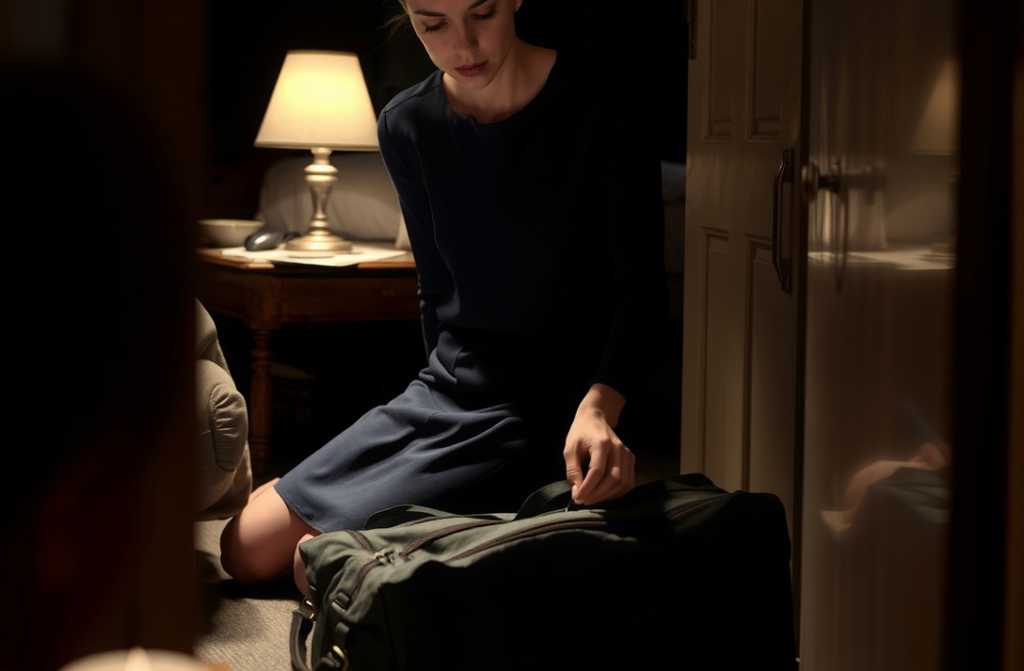
She opened her wardrobe and took down her old navy bag with its well-worn strap. She packed quietly: two jumpers, jeans, three dresses, underwear, socks. Her passport, driving licence, bank card her tiny savings, tucked aside from the household money Edward gave her. Notebooks. Laptop. Charger. The essentials.
She didnt take her wedding ring, just left it by the bed. Nor the chain with a pendant Edward had gifted on their first anniversary. Or the earrings. Not from spite. She simply didnt want anything of his.
Edward appeared in the doorway as she zipped her bag.
What do you think youre doing?
Im leaving.
He glanced at the bag.
Now? Its the middle of the night.
Yes.
Dont be silly, Susan. Where will you go?
To Harriets.
Harriet, he repeated, as if the name was an inconvenience. Speak to her tomorrow if you must. Sleep now.
Im leaving, Edward.
He hesitated.
Because of what I said about the chair? Are you serious? I just didnt want an antique broken.
I know what you wanted.
Do you, now? What did I want? Tell me.
For the first time in a long while, she looked at him directly.
You wanted to remind me of my place. I got the message. Thank you.
She lifted her bag and left the room. He followed down the hall.
Susan. Wait. I wont have you back if you leave now.
She pulled on her shoes, shrugged on her coat, opened the door.
All right, she said, stepping out.
It was cold in the street, late Octobers damp breath, no one around. She walked toward the Underground, hefting her bag, considering she really should have worn different shoes, Harriet would probably be in bed. Thats all she thought. Not if she was right, not of futures. Only: bag, shoes, Harriet.
Harriet Bennett opened her door three minutes after Susans knock. Eyes heavy with sleep, hair in a wild swoop. She took in Susan, the bag, Susan again.
Come in, she said. Tea?
Yes, please.
They sat in Harriets tiny kitchen, in her one-bed off Angel, drinking tea with plain biscuits in silence. Susan told the story in brief: dinner, guests, the chair. Harriet listened, not interrupting.
About time, she said at last.
You did tell me.
I did. But its better you found your own way.
Susan nodded. She stared at her mug, tallying up tomorrows worries: work, money, how long she might stay, the fact that Art History would never feed her, those five years lost.
Harry, is it all right if I stay a bit?
Su, are you mad? Of course you can.
Ill find work. Quick.
Dont rush. Sleep first.
She slept on Harriets pull-out in the lounge. It took a while for sleep to come not restless, simply deliberate. She didnt think about Edward. She thought about the apple crumble left sliced in the flat. It had turned out well.
She found a job in a week. Fresh Lane, the supermarket five minutes away, needed a cashier. Susan filled in the form, interviewed with the manager a brisk woman called Mrs. Hughes and started within days. The job was simple. Scan, smile, say Thank you, see you again. Susan was good with people. Old ladies spoke to her by name within a month.
Money was tight. Harriet refused to charge rent and Susan couldnt quite accept it, so she shopped and cooked for two and kept the place tidy. Harriet insisted it wasnt needed; Susan insisted it was, and so they found their balance.
Edward messaged two weeks later: You still at your friends? She never replied. Then his lawyer wrote with settlements. Susan asked Harriets friend Charlotte, a solicitor, to advise her. Edwards flat purchased before marriage; she had no claim. As for assets, not much that could be argued. Susan asked for nothing but a swift disentanglement, which she got. Three months after that night, it was all over.
She stayed at Fresh Lane. When Mrs. Hughes offered her the head cashier position a little more pay Susan accepted. In her spare time, she began to bake again, first for the pleasure it gave, second because Harriets oven proved reliable and friends began to request cakes and tarts for occasions.
So her first orders began: small, homely, paid with cash. A birthday cake, a pie for someones office party. Susan kept jotters: tallying orders and pennies, setting savings aside.
She never thought it would turn business. She just baked because it filled her with something like hope and it turned out she was genuinely rather good at it.
In six months, she moved to a spare room in a house-share in Kentish Town. Small, second-hand furniture, her own space. She bought plain sheets, two pillows, a stovetop kettle. She pinned to her wall a free postcard print of Vermeers Girl with a Pearl Earring. She liked that the girl looked back over her shoulder, as if just caught turning.
Her body, she handled as she’d been told not to: sensibly. Walking everywhere. Cooking for herself. Not counting, not weighing. A cheap membership let her swim weekly. Her weight crept down, unhurried. She realised her body wasnt the culprit at all it had borne what was given to it, and now was given less.
She wandered museums again. Alone, Sundays. Always the cheapest ticket, lingering at length before what she wished. No one hurried her. Sometimes she thought of that lost PhD, without regret with curiosity. But what was gone was gone.
She found her way into a bakery by chance a new place called Flour & Honey that opened down the street. The owner, Mrs. Lawrence, was fortyish, a sharp but kind cake-maker who also ran classes. One afternoon, Susan dropped by, they chatted, and Mrs. Lawrence, discovering Susans skill, offered weekend work. Susan accepted, glad for the change.
It was nothing like her past routines: bright white walls, shelves of tins, vanilla and golden syrup thick in the air. People came and went; children pressed noses against the cases. Mrs. Lawrence worked without fuss or panic.
Ever think of opening your own place? Mrs. Lawrence asked while they washed up one night.
No, said Susan, paused. Or yes. I just doubted I could.
Oh, you can, said Mrs. Lawrence. Its tough, but its real.
Susan kept on at Fresh Lane but spent her weekends at Flour & Honey. Her savings grew. She studied: watching Mrs. Lawrence price, buy, negotiate, question suppliers all the practicals. Mrs. Lawrence had time for questions and gave answers that mattered.
It took a year and a half to gather enough for her own lease. Harriet lent a bit, Mrs. Lawrence added some, believing in her from the first.
She found premises in a quiet Mews off Kentish Town. Ground floor, a single, clean window. She painted the walls herself in white and soft green. Shelves were built by an old friend of Harriets. The cake display cost more than expected, but she told herself it was an investment.
She named the place Bramleys, for the apples with sharpness better than all the rest.
The first month was a blur: baking, numbers, suppliers, tax, timing. Not many customers to start then word spread. Someone wrote about her in a local blog, someone brought a friend, soon people returned for crumble that reminded them of their gran’s, but just a touch better.
She worked hard. Harder than at Fresh Lane, but differently. By choice.
It was in Bramleys second month that she met Tom. He wandered in seeking a birthday cake for his mum. She steered him to a cinnamon-pear sponge, asked if he wanted a message iced on top. Mum, youre the best. She wrote it, boxed it. He stopped at the door.
Are you here every day?
Closed on Wednesdays.
Got it, and he left.
He came again Friday. Coffee and apple crumble at the window nook, reading on his phone. Good crumble, he said.
Thank you.
Bramleys?
She regarded him properly at last: thirty-five maybe, checked shirt, direct gaze.
Bramleys, she confirmed.
Thought so. Tastes different.
You know your apples?
Mum has an allotment. Grew up on Bramleys.
So began their chats first short, then longer. She learned he was an engineer, worked HVAC in a small firm, lived alone, spoke without rush or flattery, watched her without judgement.
One day he asked if shed like to walk in the park Sunday.
She thought, then said Yes.
They walked for hours, talking about their lives: his growing up in Oxford, her art history, Vermeer, opening Bramleys. About starting over, not about Edward. That chapter hadnt claimed its time yet.
His name was Tom Fletcher. He listened well, asked honest questions, remembered her words. Once he brought in a crate of Bramley apples Mum said theres plenty. Figured youd use them. She laughed.
You and your mum plotting against me?
She doesnt know about you, he said, grinning. Yet.
She registered the yet, and let it pass, not missing it.
They saw each other steadily. Museums. A trip to the V&A for a Flemish exhibition, where she spent ages narrating invisible stories in the brushwork. He listened, not to humour her but out of interest. They lingered in a cafe to discuss what painters saw in light. She realised she hadnt spoken that way in years.
About Edward, she finally told him after four months, by then knowing this was serious. Over coffee in her kitchen, prompted by a faded photo of little Susan with her grandmother at an old country fence.
You spent time in the country then?
Childhood. Gran lived near Canterbury.
Was that nice?
It was She baked mornings. I always woke to the smell.
Is that why you bake?
She reflected.
Maybe. And because sometimes it was all that made me feel better.
He looked at her.
Will you tell me?
And so she did the five years, the PhD lost, the coldness, the dinner and the chair. She spoke calmly, without trembling. He listened, never hurried her. Only when she described the dinner party did he interject, quietly,
Thats cruel.
Not a question. Just the truth.
I know, she said. He thought he could.
And you?
I thought he couldnt, and I left.
He was silent, then,
Good for you.
She nodded.
Tom, I want you to know it because its part of me now. Not the main part, but part.
I know. Thank you for telling me.
He didnt call her brave, didnt curse Edward. He took what shed given and sat beside her. It mattered.
By two years after that night, Bramleys was steady, with regulars, and Susan hosted baking workshops twice a week one for children, one for grownups, always booked ahead. By December she hired her first helper, Lottie, a tidy culinary student.
Tom visited most evenings. Sometimes helped carry heavy flour sacks, sometimes just sat with coffee and his laptop. They let things take their time. She liked that.
She was fifteen kilos lighter than that evening, but she didnt know exactly, hadnt weighed herself in ages. One day she tried on an old dress from the blue bag it fit. She hung it back up with a casual shrug. Her body simply became what it needed to.
She looked in the mirror now and again not avoiding, not lingering. Just another face in the glass.
Edward called in November, two years after she’d left. Number unknown, she answered out of habit.
Susan, he said.
She recognised his voice at once, a touch lower, or maybe she was changed.
Yes.
Its Edward.
I know.
He hesitated.
I want to see you. Talk.
About?
Us. About then. I he seemed to search for words. I have something to say.
She was standing at the Bramleys counter, Lottie packing a box, drizzle beading the window.
All right, she said. Come here. I have a bakery now, heres the address.
She gave him directions. He jotted them down, and arrived next day, Tuesday at two.
She saw him approach through the glass, umbrella in hand, good coat, face thinner, eyes etched with lines.
Its nice, he nodded, glancing round. All yours?
Mostly.
How are you?
Fine. Sit down.
Lottie poured coffee. Susan put a plate of apple crumble before him. He looked, a small smile crossing.
Bramleys?
Yes.
You always liked Bramleys.
Theyre sharper, better for baking.
He sipped his coffee, she watched, hands calm.
Susan, I he paused, eyes darting. Works not good. Ralton dropped us. Lost two other partners. Closed an office, the rest is lawyers swallowing cash. Frankly, it’s a mess.
She listened.
I’ve been thinking. About the past, how I behaved. That evening. He met her eyes. I get it now. It was wrong. I was out of order.
Silence.
Yes, she said quietly. You were.
I want to say, Im sorry. I really am.
I hear you, Edward.
He hesitated.
I was hoping, maybe He trailed off, but she understood.
She looked at who he was now: sharp cheeked, tired about the eyes. No malice, no triumph, simply looking at someone she once loved and realising he was just a stranger, not an enemy.
Edward, Im glad youre sorry. Thats important.
She let her words settle.
But no, she said. I dont want to start again. Not because Im angry. Just Im someone else now. I dont need what you could give, then or now.
He stared at his coffee.
Are you seeing someone?
Thats not the point.
I was just asking.
I know. Edward, I hope it gets better, for you. Genuinely. It just wont get better with me.
He looked up. There was something in his eyes not full contrition, more the bafflement of a man whod expected a different ending.
Youve changed, he said.
I have.
Really changed.
Yes.
He finished his coffee, stood, shrugged on his coat, grabbed his umbrella.
Good crumble, he said.
Thank you.
As always.
He reached the door, paused with the handle.
Susan. I He didnt finish.
Goodbye, Edward, she said.
He went out. Lottie busied herself with the display as if it needed urgent care. Susan watched through the rain-soaked glass as he hurried up the lane, his coat already damp. He turned the corner and was gone.
She sat for a moment, then rose and retreated to the kitchen, hands automatically weighing, flour, butter, pinch of salt.
Tom came in at half-four, as usual. Left his dripping umbrella at the door, shook his jacket dry, took his usual place by the window.
How was your day? he asked.
Lottie poured his coffee before he finished.
Fine, Susan replied, emerging. Saw a ghost from the past.
He looked at her, concerned.
All all right?
All right, Susan said, coming to the table. Im fine.
He took her hand in his and simply held on, asking nothing more. Outside, the rain kept falling. Inside, the air smelt of cinnamon and apples and rising cake.
Lottie fussed over the counter. A woman peered in, a child tugged at her side.
Mum, look! They have apple ones!
I see shall we go in?
Lets, Mum!
Tom chuckled softly. Susan grinned. She walked to the front to greet them as the bell chimed, and a draught of autumn rain twirled through her shop.






