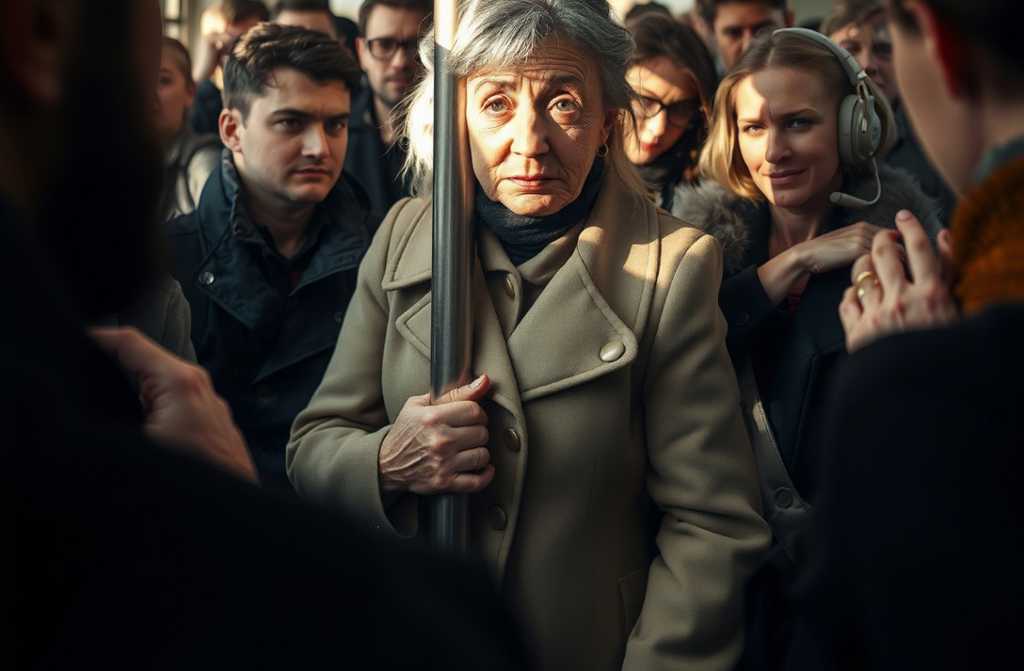
I need to see a doctor, and they call me Granny…
Granny, you really shouldnt travel during rush hour, said a young man with headphones, not even bothering to look at Edith Wilkinson. Youre just in everyones way.
She stood wedged by a tangle of elbows and briefcases, clutching a pole for dear life, and the boys words rang out so loudly that the whole bus fell silent for a moment. Her heart gave a little lurch, and suddenly the air seemed to thin, squeezed out not so much by the cramped bus as by the waves of shame.
Shes right, you know, chimed in a girl glued to her mobile. They get free bus passes and then they pick the busiest time on purpose. Honestly, shed be better off staying at home.
Edith squeezed the handrail tighter. Her knee throbbed, her chest felt tight, and now her head had decided to join the party by spinning. She wanted to say somethingto explain that the doctors booked her for nine, that she couldnt possibly get there at any other time, that walking to the surgery was an Olympic feat these days, with every step a negotiation with gravity and pain. That she wasnt standing in this scrum for a laugh.
But the words bottlenecked in her throat. She could only lower her gaze and try to physically shrink, as if blending into this sea of grumpy commuters might make her invisible.
The No. 47 bus lurched from one red light to another, each jolt sending aftershocks through Ediths knees. Lower Darford woke up early, and by eight the buses were already packed sillier than a student pub on a Friday. Edith knew this of course, and she also dreaded these morning expeditions. But when your only appointment with the NHS cardiologist comes at nine, and dear Dr. Mary Franklin only sees patients before lunch, what choice do you really have?
Shed spent last night prepping for her grand outing. Laid out her NHS card, her list of medications, and the ever-expanding paperwork from her last hospital visit. Popped her nitroglycerin in her handbagjust in case. Then she sat on the edge of the bed and imagined tomorrow: up at six, a military operation just to wash, dress, and eat what little breakfast her nerves would allow. Out the door by half seven, even though the stops only five minutes away (ten, really, when the stairs feel like Everest).
Once, she wouldnt have given a second thought to a bus ride like this. Shed been a teacher, after all, up with the lark, insufferably chipper, commuting by sardine can every morning. But back then, people would offer you a seat if you looked a bit older than the TV presenters. Back then, they didnt glare as if youd just crashed their party by having the temerity to exist in public.
She often wondered: When exactly did everything change? Was it when she retired eight years ago, or later, when shop assistants figured the old lady in aisle four was surely up to no good, and everyone in a queue turned into Usain Bolt to dodge the slow coach at the front?
This morning her alarm went off in the dark hours. It took her a heroic stretch before she could lever herself upright. The knee was already grumbling away, and every movement was a debate. She splashed cold water on her face (hoping for a miracle), made herself weak tea, and nibbled half a slice of toast. Nerves had already tied her stomach in knots.
She ran into her neighbour, Dorothy Baxter, in the stairwellwho shuffled along with old Percy, her ancient beagle.
Edie, wherere you off to so bright and early? Dorothy asked, Percy sniffing everything but the conversation.
Appointment with the cardiologist. Nine oclock sharp.
Dorothy grimaced, giving her the look old war nurses reserve for tales of the trenches. Youll really cop it on the bus at this hour. Its hell out there! Why not try a bit later?
Cant, Edith sighed. You get what youre given these days. If I put it off again, next slots Christmas.
Well, just you mind yourself. People have gone awfully nasty lately. Yesterday I saw an old dear on the trolley, barely upright on her stick, and these young lads gave her what-for for taking up a seat!
Those words stuck like a scone halfway down. Edith was nervous enoughnow Dorothy had her pondering all sorts. But there wasnt any other option. Health comes first. Blood pressures all over the shop, and her heart has taken to skipping beats just for giggles. Dr. Franklin promised more testsmaybe a tweak, maybe notbut you have to show up first.
A crowdmostly young, all attached to their mobiles like umbilical cordshad already gathered by the stop. The bus arrived already fit to burst. The doors whooshed open, and they were off like sprinters for the last chips in the shop. Edith was, predictably, the very last to wedge herself in, hanging grimly onto the pole by the door.
Ageism on public transport starts with a look. That half-second scan, the silent Do we need this now? as if your very presence is a provocation, an insult to those who actually have somewhere important to be.
The headphones boy was next to her, all athletic frame and digital distractions. The bus started, Edith got nudged in his direction.
Careful, he muttered, one earbud out for a second.
Sorry, she managed.
Granny, you really shouldnt travel during rush hour, he declared more loudly this time, nudging his mate across the aisle. Youre in the way.
That hurt. Not just the words, but the sheer casual indifferencelike she was a particularly stubborn suitcase blocking the door.
Thats right, the girl with the social feeds chirped, never looking up. They get free travel and still pick peak times. Should just stay home, innit?
Edith felt tears slip, quiet and mostly unnoticed. She turned to look out the window, pretending to admire Lower Darfords mid-rise blocks and dog walkers, but really seeing a younger herself, thirty years ago, when shed offer her own seat to folks who needed it and scold her son if he dared pretend not to notice. It had been real shame back then, not giving up your spot for pensioners.
What happened to kindness? To seeing an actual human being in someone over sixty?
A gentle voice: Dont pay attention. Edith turneda careworn woman in her forties, offering a small, supportive smile. Theyre not all like that.
She nodded, too choked for words. Thank you, she mouthed, tears still jammed somewhere between heart and eyes.
The bus crawled along, picking up even more passengers. People pressed in tight, breathing each others air. Ediths head really began to spin. She clung to the rail as if the North Sea raged beneath her.
Shell go down next, someone muttered behinda right charmer. Why do they pick now to go joyriding?
She squeezed her eyes shut, counted to ten twice, and did the breathing Dr. Franklin taught her: in through the nose, out slower than in.
Peak-time travel for pensioners is a marathon no one asked to runnot just because its crowded, but because it leaves you feeling utterly unnecessary. You start to believe youre a nuisancesomeone whose very existence is an affront to the urban experience.
Three stops left before the surgery. Edith rehearsed what shed say to Dr. Franklin: the blood pressure, the palpitations, the breathlessness that now came just crossing her living room.
But the words of headphone boy kept echoing: Granny. When had she become granny to strangers? When had Edith Wilkinsonthe person, with a history and a name, and a bit of self-respectvanished?
She thought about her mother, whod also caught buses late in life. Back then, someone always offered a seat, no questions asked. Not to do so was shameful. People were raised differently.
And now? Now the shame seems to belong to simply existing in public after pension age.
The bus lurched at yet another light. Edith was nearly launched forward but managed to hang on, only to feel another elbow jab her side.
Oh, do stand still, hissed someone else.
She kept quiet. What was there to say? That standings hard on a busted knee? That you dont quite have the balance of your youth? That with every lurch you risk a starring role in a viral video called Pensioner Takes a Tumble?
Finally, her stop. Edith began the slow shuffle to the door. People parted, faces twisted in annoyance.
You should get ready to get off earlier, grumbled a woman loaded with grocery bags.
Sorry, Edith mumbled.
Disembarking was a featthe step down felt as high as Tower Bridge and twice as daunting. She nearly lost her footing, and grabbed the railing as if it owed her rent. The doors slammed behind, the bus all but giving a sigh of relief at her departure.
She rested at the stop for a moment, legs wobbly, heart doing tap dance routines. No benchprobably sacrificed for budget cuts or, more likely, anti-vandalism measures. Five more minutes walk to the GP. On paper, nothing, but today it felt like marching to Scotland.
Societys attitude toward the elderly in public isnt a minor thing. Today, Edith felt the cold edge of it, more than ever.
Reception at the surgery was packed. She took a number, saw a wait ahead, and slumped onto a hard plastic chair by the window. Her hands trembledwhether from exhaustion or humiliation, she couldnt decide.
Edith Wilkinson? Dr. Franklins warm voice. She opened her eyes to find the GP with her folder, concern in her eyes. You look awfully pale. Are you all right?
Just a bit tired. The bus was a bit much, Edith managed, trying for a smile.
Let me guessrush hour? Tough one. I get stuck in it myself sometimes, Dr. Franklin sat next to her. Checked your blood pressure yet?
Not yet.
Come on, lets not make you wait. I can see youre not up to queueing.
In the surgery, Dr. Franklin had her lie down, then frowned at the monitor. Thats rather high170 over 90. Something happen on the bus?
Edith finally broke. Tears bubbled up, quietly but unstoppably.
Oh Edith, darling, what happened? Dr. Franklin handed her tissues.
In the bus… they said I shouldnt travel. That I was in the way. That I ought to stay at home.
Dr. Franklin sighed, pulling up a chair. It happens far too often, I know. You have every right to ride the bus, any time. Needing a GP doesnt stop for the convenience of others.
I know in my head, Edith sniffed, but it still hurts. The looks, the words… like Im not wanted anymore.
People are tired and snappy these days, and its easier to sneer at a pensioner than question why public transport is an endurance test for everyone, Dr. Franklin offered gently. It wasnt always this way, but not everyone is like those brash kids. Someone did speak up for you.
One woman. But the rest… Edith shook her head. How am I supposed to do it again, next week, back for tests, to the pharmacy? What if I have to go when theres no other choice?
You just doand remind yourself youre not doing anything wrong. You deserve treatment, and no snide commuter can take that away.
They chatted a bit longer; Dr. Franklin ordered more tests, fiddled with Ediths prescriptions and promised to book her for a gentler hour next time.
Try and come a bit later if possible. Ten oclockrush hours faded by then. Ill do my best to get you that slot.
Thank you, truly, Edith said, pockets bulging with appointment slips.
She left the practice at nearly eleven, and the day suddenly seemed lighter. The bus back had spaceluxury of luxuries, she even snagged a seat by the window. Lower Darford glided by, a town shed loved for a lifetime, raised her son, and worked as long as health allowed.
Getting to the doctors on public transport has become a quest for many pensionersone filled not just with aches and pains, but the constant gauntlet of stares and sharp tongues.
At home, Edith made tea and settled by the window, watching neighbourhood life: kids on swings, a few dog walkers, the inevitable cluster of gossiping pensioners on the bench. An average English day. An ordinary life. Except that inside, everything had shifteda fresh layer of fear, afraid already of the next trip.
That evening, Dorothy Baxter popped round.
So? Did you survive? she called, striding into the kitchen. Shall I put the kettle on?
Please do. Edith sat down, weary. Dorothy, do you find buses as grim as I do? Arent you nervous?
Course I am, Dorothy admitted, pulling mugs from the cupboard. I try to go late morning or early afternoon. Not always possible, thoughvet appointments, eye checks, you know. And its not as if the bus is free anymore; even with a pass, I sometimes owe a few quid!
But what if you cant avoid the busy times?
Then I brave it. What else is there? You cant take a taxi for every little thingDr. Franklins prescription doesnt include Black Cabs! Only yesterday, in the trolleybus, saw an old dear stand with her stick, while two young chaps scrolled their phones flat out ignored her. She asked them for a seat and got nothing but snarls about privileges and entitlement. Cheek!
Edith sipped her tea in silence.
It happened to me today, too, she said softly. They said I had no right to travel at nine. That I was in their way.
Dorothy flapped her hands in outrage. Honestly! Its outrageous. Where are we supposed to go? We have appointments, we pay taxes, we need to see GPs. Hows a pensioner to stand up for herself if even the bus becomes enemy territory?
I know. Edith set down her mug. Part of me knows I have the right. But part of mes paralysed. I dread hearing those words again.
I get it, nodded Dorothy. After my nasty episode, I barely left the flat for a week. Then I thought, why should I let them win? If they bully us into staying in, what becomes of us? Were people. And Ill be damned if I let todays lot push me out of my own city.
But its not easynot just physically. Emotionally, its the hardest bit. We were respected onceoffered seats as a matter of course. Now…
Now its a different world. Dorothy topped up her tea. People have grown hard. Everyones in a hurry, no time for each other. But if we withdraw out of fear, it gets worse. Sitting isolated at home just feeds the loneliness.
Arent you scared? Edith asked.
I am, love. Every time. But whats the alternative? If I stop going to the GP, stop popping down to the shops, Ill rot at home. My health will crash and Ill be lonelier than ever.
They sat, sipping tea in companionable silence, watching dusk spread outside. The streetlights flickered on, warding off gloom.
You know, said Edith at last, Dr. Franklin told me not to let them break me. That I have every right to get out and about.
Shes right, Dorothy agreed. We worked, we did our bit, we raised families. Weve earned respect. And if someone cant understand that, thats their problemnot yours or mine.
How do we keep going? Even when were scared? Edith looked across at her friend. Therell be more buses. More appointments to keep.
You keep going, Dorothy said firmly. Because you havent got a choice. Try not to pick the peak, but know youre far from alone. There are thousands of us, facing exactly the same.
When Dorothy left, Edith sat for a long time, replaying the mornings humiliation. The boys words, the thick knot of helplessness, the struggle to hold back tears.
But Dr. Franklin and Dorothy were rightshe had every reason to be on that bus. Her medical appointments were no less important than someone elses nine-to-five. She couldnt cower at home for fear of being told off.
Her mother wouldnt have hidden. Shed have squared her shoulders and fought backor at least kept her dignity. But times had changed, and perhaps so had Edith herself, patience worn thin, nerves frazzled.
She went to bed late, replaying the day. Maybe she shouldve defended herself, explained her situation. But in her heart of hearts, she knew: the people who judge pensioners arent really interested in explanations.
She fell asleep and dreamt she was young againwalking down the street with energy to spare, offering someone else her seat, earning a grateful smile. And feeling, truly, that shed done something right.
She woke with the heaviness of that dream pressing in. It seemed impossibly far, that world where the old were respected and not resented.
But reality waited: another week, another trip. Another chance to catch a stray attack on her dignity.
She made tea, sat with her notebook, and wrote: Appointment, 15th November, 10:00. Leave at 9:15. Bring documents, NHS card, medication. And underneath, for good measure: If youre scared, remember you have the right to go. Youre doing nothing wrong. Your health matters.
The week drifted by in a haze of mundane chores. Dorothy popped in daily; they compared news, neighbours, aches and pains.
But Ediths mind always wandered back to that day on the No. 47 bus: the sting of the boys words, her shame. She struggled to imagine a clever retort that would change things. Should she have announced, Im going for a heart check! Would it have melted the ice? Unlikely.
Her son, Peter, called from Leeds. How are you, Mum? Hows the ticker?
All right. Saw Dr. Franklin this week, she replied, omitting the bus saga. Why worry him? Besides, hes got a car.
Glad to hear it. Got all your tablets? Enough money?
Im fine, love. Dont worry about me.
They chatted about his job, the grandchildren, the usual. Afterward, Edith felt the echoing emptiness every pensioner dreads. Outside, Londons evening lights twinkled; inside, she was another old lady, unseen and unheard, in danger of shrinking into the wallpaper.
Thats how social isolation creeps in: first you avoid the busy hours, then outings altogether, until even the corner shop feels as out of reach as Kilimanjaro.
No, she wouldnt let it play out like that. She had every right to live her life. Shed have to fight herself as much as society, but she was determined.
The night before her next appointment, she prepped: papers, pills, sturdy shoes, coat zipped to the chin. The forecast: a typical English chill.
She slept littleworries about another onslaught of unkindness playing out in her minds cinema. What if someone said something again? What would she do?
She decidedthis time, no comebacks. Not for lack of courage, but because arguing in a moving bus never changed a small mind. Sometimes, silence was dignity too.
On the day, she left at quarter to nine. Dorothy met her at the door, linking arms for the walk to the stop. The knee felt better, possibly out of fear, possibly out of spite.
This time, only a handful waited. The bus was blessedly half-empty. Edith found a window seat and exhaled. Dorothy waved goodbye.
As the bus trundled towards the health centre, Edith watched her city roll bythe same city shed served, belonged to, deserved to enjoy as much as anyone else.
A young man boarded, sat opposite, and said nothing. A couple more stops, a few more passengers, but the mood was different: a regular journey for regular people.
No one sneered, no one stared. Edith felt her tension retreat; perhaps the whole world wasnt so unkind after all.
Dr. Franklin greeted her with a smile. Made it in one piece? she teased, checking Ediths pulse.
Easier today. Quieter bus, friendlier city.
As they dealt with prescriptions and next steps, Dr. Franklin admired her spirit. Youre doing brilliantly, Edith. Never let those sods get you down.
Edith left, feeling lighter. Yes, there would be tough journeys ahead. But now, she understood: the pensioners secret weapon wasnt a sharper tongue, but the simple determination not to disappear.
Home again, with tea and notebook in hand, Edith scrawled, Appointment: 29th November. Get bloods done in advance. Then, emboldened, she added: It worked last time. Itll work again. I can do this.
Dorothy visited in the eveningDid you survive? Of course she had.
They chuckled over sandwiches and weak tea, the way the English always do, and celebrated a small act of defiance.
Changing societys attitude to the elderly wont happen overnight. But every pensioner who holds their groundwho keeps showing up, quietly reminding the world of their right to existchips away at the wall of indifference and resentment.
Before bed, Edith looked at her note: I can do this. Small words, but powerful for their quiet insistence. She could, she would. Because whats the alternative? Shrinking out of sightand lifejust to avoid a strangers frown? No, thank you.
Public transport will remain, for the foreseeable future, a battleground for dignity. Until the day everyone on the bus can see the person, not the inconvenience, in the pensioner at the door. Until getting to the doctor at 9am is no longer an exercise in endurance but a simple, unremarkable act.
Until then, Edith resolved to keep going. Because living, even anxiously, is better than not living at all. She had the right to her town, her doctor, her morning bus.
She slept, and dreamed of an ordinary bus ride. No glares, no mutters. Maybe even a smile. And that hope, small as it was, was enough.
Maybe, some future morning, it wouldnt just be a dream. Maybejust maybeevery granny on the No. 47 would get to her appointment without a second thought at all.
Until then, shed show up, day after day. Shed remember she was a person. And that, really, was the strongest right of all.





