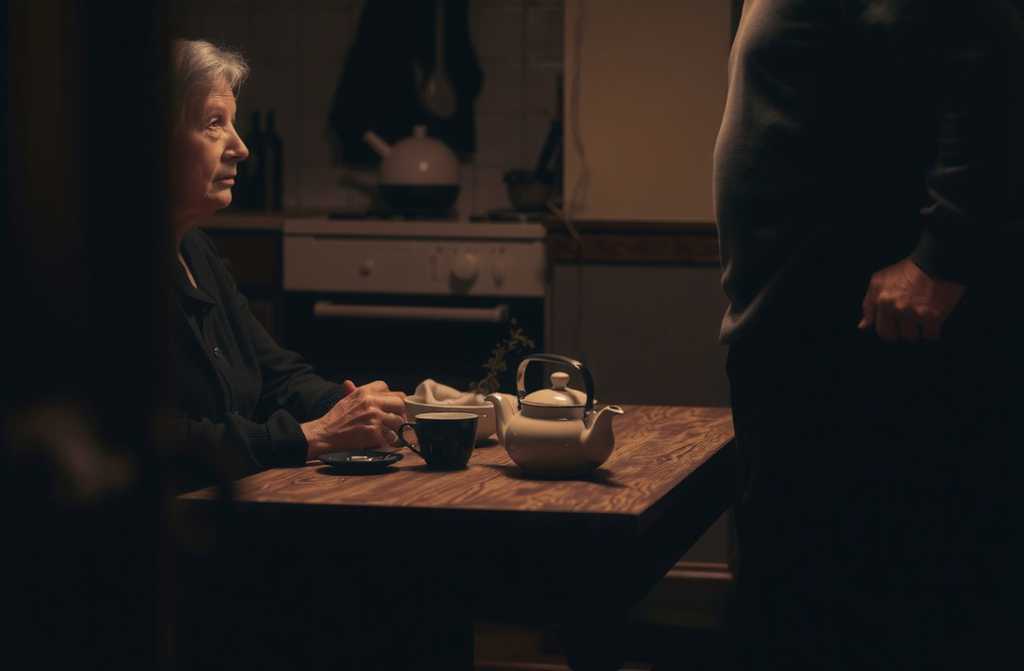
My husband retired, and I want to divorce him.
Bernard, sorry, Im tied up in a meeting. Ill have to call you back.
The voice on the other endmy old deputy, Adamwas cool and detached. Gone was the familiar deference, or even the simplest warmth. Only polite impatience, as if he couldnt wait for the conversation to end.
I know, Adam, but about that old contract
Bernard, seriously, I must dash. Contact the archive, or speak to the new head of department. All the best.
Click. The line went dead. I slowly replaced the receiver. There I sat in my home study, at the same oak desk where Id once signed off deals worth millions. Now, on its polished surface, lay a bundle of unpaid bills and the *Times*, which Id already read cover to cover.
Phoning the office again?came Julias voice from the kitchen, carrying a tired pity that only deepened the gloom.
Just sorting something out, I muttered, looking away.
She emerged, drying her hands on a tea towel. Julia had always been a quietly capable woman; even at sixty, she was impeccableshort, silvery hair, a touch of lipstick. It was as if she still dressed for work at the library, where books, readers, and colleagues awaited her. Watching her, something twisted in my chest. She had purpose. She had somewhere to go.
Bernie, what are you doing to yourself? Its been three months.
Im fine, I said, standing as if to prove it. Just had to clarify a small thing.
Julias silence spoke volumes: I understand, but Im so very tired of understanding. She turned and headed back to the kitchen. I stood alone, listening to a distant car outside, the dull echo of a neighbours door downstairs. A weekday. Morning. Everyone at work. Everyone with their own businessexcept me, confined to these four walls like a discarded cog.
The first month of retirement felt like a long overdue holiday. Thirty-eight years at Armstrong Engineering, the last fifteen as Head of Procurement. That was my life: negotiations, contracts, meetings, phone calls, decisions for which I alone was responsible. I knew how to hold everything together, how to speak with suppliers, wring out the best terms, run my team. People respected me, came to me. Ask Bernard. Bernardll sort it. Bernard knows. Those words were the air I breathed.
I remembered my last day. Farewell in the boardroom, cake, flowers, speeches about how Id be missed. Always a welcome visitor, the Managing Director said, squeezing my hand. I smiled and thanked them, but inside, a void already yawned wide. As if I were present at my own living funeral.
The first few weeks were peppered with modest joys. I slept in, watched daytime telly, read the paper. Julia was glad I was finally home; we could linger over breakfast. I even fixed the tap that had dripped for six months, changed the hallway bulb. Our daughter Charlotte brought the grandchildren and I fussed over them, told stories about the factory, about how things were done in my day.
Slowly, my world shrank. Days stretched interminably. Julia left for the library at nine, returned at six. Nine long hours. What to do? I tried reading, but my mind wandered. The news was just infuriatingeverything, everywhere, wrong. Id go for a walk, but daytime in the park felt strange. Young mothers wheeled prams, pensioners on benches, men out of work. Im not like them, Id think, speeding up. I always worked.
Crisis of male retirement crept up quietly. Annoyance replaced boredom. I started calling the officeat first with genuine questions, later just to chat. The conversations became brief. My old colleagues too busy, distracted. Adam, whod been my junior and now sat in my chair, was especially frosty. I could see it: to them, I was out of sight, out of mind. A relic.
Retirement depression set in slow as fog. I stopped getting up earlywhat for? Julia would creep out, leave me breakfast; sometimes I didnt touch it. No appetite. Id wander in my dressing gown, fuss with old folders, sift through redundant paperwork. The phone only rang with spam or Julia asking what to buy for dinner. No one sought my advice anymore. The loss of significance ached like a bruise.
Dad, you alright? Charlotte rang one Wednesday. Mum says youre a mess.
Im fine, I snapped. Im resting.
Dad, you cant just carry on like this. Find a hobby. The internets full of ideas. Try a course?
I dont need a course, my voice rose. I managed people for decades, and you offer me courses?
Oh, Dad she sighed. Mum has a hard enough time. Do you realise how tough it is for her? She gets back, and youre just
What? Am I just in the way?
Thats not what I meant. Why do you always take things so badly?
I hung up. My hands trembled. My heart thudded. A mess. Find a hobby. Easy for them to say. They didnt know what it was like to realise, overnight, that nobody needed you. That everything youd built was finished, and youjust one more pensioner. Anonymous, superfluous.
Family rows escalated. I started picking fault with everythingJulia bought the wrong bread, oversalted the soup, spoke too loudly on the phone. I noticed every spec of dust, every shoe out of place. As if, with nothing left to manage, I could only police the little things.
Bernie, enough, Julia snapped one evening. She was chopping potatoes, and Id told her she was doing it wrong. Stop trying to control me. Youre not at work.
Just saying, its quicker this way.
I dont need your potato advice! Ive cooked for thirty-five years. If you dont like it, do it yourself.
Come on, Jules.
No, you listen. Youve become a right old misery. Its never right, never enough. Im exhausted, Bernie. Understand? Exhausted.
I stared at the table. Anger boiled inside, but what could I say? These criticisms, this urge to managemy only proof, now, that I still mattered.
Sorry, I forced out.
Julia sighed, picked up the knife again.
Go watch TV. Ill call you for dinner.
I went, but the TV was a blur. Julias tired face haunted me. I was ruining her life. I couldnt stop. If I didnt manage something, however trivial, I felt Id disappear completely.
Male retirement wasnt as straightforward as Id imagined. I survived the turbulent eighties; kept the factory going through thick and thin, saved my team from disaster. Yet now, facing my own empty life, I was utterly helpless. The emptiness spread and grew. I barely slept. At night Id listen to Julias breathing, steady and peaceful. Her world hadnt changed. The library still wanted her; the readers still needed her. And me? Who was I now?
Tony, my old friend, rang early October.
Bernie, you joined a monastery? Go fishing with me Saturday.
Not in the mood, Tony.
Thats *exactly* why you need it. Ill fetch you at eight. No arguments.
Tony hung up before I could protest. Sure enough, Saturday he was there, beeping outside. Julia, on her way to coffee with friends, nudged me toward the door.
Go on. You need a break.
So I went, more to appease her than myself. Tony was full of swagger. Hed retired two years earlier and seemed all the better for ittan, sports jacket, rod and tackle box in the back.
Hows life? he asked as we drove out of town.
Alright.
Liar. Julia told my wife youve withdrawn into yourself.
Silence. Betrayalmy own wife confiding in friends.
Bernie, listen, Tony went on. I went through it too. First year after retirement, thought Id go round the twist. No idea what to do with myself. My wife said either I got a grip or shed move in with our daughter. Thats when I realised it was time to change.
So what did you do?
First, stopped ringing work. Accepted that I was outand always would be. Like breaking up, you know? You have to let go. Then, I found new things. Fishing, the allotment, started carving wood. The hands remember. Best of all, I realised I wasnt dead. Id just started a new phasemight even enjoy it if I gave it a chance.
I listened, more irked than comforted. Easy for him. Tony had been a craftsman, loved working with his hands. Id been a leader. My worth was my team, my authority, my respect. Losing that was like losing my spine.
On the riverbank, we spent the day in stillness. Tony reeled in a few trout and told tall tales, laughing. I barely spoke, staring at the waters endless hush. That hush pressed in, reminding me that the future was nothing but years of this: empty, inconsequential, pointless. How could I accept my new identity, when everything rebelled against it? I *had* been somebodydidnt that count for anything?
Back home, Julia met me at the door.
Well, did you enjoy it?
It was alright.
She sighed. The same answer. Alright. She watched me take my shoes off, her eyes full of distance. The man shed lived beside for thirty-seven years was almost a stranger now. Walled behind silence and irritability. She kept trying to reach me, but I wouldnt let her.
A week later, Charlotte came round with her husband and their two. Julia brightened, set the table. I emerged from my study, said hello, but kept my distance. The grandchildren rushed to hug me, chatting about school, but I nodded absently, barely listening.
Over lunch, Charlotte had had enough.
Dad, whats with you? Are you alive at all?
Charlotte, Julia tried to intervene.
No, Mum. Let him hear it. Dad, do you realise youre driving Mum insane? You mope about, snap at everyone. Get a grip! People your age climb Everest, and you act like an ancient relic.
Come on, Char, her husband, Will, tried to calm her.
No! Hes ruined her life. Shes always by his side, he cant even say thank you. Just scowls and finds fault.
I stood up, heavy and slow. I looked at my daughter, then at Julia. Julia sat, eyes low. And I understood: she agreed. She, too, blamed me. I left the room, shut myself in the study. Laid my head on my arms, burning with shame, rage, hurt. They were right. I *had* become obsoletea burden to tolerate.
Muted voices drifted from the sitting room. Then the front door. Charlotte departed. I stayed in the dark, not turning the light on, as dusk closed in. I wasnt deadbut the life Id known, the one that gave me value, was gone. And nothing yet replaced it. Only emptiness, and days that would never end.
Julia knocked.
Bernie, are you eating?
Not hungry.
Please come out. Lets talk.
Theres nothing to say.
She waited a bit, then walked away. I heard her padding about, then the distant TV in the bedroom. A normal eveningfor her. For me, agony. Self-discovery, at this age, seemed impossible. Who was I, if not the boss, the man others listened to? My whole purpose gone, everything toppled when the anchor was pulled out.
For weeks, I barely emerged. I pretended to keep busysorting old contracts, browsing aimlessly onlinebut mostly just sat, unseeing. Self-isolation seemed the only way I might avoid inflicting hurt on others. If I didnt speak, I couldnt snarl, criticise, make it worse. Julia tried to draw me out on walks, invited me to the cinema or to her friends house, but I declined. No, Im tired. You go. In time, she stopped asking.
One morning, while she bustled about for work, I appeared in the kitchen early. She looked surprisedI never rose before ten.
Youre up early, she remarked, pouring me tea.
I sat, silent, watching as she moved about. Immaculate, graceful, intent on her own life. My place in it, I realised, was smaller than ever. If I didnt change, shed leave me. Not in bodyemotionally. And then Id never get her back.
Jules.
She turned, mug in hand.
Sorry.
She froze, mid-motion.
For what?
Everything. For The words jammed in my throat. How to explain? Each day was a battle, a fight with my own uselessness and the dread that nothing lay ahead but vacancy.
She slipped into the seat opposite.
Bernard, I dont need apologies. I need you*the real you*not this shadow.
I dont know how, I admitted, meeting her gaze. I dont know how to be someone real, when everything I was is over.
She laid her hand over mine, gentle.
Do you think you were only ever the boss? Youre a husband, a father, a friend. Thats still who you are. You just have to remember.
I wanted to believe her. But those other rolesall secondary to my job, my title, my respect. Without that, nothing felt authentic. How to help the retired adaptthe phrase flickered in some online pamphlet Id read. But what did it *mean* to adapt, when you mattered to no one?
The days dragged, grey and wet as November. I gazed from the window at the world moving oncommuters rushing, children heading to school, all busy, all engaged. Sometimes I envied even the caretaker sweeping the car park; at least he had a purpose.
Julia stopped insisting we talk it out. She simply stayed near, quietly waiting for me to find my own way, if I could. Charlotte no longer visitedsince the row, nearly two months. She phoned her mother, checked up on me, but kept her distance. I noticed that and felt the guilt deepen. Id soured things with my daughter, driven away my wife, lost friends. What was left?
One evening, while Julia read in bed and I stared at the silent TV, I wondered: was this simply the end? Not deathjust the end of what could be called living. Aimless existence, joyless and flat, nothing but time stretching ahead. A chill ran down my spine. Would the next ten, fifteen, twenty years be only thisa slow fade into nothing?
I stepped onto the balconythe November air raw as a blade. The city glimmered below, full of people with places to be. I stood, wrapped in the winds bite, lost in the question: who am I now?
What are you doing out here? Youll catch your death, Julia appeared, draped a coat over my shoulders. Come in out of the cold.
I let her lead me in. She sat beside me on the sofa, found an old black-and-white film. We watched in silence. I barely registered the story. I only thought: Julias still here. Still hasnt left me, though she had every reason to. She endured my silences, my outbursts, my grinding melancholy. Why? Did I deserve such kindness?
Jules, I turned to her.
Hm?
Thank you. For not giving up on me.
She looked at me, tears in her eyes.
You daft thing, Bernie. I love you. I just want you back. Alive again.
I put my arm round her, awkward after so long. She curled up next to me and we watched to the end of the film. I slept better that nightnot well, but better. Something inside had shifted, by the smallest fraction.
December brought frost and snow. I started venturing out more, hesitantly, from my study. Not that I felt much lighterbut the self-pity eased a touch. I noticed Julias tiredness, that her days werent easy either. Once, as she started cooking supper after work, I stepped in.
Let me help.
She froze, an onion in hand, startled.
Really?
Why not? Peeled a thousand potatoes in my time.
We cooked together, mostly in silence, but it was easier than beforea companionable quiet. Julia showed me what to do, didnt interfere, just smiled now and then. Over dinner, she said:
You know, this is nice. Cooking together.
I nodded. It was only a small thing, but after the meal, breathing felt a little less heavy.
Tony called again just before Christmas.
Bernie, you alive?
Still here.
Good. Come down to the allotment. Snow needs shifting. Two of usll manage it no bother.
This time, I agreed without fuss. We spent the day clearing paths, bringing in logs. It was hard, chilly workby evening I was exhausted, but strangely satisfied. Physical ache was easier than mental. My mind was clearer. Over tea in Tonys shed, we talked nonsense about weather, neighbours, plans for spring.
Funny, Tony said, topping up his mug, you work all your life just to live, and when its time to *really* live, youre lost. Odd, isnt it?
I chuckled.
Youve got a point.
You can learn, though. Every morning now, I ask myself: whats something new I can do today? Maybe walk in the woods, maybe fix up the greenhouse, maybe see a film with the wife. I dont have to answer to anyone. Freedom.
Freedom. Id always thought of retirement as punishment, as an end. But perhaps it *was* freedom. Id just never learned what to do with it. Id always lived by schedule, by duty, by others expectations. Now, I could live for myselfif I had the nerve.
New Years Eve was quietjust myself, Julia, Charlotte and Will. The grandchildren stayed at their other grandparents. Charlotte was still wary, but she studied me closely for signs of change. I triedI smiled more, asked about the kids. It took effort, every word like pulling teeth, but I tried. At midnight, Julia raised a toast:
To a new year. And new lives. To learning to be happy here and now.
I lifted my glass. Julia gazed at me with hope. I nodded, and she gave me a real smilethe first in months.
The holidays ended, life ticked on, but something was different. I began rising earlier, joining Julia for breakfast, seeing her out the door. Sometimes, Id take a walk, then call into the library. Julia was startled the first time.
What brings you here?
Just for a look around. Is that alright?
Of course.
I pottered between the shelves, picked out a few detective stories Id never have bothered with before. At home, I readand, surprisingly, found myself drawn in. The stories distracted me from my own thoughts. Julia was pleased.
You look good with a book, she remarked one evening, seeing me in the armchair. Calmer.
I only nodded. I still felt the undertowmelancholy and regretbut less often.
In February, Tony suggested we join the local chess club at the community centre.
Lads from all over, mainly retirees. Good crowd.
I hesitated. Going somewhere new, meeting strangers, facing up to being just another pensionerit was all hard. Julia encouraged me.
Go on. You might even enjoy it.
I gave it a try. About fifteen people, all hunched over chessboards. Tony introduced me, and one of the older men invited me to play. I hadnt played properly in years, but the moves came back. I won a couple of games; my opponent nodded in respect.
You play well. Join us again.
I went home with a faint flicker of satisfaction. Not the high of landing a contract, but somethingproof I hadnt yet faded entirely.
Julia often wondered how to help me settle into retirement. She read endless advice, asked friends, but they all said the same: it takes time, patience, and he must find his own route. She tried, but it was hardhard to watch the man you love unravel. Hard not knowing how to ease the way. But now, in March, the thaw setting in, she noticed changes. I was different. Not the man I had beennever that again. But slowly, someone new. Still quieter, still sometimes retreating, but now making an effort.
One March evening, we sat in the kitchen with tea, rain drumming on the window. Julia thumbed through a magazine; I stared outside. Companionable silence.
You know, I said suddenly, maybe we could go up to the allotment this spring? Tony says hell help with the planting. Hell show us the ropes.
Julia looked up.
You? Gardening?
Why not? Dont think I can do it?
No, I just she smiled Im glad. Of course well go.
I nodded, glancing at the rain. Gardeninga former department head, digging in the dirt. Before, the thought would have been disgraceful. Now? I didnt care. Perhaps that was acceptance: not fighting, not denying, just agreeing. Im not the boss anymore. Im a pensioner. So what? Life goes on, only different.
What can you do after retirement? The question no longer seemed so futile. The allotment, chess, books, helping Julia around the house. Maybe more, in time. The main thing was to stop searching for a replacement job or lost status, and just find some little thing that brought satisfaction.
Charlotte visited at the end of March with the children. This time, it was peaceful. I played with them, talked gently about the factorywithout bitterness, almost matter-of-factly. Later, Charlotte found me in the kitchen while Julia was busy.
Dad, you look better.
Hmm. Maybe I am.
Sorry about before. I didnt mean to be so harsh.
No worries. You were rightI really was lost.
Well, youre doing well now. Mum says youre playing chess, and taking up gardening.
Im trying.
She hugged metight, like a little girl. I patted her back, my chest tight with feeling. My daughterit didnt matter how old she was, she still loved me.
How do you keep your self-respect when your status is gone? Theres no simple answer. Deep down, I knew it would take monthsmaybe yearsto find true acceptance. But I was trying. That was something.
April brought new green. Tony and I went to the allotment, started preparing the beds. Working with my hands was tiring but honest. My body ached, but my mind quietened. In the evening, tea on the garden bench, Tony said:
See? Nothing to be afraid of.
Afraid of what?
Life without work. Its here all right. Just quieter, different.
I said nothing. He was right. Life was here. Not as grand as beforesubtle, humble. But real. Sometimes, things eased a little. Watching the sunset, winning a chess game, seeing Julias smile over breakfast. Not much. But it was something.
Early May, blossom on the trees and tulips in the park, I came back from a walk before Julia got home. I made the tea and sat in the peaceful flat. Before, this quiet was menacing. Now, just an absence of noiseno longer a threat.
Julia came back, weary, burdened with library books. I met her at the door and took her bag.
How was your day?
Exhausting. Inventory nearly finished. She kicked off her shoes and headed for the kitchen. Ooh, tea made. Thank you.
We sat in silence, as she chatted about work, moaned about a reader insisting on a book the library never owned. I listened, nodded, added a word or two. An ordinary evening. Thousands ahead just like it. But now, that wasnt frightening. Not really.
After supper, with her reading and me with the newspaper, I put it aside and watched her. She read, not noticing my gaze. Silver hair, laughter lines, tired hands. Thirty-seven yearsthrough everything, shed stood by. Through our broke twenties, the rough nineties, my sick mother, Charlotte growing up. Now, even through thisthe long, slow crisis of my retirement. Shed stayed. Not left, not given up. Shed borne it, quietly hopeful.
Jules, I whispered.
She looked up.
Yes?
I wanted to say something profound, grateful. But the words wouldnt form. How do you say itthat the person beside you is the only thing thats kept you from being lost? I hesitated; she waited patiently.
I I still dont know what to do with all this time.
Very gently, Julia closed her book, hands folded. She watched me a long moment. Then quietly asked:
But do you want to try and find out?