Fifteen Years of Silence
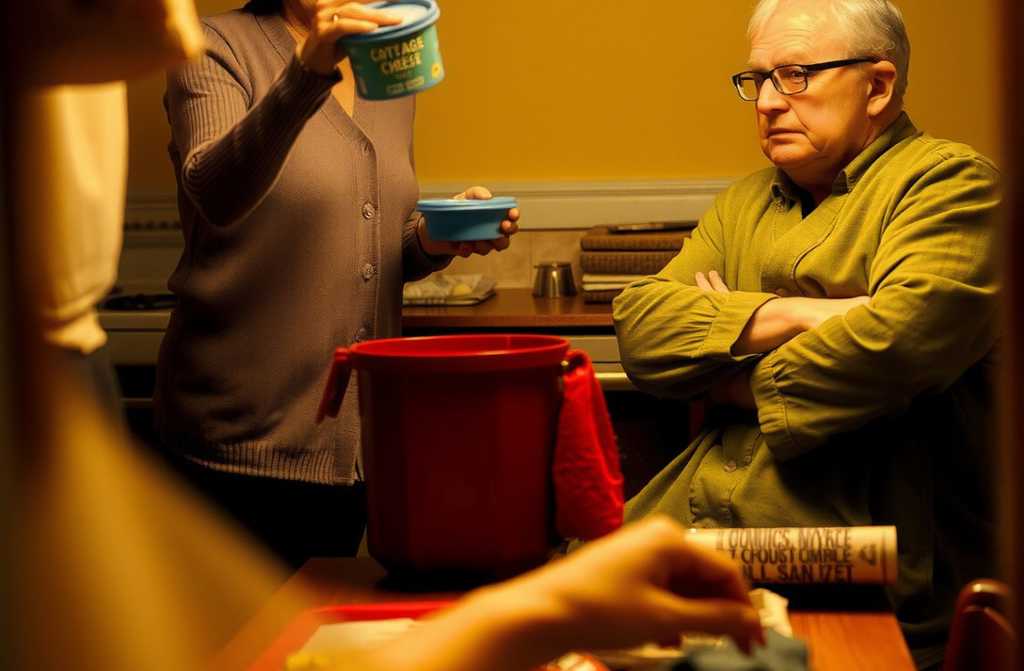
Did you pick up that awful cheese again?
Helen Porter placed the carrier on the kitchen table and didnt turn around. She already knew what she would see: Victor, sitting by the window, holding a newspaper he wasnt reading, peering at her over his glasses. Always over the top of his glasses. As if she were a pupil whod been caught cheating in a spelling test.
Its cottage cheese, Victor.
I can see its cottage cheese. Im asking why you always get the one in the blue tub. Its so sour.
Its not sour. Its just not as creamy as you like.
So you got the one you like, not the one I do.
Helen began to put away groceries. Apples in the fruit bowl, bread into the wooden box, milk in the fridge. Her hands moved out of habit, knowing where everything belonged after thirty-eight years. Everything in its right place.
I got both kinds, she said. Look in the bag.
Victor didnt check the bag. He lifted the newspaper again.
Next time, at least let me know youre getting two. Then I wouldnt be fussed.
Helen wanted to ask what on earth he was fussed about. But she didnt. That was one of those questions best kept in your mind, because out loud they led to arguments, arguments led to several days silence, and at sixty-two, three days of being ignored weighed far more than they did at thirty.
She was sixty-two. Victor was sixty-five. They lived in a three-bedroom flat on the fifth floor without a lift in Reading, and for the past ten years or so, Helen kept count of the steps going down, not upthe descent was always easier.
Their daughter, Emily, called that evening, as if she felt something was off. Emily lived in London, working for a logistics company, with her husband Stan and seven-year-old son, Jamie. She called every Tuesday, just after eight.
How are you two?
Were fine, love. Your dads reading, Ive tidied upnothing unusual.
Mum, you always say nothing unusual. That in itself is a red flag.
Dont be daft.
Im not being daft, Im observing. Most people go Oh, great! or Its been a long day or Dad and I squabbled over something silly. Youre always just nothing unusual.
Helen shifted from the sofa to her chair. The chair near the hall, where the hum of the telly barely touched her when Victor had it on.
We rowed about cottage cheese, she said, almost laughing.
Cottage cheese?
I got the blue tub. He thinks its too sour.
A pause. Helen imagined Emily in her warm and slightly cluttered London kitchen, Jamies drawings on the fridge, thinking something shed never actually say aloud.
Mum, its not about cottage cheese.
Emily.
No, hold on. Ive wanted to say this for three years but never get round to it. Dad wears you out. I see it every time I visit. You walk around the flat as if youre terrified to put a foot wrong.
Youre exaggerating.
Im not. Remember January? You dropped a cup. Your hands were shaking so much. Most people would curse or laugh in those moments, but you froze and looked at Dad instead.
Helen was quiet for a long time.
It was an old cup, she said at last. Thats all. A shame for the cup.
Mum.
Emdarling, its late. Is Jamie in bed yet?
Emily sighed. That sigh, more frequent these days. Not annoyed, not judgementaljust tired. As though shed tried explaining something simple over and over, and realised it didnt help.
Hes in bed. Fine, Mum. Ill ring on Thursday.
Ring, yes. Of course.
Helen sat in her chair a bit longer after hanging up. The hallway lamp, old and yellow-tinted, cast shadows; shed bought it in 1987, before Emily was born. Itd survived moves and one crash to the floor when they redid the wallpaper.
The kettle started in the kitchen. Victor was on his feet.
She got up and went in.
He stood by the hob, gazing at the dark outside. The streetlamp and silhouette of a tree that, every spring, the local council threatened to chop down but never did. He wore his familiar worn-out green dressing gown, one Helen bought him for his fiftieth. Every year she said he needed a new one; every year she didnt bother.
Cant sleep? she asked.
Just fancied a brew.
She made two mugshis big blue one, with Best Dad from Emily painted on it, and her own small white one, plain and unadorned.
Sit down, Ill make it.
He sat. She poured the tea. For a while, they said nothing, but this silence was different from the daytime. The daytime silence had an edge to ita weight. Nighttime silence was just quiet.
Emily call? Victor asked.
Yes. Alls well with them.
Hows Jamie?
Good. Soon to start school.
Already?
In September.
Victor nodded, held his mug for a moment, then put it down.
Youre annoyed with me about the cheese, he said. Not a question, a statement.
Im not annoyed.
You are. I can tell.
Helen looked at him. He was looking back, and for the first time in ages there was intent in his expression, or perhaps something shed never noticed. Some kind of effort.
Victor, honestly, Im not annoyed. Im tired of needing to explain that its fine to buy two sorts of cheese.
I didnt ask for an explanation. I just asked a question.
You ask it as if Im in the wrong.
I didnt say you were.
Your tone does.
He took another sip of tea.
Youre always finding fault with something, he grumbled. You never used to. Youd just be quiet.
And that was it. Helen covered her mug with her hands for warmth and didnt reply. The conversation ended where it always didin that space where neither saw the point in carrying on.
A week later, Helen went to London.
Not because Emily invited herthough she often didbut because she had a check-up with Dr Margaret Cook, an old friend working at a small surgery in South London, and thought shed stay with Emily for three nights. Victor didnt object. He never did. He said he needed peace and quiet, though Helen was never sure what exactly he meant.
London greeted her with its bustle and the damp scent of the Underground. Emily arrived at the station with Jamie, clinging to Grans shopping bag and tugging her towards the escalator.
It moves by itself! he explained, just in case.
I know, darling, said Helen, taking his hand.
Emily walked beside her, watching Helen in that assessing, non-critical way, like a doctor might check for change.
Youre thinner, Emily said once in the car.
Nonsense.
Mum, I can tell. Your cheeks have gone in.
Its the tube lighting. Awful, really.
Tube lights are hardly forgiving, yes, but I know what I see.
Jamie, in the back, made guns with his fingers and fired at the people outside. Helen watched her grandson and marveled at how quickly children grow. The last time shed seen him was February, and hed seemed smaller then.
Hows Dad? asked Emily.
Hes alright. Pressures up and down a bit. Pops into the surgery sometimes.
I dont mean healthwise. I mean, how are you two?
Emily, lets not right now.
Okay. I wont.
But she did that very night, once Jamie was asleep and Stan shut himself away in his study. They sat at Emilys kitchen tablethe very setting Helen always imagined when speaking to Emily on the phone. Warm, a touch cluttered, Jamies family drawings on the fridge. In one, Jamie had sketched them all together. Helen studied the picture, trying to pick herself out.
Mum, theres something I want to say. Please dont fob me off, Emily began.
Im listening.
Ive spent six months reading up on emotional pressure in families. Not just to kill time, but because when I look at you, I notice something that worries me.
Helen picked at a poppy seed biscuit, tipping crumbs onto the cloth.
What do you notice?
Youre always making excuses. Even when theres nothing to explain. Like today in the car, I said youd lost weight, and you instantly blamed the light. I was just making an observation, not an accusation.
So what?
They call it a defence habit. You always brace yourself, as if someones about to judge you, so you explaineven when no ones doing anything.
Helen tidied the poppy seeds into her palm and onto a saucer.
Emily, your father and I have been married thirty-eight years. Life isnt simple over that time.
I know. Stan and I arent perfect either. But I dont see you relax. Not often.
Im fine.
Are you? Sometimes, you seem to be waiting for someone to pick holes in what youve done.
Helen concentrated on the tablecloth. On the drawing, a little orange person with no neck stood between two tall ones and a small one. That mustve been her.
Victors not a bad man, Helen said finally.
I know. Bad people arent always those who mean harm. Some just wound you by being themselvesand it still hurts.
You sound like a book.
Ive been reading books, Emily smiled, but Im talking about you, not a theory. Mum, can you remember the last time you did something just because you felt like it? Not because it was expected, just because you wanted?
Helen thought. Oddly hard to answer.
Last year at the plot, I suppose. I planted phloxes. Just because. Victor said nobody needed phloxes, better to sow strawberries. But I did the phloxes anyway.
And?
They came up. Lovely pink ones.
Emily squeezed her hand.
Good. That means youre still there, Mum.
Helen didnt ask what exactly that meant. But that night she lay in Emilys spare room, wide awake, and thought about the phlox. Pink, scruffy, stubborn.
Next day she visited Dr Cook.
Margaret Cook was eight years older than Helen, semi-retired but still keeping a handful of patients. Theyd met 20 years ago at a Reading surgery and stayed in touch. Not quite friends, but they trusted one anothersomething else.
Lets have a look at you, Margaret said, peering at her over her glasses the same way Victor did, though not really.
Lost a bit of weight, Helen admitted.
I see. Checked your blood pressure?
Everythings fine.
Sleeping?
Alright, except I drift off slowly sometimes.
How longs that been going on?
A year maybe. Could be longer.
Margaret jotted a note by hand, still using her battered leather notebook instead of a computer.
What goes through your mind when youre awake?
Helen was surprised. Shed been expecting questions about blood pressure, not thoughts.
All sorts, she answered cautiously.
Elaborate. Past? Future?
More the day just gone. I replay conversations, what I said, what I should have said.
Margaret put down her pen.
Helen, Ive known you a long time. Youre a clever lady. Whats actually going on?
And Helen found herself telling the truthmore than she had with Emily. She spoke of the cottage cheese, the nightly silences, the habit of apologising for no reason. The phloxes.
Margaret listened, never interrupting.
Ever occurred to you this isnt normal? Margaret asked. Not morally, just whether its good for you.
I always thought it was just life.
Life can be many things. Margaret picked up the notebook again. Theres someone you should see. A psychologist in Reading. Young, but sharp. Give it a try.
Margaret, Im sixty-two. What would I want with a psychologist?
Thats exactly why you should go. Maybe at thirty youd muddle through. At sixty-two, you dont.
Helen Porter. Always the full name, never just Helen, since childhood. Her mother said a name should have substance, so youd know you existed. Helen Mary Porter, née Brown, born in Oxford, moved to Reading after marriage, taught English literature at a comprehensive for thirty years. Retired quietly, without a fuss. Just a class of Year 8s handing her flowers on her final day.
She thought of all this on the train back home. The paper with the psychologists name was in her jacket pocket: Anna Reeves.
Victor met her in silence. Hed made a strange pearl barley soupsomething hed never cooked before.
Whats this? Helen asked.
Soup.
Whats in it?
Whatever was at hand.
She tried it. Actually, quite nice.
Its good, she said.
Victor looked at her as if she was poking fun at him, then reached for his newspaper.
Hows Emily?
Fine. Jamies already nearly grown up.
Starting school soon.
In September.
I know. Already said that.
You asked again.
He said nothing. Helen finished her soup, washed the bowl, and went to the bedroom. She slipped out the paper. Anna Reeves. Her phone number was written in neat, doctorly handwriting.
Helen called three days later. She held the phone, then told herself not to be silly and dialled.
Hello?
Hello, Dr Reeves? Margaret Cook gave me your numberId like to make an appointment.
Certainly. Your name?
Helen Porter.
Lovely, Helen. Do you have something specific you want to work through, or just want to talk for now?
Just to talk, I suppose. Im sixty-two, if that matters.
Everything you want to share matters, Anna Reeves replied. How about Wednesday at four?
Dr Reeves office was in the centre of Reading, in an old townhouse with high ceilings. Helen had no cover story if she bumped into someone she knew. She decided, if it happened, shed simply say the truth. Im seeing a professional. Im an adult, its my business.
Anna Reeves was around forty, quiet, cropped hair and those deeply observant eyes. Two armchairs, a low table with water. Nothing more.
Lets start wherever you want, Anna said.
So Helen spokelonger this time. Annas questions unlocked things Helen thought shed shut away.
When you say Victor looks at you over his glasseshow does that make you feel?
Awkward.
A bit more precise. Like what?
Like Ive done something wrong.
Always?
Almost always.
Have you done anything wrong?
No. I put the shopping away.
So that feeling isnt about what happened.
Helen paused. It was so obvious it was baffling shed never realised it in all those years.
When did this start? Anna asked. Have you felt like this a long time?
Not at the start. Before, it was different.
How so?
Easier, said Helen. Then, catching herself, Not easiermore interesting. He was so sure of himself. I liked that, I was…not so confident. I thought he knew what was best.
And now?
Now I think thats how he talks. It isnt always true.
When did you realise?
Long ago. But its one thing to see things, another to accept them.
Anna nodded.
Helen, Ill say something you can disagree with: what youre describing isnt just a hard patch or someones tricky personality. Its called constant undervaluing. When one personperhaps not intentionallymakes another believe their choices, thoughts, feelings matter less. The other person starts believing it, too.
But he doesnt mean to.
Perhaps not. But its about your feelings, not his motives.
Helen looked out at the street. Early April, the trees greening up.
So what am I supposed to do with this? she asked.
For now, just know its real. Naming something is a start. A small beginning, but real.
Home, she walked instead of taking the bus. She turned over the word undervaluing in her mind. Money could be devalued. Time, effort could be devalued. But a person?
Except really, she did know. Her whole body knew, even if her mind never had the name for it.
She kept seeing Anna Reeves, every fortnight into summer. Each session left her not better, not worse, just clearer.
In June, Emily and Jamie came down. Stan stayed in London for work. They stayed for ten days, and for Helen the days felt odd. Jamie kicked a football in the playground from breakfast to dusk. Victor and Emily had long conversations on the balcony. Helen didnt listen in.
One evening, Emily found Helen sorting through old photographs. Not for anything urgentjust because. She browsed through the album.
Whens this? Emily asked, sitting beside her.
Year escapes me. Early days. Before you came along.
They stood by the water, Victor roaring with laughter. Helen, smiling, though looking off to the side, as if shed spotted something.
You were so pretty, Emily said.
Was?
You still are. I meant, young.
Twenty-four. Wed been married a year.
Hes laughing in this one. He doesnt laugh very often, does he?
He used to, more.
Emily slid the photo back in.
Mum, how are you? Really.
Im seeing a psychologist, said Helen. She hadnt meant to say it. She just did.
Emily hesitated.
How long?
Since April.
And?
Weird, but it helps.
How?
I understand things better nowabout myself, why I live the way I do.
Emily watched her a long time.
Have you told Dad?
No.
Will you?
Dont know. Maybe not.
Why?
Hell say its a waste. That normal people sort themselves out.
And what would you say to that?
Helen put the album back on the shelf.
I dont know yet. But now Im thinking of an answer. Before, Id have agreed.
That July, Helen remembered for ages. She and Victor went to their little allotment twenty miles out of town. Each year, Victor called the garden overgrown, and each year Helen put it right. The phloxes, planted the previous year, had thrived. They bloomed along the fence, pinks and whites, just as she wanted.
Victor walked by.
Weeds need pulling along that fence, he pointed out. Its a jungle.
Theyre not weeds. Theyre phloxes.
Phloxes take up space too.
Theres plenty of room.
He paused. Looked at her. Then at the phloxes. Then her again.
Whats up with you lately?
How do you mean?
Youre different. Arguing.
I always argued, Victor.
No. He shook his head. You used to give your side and then go quiet. Now you dont.
Helen felt something insideno fear, for once. Something strong and unfamiliar.
Maybe Ive got something to say, she told him.
Emilys been putting ideas in your head?
No ones put anything. I think for myself.
He stared, then went indoors. Helen remained by the fence. She touched a flowergently. The petals were alive, damp with morning dew.
In August, Anna Reeves noticed the change.
Youve started acting differentlyI can hear it in your words.
I dont immediately agree now. Not picking fights. Just not backing down.
And what happens?
Hes surprised. Slightly annoyed. Mainly, lost.
How do you respond?
I want to shrink awayold habit. But I dont.
Hard?
Very. Like pushing through wind thats always blown in the same directionsuddenly youre going against it.
Anna smiled.
Good metaphor.
I was an English teachercame with the territory.
They both laughed. Helen noticed she was laughing freely, and that surprised her. She hadnt done so in a long time. Not because nothing was funny, but because she always held back, wary.
Helen, personal questionskip it if you like: Have you thought about how you want to live, really? Not about Victor, but you. What makes you feel alive?
The word alive was heavy.
I have, Helen said. I want to write.
What?
Dont know yet. When I taught, I wrote sometimesnotes, stories. Not for anyone. Then I stopped. Victor once read something and said it was amateurish. I put away my notebook from then.
When was this?
Fifteen years ago.
Do you still have the notebook?
I think soin a cupboard somewhere.
Find it, Anna said.
She found it in October, cleaning out the wardrobe top shelf. A thick blue school exercise book. Helen opened it and read the first line of the first story: Autumn crept in this year, all at once as usual.
She laughed. Then cried, just a little. She went to the kitchen, made tea, and read more.
In November, Helen wrote a short piece. Not for anyonejust because. It was about a woman who planted flowers for the sake of it, though others told her it was pointless. The woman wasnt Helen, but she wasnt not Helen, either.
Emily phoned that week.
Mum, hows things?
Im writing.
What?
A little story.
Pause.
Really?
Really. No laughing.
Im not laughing. Im glad. Will you show me?
Well see.
Does Dad know?
No.
Will you tell him?
Helen looked out. November was grey: the tree outside already bare, sparrows hunched in twos and threes. But she wasnt watching the birdsmore the sky above, milky white, as only November could be.
Ill tell him Im writing. I might not show him. But Ill say.
And what do you think hell say?
Something. But it frightens me less now.
Thats a big deal, Mum.
I know.
December, Helen did tell Victor.
They sat after dinner, him with the paper, her with the blue notebook. He eyed the exercise book. Eventually, curiosity won.
Whats that?
Im writing.
What?
Stories.
He put down the newspaper, properly for once, not just folding it in his lap.
For long?
Since autumn.
Why keep quiet about it?
Didnt know if I should.
Why not?
You once called it amateur stuff.
Victor frowned.
When was this?
Fifteen years ago. You read one of my stories and called it amateurish.
He was silenta painful awareness he didnt remember at all, and it embarrassed him.
I dont think I meant to hurt you.
I know you didnt.
So you gave up for fifteen years over a word?
Over several. That one stuck.
Silence again. Victor folded the newspaper and left it on the tablerare for him.
Youll show me sometime?
Maybe.
Alright. Tea?
Yes, please.
He went into the kitchen. Helen watched him go, thinking, maybe life worked by tiny changes, not big speeches; small points where things shifted a bit.
Whether it meant anything, she didnt know.
January began with a call from Emily.
Mum, Stan and I thought, why dont you both come to us next New Year? Jamie loves having Granddad round.
Ill ask Dad.
And you?
Id love that.
Good! Youll have to persuade him!
Helen laughed.
Em, can I ask? That drawing on your fridgethe orange person with no neck.
Yes?
Thats me, isnt it?
I thought youd guess. Hes bang in the middleJamie says the person in the middle is the most important.
Helen paused.
Middle one?
Absolutely. Middle means youre holding everyone together.
Seven-year-old says this?
They know more than we think. By the way, Mumlet me just say: Im proud of you. You didnt have to change anythingwould have been easier not to, at your age. But you did. Thats truly brave.
Helen was quiet for a long time. Outside, the snow spilled over the bare branches, sparrows shivering again.
I dont know what will come of it, she said.
No one ever knows. Thats alright.
Emily, are you happy?
Me? Overallyes. I get tired, Stan doesnt always get it, Jamie tires me out, and work. But yes. Its a good life overall.
Im glad.
Mum, are you?
Helen consideredhonestly, not hurrying.
I dont know what happiness means exactly. I used to think I did. Now, I think its not a steady thing, but something that visits, in moments.
Do you get moments?
I do. When I write. When I read. When I think of phloxes.
Phlox. Emily smiled. You must plant them again this year.
I will.
More.
As many as I can.
They were quietthe kind of silence between mother and daughter when most things are said and theres no need to rush the unsaid.
Eventually Emily asked,
Mum, mind a silly question?
Go on.
If you had known, at twenty-four, all you know nowwould you still have married Dad?
Helen thought. Again, being honest.
I dont know. Its probably the wrong question. If I hadnt, thered be no you, nor Jamie. And the phloxes, perhaps.
So what will you do next?
Live. Write. Go to Anna Reeves. And stop being scared of the word amateur.
Mum
What?
Will you show me your story, at last?
She looked at her exercise book, by the window, in the light.
I will, she said. When Im ready.
And when will that be?
Thats my call, Em. Mine.
In February, she enrolled on a classnot therapy, not medicinea creative writing workshop at the towns arts centre. Just a handful of adults, Thursday nights. Helen attended, quiet her first evening, just listening. She walked home, feeling maybe it was silly to start new things at sixty-two.
Then she thoughtnot silly. Simply unfamiliar. Strange and silly werent the same thing. Now she knew the difference.
Victor asked when she got home,
Off to your shrink again?
No. Writing group.
He looked at herthe look shed learned to read. Not angry; lost.
Seriously?
Yes.
Why bother?
Because I enjoy it.
He nodded, slow, as someone digesting a new dish.
Alright then, he said. Potatoes are cooked. Want some?
Yes.
She hung up her coat, came to the kitchen. The potatoes were done well enough, better than the odd barley soup. Victor sat across and watched his plate.
It far, your group?
Half-hour on foot.
Walking in the dark?
In winter, its dark early. Theres streetlights.
Could take a bus.
I could. Id rather walk and think.
He nodded and lapsed into silence. But it was a different silence. Not the old oppressive quieta sort of caution, like someone trying to find new words.
Helen, he said, unexpectedly.
Yes?
I I know Im difficult sometimes.
Helen put her fork down.
You are, she said honestly, without softening.
I dont do it on purpose.
I know.
Im just used to things being done properly. When theyre not, it grates.
Victor, properly is your version of proper. Not the universes.
I see.
Do you?
Im starting to. He looked at her. Is that why you saw a psychologist?
In part.
And what do you do there?
Im learning to listen to myself. To what I feel, what I want, what matters to me.
You didnt, before?
I did. But never thought it had weight.
He was quiet a long while. Then he took his plate away.
Maybe we should, you know, talk. For real. He stood at the sink, staring out, not at her. But Ive not done that. Really talked.
I know.
Can you?
Im learning.
He turned around. Looked at her for a long, uncertain moment.
Maybe we could learn together?
Helen didnt answer at once. She saw him, and thought of the photo by the river, the blue exercise book, the phloxes that grew regardless, Jamies drawing with the orange figure in the middle, holding everyone together.
Of what Anna Reeves had said last time: you can only change yourself. Others, maybe not. But sometimes, change in you triggers something around younot always, but sometimes.
She didnt know if this was one of those times.
Victor waited.
We could try, she said at last.
He nodded, took his seat, reached for the teapot.
Tea?
Yes, please.
He poured ithis big blue mug, her small white one. Set out the poppy seed biscuits shed bought yesterday.
Helen wrapped her hands round her mug.
Outside, February cold. The tree, dusted in snow. And in some far-off allotment, the bulbs of phloxes, pink and white, slept underground. Theyd wake in spring. She knew they would.
Victor opened his mouth, closed it, then asked,
Will you ever tell me what youre writing?
When Im ready.
And when will that be?
She looked at him over her little white mug.
Thats for me to decide, Victor.
He blinked.
Alright.
And this time, the silence between them felt different.
* * *
Because sometimes, you can spend fifteen years living quietly on tiptoe, only to realise that all along, you were allowed to plant your flowers any place you liked. And its never too late to start again.