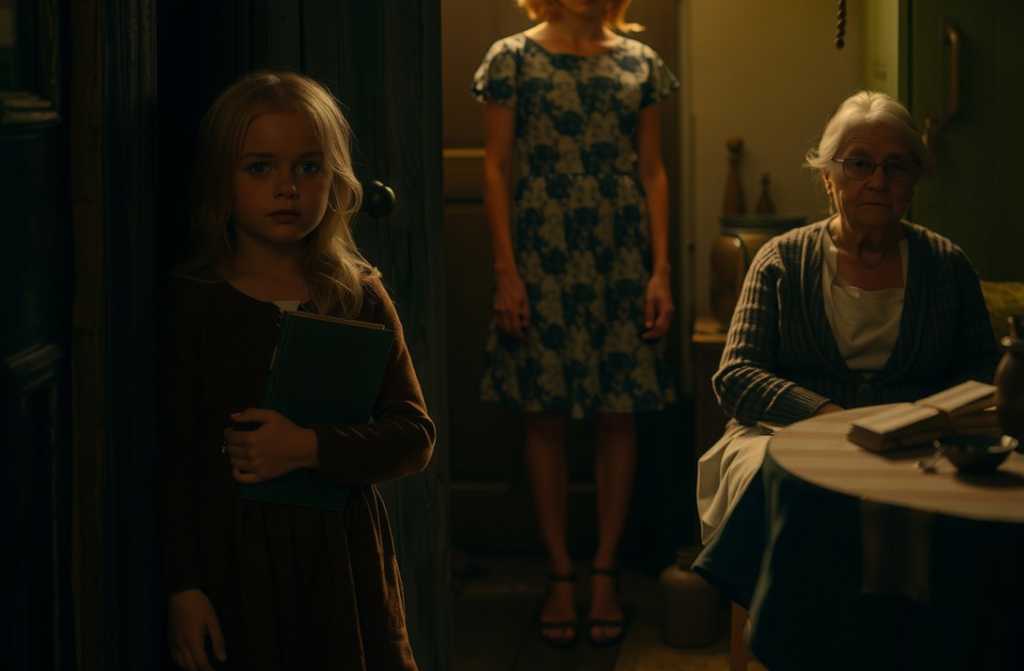
Dont lie to me, Mum.
Grandma, can I ask God to bring Mum back?
The elderly woman standing nearby made the sign of the cross, while Granny Margaret waved her little great-granddaughter forward.
Of course you can, sweetheart. Ask away. You can ask God for anything you want, she gently nudged little Grace towards the old wooden cross that hung beside the door.
In a small Yorkshire village, both the grandmother and the great-granddaughter prayed for the same thing. One prayed with a heavy heart, the other with childish hope.
So thought Rachel, Graces mother. She was well aware her gran took Grace to church, gave her communion, and handed notes to the vicar. In Rachels view, it was all corrupting the child with old-fashioned superstitions.
Shed fix it all soon enough. Shed take Grace away and make everything right. Just not yet
Ill take you away soon, darling Grace! Just you wait. Well go to the seaside, you and me! Have you ever seen those sunsets? Theyre fiery red, and the sunrises are soft as milk. The evenings are deep as night, and our time together will last forever, she declared, hugging Grace close.
They were sitting together outside a slanting cottage, chicken wandering freely beyond the picket fence. Built from sturdy pine, the house had settled so much that the lower logs had sunk beneath the earth and the roof sagged in the middle. Nearby stood a large barrel for catching rainwater, the liquid inside yellowish and murky.
The water at the sea is salty, kitten. And its clean, too. Not like this, Rachel swirled her fingers in the barrel, sighed and shook her head. Ill take you. Just give me a bit more time.
There was nobody in all the world more precious, more beautiful to Grace than her mum. She loved her grandmother too, but in the way you love somebody old, wrinkled and nothing like your dazzling mother.
Mum had a scent all her own, something flowery and mysterious. Grace always imagined these flowers must grow next to the sea, the very sea she and Mum would soon visit together.
Granny, were going to the sea, Mum and me. The water theres salty and clean. Not like here, she bragged to Margaret after her mother left.
You will, of course you will, Granny Margaret gave a soft sigh, glancing out the window. But finish your spuds, lass, or youll have no strength for the journey. The seas a long way off, and your mums a busy woman. Give her time
Grace didnt understand what a poetess was until she was five. Thats what Granny called her mother. But once, when Mum came to visit, she brought a slim little book. She said shed written it herself. Grace took this literally. After her mother left, she wiped her grubby hands on her trousers, picked up the book, and tried to decipher the beautiful, even letters, amazed that anyone could write them by hand.
She fetched a notebook and tried to copy out those tiny, tidy letters, though she didnt even know the alphabet yet.
What are you doing? Granny stumbled in, exhausted. Grace was still awake. Look at you! Thats not bad at all!
Its not as nice as Mums, Grace said, scowling.
Well, shes grown up, your mum. A proper poet. Youll get there too, youll see. Now off to sleep with you.
Granny would switch the light off, and reluctantly, Grace would climb into bed, lying awake for ages, drawing swirly lines in her mind.
She was proud of her mother.
Not until she was six did she start to wonder why everyone else had their mothers close, and hers was always far away. Granny Margaret always wore the same layers of old jumpers, topped with an ancient apron. Her stockings were rolled down, patched knickers under sturdy wellies. She didnt have much, but she got by.
On Sundays, Margaret wore her best grey woollen dress and a sky-blue cardigan with her favourite floral scarf all sewn on her ancient Singer. Shed taught Rachel her first stitches on that sewing machine, which was how Rachel had wound up in tailoring college.
Now it was Granny who sewed for Grace. The girl always looked neat and warm, if not fashionable. But out here, sturdy wool was what mattered. The mobile shop came through occasionally, and Granny would spend her carefully saved money on socks and new shoes for Grace.
There was no school for under-fives, and entertainment meant running wild with other village children in the muddy fields.
Rachel visited less and less. Things werent working out for her in the city. One visit, she came in and gathered up her old poetry collection from the table.
Ill take this, Gran. Ive given all the others away, and youve just got clutter here.
But Grace copies the letters from it. Let her keep it.
Give her a different one and say its mine. She cant read anyway.
When Grace found her book gone, Granny gave her a thick green volume from the top shelf.
Your mum left you this one. She wrote it too, look. It was fancier than the first, the title letters gold.
But one summer, aged six, Grace came home sobbing, her new lacy cardigan ripped and missing buttons.
What happened, Gracie? Granny cried.
He he Grace wailed, pointing outside.
Shed argued with Victor, the neighbours son. Hed told her her mother had abandoned her, that she wandered who knew where, and that Granny was wearing herself out, never buying herself anything because Mum didnt send any money.
I said, My mums a poet! She writes books! But he laughed and said I was lying. Isnt it true, Granny? Isnt it? Grace rushed inside, grabbed the green book, and ran back outside to prove her point.
Granny couldnt stop her and, realising the disappointment coming, followed behind. The other children could read.
Look, it says here: S. Yeats. Poetry. Its by W. B. Yeats, not your mum.
Grace started screaming, fighting for her book as the children laughed, tossing it between them. They asked an older lad walking past to check. He smiled and agreed it was Yeats, and told Grace she should learn to read.
Granny arrived, breathless.
Granny, tell them! Tell them its Mums book! Grace sobbed.
Margaret silently reached for the book. Once it was handed to her, she took Grace by the hand and led her home.
I made a mistake. Sorry, sweetheart. My eyes arent so good these days, she mumbled, half dragging Grace home. Your mum will bring you one of her books next time, I promise. Ill write and ask her.
Grace said nothing, already over her tears. She took the book and, suddenly furious, flung it deep into the nettle patch.
Gracie! Whats the book ever done to you? Someone worked hard on that, you know.
They wasted their time, Grace replied, heading for the house.
Margaret chose not to retrieve it from the nettles.
Later, her friend Lucy Parris came to see her, a little younger than Grace.
I believe you. I believe your mum wrote the book. The others are daft, Gracie.
Dont believe it. Its not true. I hate those books. And I hate poets!
And Mum? Lucy asked, shocked.
Grace was silent. She herself wasnt sure what was wrong with her mum.
***
Rachel had quickly learned that earning a living as a poet was no picnic. In eight years, shed published only two slim collections. Waiting for the third, she read her poems in community halls, at schools, colleges, and even factory events to make ends meet.
Shed started out writing verses for the school newsletter, then at tailoring college, penned a ballad that even won a prize. Local newspapers published her poetry for a while. But tailoring only interested her because she liked new dresses for herself.
After college, she got an office job at a local publisher, thanks to a visiting journalist, Michael Harwood, whod come up from York. Shed tried to keep him by having a child, so she moved to York, but Michael ran just as hed run from the summer fires his articles described. He did help her find work in York, pulling strings with the arts council.
She had to leave Grace with Granny, just as her own mother had left her with Margaret, having died young.
She soon married another poet weak, unhappy, drinking, always full of woes. Hed disappear for months and then reappear unexpectedly. After various dramas they divorced and he vanished too. Rachel was left with a room in a shared house, hardly what shed hoped for.
For the past three years, shed been living with an engineer from a shoemaking factory. A silent and, frankly, boring man, but he had his own flat, which suited them both. She was attractive, sometimes cheerful and generous.
But he found her odd too theatrical, always playing a part. Naive one moment, proud the next, cold and business-like after that.
Others found her strange too. Rachel was always making extravagant new dresses for herself. The moment she saw wide-legged trousers or a tiered skirt on someone else, shed rush home to make it. There was plenty of fabric in the shops and she sewed quickly, her old hand-cranked machine a gift from a retiring costume lady. She used fashion magazines for ideas, always wearing long gowns and full skirts, never blending in with the other locals.
Thats what a poet was meant to be.
Eventually they separated, and Rachel went back to her room in the house share, never letting go of dreams of fame, romance, a high-society life that always seemed just out of reach. She longed for her own bohemian world.
She knew full well Granny Margaret wasnt immortal. It wasnt easy for her, raising a child on her own. Rachel wrote about this, and those poems about the ache of impending loss and longing for her daughter were always her best, full of tears and cries of loneliness.
Shed thought shed collect her daughter by the time she started school. But then a summer romance with a sculptor distracted her she even posed for him. By autumn theyd parted ways, but she hadnt fetched Grace. She visited the village, only to find Granny had “spoiled” the child, made her rude and cheeky. Still, shed promise next summer.
You wont let me down, will you Mum? Grace asked, looking up from under her eyebrow.
Rachel was taken aback.
She grabbed her daughter and hugged her tight.
Of course not! How could you think that? I love you. I love you, Grace! she showered her with kisses.
She played the role of the wronged mother so well.
And Grace believed her. How could anyone not?
***
Hows the old dear, Grace? asked Mrs. Norris, the shopkeeper, one day.
Grace had taken on all the housework that winter. Granny was poorly. Now shed come with their neighbour, Mr. Green, to the village shop.
Shes in bed. I make her jelly; thats all she wants.
You cook it yourself?
I do. Its not hard. I can manage.
Good girl, love. With a granddaughter like you, anyone could afford to be ill.
In the village, everyone knew each other. People felt for Margaret and Grace. Mrs. Baker, Grannys friend, kept an eye on the chickens. Her grandchild had grown up with Rachel. The postwoman brought medicines, and the neighbour, the Parrises, drove Grace to the nearest supermarket as needed. Mr. Green cleared the snow, chopped the wood, and Mick the tractor driver kept the yard neat and always dropped by a load of coal.
Grace could light the fire herself and prepare simple meals. At first, Mrs. Baker and Mrs. Parris checked in frequently, but after a while, reassured by Graces skill, they dropped by less often.
Amazing what you can do. If only my Lucy could manage like that! the neighbours praised her.
Graces friends had all started school. Shed run to Lucys to look longingly at their reading books.
See, we can read now. This is A, thats U. Together thats au.
Au? Whats this one?
Havent read it yet.
Looks like wa. Theres a picture of a crying baby next to it.
Grace loved the schoolbooks. She still hoped shed go to school in York, because Mum had promised to fetch her that summer.
In the evenings, shed climb in next to Granny on the old, high-backed sofa in the parlour.
Whats this letter, Granny?
Thats G, for Grace. Then R, then A. There you are: Grace. When Im feeling better, Ill go to the school and ask for a primer for you.
But eventually Margaret had to go to hospital. Mrs. Baker insisted.
And Grace? Shell come to mine, of course. Well look after everything, dont fret. And youll be right as rain when theyve finished with you. Sorry I cant come visit my knees are no good.
But in hospital, she wasnt forgotten. The neighbours brought packages for her, and visited with news of Graces well-being.
Mrs. Bakers granddaughter, Elizabeth, had also come from Norfolk, and now she helped around the house, encouraging her gran to move to the city, to her place, but Mrs. Baker stubbornly stayed put in the cottage.
By then, Grace was well settled in the Baker household. Elizabeth began to notice her more and more a shy, practical little girl, not much like her mother.
Do you know any poems, Grace?
Not really. But I know prayers. Granny taught me. Want to hear? Our Father, who art in heaven
Elizabeth was amused.
And the letters how many do you know?
Some, not all.
Well, lets tidy up and Ill teach you a few more, Elizabeth said.
Those days with Elizabeth were some of Graces happiest.
Do you know when Mums coming? She promised Granny a book of poems for Mothering Sunday.
If she promised, shell come. Just wait a bit, Grace.
Elizabeth bit her lip. What a lovely girl.
Slowly, Granny Margaret began to recover her great-granddaughter gave her something to fight for.
***
Rachel didnt expect it: after reading her poetry at the factorys Womens Day bash, someone caught her by the sleeve of her flowing floral blouse.
Elizabeth?
Theyd been at primary school together, lived in nearby villages.
Rachel, clutching her bouquet, was looking for the dining room table.
Lizzie? Rachel looked around as if expecting the entire village to show up.
Its me. Hi, Rachel.
How did you find me here?
I just wanted to hear you. You read beautifully.
Thanks For some reason, the praise meant little. Shed heard, through her gran, that Elizabeth had married a regular chap, become a teacher, and lived nearby in York.
So what brings you here? Rachel looked anxious, eager to get to the table before the seats filled. She still hadnt made her debut in the upper tiers of the citys literary scene.
My husbands mate works here. He helped me find you.
Me? Why?
Just wanted to catch up. Arent you glad?
Of course, darling, of course. But nows not the best time, Liz. Theyre expecting me But how are you?
Keeping well. Teaching at the local junior school, earned a degree by night. Husband works at the same factory. You should come visit.
Oh, I havent a minute, Liz. Im in a rush now too, sorry…
Off you go, then. I understand big day for you. Happy Womens Day, Rachel!
Same to you, Liz, and your lot! Rachel hurried to the dining room.
Of course, all the seats at the administrations table were gone. She ended up at the far end and slipped into the role of overlooked poet.
People were still settling down when a voice from the head table called out:
Miss Elizabeth Baker, please take your seat here.
Lizzie swept past and sat in pride of place next to the deputy managers wife. Not much longer, Rachel found herself brought up to the front too after the first speeches. Warm welcomes were exchanged, and soon, as often happens, old friendships rekindled warmth. Rachel became a regular at their home, soon acquainted with Elizabeths husband, George.
Elizabeth and George had their sadness: they couldnt have children, no matter how hard they tried; shed miscarried several times, and doctors advised it was too dangerous to keep trying.
George mourned this but accepted it. He loved his wife and put her health above all. Elizabeth threw herself into her work, mothering her students. It helped, a little.
They only discussed Grace once; Rachel wrung her hands and sobbed about her difficulties, swearing shed fetch her daughter that summer.
Afterwards, Elizabeth never mentioned Grace again.
That summer, the family planned a trip to Cornwall and invited Rachel, but a week before they left, Rachel turned up in tears the publisher had rejected her new collection. George tried awkwardly to offer comfort while Elizabeth was out. Rachel sobbed on his shoulder, cursing the publisher, her mascara streaking down her face as she disappeared to the bathroom.
George, listening to the sound of water, was soon worn out by her drama. He hoped shed have a wash and leave. Instead, Rachel emerged, sat close, and tried to embrace him, talking breathlessly about love, unbuttoning his shirt, and fiddling with his belt.
No, Rach, no, he stopped her, sitting her aside, then helped her out the door. At last, she took a cab home, still declaring her love with tears.
When Elizabeth told Rachel they couldnt take her on their trip after all their friend, Vitaly, didnt want a stranger along Rachel didnt seem bothered.
Ive made other plans, Liz. Something rather exciting has come up, she replied mysteriously.
And Grace? Shes eight now arent you collecting her? She reads well, you know.
Well, if circumstances allow, yes.
Elizabeth realised then that Rachels promises were empty. Grace was unlikely to ever live with her mother. Meanwhile, it was already past time to start school.
Elizabeth longed for a child herself, and when Rachel asked off-handedly where her book could be bought, Elizabeth accepted a copy in silence.
***
Grace pressed her mothers poetry collection to her chest. This time, her own mothers. She could finally read it herself Aunt Lizzie had brought it for her. The teacher from the nearest school came yesterday and wrote Grace down for first year. Granny Margaret worried nothing was ready, and August was nearly over.
Mum still hadnt come. Grace spent her days at the window, watching the lane.
Dont let me down, Mummy, dont let me down, she prayed to her saints.
Shed read Mums poems. One line at a time, stopping to think, trying to grasp the meaning, but perhaps she was too young or the sense was too grown-up because she couldnt always understand.
She peppered Granny with questions, but Margaret would just wave her off. Since the hospital, she was still weak.
Who will get Grace ready for school? Only the neighbours. Her own mother clearly didnt care.
Margaret hardly had the energy to be angry anymore. Feeling faded with old age, and she only felt sorry for Grace, who waited day after day for someone who never came.
Granny, is there such a place as the heaven of love?
Whats that?
The heaven of love? You said when people die and go to heaven, thats where they find love, right? Is it real?
I dont know, petal. I suppose when I die, Ill find out. In heaven, everyones kind; thats what makes it heaven.
Mum once wrote: Oh heaven of love, dont deceive me! Is there lying in heaven?
No, not in heaven. Heaven isnt a place for lies.
I want to go to heaven, Grace whispered.
Not yet, darling. Youve your whole life.
Margaret watched her great-granddaughter, wiping her eyes as if from a stray speck.
At that moment, the old dog started barking meaning strangers. Grace ran to open the door and flung herself at Lizzie.
Lizzie came in with Mrs. Baker, limping but still carrying cakes shed baked. They drank tea, talking of this and that. Grace loved having them there, but she was soon sent outside adult matters. She went off to find Lucy.
Are you really leaving? Lucy asked quietly.
Me? Grace hung her head. No. Mums tricked me again.
But youre going to live with Mrs. Bakers granddaughter, arent you?
What?
Grace dashed home, breathless, bursting in door banging off the sauerkraut barrel.
The women looked at her, puzzled.
Lizzie understood first.
Want to come with me, Grace?
She stared, then nodded.
Your mum knows, dont worry. Shes said its fine. Shes busy with things.
Grace didnt mind. She liked Lizzie. Her mum was glamorous, mysterious, smelling of lilies. But Lizzie was like a warm hearth not as dazzling, but always there.
Grace buried her face in Lizzies jumper. Lizzie hugged her.
Dont worry, darling. Mum will visit, and well see your gran often.
Margaret and Mrs. Baker bustled around, packing Graces things. Mrs. Baker refused to leave, saying shed see out her days with Margaret.
A few days later, Mick the tractor driver came to take them to the station. Despite the early hour, half the village turned out to say goodbye everyone loved Margaret and Grace. And now, thanks to Lizzie, all would be well.
Granny, Grace whispered, get well. And stop praying for Mum to come back. Live your own life. Ill come for you when I grow up, I promise. Do you believe me?
I do, sweetheart, I do, Margaret managed through tears. She made the sign of the cross, as did Grace.
The tractor roared to life and set off, covering them all in dust.
Stop! Please stop here! Grace suddenly shouted.
What is it? asked Lizzie, confused.
But Mick, knowing Grace, stopped. She slid past them and ran to the nettle patch, flattening the tall stems.
Youll get stung! What are you doing? Lizzie called.
Margaret alone knew what she was after.
The books there, she whispered.
Mick and Lizzie marched through the nettles to help.
What are we looking for?
Here! Grace called, holding aloft the battered green book.
Whats that? Yeats in the nettles. Not his usual sleeping spot, eh? Mick laughed.
What is it? Lizzie asked.
A poetry book. Someone worked hard on it, after all.
Lizzie felt anew the responsibility she was taking on.
It had been her own idea, a month ago, to suggest Rachel let her have Grace. Flighty Rachel had been delighted shed been offered work as a poet on a touring show bound for Scotland. She signed over guardianship with a flourish, chattering about her plans and possible romances.
Lizzie pitied her, and, re-reading Rachels poems as she travelled with Grace, found them clever but hollow, lacking warmth and heart.
On the journey, Lizzie, George, and Grace read Yeats together.
Welcome! George greeted them, hugging both Lizzie and Grace. Youre home now, Grace! They say youre a good cook. And not a little girl anymore. Right, lets get the bags in. Porter!
Grace started school two days later. At home, a red satchel and school supplies were ready. Lizzie and George bought her uniform and shoes just before term began.
Grace barely dared breathe during her first school assembly, holding her flowers as she caught Georges eye in the crowd. He winked, proud as any father.
On the other side of the playground, among her class, stood Lizzie, her teacher neat and collected, but always searching the crowd.
Nobody told Grace that Mum had planned to be at assembly. Lizzie had explained how to find the school over the phone, but George forbade anyone telling Grace, convinced Rachel wouldnt come. Dont promise, he said, or youll break the childs heart once more.
Still, sometimes Lizzie couldnt help looking just in case. But she knew better.
***
In ten years, Rachel visited Grace three times. She gave up poetry for a job in a tailors shop. Both Margaret and Mrs. Baker died one after the other. Rachel was far away and couldnt come, but sobbed bitterly at Margarets grave after, enough to move the whole village.
When finishing school, Rachel promised to sew Grace a stunning dress for the leavers dance.
She wont make it, Mum. I know she wont. Better to make other plans, Grace told Lizzie sadly.
Fine. Well go to town tomorrow, Lizzie said, already picturing the dress after all, a school leavers dress is a serious business! My, Grace, how quickly youve grown.
Im grown, but Ill always be here with you and Dad. I promise
***That afternoon, Grace and Lizzie wandered through racks of dresses, laughing at the wild patterns and odd frills, debating blue versus crimson, old-fashioned bows or a shock of glitter. At last, Lizzie draped a soft midnight blue fabric over Graces shoulder. In the changing room mirror, the young woman stood straight, both uncertain and radiant.
Thats the one, Lizzie whispered, smoothing Graces hair.
On the night of the dance, Lizzie and George watched Grace sail out the door, grown tall, luminous under streetlights, old hurts softened by time. Lizzie squeezed Georges hand, the ache of what might have been now quietly outshone by pride.
Later, in a quiet moment, Grace stood alone on a terrace, the moon silvering the fields beyond. She thought of Grannys prayers, of her mothers rare visits and lingering scent. The air was full of crickets and distant laughter.
She turned the green book in her hands, its pages wrinkled from years in the nettles and tears. On the flyleaf, she had written her own name, carefully beneath Yeatss. She traced both with her finger, smiling softly.
A shadow fell beside her. Lucy, her childhood friend, stood at her elbow.
Still love poetry?
Grace grinned. Maybe when its about the truth.
She opened the book and read aloud, her voice steady now, turning uncertainty into melody. The bittersweet lines floated on the summer air, and Grace felt, at last, that she was really home.
When she finished, Lucy linked her arm with Graces.
Come back in, poet.
Grace closed the book gently. Behind her, the hall pulsed with life: girls in bright dresses, families who had become her family, and at the heart of it all, Lizzie waving with quiet love.
Grace went inside, her dress swirling at her knees, her story held in her heart not written by anyone else, but by herself, begun at the seas salty edge and carried home on the wind.
And this time, she was sure: she would never leave.