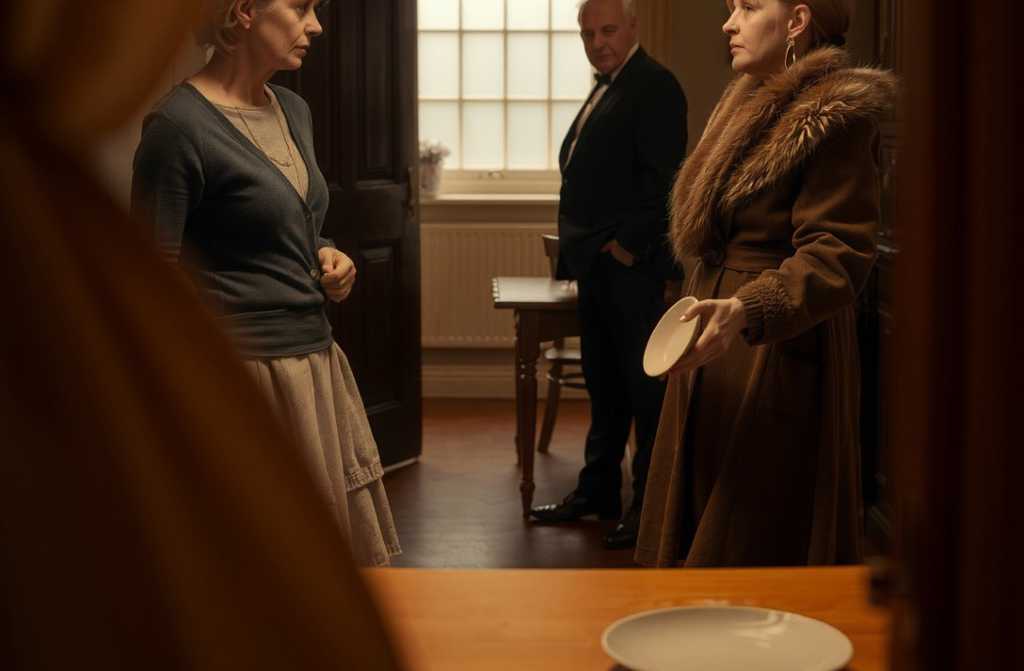
Do you even realise theyll be here in two hours and your hob still isnt working? Susan stood by the cooker, gripping a ladle so hard her knuckles turned white.
It works, you just have to turn the knob all the way, replied Peter from the living room, using the kind of voice people use when they want a conversation to end before it properly begins.
Ive been turning it for ten minutes. Turning and turning, Peter.
Not now, Sue.
Well, when then? When Elizabeth walks in and points out weve got a whiff of gas?
Silence. Then the sofa let out a protesting squeak, and Peter appeared in the kitchen doorway. He was wearing an old jumper, a bit baggy around the elbows, and some faded lounge trousers. He looked at his wife like youd look at the weather outside nothing you can do to stop it, but impossible to ignore.
Elizabeth wont say anything, he said, though he clearly didnt believe himself.
Elizabeth always has something to say. Susan turned back to the cooker, gave the knob another twist finally, the ring sparked to life, blue and bright. See? Just as I said.
Well, thats good, isnt it.
Is it. She stared at the flame for a moment. Peter, could you, you know, just once today if she starts on about the salad or the plates
Sue.
Im asking, thats all.
She wont start on.
Susan didnt reply. She picked up the saucepan, set it down a little harder than needed on the ring, making it obvious she was ending the topic not because she agreed, but because she knew carrying on was pointless.
She was forty-three, had lived with Peter for twenty-one of those years. In that time, shed memorised all his intonations, all his long silences, all the ways he wouldnt answer a question. Elizabeth wont start on, meant: I really hope she wont, but if she does, you know I wont say a word.
They lived in a two-bedroom flat on Shipwrights Lane, a part of town everyone called The Heights, though there was nothing remotely high about it. Years back, thered been a big industrial estate called Heights Engineering. The business went bust, but the name stuck and so did the faded brick tower blocks from the eighties, with their narrow stairwells and lifts that whined and rattled as if complaining about existence. The block was tidy Susan herself saw to the entrance, picking up stray leaflets, sometimes sweeping snow off the path with a shovel if the caretaker was late.
The flat was originally Peters dads, Mr. Arthur Barker. Hed handed it over to them three years ago, when it became clear he couldnt really cope on his own anymore and moved in with them. Before that, Mr. Barker had lived here alone since his wife had died. Short and wiry, builders hands, the dust of countless site jobs etched deep in his lines. Hed worked his whole life started as labour, then foreman, then site manager, finally ran his own small construction company. Built garden rooms, conversions, garages later, took on private houses and did all right. Not a fortune by modern standards, but more than enough for a man whod started with nothing.
Arthur had two children: Peter and Elizabeth. Elizabeth was eight years older, and had pulled off a rather tidy marriage her husband, Richard, ran a successful timber merchants. For the past fifteen years, theyd done very well fancy new place over by the river in the upmarket end of town, good car on the drive, holidays somewhere abroad every summer. And they had a knack for making sure everyone knew it never bluntly, but enough that the difference was always felt.
Susan felt it every time, as expected.
She ran through her mental list of things shed cooked already: prawn cocktail, coronation chicken, salmon mousse, roast chicken and potatoes, a sprawling cabbage pie. All homemade, hands red from the hot water and a nail snapped clean off her index finger wrestling the tinned peas. Her last manicure had faded weeks ago no time. Not for lack of money, just that after teaching piano classes at the local music school (her day ended at seven), shed pick up groceries, then cook, then check on Arthur, make sure hed taken his pills, change his bed linen.
He lay in the box room. Theyd given him that, sleeping on the fold-out in the lounge themselves. Their choice Susan never mentioned it aloud, didnt see the point. The old man needed help. Someone had to step up.
Lately, Arthur had been poorly something to do with his chest, leaving him breathless and coughing, so Susan had been shuttling him to hospital appointments. Not Peter his shiftwork at the plant made it impossible. Not Elizabeth either, apart from the odd cash for medication, or phoning once a month, which seemed to tick a box for her. So Susan did it grabbing a half day, shifting her lessons, bundling Arthur into her battered old Astra. Theyd drive in silence, him gazing out the window, sometimes mumbling, Light on the snow, this year, or, There used to be a market along here.
Susan always answered, not because she had to, but because she liked listening.
Now she was slicing carrots for the salad, thinking she should really iron out the tablecloth. The linen one, hand-embroidered at the edges her mum had stitched it, way back. The only thing shed brought with her from her childhood home, left in that small seaside town four hours away, where her mum still called every Sunday. Everythings fine, Susan always said, and left it at that.
Sue. The call, croaky, from the small room.
She wiped her hands and stepped out.
Arthur was propped on the bed under a checked blanket. Seventy-two, and these last few months it looked as if something invisible was gently tugging him downward, roots into the mattress. His face had gone ashen, but his eyes were sharp, dark, the sort you only see in people whove lived a lot, and dont talk much about it.
What is it, Mr. Barker?
Could I bother you for a glass of water? My throats like sand.
Of course. Warm?
Yes, please. Are they coming today?
They are. Elizabeth and Richard. New Years and all that.
He nodded. Didnt say anything else, but she saw his eyebrows draw together. She fetched him water, helped him up, tucked the pillow behind his back.
Will you eat something? Ive made a lovely chicken broth with noodles.
Later, maybe. Not hungry now.
Alright. Ill keep it on the hob.
Susan, he said, as she was turning to leave.
Yes?
He looked at her, for quite some time, as if weighing whether to say what he was thinking.
Nothing, he said at last. Best get on. Youve got loads to do.
She went back to the kitchen.
The phone rang out in the hallway. Peter answered Susan could tell by the shift in tone that he saved just for Elizabeth, a more tense, slightly apologetic voice.
Yes, Liz. Yes, all sorted. Susans been at it all day. Yep, well be waiting. Sure.
Susan rolled out the pastry for the pie, thinking all sorted sounded like Peter had been sweating over the stove since sunrise, instead of only just changing his shirt.
She didnt say anything.
Night fell outside. New Years Eve in The Heights looked like New Years in every other residential pocket: fairy lights, the odd parent dragging tired kids with shopping bags, grimy snow turning to slush by the kerb.
Susan happened to glance out just as a shiny black Range Rover nosed in through the gates, glinting under the street lamp. She knew it straight away.
Peter, theyre here.
He clicked into action, now in a crisp shirt, hair combed. Susan looked at him, and felt, as always in these moments, not angry, but a heavy, tired kind of sadness.
Go open the door, Ill just finish washing my hands, she said.
She scrubbed her hands, took off her apron, ran a hand through her hair in the little mirror by the door. It was dark, streaks of silver framing her temples. She never bothered with dyeing, not out of principle just no time.
The front door banged. From the lift at the end of the hall that bone-shaking, complaining thing came that unmistakable voice, already rising before the bell rang.
Oh Lord, not this funny smell again. Richard, can you smell it?
Peter opened the door.
Elizabeth swept in a tall, statuesque woman of fifty-one, immaculate blow-dry, serious earrings. She always had a way of entering a room and taking Owners Rights, not by force, but by habit shed been the oldest, most successful one all her life, the one who seemed to land on her feet, with others always left feeling a bit small.
Richard followed, two hefty bags in his hands, a couple of years younger, stocky, face calm and sure in the way only men who can fix anything usually look.
Peter! Elizabeth did the shoulder-hug-shoulder-pat thing, then to Susan, a near-air kiss. Susan. I can see youve pulled out all the stops. You mustve been cooking up a storm?
I have, said Susan evenly.
Weve brought a few bits, Elizabeth said, nodding at the bags. Some proper smoked salmon, not that tinned stuff. And cheese real cheddar, not that processed rubbish. Richard, pop it in the fridge, would you?
Richard vanished to the kitchen with every intention of putting things away without asking. Susan started to follow, but Elizabeth gently caught her by the arm.
Hold on, just wanted to ask how Dad is?
Up and down, said Susan. A bit better today.
We were thinking maybe get him into a proper private clinic? Richard had a look. Good specialists there.
Hes already got a consultant. I take him over to St. Georges.
St. Georges, Elizabeth echoed in a tone reserved for things that simply dont merit a better answer. Right. Well. Anyway.
Then she breezed into the sitting room, sizing up the place. Susan watched her from the kitchen doorway.
You still got that old dresser? Elizabeth nodded to the vintage sideboard with glass doors, the sort that holds the good plates.
Still got it, Susan said.
We offered you that Italian chest of drawers, didnt we? You know, the one were replacing.
We remember, Peter said, popping out from the hall. Thanks, Liz.
You should have just taken it. Never mind. Elizabeth smoothed a speck from her clever faux fur coat and hung it up. It was expensive, dark, and unsubtly lavish. Whats for dinner, then?
In the kitchen, the table was already set: linen cloth, her mums embroidery, those simple white plates with the blue ring theyd bought for their first anniversary. Matching bowls, salads under clingfilm. Everything straight, everything even.
Elizabeth eyed the table, the chair, the crockery.
Charming, she said. One word meaning everything youd expect.
Richard sat down, Peter opposite. Susan checked the oven the chicken was nearly done.
Youre still at the music school, Susan? Elizabeth poured herself water.
I am, yep. Piano class.
A teacher? Proper teacher?
Proper, yes I run the piano group.
Teachers these days Elizabeth left a pause. Its got to be better than being out of work, I suppose.
Definitely better than nothing, Susan matched her tone.
I mean, the moneys not much, is it? Its a state school, right?
State school, yes.
We had a look at putting Richards nephew in private, didnt we, love? Its another world all the teachers have their Royal College certificates.
Ive got a Royal College certificate, said Susan.
A short silence.
But of course, said Elizabeth. I wasnt suggesting otherwise.
She was.
Susan pulled out the roast. The chicken was golden and crisp, the rosemary scent mingling with garlic, making the little flat almost festive. She took off the clingfilm from the salads.
Oh, prawn cocktail how retro, Elizabeth observed.
You loved prawn cocktail, Peter chipped in.
Used to. When I was a kid. Elizabeth poked at it with a spoon. Susan, is the peas out of a tin or frozen?
Tin.
Well, you want to use frozen now completely different beast, just so much fresher.
Its fresh enough, Susan muttered under her breath.
Richard poured the wine you could tell it was the posh stuff theyd brought. He poured for Peter, then Susan, almost forgetting her for a second before finally topping up her glass (just less than the others).
To the New Year, said Richard.
Glasses clinked.
Elizabeth had a bite of the prawn cocktail.
Its alright, she decided. Bit heavy on the mayo. We get our housekeeper to use Greek yoghurt these days. Worlds apart.
Whos that, then? Susan asked.
Oh, Lena. Shes from the North. Cooks beautifully. We pay her well, so she pulls out all the stops.
Susan nodded more because it was easier than not.
A cough from the small room. Deep, muffled. Arthur was coughing. Elizabeth paused for a heartbeat, then started up again, talking to Richard.
Susan stood up. Ill check.
Arthur was on the edge of the bed, gripping the frame, face all taut.
Water?
Yes, if you would.
She took it over. He sipped, and the cough eased.
Are they here? he asked.
They are. Having dinner.
He studied her, as if searching for just the right words, decided against it.
Want to come in for a bite? Ill help.
Maybe after. Let them get on with it first.
Alright.
Susan. He stopped her again, meeting her eyes this time. You know youre a good un, dont you.
She smiled. Not because shed waited for it, but because he said it like truth, plain and simple.
Come to the table before your dinner gets cold, Mr. Barker.
Back at the table.
How is he? Peter asked.
Settled. Coughs calmed.
That cough, Elizabeth started, he should see someone a top lung specialist. Not just the local GP.
He has a specialist.
A proper one?
An oncologist.
Everything shifted.
What do you mean, an oncologist? Elizabeth asked carefully, all the ease gone from her voice.
A cancer doctor.
You said it was his lungs.
I said he had a problem with his lungs.
Elizabeth turned to Peter, but he only stared at his plate.
Did you know this?
Its just tests at this point, Peter muttered.
Just tests? What does that mean?
It means the doctors are on it, Susan said, gently. Can we leave it? Its New Years.
Elizabeth leaned back, watching Susan the way you eye someone whos surprised you not quite sure how to play your next move.
Alright, she said at last. New Years.
Chat drifted to cars, the extension on their country place. Susan kept plates moving, serving, clearing quietly. Years of practice, moving around her in-laws like invisible furniture.
Peter nodded along, dropped in the odd word. He looked relieved it was smooth sailing, that Elizabeth hadnt started up, that Richard was content. Susan looked at him thinking hell never really understand what it costs for things to be this calm.
Susan, you had a mother-in-law, didnt you? Elizabeth piped up, suddenly.
I did. She passed away years ago.
Did you get on with her?
We managed.
My mum said Elizabeth said it like it should mean something, she said you were dutiful.
The pause on dutiful made it sound almost like something else.
I do my best, said Susan.
Yes, thats obvious, Elizabeth replied, peering at the herring salad. Is that beetroot in the salad?
It is.
I cant stand beetroot. You knew?
I did.
So why make it?
Its a classic. Without, its just tinned herring and potatoes.
Well, I wont touch it. Doesnt bother me what its called. She pushed the dish aside.
Thats fine.
Couldnt you have rustled up something else just for me? Only asking.
Susan looked her in the eye. Calm, flat.
I didnt know it mattered you ate it last Christmas.
Last time, I was just being polite.
Right.
Dont get huffy just next year, maybe do separate.
Will do, Susan said, busying herself again.
Peter stared into his glass.
Fish is lovely, Richard broke in, surprising everyone by joining in. You make it yourself?
I do, Susan replied.
Nicely done, he said, and for a moment, Susan actually believed him.
Around ten, Elizabeth said, Bring more prawn cocktail, would you, Susan? Richards after seconds.
No please, no could you.
Susan fetched more.
Bit more, bigger helpings, Elizabeth said. And a clean spoon.
Susan obliged.
Running low on bread here, Richard noted.
Susan got up for bread.
Peter, of course, didnt move once.
By half eleven, coughing echoed down the hall again, rougher, lasting longer. Susan stood.
Off to him again? Were at the table, you know.
Hes unwell.
Well, ask Peter then. Hes his father, isnt he?
Peter flinched, making as if to get up.
Sit, Susan said. Calm, but not to be argued with. Ill go.
She entered Arthurs room. He was coughing, hands shakily braced on his knees. Susan fetched water, sat quietlythe cough passed.
I think Id like to come to the table, he said. Join for a bit.
Of course. Give me a sec.
She helped him up, found his warm cardigan and cane.
Ready?
He nodded.
They walked in together.
Elizabeth sprang up. Dad, she managed, giving him a careful hug, as if hugging something breakable. How are you?
Managing, he said. You all go on.
She made room, Susan slid a plate and poured him tea.
Dad, we wanted to talk about getting you to that private clinic
Later, Arthur said. Lets eat for now.
He took some bread, hands trembling but steady enough.
Dad, you dont look yourself, Elizabeth said.
Im not well, Liz not exactly the time for rosy cheeks.
Thats why we need that private clinic.
I heard you.
A pause.
Theres the marshmallows, Richard pointed out, nodding at a dish in the middle.
I picked them up, Susan replied.
Pink ones, Richard laughed. We used to have those at Grans for New Years, every year.
Such a softy! Elizabeth rolled her eyes, but you could hear the warmth now.
A little lighter, everyone ate and chatted. Arthur took slow mouthfuls, Susan watched, glad.
Elizabeth went for more prawn cocktail, knocked the herring salad with her elbow accidentally, not maliciously. The bowl toppled onto the tablecloth, mums embroidered cloth. Mayo and beetroot straight onto the linen.
Everything froze.
Well, Elizabeth said, flatly, these things happen.
No big deal, Peter started, well just.
Wait a minute. Susans voice cut through.
She looked Elizabeth in the face.
Youve knocked the salad over the one I was up at dawn making.
It was an accident.
An accident, fine. Susan didnt move. Thats mums tablecloth. Linen, hand-washed. I take care with it.
Oh, Sue, dont start. It was an accident.
I understand that. Just say, sorry. Please.
A pause.
What?
Apologise. Please.
For tipping a salad, really?
For spilling food on something precious to me.
Elizabeth looked around to Richard (reading his wine glass), to Peter (gazing into space), then her father.
Arthur just sat quietly, not judging, just watching.
Oh, come on, began Elizabeth, seriously?
Seriously.
You want me to apologise?
Im asking.
For a bit of salad.
Thats right.
Another pause. Elizabeth bristled, but Arthur, surprisingly strong, cut in: Say sorry, Liz. Shes asked you nicely.
At last: Sorry, from Elizabeth, quick and clipped as a tube ticket shoved through a barrier.
Thank you, said Susan, switching to mop up the stain.
The room was silent.
Three minutes of quiet. Then Richard topped up glasses, Elizabeth had a marshmallow talk started up again, but not as before. Some invisible balance, something that had always been off-kilter, now shifted.
Susan rolled up the cloth, fetched another plain one. The beetroot stain would never quite come out, but shed soak it tonight.
Oh, Elizabeth said suddenly, have you made any decisions about the flat? This place, I mean.
What do you mean? Peter asked.
Well, you know. When anyway. Dads flat. He gave it to you, I remember. But he always said he wanted things above-board.
Elizabeth Richard tried to hush her.
No, Im serious. Weve never discussed this properly. Dad, you know it all has to be legal. The bank accounts, the shares from Heights Engineering, everything needs sorting.
Liz, Arthur said, I hear you. I get what this is about. I actually wanted to say something tonight.
Elizabeth and Richard exchanged glances.
Tonight? Why now?
Because its New Years Eve. Because youre all here. Ive been putting it off for ages until I realised theres never a perfect time.
The hallway clock ticked, loud as a drum. It was a find from a car boot years back, fixed up by Susan, steady and comforting.
You all know Ive been ill, Arthur said. And since the beginning, Susans taken me. Every appointment, whatever the weather. Off work, waiting for hours. She comes home, cooks for me, gets up in the night if I need anything, sorts me out.
Dad, we helped with money, Elizabeth cut in.
I know the money paid for pills. Im grateful. But the money doesnt come and sit with me in the waiting room, doesnt cook soup, doesnt change my sheets. Susan does. Not once has she asked for anything or even hinted shes tired of it. She just gets on with it.
Somewhere outside a firework started early, fizzing into the sky.
Dad, what are you saying? Peter asked, with a strange, worried look on his face.
Arthur took his time, pulled a stamped envelope from his cardigan, put it on the table.
Its all in there, he said. Three months back, I went to a solicitor. The shares, savings, my bits of property Ive left them all to Susan.
It hit the table, thick as a brick.
What? Elizabeth croaked, her whole manner gone.
You heard me.
Dad, you you realise what youre saying?
I do.
Were your children. Im your daughter. Peters your son.
And I know exactly who you are.
And you youre giving everything to her? To your daughter-in-law? A woman who married in?
To the person by my side, actually. He said it gently, not harsh or cold. I love you both, you know that. But sometimes love and fairness arent the same thing.
Elizabeth stood up. You call that fair?
Liz, please sit, Richard said.
No! She looked at her dad. Weve helped, weve sent money, weve looked into clinics
You looked into them, yes. But you never once drove me there, never once spent the night when I was bad, never once rang Susan to see if she was holding up. Not once.
She stood very still, face paper-white.
Its not fair, she whispered, suddenly like a child.
Maybe not, Arthur said. But its right, as I see it.
Richard rose, jacket in his hands.
Richard, Peter tried.
We should go, Richard said, not meeting anyones eyes. Come on, Liz.
Were not going! Dad, youll regret this.
I well might, Arthur said. But Im old and ill, and too done in to do things I dont believe in just to avoid regrets.
Elizabeth got her coat. Richard was already halfway down the hall. Peter sat, still as a statue.
Peter, Elizabeth said.
I he began.
You coming or not?
He looked at his sister, then his wife face trapped, doomed to pick a side and lose both ways.
Im staying, Liz. This is my home.
Elizabeth left. The door closed softly, which was somehow infinitely worse than if it had been slammed.
The clock in the hall read three minutes to midnight.
Peter sat there, staring at the envelope.
Susan he started.
Not now, she whispered.
I just
Peter. Not now.
She got up, poured a glass of bubbly, brought it to Arthur. He watched her with a sort of peaceful, gentle pride, the look of someone whos finally done what they believe in.
Five seconds, he said quietly.
On the telly, Big Ben chimed. Once, twice, three times.
Susan raised her glass.
He raised his, hand trembling but strong enough.
Happy New Year, Susan.
And you, Mr. Barker.
They clinked glasses a soft, honest sound.
Fireworks burst beyond the window, red and green and gold, going off with borrowed joy.
Peter was still in his chair, silent.
Then, slowly, he stood, picked up a bit of china from the carpet Elizabeth had knocked a plate over when leaving, and no one had noticed. He looked at the fragment for a moment, then up at Susan.
Sue he said Will you forgive me?
She looked steadily back at him.
Pick up the mess, Peter, she replied, quietly. Then eat. Theres salad left.
He nodded, shuffled off for the dustpan.
Arthur gazed through the window. Over the dark January rooftops of The Heights, the fireworks went on blazing red, green, gold. Each one looking like the last, until another followed, and another again.
Susan set her glass down.
Sat beside her father-in-law.
And the two of them stayed there, without saying a word, while the party sparkled on outside.