Artist
– That cat is the devil incarnate, Rose! You need to get rid of him! Margaret wrinkled her nose in disgust, staring at the one-eared, ginger tom weaving around my legs.
– What are you saying, Maggie?! I gasped, appalled. Hes a living creature!
– Creature? Thats the best word for him! Dont you think, Rose, hes got far too much attitude?
As if confirming Maggies accusation, the cat suddenly hissed, arching his back, and with utmost caution, stalked sideways towards the supposed disturber of our peace, ready for battle.
– See? Maggie jabbed a finger triumphantly at the cat, shuffling back a step. Didnt I tell you?
I sighed and called gently, Oscar, darling, dont. Its alright.
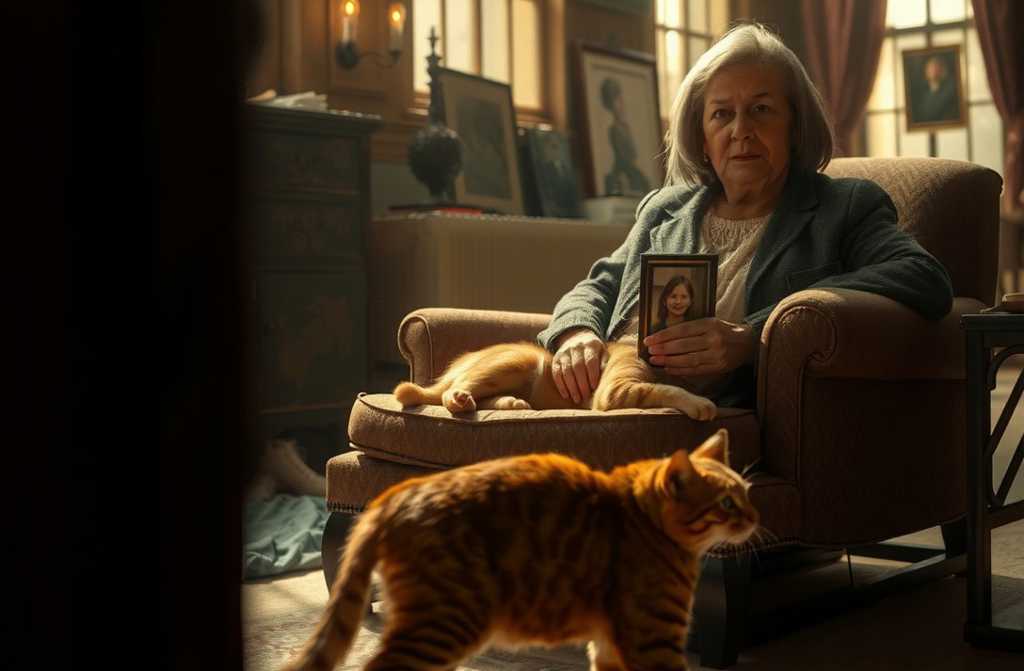
The cat swiveled round, regarded me coolly, and then, just as quickly, relaxed. He trotted back to my side, nudged my ailing leg, and plopped down, making it clear he was on guard, all the same.
– Hooligan! Maggie scoffed, giving him a wide berth. And you feel sorry for him!
– Someone has to, I sighed.
Oscar showed up at my doorstep three years ago, during the gloomiest chapter of my life. I had barely had time to say my farewells to my husband before he passed away, and then I lost my only son not long after. Suddenly, I was completely alone, apart from my sister and one or two ladies I could hardly call friends.
But there was Margaret, my sister.
Margaret was the eldest. There wasnt much between us in age, but our parents were always keen to point out:
– Margarets our eldest! So responsible! You can trust her with anything and shell get it done, properly and on time! And little Rosie oh, our angel, comfort of our hearts. A wonder of a child! But so scatterbrained such a pity!
We grew up certain: Margaret was the starclever, beautiful, the lotwhile I, the scatterbrain, was at least the favourite.
– Why do mum and dad praise you? I dont get it! Margaret would grumble if ever I brought home a school report with decent marks. Youre just doing whats expected! Whats to celebrate?
– But Maggie, Im not as clever as you! You always get top marks. Mine are a mix.
– Exactly! Yet they praise you! she sulked, and Id hide my smile, trying not to wind her up more.
Margaret finished school brilliantly and went off to university, rarely coming home.
– Hows it going, Mags? Id seize any chance to ask about her life.
– Fine, just slow. Wish there were more hours in a day!
– More hours? For studying?
– Oh, not studying! shed snort. I havent got time for a life! Hows one supposed to meet anyone decent when youre spinning madly trying to build a career base?
– I never thought of that, Mags
– Did you ever think at all, little one? shed laugh, unfazed by how her words stung. Thats grown-up stuff. Not for you!
Id swallow my hurt and quietly wish her well, always happiest when things went her way. The star had to shine. I could only bask in her glow.
By the end of university, Margaret was still alone. Chaps steered clear of herwary of her sharp tongue and sharper wit. No amount of Mums pleading to soften ever got through.
– Mum, do you really want me to sit tamely in a corner and perfect my embroidery like some Jane Austen character? Leave that for Rose! Its not me!
– No one wants you to change everything, love! Just be a bit softer. Boys like that.
– Oh, Mum How would you know what modern boys like? Times are different!
– Maybe youre right I suppose youd know, Mags.
A bolt from the blue struck when I, the one everyone said didnt need uni and ought to get a trade, brought home a fiancé.
– Mum, Dad, this is David
David charmed my parents without even trying. Handsome, bright, and talented, he was starting out in local television as a journalist. His early steps were promising; he was making a name, if not a famous one, at least a good one.
But the biggest thing was, he adored me. Plain, unremarkable Rosiestudying at a local college, not the universitywho, in the familys eyes, was nothing special.
Id always loved sewing and dressmaking, so of course I chose that for myself: something beautiful for me and for others.
– Rose, honestlya seamstress?! Margaret was not impressed.
– Well Maggie, Im not as brainy as you. But not everyone can whip up a beautiful skirt or blouse. I want people around me to look lovely and feel happy.
– As if! Whats wrong with your head?
– I dont know. But your dress I made looks right, doesnt it?
– For who?
– You! Me! Anyone! People will see you and say, gosh, she looks wonderful! Isnt that nice?
– Hm Some people reach for the stars, my sister well, shes content down here!
Once again, I never understood what Id done to bother her. She wore my clothes with obvious pleasure, even though shed never admit their origin to her friends.
People would ask Margaret where she bought her skirts or dresses.
– Thats a secret!
– Abroad, then? Do you have diplomat relatives?
– Im not telling! Its not my secret! shed say, secretly proud that her sister caused such a stir.
But Davids arrival in my life floored Margaret.
How could it be that the dull one, neither educated nor a beauty, became a bride before Margaret? Unthinkable!
At my wedding, Margaret sat stony-faced. People wondered what was wrong. For the first time, it seemed, I was truly noticed and complimented.
– Stunning! And her young man, too! What a pairgood luck to them!
Possibly for the first time in her life, Margaret tasted real envy. It bit into her heart, nesting there stubbornly.
Your sisters fiancé is handsome? Brilliant! You have no one!
The parents cant take their eyes off Rose, whispering about grandchildren? Not your fate!
Rose shines, as if shes stolen your light and become the star! Serves you right! Some get it all, othersnothing!
Margaret never made it to the end of my wedding. She slipped away, went home, and wept herself to sleep, cursing her lot.
But as soon as Mum walked into their childhood room, Margaret composed herself.
– Are you alright, love?
– Perfectly fine! Dont worry.
Margaret married six months later, more or less the first chap who asked. He was much older, a bit balding, plump, but very clever. Hed figured out quickly what Margaret wanted from marriage.
– I can give you what you want. But this is a mutual arrangement.
– Terms?
– Youll give me a child, maybe two. Get on with your career. Ill make all that possible: a nanny, cleaner, whatever you want. I guarantee no affairs, and you neednt worry about my health. But in return: absolute fidelity. I wont tolerate cheating. Youll run the homemeals, bed, a welcoming atmosphere, no drama, so I can focus on my work. Agreed?
Margaret barely paused.
– Accepted!
Strangely, it worked out splendidly. There was none of the tenderness that filled my life with David, where love seemed to breathe in every corner of our home, making even strangers smile. Margarets marriage was calm, steady, reliable.
She had a son, then a daughter, just as agreed. The children were raised by their nanny; their hours scheduled to a tee so theyd grow up educated and, hopefully, well-mannered. Margaret herself had little time for child-rearing. Doctorate, work, social engagementsshe sparkled, never letting slip where her dresses came from.
I, meanwhile, never rushed. Through the difficult nineties, I worked from home. Women sent one another, whispering my address.
– Seamstress from heaven! Hardly takes new clients anymore.
– That good?
– Amazing! See my pink dress? She made it!
– No way! Looks like a designer piece!
– Even most designers started somewhere small! Rose will make it, if she has the nerve. Just wait!
My reputation grew. MPs, wives of nouveau riche, half the BBC and West End actressesI dressed the lot, never repeating a pattern, knowing the scandals that could spark otherwise.
When life calmed down, I opened my own little studio, which soon turned into something of a fashion salon: a place for connections, gossip, or simply to come and go unnoticed. The Victorian ground floor rooms, found by Margaret, were perfect for comfort and privacy.
Maggie bought the equipment, lent me the money, and told me not to worry.
– Well settle up!
She wanted to give her scattered sister a firm footing. With hindsight, Maggie berated herself for ever resenting my happiness, feeling that it had dimmed something inside me. Looking at her healthy children, she was sometimes twisted with envy that my only boythe miracle Id dreamt ofwas born ill.
A bright little boy Someone called him that once, and Margaret picked up the nameSunshine.
– My darling, my beautiful boy! Ive brought you gifts! Maggie would greet my son.
Hed meet her with a broad, trusting smile, and shed want to turn the world upside-down just for him.
– Maggie, you love my little Jamie more than your own kids! Id say, watching my boy hug his aunt, when he barely approached anyone else. He was waiting for you
It was only half true, but I wanted to believe there was hope for my childs health.
Margaret, seeing how hard it was for me, found a nanny and helped set up the studio.
– Work, Rose! You need it. Davids busy with his work. Whats the point sitting at home?
– I cant, Maggie! Jamie
– The studios big. Make a playroom. Hire staff. Ill sort the nanny. Manage it all! Jamie stays close, youre busy, everyones happy!
– I dont know what Id do without you, Maggie.
– What else are sisters for? Dont make me cry! I spent ages on make-up todayIve got a meeting!
And so we went on.
Margaret kept an eye on Jamies health and mine, finding specialists and booking the best. Jamie was frail, always some health scareheart, internal organs. I often broke down when we were alone.
– Maggie, what did I do wrong for my boy to have all this?
– Nothing, love! Its just fate, or whatever you want to call it. Well get through. Jamie may never be well, lets not pretend otherwise. But we can still give him happiness. Thats what matterslove, care, warmth. Lets do what we can.
– Maybe youre right
– So less crying, more action. Ive found another neurologist, supposed to be top-notch! Long wait list, but never mind. Jamies on it. Lets see what they can do.
– Maggie
– Dont start! Pour me more tea! And a sandwich, Ive not eaten all day.
Margarets husband understood her care for my boy.
– Wish there was more we could do. If you need anythinglet me know.
Simple words, but they meant the world. Maggie realised she did love her husbandsteady, quiet love, not the tempest of youth, but something deeper.
Our children grew, our parents aged, and the strains between us faded away.
Who else could we confide in but each other?
It wasnt just Margaret helping me. When her husband had trouble at work, I asked David to help untangle it. The investigation was long, dangerousyears later I learned how close David came to disaster, but the truth came out. Margaret thanked me, short and sure as always:
– Rosie, you may never know what you and David did for me. But I promiseyour family will never want for anything while I live.
And she kept her word.
She was there, solid as a rock, when David fell ill. He ebbed away slowly, fading before my eyes, me clinging to Margarets shoulder, weeping:
– Why?! Why him? Hes still so young!
Margaret helped me through the loss, day after day, reminding me that I still had Jamie.
And again, when my Sunshines heart finally gave out, she caught me when I would have collapsed. We didnt cry, not in front of doctors; we just left together, walking the whole way home, hand in hand, in silence.
– Yellow T-shirt, red trainers
– Yes
No explanations needed. We were sending him off as he would have liked.
After Jamie passed, I withered almost overnight. I worked mechanically, leaving operations to my team. More than once Margaret would drop by, find me slumped over my sketchpad, unable to draw even a single line.
– Rosie
– Just let me rest a little, Maggie. Please Id look at her with empty eyes.
– You cant go on like this! Maggie nearly wept herself.
– It doesnt matter anymore… Id reply with a tired smile. Its all the same now.
Everything changed the day the cat came.
Who knows where he came from, all battered, dirty, with a torn ear. The high street outside our studio wasnt somewhere youd often see strays.
He tried to get in, but was shooed away.
– Go on! Shoo!
So the cat did the only thing he couldcollapsed at the top step, head and paws drooped, feigning lifelessness. Thats how I found him one late morning.
– Girls, whats this?! I asked, peering down at this performer.
– A cat, Mrs. Rose! Came in, flopped down, refuses to budge!
– Is it even alive? I nudged it gently with my shoe.
In reply, he opened one eye, sighed theatrically, then poked out his tongue, as if to plead,
– What are you doing to me, cruel people? Im dying, I swear! Any second now Ill be gone, forgotten! I havent a name or a meal in agesits all your fault! No kindness, no honour!
I couldnt help it. For the first time in memory, I smiled.
– What an actor! Girls, just look at him! Sir Laurence himself would be jealous! Alrightyou win! Come on. Ill feed you.
Scooping him up, I shook my head.
– No, firstoff to the vet. I dont like the look of that ear. And all the rest
The cat didnt argue. Sat calmly on the passenger seat as I drove, stoic for the injections except for one offended yowl at the sharpest jab. He graciously accepted a tin of expensive pâté as reward, then followed me out of the surgery with quiet dignity.
– Well Ive never had a cat before. How shall we get along, then, Oscar?
He struck a sphinx pose, staring unblinkingly out the window. I smiled again.
– Well manage, I think. Now, will Margaret approve?
Unsurprisingly, Maggie did not approve of Oscar. Not openly, anyway. Shed chase him out, all the while delighted to see the old spark back in my eyesto see me needed again, caring enough about someone to put myself aside.
– Rose, he looks at you so strangely!
– Let him, Maggie! No ones looked at me like that for ages!
– Like what?
– With love!
– Nonsense! Hes a cunning one! Hes lying to you!
– Maybe sobut he keeps my feet warm at night and watches TV with me. Can you believe it? Sits as if he understands every word!
– Shouldnt have picked a silly name! Oscar, honestly. Call him Socks or Smokey, something normal!
– It suits him! Id laugh, and Maggie would feel her heart soften.
Because her sister was smiling again. For that, she could forgive Oscar anything.
But Maggie truly accepted him the day she almost lost me.
It was the weekend, a Saturday. I hadnt arranged to meet Maggie, but she happened to be nearby and decided to pop injust in case I was burning the midnight oil over another order. Ever since Oscars arrival, Id started working again; my dresses as popular as ever, with clients lining up for the new collection.
The lights were on when Maggie arrived; she let herself in with her key.
– Rose, Rosie! Its me!
A flash of ginger darted at her feet, and Maggie shrieked as Oscar latched onto her ankle, laddering her tights.
– Oscar! Are you mad? What are you doing?
He looked truly odd, Maggie said later. Eyes ablaze, she actually shrank back.
– Goodness, youre rabid!
She grabbed a long ruler, ready to chase him off, when the cat let out a plaintive yowl and darted between her and the door to Jamies old room, which Id never managed to convert into another fitting room.
– Whats in there? she whispered to Oscar. Wheres Rose?
She rushed in, forgetting all about the cat, and found me on the floor, clutching Jamies photo.
– Rose!
There followed an ambulance ride, hospital, nearly a day in intensive care.
Maggie stalked the corridors, unable to keep still, muttering prayers she barely remembered.
– Dont take her! Leave her for me! Let her live!
Later she heard how Oscar would prowl the locked studio, wailing with a strange, guttural yowl heard only when he called for me. He settled only once I woke.
I was discharged three weeks later.
– Maggie, straight to the studio!
– Why? I can bring that rascal home with me.
– No, I want to see him.
I struggled up the steps; the girls watching laughed as flames of ginger streaked down the corridor, wrapped round my legs, and purred so loudly even Maggie melted.
– Oh, Oscar!
I scooped him up, stroked his now-healed ear, and said,
– He called me, Maggie. I heard him First Oscar, then you. That time, before the hospital. Even there
– What do you mean, there?
– I cant explain. First Davids voice, then Jamies, but the cats broke through then you
– Strange, admitted Margaret.
But Oscar seemed to know. He tapped my chin with a paw, glanced at Maggie, and curled up in my arms, utterly content.
– I think Ive just been accepted, Maggie smiled. Not too sure what for, but Ive been approved.
Oscar opened one green eye, twinkled a little, and purred louder, chasing sadness away, promising peace. And I smiled again at last, making my sisters heart glow.
Really, what else does a person need? Loved ones close, a quiet heart.
So little. So much.