Quiet happiness
Harry was only three when he lost his mother. He watched her tumble from a roaring motorbike that barreled toward them, her red dress catching fire for a breath before darkness claimed the world. The doctors did all they could; the boy finally opened his eyes, but the memory of his mother’s scream lingered like a shadow.
No one dared ask when he would speak her name, yet Harry kept silent for six long months. One night he awoke with a wild cryMum!and the image of that blazing red dress flared once more in his mind. By then he had been placed in the York Orphanage, unable to understand why he was sent there. He grew a habit of standing before the big window that looked out onto the road and the main lane, eyes strained toward the distance.
What are you doing there all the time? croaked Mrs. Thompson, the elderly matron, sweeping the floor with practiced ease.
Im waiting for my mother. Shell come for me.
Oh, dear, she sighed. Dont just stand there. Come, Ill fetch you a cup of tea.
Harry agreed, but after the tea he would return to the window, flinching whenever anyone approached the home.
Days turned to weeks, weeks to months, and Harry never left his post, hoping that one grey day a woman in a red dress would appear, reach for him, and say, At last Ive found you, my boy! Mrs. Thompson wept for him, feeling his loss more keenly than for any other child, yet she could offer no remedy. Doctors, psychologists, and other wellmeaning folk urged him not to wait forever, to find games and friends instead of lingering by the pane. Harry would nod, smile, then slip back to his vigil. Mrs. Thompson saw his silhouette through the glass so often she could no longer count the farewells she gave him.
One evening the matron turned away from the window and trudged home, her tired feet carrying her across the iron bridge that spanned the railway. Few lingered there, but today a young woman stood, eyes fixed below, and made a sudden, almost invisible motion. Mrs. Thompson sensed what she intended.
Dont be foolish, she called, stepping closer.
What did you say? the stranger asked, her faded eyes sharp.
Foolish! What are you thinking, you scoundrel? Do you not know it is a grave sin to deny yourself a life? the matron snapped.
What if I cant any longer? the woman shouted, a note of desperation in her voice. What if I have no strength left and see no purpose?
Then come with me. I live just beyond the footpath; we can speak there. Theres no point standing here.
Mrs. Thompson slipped away without looking back, holding her breath. Behind her, the womans footsteps faded, and the matron exhaled a sigh of relief, grateful to have arrived in time.
Whats your name, you daft thing? the matron asked.
Ethel, the woman replied.
Ethel My own daughter bore that name. She died five years ago, a cruel illness took her within a year, leaving me an old spinster with no children, no grandchildren, no husband. Im called Mrs. Thompson. Come in; this is my little house. Not a palace, but its mine. Ill change my dress, set the table, and well have tea. Everything will settle then.
Ethel smiled gratefully.
Thank you, Auntie Thompson.
Ah, youre welcome, dear. Life on this earth has never been easy for a woman. Tears and suffering are many, but throwing yourself into extremes is the last thing to do.
Im not weak, Ethel said, warming her hands over a steaming mug. It just feels as though madness has taken hold of me.
Ethel had grown up in a village, living carefree until the age of seven. Her parents loved hershe was their only childuntil everything fell apart. Her father abandoned them, slipping away to a second family that had been in existence for years. Her mother, unable to bear the blow, turned to drink and vented her rage upon her daughter.
In revenge against the husband she never divorced, her mother began to bring strangers home, neglecting the house, leaving all chores to the young Ethel. Soon, the mothers drinking companions stripped away what little remained of the fathers estate. Ethel took odd jobs for neighbourshoeing gardens, mending fencesand was paid in food. She fed her wayward mother without ever receiving thanks, having long since given up hope of a normal family.
Her father never called, never asked how they fared. Rumours whispered that he had moved abroad, and Ethel understood she would never see him again. Poverty kept her from friendships; the local lads shunned the daughter of a drunken woman, and she grew into an outcast in the modest village.
One night, a drunken intruderher mothers companionburst into Ethels tiny room. By sheer luck she escaped through the window, fleeing before any tragedy could occur. She spent the predawn hours under a rickety shed, then, once the house fell silent, slipped into the bedroom, gathered her papers, stole a few coins hidden in a small nook, packed a few belongings, and fled, never to return.
By evening her father, John, arrived, hoping to reunite with his daughter. The sight of the dilapidated cottage horrified him; he searched the village, questioning anyone, but no one knew where Ethel had gone. He wept in his battered lorry, cursing himself for the delay in coming back.
John had been a longhaul truck driver. During one haul he met a wealthy, unmarried woman named Gillian, who repeatedly used his transport firm and always insisted that John himself deliver. She liked him both for his looks and his character, and she made every effort to win his heart. Over a few years she bore two sons, then declared she was leaving England.
Do you want to live with us? Come with me. If not, return to your wife. I love you, John, and it will be hard without you, but I wont force you. Choose.
John chose her. He mourned leaving his daughter, yet he no longer wanted to split his life between two families. Ethels mother, with her constant accusations and jealousy, had grown tiresome, and her drinking only worsened.
One day, while Ethel was at school, John returned home to find his wife with another man. That was the final straw. When Ethel came home later, she saw only a drunken mother, who told her that her father had abandoned them and would never return. Ethel left the village for the city, seeking work.
A kind, solitary old lady named Zenaida rented her a tiny room, which Ethel paid for three months in advance. When the tenancy ended, Zenaida asked the diligent young tenant to look after her, offering free lodging in return. For five years Ethel tended to her, and in the last two Zenaida became bedridden. When Zenaida passed away, grief-stricken Ethel discovered that she had been left Zenaidas modest flat on the outskirts of town.
There, Ethel met Yuri, a handsome banker, and thought fate had finally smiled. Two blissful years passed until the day she caught him with another woman. He offered no apology, threw the lover out, then beat Ethel so violently she was hospitalized. She never managed to tell him she was pregnant; the baby was lost, and doctors warned she might never carry another child. Bereft of family, husband, home, and even the flat Zenaida had left herYuri sold it within a year and bought a shiny carEthel felt utterly alone.
Released from the hospital, she wandered aimlessly until she found herself at the railway bridge. There, Mrs. Thompson listened patiently, never interrupting, and when Ethel fell silent she said, Thats still nothing. You must live, you know? Youre still young, with everything aheadlove, happiness. Stay with me for a while; I work all day and only come home at dusk.
Ethel spent two weeks under Mrs. Thompsons roof. A strangers kindness had once again sparked hope, and it soon bore fruit. A new constable, Gregory, arrived to meet the residents of his beat. Mrs. Thompson was absent, so he spoke with Ethel, promising to return when the matron came back. He kept his word, visiting often, and soon became a trusted friend to Ethel.
One afternoon Gregory called, Do you know Ivan Saville?
Yes, thats my father, Ethel answered.
Hes been looking for you for years.
Thus Ethels fortunes turned. Her father, overjoyed to have found his daughter, bought her a respectable flat in Leeds, opened a solid bank account, secured her a respectable job, and vowed to visit more often.
When Ethel went to see Mrs. Thompson, bringing a few treats, she found the matron bedridden with a high fever, weak and frail.
Somethings taken me, dear Ethel! Im afraid I wont pull through.
No, Auntie Thompson, Ive called the ambulance; theyll be here soon and youll be fine. Do you believe me?
I do. Listen, you know I work at the orphanage. Theres a boy named Harry, just turned five. I intend to leave my flat to him; its in my will. Let that be yours for the time being.
What boy is that? How will I recognise him?
Youll know. Hes the one whos been standing by the secondfloor window for two years, waiting for his mother in a red dress
The ambulance whisked Mrs. Thompson to the hospital, then to a convalescent home, all expenses paid by Ethel. When the matron finally returned to work, the window was emptyHarry had been adopted.
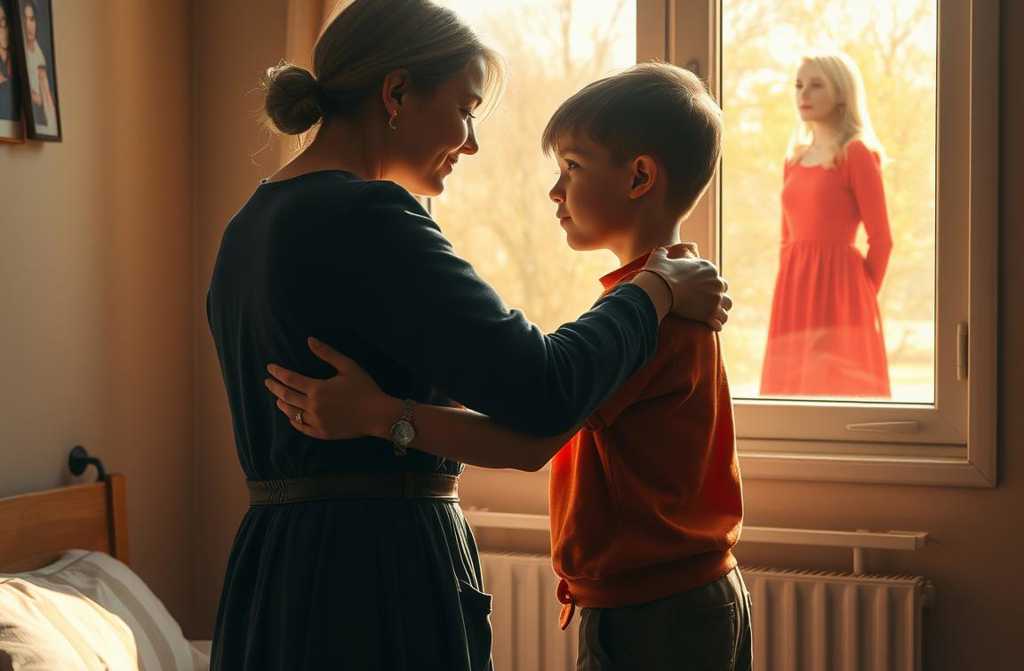
Children in the town whispered that his mother had indeed come for him. One morning, as Harry kept his vigil, a silhouette appeared on the road. He clutched his heart, eyes wide, as a woman in a red dress turned directly toward him and waved.
Maaaa! he cried, sprinting forward, fearing she might vanish. She opened her arms, meeting him with a smile.
My mother! Mother, dear! I knew youd come! Ive waited so long
Ethel wept, cradling the thin boy, vowing never to let him know such sorrow again. Years passed. Ethel and Gregory lived in a spacious house, raising Harry, who now prepared for school and eagerly awaited the arrival of a little brother. With them lived the evergrateful Mrs. Thompson, whose heart was full of thanks for Ethel and Gregory.
And the quiet happiness of that family lived on in the love they shared each day.