12August2004 Diary
I shall never forget the day the tide turned for my family. After a hardwon tennis session on the courts at Wimbledon, I was due to meet a client to sign a contract that had been hammered out over two grueling years of negotiations. The inked paper would finally secure a future for my wife, Eleanor, who was in her final month of pregnancy, and for the two generations that would follow us.
The documents were signed, a glass of champagne clinked in celebration, and my phone rang. Max, I think its time to head to the hospital, Eleanor said.
My schedule is packed today I have a meeting and then an important briefing. Can we go a bit later? I asked.
She paused, then replied, You know what, drive me to the hospital now and you can deal with everything else afterwards.
I cancelled the meeting. When we arrived and the doctors examined Eleanor, the nurse announced, Shes in labour! They whisked her away to the maternity ward.
Will you be present at the birth? a midwife asked. Before I could answer, a white coat was thrust over me and I was ushered into the delivery suite, still in my suit, tie, and briefcase.
The next thing I recall is the weight of a newborn in my arms a son, my son. Men may forget their own birthdays, but I will never forget the moment I became a father. That day gave my life its true purpose. I resolved to raise a strong, driven, victorious man, for in a world ruled by competition he would have to be the best. My thoughts centered on shaping my boy into a leader. I enrolled him in the finest schools, signed him up for sports, and bought every book on personal development and leadership I could find.
My old university mate, Ian Fletcher, a former boxing champion, suggested, Max, dont overthink it. Bring your lad, Stanley, to my gym. Well turn him into a proper man.
So Stanley began training. A few months later Ian told me that Stanley lacked punch, showed no desire to fight, and had no hunger for victory.
Exactly, I said, hes more interested in manga and fantasy novels. Its all nonsense, nothing to do with reality. At home I push sports, discipline, and selfimprovement, insisting they forge true leadership. He wants to go camping with his mates, and I forbid it, arguing that study, routine, and training come first. Theres no room for frivolity in this world.
One afternoon Eleanor called, demanding I come to the urgent care clinic on Sadler Street. The surgeon informed me that Stanley had torn his lip and lost two front teeth in a scuffle in the neighbours garden. Boxing had to be put on hold. When Eleanor glanced at me as I signed the discharge papers, the question in her eyes was plain: What have you achieved? I replied, Scars only make a man more rugged.
I asked Stanley what had happened. He could only shrug; his lip throbbed. He scribbled on a scrap of paper, Juststop making me go to boxing. I saw this as weakness and, once he recovered, urged him back to training.
I told Eleanor, Competition breeds success, true leadership. A weak man is no good; you must stand up for yourself. She answered, Max, those slogans sound fine on paper, but a man shouldnt have to beat anyone but himself. Violence isnt strength; its a crutch. Stanley isnt a weed; look how many books he reads. We never reached a consensus.
After finishing secondary school, Stanley entered a reputable academy. He had always been an excellent student, but at his new school the whole class struggled with maths, and his relationship with the maths teacher was strained. When Stanley asked if he could compete in the national maths Olympiad, the teacher dismissed him, saying no one cares about that. Later, Stanley solved a problem in fewer steps than the textbook method, yet the teacher gave him a failing mark, arguing he hadnt followed the prescribed technique. The whole class suffered similar treatment. One girl suffered panic attacks in class; Stanley began having frequent nosebleeds during lessons.
His grades slipped, his enthusiasm for school vanished, and he started waking up with throbbing headaches. I told him he was being soft, that his duty was to study hard and that headaches were no excuse.
One morning he couldnt even get out of bed to go to school. He fell into a deep apathy: he stopped leaving his room, refused food, draped black curtains over his windows, and his eyes grew hollow. It was as if he were fading before my very eyes.
I was at my wits end. The doctor diagnosed him with Aspergers syndrome, describing it as a condition that makes it hard for him to fit in with people. Those words hit me like a verdict. The vibrant, humourfilled boy who loved learning, the soul of the class, was now labelled. All the plans I had built for him seemed to crumble like a sandcastle at high tide. I felt a decade older in an instant.
Stanley began seeing a psychologist, but progress was scant. Eleanor, however, refused to lose hope. Doctors can be wrong, she said. Together we searched for the best specialists. She eventually found a highly regarded child psychiatrist, Dr. Harold Whitaker, and we booked an appointment. After a month of sessions with Stanley, I started to see a glimmer of change his eyes softened, a spark of hope flickered within me.
When Dr. Whitaker finally called, Eleanor said, He wants you to come alone. Why just me? I asked. He asked that you meet him by yourself.
Driving to the clinic, my hands trembled like a schoolboys, my mind whirring with possibilities for my son.
Good afternoon, Mr. Collins, Dr. Whitaker began. Im pleased to tell you that Stanley is showing genuine improvement.
Thank you, I replied, but why am I here without Eleanor?
I wanted to speak to you personally, he said. Stanley does not have Aspergers. Hes simply different.
It felt as though the ground slipped from under me. I struggled to grasp his meaning.
I must be honest, I admitted, I dont quite understand what youre saying.
He explained, Every parent wants the best for their child a good education, good habits, extracurriculars. Thats fine. What Im urging you to reconsider is the way you raise him. Lighten the grip. Children are individuals with their own paths, even if we cannot yet see where they lead. For Stanley, the key is to let him develop at his own pace.
How do I help him without meddling? I asked.
Give him space to explore friendships, go on hikes, maybe get a pet. Kids thrive when they interact with other children and animals.
And my parenting? he said, smiling. Sometimes the best thing you can do is step back. Kids rarely learn directly from their parents; they learn from their mistakes and from the examples they pick themselves. If you force them into a life that isnt theirs, you only push them toward despair.
His words cracked something inside me. It was as if a thin thread of hope had been pulled through a dark cloud. Another path, I whispered, echoing his advice.
I began to read everything I could about neurodiversity, about letting go of the need to be first, about strength found in empathy rather than domination. My mind turned upside down. I realised I had been building a temple for my son without ever checking whether he could live inside it. Slowly, I shifted my focus from my own ambitions to genuinely listening to Stanley, granting him freedom, allowing the books he loved, and letting him make his own choices.
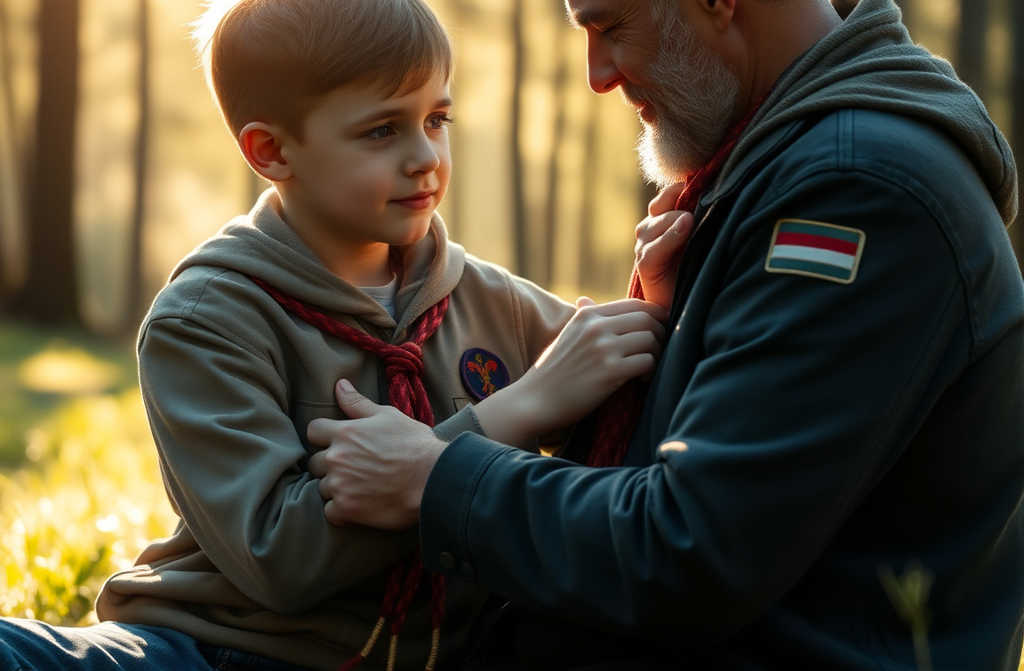
Life started to turn. Stanley left boxing and joined a basketball team. He handed me a list of books on teamwork, astronomy, wildlife, and friendship, asking me to buy them. He signed up for the Scouts and began weekend camping trips with his mates exactly the things I had once forbidden.
Now I watch Stanley carve his own road, and Eleanor and I celebrate each small triumph as if it were our own first steps. He lives a full, happy life, and I have changed too. I finally understand that a true leader does not dictate the way but illuminates it. Being a father means giving, not demanding; supporting, not steering. The greatest lesson I have learned is that a parent grows through the child, not the other way round.