Mum
She was an ordinary woman. From the outside youd hardly notice anything special not very tall, skinny, with the first few strands of grey threading through her hair. She worked as a cleaner in a town health centre, earned a few bob, but never complained. At five in the morning she was up, squeezing in a sidejob tidying the stairwells of the block next door, then whipping up breakfast for her boy.
Her son was fifteen. Tall, lanky, perpetually sporting a messy mop of hair and a stare that said hed rather be anywhere else. He was convinced Mum didnt get him, that she was stuck in the past, that it was embarrassing to trot around town in a threadbare coat, a wornout scarf, hands cracked from cheap cleaning fluids.
He often shouted at her.
Why are we always broke?! Why cant you dress decently?! Why do we live in this dump?!
She kept quiet, lowered her eyes and whispered, Im sorry, love Im trying.
He rolled his eyes and slammed the door.
When he turned eighteen he packed for the capital in one night, left a note: Dont look for me. Ill sort it all myself. No calls, no letters.
Mum wept for three days. Then she dried her eyes, took on two more odd jobs and kept on. Each month she slipped what she could spare onto his bank account pennies, really. He never thanked her. He just spent it as fast as it arrived.
He soon found easy money. First as a delivery rider, then helping a dealer, and eventually dealing himself. Cash rolled in. Expensive trainers, a shiny new phone, girls, clubs. He thought of Mum only in irritation: She keeps sending me pennies. Im practically begging now.
She rang him once a month. He either didnt pick up or snapped, All good. No need to check up.
The last call came in November. Her voice was thin, hoarse.
Mum I have cancer. Stage four. The doctor said three to four months Please come home.
He replied, Cant now. Busy. Later, maybe. and hung up.
She died on 28 January, alone, in the A&E of the district hospital. A neighbour found her unconscious at home, called him countless times, but he kept letting the calls go.
The council paid for the burial. On the grave stood a simple wooden cross and a slate with her name.
He returned a month later, when the money ran out, the friends vanished, the police were breathing down his neck, and there was nowhere to hide.
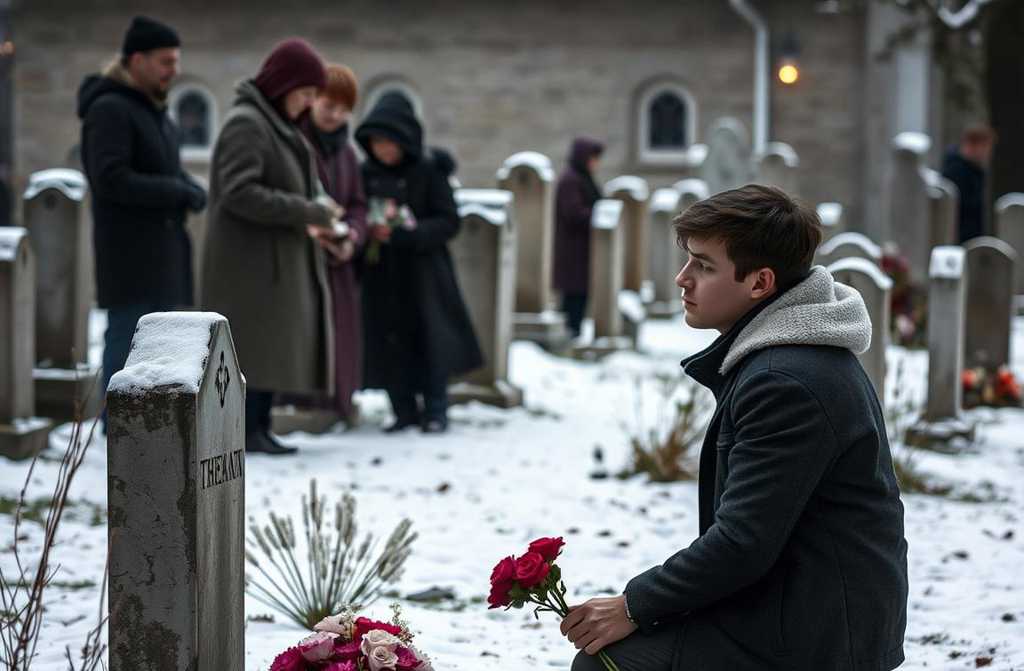
He arrived and fell to his knees at the headstone, shouting, thumping the frosthard earth, begging forgiveness, kissing the cold cross.
Neighbours later said he came every day, sat for hours, brought bouquets lavish ones shed never received in her whole life cleared away the snow, talked to her, wept like a child.
One day he showed up with a bottle, drained half of it right on the grave, poured the rest onto the ground.
Mum I finally get it Too late
He then stood, wiped his face on the cuff of a pricey coat bought with her last transfers, and walked away.
No one in town saw him again.
But for a whole year the grave was kept alive with fresh flowers. Someone tended them, even though shed left no relatives or acquaintances behind.
Folks whisper that he still sends them, from somewhere far away, every week, apologising, asking her to wait.
Now he knows for sure that a mother is the one thing you never lose in life.
Never.
For any amount of money.
For any better fate.
He realised it too late.
But he did realise.





