Genetic Uncertainty
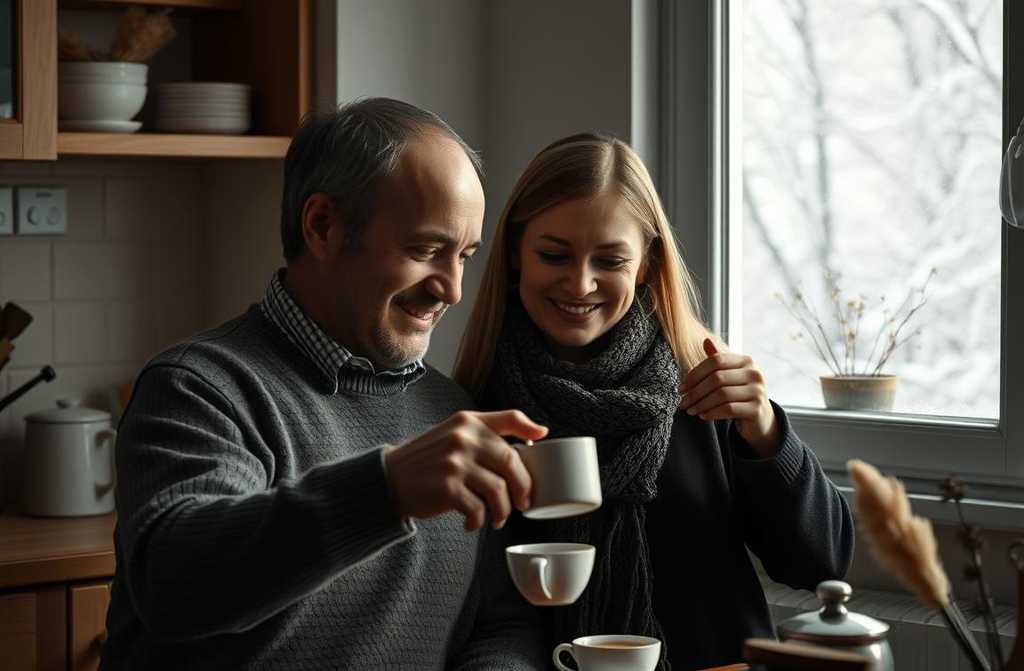
The Sunday morning flat was peacefully quiet. It was late November, with the sort of sky that only England could serve upunapologetically grey, branches shivering bare outside the window. The fridge hummed approvingly in the kitchen corner, a kettle cooled on the worktop, and last night’s plates waited in the sink with the stoic patience only crockery can muster.
Simon sat at the table, peeling an orange, tucking bits of peel neatly into an ashtray. His wife, Margaret, rustled in the upper cabinet, hunting for the elusive coffee filters. On the chair by the window was their son Adams coat, rucksack plopped beside it as though abandoned mid-thought. Their daughter Emma had promised to pop in for Sunday lunch, escorting her Latest Blokesomeone her parents had only ever encountered as a slightly anxious voice on the phone.
How old do you think he is, this boyfriend of Emmas? Margaret prodded, not turning around.
Who can say? Simon shrugged. He sounds grown up. On the phone, at least…
Margaret sighed. She did that more often these days. Simon hardly noticed anymore; at forty-six, he went about life as if on railswork as a systems engineer, fixing up air cons around London, home, the odd pint with friends swamped by busy schedules. Both his parents were long gone; the only close family left was Margarets mother, Mrs Pennybrook, who lived in the next block.
Ill nip over to Mums after lunch, Margaret announced. Shes got her legs againmoaning, I mean.
Mrs Pennybrooks legs had been a topic for local medical drama for yearsarthritis, varicose veins, pills according to a schedule meant for naval manoeuvres. Simon sometimes chauffeured her to the GPs, more with weary fondness than irritation. Old age, after all, is not exactly a choice.
The front door clattered. Adam appeared, tall and gangly, headphones clamped to his ears. He kicked off his trainers, nodded to his dad, tugged out one of the earpieces.
Ill eat later, Mum, yeah? Were off to the gym.
To the gym, Margaret muttered. Is your exam going to pass itself, then?
Mum, its under control, Adam replied, already adjusting his trajectory to dodge a maternal scolding. Just a couple more credits to tick off.
Simon eyed his son, marvelling at how quickly hed shot up. Just yesterday hed been pushing him on the trike round the green; now the lad had biceps, a tattoo on his wrist, and mysteries crowding into his life.
They lived as most families did: a mortgage on a two-bed, holidays in Cornwall or if they were feeling flush, Spain. The usual squabbles over money, who was taking the bins out, whose turn it was to phone Margarets mother. Nothing fancy.
Recently, Margaret seemed more easily exhausted. Shed collapse on the sofa in the evenings, legs tucked under her, complaining of aches. Simon blamed work, or perhaps the British weather. She was the schools accountant, chained to the computer all day.
But that day, it wasnt Margarets legs but her mother who needed attention. Mrs Pennybrook phoned just after Emma and her boyfriend arrived; the table was laden with salad, a suspiciously English reinterpretation of “aunties herring under a fur coat”, and roast chicken.
Margie… my hands gone all twitchy again, her mothers voice quivered over speakerphone, And my foots not right either… Its made me jumpy.
Margaret turned pale, pushed her plate aside.
Im coming, Mum.
Simon stood up.
Ill go with you.
Sit down, she cut him off. Someones got to host. Emma, dear, keep an eye on the guest. Ill be quick.
Simon ignored orders, grabbed his coat anyway. They walked downstairs, through the estate. In the hallway of Mrs Pennybrooks block, the air was thick with smellsboiled cabbage and detergent, a quintessentially British combo. Mrs Pennybrook answered the door herself, holding onto the frame.
Show me, Margaret demanded, taking her hand. Whats twitching?
“Must be my blood pressure,” Mrs Pennybrook offered, attempting cheer.
Simon felt a vague anxiety gnaw at him. She was seventy-two, used to be the neighbourhood whirlwind: church, old dears gatherings, helping Mrs Tilley on the next floor. Lately, though, she was more scatterbrained, once leaving the hob on for an entire afternoon.
Were calling an ambulance, Simon said, steady.
Oh, dont fuss she waved him off. Itll pass in a tick.
It did not. An hour later, they were loitering in the A&E of the local NHS trust. The corridor was sweltering and had a whiff of disinfectant and something acrid. Along the wall perched an assorted cast of family types, clutching bags, coats folded across laps, expressions pitched between weary patience and desperation.
Mrs Pennybrook was wheeled off for tests. Margaret paced the corridor. Simon tried Emmas phone to say theyd be late, but she didnt pick up.
Its probably just nerves, he offered, not quite sure whom he was trying to console.
Margaret nodded, but her eyes were wide with dread.
That evening, the doctora short man with a face worn to exhaustionsummoned them.
Your mother has signs of a neurological disorder, he said, staring at his computer. Weve done the CT, nothing acute, no stroke. But… possible degenerative process.
Sorry, a what? Margaret blinked.
We see certain changes in the brain. Youll need more tests. Id suggest a specialist centreneurologist and geneticist.
It felt as if something had caved in inside Simon. Genetics? That wasnt a word hed ever used about his family.
So, is it… inherited? he asked.
Too early to say, the doctor looked up. There are illnesses with a genetic element. But lets rule out everything else first. Ill refer you.
Back on the corridor, the medicinal tang of the NHS still hung stubbornly. Mrs Pennybrook, returned to her bed, tried to be plucky.
Well, still here, arent I? she quipped.
Dont joke, Mum, Margaret said quietly, gripping her hand.
Simon found himself by the window, looking out at the night. One word ricocheted round his head: inherited.
Within a week, theyd traipsed to the neurology unit in Oxford. Everything was a touch more futuristic: glass doors, the near-mystical automated queue system, gargantuan screens. Mrs Pennybrook got an MRI, gave some blood, was prodded and poked by a neurologist wielding the kind of hammer that would make even the most confident knee blush.
Then, in a beige consultation room, a woman in a white coatDr. Hailey, her badge said Geneticistappeared.
Ive reviewed your mothers tests, she said, readjusting her papers. There is reason to suspect a hereditary neurodegenerative disease called Huntingtons. Familiar at all?
Simon and Margaret shook their heads.
Its a condition caused by a mutation in a certain gene. Brain cells break down over time. Involuntary movement, coordination problems, mood, and personality changes occur. Its progressive.
She delivered each sentence like a weather forecast. Simon felt frozen.
But… why now? Shes over seventy, Margaret managed.
Age of onset varies. Sometimes early, sometimes late. Your mothers symptoms are mild but typical. Only a genetic test will confirm it.
So its definitely hereditary? Simon asked.
Yes. If you carry the mutation, each child has a fifty percent risk, said Dr. Hailey, switching into teacher mode. You either have the gene… or not.
Margaret paled, Simon offered his arm as she seemed ready to collapse.
So… I might have it too? Margarets eyes were impossibly wide.
You may, or you may not, the geneticist replied calmly. You cant tell from the outside. Predictive testing is available.
Simon mentally filed away a new word: predictive.
And the kids? he asked. Do our children have this risk?
If you test positive, each child has, again, a fifty percent risk. But if you test negative, theres no risk to them.
Silence fell, as heavy as government paperwork. Beyond the door, someone coughed, a phone chimed.
Theres absolutely no pressure to test, Dr. Hailey added gently. Its your decision. Genetic counselling is offered beforehanda chat with a psychologist. Its important you know why you want this information, and how youll live with it.
Simon nodded, trying to absorb faces and facts all at once.
That evening, they sat in the kitchen, kids hiding in their rooms. The untouched soup on the hob was muttering about its right to exist.
Fifty percent, Margaret muttered. Like flipping a coin.
Simon poured himself a whisky, midweek or not, and downed it neat.
We dont know anything for sure, he said. Maybe you dont have the mutation.
And if I do? Margaret stared at the wall. That means they might, too. My lovely housewarming gift.
He said nothing, just placed his palm on her shoulder. She didnt flinch but nor did she lean in.
That evening, they gathered everyone in the living room. Emma perched in an armchair, legs folded. Adam draped himself across the arm of the sofa. The telly was off; the remote sat abandoned, brooding.
Weve been with Grandma in Oxford, Margaret started. Her voice trembled, but stubbornness held it together. Shes got a new diagnosis. Theres suspicion of a hereditary condition.
What, like, genetics? Adam frowned.
Yes, Margaret replied. Huntingtons disease. One faulty gene. If you have it, your children have…
Fifty percent risk, Simon finished.
The silence was so thick it seemed to have opinions. Only the clock chucking away the seconds.
So, were at risk too? Emma asked. She was three years older than Adam, worked in an ad agency, lived independently but popped home with predictable unpredictability.
You might be, you might not, Margaret said. First, I have to know if Ive got it.
How do you know? Adam blurted, words tripping over each other.
Its a blood test, Simon said. But theres a lot of talking to doctors and counsellors before. Big decision.
And if you dont do it? Emma twisted the remote anxiously. Just… keep living in ignorance?
You can, Simon nodded. Nobody can force you.
And if you dowhat then? Adam locked eyes with his father. Find out youve got it, and then what?
Then you live with that knowledge, Margaret answered quietly. You know youll get sick. Or not.
Emma clutched the armrests as if the chair might bolt.
Is there a cure for it?
No, Margaret said. Just symptom management. Thats all.
Nobody spoke. Simon felt something invisible settling over themnot just fear, but the invasion of an unfamiliar reality.
I want to know, Adam said suddenly. If theres a test, I want to do it.
Margaret turned sharply.
You dont understand, she replied. I have to do it first. Then well decide.
And if you dont? Adams voice was sharp, a challenge.
Not now, Adam, Simon intervened.
When, then? Adam shot back. When my hands start to shake?
Margaret got up abruptly.
I cant Im tired. Enough now.
She swept out, door slamming. Simon looked at the kids.
We need time, he said. This isnt homework due Monday.
Emma nodded, but her eyes had gone somewhere distant. Adam clamped his lips together.
In the weeks that followed, life flowed strangely: work, school, Sainsburys, standing order for the mortgage. But the test or not test question hung over them like a raincloud.
Margaret started seeing the geneticist and a psychologist. Simon drove her, warming the waiting room chairs. In one consultation, they explained things in the usual straightforward NHS way.
The test will check if you have too many repeats in a specific gene, said the geneticist crisply. If you do, the disease develops at some pointnot if, but when and how quickly. If not, you and your children are in the clear.
What if I dont want to know? Margaret asked.
Thats an option, the doctor replied. Some find not knowing easier than knowing. Decide whats right for you.
And the kids? Simon pressed.
Theyre adults, the doctor checked the notes. But we usually suggest testing the parent first. If you dont have the mutation, they dont need to worry.
Margaret gripped her tissue, thinking of Emmas baby days and Adams first wobbly walk to nursery. Shed once worried about runny noses and grazed knees. Now the fear was in another postcode altogether.
If I have the mutation, she asked quietly, can I be fired? Denied insurance?
Theres no explicit genetic discrimination law here, the doctor said. Results are confidential by lawunless you disclose. But you should consider the implications. Not everyone reacts kindly.
At night, she and Simon dissected these conversations over tea.
If I have it, Margaret said, I dont want people looking at me with pity. Like a walking ticking time bomb.
I wont, he protested.
You already do, she smiled sadly. I see it.
He wanted to argue, but couldnt. He realised he examined every forgotten word, every wobbly movement, for symptoms.
One evening, Emma joined them for tea.
Ive been reading about Huntingtons, she admitted, eyes on her mug. Some people decide not to have kids, if theyre at risk.
You dont know if you ARE at risk, Simon pointed out.
But what if I am? Emma asked. I… we were thinking of a baby, maybe in a year or two. Now I feel like I shouldnt.
Dont talk like that, Margaret slammed down her cup. Its not your fault.
If I pass this on… Emma replied, calm but determined, thats on me.
Simon felt the tension between thema tug-of-war between wanting a normal life and the fear of what might be next.
Adam coped differently: more gym, more mates, music cranked through headphones at noise-complaint levels. Sometimes Simon peeked at his search history: Huntingtons, genetic testing, life expectancy.
Are you spying on me? Adam snapped once, finding him at his desk.
Im worried, Simon confessed.
So am I, Adam shot back. But I wont be pitied in advance.
One day, Margaret brought home an NHS letter: she was officially eligible for genetic testing after pre-counselling.
I dont know if I can take it, she confessed at the table.
But can you handle not knowing? Simon asked.
She glared at him, tears brimming.
What would YOU do?
He paused. His head was a battleground: the urge to know, plan, act, versus the quiet plea to leave well alone.
I honestly dont know, he said.
A few days later, they visited Mrs Pennybrook in hospital. Her new home was a four-bed ward, cohabited by other no-nonsense grannies. Her locker sported a glass of water and a miniature Saint.
How are you, then? Simon attempted.
Surviving, she replied, Doctors say Ive got some odd overseas illness. I told them its probably punishment for my sins.
Mum, stop, Margaret frowned. Its not punishment.
Call it what you like, Mrs Pennybrook shrugged. Its all Gods will.
Simon recognised she handled things easier as fatea higher power means less blame to shoulder.
Did they offer you a test? Margaret asked, once Simon had slipped out to the corridor.
What test? Mrs Pennybrook flicked her wrist. Theyve had my blood, checked my brains. What they call it doesnt matter. I know Im nearly done.
Mum
Think of yourself, dear, and your kids. But dont burden yourself. Whatll be, will be.
Those words clung to Margaret. Whatll be, will be. Both comforting and infuriating. She didnt want to be a mere background character.
Later, the clinic invited them all in for family counselling. All fourMargaret, Simon, Emma, Adamshuffled into a small office arranged almost like they were about to play musical chairs. The geneticist and a friendly psychologist sat opposite, box of tissues ready.
Were not here to push you one way or another, the psychologist said, jumper radiating kindness. Our job is to help you work out what you want, and what youre afraid of.
Im afraid of being a burden, Margaret blurted. You looking after me, me shouting, not understanding.
Simons throat closed.
Im scared I wont see my grandchildren, she added softly.
Emma gazed at the carpet. Adam watched the clouds out the window.
And you? the psychologist asked Emma.
Im scared Ill bring a sick child into the world, Emma forced out. But Im also afraid if I dontif Ill regret not being a mum.
Im scared if I dont know, Ill always worry I have it, Adam said. If I do knowand I have itwell
And you, Simon? the psychologists gaze landed on him.
He sighed.
Im scared I wont cope. That I cant support them. And if Margaret has the mutation, that Ill spend the rest of our years counting down.
The psychologist nodded. All reasonable fears. Testing wont erase themit just changes the shape they take.
Afterwards, they stood outside, wind whipping their faces. Emma cocooned herself in a scarf.
Ive decided, she announced at the steps. No test for me. Ill use every possible trick not to fall pregnant accidentally. If I want a child, Ill consider IVFget the embryos checked. I read uppeople do that.
Thats pricey, Simon said.
But honest, Emma replied. I couldnt live with that certainty on paper. Ill take the risk, not a deadline.
Margaret looked at her, feeling proud and heartsore at once. She wanted to hug her, but the impulse stayed put.
Ill test, Adam stated. Dont want to live in limbo. I need to know.
You heard what the doctor said. Me first, Margaret insisted.
And if you cant decide? he locked eyes stubbornly. Im not waiting on your permission.
Simon stepped in: Lets not bicker on the NHS steps. Lets go home. No ones asking for final answers tonight.
But inside, decisions were crystallising. The car journey played out in silence, the radio emitting bland pop tunes that didnt register.
A week after, Margaret booked the blood test. Simon shadowed her through registration. They told her to wait a month or so for results.
Thats a long while, she said, leaving the blood room.
Not as long as a lifetime in limbo, Simon ventured. The joke fell flat.
A month dragged its heels. Life pretended to carry on: Simon juggled jobs and builders, Margaret her spreadsheets and squabbles over missing receipts. Emma fired off more client presentations, texted home snarky lines. Adam finished his term, hit the gym, scowled at the world.
But underneath, there was new tuning, an itch of hyper-awareness. Every time Margarets hand quivered, or she forgot the iron, Simon quietly audited her walk and voice.
One evening, Adam fumed home.
Bio lesson today, he announced, trainers flying off. We did hereditary diseases, mutations, risk. Sat there feeling like the exhibit.
You could have left, Margaret offered.
And whatsay Sorry, possible genetic time bomb, do I get an exemption? No thanks. Adam gave a short, dry laugh. Pardon me for passing.
Simon dared a hand on his shoulder.
You dont owe anyone an explanation.
Except you, Adam retorted. You want to know every damn thing.
I want you to live, Simon replied, quietly.
I want to know for how long, Adam shot back, and stomped away.
On result day, the world outdid itself with miserable sleet. Simon took the day off. They trekked, together, to the hospital.
In the hallway outside the genetics office, a nervous couple squeezed hands, a middle-aged man with a document wallet stared at his shoes.
Im not going in, Margaret blurted, eyeing the door. I cant.
Simon studied her. She was pale, mouth pinched.
Were here now, he replied gently. But its still your choice. We can leave. But the answers there, somewhere. If we dont hear it, it wont change.
But we will, she whispered.
The nurse popped through, called her name. Margaret flinched.
Ill go, Simon said at once. With you, or wait outside. Whatever you want.
She nodded. They entered together.
The white-coated consultant was waiting, folder open.
Hello, she said, businesslike. Take a seat.
Simon sat, heart scudding. Margaret perched, hands knotted.
We have your results, the doctor began. I know youre anxious.
Margaret nodded. Simon studied the line of her jaw, how her lashes trembled. He realised, with a thud, how much he adored her.
In your case, the doctor continued, the number of repeats in the gene falls within normal range. Meaningno Huntingtons mutation.
Simon took a minute or two to catch up; the words bounced off him.
So… I dont have… Margaret checked.
You havent inherited the gene, the doctor calmly repeated. This doesnt change the fact your mother is ill. But for you and your childrentheres no risk.
Simon exhaled, discovering hed forgotten how. Relief flooded him dizzy. Margaret sat there, unmoving, as if disbelief rooted her.
Are you sure? she checked. No mistake?
The test is double-checked, lab certified, the doctor assured. Mistakes are vanishingly rare.
Margarets face dissolved behind her hands. Her shoulders shook. Simon leaned over and hugged hershe cried into his shoulder, sobs made of fear, tension, and a newly unnecessary guilt.
The corridor, when they emerged, looked no different, but felt lighter to Simon.
Lets ring the kids, Margaret mumbled, drying her eyes.
Lets get outside first, Simon suggested.
On the kerb, the last crumbs of snow departed. Simon dug out his phone.
Ill do it, he said. You have a breather.
He rang Emma first, explained. She was silent, then breathed out long.
So… were… She couldnt finish. Dad, Ill pop over later.
Adam picked up immediately.
So? he said, skipping hello.
Mums clearno mutation. Youre fine too.
A pause lingered.
Alright, Adam finally said. Got it.
You home?
Uni. Ill swing by later.
Simon hung up, turned to Margaret.
Theyre both… as if they cant believe it, he said.
I cant, either, she replied. Feels like weve been pulled out of a lottery line.
That evening, they gatheredEmma with cake, Adam with a bag of clementines. There were salads, mains, the kettle whistling.
So, were healthy, Adam declared, nodding at Margaret. Genetically, I mean.
For now, Emma added. The rest is pure luck.
You got lucky, Margaret said softly, I did too. But Gran didnt.
They sat, a strange commingling of relief and survivors guilt. Simon felt it too, heavy and sharp. He thought of Mrs Pennybrook, hands trembling across the estate in her hospital bed.
Ill see her tomorrow, Margaret said. Ill tell her.
Will she understand? Adam asked.
Dont know, Margaret admitted. But I need to tell her anyway.
After dinner, Emma helped with the washing up. Soap suds, gentle clinks of plates.
Im still not sure, Emma admitted, back to her. About kids, I mean.
No rush, Simon told her quietly. Youre free of this risk. But life itselfwell, its always a bit chancy.
Emma grinned.
Youre a philosopher, Dad.
Just practical, he said.
Adam lounged in the lounge, pummelling the remote. Margaret drifted in, sitting next to him.
You said you wanted testing, she said.
No need now, he said. Not for that.
You might still want to know some dayabout other things. Other genes.
Once is enough for me. Ive gone grey this month.
She laughed gently.
Me too.
He eyed her.
Are you cross with us? For how we acted?
Im cross with myself, she said quietly. For feeling guilty straight away. But youyou have every right to be afraid.
He nodded, then, in a rare move, hugged herhard and solid. She felt just how much hed grown, how much strength he carried.
Next day, Margaret visited her mum. The hospital smelt of antiseptic and those odd sweet corridor cakes. Mrs Pennybrook was staring out at the sky.
Mum, Margaret said, taking her hand. I dont have that mutation. The doctors told me.
Well, thank the Lord, her mother said. I prayed for you.
And for yourself?
Mrs Pennybrook smiled. For myself too. But maybe its my time. Ive had my run. Youlive your life. For me, as well.
Margaret squeezed her hand, feeling something ease in her chest.
Ill be here for you, Mum, she said. As long as I can.
I know, her mother replied. But dont make your whole life a waiting room. Husband, childrengo and live. And be glad. For me, too.
On the way home, Margaret pondered how life had, in some ways, resumed its old pacebut the tracks were forever changed. Theyd dodged a bullet, yes, but the mark of this ordeal would always be there: genes, choices, whether to know or not.
That night, they reconvened in the kitchen. Simon peeled potatoes. Emma sent a photo to the family chatsome hilarious Tube graffiti. Adam scrolled through his laptop, as only the young can.
Dad, Adam called, eyes still on the screen. I was just looking up life insurance. Might take one out. Not because Im illjust… practical for you lot.
Simon chuckled.
Thinking of us already?
Well, we lucked out on the genesthe rest is up to me now.
Pouring tea, Margaret listened to them, feeling anxiety gradually quietennot vanishing, but turning into something more manageable, more human.
I signed up for a counsellor at the surgery, she said suddenly. Fancy a chatnot just about this. Everything.
Simon met her eyes, respect in his own.
Good move, he said. Maybe Ill go too.
Family field trip, Adam grinned.
Why not? Margaret laughed.
They sat, drinking tea as the rare English snow tried and failed to linger. The flat was warm; Emmas phone flashed with new messages. In the next block, Mrs Pennybrook dozed off to the scurry of the night nurses footsteps.
Each one of them carried their own fears, made their own choicesknowing, not knowing, or still in-between. But they were still, and always, a familymessy, ironic, encouraging each other through disaster and banality alike.
Simon held his mug, felt the warm heft. Ahead there would be more news, bills, medical dramas, squabbles and holidaysno guarantee or lifetime warranty for any of it. But for now, at this table, together, it was enough.
He smiled at Margaret, as she watched snowflakes and permitted herself the faintest, most unforced smilethe smile of someone whos survived a personal ice age and is learning to breathe again.
More tea? he asked.
Yes please, she replied.
And so, he poured, discovering theres a quiet heroism in the smallest, most ordinary acts, none of which any lab test can measure.





