The Key in My Hand
Rain pattered steadily against the window of the flat, each drop measured and ceaseless, like the tick of a clock counting down to some quiet ending. Michael sat at the edge of his sagging bed, hunched over, as if trying to shrink away from his own fate.
His large hands, once capable and strong from years at the factory, now lay helpless in his lap. His fingers twitched occasionally, uselessly grasping for something just out of reach. He stared, not simply at the wall, but through itseeing traces on the faded wallpaper, maps of all the hopeless routes from the GPs surgery to the private diagnostic centre. His gaze was washed-out and faraway, like an old film stuck on a single frame.
Another doctor. Another patronising, Well, you cant expect much at your age. He didnt bristle. Anger needed energy, and he had none left, only weariness.
The ache in his back was no longer just a symptom; it had become his landscape, the backdrop to every movement and every thought, a blanket of pain so constant it all but drowned everything else out.
He followed every instruction: took his pills, rubbed in the ointments, spent sessions lying on a cold physiotherapy table, feeling dismantled like an old machine ready for the scrapyard.
And all that timehe waited. Not actively, but passively, with a quiet, almost religious faith that someone would eventually throw him a lifelinea miraculous professor, a government scheme, a brilliant doctor. Anyone. Anything to save him from this slow, sticky mire.
He gazed out the narrow horizon of his life, seeing only the grey sheet of rain through the window. His will, once the force that solved every problem at work and home, had withered to a single function: endure, and hope for some miracle from beyond.
Familyyes, hed had family. But they had dissolved, quietly, almost overnight. Time slipped past. His daughterclever, sweet Emilywas the first to go, off to London for a better life. He hadnt opposed her choice. You always wish the best for your only child. Dad, Ill help you as soon as Im settled, she had promised over the phone, though it hadnt really mattered.
Then his wife leftbut not to the corner shop. She left for good. Rachel faded quickly, a merciless cancer found far too late. Michael was left, not only with his aching back but a gnawing guilt: that he, shuffling and half-bedridden, remained alive.
She, his pillar, his source of energy, his Rachelshe flickered out in three short months. He cared for her the best he could, until her cough was nothing but a rattle, and the light behind her eyes began to slip away. The last thing she said, clutching his hand from her hospital bed: Hold on, Mike And he broke. Utterly.
Emily called, suggested he move in with her to her rented flat, pleaded with him. But what for? To be a burden? That wasnt a home for him. And she had no plans to come back, not really.
Now, the only person who visited was Rachels younger sister, Mary. Once a week, without fail, shed arrive with soup in a Tupperware, some rice or pasta and a fresh box of painkillers.
How are you, Mike? shed ask while peeling off her coat. Hed nod: Oh, nothing much. Theyd sit in silence while she tidied his cramped bedsitbringing a superficial order to his things, as if that might bring order to his life. Then shed go, leaving behind the scent of a strangers perfume and a quiet, physical sense of duty fulfilled.
He was grateful. And yet, the loneliness was crushing. It wasnt just physical solitude; this was a prison constructed from his own helplessness, grief, and a muted fury at the unfairness of it all.
One particularly dreary evening, his eyes roamed the threadbare carpet and landed on a key, lying where he must have dropped it last time hed staggered back from the clinic.
Just a key. Plain metal. He stared at it, as though seeing something remarkable for the first time, not merely a key, but a presence. It lay there. Silent. Waiting.
A vivid memory of his grandfather, Arthur, flashed through his mindas if someone had clicked on a lamp in a darkened room of memory. Grandad, with a shirt sleeve neatly pinned, would sit on a kitchen stool and, with his single hand and a bent fork, manage to tie his shoelaces. Slow, methodical, with a triumphant little snort when he succeeded.
Watch, Mikey, hed say, eyes bright with the thrill of outwitting circumstance. The right tools always nearby. Sometimes it looks like rubbish, but youve got to see the ally in the scrap.
As a boy, Michael thought it was just old-man talk, stories to cheer up the weak. Grandad was a hero, after all, and heroes could do anything. But Michael, an ordinary fellow, fighting his quiet war against pain and isolation, didnt have tricks for laces and forks.
Yet now, as he looked at that key, the memory didnt comfort himit reproached him. Grandad never waited for help. He took what he hadan old forkand won. Not over pain. Not over loss. But over helplessness.
What had Michael done? Hed waited, bitterly and passively, on the doorstep of someone elses charity. The thought jolted him.
And now this keythis bit of metal, echoing his grandfathers wordsbecame a silent command. He rose, wincing at the familiar groan his joints gave, embarrassed even before an empty room.
He shuffled over, reached for the key. Tried to straighten upthe familiar knife-blade of pain dug savagely into his spine. He held still, teeth grit, waiting for the wave to pass. But instead of giving in and slumping back, he did something odd: he went to the wall.
Without thinking it through, he turned his back to the wall, pressed the blunt end of the key against the spot where the pain bit deepest, and with gradual, testing pressure, leaned into ithis whole body weight behind.
He wasnt trying to stretch or to massage. This wasnt medicine. It was pressure. Crude, deep, an act of pain meeting pain, reality meeting reality.
He found a spot where this contest brought not another wave of agony but a strange muted reliefsomething inside him seemed to unlock, only by a millimetre but enough. He shifted the key higher. Then lower. Leaned. Tried again.
Each movement was slow, exploratory, listening to the bodys reply. It wasnt treatment. It was a negotiation. The tool for these negotiations wasnt a gadget but the old key to his door.
It was absurd. A key solves nothing. Yet, the next evening, when the pain surged again, he repeated the ritual. And again. He found points where the pressure lessened instead of heightened the pain, as if by force of will he was easing locked jaws from within.
Soon he began using the doorframe for gentle stretches. A glass of water sitting on the nightstand reminded himjust drink water. Simple. No charge.
Michael stopped sitting with folded arms, waiting. He used what he had: the key, the frame, the floor, and his own stubbornness. He kept a small notebook, not of pain but tiny key victories: Stood at the hob for five minutes longer today.
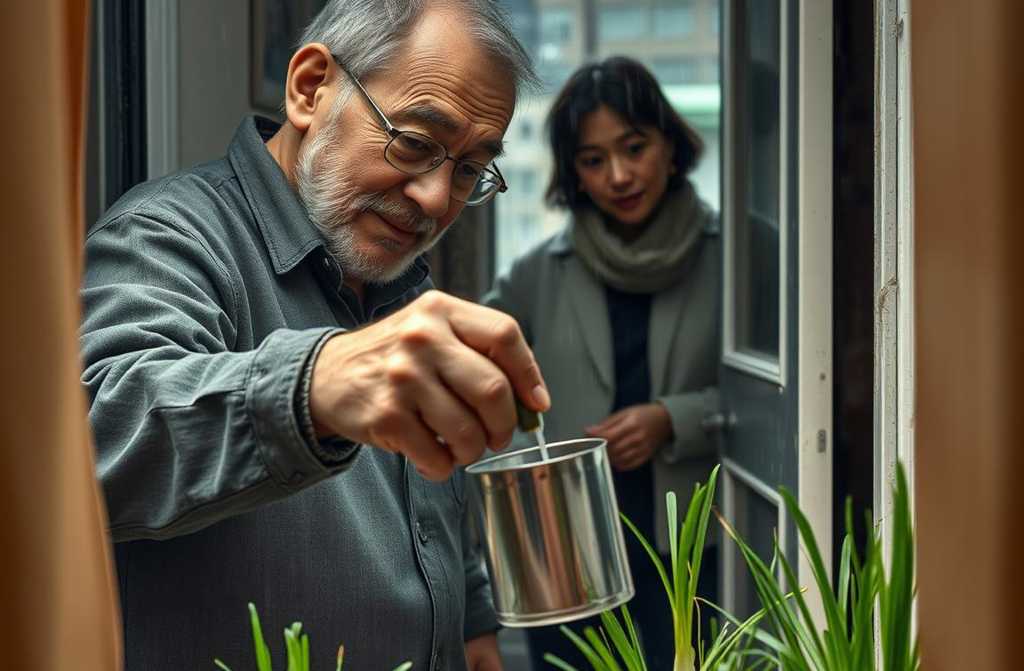
On the windowsill, he set up three empty baked bean tins destined for the bin. Filled them with compost borrowed from the buildings front patch. He planted small onion sets in each one. Not a garden, really. But three tins of life, and now, they were his responsibility.
A month passed. At his next appointment, the doctor, studying his X-rays, raised an eyebrow in surprise.
Theres been an improvement. Have you been doing the exercises?
Yes, Michael replied simply. Been using what I had to hand.
He didnt mention the key. The doctor wouldnt understand. But Michael knew. Salvation hadnt sailed in on a hospital ship; it had lain on his carpet all along, while hed been hoping someone else would flick on the light in his life.
One Wednesday, when Mary came round with soup, she stopped short at the threshold. On the sill, in those old tins, new green shoots of onion bent towards the pane. The flat smelled not of sickness and stale air, but something elsesomething that offered hope.
You… whats all this? she managed, staring at him as he stood upright next to the window.
Michael, carefully watering his young onion plants from a mug, turned to her.
A garden, he replied simply. After a pause, Want some for your soup? Nice and fresh.
That evening, she stayed a little longer than usual. They shared tea, and he, not complaining about his health, described how he now managed the stairsone flight every day.
No Doctor Brown arrived wielding potionsit had come to him as a key, a doorframe, a tin, an ordinary stairwell.
It hadnt erased pain, loss, or age. It simply gave him tools; not to win a war, but to fight his daily, humble skirmishes.
Turns out, if you stop waiting for a golden staircase from the sky and notice the concrete one at your feet, you might find that just climbing itslowly, carefully, step by stepis life itself.
And on the windowsill, in three tin cans, the onions grew lush and green. The finest little garden in the world.