Living Under My Roof My Rules
You understand, dont you, Grace, I dont believe in other peoples children. Jamie will be my son, just as much as the baby well have together, when he arrives.
Grace watched Davids face closely, searching for any hint of insincerity. She found none. He spoke calmly, confidently.
Thank you, she murmured, eyes dropping to her hands. Jamies already been through so much since the split.
I know. And I promise hell never feel like he doesnt belong.
The first months of marriage unfolded just as David had promised. He bought treats in pairs a Kinder Egg for Jamie, a bar of Dairy Milk for himself, always sharing with his stepson. On mornings when his schedule allowed, he drove Jamie to school, asking about classmates and lessons along the way. Grace, hidden behind the kitchen window, would watch as the car pulled away, breathing a tiny sigh of relief each time.
Jamie adjusted to his stepdad slowly and gingerly. By the end of month three, hed started coming to David with maths questions and Grace caught herself thinking: its worked. Its turned out right. Just as it should.
Only sometimes rarely, subtly she noticed something peculiar. David could spend half an hour kneeling on the pavement outside, showing the neighbours boy how to fly his new drone, patient and sparkling with enthusiasm. To Jamie, he gave short, matter-of-fact answers, his eyes missing that gleam. Grace convinced herself it was tiredness after work, the age gap, anything except the glaring truth: the warmth in Davids voice seemed reserved for everyone else.
He just needs time, she told herself at night, staring at the ceiling. Parental love doesnt flick on overnight.
Oliver was born in February, red-faced and howling from his first breath, demanding as a tiny king. David hardly left his cot, changing nappies, getting up for night-feeds, though Grace was more than ready to manage herself. She chalked this eagerness up to new-dad euphoria and felt grateful wonderful when a man is so hands-on.
For those weeks Jamie hovered at the outer edge of family life. Grace realised it, blamed herself, but couldnt physically be in two places at once.
He returned from school, reheated his dinner in the microwave with barely a word, and did his homework alone. Grace promised herself: Once Olivers a bit older, Ill make it up to him.
Oliver grew. He turned three, and the unevenness was now impossible to hide behind the excuse of hes just a little one.
Look, son, I bought you a robot! David announced, handing the youngest a box with the latest flashy transformer. Batteries included well build it together.
Jamie sat at the table, hunched over his English workbook. His eyes flicked to the box expensive, dazzling, marked 8+ on the corner.
Dad, what about me? The words slipped out.
David didnt even turn around.
Youll get something on your birthday. Its Olivers turn now.
Grace said nothing. Jamies birthday was four months away. Oliver received presents every week because David happened to pass the toyshop.
The moment Oliver turned four, David started filling his schedule: swimming lessons, a music group, school readiness classes. He checked timetables, boasted about Olivers milestones. Jamie went alone to the school chess club, which was free.
I lost three matches in a row, Jamie said one supper. But the coach said Ive got a good defence.
Well done, Grace replied, distractedly, as she wiped Olivers porridge from his cheek.
David never looked up from his phone.
Parenting in that house split into two parallel universes. When three-year-old Oliver hurled his bowl to the floor, David only laughed and scooped him up.
What, you little rascal, didnt like that? Mummy will whip up another, wont you, Grace?
A week later, Jamie accidentally elbowed his mug, smashing it. Cocoa seeped into the linoleum.
Do you even watch what youre doing? David towered over him. Eight years old and you act likeFetch a cloth. You clean this up, you mucky pup.
Jamie fetched the cloth in silence, ears blazing, not a word of complaint. He already knew the rules of the game.
Planning holidays became a humiliating ritual, no one naming it but all sensing it.
Were off to Splashdown Waterpark, David decreed in May. Theres a toddler area Oliver will love it.
But its just for babies, Jamie protested quietly. Ill be bored.
You can sit with your mum in the café. Or bring a book.
Grace opened her mouth to suggest a compromise maybe a waterpark with rides for all ages but David was already clicking through the booking site. That was that.
School reports and Jamies competitions lived in an alternate reality, one David pointedly ignored.
My teacher asked if you could come in, Jamie said one evening. Its about a drawing contest
Thats for your mum, the stepdad cut him off, eyes on the telly. I leave your problems to her.
Its not a problem, just
Grace, deal with it, would you.
Grace saw her son press his lips into a thin, silent line and disappear to his room. That night, she couldnt sleep, replaying the words. Since when had her son become a problem to be sorted out, outside the family?
Jamie seemed to shrink himself to fit invisible corners. At mealtimes he ate quickly and quietly, took his plate, thanked everyone, and vanished. He stopped asking for new trainers though his old ones pinched and no longer told stories about school, mates, anything. His room became an island, cordoned off by a sturdy, unseen wall.
Hes old enough to cope, Grace reassured herself, though the words rang hollow.
She realised she rushed, instinctively, to defend Oliver in every squabble. If the toddler swiped Jamies pencils: Jamie, come on, let him have them hes only little. If he broke Jamies projects: He didnt mean it. You understand, dont you? If he shrieked for attention: Just a minute, Ollie, Im coming!
Jamie stopped complaining altogether.
A strange tension gas built up in the flat inhaled every day, invisible but suffocating. Jamie got home, locked himself away, answered questions in single syllables. His grades stayed high, but when Grace saw his teacher at parents evening, she ventured, Is everything alright at home? Jamie seems so withdrawn lately.
All fine, Grace lied.
On a typical night, Jamie sat on the settee, reading from his tablet for an independent school project.
Can I play on the computer? he asked, glancing at his stepdad. Ive done my homework.
David didnt turn.
No. Not yet.
But you said yesterday after eight I
I said no.
Oliver piped up, tugging the mans sleeve:
Daddy, telly! Want telly!
Of course, son, lets get it on.
Grace froze in the doorway. Jamie watched as David settled Oliver for cartoons, straightening the cushions all with smiles, tenderness, boundless patience.
Why can he, and I cant? Jamie whispered.
Finally, David turned to face him.
Because *my* son gets what he wants here. You dont. You dont make the rules in my house, understood? His voice was level, even bored, utterly certain. You live under my roof you follow my rules.
Silence Oliver giggled at Peppa Pig. Jamie sat motionless, something shifting in his face once and for all.
Grace understood in that instant. Her son lived in a home where every day he was reminded: youre second class. And always would be, for as long as she let it go on.
Jamie, pack your rucksack, she said, her voice steady and clear. Were leaving.
The divorce paperwork took three months. David barely protested if anything, he seemed relieved to have his annoying stepson gone. Oliver, of course, left with Grace. Child support, contact, the splitting of the furniture, none of it mattered. The hardest step she had already taken.
The playground behind their new flat was nothing special battered swings, a slide with peeling paint, a sandbox filled with bottle tops. Jamie perched on a bench, flipping through a comic. Oliver, now a toddler, slept in his pram. A man with kind, weary eyes sat beside them, keeping an eye on a six-year-old dangling from the climbing frame.
Yours? he nodded at Jamie.
Mine, Grace replied.
George! Stop pushing! the man shouted, then turned back. Michael.
Grace.
The first talks were about children, schools, NHS jabs, what to put in porridge. Michael, a widower, had lost his wife after a hard birth. George was his only child, and sometimes Grace saw that same caution on his face that lived in her sons.
The relationship moved slowly. Michael never pressed, never forced the children to meet, never hurried. They strolled in parks, roamed the zoo, baked pizza on Sundays four of them, then five, once Oliver was old enough to wreak proper havoc in the kitchen.
Jamie thawed, degree by degree. At first he tolerated Michael, then he started replying to questions, finally asking his own. One evening, as Michael spent a full ninety minutes helping him with a maths puzzle, Jamie muttered:
Thanks. You actually explain things properly.
From Jamie, that was love.
In a year, theyd all moved in together. Six months later, they registered their marriage at the local registry office, no fuss, no big crowd. The children ate cake and played tag under the tables at the reception. Nobody counted out mine and yours. No one measured who got the biggest helping of ice cream.
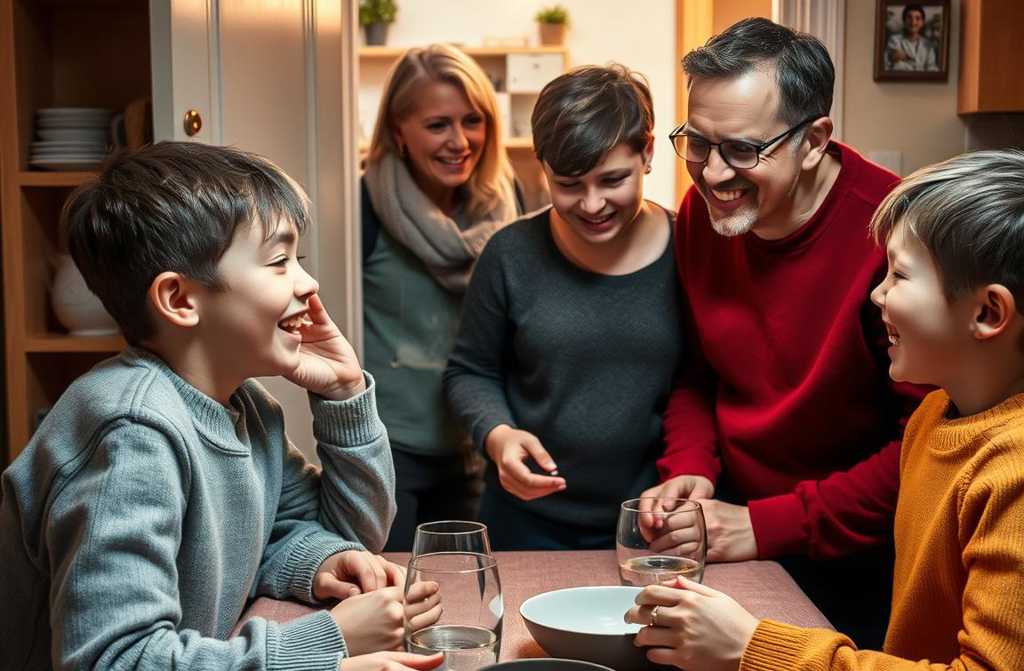
Their new home was cramped for five, but expansion was the plan. On weekday mornings, Michael made breakfast for the whole tribe eggs, toasties, porridge, a different favourite for everyone. He checked up on the older ones homework, scolded them equally for mess, praised achievements with the very same smile.
Jamie laughed again loud, open-mouthed, head thrown back. Hed become mates with George, tolerated Olivers little brother stunts, and, one day with no hint called Michael Uncle Mike. Later, simply Mike. Much later, faintly, almost inaudibly Dad.
Michael heard. He said nothing. He only rested a hand on Jamies shoulder.
Grace watched them from the kitchen, drying her hands. Three boys of different ages squabbled over the TV remote, Michael stubbornly eating his stew.
Either sort it out together or no one watches anything, he called, eyes still on his dinner.
Thirty seconds, and theyd resolved it. Grace smiled.
Sometimes happiness looks just like this not fireworks and promises, but an ordinary evening in a crowded flat, where everyone knows their place. And that place is equal, loved, and truly theirs.