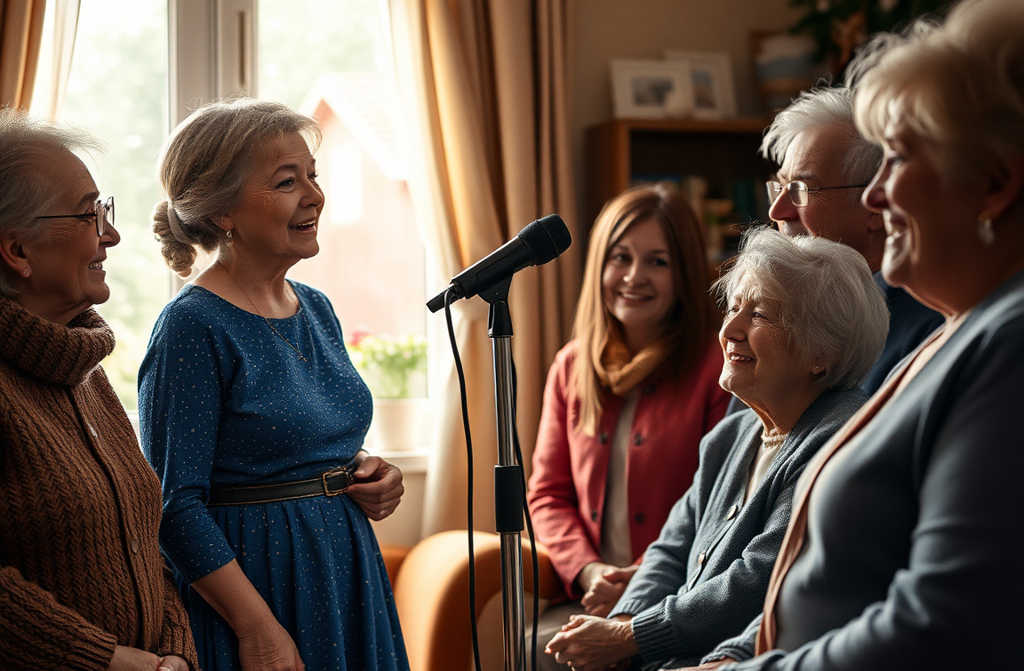
The Stage After Seventy When the vacuum cleaner droned in the corridor and the dinner trolley rattled by the door, Mrs Anna Peterson was already sitting on her bed in her dressing gown, gazing at her dress laid out on the blanket. Deep blue, edged with sequins, it looked out of place here, like a stage prop left behind in a hospital room. She glanced at the clock above the door. Twenty minutes to dinner, two hours until the volunteers arrived. On the nightstand, her ageing mobile phone with large digits blinked silently—no calls, but that was fine, she told herself. Today had brought enough fuss already. A nurse in a blue tunic peeked in. “Mrs Peterson,” she said, “joining the concert tonight? The volunteers promised a traditional round dance.” “A round dance?” Anna repeated, nodding. “Where else would I be?” The nurse smiled, disappearing in a waft of disinfectant and sweet canteen smells. Quiet settled again. Her roommate, Mrs Stevens, slept facing the wall, an earbud in one ear, tinny voices from a radio drifting out. Anna touched her dress. The fabric was cool beneath her fingers. She’d brought it when her daughter checked her into the care home nearly a year ago. She’d thought it might be useful—for someone’s birthday, or perhaps New Year’s Eve. She’d folded it neatly away and stopped thinking about it. Calls to dinner echoed from the hallway. Anna hid the dress, closed the wardrobe, and lingered a moment with her hand on the handle. Her own reflection stared back: the familiar, determined face with thin lips and carefully lined eyes. Old habits died hard, even here. “Come along!” someone called. “Before your compote goes cold.” She slipped on her knitted waistcoat and headed out. The dining hall bustled. Men and women of all ages sat at the long tables: some in track bottoms, some in shirt and tie. Paper snowflakes clung to the walls with tape, fairy lights glimmered shakily, tired before their time. “Anna, over here!” waved Mrs Thomas, former accountant and now queen of board games and gossip. Anna settled beside her as plates of buckwheat and meatballs appeared, bread in a tin basket, a jug of vivid pink fruit squash. “Have you heard?” Mrs Thomas leaned in conspiratorially. “Those volunteers are coming again. Guitars and all. Just like last year!” “They sang well,” piped in Mr Simonson, tall, thin, cane in hand. “But it’s always the same songs. ‘Greensleeves’ and ‘Scarborough Fair.’” “It’s easier for them,” Anna shrugged. “They have a set programme.” She said “programme” with professional precision. She’d had programmes once too: “Evening of British Ballads,” “Retro Hits,” “Cinema Favourites.” She knew just how to smile, when to pause, when to raise a hand. The hall would go dark, the stage lights blind her, and she’d step out knowing it would all come together. “Programme, huh,” Mrs Thomas snorted. “I want my favourite ‘Blue Eyes’ for once. I told them last year—they only nodded.” “Write them a list,” Mr Simonson suggested. “They’re young, they’ll play anything.” “And what about you, Anna?” Mrs Thomas turned. “You going to sing? I told the nurse we’ve got our own star here!” Anna gripped her fork tighter than needed. “That’s enough,” she murmured. “I’ve done my singing.” “Don’t be silly,” Mrs Thomas persisted. “I saw you on telly. In the lounge, with the old concerts. You in sequins.” “That was last century,” Anna answered crisply. “And telly makes everything look grander.” Old defiance flickered within her. Here she was just Mrs Peterson from Room Six—helping others with forms, laundry runs, tips for the desk staff. Sometimes the nurses asked her to arrange the noticeboard, lining up the papers neatly. It suited her: no posters, no expectations. After dinner, everyone gathered in the lounge. The Christmas tree stood ready—plastic, its top a little skewed. Last year’s baubles hung from the branches, tinsel everywhere. The TV on the wall ran a news ticker silently. “Tomorrow,” announced the head nurse, clapping for attention, “the volunteers will visit. There’ll be a performance and a celebration. So let’s finish decorating tonight, please. Anyone who can, help out.” Several residents shuffled up to the toy box. Anna stayed seated, knowing if she stood she’d be pressed into leadership: “You know how to make it look nice, Mrs Peterson!” She didn’t feel like directing. Didn’t want that old weight of expectation. “You know what?” Mr Simonson said suddenly, leaning on his cane. “Are we just going to sit and watch kids with guitars, then see them off?” The head nurse gave a tired smile. “You know we’re short on time, Mr Simonson. Staff are busy. There’s no time to rehearse.” “We can do it ourselves!” he insisted. “We have talents here! Thomas knows all the poems, Anna used to sing…” Heads turned to Anna. She felt her cheeks glow. “I’m not,” she said at once. “My voice isn’t up to it.” “Sounds fine to me,” called out tiny Mrs Perkins, former schoolteacher. “I’ve heard you humming in the shower.” Anna pressed her lips together. She did sometimes sing in the shower—quietly, old arias, a verse or two of “Yesterday When I Was Young.” “Tell you what,” the head nurse hurried to conclude. “Anyone who wants can prepare something. Tomorrow, before the volunteers, a half-hour show of our own. But—no fuss! And don’t complain later if it gets muddled.” A murmur rippled through the room: someone proposed a carol, another remembered a comic song. Mrs Thomas patted Anna’s arm. “See? We have permission. We need you.” “I’m not going out there,” Anna said, stubborn. “But I’ll help—song sheets, programme order, backing tracks, whatever’s needed.” “It’s not the same without you,” Mrs Thomas sighed, but was soon distracted, arguing with Mrs Perkins about the running order. Anna slipped out. The corridor was dim. Two rubber plants and a faded snowman ornament perched on the windowsill. She stopped by the window. Outside, snow fell behind bars on the glass. The car park below lay dusted white. Far away, fairy lights sparkled on a neighbouring block. She remembered the stage—not the grand one with orchestra, but the little community centre in the suburbs, full of dust and face powder. She performed for folk just off shift, singing about love, the open road, their younger selves. They’d clap, sometimes sing along. She thought it would last forever. Later, times changed: cancelled gigs, new formats. She sang at office parties, at weddings. Then it just… stopped. No one fired her; people just stopped phoning. “Your time’s past now,” a young director had once told her. “We’re after new faces.” That phrase stuck with her. She’d repeated it to herself since—it made things easy. No offers expected, no rebuffs to fear. She returned to the room as bedtime tablets were handed out. Mrs Stevens stirred and spoke up. “Big do tomorrow! I said I’ll read a winter poem.” “Lovely,” nodded Anna. “And you, Anna—singing for us?” “No.” “Pity. Your voice is proper. Not like those girls last week. Always bellowing.” Anna lay down, turned to the wall, switched off the lamp. She heard, beyond the wall, someone coughing, the trolley clacking by. She tried to think of other things, but scraps of song and the faces of past audiences played over in her head—along with those hopeful eyes in the lounge. Morning arrived as usual—wake-up, gentle exercises, breakfast, a dab of butter on the porridge. Someone shared tangerines from a family parcel. Festive pop videos looped on the lounge TV. After rounds, the nurse gathered everyone again. “Right, who’s performing today? Volunteers at six, our concert—a five o’clock show, one hour. Let’s decide.” “I’ll start!” Mrs Perkins raised a hand. “A Tennyson poem.” “I’m singing,” called out Louise, a former nurse, from her armchair. “‘Three White Horses’!” “I’ll do some comic rhymes,” Mrs Thomas announced. “And I—” Mr Simonson began, then paused, glancing at Anna. “But best talk to our organiser here.” Eyes all turned to Anna again. “I won’t perform,” she said, her voice automatic now. “But let’s make a list, to avoid confusion.” She took a pad and pen and stood. “Okay, order. Poem first. Then song. Then comic rhymes. Who else?” “I’ll tell a story,” said a lady in a bobble hat, known to all as Gail. “About a little lost rabbit.” “Fine. I’ll note that.” She wrote, arranged, helped with staging and microphone tips. Excitement sparked in the group, debates broke out about compering. They let Mrs Perkins host, since she insisted she was “expressive.” “Mrs Peterson,” Mrs Thomas said quietly, as others returned to rehearse. “One song from you. Please. For yourself, if nothing else.” “I’m frightened,” Anna blurted—surprised by how true it felt. Thomas raised her brows. “Of what?” “That my voice will crack. That I’ll forget the words. That I’ll stand there and—” She trailed off. “It just won’t work.” “And so what if it goes wrong?” Thomas shrugged. “We’re all friends here. No judges. I’m scared too. Might mess up a rhyme—so what? We’ll laugh.” Anna nearly argued—but couldn’t. To Thomas, performing was a game. To Anna, it meant something heavier. A mistake used to risk everything—work, reputation. No one here would sack her, but the pressure hadn’t left. “All right,” she said at last. “I’ll think about it.” She returned to her room and closed the door. Took her blue dress out and draped it over the chair. Looked at it for ages, then put it away again. Her heart raced as though she were about to walk onstage. Before lunch, she coached neighbours: Mrs Stevens with her poem, Gail on story order, Louise on key changes (Anna couldn’t resist humming a few bars to guide her). “You’re a conductor,” Louise said, admiringly. “When’s your turn?” “Later,” Anna waved her off. After lunch, a young woman arrived in a reindeer jumper—the advance guard from the volunteers, prepping equipment. “Hello, everyone, I’m Katie. Our group will be here later with the programme, songs, and games. We’ll do everything—just relax!” “We’ve got our own show actually,” Mr Simonson announced grandly. “Really?” Katie’s eyes widened. “How brilliant! But – don’t wear yourselves out! At your age, it’s meant to be easy.” It wasn’t cruel, just matter of fact. But Anna felt something inside click—“At your age, that’s a bit much,” as if someone had drawn a line. “Oh, we’ll manage!” Mrs Thomas laughed, unoffended, but her voice shook slightly. Anna pictured the evening: young, bright volunteers, singing, handing out goody bags, taking a group photo—then rushing back to their real holidays, jobs, parties. The residents would stay, with the tree, the TV, and “At your age…” echoing. She went back to her room and sat on the bed. The dress lay out again; she hadn’t realised she’d taken it. Her hands trembled as she undid the zip. “Are you really putting it on?” Mrs Stevens asked, coming in. “I don’t know,” Anna confessed. “Maybe.” “Do it,” her roommate said earnestly, “It cheers me up, seeing you. Feels like not everything’s over yet.” Those words struck deeper than any from the volunteer. Not everything’s over. Anna exhaled and stood up. “Help me with the zip?” she asked. The dress was looser than before, but still sat neat. In the wardrobe mirror, she saw a woman with silver hair pinned back, narrow shoulders, sequins at her throat—not the woman from old posters, but alive. “Lovely,” Mrs Stevens said with true feeling. “Like on TV.” “Enough about the telly,” Anna snorted. “Best help me with my lips, my hands are shaking.” They fumbled over make-up, giggling at crooked lines. Someone called from the corridor—it was rehearsal time. The lounge was set: microphone on a stand, speakers ready. Mrs Perkins clutched a poem sheet. Thomas adjusted her bright scarf. “Oh my,” Thomas said, spotting Anna. “Now we’ll never get out of a song from you!” “We’ll see,” Anna replied, feeling both nerves and a strange lightness, as if done with hiding. The rehearsal began. Mrs Perkins tripped up on a poem and started again—no-one laughed, everyone chipped in. Louise fumbled her song’s chorus; Anna quietly hummed beside her, helping her find it. “And you?” Mr Simonson said when all were done. “Your turn.” Anna stepped up to the microphone, heart pounding, gripping the stand to steady herself. “I’m not sure,” she said. “Maybe a ballad. ‘Grey Skies of London’.” A ripple went round—an old favourite. She closed her eyes and searched for the words. The song came, her voice shaky and low. On the second verse, her voice cracked on a high note. She stopped. “Enough,” she whispered. “I can’t.” “Yes, you can!” Mrs Perkins called out firmly. “From the top.” “We’ll wait,” said Mr Simonson. Anna took a deep breath and tried again—singing lower, gentler, as if telling a tale. Her voice wobbled, but the lounge fell silent. Someone even switched off the TV. When she finished, there was no applause at first, only stillness. Then Thomas clapped, others following loudly. “See?” someone called. “A real song!” Anna backed away, heart full—not pride, just relief. She hadn’t sung perfectly. But she’d sung. “Well then,” said the head nurse, peeking in. “Ready for tonight?” “We’re ready!” several voices chorused. By five, the lounge was transformed—biscuits and tangerines out, the tree dressed in extra tinsel, a cut-out star pinned haphazardly on top. Residents gathered, best frocks and shirts, some in jackets, some just in smart jumpers. “We begin,” said Mrs Perkins, holding her sheet. “Dear friends…” She faltered on the second sentence, corrected herself. No one minded; everyone smiled. It wasn’t like the old shows Anna knew—no strict script, no slick jokes. But there was warmth in it. Poems, songs, a rabbit’s winter tale. Thomas’s rhymes, which even made the grumpy ones laugh. Louise sang of horses, mixing up their number every verse. “And now,” Mrs Perkins said, squinting at her list, “Mrs Peterson.” Chatter stilled. Anna felt her palms dampen. She stood up. Her legs heavy as lead, but she went to the mic. “I…” she started, then faltered—an absurd sort of fear. Not thousands of eyes now, just a room of familiar faces. The nerves felt just the same. “Sing!” Mrs Stevens whispered from the front row. “We’re with you.” Anna took the mic. “At your age, it’s a bit much,” ran through her mind. And suddenly it seemed: if not now, then when? There may not be another chance. Unexpectedly, she began an old New Year song—a simple one, the sort sung round a British pub. She slipped on a couple of notes, but kept going. Someone took up the chorus, then another. Soon half the lounge was singing along, not always in time, sometimes off-key, but loud and full of cheer. Anna felt something unfold inside her. Not youth returned or old posters revived—but the vanishing of that urge to hide away. She saw not an audience, but friends—people she shared her tea, tablets, chats, and silences with. And they saw her not as a “former star,” but simply one of their own. When the song ended, applause rang out. Someone whistled; another cheered “Bravo!” Anna bowed slightly, as she had years ago, and for the first time in decades, laughed—a light, almost girlish laugh. “Another!” cried Thomas. “No,” Anna shook her head. “That’s enough for today.” She returned to her seat, heart still fluttering—but no longer from fear. Mrs Stevens squeezed her hand. “Thank you,” she whispered. At six, the volunteers arrived with guitars, speakers, boxes of treats. Katie scanned the room, surprised. “Wow,” she said. “Looks like your party started already!” “We rehearsed,” Mr Simonson crowed. “We have our own programme!” “Fantastic,” Katie beamed. “We’ll join in.” And they did—singing together, playing easy games. Young and old, walking sticks and wheelchairs alike. At one point, a volunteer invited Anna to duet—she politely declined, but with softness not reluctance. “Next time,” she promised. “I’ve performed today, thanks.” Katie smiled and didn’t press. When it was all over, as the volunteers handed out parcels and posed for photos, Anna stepped into the corridor. It was quiet there. Laughter and music echoed distantly. She went to the window. Snow fell softly outside, streetlights illuminating the path to the gate. The volunteers’ van stood ready. Anna touched the cool windowsill. Her reflection—blue dress, smudged lipstick, sequins at her throat—was not a “star,” not a “stage legend.” Just a woman who’d found the nerve to step forward today. She felt a pleasant fatigue—not the kind that pins you down, but the kind that follows a deed well done. She craved nothing more than tea and a little quiet. “Mrs Peterson!” came a call behind her. “We’re looking for you—there’s a fierce debate over the Old New Year’s sing-along, and we need your input!” She turned. Mrs Thomas stood, pink-cheeked, scarf askew, breathless. “I’m coming,” Anna replied. She cast another glance through the window. Snow was falling quietly. The volunteers’ van pulled away, headlights glowing behind. Anna turned and walked back towards the lounge—towards people with whom she’d still share evenings of musical wrangling and poetry practice, even heated rows over running orders. And for the first time, she was glad she’d no need to hide, if anyone called out: “We need a singer.” She might forget the words, sing off-key, but she’d step up all the same. And that, she realised, was enough. Enough for this New Year in their house to become something more than a calendar date—something living and warm, like a voice weathered but still willing to ring out.

Scene Beyond Seventy

When the vacuum started whirring in the hallway and the dinner trolley clattered behind the door, Anne Whitfield was already perched on her bed in her dressing gown, eyeing the dress neatly laid out across the blanket. Navy blue, spruced up with a bit of sparkle along the neckline, it looked as out of place here as a leftover pantomime prop in a hospital ward.

She glanced up at the clock above the door. Twenty minutes until dinner, two hours until the volunteers arrived. Her ancient mobile with its dinosaur-sized numbers blinked on the nightstand, but no calls. Just as well, she told herself. Shed had enough fuss for one day.

In popped the nurseblue tabard, slightly rushed.

Anne, she said, are you coming to the concert tonight? The volunteers promised a bit of a do. Maybe even a conga line.

A conga, is it? Anne said, nodding. Well, I suppose I mustnt miss out.

The nurse smiled, abandoning behind her a strong whiff of cleaning fluid and a ghost of something dessert-like from the dining room. The door closed and quiet settled again. Her roommate Val, sound asleep and facing the wall, had an earbud jammed in, leaking out the distant babble of a Radio 4 host.

Anne touched the dress. The fabric was cool, unfamiliar. Shed brought it with her nearly a year ago, when her daughter settled her in here, convinced Anne would need it for someones big birthday or perhaps for Christmas. Shed folded it carefully into her wardrobe, and then stopped thinking about it.

A call rang out for dinner. Anne quickly tucked the dress away, paused with her hand on the wardrobe handle. In the mirrored door, her face stared back: familiar, stubborn, lips thinned, eyes a little mascaraed. Old habits die hardeven here.

Come on now, a voice called from the corridor. If youre late, the jellyll turn back into water.

She slung on her best knitted cardigan and headed out.

The dining hall was lively. People in all manner of attiretrackies, blazers, novelty jumpers. On the walls hung lopsided snowflakes, sellotaped up, and fairy lights that flickered half-heartedly as if exhausted by the effort.

Anne, over here! Tamaraformerly Tamara Smith from accounts, now Queen of board games and gosswaved her over.

Anne took a seat beside her. There was buckwheat and mince on the table, a metal basket of bread, and a jug of violently pink squash masquerading as fruit juice.

Heard the news? Tamara whispered, the arch-conspirator. That lot are coming back. With guitars. Like last year.

They were rather good, chimed in Simon Lewis from across the tablea tall, bony man with a walking stick. But the same old tunes! Daisy, Daisy and My Old Man on a loop.

Routine makes things simpler for them, Anne shrugged. Its all part of their setlist.

She said setlist like a pro. She had once had setlists of her ownAn Evening with the Golden Oldies, Retro Hits of the Silver Screen Anne knew just when to smile, when to pause for effect, how to lift a hand. The lights would dim, the stage would glare, and Anne knew: she could always deliver.

Setlist, schm-etlist, said Tamara, wrinkling her nose. Why cant they sing my favourite? Blue Eyes? I requested it last year. They only nodded.

Write them a list, Simon advised. Theyre just kids with guitars, theyll play anything so long as theres a biscuit in it.

And you, Anne, Tamara turned to her, will you be singing? The nurse told me weve got a proper performer in our midst.

Anne gripped her fork a tad too tightly.

Oh, Ive retired, she mumbled. All sung out.

Dont you start! Tamara pressed on. I saw you on telly. In the loungethose reruns from the old galas. You had a bit of sparkle on you then!

That was last century, Anne snapped back. The telly glamorises everything.

Anne felt the familiar prickle insideresistance. Here, she was just Anne from room 6: helping people with forms, lugging laundry round, showing others how to get receptions attention. Sometimes, when the nurses asked, shed help pin up the announcements, making sure everything was aligned. It was easy. No billboards, no expectations.

After dinner, everyone was herded into the lounge. The treeplastic, slightly lopsidedwas up, decked in the same battered baubles and bits of tinsel as always. The telly in the corner streamed rolling news, though the only headlines anyone cared about were the puddings.

Right then, the senior nurse clapped, the volunteers are with us tomorrow at six. Concert, presents, the whole shebang. So tonight, lets finish these decorations. Whos helping?

A handful of residents made for the cardboard box of baubles. Anne stayed in her chair. If she got up, shed be in charge before she could say mistletoeAnne, show us your professional touch! No, thanks. Shed had it with being in the limelight, even for bauble positioning.

Suddenly, Simon tapped his stick and piped up, Why do we always let them do the entertaining? Why shouldnt we put on a showProve were not just audience for some youth centre strummers!

The nurse attempted a polite but worn-out smile. Simon, you know how it is. Were short-staffed, rehearsals just not possible…

Well do it ourselves, Simon insisted. Look at Tamarashe knows a poem or two. And Annes a singer.

Several heads swiveled towards Anne. Her cheeks flushed.

Im not performing, she said at once. Those days are long gone. My voice too.

Your voice is fine, squeaked out Mrs. Jane Hall from the knitting nooka retired teacher. I heard you humming while you thought no-one was listening.

Anne pressed her lips together. She did sing sometimes, in the shower, quietlyold arias, love songs, a snippet or two of Yesterday When I Was Young.

Lets do it like this, the head nurse hurried in, keen to keep the peace. Anyone who wants to, put your name down. Well do a little show right before the volunteers. Nothing fancy. No wrangling over rehearsals tomorrow!

The room filled with gentle excitementtalk of carols, limericks, someone plotting a story about a lost hedgehog. Tamara gave Annes arm an encouraging slap.

See! Permission from above. We want you.

Im not singing, Anne repeated, digging in. But Ill helpprogrammes, cue cards, even the playlist. Just not on stage.

Itll be flat without you, Tamara sighed, but soon got distracted, debating with Jane which song should open the festivities.

Anne quietly slipped away down the corridor, where ferns perched on the windowsill next to a faded plastic snowman. Through the wire mesh, snow fluttered past the car park, dusting the cars like a Bake Off contestant gone wild. Across in the next block, Christmas lights winked through the dusk.

Anne remembered the stagenot the grand one with its orchestra, but the poky community hall back home. The smell of dust, greasepaint. Workers come for a tune and a cup of tea. Shed sing love songs, songs about roads and youth; people would clap, join in. She once thought it would always be so. Then, budget cuts, closed venues, everything changing. Shed done some gigs at weddings and work partiesthen even they stopped ringing.

Your times up, she remembered a young director saying, too kind by half. They want new faces now.

That line had stuck. These days, she said it to herself firsteasier than waiting to be rejected.

She headed back. By the time she reached her room, the night nurse was already distributing bedtime pills. Val yawned and lit up at once.

Heard? Tomorrows a proper do! Ive put my name down to recite a winter poem.

Good on you, Anne nodded.

Youre not singing?

No.

Shame. Youve got a proper voiceunlike those girls who came last time, shrieking, all show.

Anne lay down, back to the room, nightlight off. She could hear a cough through the thin walls, a trolley squeak out in the hallway. She tried to think of anything else, but lyrics spun in her mind, faces from old hallsand those expectant glances in the lounge tonight.

The morning came with its routines: wake-up bell, a bit of physiotherapy for the limber, breakfast. To everyones delight, the porridge had a tiny pat of butter. Someone had care parcels and generously handed out clementines. The TV blared out a playlist of Christmas pop.

After the rounds, the senior nurse rallied the troops again for final preparations.

Rightwhos performing? Lets sort the order. Volunteers arrive six, our shows at five. We have one hour.

Ill open, piped up Jane. A classicWordsworth.

Ill follow with a song, shouted Lucy from the far armchair, a former nurse who fancied herself the next Adele. The one with three white horses!

Ive got jokes, Tamara announced, looking mischievous.

I Simon began, but stopped, looking at Anne. And weve got an organiser par excellence, havent we?

All eyes on Anne again.

Im not performing. Even to her, it now sounded more like a reflex than an argument. But lets make a running order. No shambles. List, anyone?

She scribbled it all down. Poem, song, comic bit, storytime. Who else?

Ill do the hedgehog story, said Gertie in her bobble hat.

Noted, said Anne, resigned but efficient.

She handed out advice: where to stand, how to hold the microphone. The bickering commencedwhod MC, what order, who got the final word. In the end, Jane bagged the MC role, claiming the best Keats reading voice in Kent.

Tamara cornered Anne as people retreated for bedroom rehearsals. Just one song, Anne. For your own sake, not ours.

Im scared. The truth escaped Annes lips before she could bottle it up.

Tamara stared. Of what?

That my voice will crack. Ill forget the words. Walk up there and freeze.

Tamara shrugged. Oh, you old drama queen! Were all in the same boatwho cares? No ones judging. Ill forget my lines too, and well all giggle. So what?

Anne wanted to contradict hershe knew what a mistake once meant, back on stage. A fluffed line could torpedo your whole career. No audience here, no critics to boo. Still, the old tension stuck to her ribs.

Ill think about it, she said at last.

Back in her room, she hovered over the wardrobe, took out the dress, hung it on the back of the chair, stared for a long while, and put it back again. Her heart hammered, stage fright seeping into this quiet, carpeted world.

Before lunch, she ran through the poem with Val, edited Gerties rambling hedgehog tale, and even dared pitch the right notes for Lucys chorus.

Like a real conductor, you are, marvelled Lucy. But what about you?

Ill see, Ill see, Anne waved her off.

After lunch, in came a young woman in a woollen jumper plastered with prancing reindeerthe advance party from the volunteer crew.

Hi! Im Katie, she chirped, all teeth and high spirits. Were arriving tonight with music, games, a bit of entertainment. Dont you worry about lifting a finger, just enjoy yourselves.

Were putting on our own show too, Simon declared with a hint of pride.

Brilliant! Katie beamed. But take it easy, you know. At your age, you shouldnt tire yourselves out.

Not meant unkindly, her words pricked at Anne like icy rain. At your ageas if the date on her birth certificate was an off switch.

Tamara only laughed. Oh, dont write us off yet. Were harder to stop than you think!

Katie giggled, promised to sort microphones, and dashed off. The air in the lounge turned oddly flat.

Heard that? Simon said quietly. Not for your age.

Rubbish, Tamara muttered, though there was a tremor in it.

Anne saw clearly in her mind how the evening would play out: the young volunteers, strumming, all full of cheer, would sing their set, hand out goodie bags, pose for a few snaps and then vanishto their real parties, their real lives. Leaving the residents here, with their tree, the telly, and the phrase not for your age lingering in the air.

She slipped away back to her room. The dress was out, flung over the chair. She must have taken it from the wardrobe without noticing. Fingers trembling, she fumbled at the zip.

You going to wear it? Val asked, coming in.

Maybe, Anne muttered, unsure.

You should, Val said, serious and clear. Makes me feel like its not all over when I see you dressed up.

That touched Anne more than Katies comment. Its not all overstrangely comforting. Taking a deep breath, Anne stood.

Could you help with the zip?

The dress was looser now, but it fit. In the wardrobe mirror, she saw a woman with silver hair in a bun, thin shoulders, a glint of sequins. Not the star from the old posterssomeone new, but alive.

Stunning, Val said honestly. Right proper telly, you.

Oh, leave off the telly chat! Anne grinned. Now, hand over that lipstickmy hands are shaking like jelly on a plate.

They fussed with the makeup, giggling, smearing, wipinglike teens. Someone in the hall called for the run-through.

In the lounge, the microphone stood ready, propped against a battered speaker. Jane fingered her poem, Tamara adjusted a violently red scarf.

Well well, Tamara whooped seeing Anne. Cant back out now!

Well see, Anne replied, feeling a wash of nerves and an odd sort of relief, as if shedding a heavy coat.

Jane took the first turnand after three lines, promptly lost her place and started over. No one laughed. Instead, they helped. Lucys song wobbled on the chorus, but Anne quietly hummed along and Lucy picked it up.

And now? Simon chirped when all the slots had been rehearsed, Isnt it your turn?

Anne stepped to the mike. Her heart thudded. She clutched the stand.

I might try a song she faltered, maybe The Water is Wide.

Someone in the seats lit up. Lovely, that.

Eyes closed, Anne fished back for the opening melody. The words slid into place. Her voice was softer now, a bit ragged. Halfway through, she missed a notestopped.

No more, she whispered. Ive lost it.

You havent, said Jane firmly. Start again.

Well wait, Simon added, steady as ever.

Anne took a breath. This time, she didnt chase the old high notes. She sang just as she was: steady, quiet, like telling a story. The room fell utterly stilleven the TV muted.

When she finished, applause was awkwardly delayed, as if everyone needed to exhale first. Tamara was first to clap, the room followed.

There, you seestill got it, someone murmured.

Anne stepped away from the microphone, her chest tight, but not unhappily so. It wasnt perfect. But it was enough.

So, the nurse peeked in, are you ready for tonight?

Ready! a dozen voices chorused.

By five, the lounge was transformed. Plates of biscuits and satsumas dotted the side table, the tree finished with an origami star. Everyone wore their best: dresses, suits, fresh jumpers.

Jane awkwardly took centre stage. Dearest friends She lost her place, started again. No one mindeda real, unpolished party, not like the scripted ones Anne remembered. Somehow, it felt all the more festive.

Poems, carols, Gerties hedgehog story (with a twist ending), Tamaras limericks (which had even the most stoic laughing), Lucys horses that seemed to multiply as the verses went on.

And now Jane squinted at the list, our final act: Anne Whitfield!

The room silenced itself. Anne felt her palms go slick. Her legs felt stuffed with sand, but she made her way forward.

I, um she started. The nerves felt almost comicaltwenty familiar faces, and still the old terror.

Go on, Val whispered in the front row. Were with you.

Anne gripped the mike. At my age, she thought, if not now, then when? She ditched the romantic ballad and, without planning, belted out an old street songone every English pensioner knew. Her voice quivered, sipped the air, but she pressed on. Someone in the back joined the chorus. Then another. Soon the whole room had rallied, slightly off key, but hearty.

Anne felt something uncoil inside. It wasnt youth returning, or old headlines reprinted. Just the odd relief of not needing to be invisible. Looking across her neighbours, she saw people, not a crowdpeople who shared cups of tea and paracetamol, whose lives were woven with hers.

The song ended to wild applause. There was even a wolf whistle. Anne gave a modest bowthe sort you do when theres nothing left to proveand let out an unexpected laugh, right from her belly.

Encore! Tamara shouted.

Thats enough! Anne grinned. Save it for next time.

Val gripped her hand as Anne sat down.

Thank you, Val whispered.

At six, the volunteers turned up, full of energy, guitars, and mystery boxes of gifts. Katie looked around, astonished.

Blimeyyou lot have already started the party!

We rehearsed, Simon said proudly. Weve got our own show.

Katie beamed. Well, well just have to join in!

And they did. All togethervolunteers, residents, those on sticks, in wheelchairs, winter jumpers and party dresses. At one point, they asked Anne to sing a duet. She politely declined, but there was none of the old sharpness in it.

Next time, she promised. Tonight was quite enough.

When it was all over, the volunteers posed for photos, dished out their treat bags, and mingled. Anne slipped away for a moment into the hush of the corridor. Through the window, she watched the snow fall, yellow lamp-post light casting soft halos over the garden path. Down by the gate, the volunteer minivan revved up, ready to disappear into the night.

Anne touched the cold windowsill. In the glass she saw her reflection: blue dress, lipstick just a bit smudged, a twinkle belatedly caught at her throat. Not a legend, not a star. Just a woman whod dared to step out, once more.

She felt a kind of tiredness, good and honestlike sitting after a day well spent. All she really wanted was a cup of tea and some quiet.

Anne! a voice called from down the hall. Whereve you got to? Everyones arguing about what well sing for Old New Year. They need you.

She turned. Tamara was there in her scarfbunched up and wild as ever.

Im coming, Anne replied.

She took one last look at the snow outside. The minibus trundled off, headlamps carving two tunnels into the white. And Anne headed back, to where voices waited, people shed fuss and giggle and debate with yetover running orders, forgotten lines, and which biscuits really counted as Christmassy.

It settled somewhere deep inside her, this certainty: next time they asked for a singer, she wouldnt shrink away. She might fluff it, might forget the words, might crack a note. But shed stand up and do it, just the same.

And, somehow, that was more than enough to make this New Year a memorynot just a date on the calendar, but truly hers: unexpected, fierce, alive, as a voice thats lived a bit, but still rings out.


Rate article
Add a comment

;-) :| :x :twisted: :smile: :shock: :sad: :roll: :razz: :oops: :o :mrgreen: :lol: :idea: :grin: :evil: :cry: :cool: :arrow: :???: :?: :!:

The Stage After Seventy When the vacuum cleaner droned in the corridor and the dinner trolley rattled by the door, Mrs Anna Peterson was already sitting on her bed in her dressing gown, gazing at her dress laid out on the blanket. Deep blue, edged with sequins, it looked out of place here, like a stage prop left behind in a hospital room. She glanced at the clock above the door. Twenty minutes to dinner, two hours until the volunteers arrived. On the nightstand, her ageing mobile phone with large digits blinked silently—no calls, but that was fine, she told herself. Today had brought enough fuss already. A nurse in a blue tunic peeked in. “Mrs Peterson,” she said, “joining the concert tonight? The volunteers promised a traditional round dance.” “A round dance?” Anna repeated, nodding. “Where else would I be?” The nurse smiled, disappearing in a waft of disinfectant and sweet canteen smells. Quiet settled again. Her roommate, Mrs Stevens, slept facing the wall, an earbud in one ear, tinny voices from a radio drifting out. Anna touched her dress. The fabric was cool beneath her fingers. She’d brought it when her daughter checked her into the care home nearly a year ago. She’d thought it might be useful—for someone’s birthday, or perhaps New Year’s Eve. She’d folded it neatly away and stopped thinking about it. Calls to dinner echoed from the hallway. Anna hid the dress, closed the wardrobe, and lingered a moment with her hand on the handle. Her own reflection stared back: the familiar, determined face with thin lips and carefully lined eyes. Old habits died hard, even here. “Come along!” someone called. “Before your compote goes cold.” She slipped on her knitted waistcoat and headed out. The dining hall bustled. Men and women of all ages sat at the long tables: some in track bottoms, some in shirt and tie. Paper snowflakes clung to the walls with tape, fairy lights glimmered shakily, tired before their time. “Anna, over here!” waved Mrs Thomas, former accountant and now queen of board games and gossip. Anna settled beside her as plates of buckwheat and meatballs appeared, bread in a tin basket, a jug of vivid pink fruit squash. “Have you heard?” Mrs Thomas leaned in conspiratorially. “Those volunteers are coming again. Guitars and all. Just like last year!” “They sang well,” piped in Mr Simonson, tall, thin, cane in hand. “But it’s always the same songs. ‘Greensleeves’ and ‘Scarborough Fair.’” “It’s easier for them,” Anna shrugged. “They have a set programme.” She said “programme” with professional precision. She’d had programmes once too: “Evening of British Ballads,” “Retro Hits,” “Cinema Favourites.” She knew just how to smile, when to pause, when to raise a hand. The hall would go dark, the stage lights blind her, and she’d step out knowing it would all come together. “Programme, huh,” Mrs Thomas snorted. “I want my favourite ‘Blue Eyes’ for once. I told them last year—they only nodded.” “Write them a list,” Mr Simonson suggested. “They’re young, they’ll play anything.” “And what about you, Anna?” Mrs Thomas turned. “You going to sing? I told the nurse we’ve got our own star here!” Anna gripped her fork tighter than needed. “That’s enough,” she murmured. “I’ve done my singing.” “Don’t be silly,” Mrs Thomas persisted. “I saw you on telly. In the lounge, with the old concerts. You in sequins.” “That was last century,” Anna answered crisply. “And telly makes everything look grander.” Old defiance flickered within her. Here she was just Mrs Peterson from Room Six—helping others with forms, laundry runs, tips for the desk staff. Sometimes the nurses asked her to arrange the noticeboard, lining up the papers neatly. It suited her: no posters, no expectations. After dinner, everyone gathered in the lounge. The Christmas tree stood ready—plastic, its top a little skewed. Last year’s baubles hung from the branches, tinsel everywhere. The TV on the wall ran a news ticker silently. “Tomorrow,” announced the head nurse, clapping for attention, “the volunteers will visit. There’ll be a performance and a celebration. So let’s finish decorating tonight, please. Anyone who can, help out.” Several residents shuffled up to the toy box. Anna stayed seated, knowing if she stood she’d be pressed into leadership: “You know how to make it look nice, Mrs Peterson!” She didn’t feel like directing. Didn’t want that old weight of expectation. “You know what?” Mr Simonson said suddenly, leaning on his cane. “Are we just going to sit and watch kids with guitars, then see them off?” The head nurse gave a tired smile. “You know we’re short on time, Mr Simonson. Staff are busy. There’s no time to rehearse.” “We can do it ourselves!” he insisted. “We have talents here! Thomas knows all the poems, Anna used to sing…” Heads turned to Anna. She felt her cheeks glow. “I’m not,” she said at once. “My voice isn’t up to it.” “Sounds fine to me,” called out tiny Mrs Perkins, former schoolteacher. “I’ve heard you humming in the shower.” Anna pressed her lips together. She did sometimes sing in the shower—quietly, old arias, a verse or two of “Yesterday When I Was Young.” “Tell you what,” the head nurse hurried to conclude. “Anyone who wants can prepare something. Tomorrow, before the volunteers, a half-hour show of our own. But—no fuss! And don’t complain later if it gets muddled.” A murmur rippled through the room: someone proposed a carol, another remembered a comic song. Mrs Thomas patted Anna’s arm. “See? We have permission. We need you.” “I’m not going out there,” Anna said, stubborn. “But I’ll help—song sheets, programme order, backing tracks, whatever’s needed.” “It’s not the same without you,” Mrs Thomas sighed, but was soon distracted, arguing with Mrs Perkins about the running order. Anna slipped out. The corridor was dim. Two rubber plants and a faded snowman ornament perched on the windowsill. She stopped by the window. Outside, snow fell behind bars on the glass. The car park below lay dusted white. Far away, fairy lights sparkled on a neighbouring block. She remembered the stage—not the grand one with orchestra, but the little community centre in the suburbs, full of dust and face powder. She performed for folk just off shift, singing about love, the open road, their younger selves. They’d clap, sometimes sing along. She thought it would last forever. Later, times changed: cancelled gigs, new formats. She sang at office parties, at weddings. Then it just… stopped. No one fired her; people just stopped phoning. “Your time’s past now,” a young director had once told her. “We’re after new faces.” That phrase stuck with her. She’d repeated it to herself since—it made things easy. No offers expected, no rebuffs to fear. She returned to the room as bedtime tablets were handed out. Mrs Stevens stirred and spoke up. “Big do tomorrow! I said I’ll read a winter poem.” “Lovely,” nodded Anna. “And you, Anna—singing for us?” “No.” “Pity. Your voice is proper. Not like those girls last week. Always bellowing.” Anna lay down, turned to the wall, switched off the lamp. She heard, beyond the wall, someone coughing, the trolley clacking by. She tried to think of other things, but scraps of song and the faces of past audiences played over in her head—along with those hopeful eyes in the lounge. Morning arrived as usual—wake-up, gentle exercises, breakfast, a dab of butter on the porridge. Someone shared tangerines from a family parcel. Festive pop videos looped on the lounge TV. After rounds, the nurse gathered everyone again. “Right, who’s performing today? Volunteers at six, our concert—a five o’clock show, one hour. Let’s decide.” “I’ll start!” Mrs Perkins raised a hand. “A Tennyson poem.” “I’m singing,” called out Louise, a former nurse, from her armchair. “‘Three White Horses’!” “I’ll do some comic rhymes,” Mrs Thomas announced. “And I—” Mr Simonson began, then paused, glancing at Anna. “But best talk to our organiser here.” Eyes all turned to Anna again. “I won’t perform,” she said, her voice automatic now. “But let’s make a list, to avoid confusion.” She took a pad and pen and stood. “Okay, order. Poem first. Then song. Then comic rhymes. Who else?” “I’ll tell a story,” said a lady in a bobble hat, known to all as Gail. “About a little lost rabbit.” “Fine. I’ll note that.” She wrote, arranged, helped with staging and microphone tips. Excitement sparked in the group, debates broke out about compering. They let Mrs Perkins host, since she insisted she was “expressive.” “Mrs Peterson,” Mrs Thomas said quietly, as others returned to rehearse. “One song from you. Please. For yourself, if nothing else.” “I’m frightened,” Anna blurted—surprised by how true it felt. Thomas raised her brows. “Of what?” “That my voice will crack. That I’ll forget the words. That I’ll stand there and—” She trailed off. “It just won’t work.” “And so what if it goes wrong?” Thomas shrugged. “We’re all friends here. No judges. I’m scared too. Might mess up a rhyme—so what? We’ll laugh.” Anna nearly argued—but couldn’t. To Thomas, performing was a game. To Anna, it meant something heavier. A mistake used to risk everything—work, reputation. No one here would sack her, but the pressure hadn’t left. “All right,” she said at last. “I’ll think about it.” She returned to her room and closed the door. Took her blue dress out and draped it over the chair. Looked at it for ages, then put it away again. Her heart raced as though she were about to walk onstage. Before lunch, she coached neighbours: Mrs Stevens with her poem, Gail on story order, Louise on key changes (Anna couldn’t resist humming a few bars to guide her). “You’re a conductor,” Louise said, admiringly. “When’s your turn?” “Later,” Anna waved her off. After lunch, a young woman arrived in a reindeer jumper—the advance guard from the volunteers, prepping equipment. “Hello, everyone, I’m Katie. Our group will be here later with the programme, songs, and games. We’ll do everything—just relax!” “We’ve got our own show actually,” Mr Simonson announced grandly. “Really?” Katie’s eyes widened. “How brilliant! But – don’t wear yourselves out! At your age, it’s meant to be easy.” It wasn’t cruel, just matter of fact. But Anna felt something inside click—“At your age, that’s a bit much,” as if someone had drawn a line. “Oh, we’ll manage!” Mrs Thomas laughed, unoffended, but her voice shook slightly. Anna pictured the evening: young, bright volunteers, singing, handing out goody bags, taking a group photo—then rushing back to their real holidays, jobs, parties. The residents would stay, with the tree, the TV, and “At your age…” echoing. She went back to her room and sat on the bed. The dress lay out again; she hadn’t realised she’d taken it. Her hands trembled as she undid the zip. “Are you really putting it on?” Mrs Stevens asked, coming in. “I don’t know,” Anna confessed. “Maybe.” “Do it,” her roommate said earnestly, “It cheers me up, seeing you. Feels like not everything’s over yet.” Those words struck deeper than any from the volunteer. Not everything’s over. Anna exhaled and stood up. “Help me with the zip?” she asked. The dress was looser than before, but still sat neat. In the wardrobe mirror, she saw a woman with silver hair pinned back, narrow shoulders, sequins at her throat—not the woman from old posters, but alive. “Lovely,” Mrs Stevens said with true feeling. “Like on TV.” “Enough about the telly,” Anna snorted. “Best help me with my lips, my hands are shaking.” They fumbled over make-up, giggling at crooked lines. Someone called from the corridor—it was rehearsal time. The lounge was set: microphone on a stand, speakers ready. Mrs Perkins clutched a poem sheet. Thomas adjusted her bright scarf. “Oh my,” Thomas said, spotting Anna. “Now we’ll never get out of a song from you!” “We’ll see,” Anna replied, feeling both nerves and a strange lightness, as if done with hiding. The rehearsal began. Mrs Perkins tripped up on a poem and started again—no-one laughed, everyone chipped in. Louise fumbled her song’s chorus; Anna quietly hummed beside her, helping her find it. “And you?” Mr Simonson said when all were done. “Your turn.” Anna stepped up to the microphone, heart pounding, gripping the stand to steady herself. “I’m not sure,” she said. “Maybe a ballad. ‘Grey Skies of London’.” A ripple went round—an old favourite. She closed her eyes and searched for the words. The song came, her voice shaky and low. On the second verse, her voice cracked on a high note. She stopped. “Enough,” she whispered. “I can’t.” “Yes, you can!” Mrs Perkins called out firmly. “From the top.” “We’ll wait,” said Mr Simonson. Anna took a deep breath and tried again—singing lower, gentler, as if telling a tale. Her voice wobbled, but the lounge fell silent. Someone even switched off the TV. When she finished, there was no applause at first, only stillness. Then Thomas clapped, others following loudly. “See?” someone called. “A real song!” Anna backed away, heart full—not pride, just relief. She hadn’t sung perfectly. But she’d sung. “Well then,” said the head nurse, peeking in. “Ready for tonight?” “We’re ready!” several voices chorused. By five, the lounge was transformed—biscuits and tangerines out, the tree dressed in extra tinsel, a cut-out star pinned haphazardly on top. Residents gathered, best frocks and shirts, some in jackets, some just in smart jumpers. “We begin,” said Mrs Perkins, holding her sheet. “Dear friends…” She faltered on the second sentence, corrected herself. No one minded; everyone smiled. It wasn’t like the old shows Anna knew—no strict script, no slick jokes. But there was warmth in it. Poems, songs, a rabbit’s winter tale. Thomas’s rhymes, which even made the grumpy ones laugh. Louise sang of horses, mixing up their number every verse. “And now,” Mrs Perkins said, squinting at her list, “Mrs Peterson.” Chatter stilled. Anna felt her palms dampen. She stood up. Her legs heavy as lead, but she went to the mic. “I…” she started, then faltered—an absurd sort of fear. Not thousands of eyes now, just a room of familiar faces. The nerves felt just the same. “Sing!” Mrs Stevens whispered from the front row. “We’re with you.” Anna took the mic. “At your age, it’s a bit much,” ran through her mind. And suddenly it seemed: if not now, then when? There may not be another chance. Unexpectedly, she began an old New Year song—a simple one, the sort sung round a British pub. She slipped on a couple of notes, but kept going. Someone took up the chorus, then another. Soon half the lounge was singing along, not always in time, sometimes off-key, but loud and full of cheer. Anna felt something unfold inside her. Not youth returned or old posters revived—but the vanishing of that urge to hide away. She saw not an audience, but friends—people she shared her tea, tablets, chats, and silences with. And they saw her not as a “former star,” but simply one of their own. When the song ended, applause rang out. Someone whistled; another cheered “Bravo!” Anna bowed slightly, as she had years ago, and for the first time in decades, laughed—a light, almost girlish laugh. “Another!” cried Thomas. “No,” Anna shook her head. “That’s enough for today.” She returned to her seat, heart still fluttering—but no longer from fear. Mrs Stevens squeezed her hand. “Thank you,” she whispered. At six, the volunteers arrived with guitars, speakers, boxes of treats. Katie scanned the room, surprised. “Wow,” she said. “Looks like your party started already!” “We rehearsed,” Mr Simonson crowed. “We have our own programme!” “Fantastic,” Katie beamed. “We’ll join in.” And they did—singing together, playing easy games. Young and old, walking sticks and wheelchairs alike. At one point, a volunteer invited Anna to duet—she politely declined, but with softness not reluctance. “Next time,” she promised. “I’ve performed today, thanks.” Katie smiled and didn’t press. When it was all over, as the volunteers handed out parcels and posed for photos, Anna stepped into the corridor. It was quiet there. Laughter and music echoed distantly. She went to the window. Snow fell softly outside, streetlights illuminating the path to the gate. The volunteers’ van stood ready. Anna touched the cool windowsill. Her reflection—blue dress, smudged lipstick, sequins at her throat—was not a “star,” not a “stage legend.” Just a woman who’d found the nerve to step forward today. She felt a pleasant fatigue—not the kind that pins you down, but the kind that follows a deed well done. She craved nothing more than tea and a little quiet. “Mrs Peterson!” came a call behind her. “We’re looking for you—there’s a fierce debate over the Old New Year’s sing-along, and we need your input!” She turned. Mrs Thomas stood, pink-cheeked, scarf askew, breathless. “I’m coming,” Anna replied. She cast another glance through the window. Snow was falling quietly. The volunteers’ van pulled away, headlights glowing behind. Anna turned and walked back towards the lounge—towards people with whom she’d still share evenings of musical wrangling and poetry practice, even heated rows over running orders. And for the first time, she was glad she’d no need to hide, if anyone called out: “We need a singer.” She might forget the words, sing off-key, but she’d step up all the same. And that, she realised, was enough. Enough for this New Year in their house to become something more than a calendar date—something living and warm, like a voice weathered but still willing to ring out.
Tested. Approved. Rejected.



