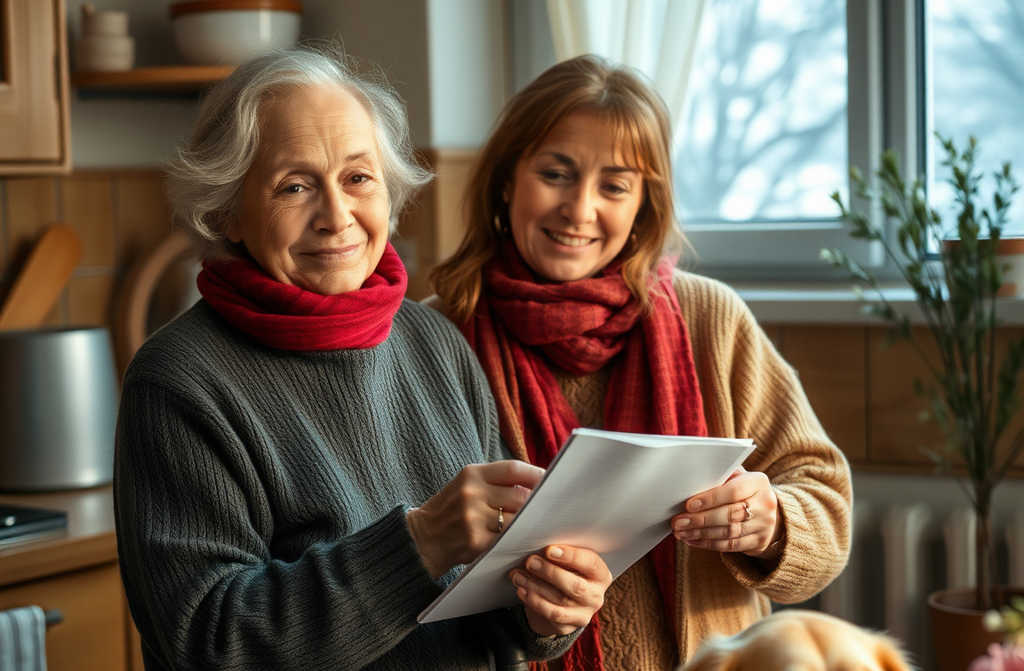
A Letter to Myself She pushed aside her plate of cold buckwheat and sat up straighter. The TV murmured about a concert, with glittering hosts flashing across the silent screen. In the kitchen, the clock ticked toward midnight. Anna Petrovna placed a blank checkered sheet in front of her, her thick plastic-framed glasses on top. The pen her son gave her last New Year lay nearby. She clicked the cap, a small jab of nerves, as if she were about to take an exam. Well then, old girl, she thought, write. You promised yourself. The idea had come a week ago, after seeing a television psychologist recommend writing letters to your future self. It seemed childish then, but stayed with her. Now, in the hush of midnight, the idea no longer felt ridiculous. She leaned in, flattened the paper with her palm to steady it, and wrote at the top: “31st December 2024. A Letter to Myself for Next New Year.” Her hand trembled, but the letters were neat, precise—her bookkeeping days of thirty years never truly left her. “Hello, Anna, now seventy-three,” she wrote, then paused. The number “seventy-three” stung. She was seventy-two now, but still jolted at that number; in her mind another, smaller number lingered. She tuned into herself. A hollow ache of hunger and nerves twisted her stomach; her back throbbed from cleaning all day. Her heart was steady but somewhere deep, the old fear: would it still beat like this next year? She leaned to the paper again. “I really hope you’re alive to read this. That you’re still walking unaided. That your hand hasn’t given out, your legs haven’t failed. That you’re not in hospital, not dependent on anyone…” She reread those lines and grimaced—too grim. But she didn’t rewrite it. Best to be honest. “I hope you haven’t become a burden to your children. That you still walk to the shops, pay your bills, handle your medicines yourself. That you don’t call them ten times a day over nothing.” She set the pen down, glancing at her phone on the windowsill. Her daughter had called an hour ago from another country—rushed, between errands, showing off a decorated tree and a sparkly granddaughter by video. Her son had texted, “Mum, Happy New Year in advance, we’re with friends, I’ll call you tomorrow.” She’d replied with a smiley and heart, just as they had shown her. “So you won’t bother them with your loneliness,” she wrote, exhaling. The word “loneliness” hung heavy, like a stone. She looked around the kitchen; her dressing gown draped over the chair, woolly socks drying on the radiator. Two plates on the table—she still set one opposite, out of habit, though she knew no one would drop by “for a minute.” It made things feel gentler. She returned to her letter. “This year, you must—” she wrote that word deliberately, “must learn to live well. Walk for at least half an hour a day. Stop eating late at night. Stop complaining about your blood pressure to everyone. Find something to do—maybe try senior yoga, or a hobby club. Talk more with people instead of sitting inside four walls. Be calm, kind, no nagging or giving advice to your kids. Be a cheerful old lady, the kind people enjoy being around.” She reread the paragraph, her chest tightening; “cheerful old lady” sounded like an advert. But that was her ideal: tidy, smiling, not drawing the focus, not being ill, not in the way. She added, “And please, don’t be afraid of the future. Don’t sit waiting for something bad. See the doctor on time. Take your medicine as you should. But don’t endlessly read about diseases online. Don’t ring your daughter every time you get a twinge. You’re grown, you can handle it.” Her hand tired. She leaned back, eyes closed—more clocks ticked in the hallway, the ones she got for her retirement. The TV concert rolled on soundlessly, singers mouthing silent songs. She finished: “Let the coming year bring at least one friend to have tea and a chat with. And I hope you won’t always feel like an extra.” She underlined “extra” twice, then erased one line. Signed: “Anna, 72.” She folded the sheet, found a leftover Christmas envelope, slipped the letter inside. On the front she wrote, “To open: 31.12.2025.” She held it up, as if testing: did she believe she’d last that long? Then she stood, tucked the envelope into the china cabinet, between old cards and photos, and turned the key. As the TV began the midnight countdown, she stood by the window with a glass of champagne, watching fireworks in the square. She pressed her palm to her chest, feeling her heart’s steady rhythm and whispered into the darkness: “Go on, year. Just be gentle, will you?” *** A year later, she found the envelope while searching for old bills. It was mid-December, still early for celebration, but shop displays were pyramids of clementines, and outside workers built the frame for the town Christmas tree. Anna sat on the floor beside a box of paperwork. Folder by folder—“Utilities”, “Medical”, “Documents”—she sorted for the social worker coming to help with her medicine compensation. The envelope slipped from an old card folder, falling to her lap. She knew her handwriting at once. Her heart jolted. “To open: 31.12.2025.” “Well, would you look at that…” she said aloud. Two weeks to go. She hesitated: put it back, wait for the day, like planned? But curiosity straightened her spine. “What’s the difference,” she muttered. “A couple weeks here or there.” She heaved herself up, sat at her table. Nails clipped neat, a trail of iodine on her thumb where she’d cut herself unscrewing a jar. She tore the envelope’s edge, pulled out the folded sheet, yellowing at the creases. Her greeting waited: “Hello, Anna, seventy-three.” “Seventy-three,” she repeated, hearing the number. A year ago, it sounded strange. Now she gave it to the surgery receptionist without pause, though it still surprised her to see a face in the mirror wearing such soft creases. She read. “I really hope you’re alive to read this. That you’re walking unaided…” Her gaze slid to the cane by the hallway wall. Black, rubber grip, bought last spring after she’d fallen on the surgery steps—wet weather, rushing while holding test results, missed a step, banged her side. The hospital cleared her bones, but the doctor had been firm: “Anna, you need a cane. And take the stairs slower.” She’d cried right there in the corridor. The cane felt so shameful—a mark of “really old.” But when pain lingered and her leg buckled, she caved. Bought it at the chemist, alongside ortho insoles. Reading last year’s “unaided,” shame rose. She’d failed her own assignment. “…so your hand hasn’t seized, your legs not failed, you’re not in hospital, not dependent on anyone…” She remembered April, a blood pressure spike so fierce she fainted. Her neighbour downstairs, Zoe, called an ambulance, stayed until Anna came home. She spent five days in a four-bed ward, listening to other women’s stories. Her daughter couldn’t fly in, her son visited once—work, he said, apologetic; but she survived. For once, she let herself just lie there, world unravelling without her surveillance. “So you walk to the shops, pay your bills, manage medication…” She smiled. In the summer, her son installed a bill-paying app on her phone. At first she’d resisted, but grew used to it; now she showed her upstairs neighbour how to use it too. Her medication was always lined up in the kitchen, a notebook tracking her pills—mostly under control. “So you don’t call them ten times a day…” She’d taped a note to the fridge: “Don’t call the kids more than once each day.” Lasted a week. Then realised she didn’t actually call so much; her daughter always messaged, sent snippets of her granddaughter. Her son called less, but when he did, he had time. She read on. “So you don’t burden them with your loneliness.” That familiar guilt. That night in March, calling her daughter only to cry and admit she struggled alone. A pause on the other end. “Mum, it’s hard for me too. But I don’t call every time I hit a wall.” The phone was left untouched for three days. She patrolled her flat, ignoring the phone, her daughter’s words echoing: “Don’t burden me.” Later, her daughter texted: “Sorry, I snapped—let’s agree, if you’re low just say so, don’t make me feel guilty, okay?” They spoke—honestly, not perfectly. After that, Anna tried to say, “I’m lonely today, can we talk?” instead of, “You’ve left me behind.” She moved on. “So this year, you must learn to live properly. Walk for at least half an hour. Don’t eat late…” She snorted—remembered doctor’s orders to walk daily after the hospital. She obeyed, first circling the block with that new cane, counting laps, sometimes finding another woman with a shaggy dog—her name, she learned, was Nora. They started walking together, moaning over prices, complaining about children, sometimes laughing until they wheezed. Once, Nora brought tea in a flask. “Like a pair of schoolgirls,” Anna thought. As for eating late—she tried. Sometimes a slice of cheese in a quiet kitchen helped more than anything else on a lonely night. “Stop moaning about blood pressure…” Clinic queues were always full of blood pressure complaints. But she found herself more interested in others’ stories now. “Find something to do—senior gym, hobby club, see more people, not just walls…” In August, she’d spotted a flyer for free pensioners’ classes: Nordic walking, chair yoga, health talks. Hesitated to take the number, finally copied it down. The first chair yoga class, she shook not just from arthritis but nerves. The instructor was soft-voiced but firm. They stretched, reached, breathed. Anna was amazed to feel her body as more than just pain—something with life left. After class, in the kitchen with tea, she met Gillian, a retired teacher from two doors down, and Lidia, who soon became a phone buddy. They started walking, going to the chemist, the market. “Be calm, kind, don’t nag or advise your kids. Be a cheerful old lady folks like.” A lump grew in her throat. In June, her son brought his family. The grandson never looked up from his phone, and Anna snapped, “You could read a book, you’ll ruin your eyes!” Her son bristled, “Mum, please don’t. He worked hard all year, leave him be.” Anna had stormed to the kitchen, slamming cupboard doors, listening to their laughter; felt unneeded. Later, her son rang: “Mum, you act like we do everything wrong. We’re not your enemies.” “I’m worried for you—and for me,” she’d answered, finally. Afterwards, calls were softer. She caught herself about to butt in, and held her tongue. “And please, don’t fear the future. Don’t sit waiting for something bad… don’t Google symptoms endlessly…” She remembered November’s week of side pain. Nearly rang her daughter, stopped herself, booked her own doctor’s appointment. A muscle, not a tumour. The GP laughed, “Good for you, being active!” The relief afterward: nothing dreadful happened. She’d managed alone, and told her daughter the story as a joke, later. She limited her phone Googling, managed to stick to half-hour sessions sometimes. “Let the coming year bring you a friend, someone to have tea and talk with…” She glanced at yesterday’s mug—Nora had visited, eaten cabbage pie, laughed about creaky knees. When Nora left, the flat felt gently warm, not empty. “And may you not constantly feel surplus.” She reread it—“surplus”—several times. Last year, it had seemed like a verdict. How often did she feel that way, she wondered. Yes, there were nights at her window, watching lights blink on and off in neighbour’s rooms; days when nobody called and she thought, “If something happened, how long until someone noticed?” But there were other times: her granddaughter’s poem on a voice note; Gillian ringing to see if she fancied the shops; Zoe knocking for help with her computer— “you’re our local expert.” She laid her letter down and reclined against her chair. There was pride for what she’d managed, shame for what she hadn’t; it mixed together inside her. She looked at her hand: skin softer, veined, speckled. This hand had gripped a cane, washed pans, stroked her granddaughter’s hair in summer. I wanted to be easy, she thought, but I am what I am. She reread the start—about “not being a burden.” She remembered how her daughter had finally come for a week; they’d shopped, sat outside together. One day, Anna overexerted, and her daughter insisted on a taxi, helped her walk the stairs. “I’m a burden to you,” Anna blurted. Her daughter paused on the landing, then replied quietly, “Mum, you’re not luggage. You’re human. Sometimes people need help. That’s perfectly normal.” That phrase had stuck harder than any other—a small shift occurred that day. Not right away, but it stayed. Now, looking at her old letter, Anna saw how much was “should,” “don’t you dare,” “stop,” “be.” She was her own harsh boss. She stood, fetched a new hardback notebook—Gillian’s birthday present: “Write your recipes or your thoughts. Don’t keep it all in your head.” Anna sat at the kitchen table, opened it, the old letter beside her, pen in hand. She sat for a long time, stuck on where to begin. Part of her wanted another list: walk, don’t moan, don’t interfere. But something else whispered that maybe it could be different. At last, she wrote: “31st December 2025. Letter to Myself for Next Year.” Paused, then struck it through. Instead wrote: “December 2025. Note to Myself.” “Hello, Anna. You’re seventy-three. You’re sitting in your kitchen, last year’s letter on the table. You’ve read it and realized most of it you haven’t ‘done.’ You still eat late. You still grumble about blood pressure. You bought yourself a cane. You cried on the phone to your daughter. You argued with your son. You didn’t become the cheerful little old lady from the adverts. But you called the doctor yourself this year. You were in hospital and didn’t die of fright. You got to know Nora and Gillian. You go to classes, lazily sometimes but you go. You laugh. Once you even gave your bus seat up for a young man who needed it more. You still sometimes feel surplus. But sometimes you feel needed. That’s something. I’m not going to tell you what you ‘must’ do. I want you to be kinder to yourself next year. If you want—walk more. If you’re tired—sit down. If you’re afraid—call someone. That’s not a crime. I want you to keep having people to have tea with. Not to be ashamed of your cane. Not to think of yourself only as a problem. You’re not a checklist. You’re you.” She stopped, reading over the lines, eyes brimming—not with self-pity, but with gentle relief. From outside came the thump of planks: workmen prepping the square. The news on TV talked of holiday snow. Anna closed her notebook, placed last year’s letter on top, held her palm over both, connecting two versions of herself. She stood, went to the window. Nora sat on a bench, bundled up, dog at her feet. Anna pulled on her coat, picked up her cane. On the threshold, she turned back, opened the notebook and added: “Today I’ll walk with Nora—just because I want to. Tonight I’ll call my daughter, not to complain, but to ask how she is.” She put the notebook in her desk drawer, not hidden away, no instruction for when to open—any day she wanted would be right. She locked the door, took the stairs slowly, cane tapping each step. Her leg ached, but she managed. The air was chilly outside, pinching her cheeks. Nora waved. “Annie, fancy a couple of laps?” she called. “Absolutely,” Anna replied, and felt something unfurl gently inside her. They set off, slow and steady, the dog’s pawprints trailing ahead. Anna listened to Nora talk about her granddaughter, and thought about the New Year coming—without loud resolutions or rigid plans. Just another year, to be lived as best she could—with respect for her strengths and softness for her failings. And somehow, that was enough.

Letter to Myself

I pushed the plate of cold porridge away from the edge of the table and sat up straighter. The TV in the lounge was mumbling about a Christmas concert, all sequins and dazzling hosts, but the volume was almost down to nothing. The kitchen clock ticked away, its hand creeping towards midnight.

Eleanor Smith set a clean sheet of lined paper in front of her, then placed her thick-rimmed glasses on top. A pen her son had given her last Christmas sat beside it. She clicked the cap and felt a familiar jab of anxiety, as if she were about to sit an exam.

Alright, old girlshe thoughtget writing. You did promise yourself.

The idea had come to her a week earlier, after shed seen a psychologist on the telly recommending letters to ones future self. At first, shed found it childish, almost, but it niggled at her. And now, in the hush of her kitchen, the thought didnt seem so absurd.

She leaned forward and placed her palm on the paper to stop it trembling, then wrote at the top: 31st December 2024. Letter to myself for next New Year.

Her hand shook, but the writing was neat. Shed never lost the habit after thirty years in accounting.

Hello, Eleanor, aged 73, she wrote, and paused.

That 73 stung a little. She was 72 now, but that number always startled her. In her mind, it was still something much smaller.

She tuned in to herself. She was hungry, and nervous, her back aching after the days cleaning. Her heart thudded steadily, but underneath lurked that familiar dread: would it be beating the same way next year?

She leaned towards the paper again.

I really hope youre alive and able to read this. That youre still walking without a stick. That your arms and legs are still working. That you arent stuck in a hospital bed, relying on anyone for everything

She read that over and grimaced. Too gloomy. But she left it as it was. It was honest, at least.

I hope youre not a burden on the kids. I hope you can still pop to the shops on your own, pay your bills, sort your prescriptions. That youre not ringing them ten times a day about nothing.

She laid her pen down and glanced at her phone on the windowsill. Her daughter had called an hour ago from overseas, in a rush, juggling errands, quickly showing off their tree and her granddaughter sparkling in tinsel. Her son had texted: Mum, Happy New Year in advance. Were at friends, Ill call tomorrow. Shed sent a smiley and a heart, like theyd taught her.

So youre not pestering them with your loneliness, she added, exhaling.

The word loneliness hung in the kitchen, heavy as a stone. She looked around. Her dressing gown was flung on a chair and her woollen socks were drying on the radiator. Shed set two plates on the table out of habit, one sitting opposite her, though she knew no one would just drop by for a minute anymore. It brought her a kind of comfort.

She looked back at the paper.

This year, you mustshe carefully underlined mustlearn to live properly. Go for a walk every day, at least half an hour. Stop eating late. Dont complain about your blood pressure to everyone. Find something to do. Maybe join a gentle exercise class for pensioners, or an interest group. Talk to people more, and dont spend every day shut away indoors. Try to stay calm, be kind, dont nag or lecture the kids. Be that sort of easy old lady people like to be around.

She reread that and felt something twist inside her. Easy old ladyit sounded straight off an advert. But thats what she imagined an ideal to be: neat, smiling, not a bother, never ill, never in the way.

She scrawled one more thing:

And please, dont be scared of the future. Dont sit there expecting disaster. See the doctor when you need to. Take your tablets properly. But for heavens sake, stop googling every twinge. Dont ring your daughter every time you get a pain in your side. Youre a grown woman, you can handle it.

Her hand was aching. She leaned back and closed her eyes. The hallway clock ticked quietlya retirement gift. In the lounge, the silent TV paraded singers, their mouths moving in a soundless song.

She finished the letter, writing: Lets hope, by next year, youve got at least one friend you can have a cuppa and a natter with. And that you dont spend the whole time feeling like you dont really belong. She double-underlined dont really belong, then carefully erased one of the marks.

She signed off: Eleanor, 72.

She folded the letter twice and found a leftover Christmas envelope in her drawer. She slipped the letter inside and wrote on the front: To be opened 31.12.2025, staring at the date as if checking whether she believed shed make it to then.

She got up, slipped into the lounge and tucked the envelope in with a stack of old cards and photographs in the sideboard. She closed the door and turned the little key.

When the TV countdown began, she stood by the window with a glass of bubbly and watched the fireworks burst across the estate. She pressed her palm to her chest, felt her heart beat steady, and whispered into the darkness:

Go on, then, year. But take it easy with me, will you?

***

She found the envelope the following year while searching for gas bills. December had only just arrivedChristmas was still weeks awaybut the supermarkets were already stacking tangerines into pyramids and workmen outside were setting up a frame for the Christmas tree on the green.

Eleanor sat on the floor in her sitting room, beside an open box of papers. She sorted files marked Bills, Medical, and Documents, keen to get herself organised before the support worker came round to help with prescription refunds.

The envelope had slithered from an old card file and landed in her lap. Immediately, she recognised her own handwriting. Her heart stumbled for a second.

To be opened 31.12.2025.

Well I nevershe said aloud.

Two weeks to go. She considered putting it back, waiting for the day, as intended. But curiosity got the better of her.

Whats two weeks between friends, ehshe muttered.

She pushed herself up, bracing on the edge of the sofa, and sat at the table. She placed the envelope in front of her. Her nails were clipped neatly, though her thumb bore a line of iodine from a recent mishap with a stubborn jar of pickles.

She tore open the envelope and pulled out the folded letter. The paper was yellowed at the creases. She opened it and read the greeting: Hello, Eleanor, aged 73.

Seventy-three, she echoed, weighing the number.

A year on, it wasnt so strange. She said it to her GP without stumbling now. Though she still sometimes caught her breath, seeing the soft lines in her face and the crinkles round her eyes in the mirror.

She began to read.

I really hope youre alive and able to read this. That youre still walking without a stick

Instinctively, she looked to the hallway where her cane stood by the wall: black, rubber handle, bought that spring after shed fallen on the surgery steps.

It had been slippery. Shed hurried for her cardiology appointment, blood tests clutched in her hand. Stepping outside, she slipped, landed hard on her side and bruised her thigh. The A&E staff left her for observation, X-rayed her: bones intact, but the doctor had said sternly,

Mrs Smith, I think you best get yourself a stick. And mind those stairs from now on.

Shed cried, right in the corridor. The cane felt like a badge admitting properly old. But as the leg kept giving way, she bought one from the chemists, where they also sold orthopaedic insoles.

Reading without a stick in her old handwriting, Eleanor felt a pang of guilt, as if shed failed some task.

that your arms and legs are still working. That you arent stuck in hospital, relying on anyone

She remembered April: a blood pressure surge so bad shed felt sick and dizzy. Mrs Jones downstairswho shed only really known for a few lifty conversationshad called the ambulance. Eleanor spent five days in a shared ward, listening to other peoples tales of surgery and grandchildren. Her daughter couldnt make it over, but called every day. Her son dropped by once with fruit and a phone charger, apologetic about work.

For the first time in years, Eleanor let herself simply belying there, staring at the ceiling, counting IV drips. For once, the world didnt fall apart because she let go.

You still do your shopping yourself, still sort your bills, still manage your meds

She smiled. That summer her son had installed an app on her phone for paying bills. Shed resisted at first, but soon got the hang of iteven guided the neighbour upstairs through his first go.

She managed her medicines, too. The tablets lined up neatly on the kitchen shelf, a notebook for ticking off what shed taken. Occasionally mixed things up, but mostly she was on top of it.

That youre not calling them ten times a day over nothing

She remembered her attempt to cut back on phone calls in the spring, sticking a note on the fridge: Dont call the kids more than once a day. Lasted a week. She realised, really, she didnt call as much as she thought. Her daughter was often busy but sent regular messages and photos of her granddaughter. Her son called less but talked for longer.

So you arent pestering them with your loneliness.

There it was again: the old guilt. She remembered a March evening when she rang her daughter and, unable to hold it in, began to cry, admitting it was hard, being on her own. A pause, then her daughter sighed,

Mum, its hard for me too. But I dont cry to you every time Im exhausted.

They went three days without speaking after that. Eleanor wandered the flat, avoiding her phone, replaying that dont pester on a loop. Her daughter wrote, Im sorry, I snapped. Lets agree: you tell me when youre struggling, but please dont load me with guilt, alright?

They talked. Less than perfectly, but honestly. After that, Eleanor tried to phrase things differentlynot youve abandoned me, but Im feeling a bit lonelycall if you can?

She read on.

This year, you must learn to live properly. Carry on with the walks. No more late-night snacks

She chuckled, recalling the early summer. After leaving hospital, the GP had ordered daily walks. Eleanor obeyed, doing cautious laps around the block, counting circuits with her stick. Then shed met Dorothy, a woman with a scruffy little dog. For weeks theyd strolled together, chatting about prices, pills, grown-up children. Theyd rib one another about daft things, and sometimes Dorothy brought along a flask of tea to share on the bench, watching teenagers play football nearby.

As for no late suppers, she smiled. Shed made an effort, eating earlierbut some evenings, alone in the quiet, shed still fetch out a sliver of cheese or ham. Sometimes, it was just the comfort she needed.

Stop banging on about your blood pressure to everyone

Eleanor remembered the GPs waiting room. The conversations there always ended up about aches and diagnoses. She sometimes joined in, but listening to other peoples stories was getting more interesting than telling her own.

Find something to fill your time. Maybe exercises for the elderly or join a club. Chat to people more

She stopped at that and smiled.

Back in August, at the surgery, a poster caught her eye: Free activities for seniors at the community centreNordic walking, chair yoga, health talks. Shed hesitated, but scribbled down the number. Her first time at chair yoga, her hands were shaking (and not just with arthritis). The hall was full of men and women her age, the young instructor gentle but never patronising. The stretches surprised herher body, for so long a catalogue of aches, turning out to be alive and just a bit marvellous.

Afterwards, theyd chatted over tea. Thats how she met Gill, who lived a few doors away, and Mrs Wright, a retired teacher. Now and then, theyd call one another to walk to class or visit the chemist together.

Stay calm, be kind, dont grumble, dont pester the children with advice. Be the easy-going old lady people enjoy being around.

She read that and a lump rose in her throat. She remembered June, when her son came with his family for a weekend. Her grandson sat glued to his phone at the table, and she snapped,

You could at least read a book, youll ruin your eyes.

Her son flared:

Mum, dont start. Hes been flat out at school, let him relax.

Shed taken offence, retreating to the kitchen and slamming a cupboard door, then sitting alone, listening to laughter in the other room, feeling surplus. After theyd gone, she replayed it countless times, hunting for exactly where shed crossed the line.

Two days later, her son phoned and said,

Mum, when you say things like that, it makes it sound as if we never do anything right. Were not your enemies.

Shed been silent a long time, then said,

Im just worried for you all. And for myself, too.

Admitting that hadnt come easily. But after, their conversations softened. She found herself biting her tongue before offering a helpful tip.

And please, dont dread the future. Dont sit waiting for something awful. See doctors promptly, stick to your tabletsbut dont obsess over symptoms online

She thought of November: a week of twinges in her side. She nearly rang her daughter to complain, but made her own appointment, saw the GP. Turned out it was just a pulled muscle from yoga. The doctor smiled,

Good on you for keeping active.

Shed left the surgery lighter, nothing awful had happened. Shed managed on her own. Later, she called her daughter and told the story as a joke.

And lets hope, next year, youve got at least one friend to have a cup of tea and a chat with

She looked at the kettle in the kitchen. Just yesterday, Dorothy had been over for cabbage pie, both women laughing about the peril of climbing stairs. Dorothys laughter lingered in the flat long after shed leftwarm, not hollow.

And that you dont always feel like you dont belong.

Eleanor read that line again and again. That feelingoutside, unnecessaryhad haunted her a year ago.

She asked herself: how often this year had she truly felt like that? Thered been evenings when shed sit by the window watching lights flicker in other flats, days when no one called and shed wonder if anything happened to her, how long it would take for someone to notice.

But thered also been a granddaughters voice note, reciting poetry; a call from Gill to walk to the shop together; Mrs Jones knocking to ask, Can you help with the laptop, you know what youre doing.

She set the letter on the table and leaned back. What she felt was odda knot of guilt for failures, and a delicate gratitude for what shed managed.

She looked at her hands. The veins were more pronounced these days, her skin softer than before, all freckles and spots. These fingers had held the stick, opened doors, scrubbed plates, stroked her granddaughters hair during her summer visit.

I meant to become easyshe thought. But I became myself instead.

She picked up the letter, rereading the bit about not being a burden. She remembered how, in summer, her daughter had finally managed a week-long visit. They shopped together, sat on the bench outside the block. One day Eleanor overdid it and was exhaustedher daughter called a cab, paid and helped her up the stairs.

Im a burden to you, arent I?Eleanor blurted out.

Her daughter paused on the landing, looked at her, and said calmly:

Mum, youre not luggage, youre a person. Sometimes you need help. Thats fine.

Those words stuck with Eleanor more than anything. A little part of her shifted that day. Not all at once, but it moved.

Now, sitting with last years letter, she saw how much it asked of her. You must, Stop, Dont, Be. Like she was her own schoolmistress.

She stood, fetched a new hardback notebook from the shelfa birthday present from Gill:

For writing recipes or thoughts, shed said, theres only so much space in your head.

Eleanor returned to the kitchen, set the notebook next to the old letter, and grabbed her pen.

She hesitated, unsure how to start. Two clashing impulsesone wanted to draw up a list: walk, dont moan, keep out of the way. The other whispered that there might be another way.

She lowered her pen and wrote: 31st December 2025. Note to Myself.

Then she changed her mind and crossed out the date, writing: December 2025. A Note to Myself.

Eleanor, hello. Youre 73 now. Youre sitting here with last years letter, reading all the things you never quite managed. You still eat late sometimes. You still complain about your blood pressure. You bought a cane. You cried to your daughter. You quarrelled with your son. You never became the easy old lady from the adverts.

But you learned to ring the doctor by yourself. You spent nights in hospital and didnt panic. You made friends with Dorothy and Gill. You joined a club, even if you sometimes cant be bothered. You laugh now and then. One time, you gave up your seat on the bus for a young chap who looked worse than you. Sometimes you still feel like you dont belong. Sometimes you feel needed. Thats a step forward.

Im not going to give you a list of things you must do. I just hope you go easier on yourself this year. Walk more, if you fancy. Sit and rest, if youre tired. If youre scared, ring someone. Thats perfectly alright.

I hope you keep friends to share tea with. That you dont feel ashamed of your cane. That you stop seeing yourself only as a problem. Youre not a tick-list. Youre you.

She paused, reading that back, eyes stingingnot from self-pity, but a kind of quiet relief.

Outside, workmen banged around the green, preparing for the Christmas tree. The telly was talking about snow in the forecast for the holidays.

Eleanor closed her notebook and laid last years letter on top, pressing her palm over both, as if joining the two versions of herself.

Then she stood and looked out of the window. Dorothy, wrapped in her puffer jacket, was sitting on the bench outside, her little dog fussing around. Eleanor grabbed her warmest coat and picked up her stick.

On the doorstep, she hesitated, then went back to the kitchen, opened her notebook and wrote at the bottom, Today, Im going for a walk with Dorothy. Just because I fancy it. And later Ill ring my daughter, not to complain, but to ask how she is.

She slid the notebookno not to be opened beforeinto the drawer where she kept pens and pads. Shed read it any day she liked.

She locked the door behind her, taking care on the stairs with her stick. Her leg ached a touch, but it was bearable. The air outside had a fresh bite, making her cheeks tingle. Dorothy waved.

Ellie, fancy a lap?she called.

Lets do it,Eleanor replied, feeling something quietly unfold inside her.

They set off around the green, slow and steady. The dog dashed ahead, leaving prints on the path. Eleanor listened as Dorothy talked about her granddaughter, and thought about the coming new yearno bold promises, no rigid plans.

Just another year, to be lived the best she could, showing herself a little grace, and a bit of kindness.

It felt, suddenly, like quite enough.

Rate article
Add a comment

;-) :| :x :twisted: :smile: :shock: :sad: :roll: :razz: :oops: :o :mrgreen: :lol: :idea: :grin: :evil: :cry: :cool: :arrow: :???: :?: :!:

A Letter to Myself She pushed aside her plate of cold buckwheat and sat up straighter. The TV murmured about a concert, with glittering hosts flashing across the silent screen. In the kitchen, the clock ticked toward midnight. Anna Petrovna placed a blank checkered sheet in front of her, her thick plastic-framed glasses on top. The pen her son gave her last New Year lay nearby. She clicked the cap, a small jab of nerves, as if she were about to take an exam. Well then, old girl, she thought, write. You promised yourself. The idea had come a week ago, after seeing a television psychologist recommend writing letters to your future self. It seemed childish then, but stayed with her. Now, in the hush of midnight, the idea no longer felt ridiculous. She leaned in, flattened the paper with her palm to steady it, and wrote at the top: “31st December 2024. A Letter to Myself for Next New Year.” Her hand trembled, but the letters were neat, precise—her bookkeeping days of thirty years never truly left her. “Hello, Anna, now seventy-three,” she wrote, then paused. The number “seventy-three” stung. She was seventy-two now, but still jolted at that number; in her mind another, smaller number lingered. She tuned into herself. A hollow ache of hunger and nerves twisted her stomach; her back throbbed from cleaning all day. Her heart was steady but somewhere deep, the old fear: would it still beat like this next year? She leaned to the paper again. “I really hope you’re alive to read this. That you’re still walking unaided. That your hand hasn’t given out, your legs haven’t failed. That you’re not in hospital, not dependent on anyone…” She reread those lines and grimaced—too grim. But she didn’t rewrite it. Best to be honest. “I hope you haven’t become a burden to your children. That you still walk to the shops, pay your bills, handle your medicines yourself. That you don’t call them ten times a day over nothing.” She set the pen down, glancing at her phone on the windowsill. Her daughter had called an hour ago from another country—rushed, between errands, showing off a decorated tree and a sparkly granddaughter by video. Her son had texted, “Mum, Happy New Year in advance, we’re with friends, I’ll call you tomorrow.” She’d replied with a smiley and heart, just as they had shown her. “So you won’t bother them with your loneliness,” she wrote, exhaling. The word “loneliness” hung heavy, like a stone. She looked around the kitchen; her dressing gown draped over the chair, woolly socks drying on the radiator. Two plates on the table—she still set one opposite, out of habit, though she knew no one would drop by “for a minute.” It made things feel gentler. She returned to her letter. “This year, you must—” she wrote that word deliberately, “must learn to live well. Walk for at least half an hour a day. Stop eating late at night. Stop complaining about your blood pressure to everyone. Find something to do—maybe try senior yoga, or a hobby club. Talk more with people instead of sitting inside four walls. Be calm, kind, no nagging or giving advice to your kids. Be a cheerful old lady, the kind people enjoy being around.” She reread the paragraph, her chest tightening; “cheerful old lady” sounded like an advert. But that was her ideal: tidy, smiling, not drawing the focus, not being ill, not in the way. She added, “And please, don’t be afraid of the future. Don’t sit waiting for something bad. See the doctor on time. Take your medicine as you should. But don’t endlessly read about diseases online. Don’t ring your daughter every time you get a twinge. You’re grown, you can handle it.” Her hand tired. She leaned back, eyes closed—more clocks ticked in the hallway, the ones she got for her retirement. The TV concert rolled on soundlessly, singers mouthing silent songs. She finished: “Let the coming year bring at least one friend to have tea and a chat with. And I hope you won’t always feel like an extra.” She underlined “extra” twice, then erased one line. Signed: “Anna, 72.” She folded the sheet, found a leftover Christmas envelope, slipped the letter inside. On the front she wrote, “To open: 31.12.2025.” She held it up, as if testing: did she believe she’d last that long? Then she stood, tucked the envelope into the china cabinet, between old cards and photos, and turned the key. As the TV began the midnight countdown, she stood by the window with a glass of champagne, watching fireworks in the square. She pressed her palm to her chest, feeling her heart’s steady rhythm and whispered into the darkness: “Go on, year. Just be gentle, will you?” *** A year later, she found the envelope while searching for old bills. It was mid-December, still early for celebration, but shop displays were pyramids of clementines, and outside workers built the frame for the town Christmas tree. Anna sat on the floor beside a box of paperwork. Folder by folder—“Utilities”, “Medical”, “Documents”—she sorted for the social worker coming to help with her medicine compensation. The envelope slipped from an old card folder, falling to her lap. She knew her handwriting at once. Her heart jolted. “To open: 31.12.2025.” “Well, would you look at that…” she said aloud. Two weeks to go. She hesitated: put it back, wait for the day, like planned? But curiosity straightened her spine. “What’s the difference,” she muttered. “A couple weeks here or there.” She heaved herself up, sat at her table. Nails clipped neat, a trail of iodine on her thumb where she’d cut herself unscrewing a jar. She tore the envelope’s edge, pulled out the folded sheet, yellowing at the creases. Her greeting waited: “Hello, Anna, seventy-three.” “Seventy-three,” she repeated, hearing the number. A year ago, it sounded strange. Now she gave it to the surgery receptionist without pause, though it still surprised her to see a face in the mirror wearing such soft creases. She read. “I really hope you’re alive to read this. That you’re walking unaided…” Her gaze slid to the cane by the hallway wall. Black, rubber grip, bought last spring after she’d fallen on the surgery steps—wet weather, rushing while holding test results, missed a step, banged her side. The hospital cleared her bones, but the doctor had been firm: “Anna, you need a cane. And take the stairs slower.” She’d cried right there in the corridor. The cane felt so shameful—a mark of “really old.” But when pain lingered and her leg buckled, she caved. Bought it at the chemist, alongside ortho insoles. Reading last year’s “unaided,” shame rose. She’d failed her own assignment. “…so your hand hasn’t seized, your legs not failed, you’re not in hospital, not dependent on anyone…” She remembered April, a blood pressure spike so fierce she fainted. Her neighbour downstairs, Zoe, called an ambulance, stayed until Anna came home. She spent five days in a four-bed ward, listening to other women’s stories. Her daughter couldn’t fly in, her son visited once—work, he said, apologetic; but she survived. For once, she let herself just lie there, world unravelling without her surveillance. “So you walk to the shops, pay your bills, manage medication…” She smiled. In the summer, her son installed a bill-paying app on her phone. At first she’d resisted, but grew used to it; now she showed her upstairs neighbour how to use it too. Her medication was always lined up in the kitchen, a notebook tracking her pills—mostly under control. “So you don’t call them ten times a day…” She’d taped a note to the fridge: “Don’t call the kids more than once each day.” Lasted a week. Then realised she didn’t actually call so much; her daughter always messaged, sent snippets of her granddaughter. Her son called less, but when he did, he had time. She read on. “So you don’t burden them with your loneliness.” That familiar guilt. That night in March, calling her daughter only to cry and admit she struggled alone. A pause on the other end. “Mum, it’s hard for me too. But I don’t call every time I hit a wall.” The phone was left untouched for three days. She patrolled her flat, ignoring the phone, her daughter’s words echoing: “Don’t burden me.” Later, her daughter texted: “Sorry, I snapped—let’s agree, if you’re low just say so, don’t make me feel guilty, okay?” They spoke—honestly, not perfectly. After that, Anna tried to say, “I’m lonely today, can we talk?” instead of, “You’ve left me behind.” She moved on. “So this year, you must learn to live properly. Walk for at least half an hour. Don’t eat late…” She snorted—remembered doctor’s orders to walk daily after the hospital. She obeyed, first circling the block with that new cane, counting laps, sometimes finding another woman with a shaggy dog—her name, she learned, was Nora. They started walking together, moaning over prices, complaining about children, sometimes laughing until they wheezed. Once, Nora brought tea in a flask. “Like a pair of schoolgirls,” Anna thought. As for eating late—she tried. Sometimes a slice of cheese in a quiet kitchen helped more than anything else on a lonely night. “Stop moaning about blood pressure…” Clinic queues were always full of blood pressure complaints. But she found herself more interested in others’ stories now. “Find something to do—senior gym, hobby club, see more people, not just walls…” In August, she’d spotted a flyer for free pensioners’ classes: Nordic walking, chair yoga, health talks. Hesitated to take the number, finally copied it down. The first chair yoga class, she shook not just from arthritis but nerves. The instructor was soft-voiced but firm. They stretched, reached, breathed. Anna was amazed to feel her body as more than just pain—something with life left. After class, in the kitchen with tea, she met Gillian, a retired teacher from two doors down, and Lidia, who soon became a phone buddy. They started walking, going to the chemist, the market. “Be calm, kind, don’t nag or advise your kids. Be a cheerful old lady folks like.” A lump grew in her throat. In June, her son brought his family. The grandson never looked up from his phone, and Anna snapped, “You could read a book, you’ll ruin your eyes!” Her son bristled, “Mum, please don’t. He worked hard all year, leave him be.” Anna had stormed to the kitchen, slamming cupboard doors, listening to their laughter; felt unneeded. Later, her son rang: “Mum, you act like we do everything wrong. We’re not your enemies.” “I’m worried for you—and for me,” she’d answered, finally. Afterwards, calls were softer. She caught herself about to butt in, and held her tongue. “And please, don’t fear the future. Don’t sit waiting for something bad… don’t Google symptoms endlessly…” She remembered November’s week of side pain. Nearly rang her daughter, stopped herself, booked her own doctor’s appointment. A muscle, not a tumour. The GP laughed, “Good for you, being active!” The relief afterward: nothing dreadful happened. She’d managed alone, and told her daughter the story as a joke, later. She limited her phone Googling, managed to stick to half-hour sessions sometimes. “Let the coming year bring you a friend, someone to have tea and talk with…” She glanced at yesterday’s mug—Nora had visited, eaten cabbage pie, laughed about creaky knees. When Nora left, the flat felt gently warm, not empty. “And may you not constantly feel surplus.” She reread it—“surplus”—several times. Last year, it had seemed like a verdict. How often did she feel that way, she wondered. Yes, there were nights at her window, watching lights blink on and off in neighbour’s rooms; days when nobody called and she thought, “If something happened, how long until someone noticed?” But there were other times: her granddaughter’s poem on a voice note; Gillian ringing to see if she fancied the shops; Zoe knocking for help with her computer— “you’re our local expert.” She laid her letter down and reclined against her chair. There was pride for what she’d managed, shame for what she hadn’t; it mixed together inside her. She looked at her hand: skin softer, veined, speckled. This hand had gripped a cane, washed pans, stroked her granddaughter’s hair in summer. I wanted to be easy, she thought, but I am what I am. She reread the start—about “not being a burden.” She remembered how her daughter had finally come for a week; they’d shopped, sat outside together. One day, Anna overexerted, and her daughter insisted on a taxi, helped her walk the stairs. “I’m a burden to you,” Anna blurted. Her daughter paused on the landing, then replied quietly, “Mum, you’re not luggage. You’re human. Sometimes people need help. That’s perfectly normal.” That phrase had stuck harder than any other—a small shift occurred that day. Not right away, but it stayed. Now, looking at her old letter, Anna saw how much was “should,” “don’t you dare,” “stop,” “be.” She was her own harsh boss. She stood, fetched a new hardback notebook—Gillian’s birthday present: “Write your recipes or your thoughts. Don’t keep it all in your head.” Anna sat at the kitchen table, opened it, the old letter beside her, pen in hand. She sat for a long time, stuck on where to begin. Part of her wanted another list: walk, don’t moan, don’t interfere. But something else whispered that maybe it could be different. At last, she wrote: “31st December 2025. Letter to Myself for Next Year.” Paused, then struck it through. Instead wrote: “December 2025. Note to Myself.” “Hello, Anna. You’re seventy-three. You’re sitting in your kitchen, last year’s letter on the table. You’ve read it and realized most of it you haven’t ‘done.’ You still eat late. You still grumble about blood pressure. You bought yourself a cane. You cried on the phone to your daughter. You argued with your son. You didn’t become the cheerful little old lady from the adverts. But you called the doctor yourself this year. You were in hospital and didn’t die of fright. You got to know Nora and Gillian. You go to classes, lazily sometimes but you go. You laugh. Once you even gave your bus seat up for a young man who needed it more. You still sometimes feel surplus. But sometimes you feel needed. That’s something. I’m not going to tell you what you ‘must’ do. I want you to be kinder to yourself next year. If you want—walk more. If you’re tired—sit down. If you’re afraid—call someone. That’s not a crime. I want you to keep having people to have tea with. Not to be ashamed of your cane. Not to think of yourself only as a problem. You’re not a checklist. You’re you.” She stopped, reading over the lines, eyes brimming—not with self-pity, but with gentle relief. From outside came the thump of planks: workmen prepping the square. The news on TV talked of holiday snow. Anna closed her notebook, placed last year’s letter on top, held her palm over both, connecting two versions of herself. She stood, went to the window. Nora sat on a bench, bundled up, dog at her feet. Anna pulled on her coat, picked up her cane. On the threshold, she turned back, opened the notebook and added: “Today I’ll walk with Nora—just because I want to. Tonight I’ll call my daughter, not to complain, but to ask how she is.” She put the notebook in her desk drawer, not hidden away, no instruction for when to open—any day she wanted would be right. She locked the door, took the stairs slowly, cane tapping each step. Her leg ached, but she managed. The air was chilly outside, pinching her cheeks. Nora waved. “Annie, fancy a couple of laps?” she called. “Absolutely,” Anna replied, and felt something unfurl gently inside her. They set off, slow and steady, the dog’s pawprints trailing ahead. Anna listened to Nora talk about her granddaughter, and thought about the New Year coming—without loud resolutions or rigid plans. Just another year, to be lived as best she could—with respect for her strengths and softness for her failings. And somehow, that was enough.
Förlåtelse och en nystart på livet utan honom




