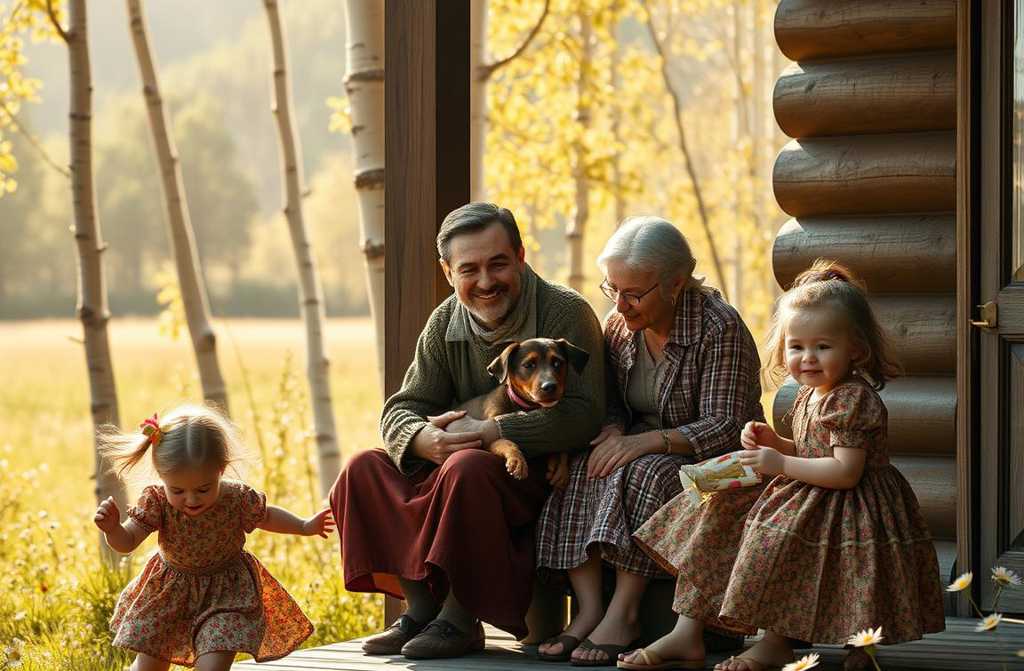
**The Doll**
Life in the village is lived in full view of everyone. There are few secrets, and those that exist dont last long.
Everyone knew everything about this couple. Theyd married by choicea good match, both tall, hardworking. Their well-kept home, which theyd rebuilt themselves, and the tidy yard, free of weeds and full of blooming flowers all summer, spoke for them. The young wife was always friendly, never one for gossiprespected for it. The husband, though, was a quiet man. But there are different kinds of quiet. Some men are silent but gentle at heart. Others are hardsometimes cruel. That was him. It ran in the family: his father and grandfather had been the same. Still, his harshness never touched his wife. He took on the hardest chores, drove her into town for new clothes without complaint, and never skimped. Best of all, he never drank. The village men used to invite himthey loved their alebut they stopped.
“Not for me,” hed say, and that was enough.
And of course, he never raised a hand to her. Some of the women envied her. She tried advising them not to accept beatings, but they wouldnt listen. “You just got lucky,” theyd say. The spiteful ones, green with envy, would add, “Who knows how long thatll last? Maybe one day youll be running to the hayloft too.” She never answered. She pitied them, letting their husbands walk all over them.
But the couple had their own sorrow: four years married, and no children. Both healthy, yet still just the two of them.
One day, a neighbour begged them to take a puppyher spaniel had eight, and seven were already spoken for. The runt, a weak but sweet little thing, remained.
“Take her,” the neighbour urged. “Youll fatten her up, train her. A little bell of life in your yard.”
To his wifes surpriseshed been ready to say yes but feared his refusalhe agreed. And so, they got Doll.
No one could say who doted on her morehim or his wife. He taught her commands, carried her inside when it rained. When she grew, he built her a kennel. A good one, with a wooden floor. Trained her to sleep in it, though at night they let her roamshe always came back.
Then Doll got pregnant.
And thats when he showed his true colours. He hated her for it. Chained her up.
“Run off, and youre not coming back,” he warned.
The night came when Doll whelpedfour puppies, born in the kennel. They didnt hear a thing. Only in the morning, when he went to fill her water bowl, did he see them. He stormed back inside.
“Dolls turned our yard into a kennel,” he told his wife. “Four of them.”
“Really?” she exclaimed, delighted. “And not a sound! Let me see”
“See them before I drown them,” he said.
She froze. “Drown them? Puppies? What about Doll? You think she wont feel it? That shes got no instincts?” She fought back tears. “Ill ask aroundsomeone might want one”
But he was already outside. She followed. He hauled buckets from the well, filling a barrel. She crouched by the kennel, watching Doll nuzzle the four tiny bodies, and wept. Shed heard of thisdrowning unwanted littersbut never seen it.
She knew him well enough to know he wouldnt stop. She went inside, shut the doors and windows so she wouldnt see or hear.
Later, he came in. “They didnt feel a thing. Still blind. Buried them at the bottom of the garden.”
She swallowed. “And Doll?”
“Dunno. Didnt ask. Shouldve kept her inside.”
“Shes howling.”
“Shell stop. Maybe shell learn not to stray.”
Something in her cracked. Yes, village folk drowned litters all the timekittens, puppies. But why like this?
That day, she barely spoke to him. He muttered once:
“Sentimental nonsense. Whod feed them? Clean up after them? Or does that not matter?”
Dolls eyes brimmed with what looked like tears. Maybe others wouldnt believe it, but she saw them. And she felt guilty. Later, she noticed Doll would sit at the far end of the gardenright where hed buried them.
Doll whelped twice more. Each time, he drowned the pups and chained her for weeks. She never got used to it.
Slowly, his wife pulled away. Not enough to leavebut the warmth between them faded.
Then came the last straw. Doll was pregnant again, belly swollen, waddling. Too many pups this time. Autumn had come, and she barely left the kenneltoo cold.
But she never froze. One morning, he took his shotgun, scooped Doll under his arm, and walked to the pond.
He shot her before she could whelp.
Their elderly neighbourthe one whod given them Dollsaw it. She stood frozen, tears streaking her wrinkled face. As he passed, she whispered,
“What have you done, lad? Taken lives. Not just a doga mother and her unborn. Arent you afraid God might do the same to your children?”
He glared but said nothing. Who was she to judge? Her own house was full of strays, and she lived hand-to-mouth. Comparing children to pupsridiculous.
Yet her words stuck.
At home, he meant to tell his wife. Chose his words carefullyknew shed be upset. But she met him with news:
“I think Im pregnant.”
Joy swallowed everything else. Long-awaited, sudden.
“Get ready,” he said. “Were going to the hospital.”
They drove to the clinic. Three hours of tests, examinations, paperwork. Five weeks along. She braced for his impatienceshed taken so longbut hed have waited forever. Boy or girl, it didnt matter. Their child.
They talked constantly now, planning: a crib, toys, where to put everything. They itched to buy things early, but she believed in the old superstitionno purchases before the birth. He humoured her.
A month before the due date, she spiked a fever. Then the baby stopped moving. They rushed to the hospital late that night. The midwife took her in; he waited. Time crawled. Then stopped.
The doctor emerged. “We saved your wife. The baby was stillborn.”
He stumbled outside, blind with pain. Then rememberedhe hadnt even asked. He went back.
“Was ita boy or a girl?”
The young nurse looked sympathetic. “Let me check.” She returned. “A boy.”
He sat in the car and cried.
They let him see her. He dreaded her eyesand rightly so. Her face was gaunt, her gaze hollow. Hed seen eyes like that beforebut where?
Wordless as ever, he kissed her hand. “Its alright. Youll recover. Well have children. The doctor promised.”
She tried to smile.
For a year, they followed the doctors orders. She spent hours outside, still unsteady. He built her a daybed under the trees, brought crosswords from town. Shed loved them since working at the village libraryfew readers left, and shed read every book.
Every morning, he fetched fresh cream and cheese from a neighbour. Slowly, she recovered. Then one day, she met him at the door with a shy smile.
“I think its happened. Im pregnant.”
This time, they barely spoke of itafraid to jinx it. The village didnt know.
At eight months, contractions began. They called an ambulanceno risks this time. It saved her, but not the baby. A girl, stillborn in the back of the van.
A week later, he went back alone. Why? Two dead babieswhat was wrong? Should she have been hospitalised from the start?
The doctor was baffled. “We monitored her closely. No warning signs either time.”
Superstition crept in. Had someone cursed them?
He drove home terrified. His wife would be there, blank-eyed, unwashed, in her nightdresssomething shed never have done before. Locked inside, lost in grief. Two nights ago, shed said:
“Find a proper wife. Im barren.”
That wordbarrenstuck like a brand.
Hed snapped. “Think before you speak!”
But now he had to go home, coax her to eat, tell her the doctor said she was healthy. Would she hear him? Lately, she only pretended to listen.
What if the doctor was right? If it was a curse? Young and old believed in such things. TV went on about karma, psychics. How did you fight it?
He remembered giving a neighbour a lift. Her son-in-law in the city was deathly illdoctors were stumped. She was going to see a wise woman, Granny Agnes. Maybe hed been cursed?
Quietly, he took his wifes photothe one from the village halland drove to Granny Agnes. A queue lined the fence. He waited.
Inside, the cottage smelled of incense and lavender. Icons, lamplight. The old woman motioned him to sit.
Before he could speak, she said, “Your wifes not at fault. You took livesfor no reason.”
He exploded. “Liar! Ive killed no one! I came for help, and this is your trick?” He threw money at her and left.
Driving home, he passed the neighbour whod given them Dollwhod seen him shoot her. What had she said? That hed killed a mother and her unborn. That God sees all. Might do the same to him.
Horror dawned. It was true. He remembered Dolls eyes as he raised the gun. Shed known. Remembered her pups, buried in the garden. No wonder shed sat there so long.
Her eyes had been just like his wifes now.
He was a murderer. How to fix it?
The next day, he went to the cathedral. Didnt know which icon to pray to. An old woman tending candles took pity. He told her everythingDoll, the pups, his wife, the dead babies.
“What do I do?” he begged. “How do I atone? If sheif she doesnt survive, I cant either.”
“Light a candle for her,” the woman said. “Then help those in need. Theres a dog shelter nearby. They always need food, volunteers to walk the dogs. Animals are like usbetter than some. And bring your wife to church.”
“We dont even know the prayersjust Our Father.”
“God wont mind. Speak from the heart. He knows the truth anyway.”
That day, he went to the shelter. The dogs were aliveabandoned, rescued. Their eyes werent empty; they remembered, feared. Some might fear *him*. Why had he treated Doll that way? He didnt want a packbut there were other solutions.
The staff said they needed cleaning supplies, transport for vets. He gave his number, promised to help. For six months, he went regularly. Knew the dogs by name. They wagged tails when they saw himhed earned that.
Then he met Benny. A puppy, half-starved, found by the railway. One ear torn or cut off. A miracle hed survived. Benny wobbled when he walked, lopsided from the missing weight.
He drove Benny to the vet for bandage changes, told him storieshis army days, meeting his wife. Never mentioned Doll. When leaving, Benny would cower in his kennel, peering up with that one earhurt, hopeful.
One evening, he told his wife. Shed met him as usualmessy-haired, pale, in a crumpled dressing gown.
“Im bringing a guest tomorrow,” he said. “If you dont like him, say so. Ill take him back.”
She shrugged.
He fetched Benny, who seemed to know this was his chance. In the house, Benny gave a soft woof. His wife turned, then approached.
“Good Lord,” she whispered. “Wheres your ear?”
Benny licked her hands. She picked him up.
That night, they made him a bed in an old shoebox. By morning, hed migrated to her pillow. His wifes eyes were alive again. Benny licked her cheeks, bringing colour back. Then trotted over, sat, and looked up as if to say, *You love her too, dont you?*
He laughed. “Benny, walk time!”
“Go,” his wife said. “Ill make breakfast.”
He nearly weptshe hadnt said that in so long.
Words came to himabout animals being kindred spirits, how his wife had always known. How hed refused to see it, and what it had cost. Benny was a healer. Hed keep helping the shelter. Maybe take her there soon. And beneath it all, one truth: *Theyre living beings.*
That night, another surprise. She joined him on the sofa.
“Bennys sprawled across the bed,” she whispered. “Can I stay here?”
A month later, she whispered again: “Im pregnant.”
He froze.
“Dont be afraid,” she said, hugging him. “I believe in miracles now. In *you*. Youve changed. This time, itll be alright.”
She was right. A miracleor the curse lifted.
Hed begged forgiveness, helped where he could. Maybe God had listened.
Now two little girlstwinstoddle after Benny, his second chance. Proof that kindness is stronger than cruelty.
And he knowslifes easier without hardness. For everyone. Even the smallest creatures.