Diary Entry John Hollis
For thirty winters I made my home alone on the high moors above Northumberland, the wind my only companion, Ruths memory my only solace. Id not heard a voice but the east wind in all that time.
But all changed on a night when the snow drove sideways across the hills and the pine trees swayed under a might that could force the moor to submit. The kind of snow that cares nothing for memory or blood, that devours everything until even the bones shiver. I kept inside, as always, tended the fire in my stone hearth, and let the silence do its work.
It had been years since Id spoken aloud, not since Ruths funeral. I was fixed in my old wooden chair by the dying fire when the knocking came. At first I thought it mere windmaybe a branch loose from its trunk knocking the old stoneworkbut then I heard it again. Not wind. Not animal. Knuckles. Human.
In three decades, not once did anyone come up this far. Last time a man tried, I ended the visit with a musket ball in the thigh and the warning that Hollis Hill was not open to guests. But this knocking was desperate, not daring. I sat still, my body keen with the absence of company. My hands went through the old habitI took the shotgun, though I didnt bother to raise it. I opened the heavy oak door.
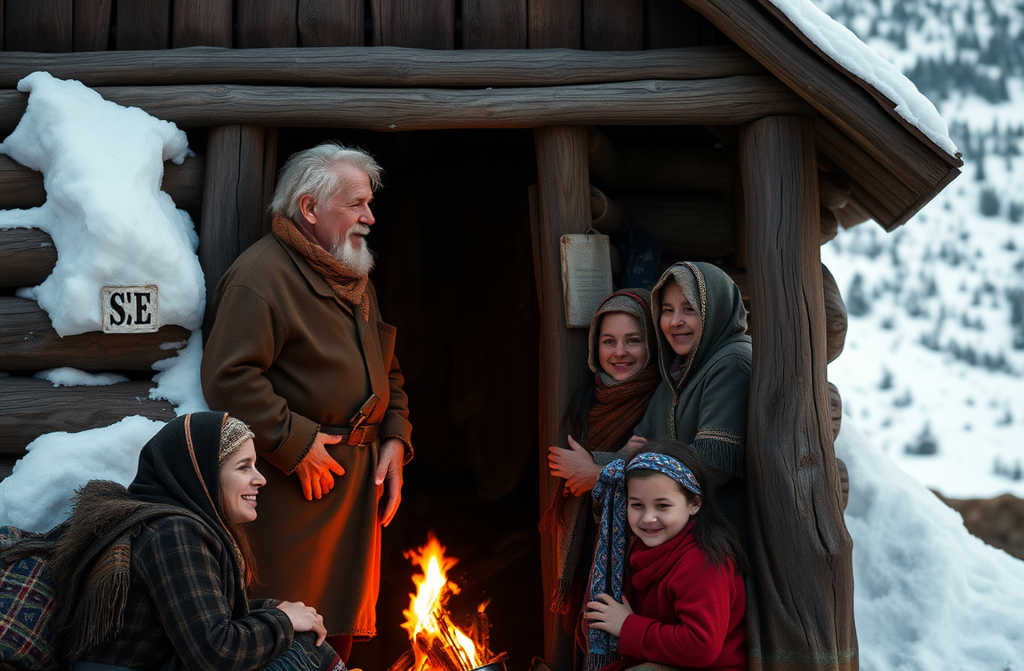
There they stood: ten women, wrapped in sodden blankets, hair stiff with frost, hunger carved into their faces but backs held ramrod straight. The one at their head, barefoot despite the snow, carried a bundle to her breastchild or wound, I couldnt say. She spoke, not in English, her voice all shiver and hope.
I didnt understand her words, but I understood what she wanted: shelter. So I stood aside and let them pass, one after another, barely lifting their gaze from the icy threshold. The youngest couldnt have been more than fifteen, the oldest my age or older. Some leaned on others, one limped, none made a sound.
I stirred the fire higher, put down the rifle, and did not crowd or question them. I gave the smallest some boiled watershe could barely hold the metal cup, her hands shook so. After Id shut the door on the wind, a deep warmth cracked through the shell that silence had made around me.
They said nothing of names that night, not amongst each other, not to me. They huddled by the flames, steam rising from blankets, their eyes haunted by old grief. I gave them my bed, sleeping by the door with my gun within arms reachnot out of fear of them, but of whatever might have driven them here.
What horror sends ten women into a blizzard, with no men, no weapons, nothing? The snowstorm continued through dawna thick white wadding upon the world. I watched them sleeping, thinner than they ought; the barefoot womans toes were split and raw. In Ruths old trunk, I found salves, socks, a heavy shawl.
She eyed the ointment warily when I offered it, clutching her bundle hard. Then I understoodthe bundle was a swaddled baby, quiet as stone. I left her the jar by the fire. By evening, shed taken it.
She tried to speak again that night, pointed from the child to the thatch above, then rested her hand on her own chest. Martha, she said. I blinked. Your name? She nodded. I tapped my own chest. John. The others listened, quiet, but something shifted then. The house felt less closed; the air, somehow, shared.
The next day, I cleared the storage shed, hung more blankets, patched what draughts I could. I made space, not just in my cottage, but in the shape of my life. I did not know how long theyd stay. I didnt ask.
Weeks passed, silent but full. Then one spoke. A sharp-jawed woman, scar on her cheek, dark eyes like pooled ink. She called herself Eliza. Her English was rough, but her tale clear. Their villagegone. Soldiers, fire, death. The rest of themexiles, no weapons, no men, no hope but to run. Theyd lost sisters to cold and buried them under frozen stones without tears, for there was no time for tears.
I listened, sacrificed one of my goats and cooked a stew, fed them all until their shivers eased. That night, Bible in handfirst time in yearsI let the sound of its pages fill the room rather than the words. One girl, Daisy, crept close and watched me turn each page. Gods words, I murmured, uncertain shed follow. She reached out, touched the leather binding, then nodded. Safe. Not sure if she meant the book, the house, or me. The word stayed with me, warming my chest after she returned to the fire.
Gradually, the womens health improved. The baby was named Henrywhen he finally cried, they said it was a sign he would live. I built a new stove, and soon there was laughter and the smell of baking bread.
But peace never lingers in places men want power more than decency. Soon, footprints appeared in the snow. Hoof-marks, boot-prints, circling two days running.
I slept lightly that night, oiled the rifle, watched the woods. Martha brought the child, asked if something was wrong. Were being watched, I said. I saw no need to pretend. The wind had eased, carrying a new, heavy stillnessthe sort Id learned to dread.
Come morning, printscloser nownot just skirting the woods, but by the smokehouse, turning away. I knew the type: men who enjoy fear, who expect no resistance, least of all from an old widower and ten ragged women. But they didnt know me. Not yet.
I warned Eliza and Martha, showed them the tracks. We might be visited soon. I offered no comfort but the truth. The women didnt flinch. We stand or disappear, Eliza said. I nodded. Then we stand.
We prepared as best we could: shoring up shutters, stacking logs against low windows, laying traps with wire and tin to snare boots, not rabbits. Martha and the older women sharpened kitchen knives, kept them at hand. The younger ones drew water and filled every vessel we had, in case the pump failed.
That night, we took shifts at watch. At midnight, I dreamed not of Ruth for the first time in years, but of boots snuffing out our outside fires. I awoke to real smokeout, not in. The smokehouse was ablaze, days of labour ruined. Three men sat their horses at the edge of the clearing.
No words, no threats, just watching as the flames claimed my work. One raised a hand in a mock salute and turned away, a clear warning: well be back. Marthas face was streaked with angry tears, not fear. Theyre testing us, I said, to see what well do. She held the baby tighter. Eliza set her jaw. Let them come.
I admired their mettle, but knew the odds: us, unarmed, alone, miles from the nearest hamlet or constable. Still, I had stood my ground before. I taught the women to reload, let them handle the shotguns heft. I gave Martha my old revolverthree bullets leftand showed her how to aim. Only if you have to, I said, but if you must, do not miss. She nodded, calm.
We survived the next days, but the baby fell illfever burning his tiny body. Martha sobbed, fearing the worst. No medicine. But I recalled Ruths wayswillow bark boiled for tea, pine tar rubbed into the boys chest. Martha watched each movement like it was holy. By morning, the fever broke, and hope returned, fragile as thawing ice.
But soon, another warning. A flint-tipped arrow in the snow by the doornot ours, but English, with a black feather. It meant other eyes were on us now. Eliza paled. My own people. They think we betrayed them running. Now they watch too. The world outside wanted none of us.
I tossed the arrow into the fire and sat heavy. No rescues coming, I told the room. Martha sat beside me and laid a hand on my knotted fingers. You saved us once. I looked at her, truly. At the strength that could mother a child in exile. All I did was open the door. And your heart, she answered. I could not reply.
That night, as I finally prayed for the first time in years, not for myself but for them, the quiet was broken by the crunch of snow. At the door, a boybarely twelve, shiveringoffered a parcel of dried meat, then vanished into the dark. A warning, a gift, or a test? We set the food aside, too wary to touch it, all too aware it might be a message or a trap.
Snow fell again, blanketing the world, hiding the scars of burnt timber. More tracks camefive or six, circling, testing our defences. We were being surrounded.
Inside, something changed among the women. When Martha found a small, mysterious feather amongst the blankets, she threw it into the fire without a word. That night, we all stayed close, sharing songssnatches of old English hymns, broken with whispers of what must have been their girlhood tunes. It came almost like peace, until a scream tore the quiet.
A womans voice outside, high and terrified, desperate for help. A trap, I knew it at oncebut Martha had leapt for the door. It could be real, she wept, but I held her back. We argued. In the end, I went alone.
Out in the snow, I found herbarefoot, bleeding, clothes torn. Theyre coming! she moaned, when an arrow struck the tree beside my head. I pulled her to safety just as two more arrows thudded into the snow. I fired once, dropping a shadowed figureonly later realising it was a boy. Thats the cost out here.
I dragged the injured woman insideher name was Kate. She spoke little before fading into silence. Brothers, she whispered, and died that night. I buried her by the remains of the smokehouse, unmarked save for a stone. No hymns, no words, just the shovel and my own breath in the hard air.
The days blurred. Then, upon the step, a bundle of fursand in it, a newborn girl, warm, silent, white feather tucked beside her. Message: youve taken and youve saved. You are watched and judged. I took the girl in, called her Elsie, and by that night, she slept beside Henry as though they were siblings from the start. We grewtwo babies, ten women, one old man.
The real siege came at last: dozens on the ridge at dawn, torches flaring, their leader an old rival from my youth, face painted red and black. The cottage never was a fortress, only as strong as bodies and will. We braced for the worsttraps set, knives hidden, water drawn, and stories passed in whispers among us.
It came with the blizzard. The war cry, sudden and shrill. The men came in a mass; the house shook. The defenders met themElizas carving knife found a throat, Martha wielded a log like a club, the children were hidden below, the fight lasted all night. By sunrise, the attackers fled; our home stood, battered but unbroken. I knelt in the wrecked snow, breathless, as inside, for the first time in thirty years, my cottage held the noise of many lives.
We tended our woundedEmmett, a traveller taken in days before, survived by miracle and Daisys steady hand. The women wept, not in fear, but for all they had survived.
Afterwards, something softer took hold. The children, the two babies, the motherless boy who had fought like a manCune, as they called himthese remnants began to rebuild, not hide. The women stitched, baked, the men chopped wood and rebuilt the roof. Elsie and Henry giggled as the snow melted through the eaves, their voices clear as church bells.
With spring, word spread. More children camefifteen, walking up from the valley, orphans, battered, but alive. The women met them at the door with food and warmth; I asked no names, nor stories, only motioned them in and said, Youre home.
We built a schoolhouse togetherchildren lugging stones, women tying bundles of withies for the roof, men carrying beams. Cune painted the signjust stars, for he couldnt write. We need books, said one girl, Seiya. Well find them, I promised, and meant it.
Some nights the children played at snowball fights, the laughter odd in my ears, but healing. Peace, though, always had to be guarded. Tobias, once a visitor to lend a hand, taught them to carve, to fish, to trap. Bertram, a stern man in a long coat, rode up once to press for “papers”officialdom, always catching up even in the wilds. He saw us, listened to the children and the women, noted the order of chores, and in the end, left with a nod. This place isnt on any map. Lets keep it that way.
That spring, we traded in towncloth for ribbons, books for smoked fish, boots handmade and tales shared by the fireside. The mountain became more than a refuge; it grew into something larger than myself: a community.
Bit by bit, lives unfurled. Children learned, grew, played. Women laughed, not behind hands, but out loud and within earshot of men. We had weddingsbabies. Not of my blood, but of my heart.
Years passed. My hair silvered further each spring. The cottages aged, but they did so with grace, their stonework proof against storm and sun alike. The children became adults and taught the next lot; Cune, now a young man, taught the youngest what it was to survive, and even more, to love and be loved.
Once, sitting with Tobias under the old pine, he asked if it was a village now. No, I said, shaking my head. Family. He smiled, as we watched the children playing below.
And as the years rolled on, grief for Ruth softened. For in opening my door that snowbound night, Id unwittingly opened my heart and let in all the pain, noise, work, and love family brings.
If you ask me what the lesson isafter these long, hard yearsit is this: solitude protects, but never warms. Heartbreak scars, but does not have to end a mans life. The world, in its coldness, can crack open and let light pour in, if only you let others share your fire.
Who would have thought the wild silence of a Northumbrian winter would be broken, and in doing so, sound so much like home?






