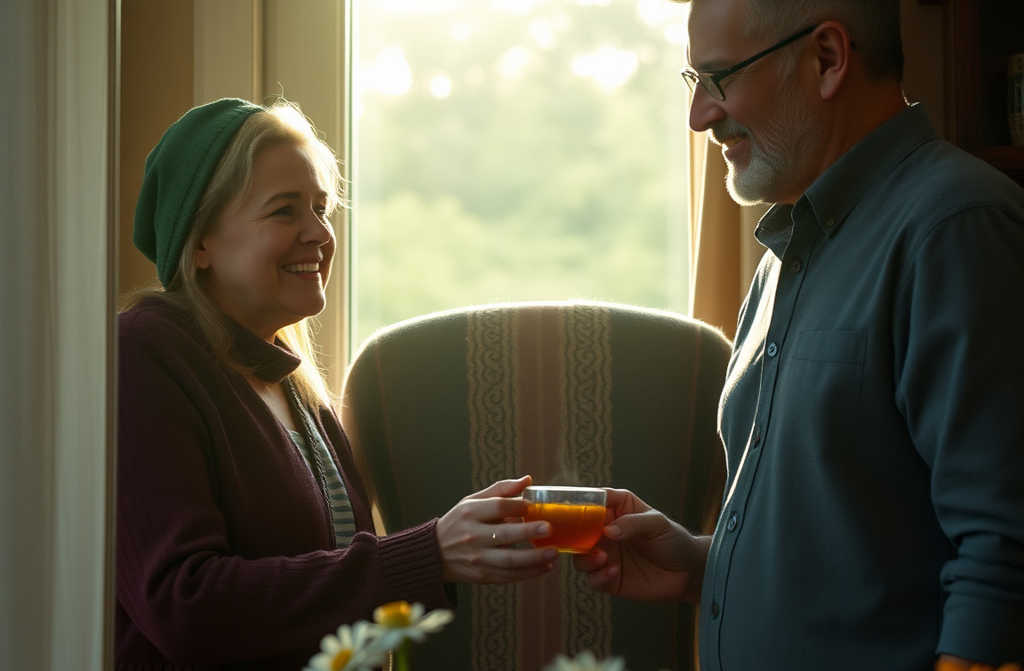
Go on now, back to your village, muttered Charles, not bothering to look at her.
His voice was steady, yet frosty and drained, hollowed out by years of silent, blunted evenings and layered disappointments that had etched frost across every feeling.
He stood by the misty window, gazing into the dull November sky, all greys and cloud-blanketed hush. Suddenly, Jane saw itall of it. Absolutely everything.
No apologies, no pleading, no tearsnothing would turn time back or mend what was broken. The door to their shared life clicked shut, softly and irreversibly.
Thats it? Just like that? she asked, her words breaking the hush of the living room, where laughter once skipped off the walls.
What did you expect? Theres nothing left for us. You can see that yourself.
He turned awayan act of dismissal sharper than any cruel word. He cut himself from her as a tailor trims away the last scrap.
Jane slumped onto the old sofas edge, burying her face in her palms. There were no tears leftthe well had run dry long before.
Everything in her had leaked out over the years, drop by drop, diluted in the bitter tea of isolation shed sipped while sitting opposite the person whod become a shadow.
She remembered, oddly vivid, how fifteen years ago hed stood in that very same window frame, sunlit and dappled gold, smiling into her eyes:
Jane, we can do anything. Together, well see through any storm.
She had believed it, so fiercely she would have marched off with him to the worlds edge.
Now those promises seemed an afterimagefaded and pale as an old photo left too long in the sun. Only the outlines of what shed once felt survived.
All right, she said simply, and in that word was not defeat, but a strange new calm. If thats what youve decided.
The calm words masked a sharp twist inside, a knot of old pain drawn tighter.
She rose, moving with an absent dancers grace, fetching the battered suitcase from deep in the wardrobe.
There wasnt much to pack; Jane, after all, had never carved a place for herself here. She lived always with one foot out the door, the ghost of herself in borrowed roomsa guest drifting through someone elses dream.
Footsteps scuffed down the hall. Lily stood in the doorwayher daughter, nearly grown, a university freshman, eyes clouded with worry that gnawed old certainties.
Mum, whats going on? Why do you look like that?
Oh, nothing much, Jane lied, her smile lopsided and weak. Im just going home. To granddad. To the village. Just for a while.
Lilys brow furrowed; tears sprung in her clear eyes, ready to spill at the least nudge.
Is Dad on at you again? Can’t you two ever stop?
It doesnt matter. Janes voice was a sigh. Sometimes leaving is the only way to not disappear completely. Ill be back. Well talk. I just I need to be alone, for now.
Charles did not appear to see her off. Didnt say goodbye. Only the kitchen clock dared interrupt the flat, troubled silence of the flat.
A final slam of the rank-smelling foyer door and Jane dragged her small treasures down the stairs, out and into the swaddling dark of whatever was next.
The train rolled all through the nightdipping and swaying, as if lulling away far-off sorrows. Jane pressed her forehead to the cold glass, gazing out but seeing nothing.
Beyond the panel, forests passed in indistinct shadows, empty platforms winked in and out of darkness, each bearing a huddled coat or two.
Silence and chill; the world outside matched the echoing cavern within. She was as empty as her suitcaseinside, only the dust of used-up yesterdays.
Across the compartment sat a young woman holding a sleeping child, and a student lazily plucked chords on his guitar.
Their words washed over Jane, indistinctexcept one, thrown sideways into her awareness: Home.
She, too, was going home. This timeforever. Away from the thundering city that had never been truly hers.
Old memories unspooled: the great cherry tree outside her childhood window, her mother kneading dough in the kitchen, her father returning from the apiary with honey in a stone jar.
Those times pulsed with the peace of warm ovens, the steady faith that tomorrow would be bright. How long since she had felt such plain, abundant joy?
At dawn, the small station welcomed her with the familiar, smoky tang of coal and wet grass. Everything looked smallerdoll-sized houses, pinched lanes, the corner shop with its washed-out sign.
Or had she grown too large for this miniature world?
Yet when Jane saw her father waiting at the iron gate, something melted inside, broke open; tearswarm and saltyfound their way down her cheeks.
He looked up, scanning his daughter and her humble suitcase, breathing out the wisdom of years:
So youre home. At last.
Yes, Dad. Im sorry.
They stood there for ages, saying nothing, just holding handsthe storm-worn, finding safe harbour.
The first weeks shambled by in odd, dreamlike dazes. Jane had to relearn how to liverelearn simple, necessary things.
She rose early each morning, helped her father in the garden, shopped at the busy little market, cooked cottage pie following her mothers dog-eared recipe.
Then shed park herself by the sitting room window, gazing out on the empty lane. Not a London rush-hour jam, not the constant shrill of work calls. Just cockerels crowing, cars passing in a fog of exhaust, wind curling round hedges.
Sometimes shed sit for hours by her old wardrobe, dresses still swinging in placea fingertip gliding over faded cotton.
Everything was distant and yet close, time wound strangely into a ball.
On the third day, their neighbour Mrs. Taylor knocked roundhearty and relentless, clutching a tin bowl brimming with potatoes freshly dug.
Jane! Youre back at last. The city too much for you, eh?
Oh, it went past me, Jane offered a pale smile.
Dont mope, love. Lifes thick and bright here, real life! The schools got a new head, widower from Guildford, still young enough, running a proper ship. Well introduce you, shall we?
Jane brushed her off, embarrassed.
Not yet, really. I need to find my feet again.
Oh, dont be daft, Mrs. Taylor waved her off. People here deserve a chat, and you need more than this endless solitude.
A week later, Jane found herself at the school anywayhelping in the office, untangling ledgers and battered files. Thats where she met Michael.
He was tall, spare, with grey eyes and a steady, gentle voice. The sort whose real strength is silentrooted, not brash.
You must be Jane Smith? he said, offering the ghost of a smilethere was a warmth in it, soft and unexpected. Mrs. Taylor says youre a dab hand with accounts. Were in a right pickle here.
Yes, she nodded, the tension easing from her shoulders, Ive done accounting for years. Ill sort it.
Excellent. Were in desperate need of someone reliable around here.
They talkedabout the school, the village, what was needed. Suddenly, Jane found she could breathe near this man.
No need to act, no more pretending. Just ease, like the space she remembered from childhood.
Winter snuck past, almost unnoticed. Jane slid into village life: helped at the school, rode with Michael for errands into the town.
During the long evenings, shed knit by the fire, wood logs crackling comfort.
Gradually, colour returned: the earthy perfume of new bread, the glow of a lamp, the cheerful snap of kindling.
Urban worries and bruises dissolved, inch by inch, into healing silence, replaced by a new sensehome, her own.
Lily called less often. First, only the odd video chat, her face pale and distant, until even those shrank to short messages:
Im fine, uni is busy, dont worry.
Jane didnt press for moreshe understood. Her daughter hovered between two worlds, two homes. Let her find her own way.
In the quietest hours, Jane sometimes recalled Charles. How, long ago, hed held her hand so tight. How, later, hed leave for work with only silent withdrawal.
Was he ever truly hers? Or had she merely loved her own painted idea of him, clinging to an illusion?
With every dawn in her old home, the answer clarifiedgently, fiercely.
Spring arrived in sudden, imperial fashion. Snow retreated, revealing dark, living soil; cocks crowed at first light, the breeze carried the scent of damp and something sweet, elusive.
Jane planted roses and bright stocks in the gardenher mothers old spring ritual. The act, simple and homely, stitched something vital and long-lost back into her soul.
Michael often appeared, hands full of stakes or nails, lending help casually.
One evening, with the sunset streaking the sky in peach and lavender, he said, not looking at her:
You know, Jane, I never thought Id stay here. After my wife died, I left. Swore Id never come back.
But here I am. Abandoned school, children who needed someone. Lifes funny like that.
The village keeps its eye on everyone, she said, planting another flower.
They can, so long as Im honest with myself.
He spoke it simply, with that unmistakable warmth that only those who have known pain and survived can carry.
For the first time in years, Jane felt that she was living, not merely enduringopen to the world, aware.
Not waiting for better days, but living in this one. Her hands smelled of earth, her hair of sweet wood smoke, her heart of gentle, returned peace.
At Trinity, the village threw a lively celebration. Remembering old hymn tunes, Jane was asked to join the church choir.
Timid at first, she tried to refuse, but Michael prodded her gently:
Your voice is clear, Janedeep. Let it be heard. Sometimes it feels like life itself sings through you.
After the concert, when the applause flooded the draughty village hall, she caught his gaze in the crowdsoft approval, something warmer beneath.
That warmth, that simple belonging, was what she had ached for, unknowingly, all this long while.
Summer blazed gold and hot. The entire village blossomed.
Jane and Michael travelled often to the nearby townsorting school paperwork, collecting supplies.
Long car rides often passed in easy, companionable silencethe kind that needs no filling.
Once, bumping down a dusty lane, Michael said, eyes fixed ahead:
You know, ever since you started at school, things feel different. Fresher. Youre like spring for all of us.
She blushed, looking away. Oh, dont flatter, Michael.
Thats not flattery. Just truth. Like the sunrise.
Her heart tightened, not in old pain, but with a shy, youthful awe. Who ever spoke of heran ordinary woman seasoned by griefwith such gentle honesty?
On her birthday, Jane was woken by the sharp ring of the gate bell. On the step stood a courier, arms full of extravagant red roses.
A small, spidery note was pinned to the stems: Forgive me. I was wrong. It may be too late. But if you wantcome back. I understand now. Charles.
Jane stood for a long time with the bouquet, breathing but not seeing.
The roses were lush and expensivejust like those gifts hed given in the past, ceremonial, for show.
That night, as Michael visited for tea, she handed him the roses without a word.
Looksomething from the past. Not sure what to do with them.
Maybe just let it go, he said, eyeing the red petals. If its come to find you, nows your time to choose.
Thats what Ill do. Thank you.
She left the flowers on the sill for two days, their thick scent saturating the air, before tossing them on the compost heap without a backward glance.
Autumn brought twirling leaves and a surpriseLily arrived, suddenly, suitcase in hand, changed, but always her daughter, pain in her eyes.
Mum can I stay a while? Its unbearable in the city now.
Of course, love. This is your home. Always.
That evening, wrapped in her old blanket, Lily confessed:
Dads with Alison now. But hes not happy, Mum. Always moody, and he told me, Its not what I imagined, not at all.
Jane shrugged, stoking the fire.
Its never any different, Lily. In the end, we all face the truth. You either accept it or live half-awake in a daydream.
Tears stung Lilys eyes, quiet and sharp.
All this time I hoped you and Dad would get back together. Now I look at you, here, and you really seem at peace, Mum. Happier.
I am, darling. Peace is the greatest happinessknowing someone waits for you, nothing more.
Winter dusted the fields with glittering, soft snow, as deep calm settled.
The house smelled of dried apples, pine and the outdoor fir, strung with glowing lights. Jane saw in the New Year huddled with Lily, her father, and Michael.
The table was simple but generous, outside the snow spun its midnight ballet.
As Big Bens chimes tolled twelve, Michael lifted his glass of homemade elderflower cordial:
A toastto never fearing a new start. At any age. Whatever the circumstance.
Jane looked at him, at her daughter, her fatherand it struck her, brilliant and true: this, here, was home.
Not the shiny London flat, not the clipped, hollow marriage, but right here, among honest hearts.
She smiled, a light and buoyant smile. Thank you, life. Thank you for every lesson. Youve set everything as it should be, like a wise gardener.
Two years swept by. Whispered half-jokes wound through the village: Soon therell be a wedding. Have you seen how Jane glows? Like shes twenty-five again.
Lily studied at the agricultural college nearby, grateful for weekends back, finding comfort she thought lost.
Michael became familysteadfast, patient, gently encouraging.
Jane now ran the school accounts, poured fresh energy into the village fetes.
And her cherry jam was legendaryher mothers forgotten recipe, revived.
She never mourned the years in the city. They were just a lesson, harsh but necessary.
Sometimes, in the early mornings, shed step outside, a mug of herbal tea warming her hands.
The sun would rise over shimmering fields, frost hemmed silver on the birch branches, and she felt itall of ita gift. A reward for daring to leave in order to find herself.
She remembered Charless parting words, hurled over his shoulder: Go on then, back to your village!
And in her heart, without hurt or blame, she answered, Thank you. If not for you, Id never have found my true place in this world.
Jane no longer searched for happinessit was something she built herself, from simple, timeless things: love, trust, work, and loyalty.
And every new day bloomed with a quiet, private miracle: simply living, breathing deep, daring to love and be lovedknowing, truly knowing, that this time it was real, and it was for always.





