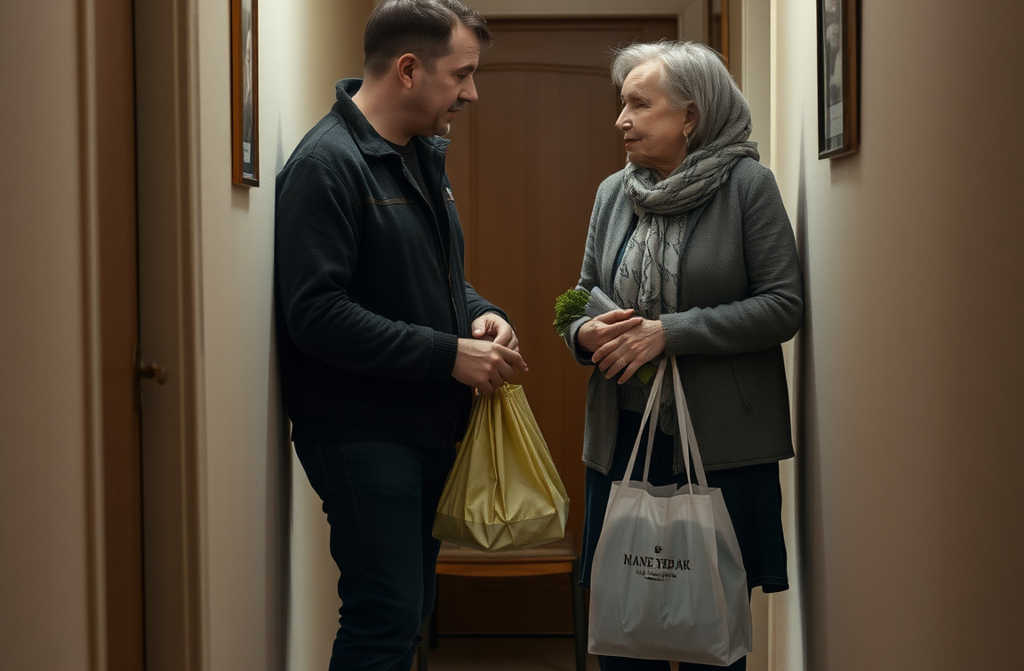
Signatures on the Landing Sergei paused by the row of postboxes in his block of flats, drawn not by the usual notices about water meter checks or missing cats, but by a new sheet of paper, pinned haphazardly as if in a hurry. Across the top, bold print read: “Petition. Action Needed.” Below, the surname from Flat 18, fifth floor, and a bulleted list of complaints: loud noises at night, banging, shouting, “breach of the peace,” “threat to safety.” A row of signatures was already taking shape at the bottom, some careful, others sprawling. He read it twice, though the message was clear on the first go. His hand automatically reached for a pen in his jacket, but Sergei paused. Not from disagreement, but because he hated being prodded. He’d lived in this block for twelve years and learned to stay out of these communal squabbles, like avoiding a draft. He had his own worries: long shifts at the garage, his mum after a stroke in another part of town, a teenage son who either sulked in silence for weeks or exploded over nothing. The stairwell was still, only the lift thudded somewhere above. Sergei walked up to the fourth floor, fished out his keys, but before unlocking his own door, glanced up the stairs. There, on the fifth, lived Mrs Valentine, mid-fifties by the look of her—sturdy, terse, always with a severe haircut and a heavy stare. She rarely said hello and answered as if you’d inconvenienced her. Mostly, Sergei saw her with shopping bags from Tesco Express, or an old mop as she scrubbed the landing by her door. Sometimes, true, odd noises came at night from her flat—a crash, a short scream, dragging across the floor. He checked the residents’ WhatsApp group only when necessary. Mostly, it was bickering about parking or rubbish chutes. But lately, there was only one topic. “Another racket at 2am! My lad was terrified!” “I’ve got a 6am start, I feel like a zombie. Enough’s enough.” “It’s not just banging—she’s shifting furniture, I heard her.” “Get the police in. The law’s the law.” Sergei just scrolled, never joined in. He wasn’t a saint. When a crash woke him at 3am, he lay there too, with annoyance rising in his chest. He wished someone else would deal with it, so next morning all he needed to read was: “Sorted.” That evening, he finally texted the chat: “Who’s collecting signatures? Where’s the form?” The reply came from Nina, chair of the residents’ association, first floor. “Pinned to the board downstairs. Meeting at mine, 7pm tomorrow—this has to stop before it gets worse.” Sergei put down his phone. Inside, an uncomfortable feeling stirred—reminiscent of those old parent-teacher evenings, when the decision was made before you arrived, and they just needed you for the tick-box. The next day, he met Mrs Valentine on the stairs. She was lugging two heavy bags, breathing in short bursts but stubbornly refusing to ask for help. Sergei took one anyway. “Don’t,” she snapped. “I’ll just carry it up,” he replied. She stayed silent right up to her door, then yanked the bag from his hand. “Ta,” she said—it sounded less like thanks, more like a note in a register. Sergei was about to leave, but heard, behind her door, a different kind of sound: laboured, human breathing, a moan. Mrs Valentine froze, key in the lock trembling. “You… all right?” Sergei asked, not sure why. “It’s fine,” she said, sharply, and closed up. He went back down, but that heavy, haunted noise lingered in his mind. Not music, not banging, but something wordless and real. A few days later, a note appeared taped to Mrs Valentine’s door. Sergei saw it on his way out with the rubbish: “STOP THE NOISE AT NIGHT. WE’RE NOT OBLIGED TO SUFFER.” The marker letters were thick with pressure. He stood there, looking at the note, its tape glinting like a raw wound. He remembered his own childhood, when the neighbours would scrawl on their door because Dad was drunk and yelling. Back then, Sergei hated not his dad, but the neighbours—who pretended nothing was happening, until whispers began. He climbed up to the fifth, pressed his ear to her door. Nothing. He didn’t ring. Carefully, he took down the note, folded it, and put it in his pocket. He binned it outside, not in the flat’s entrance, so no one else would see. Meanwhile, the WhatsApp group grew harsher. “She doesn’t care about anyone.” “People like her should be moved on. Let her live in a house on her own!” “Police said it takes a group complaint.” Sergei saw how quickly “noise” and “disturbance” turned into “people like her.” It wasn’t about a single night anymore. It was about someone cast as a problem. Saturday, he got home late from work. The lift stank of air freshener and cigarettes. On the fourth floor, he heard a dull thump from upstairs. Then another. Not DIY, but a fall. Then a woman’s strained voice: “Hold on… just a sec…” He climbed to the fifth. Under Mrs Valentine’s door a line of light burned. Sergei knocked. “Who is it?” The voice was taut. “Sergei, fourth floor. Everything—” The door opened on the chain. Mrs Valentine was in a dressing gown, red patch on her face from a damp hand. “It’s nothing. Go,” she said. A rasping groan came from inside. “Need a hand?” She looked at him as if he’d offered charity. “I’m fine. It’s under control.” “But—someone…” “My brother. Bedbound.” She said it all in a rush, cutting off follow-ups. “Go.” The door closed. Sergei stood on the landing, torn: one part of him wanted to leave, because she’d asked. The other wanted to stay—he already knew too much to pretend otherwise. He went home but couldn’t sleep. The word “bedbound” circled his mind. He pictured someone falling, being lifted, ambulances in the small hours, buckets of water, beds dragged. And neighbours below, listening, furious. He went to the meeting at Nina’s not out of nosiness, but shame—if he didn’t go, he’d regret it. By 7pm, a crowd mingled at her door: slippers, coats, all hushed, tension in the air. Nina arranged them in her small kitchen. The petition sat on the table, print-out of “quiet hours” by it, police numbers scribbled next to the kettle. “Here’s the thing,” Nina began, “we can’t go on like this. We have kids, jobs. I check my blood pressure every morning because I can’t sleep. We’re not against anyone, but there are rules.” Sergei noticed how neatly she said “not against anyone”—and how it relieved some faces. “I was up at two,” said a young mum from the sixth. “My baby had just gone down—then a crash, like a wardrobe toppling. I rocked him till dawn.” “I’ve got a father fresh out of hospital,” said a man in a tracksuit. “He can’t take stress. Every time he hears it, he thinks it’s a fire.” “We should call the police every time,” someone muttered. “Let them record it.” Sergei listened. It was all true. These weren’t made up. Their exhaustion was real. There was power in that. “So who’s actually talked to her?” Sergei asked. “I did,” said Nina. “She’s rude. Told me, ‘If you don’t like it, move.’ Slammed the door.” “She’s always like it,” the mum agreed. “As if we owe her something.” Sergei wanted to mention the brother, but hesitated. Was it his place to share? But silence was a choice too. “Maybe she’s got her own…” he began. “We all do,” Nina cut in. “Doesn’t mean we keep everyone up.” Just then, the doorbell went. Nina went to answer. Mrs Valentine stepped into the kitchen, in a dark jacket, hair brushed, holding a folder and her phone. Her face tense, but not afraid. “I assume I’m the topic,” she said. The room tightened, awkward as a packed lift. “We’re discussing the problem you’re causing,” Nina said. “I’m the problem,” Mrs Valentine echoed. “Fine. Let’s be clear.” She opened the folder, produced papers, a doctor’s note, receipts, her phone. “My brother. Disabled. First degree. Stroke. Can’t walk, can’t sit. Night-time incidents—he suffocates, falls out of bed, I have to lift him, or he’ll get sores. This isn’t ‘moving furniture.’ It’s me lifting a grown man heavier than I am.” Her voice was flat, iron in exhaustion. Sergei saw her hands—bruised, like someone used to heavy work. “Ambulance three times in a month. Here—see the calls, GP note. I don’t have to show you, but you’re acting as if I’m running all-night parties.” Someone coughed. The mum from the sixth looked away. “We didn’t know,” she said softly. “You didn’t ask,” Mrs Valentine shot back. “You wrote on my door, slagged me off in chat, wanted ‘action.’ What—want me to leave him on the stairs so it’s quieter for you?” “No one said that,” Nina flared. “But there are rules. No noise after eleven.” “Rules,” Mrs Valentine gave a tired half-smile. “All right. Want rules? Fine. I’ll call ambulance and police every time I lift him, and you can all witness it, sign.” “So we just put up with it?” asked the tracksuit man, voice cracking. Sergei saw he, too, was at the end of his rope. “I told you, my dad’s ill. I can’t listen to this every night.” “Think I can?” Mrs Valentine met his eye. “You think I like this? I want to sleep too.” A silence fell. Sergei felt the urge to say something, defuse—except there was no easy answer. Nina sighed, gentler now. “Mrs Valentine, you must see everyone’s struggling. If you’d warned us…” “Warned you? What—that my brother might die in the night?” Folder shut. “I don’t know how to ask for help. Never had anyone I could ask.” Sergei realised it was true. They lived near each other, yet never “near” each other. Just doors. “Let’s not shout,” Sergei said finally. His voice was rough. “We’ll tear ourselves apart, or try to manage, however badly.” All eyes turned to him. Sergei hated being centre stage, but it was too late to duck out. “I didn’t sign and won’t. It doesn’t fix things, it just creates enemies. But we can’t ignore the noise. People are genuinely suffering.” Nina pursed her lips. “So what do you suggest?” Sergei recalled standing on the landing at night, listening to that groan. “First, communication,” he said. “Mrs Valentine, if something urgent happens at night, could you post in the chat: ‘Ambulance’ or ‘Incident’? Not as an excuse, just so people know it’s not music or DIY.” “I shouldn’t have to,” she snapped, but then met his eyes. “All right. If I can.” “Second,” Sergei turned to the rest. “If you hear a crash, instead of texting ‘call the police,’ try her buzzer or knock. No accusations, just check. If no answer, then decide.” “What if she’s rude again?” the mum asked. “Then you know you did the decent thing,” Sergei said. “Important—for us, not for her.” Nina huffed, but didn’t object. “And also,” Sergei addressed Mrs Valentine, “maybe mats, rubber feet for furniture—move the bed from the wall? I could help, if you wanted.” She was silent, then: “Bed can’t move. Makeshift hoist’s fixed to the frame. But mats—maybe. Also… if anyone can sit with him an hour sometimes, so I can run to the chemist…” She trailed off. Someone shuffled. “I can do Wednesday,” the young mum said, blushing as if embarrassed to offer. “Mum can mind the baby, I’ll drop in.” “Me too,” the man muttered. “Not at night, but during the day, fine.” Sergei felt some of the tension ease, if only a bit. It changed shape, but didn’t go. Nina gathered the petition. “What about this?” Sergei eyed the familiar signatures, his own neighbour among them. “My view? Take it down. If anyone wants to complain, let them write individually, with dates. No more ‘action needed’ blanks.” “So you’re against order?” Nina’s stare was pointed. “I’m for order. But order shouldn’t be a club.” Mrs Valentine looked up. “Take it down. I don’t want to see my name signed against every time I come down.” Nina folded the paper slowly and put it away. Sergei wasn’t sure whether it was out of respect, or because public mood had shifted. People left quietly. On the stairs, someone tried joking, but it died in the air. Sergei and Mrs Valentine shared the landing. “You shouldn’t have got involved,” she muttered. “Maybe not,” Sergei said. “But I didn’t want this to turn into police and scandal.” “It’ll get there anyway—when he gets worse.” Sergei wanted to ask her brother’s name, but didn’t dare. Instead, “If it gets really bad at night and you need help lifting—knock. I’m here.” She nodded without looking. Next morning, the form was gone from the board. But a new message appeared in the chat: “Agreed: in urgent cases, Mrs Valentine will notify; please, no row at night. Help in daytime, schedule to follow. If you can volunteer, message me.” Sergei raised an eyebrow at “schedule.” Seemed a bit formal for their chaotic block. But soon messages came: people offering Monday, Friday, odd hours. Some stayed silent. The first night after, there was another bang. Sergei woke, chest tight. 02:17. Then a short WhatsApp—“Incident. Paramedic called.” No frills, no requests. He lay listening to doors opening upstairs, footsteps on the stairs. Imagined Mrs Valentine holding her brother, fighting to keep him alive. Annoyance was still there, but also something heavier, quieter. He ran into Nina in the lift the next morning. She looked crumpled. “So, another racket.” “Ambulance was round,” Sergei replied. “I saw. I didn’t know how bad she’s got it. But still—Sergei, I really can’t sleep. My heart.” He nodded. He couldn’t cure her heart. “Earplugs, maybe?” He knew how feeble that sounded. “Earplugs—what have we come to?” A week later, Sergei knocked on Mrs Valentine’s by day. He had a bag of rubber feet and a heavy mat he’d bought for the cause. She answered at once, as if expecting him. Inside, the flat smelled of bleach and something sour, hospital-like. In the bedroom, a thin man lay rigid on the bed, eyes open, face empty. Next to him, an improvised hoist built from belts and conduit. Sergei understood why the bed couldn’t move. He explained about the mats, tucked them carefully, hands tense from awkward lifting. Mrs Valentine watched closely, making sure he didn’t upset the hoist. “Thanks,” she said—this time, somehow differently. Sergei nodded. About to go, he heard a phone ring in the hall. Mrs Valentine answered, face hardening. “No, not now… Yes. No.” She hung up. “Social services. Two hours’ home help a week. And there’s a queue. I need every day.” He couldn’t answer—their “rota” was a patch, not a solution. That evening, someone posted in the chat: “Why should we help? It’s her family, her job. Paperwork and services exist.” Replies followed, some rude, some sympathetic. Sergei didn’t reply—tiredness rose inside, not at Mrs Valentine, but at how every human act quickly turned into an argument about fairness. A few days later, a new paper appeared downstairs: not ‘action’, but a neat table—days, times, volunteers. Mrs Valentine’s number at the bottom, with: “If urgent at night, will post in chat. If you can help lift or meet ambulance, let me know.” It hung straight. Sergei realised he disliked seeing this latest schedule as much as he had the petition, though for a different reason. The block had accepted: behind a door could be illness—or worse—but now it was spread-sheeted. One night the crash felt bigger. He went up. Mrs Valentine, not bothering with the chain, opened at once: “Help,” she said, briefly. Sergei stepped in, took off his shoes to not get in the way. Her brother lay gasping on the floor; together, they hauled him up, careful and slow, counting. Sergei’s hands trembled from the strain. Mrs Valentine didn’t cry, didn’t thank, just straightened his pillow and checked his air. Back on the landing, he heard a door below open—someone peered out, quietly, then retreated. No one else came, no comments. The block held its breath. In the morning, Sergei met Victor, the neighbour whose signature was first. “Look,” Victor said, not meeting his eye, “I signed, but, well—if I’d known…I wouldn’t have…” “I get it,” Sergei said. “Doesn’t matter now—what matters is what next.” Victor nodded, stubborn pride lingering. The compromise worked. Not perfectly, but it worked. Short nighttime alerts. Less venom at 2am, more at 10am when tempers cooled. Volunteers really did come, some only once. Nina managed her table, but occasionally left blank slots. Sergei noticed fewer random chats in the halls. More guarded hellos, everyone aware a single word could start trouble. No more paper threats, but lightness was gone too. Even moaning about the hallway bulb, people had a wary “let’s not go there” tone. One evening, Sergei came home and found Mrs Valentine by the lift, clutching a pharmacy bag and a flask. Her face was grey. “How’s he doing?” Sergei asked. “Still here,” she said. “Quiet today.” They rode up together. On the fourth, Sergei paused. “If you need anything, just bang on the door.” She nodded, then, quietly: “At the meeting—I didn’t mean…” She trailed off, waving a hand. “I know,” Sergei replied. The lift shut behind her. Sergei stood in the corridor, let himself in, took off his jacket, lined up his shoes. The flat was silent; his son on headphones, his mum on the phone asking when he was coming over. Sergei checked his phone, then the door to the stairwell. He thought about the papers we use to change people: one with angry signatures, one with names of those willing to help for an hour. The gap between them is less than the gap between neighbours living through a wall. That night, someone posted in the chat: “Thanks to everyone who helped today. Please—no public rows. DM if questions.” The message soon disappeared under the usual bin and lift talk. Sergei switched his phone off, put the kettle on. He knew another night might bring another crash. Now it wouldn’t just be his own sleep on his mind. It didn’t make him better. It just made him a participant.

Signatures on the Landing

Simon paused by the letterboxes, distracted from his post by a new notice on the usually uneventful communal boarda place typically reserved for reminders about boiler checks and escaped tortoises named Daisy. Someone, probably in a hurry, had pinned up a rather dramatic sheet of paper, all lopsided and urgent. At the top, in thick black marker: Collecting Signatures. Serious Measures Needed. Below, Mrs. Hancock from Flat 28 had listed a concise catalogue of offenses: late-night noise, banging, shouting, violation of quiet hours, and even endangering the safety of others. At the bottom, a snaking row of signaturessome methodical, some so wild they threatened neighbouring flyers.

He read it twice, even though it wasnt exactly subtle. Fingers automatically reached for the pen in his jacket pocket but Simon hesitated. Not that he disagreed; but hed always hated being nudged along by mob enthusiasm. After twelve years in this block in Croydon, hed learned to treat neighbourly feuds like brisk draughtsbetter not to get involved. He had his hands full: a job fixing boilers, awkward shifts, his mum still wobbling through physiotherapy in Lewisham, and a teenage son who alternated between epic sulks and random emotional explosions.

The stairwell was eerily peacefulonly the lift overhead gave a muted thud before trundling away. Simon took the steps up to the fourth, fished out his keys. But before he unlocked his door, he peered up the next flight. Flat 28. Mrs. Hancock. Fifty-something, solid as a post, always in a severe pixie cut and with an expression like shed just bitten a lemon. She almost never greeted anyone first; when she replied, it always sounded as though youd interrupted an epic doctorate thesis on fencing. Simon mostly saw her lugging bags from Sainsburys or scrubbing her bit of the landing. Occasionally at night, odd noises leaked from her flat: bangs, a sudden yelp, as if someone was dragging a chest of drawers over concrete.

He only checked the blocks WhatsApp group when necessary; mostly it was complaints about parking or when someones bin bag split in the hall. But lately, the entire chat revolved around Hancocks flat:

Another racket at 2am! My boy was terrified!

I start at sixI look like an extra in a zombie film. Enoughs enough.

Its not banging, its her moving furniture again. I heard her last Tuesday!

Time to get the police. There are rules for a reason.

Simon scrolled by silently. He wasnt blamelessat 3am, when yet another crash had him bolt upright, he did get that familiar red-hot rage in his chest, the childish wish that someone else would sort it out and hed just wake up the next morning to: “Sorted it, mate.”

That evening, he caved and sent a short message to the group: Whos organising the signatures, then? That paper in the hallwhere is it?

The reply came swiftly from Mrs. Newton, the chair of this particular circus, Flat 12: Noticeboard by the front door. Were meeting at mine, 7pm to discuss. Need to sort it before its too late.

Simon put his phone away, an unwelcome school-meeting feeling stirring inside him: when everyones already made the decision, but youre needed to smile and tick the box.

The next day, he ran into Mrs. Hancock on his way up. Two heavy shopping bags bit into her hands, her breathing uneven, but she refused to admit defeat. Simon took one from her grip, ignoring her terse Thats not necessary.

Course it is, he told her, as they trudged upward together.

Nothing was said until she reached her landing. She jerked the bag from him.

Thanks, she clipped, as if registering him for attendance, not gratitude.

Simon was about to leave when, through her just-opened front door, he caught a strange noiserough breathing and a low groan, barely human.

Everything alright? he blurted, no idea why.

Its fine. She shut the door fast.

Back on his own landing, Simon couldnt shake the sound from his head. Not the usual crash, not even the muffled TV. Something altogether heavier and raw.

A couple of days later, a new note was taped to Mrs. Hancocks door. ENOUGH NOISE AT NIGHT. ITS UNACCEPTABLE. Scrawled with the thick impatience of someone running out of patience, or permanent marker. Simon stopped. The tape glistened like an accusation. He remembered, suddenly, how as a kid their neighbours used to leave angry notes when his dad went on a bender, singing sea shanties until dawn. Simon hadnt even hated his dad as much as he hated the neighbours for pretending not to noticeright up until the whispers started.

He climbed to Flat 28, paused to listen. Silence. He didnt buzz. Just peeled off the note and folded it, slipping it into his pocket. He binned it down the road, not in the shared bins. Let nobody else see it.

Meanwhile, online, the chat was getting bloodthirsty.

Shes doing it on purpose, not a care for anyone.

We need to evict. She can live in a cottage somewhere.

Neighbourhood officer said: group complaint needed.

Simon watched with a shiver how quickly noise and disturbance became one of those peopleas if the problem stopped being the hours, and became the person.

That Saturday he got in late: the lift stank of air freshener and stale cigarette smoke. On the fourth floor, a thud from above, then another. Not DIYmore like someone collapsing. Then a womans voice, choked: Hold on… coming

Simon jogged to the fifth. Mrs. Hancocks spyhole gleamed; a strip of light under the door, bright and intrusive. He knocked.

Who is it? Edgy.

Simon. From below. Is everything

She cracked the chain. Dressing gown, red patch on her cheek like shed just washed her face in cold water.

Its handled, then tried to shut him out.

He heard the groan again.

Need a hand? He couldnt help himself.

For a moment, she looked at him as if hed offered her a fiver on the street.

No. Under control.

Someone in there

My brother. He cant get up. Stroke. Hes bedbound. She fired it all out in one lump, as if chopping the conversation short. Night.

Door shut.

Simon stood outside, torn between leaving (because she told me to, case closed) and hanging about (because, now I know, I cant suddenly not). Eventually he left. But lying awake, all he could picture was what bedbound really meant: the falls, the ambulances, the late night wrestling of beds and bodies. Meanwhile, everyone below listening and fuming.

When Mrs. Newtons meeting rolled around, Simon knew he had to gonot out of nosiness, but because, somehow, hed be ashamed not to. At seven, the crowd squeezed into her kitchen: slippers, winter coats, that just popped down for milk look. The mood: sullen church hall.

On the table: the signature sheet, a printout of council noise regulations, and the local constables business card.

Look, Mrs. Newton began, we cant just put up with this. Weve got work, weve got kidsIm measuring my blood pressure every morning. No ones against people, but there are rules.

Simon noticed how smoothly shed inserted not against people, and saw some visibly relax.

A tired mum from the sixth piped up, At two a.m., Id just got Evie down, and thenbang! Like a wardrobe falling through the ceiling. Rocked her till dawn.

My dads recovering from surgery, chimed in a bloke in a tracksuit. Cant have any stress. Hears a loud noise and thinks theres a fire.

Ring the police every single time! someone said. Build a case.

Simon sat back. No one was making it up: the exhaustion was real, and with it, a certain blunt justice.

Anyone actually talked to her? Simon asked.

I tried, Mrs. Newton replied. She was rude as you like. If you dont like it, move! Slammed the door.

Shes always like that, the sixth floor neighbour added. As if we owe her!

Simon wanted to mention her brother, but wasnt sure it was his to share.

Maybe shes got he started.

We all have something! Newton retorted. But we dont stomp around at midnight.

The doorbell interrupted. Mrs. Hancock stood in the kitchen doorway, all severity and shiny folder, phone clutched like a shield. Tense, but not scared.

I take it Im the topic? she declared.

The kitchen shrank.

Were discussing the situation, Mrs. Newton said, Youre disturbing everyone.

Im disturbing you? Mrs. Hancock nodded softly. Fine. Listen then. She slid her folder onto the table, produced printoutsmedical statements, NHS forms, call logs. This is my brother, Michael. Bedbound, post-stroke. I turn him every two hours to avoid soreslonely night work, not a disco. Hes heavier than I am. I call for ambulances every week. Herelook, see the calls. Im not obliged to share my life story, but you accused me of running a nightclub.

A cough. The mum on six looked at her feet.

We we didnt know, she muttered.

Because nobody asked, Hancock snapped. You stuck angry notes to my door. You tore into me on WhatsApp. Wanted actionwhat does that mean? You want me to dump him on the landing so its quieter?

Nobodys saying that! Newton bristled, But there are lawsafter eleven, theres meant to be silence.

Law, Mrs. Hancock actually laughed. Fine. Ill dial the police and ambulance every time, you can sign off that I wasnt rearranging furniture but trying to keep my brother breathing. Want to be witnesses?

So were just meant to suffer? Tracksuit Mans voice cracked, and Simon got iteveryone here was ground-down. My dads sick too. I cant keep listening to banging all night!

And you think I can? Mrs. Hancock shot back. You imagine I like this?

Silence. Simons mouth was dry; surely someone could defuse this, but the solution wasnt obvious.

Newton exhaled, subdued now. We just wish youd warned us

What? Warned you my brother might die at 2am? She snapped her folder shut. Im not good at asking for help. Or explaining myself.

Simon suddenly understood: they lived close, yesbut they lived as doors, not neighbours.

Lets not scream about this, he croaked out. Well either explode ormaybe, just maybefind a way to make it bearable.

They all stared at him. Simon hated being centre stage, but too late to duck out.

I never signed the petition, he continued, and dont intend to. It doesnt solve anythingjust picks a new enemy. But pretending theres no noise isnt fair either. Health matters to everyone.

Mrs. Newton pursed her lips. So your plan is?

He pictured that landing at 2am.

First: lets use the group chat better. Mrs. Hancockif its one of those nights, just post: ambulance or emergency. No need for details, just so people know.

She snorted, but paused at Simons look. Alrightwhere possible.

Second: if anyone hears a big crash, maybe ring her or knockgentlybefore calling the police? Offer help instead of starting a war. If she slams the door, fineat least we tried.

What if shes rude? asked Mum-from-six.

Then youll know you did the right thing, Simon said. That counts. For you, not her.

Mrs. Newton grunted, but didnt argue.

And maybe, Simon went on, think about padding. Rubber mats, felt tips for chair legs, move the bed a bit from the wall. I can help, if needed.

Mrs. Hancock considered. The beds stuckhomemade hoist attached. But mats maybe. And if anyone could sit with Michael for half an hour in the day, so I can fetch medicine

She trailed off. A shuffle in the kitchen.

I can do Wednesdays, Mum-from-six offered, blushing. Mum can watch the baby. Just an hour.

Same, said Tracksuit Man, awkward. Just not at night.

Simon felt the tension ease just a littlechanging shape, but not quite gone.

Mrs. Newton eyed the petition. What about this?

Simon looked at the page of signatures, including Mr. Brown from across the hall who always smiled in the lift. Best take it down. If anyone truly needs to complain, let them do it personally, for specific datesnot this something must be done business.

So youre anti-order now? Newton retorted.

No. Just think order shouldnt involve a bit of wood with nails in.

Mrs. Hancock met his eyes. Please remove it. Im tired of seeing my own name on a hit-list.

Newton carefully folded the petition awayout of some blend of respect, practicality, and a hunch that the crowd was no longer sure whose side to take.

People left the meeting in silence. Someone tried a joke about the bins, but it died halfway up the stairs. Mrs. Hancock happened to walk down with Simon.

Shouldnt have stuck your oar in, she told him.

Maybe not, he said, but was hoping to avoid this place ending up in a tabloid.

She gave a tired snort. Only a matter of time. When he gets worse

He wanted to ask her brothers name, but let it go. Instead, he said, If you need help in the nightknock. Im right below.

She nodded, not looking at him.

Next day, no more petition. Instead, a new chat message from Mrs. Newton: Agreed: Mrs. Hancock will notify us if things get loud for emergencies. Please dont start arguments at night. If anyone can help during the week, message me to arrange a rota.

Simon blinked at the word rota. Too official for their haphazard little blockyet within an hour, names filled up: Mondays for Mr. Simmonds, Fridays for Zoe from the third. Some people remained silent, of course.

The very next night, the banging resumedSimon woke at 02:17. A minute later, the group pinged: Emergency. Ambulance on way. No emojis, no pleading.

He lay there listening to distant commotion, picturing Mrs. Hancock wrestling her brother back onto the bed, trying not to panic or give up. He was irritated, but now layered with a different, heavier emotion.

In the lift the next morning, Mrs. Newton sagged against the wall.

Well, that was another noisy night, she said.

There was an ambulance, Simon replied.

I saw. I didnt know it was like this. ButSimon, I havent slept this week. Honestly. My chest cant take it.

He nodded; her heart was outside his remit.

Earplugs, maybe? he suggested, though it sounded feeble.

She almost smiled. Earplugs. Thats the state of things, is it?

Some days later, Simon came round with a shopping bag of rubber pads and a sturdy doormat. Mrs. Hancock opened promptly. The flat reeked of Dettol and a faint acidic tang. In the bedroom: the brotherthin, still, eyes open but unfocused. A makeshift hoist bolted to the bed. Now Simon understood her earlier refusal to move it.

Mat can help with the thuds, he explained. Sticky feet for the stools, too.

I try to put the bowl down gently when cleaning him, she said. But arms She held out cracked hands.

They fitted the mat, padding and adjusting without a word. When finished, her Thank you came softer, not schoolmistress-hard.

A phone rang. Mrs. Hancock answered, went pale.

No, cant manage that Yes, I understand. No, nothing available? She hung up. Social careoffered a carer for two hours a week, and theres a waiting list for that. I need help every day.

Simon had no answer: the neighbours rota was a stop-gap, nothing more.

Evening messages now bristled: Why should WE help? Its her responsibility, her family. She should do it properly. Others shot back about funding cuts and council hell; the argument went around in circles.

Simon read, but didnt contribute. The weariness was about the whole world, not simply up to Mrs. Hancock to fix.

A new sheet soon appeared in the hallwayno longer a demand for measures, but a grid for the helping rota. Days, times, volunteers names. At the bottom, Mrs. Hancocks number, and a note: Emergencies at night: Ill post in chat. If you can help or meet the ambulance, please say. The sheet was pinned straight for once.

Simon felt a familiar twisthe hadnt liked seeing the complaint, but this, too, sat uncomfortably. As if the block, at last, admitted disaster as something you booked by appointment.

One night, the worst happened. A massive crash overhead, then Hancocks muffled cursesaimed at fate, not the neighbours. Simon knocked; she didn’t bother with the chain this time.

Help, she whispered, voice hollow.

He left his shoes neatly at the door, entered. Together, they got Michael off the floor and back to bed with slow, careful lifts, timing their breaths. Afterwards, Hancock merely rearranged the pillow, checked her brothers chest, and that was that.

Out on the landing, Simon caught a glimpse of a neighbour peeking through the door, then vanishingnobody offered help, but there were no more angry shouts either. The block held its breath.

The morning after, Mr. Brown from next door awkwardly avoided Simons gaze.

I signed the complaint, you know, he confessed, because honestly I was fed up. But if Id known I probably wouldnt have

Doesnt matter now, Simon interrupted. What matters is what happens next.

Brown nodded, but his stubborn pride lingered.

It was a working compromise: at night, the chat sometimes pinged a blunt Ambulance or Fallen. The anger faded with each explanation. Some people still visited Hancock by day; others helped once, then disappeared. Mrs. Newton ran the rota, though now and then it fell a bit thin.

Simon noticed a change: small talk in the corridors had cooled. Greetings became tentative, like everyone was waiting for a spark. Notes and threats vanished, but so had the old cheeriness. Even discussions about the hallway bulb were tinged with, Lets not kick off again.

One evening, returning home, Simon found Mrs. Hancock by the lift, holding a pharmacy bag and a small flask. She looked worn-out, skin grey.

Hows he doing? Simon asked.

Alive. Quiet so far. They ascended together.

On the fourth, Simon paused.

If you ever need anythingjust knock.

She nodded, then surprised herself: At the meeting the other night I didnt mean to unload on everyone

She gestured, lost for words.

I know, Simon replied.

He let himself in, dumped his jacket, placed his shoes on the mat. Inside his own silent flat, son on headphones, mum calling from Lewisham to ask when hed visit.

He glanced at his phone, at the door behind which the stairs led upwards, and thought about the sheets of paper that could remake a blockone against, one for, and the tiny, awkward gap between neighbours with only a single wall between them.

Later, in the chat, someone posted: Cheers to the helpers today. Please, lets keep personal stuff private. Message me direct if you want on the rota. It was swiftly buried by mundane arguments about recycling and the broken lift.

Simon put his phone aside and put the kettle on. He knew hed likely wake to another thud in the night. But now, the sleeplessness came with another awareness: he wasnt the only one awake. It didnt make him heroicjust, finally, involved.


Rate article
Add a comment

;-) :| :x :twisted: :smile: :shock: :sad: :roll: :razz: :oops: :o :mrgreen: :lol: :idea: :grin: :evil: :cry: :cool: :arrow: :???: :?: :!:

Signatures on the Landing Sergei paused by the row of postboxes in his block of flats, drawn not by the usual notices about water meter checks or missing cats, but by a new sheet of paper, pinned haphazardly as if in a hurry. Across the top, bold print read: “Petition. Action Needed.” Below, the surname from Flat 18, fifth floor, and a bulleted list of complaints: loud noises at night, banging, shouting, “breach of the peace,” “threat to safety.” A row of signatures was already taking shape at the bottom, some careful, others sprawling. He read it twice, though the message was clear on the first go. His hand automatically reached for a pen in his jacket, but Sergei paused. Not from disagreement, but because he hated being prodded. He’d lived in this block for twelve years and learned to stay out of these communal squabbles, like avoiding a draft. He had his own worries: long shifts at the garage, his mum after a stroke in another part of town, a teenage son who either sulked in silence for weeks or exploded over nothing. The stairwell was still, only the lift thudded somewhere above. Sergei walked up to the fourth floor, fished out his keys, but before unlocking his own door, glanced up the stairs. There, on the fifth, lived Mrs Valentine, mid-fifties by the look of her—sturdy, terse, always with a severe haircut and a heavy stare. She rarely said hello and answered as if you’d inconvenienced her. Mostly, Sergei saw her with shopping bags from Tesco Express, or an old mop as she scrubbed the landing by her door. Sometimes, true, odd noises came at night from her flat—a crash, a short scream, dragging across the floor. He checked the residents’ WhatsApp group only when necessary. Mostly, it was bickering about parking or rubbish chutes. But lately, there was only one topic. “Another racket at 2am! My lad was terrified!” “I’ve got a 6am start, I feel like a zombie. Enough’s enough.” “It’s not just banging—she’s shifting furniture, I heard her.” “Get the police in. The law’s the law.” Sergei just scrolled, never joined in. He wasn’t a saint. When a crash woke him at 3am, he lay there too, with annoyance rising in his chest. He wished someone else would deal with it, so next morning all he needed to read was: “Sorted.” That evening, he finally texted the chat: “Who’s collecting signatures? Where’s the form?” The reply came from Nina, chair of the residents’ association, first floor. “Pinned to the board downstairs. Meeting at mine, 7pm tomorrow—this has to stop before it gets worse.” Sergei put down his phone. Inside, an uncomfortable feeling stirred—reminiscent of those old parent-teacher evenings, when the decision was made before you arrived, and they just needed you for the tick-box. The next day, he met Mrs Valentine on the stairs. She was lugging two heavy bags, breathing in short bursts but stubbornly refusing to ask for help. Sergei took one anyway. “Don’t,” she snapped. “I’ll just carry it up,” he replied. She stayed silent right up to her door, then yanked the bag from his hand. “Ta,” she said—it sounded less like thanks, more like a note in a register. Sergei was about to leave, but heard, behind her door, a different kind of sound: laboured, human breathing, a moan. Mrs Valentine froze, key in the lock trembling. “You… all right?” Sergei asked, not sure why. “It’s fine,” she said, sharply, and closed up. He went back down, but that heavy, haunted noise lingered in his mind. Not music, not banging, but something wordless and real. A few days later, a note appeared taped to Mrs Valentine’s door. Sergei saw it on his way out with the rubbish: “STOP THE NOISE AT NIGHT. WE’RE NOT OBLIGED TO SUFFER.” The marker letters were thick with pressure. He stood there, looking at the note, its tape glinting like a raw wound. He remembered his own childhood, when the neighbours would scrawl on their door because Dad was drunk and yelling. Back then, Sergei hated not his dad, but the neighbours—who pretended nothing was happening, until whispers began. He climbed up to the fifth, pressed his ear to her door. Nothing. He didn’t ring. Carefully, he took down the note, folded it, and put it in his pocket. He binned it outside, not in the flat’s entrance, so no one else would see. Meanwhile, the WhatsApp group grew harsher. “She doesn’t care about anyone.” “People like her should be moved on. Let her live in a house on her own!” “Police said it takes a group complaint.” Sergei saw how quickly “noise” and “disturbance” turned into “people like her.” It wasn’t about a single night anymore. It was about someone cast as a problem. Saturday, he got home late from work. The lift stank of air freshener and cigarettes. On the fourth floor, he heard a dull thump from upstairs. Then another. Not DIY, but a fall. Then a woman’s strained voice: “Hold on… just a sec…” He climbed to the fifth. Under Mrs Valentine’s door a line of light burned. Sergei knocked. “Who is it?” The voice was taut. “Sergei, fourth floor. Everything—” The door opened on the chain. Mrs Valentine was in a dressing gown, red patch on her face from a damp hand. “It’s nothing. Go,” she said. A rasping groan came from inside. “Need a hand?” She looked at him as if he’d offered charity. “I’m fine. It’s under control.” “But—someone…” “My brother. Bedbound.” She said it all in a rush, cutting off follow-ups. “Go.” The door closed. Sergei stood on the landing, torn: one part of him wanted to leave, because she’d asked. The other wanted to stay—he already knew too much to pretend otherwise. He went home but couldn’t sleep. The word “bedbound” circled his mind. He pictured someone falling, being lifted, ambulances in the small hours, buckets of water, beds dragged. And neighbours below, listening, furious. He went to the meeting at Nina’s not out of nosiness, but shame—if he didn’t go, he’d regret it. By 7pm, a crowd mingled at her door: slippers, coats, all hushed, tension in the air. Nina arranged them in her small kitchen. The petition sat on the table, print-out of “quiet hours” by it, police numbers scribbled next to the kettle. “Here’s the thing,” Nina began, “we can’t go on like this. We have kids, jobs. I check my blood pressure every morning because I can’t sleep. We’re not against anyone, but there are rules.” Sergei noticed how neatly she said “not against anyone”—and how it relieved some faces. “I was up at two,” said a young mum from the sixth. “My baby had just gone down—then a crash, like a wardrobe toppling. I rocked him till dawn.” “I’ve got a father fresh out of hospital,” said a man in a tracksuit. “He can’t take stress. Every time he hears it, he thinks it’s a fire.” “We should call the police every time,” someone muttered. “Let them record it.” Sergei listened. It was all true. These weren’t made up. Their exhaustion was real. There was power in that. “So who’s actually talked to her?” Sergei asked. “I did,” said Nina. “She’s rude. Told me, ‘If you don’t like it, move.’ Slammed the door.” “She’s always like it,” the mum agreed. “As if we owe her something.” Sergei wanted to mention the brother, but hesitated. Was it his place to share? But silence was a choice too. “Maybe she’s got her own…” he began. “We all do,” Nina cut in. “Doesn’t mean we keep everyone up.” Just then, the doorbell went. Nina went to answer. Mrs Valentine stepped into the kitchen, in a dark jacket, hair brushed, holding a folder and her phone. Her face tense, but not afraid. “I assume I’m the topic,” she said. The room tightened, awkward as a packed lift. “We’re discussing the problem you’re causing,” Nina said. “I’m the problem,” Mrs Valentine echoed. “Fine. Let’s be clear.” She opened the folder, produced papers, a doctor’s note, receipts, her phone. “My brother. Disabled. First degree. Stroke. Can’t walk, can’t sit. Night-time incidents—he suffocates, falls out of bed, I have to lift him, or he’ll get sores. This isn’t ‘moving furniture.’ It’s me lifting a grown man heavier than I am.” Her voice was flat, iron in exhaustion. Sergei saw her hands—bruised, like someone used to heavy work. “Ambulance three times in a month. Here—see the calls, GP note. I don’t have to show you, but you’re acting as if I’m running all-night parties.” Someone coughed. The mum from the sixth looked away. “We didn’t know,” she said softly. “You didn’t ask,” Mrs Valentine shot back. “You wrote on my door, slagged me off in chat, wanted ‘action.’ What—want me to leave him on the stairs so it’s quieter for you?” “No one said that,” Nina flared. “But there are rules. No noise after eleven.” “Rules,” Mrs Valentine gave a tired half-smile. “All right. Want rules? Fine. I’ll call ambulance and police every time I lift him, and you can all witness it, sign.” “So we just put up with it?” asked the tracksuit man, voice cracking. Sergei saw he, too, was at the end of his rope. “I told you, my dad’s ill. I can’t listen to this every night.” “Think I can?” Mrs Valentine met his eye. “You think I like this? I want to sleep too.” A silence fell. Sergei felt the urge to say something, defuse—except there was no easy answer. Nina sighed, gentler now. “Mrs Valentine, you must see everyone’s struggling. If you’d warned us…” “Warned you? What—that my brother might die in the night?” Folder shut. “I don’t know how to ask for help. Never had anyone I could ask.” Sergei realised it was true. They lived near each other, yet never “near” each other. Just doors. “Let’s not shout,” Sergei said finally. His voice was rough. “We’ll tear ourselves apart, or try to manage, however badly.” All eyes turned to him. Sergei hated being centre stage, but it was too late to duck out. “I didn’t sign and won’t. It doesn’t fix things, it just creates enemies. But we can’t ignore the noise. People are genuinely suffering.” Nina pursed her lips. “So what do you suggest?” Sergei recalled standing on the landing at night, listening to that groan. “First, communication,” he said. “Mrs Valentine, if something urgent happens at night, could you post in the chat: ‘Ambulance’ or ‘Incident’? Not as an excuse, just so people know it’s not music or DIY.” “I shouldn’t have to,” she snapped, but then met his eyes. “All right. If I can.” “Second,” Sergei turned to the rest. “If you hear a crash, instead of texting ‘call the police,’ try her buzzer or knock. No accusations, just check. If no answer, then decide.” “What if she’s rude again?” the mum asked. “Then you know you did the decent thing,” Sergei said. “Important—for us, not for her.” Nina huffed, but didn’t object. “And also,” Sergei addressed Mrs Valentine, “maybe mats, rubber feet for furniture—move the bed from the wall? I could help, if you wanted.” She was silent, then: “Bed can’t move. Makeshift hoist’s fixed to the frame. But mats—maybe. Also… if anyone can sit with him an hour sometimes, so I can run to the chemist…” She trailed off. Someone shuffled. “I can do Wednesday,” the young mum said, blushing as if embarrassed to offer. “Mum can mind the baby, I’ll drop in.” “Me too,” the man muttered. “Not at night, but during the day, fine.” Sergei felt some of the tension ease, if only a bit. It changed shape, but didn’t go. Nina gathered the petition. “What about this?” Sergei eyed the familiar signatures, his own neighbour among them. “My view? Take it down. If anyone wants to complain, let them write individually, with dates. No more ‘action needed’ blanks.” “So you’re against order?” Nina’s stare was pointed. “I’m for order. But order shouldn’t be a club.” Mrs Valentine looked up. “Take it down. I don’t want to see my name signed against every time I come down.” Nina folded the paper slowly and put it away. Sergei wasn’t sure whether it was out of respect, or because public mood had shifted. People left quietly. On the stairs, someone tried joking, but it died in the air. Sergei and Mrs Valentine shared the landing. “You shouldn’t have got involved,” she muttered. “Maybe not,” Sergei said. “But I didn’t want this to turn into police and scandal.” “It’ll get there anyway—when he gets worse.” Sergei wanted to ask her brother’s name, but didn’t dare. Instead, “If it gets really bad at night and you need help lifting—knock. I’m here.” She nodded without looking. Next morning, the form was gone from the board. But a new message appeared in the chat: “Agreed: in urgent cases, Mrs Valentine will notify; please, no row at night. Help in daytime, schedule to follow. If you can volunteer, message me.” Sergei raised an eyebrow at “schedule.” Seemed a bit formal for their chaotic block. But soon messages came: people offering Monday, Friday, odd hours. Some stayed silent. The first night after, there was another bang. Sergei woke, chest tight. 02:17. Then a short WhatsApp—“Incident. Paramedic called.” No frills, no requests. He lay listening to doors opening upstairs, footsteps on the stairs. Imagined Mrs Valentine holding her brother, fighting to keep him alive. Annoyance was still there, but also something heavier, quieter. He ran into Nina in the lift the next morning. She looked crumpled. “So, another racket.” “Ambulance was round,” Sergei replied. “I saw. I didn’t know how bad she’s got it. But still—Sergei, I really can’t sleep. My heart.” He nodded. He couldn’t cure her heart. “Earplugs, maybe?” He knew how feeble that sounded. “Earplugs—what have we come to?” A week later, Sergei knocked on Mrs Valentine’s by day. He had a bag of rubber feet and a heavy mat he’d bought for the cause. She answered at once, as if expecting him. Inside, the flat smelled of bleach and something sour, hospital-like. In the bedroom, a thin man lay rigid on the bed, eyes open, face empty. Next to him, an improvised hoist built from belts and conduit. Sergei understood why the bed couldn’t move. He explained about the mats, tucked them carefully, hands tense from awkward lifting. Mrs Valentine watched closely, making sure he didn’t upset the hoist. “Thanks,” she said—this time, somehow differently. Sergei nodded. About to go, he heard a phone ring in the hall. Mrs Valentine answered, face hardening. “No, not now… Yes. No.” She hung up. “Social services. Two hours’ home help a week. And there’s a queue. I need every day.” He couldn’t answer—their “rota” was a patch, not a solution. That evening, someone posted in the chat: “Why should we help? It’s her family, her job. Paperwork and services exist.” Replies followed, some rude, some sympathetic. Sergei didn’t reply—tiredness rose inside, not at Mrs Valentine, but at how every human act quickly turned into an argument about fairness. A few days later, a new paper appeared downstairs: not ‘action’, but a neat table—days, times, volunteers. Mrs Valentine’s number at the bottom, with: “If urgent at night, will post in chat. If you can help lift or meet ambulance, let me know.” It hung straight. Sergei realised he disliked seeing this latest schedule as much as he had the petition, though for a different reason. The block had accepted: behind a door could be illness—or worse—but now it was spread-sheeted. One night the crash felt bigger. He went up. Mrs Valentine, not bothering with the chain, opened at once: “Help,” she said, briefly. Sergei stepped in, took off his shoes to not get in the way. Her brother lay gasping on the floor; together, they hauled him up, careful and slow, counting. Sergei’s hands trembled from the strain. Mrs Valentine didn’t cry, didn’t thank, just straightened his pillow and checked his air. Back on the landing, he heard a door below open—someone peered out, quietly, then retreated. No one else came, no comments. The block held its breath. In the morning, Sergei met Victor, the neighbour whose signature was first. “Look,” Victor said, not meeting his eye, “I signed, but, well—if I’d known…I wouldn’t have…” “I get it,” Sergei said. “Doesn’t matter now—what matters is what next.” Victor nodded, stubborn pride lingering. The compromise worked. Not perfectly, but it worked. Short nighttime alerts. Less venom at 2am, more at 10am when tempers cooled. Volunteers really did come, some only once. Nina managed her table, but occasionally left blank slots. Sergei noticed fewer random chats in the halls. More guarded hellos, everyone aware a single word could start trouble. No more paper threats, but lightness was gone too. Even moaning about the hallway bulb, people had a wary “let’s not go there” tone. One evening, Sergei came home and found Mrs Valentine by the lift, clutching a pharmacy bag and a flask. Her face was grey. “How’s he doing?” Sergei asked. “Still here,” she said. “Quiet today.” They rode up together. On the fourth, Sergei paused. “If you need anything, just bang on the door.” She nodded, then, quietly: “At the meeting—I didn’t mean…” She trailed off, waving a hand. “I know,” Sergei replied. The lift shut behind her. Sergei stood in the corridor, let himself in, took off his jacket, lined up his shoes. The flat was silent; his son on headphones, his mum on the phone asking when he was coming over. Sergei checked his phone, then the door to the stairwell. He thought about the papers we use to change people: one with angry signatures, one with names of those willing to help for an hour. The gap between them is less than the gap between neighbours living through a wall. That night, someone posted in the chat: “Thanks to everyone who helped today. Please—no public rows. DM if questions.” The message soon disappeared under the usual bin and lift talk. Sergei switched his phone off, put the kettle on. He knew another night might bring another crash. Now it wouldn’t just be his own sleep on his mind. It didn’t make him better. It just made him a participant.
Grateful to Fate for Our Breakup In her third year at university, Marianne met Nik, quite by chance, when he came to visit his cousin at their student halls. Tall, slim, and handsome, he immediately caught her eye—her heart skipped a beat for reasons she didn’t yet understand. At first, she didn’t quite realise it was love at first sight. “Wow, he’s good-looking,” flashed through her mind as he approached with a smile and offered his hand. “Nik,” he said, nodding slightly. “And you are?” She felt a bit shy. “Marianne…” she replied, meeting his striking blue eyes. He noticed her lovely gaze. After their brief introduction and a friendly conversation, Nik asked as he left, “Marianne, fancy going to the cinema tonight? I’ll come by for you.” “I’d like that,” she answered demurely, trying not to show her excitement. From that night on, they started seeing each other. Nik was three years older, always a gentleman—flowers for every date, thoughtful little gifts now and then. Marianne quickly learned he came from wealth. His father held a senior position at the local council, his mother was an economist. Nik didn’t hide his privileged upbringing, and though Marianne sensed he liked to show off, she brushed it aside. “What about your parents?” he eventually asked. “My parents? Just ordinary country folk—I was born in a village. Dad’s a tractor driver, Mum works at the post office. I love them dearly, they’re such kind and caring people.” He raised his brows. “How do you manage at university? Must be tough on your parents, I doubt they have much spare cash.” “I’m on a scholarship! I worked hard in school to earn my place.” “Impressive. My dad paid my way through uni. Took care of his only son, good man. We have family holidays abroad all the time,” Nik went on. Anyone could see that Nik liked to brag about his family’s money, but lovestruck Marianne paid no mind. She listened intently as he told stories of their big house, impressive guests, and his father’s influential friends. Nik became her entire world; she pictured no life without him. Quietly, she mapped out their future: “Nik and I will marry… two clever children, a boy and a girl,” she mused, dreaming up names. One evening, after agreeing to see a film together, Nik didn’t show. These were the days before mobiles, so Marianne waited anxiously, but he didn’t arrive. Four days later, he finally resurfaced. “What happened? Weren’t you well?” she worried. “It’s nothing. I saw you chatting away with Igor, all smiles.” “We’re in the same study group! We were just talking, that’s all!” she tried to explain. “How am I to know that? You two looked awfully cosy. Probably been seeing each other for ages,” he smirked. “Nik, I’ve told you—there’s no one but you I want.” “Whatever—let’s break up. And don’t come looking for me. I can’t be dealing with a girl who’ll chase after me,” he said, with a mocking edge. The ground seemed to vanish beneath Marianne. She was devastated. She wanted to explain once more, but in the end decided: “No point justifying myself—I’ve done nothing wrong. Why should I beg? If that’s his decision…” She couldn’t fathom why Nik had ended things so coldly. Little did she know, it was her background. Nik’s cousin had told his mother about Marianne. “Pretty and kind, this Marianne, but she’s a country girl, her parents are just farmers,” the cousin laughed, as Nik’s mother’s frown deepened. Storm clouds gathered at home that evening as Nik walked in. “What’s the matter, Mum? What have I done?” “Let’s discuss who you’ve been seeing. A village lass whose parents are paupers? What were you thinking? Drop her—she’s not our sort. What would your father’s friends say? We didn’t raise you for some farmer’s daughter,” she finished, her voice icy. Nik understood, but didn’t know how his mother found out about Marianne. He’d suspected she might react exactly like this, although he genuinely liked Marianne—she was softer, more honest than any posh girl he knew. But he recognised his parents would never accept her. If he didn’t end it, his mother would—and who knew what trouble that would bring. He felt sorry for Marianne. After that, Nik and Marianne never crossed paths again. Slowly, her broken heart healed and she settled down. She finished her degree, found a job in the city. There, a colleague named George noticed her—older by a couple of years, he took an instant liking. Though several of the office women flirted with him, George kept to himself, never rising to their innuendo. He was courteous and kind, nothing more. “One day, may I walk you home after work, Marianne?” he ventured over lunch. She looked surprised. “Are you serious, George?” “Entirely. Why, do you mind?” “Not really… but they say—” “You mean that I’m impossible to flirt with?” he laughed. “Truth is, I noticed you right away. I think we have a lot in common.” They started dating, then married. Both sets of parents chipped in to buy them a flat in the city. Both families helped where they could. Marianne’s dream of a boy and a girl came true—she gave birth to two children, raising them with plenty of love (with help from doting grandparents). George proved to be the best father and husband—devoted to his beautiful wife and children. When their son turned seven and was ready for school, tragedy struck. Marianne’s childhood home burned down, and her parents were lost in the fire. Grief-stricken, she travelled back to the village alone—George was busy with a work inspection that week, so his mother watched the children. “I’ll manage, George, it’s only for a few days… I’ll return straight after the funeral. We can go back together later.” At the market town, Marianne got off the bus. She’d need a taxi for the last leg, or perhaps a lift from a neighbour. Her mum always said villagers could be found by the shop. Approaching the shop, she barely noticed a black BMW. A large, portly man stepped out and came towards her. “You’ve not changed, Marianne—still as lovely as ever. Don’t you recognise me?” She looked closer—it was Nik. “Of course, Nik. Hello.” She hurriedly tried to bring the conversation to a close. Gone was the slender boy she remembered; he’d put on weight and was hardly recognisable. “You’ve changed!” she remarked, surprised. “Yes—got a bit broader. My wife’s cooking is hard to resist. I’ve got two daughters now. What about you—married, kids?” “Yes, I’ve a loving husband and two children. We live in the city. I’m in the village for family reasons,” she mentioned her loss, but Nik didn’t even offer sympathy. He had other things on his mind. “Shall I give you a lift? We could catch up in the café—share a bottle of wine?” “And what about your wife? It isn’t proper for a married man to go drinking with another woman,” she chided. “My wife? Oh, she’s not an obstacle—nothing for her to worry about,” he smirked. “She’s got it easy at home; she’ll cope.” Marianne made her excuses, saying her brother would be picking her up. Left alone, she breathed a sigh of relief. “Thank you, God, for letting Nik and I part ways. How cynical he’s become, no respect for his wife, even after she’s given him children—so ungrateful. Nik never truly loved anyone but himself.” Her thoughts turned to George—his warm and gentle eyes, full of love for her and their children. “Thank you, fate, for bringing George into my life,” she said softly. “People say you shouldn’t meet those you once loved—old feelings might resurface. But sometimes, such meetings remind you how lucky you truly are to be with the right person.”