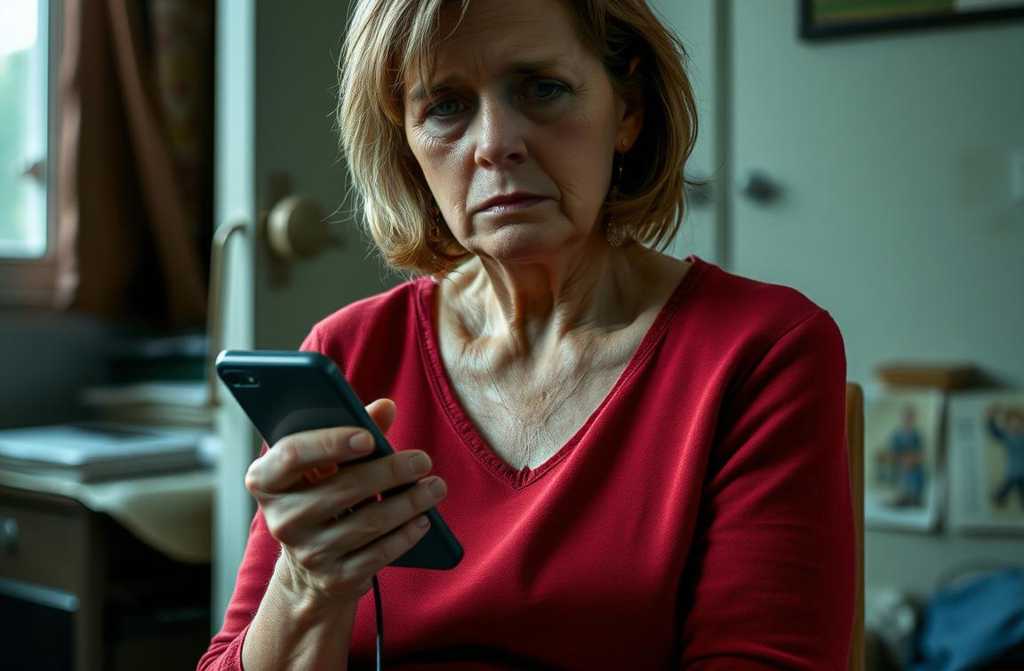
You’re in the Way,” Said My Sister Before She Stopped Answering My Calls

“You’re in the way,” her sister said, and stopped answering her calls.

“You’re in the way,” said Olivia into the phone, and Nina felt a chill run down her spine. “We want to live our own lives, understand?”

“Liv, but I” Nina began, but her sister cut her off.

“Don’t call me ‘Liv.’ I’m forty-five, I have my own family, my own life. And youre always on the phone, complaining, asking for one thing after another.”

“But were sisters!” Ninas voice trembled. “Weve always helped each other.”

“Helped?” Olivia scoffed. “Who helped whom, I wonder? When did you ever help me? When I had problems with Victor, where were you? When Alex ended up in hospital, did you even visit once?”

Nina tightened her grip on the phone. A lump formed in her throat.

“I was working then, you know that. And besides, I had my own”

“You, you, you!” Olivia snapped. “Its always about you. Your blood pressure, your nerves, your awful neighbours. But when other people have problems, suddenly youre too busy.”

Nina sank onto the worn-out sofa and shut her eyes. Tears trickled down her cheeks.

“Liv, why are you being like this? Were family.”

“Yes, family. But that doesnt mean I have to listen to your complaints every single day. I have enough on my plate already.”

“Fine, I know I can be… clingy sometimes. But right now, Im really struggling. After the divorce, I”

“Enough!” Olivia cut in sharply. “You divorced a year ago, and youre still moaning about it. Have you got nothing else to talk about besides your misery?”

Something inside Nina broke. Forty-two years theyd been more than sisterstheyd been best friends. Olivia was three years younger but had always seemed stronger, more decisive. Since childhood, Nina had run to her with every problem.

“Liv, please dont be angry. Ill call less, just dont speak to me like this.”

“Dont call less. Dont call at all,” Olivia said coldly. “I need time to think. We all do.”

“What do you mean, ‘we all’?”

“Victors tired of your calls too. The kids complain that Aunt Ninas always crying down the phone.”

That hurt the most. Alex and Katie, the niece and nephew she adored, for whom shed bought gifts for every occasion, whose birthdays shed celebrated with homemade cakes.

“The kids said that?”

“Yes. Alex asked me yesterday, ‘Mum, why is Aunt Nina always sad? Did something happen to her?'”

Nina bit her lip. She had cried often during calls with her sister. But was that so wrong? Wasnt it safe to be vulnerable with the person closest to her?

“I didnt mean to upset them.”

“But you did. And not just them. Were all tired, Nina. Tired of your depression, your endless problems, the fact that you cant pull yourself together.”

“But Im trying! I started a new job, Im seeing a therapist”

“And you tell me about it every day. How hard work is, how expensive therapy is, how lonely your evenings are. Nina, Ive had enough!”

Silence hung between them. Nina could hear music and laughter in the background at Olivias end. Life went on, while she sat alone in her one-bedroom flat, fighting back sobs.

“Alright,” she whispered. “I understand.”

“What do you understand?”

“That Im in your way. That Im a bad sister. That youre tired of me.”

“Nina, stop turning everything into a drama. We just need space.”

“How much space? A week? A month? A year?”

Olivia hesitated.

“I dont know. Until you learn to handle your problems yourself.”

“And if I never learn? What if I always need my familys support?”

“Then find it somewhere else. With friends, maybe.”

Friends. What a joke. After the divorce, her so-called friends had vanished. Turns out, theyd been friends with the couple, not with her. And making new friends in her forties wasnt easy.

“I dont have friends, Liv. Only you.”

“Then its time to make some. Or see your therapist more often. Youre paying for it, arent you?”

Anger twisted in Ninas chest, mingling with pain. Did her sister really not understand her at all?

“A therapist isnt family.”

“And family isnt your personal crying towel.”

Nina hung up. Her hands shook, her heart pounded. She had never ended a call with Olivia first.

The phone rang immediately. Olivias number flashed on the screen. Nina stared at it, unable to answer. The ringing stopped. Then a message:

“Dont take it personally. Im telling you the truth. You need to learn to stand on your own feet.”

Nina deleted it without replying.

The evening stretched endlessly. Normally, shed call Olivia now, chat about her day. Theyd discuss TV shows, news, weekend plans. Tonight, the flat was stiflingly silent.

She tried reading, but the words blurred. Turned on the telly but absorbed nothing. Went to bed early but couldnt sleep. Thoughts swung between hurt, shame, anger, despair.

Morning came with puffy eyes and a heavy head. At work, colleagues asked if she was okay. She blamed bad sleep.

During lunch, she almost dialled Olivias numberwanted to vent about her bosss new assignment, a rude client. But she remembered yesterday and put the phone away.

Work ended. On the bus home, Nina watched strangers hurry about their lives. Each had their own joys and sorrows. And her? An empty flat, a telly, and the crushing thought that no one needed her.

At home, she decided to cook something special. Maybe that would distract her. She got out ingredients, turned on music. Half an hour in, she realisedshe was cooking for one. Eating alone. No one to share it with.

Tears threatened again.

The phone stayed silent. Olivia didnt call.

Next day, Nina decided to call her. Maybe Olivia had cooled off. She hesitated, dialled, hung up. Finally, she pressed call.

Ringing. Endless ringing. Then voicemail.

“Hi, this is Olivia. Leave a message.”

Nina hung up. Maybe Olivia was busy. She called an hour latervoicemail again. Two hours latersame.

By evening, it was clear: Olivia was ignoring her.

Nina texted: “Liv, lets talk. I dont want us to fight.”

No reply.

Next day, she tried calling from work. Maybe Olivia wouldnt recognise the number. But the moment Nina said “Hello?”the line went dead. Olivia had hung up.

It hurt. Badly.

She tried Victor, Olivias husband. Maybe hed explain. He didnt answer either.

A week passed. Then another. Every day, Nina checked her phone, hoping for a missed call, a message. Nothing.

She threw herself into self-improvementsigned up for French classes, joined a gym, bought new clothes. But none of it brought joy. She had no one to share her small victories with.

Learned ten new wordsno one to tell. Lost a few poundsno one to celebrate with. Got a bonus at workno one to toast with.

Nina realised Olivia hadnt just been her sistershed been the centre of her world. Every event, every emotion revolved around their bond. Now, with that gone, there was just emptiness.

Had Olivia been right? Was she too dependent? But was it wrong to be close to family?

A month later, Nina ran into Katie, her niece. The girl was fourteen now, taller, more grown-up.

“Aunt Nina!” Katie beamed. “Hi!”

“Katie, sweetheart.” Nina hugged her. “How are you? Hows school?”

“Good. Why havent you visited? Mum said you two had a fight.”

Ninas heart clenched.

“What exactly did she say?”

Katie hesitated.

“Well… that you were really upset about Uncle Mark. That you needed time to… get better.”

So that was Olivias version. That Nina had chosen to cut contact, not the other way around.

“Katie, do you miss me?”

“Of course! Youre the best aunt. I miss your pancakes.”

Tears threatened again.

“I miss you too. And Alex.”

“Aunt Nina, should I tell Mum I saw you? Maybe shell call?”

“No, love. Your mum will call when shes ready.”

Katie nodded, though she clearly didnt grasp adult complications.

“Okay. But dont be sad, alright? And if you want, call me. Ive got my own phone now.”

Katie recited her number, and Nina saved it. At least this thread to Olivias family remained.

After that, Nina made a decision. If Olivia thought she was too dependent, shed prove otherwise. Shed show she could live fully without constant support.

She made new connections. Chatted with Mrs. Thompson next doorwho turned out not to be the nosy gossip Nina had assumed, just a lonely widow craving company.

At work, she joined colleagues for after-hours drinks, befriended women from other departments. They invited her to plays, exhibitions.

Life improved gradually. But Olivias absence still ached.

Two months after the fight, Nina took a drastic step. She went to Olivias house. Stood outside, watching the lit windows. Her family was in thereOlivia, Victor, the kids. Sharing dinner, stories, ordinary moments.

While she stood on the pavement, a stranger.

Nina pressed the intercom.

“Yes?” Victors voice.

“Victor, its Nina. Can I come up?”

A long pause.

“Nina, nows not a good time”

“Please. I need to talk to Liv. Just five minutes.”

“She doesnt want to.”

“Victor, please. Im not an enemy. Im her sister.”

More silence. Muffled voices debating.

“Fine. Come up. But make it quick.”

Nina climbed the familiar stairs, heart pounding. How many times had she raced up these steps? With birthday cakes, Christmas presents, just for visits.

Victor opened the door, awkward, avoiding eye contact.

“Come in,” he muttered.

Nina hung up her coat, stepped into the living room. Olivia sat on the sofa, arms crossed, face unreadable.

“What do you want?” she said coldly.

“To talk. To make things right.”

“I thought wed settled this.”

Nina sat opposite. Victor lingered by the door, uncomfortable.

“Liv, you were right. I was too dependent. I complained too much, asked too much, gave too little.”

Olivias expression softened slightly, but she stayed guarded.

“And now?”

“Now Ive changed. Made new friends, found new interests. Im handling things on my own.”

“Thats good,” Olivia nodded. “Im happy for you.”

“But I still miss you. Not as a crutchas my sister. My closest person.”

Olivia looked down.

“Nina, I miss you too. But Im scared things will go back to how they were.”

“They wont. I promise. No daily calls, no dumping my problems. Lets just be sisters again. Like before.”

Olivia was silent, considering.

“And if you start crying down the phone again?”

“Then you tell me. And Ill understand.”

Olivia sighed, put aside the cushion shed been clutching.

“Alright. Well try.”

A weight lifted from Ninas shoulders.

“Thank you, Liv.”

“And none of that ‘Liv’ nonsense,” Olivia said sternlybut her eyes smiled.

They hugged. Tight, real. And Nina understoodfamily isnt just about leaning on each other. Its also about giving each other room to grow.

Sometimes, you almost lose the person closest to you before learning how to love them the right way.


Rate article
Add a comment

;-) :| :x :twisted: :smile: :shock: :sad: :roll: :razz: :oops: :o :mrgreen: :lol: :idea: :grin: :evil: :cry: :cool: :arrow: :???: :?: :!:

You’re in the Way,” Said My Sister Before She Stopped Answering My Calls
A Gift from a Stranger The message popped up in the company group chat, floating over spreadsheets and urgent emails like a bright bauble in a drawer of paperwork: “Colleagues, we’re launching Secret Santa! Anonymous gift exchange at the office party. Budget up to £20. Link to the form below.” Andrew re-read the text, glancing automatically at the corner of his screen where the clock ticked. Ten working days until year-end, two weeks until quarter close, three days until the mortgage payment. His whole life had been measured in milestones like this for years. The chat quickly filled with reactions—a GIF of a reindeer, someone typing “Again?”, someone asking about the budget. HR manager Katie promptly followed up: “It’s optional to join, but highly encouraged—we’re building Christmas spirit!” Andrew finished his cold coffee and clicked the link. The form asked for his name, department, and agreement to data processing. At the bottom blinked the “Join” button. He hesitated, picturing how another pointless candle or mug would end up on his already cluttered desk. Then he imagined his name left blank in the participant list. He pressed “Join”. “Did you sign up for the lottery too?” his neighbour Simon asked, poking his head into Andrew’s cubicle. “Hope I get someone with a sense of humour. I’ve already planned my gift: a time-management book for the boss.” “It’s supposed to be anonymous,” Andrew reminded him. “That just makes it more fun. Just imagine—he opens it and sees…” Simon pulled a long face and burst out laughing. Andrew smiled politely and turned back to his report. The numbers blurred together in a grey stream. Somewhere nearby, people debated which holiday gift sets to buy for partners—splurge on expensive chocolate, or save. Out by the smokers’ shelter, talk was about bonuses: Would there be one, would it get cut, would it be paid out “in kind”—in gift baskets. All of it flickered around him like a constant Christmas backdrop: the company tree in the lobby, plastic baubles, impersonal greeting cards—”Dear partners! Season’s greetings…” For Andrew, there were two main goals this year: earn the bonus for meeting his targets, and not snap at his son for bad grades. Both seemed equally hard. That evening, an email arrived: “Your Secret Santa recipient.” He opened it on his phone in the tube, squeezed between winter coats and backpacks. “Hello Andrew! Your recipient: Andrew Collins, Analytics Dept.” He read it again—and again. The tube rattled, someone bumped his shoulder. Already the chat was buzzing with screenshots: “Is this a bug?” “I got myself too.” “Guys, this is a new level of self-awareness.” Katie replied quickly: “Colleagues, yes, there was a glitch. We don’t have time to fix it, IT says it’s tied to user IDs. Let’s treat this as an experiment. Still bring a gift, just pretend you don’t know! Let’s keep the intrigue and mood.” “What kind of intrigue if it’s me?” someone wrote. “Imagine it’s a stranger who knows you very well,” Katie answered, adding a Christmas tree emoji. Andrew closed the chat and put his phone away. In the carriage, someone on speakerphone was loudly recapping how their “year-end close is going.” Andrew stared into his own reflection in the dark window. Forty-one. Still had most of his hair, but there were grey streaks at the temples. His face was tired, not old. High street blazer, watch bought on credit, phone meant to match his boss’s. A present to myself, as if from a stranger, he thought. And what could such a stranger possibly give me? He didn’t have an answer. By the next day, the smoking shelter conversation was all about the mix-up. “I think they should cancel the whole thing,” said Paul the solicitor, flicking ash. “Breaks the concept. Secret Santa’s not supposed to be un-secret.” “I like it,” argued Anna from Marketing. “You can finally buy yourself something decent. Not another reindeer scarf.” “But you buy yourself everything anyway,” someone pointed out. “Not everything. Some things feel too extravagant,” Anna smiled. “That’s what’s interesting.” Andrew listened in silence. His mind circled the usual options: headphones, power bank, new mouse. He could buy any of it, any day after work. None felt like a gift—just one more accessory for the desk. “What are you giving yourself?” Simon asked him at the lift. “I don’t know,” Andrew admitted. “Come on! I’d have gone for a PlayStation, but the budget’s not enough.” Simon grinned. “I’ll settle for a craft beer set and label it ‘from Santa’.” And me? Andrew thought on the way back to his desk. What would I actually want, if someone really saw me—not as a colleague, payer of the mortgage, father who’s always told he doesn’t spend enough time with his son, but as… what? As a person? He realised he didn’t even have the word. That evening, the shopping centre was glowing—music pumped, lights twinkled. Stores promised “the perfect gift”, “for him”, “for successful men”: on every other poster, a confident man in a smart coat—no eye bags, no credit card debt. He stopped at the electronics shop: the best-selling wireless headphones on display. An assistant was talking up one model over another. Headphones: practical. For music, podcasts. Feels like self-care, Andrew reasoned. He picked up a box, considered the price—just within the £20 budget, if not the premium option. But it’s just me buying myself something. What’s the point? He bought himself all the things “a man my age and status is supposed to have” anyway—phone, watch, boots, jacket not from a discount rail. Is that a gift? He put the box back and walked out. The bookshop was warmer. The entrance was stacked with motivational tomes: “Be Your Best Self”, “Getting Things Done”, “Happiness by Design”. He flicked through one, saw the usual talk of “comfort zones” and “productivity”, and felt even more tired. In the back: fiction shelves. He ran his finger over book spines, picking out names he used to read. In uni he’d devour a novel overnight, went to lectures with red eyes. Then the job started, then the mortgage, then his son—reading became another item on the “should do” list. Maybe a book? he thought. But which one? And would this hypothetical stranger buy me a book, when I never make the time to read it? He left the shop empty-handed, mind buzzing from adverts and Christmas playlists. At home, his wife asked: “What’s got you so glum?” “Oh, it’s fine,” he said, taking off his shoes. “Some game at work. Gifts and stuff.” “More candles and mugs?” she smirked. “This time, you have to give yourself a present. System crashed.” “That’s brilliant!” she said, putting pasta on the table. “Buy something you never feel you can justify.” “Like what?” “I don’t know. You know best.” He fell quiet. His son, at the table, thumbed through his textbook, pretending to study for a test. “Well?” his wife looked at him. “You always want something specific. New phone, watch, rucksack. You’re into your gadgets.” “I get those as I need them,” he said. “Then maybe not a thing?” she suggested. “A voucher—for a massage, weekend, or…” “I don’t need a voucher for a weekend,” he snapped. “I need a manager who doesn’t email on Sundays.” She smiled. “Well then, ask your Santa for that manager.” “That’s outside the budget,” he joked. That night, Andrew tossed and turned—images of shops and slogans, other people’s wishes: “career growth”, “new achievements”, “financial prosperity”. All important, but none felt real—like tinsel you pack away in January. What would I want, if nobody was judging? No colleagues, no wife, no kid, no bank? He still didn’t know. A week before the party, the office was buzzing louder. Gift bags appeared on desks—some hidden away, some brazenly on display. Chat lit up with talk of dress codes, menus, games. Katie posted that the programme included a host, DJ, and a “special Secret Santa moment”. Andrew still hadn’t bought anything. “What’s the hold-up?” asked Simon. “Soon there’ll be nothing left.” “I’m thinking,” Andrew said. “What’s to think about?” Simon shrugged. “Grab something practical. I ordered myself a grill kit—always wanted one, but never got round to it. Now I will.” At lunch, Andrew sat in the café downstairs. The queue snaked to the till—people talking about reports, kids, traffic. On the digital menu screen: “Treat Yourself—Holiday Gift Sets.” He pulled out his phone, opened an online shop. Searched: “gift for man 40 years old.” Immediate results: watches, wallets, gadgets, whisky sets, barbershop vouchers. All about what I should look like, he thought. Not how I feel. He closed the tab, checked his personal email. It was overloaded with messages: “We miss you on our website”, “Your exclusive discount awaits”, “Start the New Year with a new you.” Amid the spam: an email from an education portal he’d subscribed to ages ago. “New intake for photography course—sign up by Sunday.” Photography. He remembered the old SLR camera, bought ten years back—before the child, before the mortgage. Back then, he’d wander London taking photos of houses, people, shop windows. Eventually, the camera ended up in a cupboard. First, no time; later, no energy; finally, “it’s just a phase”. It’s a cliché, his inner critic sniped. Middle-aged bloke, remembers he used to like photography. Probably about to quit his job and become an artist. Pathetic. He shoved away his tray, feeling a sudden flush of embarrassment. I’m not quitting anything. I just… But he didn’t finish the thought. His phone buzzed—a message from his manager: “Need Q3 figures by tonight.” Andrew sighed and got up. That evening, he dug the camera bag out of the corridor cupboard. The camera was there—heavy, cold. He turned it on, battery dead. Found the charger in his desk. His wife raised an eyebrow: “You’re going to take pictures?” “Just checking if it still works,” he said. When the battery had enough juice, he stepped onto the balcony and snapped a few shots of the courtyard: cars, windows, snow, streetlamps. Nothing remarkable, but the moment he looked through the viewfinder, the noise in his head drifted—didn’t vanish, but faded back. He noticed himself breathing easier. Maybe that’s the gift? he thought. Not the camera, but permission to spend time on it. An hour a week—or two. Without feeling like it’s a waste. It felt both simple and scary. The voice in his head sneered: Oh sure, just buy yourself a photography course. Like that’ll change anything. But a quieter voice replied: Why not? You blow money on things you’ll forget in a year. At least this is something you actually liked once. He reopened the course email—a module on composition, understanding light, cityscapes. Evening classes, twice a week, online. The cost fit the Secret Santa budget, unless he took the premium option. A gift to myself from a stranger, he thought. A stranger who remembers what I used to enjoy, and doesn’t think it’s stupid. He clicked “Pay”. Now the formalities: present it as a gift from “Santa.” The game rules said the gift should be a physical item. He couldn’t just turn up and say, “I signed up for a course.” He’d need something to hold in his hands. He bought a plain, navy notebook and a simple envelope. Printed out the course confirmation and slipped it inside. On the first page he wrote: “For photos you haven’t taken yet.” His handwriting was shaky, but legible. He sat down to write a note—something honest, not like a motivational poster. After several crumpled drafts, he settled on: “To Andrew. Sometimes it’s good to remind yourself you’re more than reports and calls. Hope you get a little time to see the world, not just through spreadsheets. Use it if you can. Your Santa.” He read it through—his chest tightened, not from pride, but because the words felt both alien and dearly needed. “Santa” ended up more caring than he usually was to himself. He packed the confirmation in the envelope, put it in the notebook, wrapped it in brown paper and tied it with a thin red ribbon. The gift looked modest. No branding, no slogans. The party was in the banqueting suite on the office ground floor: white tablecloths, fairy lights, a DJ playing overdone hits. Colleagues filtered in—some in sparkly dresses, some in the same shirts as in meetings, minus name badges. Presents piled high at a dedicated table. Each had a sticker with the recipient’s name. Andrew set down his parcel, eyeing the pile: bright bags from chain stores, boxes with bows, oddly-shaped packages wrapped in foil. “Ready for reveal?” Katie smiled as she passed. “As much as possible,” Andrew replied. By mid-evening the host announced the “special moment.” Music dimmed, lights lowered. People were merry—some laughing too loud, some arguing at the bar. “Friends,” the host began, “this year our Secret Santa is extra secret. So secret that you’re each your own magician. But let’s pretend we don’t know, right?” The room chuckled. “One by one, collect your gift from the table and open it right here. Remember—the point isn’t what’s inside, but what you might discover about yourself.” Another one speaking in slogans, Andrew thought dryly. When his turn came, a strange anxiety tightened his throat. He picked his parcel marked “Andrew Collins” and returned to his seat. “Ooh, what’ve you got?” Simon leaned over. “Hope it’s not socks.” Andrew untied the ribbon, peeled off the paper. Inside—a notebook and envelope. His name on the envelope; his hands shook just a little. “Not a grill kit anyway,” Simon noted. Andrew opened the envelope—pulled out the paper. Around him, someone was cheering, “I got a spa voucher!” Someone showed off a board game. He glimpsed accountant Sophie hiding behind a yoga book; HR Katie laughing over a mug marked “Best Employee.” He read the note once, then again. The words he’d written himself felt, unexpectedly, like someone truly reaching out. You’re more than reports and calls. Something inside ached—shame at feeling seen in weakness, and relief that the “someone” didn’t judge. “So what is it?” Simon pressed. “A course,” Andrew swallowed. “Photography. And a notebook.” “Wow,” Simon whistled. “Someone went all out. Must be one of the creative lot. But we’re not supposed to investigate, right?” “Right,” Andrew said. “Ah well,” Simon already distracted by his grill set. “Next time you’ll be the official photographer. Handy that.” Andrew closed the notebook. The host was joking on stage, people danced. It was noisy, but inside he felt quieter. He glanced at his wife’s message on his phone: “How is it?” He replied, “Fine. The gifts are odd. I gave myself a course”—then erased that last part and wrote, “I’ll tell you later.” He walked home near midnight. The block was peaceful—above, a door banged. The flat was welcoming—warm kitchen light, scent of tangerines. His wife sat reading, son asleep. “So?” she asked. “What did you get?” He put the notebook and envelope on the table. “That’s it?” she asked. “There’s more inside,” he said, showing the envelope. She read the note and looked at him. “Did you write this to yourself?” she asked gently. “Yes,” he confessed. “And booked the course. Photography.” She nodded—didn’t joke, didn’t tease. “Good gift,” she said. “You did love it.” “That was ages ago,” he replied. “So? Old things aren’t dead things.” He shrugged, but inside, something shifted—as if a heavy piece of furniture had finally been budged. “We’ll see,” he said. On New Year’s morning, Andrew woke without an alarm. The sky was grey, the car park dusted with old snow. His head felt heavy, not aching. His wife and son were at her parents; he’d join them tomorrow. The flat was silent. He made coffee, sat down, opened the notebook. “For photos you haven’t taken yet” said the page. He opened his laptop, found the email with course access. The first module started in a week, but he played the intro now: the tutor’s voice spoke not about “self-improvement” or “growth”, but about noticing light and shadow. He listened, and realised he wasn’t checking work email. The phone lay in another room—he didn’t reach for it. Afterwards, he picked up the camera and went outdoors. The air was chilly but bearable. Others were throwing away post-holiday rubbish, someone walked their dog. An orphaned party popper lay on the playpark. He lifted the camera, framed the branches, wires, balconies—nothing special. But when he clicked the shutter, he felt he was doing something small, but important. Not for targets, not for KPIs, not for a presentation. Just for himself. He took more shots, uploaded them to his laptop. Some were clumsy; some boring. But one—where the flats opposite were reflected in a car window—caught his eye. He zoomed in on the details. In the reflection, his own silhouette with the camera showed faintly. A gift from a stranger, he thought. Who I turned out to be. And perhaps that’s ok. He closed the photo app and finished his lukewarm coffee. Ahead was the first working day—unfinished tasks, emails, meetings. And the course, starting next week. And a time slot he hoped to keep, just for himself. He took the notebook, dated a new page, wrote briefly: “Courtyard, morning, reflection in glass.” The line was modest, but something in it was his. He set down the pen, and realised—for the first time in ages—he was thinking about the future in terms other than bills and reports. There, in the future, was now a small space just for seeing and choosing what he wanted. It wasn’t much. But it was enough to breathe a little easier. He poured more coffee, opened the course calendar, and in the notes box wrote: “Don’t cancel for work.” He grinned, realising life would intervene. But now, at least, he had the right to try. And that, too, was a gift.