“Mrs Smith… Please accept our condolences. Your little girl… she was simply too fragile, I’m afraid.”
The pain was overwhelming, blurring the line between body and mind. The light in the delivery room was harsh, cutting through swollen eyelids and bouncing off white tiled walls.
Seventeen-year-old Lucy pressed her teeth together and let out a low growl, more animal than human. Her fingers, blanched with tension, dug into her mothers handa strong, cool hand with prominent veins on the back.
Breathe, Lucy, breathe! Dont tense up! Margaret Smiths voice found its way to Lucy through the fog of agony, gentle as a shaft of sun beneath water. Its all right, darling, Im here. Just a little longer.
Lucy, her vision watery and unfocused, locked onto her mothers face. Mum was pale, lips pressed into a thin determined line, eyes fixed on Lucys own. The loving gaze flickered on the edge of Lucys consciousness, then was swept away by a fresh tidal wave of pain.
“I cant!” she howled, a raw and primal sound. “Mum, take her out! I cant do this anymore!”
“Quiet, you foolish girl!” Margaret snapped, her voice suddenly sharp, but just as quickly she softened, stroking Lucys damp hair. “Every woman gets through this. You will too. When they say, push.”
The midwife checked the monitor and spoke authoritatively. “Right, darling, now. Give it everything. One, two, three!”
Summoning what strength she had left, Lucy bore down. The world closed to the torment of a body in piecesthen suddenly, a relief so sharp it was almost faintness. A tiny sound split the airnot a healthy cry but a faint whimper, like a baby bird.
A little girl, the midwife announced, lifting a crumpled pink bundle.
As Lucy fell back on the pillow, she caught a glimpse of a fluff of dark hair and trembling little hands and feet. Her heart squeezed tight with an overwhelming blend of love and terror. She reached out.
Let me… let me hold her…
In a moment, lets get her cleaned up, the midwife said briskly, moving to the side and blocking Lucys view.
Margaret gazed at her granddaughter. Her face was stony, but inside her heart was a raging storm. She saw the childs feeble movement, the bluish tinge to her tiny heels and fingers. She saw Lucys exhausted, still-young face, and pictured their future unspooling: the cramped bedsit, forever smelling of porridge and nappies; Lucy, worn and hollow-eyed, her university abandoned, neighbours whispering, relatives shaming.
Plans, fears, and memories flashed through Margarets mind. Her decisionwaiting since Lucy refused to aborthad ripened in endless, sleepless nights, while her daughter sobbed in the next room. It had been reinforced by a conversation with an old family friend, a doctor at this discreet private hospital, who had smoked silently after her explanation before saying, “You realise what youre asking, Margaret? This is a crime.” Margaret had nodded. But to her, it was not cruelty; it was a necessary operationa brutal choice, but a rescue for Lucys future.
Now, the doctor stood quietly by the midwife, murmuring softly. The midwife caught Margarets eye and gave the briefest of nodsthe agreement was intact.
Theres something wrong with the baby, the doctor announced quietly to Lucy. Very weak. Severe hypoxia. She needs to go straight to Intensive Care.
Whats wrong with her? Lucy tried to sit up, panic in her voice. What does that mean?
Let the doctors do their work, darling, Margaret pressed Lucys shoulders down firmly. Let them help. They know best.
The baby, swaddled in a white blanket, was hustled out. Lucy watched her leave; her eyes full of terror and tears. She felt an injection slide in, felt her mind slipping. She fought the drowsiness, clutching her mothers hand.
Mum, will she live? Please, tell me shell live!
Everything will be all right, Margaret repeated, staring into space, her hand limp in Lucys grip. Sleep now. You did well.
An hour later, the same midwife entered the ward. Her face was composed, professionally somber.
Mrs Smith… you have our condolences. Your little girl… We did all we could, but she was just too fragile.
Lucy spasmed, eyes losing all light. The midwife slid a paper in front of her for signature, mumbling about procedures. Lucy signed without looking, unable to see at all.
Margaret, watching her daughters hand move across the line of the pre-prepared relinquishment paper, ensured the necessary document was in placethen, and only then, did she cry. These were not performative tears. It was true grief at the choice she had made, at what she had lost, at what she had cost them both.
************************
It had started nine months earlier, in spring, when the lilacs beyond the halls of residence shed their petals onto the cracking old pavement. Lucy, a first-year teaching student, was nothing specialshy, dreamy, with a heart full of unused tenderness. At a mates party, she met Jamie. He was older, already in his fourth year of engineering, strumming his guitar and gazing at the world with that bored, easy charm that so easily captivated a nineteen-year-old. For him, it was a brief summer romance. For Lucy, it was her first, true love.
She floated around London as if on wings, oblivious to heat and fatigue. She wrote him silly poems, listened to his music, and believed she was the happiest in the world. When her period was late, her first feeling wasnt fear but wild, shining hope: This means forever. He wont leave now. She bought a test in a Boots miles from campus, hands shaky, and did it in the cleaners cupboard at college. Two lines.
Heart racing, she called Jamie. “Jamie, can we meet? Its important.” They sat together on a rickety bench in a little park near Victoria Coach Station. Jamie was in a good mood, chatting about a new band. Lucy, unable to wait, blurted out the truth, searching his face for surprise, joy, the promise it will be all right.
He fell silent. Stubbing out his cigarette, his face grew distant.
Are you sure? he whispered.
Yes. I took a test.
Bloody hell… He wiped his face. Lucy, this is… this is huge. We need to think about it.
What is there to think about? she asked, the ground crumbling under her.
Our baby, he echoed, almost incredulous. But Im not ready. University, planning for work… Ive got nothing, and you dont, either. You want to raise a child in some rented flat, still in school?
Well manage she began.
No, Lucy. Not just manage, he cut her off harshly. You have to be sensible. There is only one proper way. Ill help with money. But I cant… I cannot take this on. Im sorry.
He patted her shoulder like an old friend, stood up, and strode to the bus stop. Within minutes, he was gonehis was an exit as cold as English fog: quietly, without farewell, or regret.
Lucy staggered home in a daze. Her father, Peter Smitha factory engineer and a man of few wordsaccepted the news with silent disappointment. Her mother, Margaret, a woman with a will of iron and clear ideas about life, exploded.
Abortion! she shouted, when Lucy, sobbing, spilled the truth at the kitchen table. Were not even discussing it! Youll ruin your life and wreck ours! Youll drop out, everyone will whisper! What do you think youre doing?!
I cant kill it! Lucy cried, hands gripping her temples. Shes my baby! I can feel her!
You feel nothing, its your hormones! snapped Margaret. Hes left youthe great catch! And now youll have the burden for life! The only sensible way is to get rid of it while you still can!
Peter frowned, Your mothers right, Lucy. You have to face hard truthsif you were foolish enough to get yourself pregnant, be wise enough to fix it. The hard truth meant only one thing.
Life became war. Margaret bombarded Lucy with tales of girls whod ruined their lives, reeled off the price of baby wipes and infant formula, painted dark pictures of poverty and single motherhood. Lucy held her ground, barely eating, shutting herself off in her box room and listening to her parents talking about her in the next room: What are we going to do with her? Shes lost her mind.
One evening, when Lucy was ready to break, Margaret crept innot with shouts, but with a cup of warm milk. She perched on Lucys bed.
“All right, enough. If youre dead sethave the baby.”
Lucy could hardly believe her ears.
“Really?”
“Yes, but on one condition,” Margaret fixed her with a steely gaze. “Its my way now. Ill organise the doctor, a proper hospital. You will obey me about everything. Im your mother. Ill be with you in the delivery room.”
Lucy sobbed with relief, kissing her mothers hand. She thought this was surrender, the bitter acceptance of her choice. She didnt see the chill calculation in Margarets eyes, never guessed a different plan was already formingher mothers idea of salvation.
****************************
The next five years for Lucy passed in a dull, grey blur. She staggered through university, got her diploma but the dream of teaching children died in that hospital. She found a quiet clerical job in the council archivesfiling papers, rarely talking. She lived alone in the small flat shed inherited from her grandmother. Relations with her mother were polite and strainedoccasional phone calls, dry meetings on holidays. Margaret tried to reach out, but Lucy was a wall of ice.
In her mind, her mother bore a share of the blame; after all, she was there when everything went so wrong.
Her father died three years later, heart attack. At the funeral, Lucy and her mother stood apart, separated by a chasm of grief that only pushed them further away.
Everything changed on a sultry June day. The bus Lucy rode into another part of London broke down on the South Circular. The driver swore and opened the bonnet, and everyone flocked to the pavement in the muggy air. Lucy wandered aside to lean against an iron park fence. Suddenly, she heard children’s laughter.
She turned instinctively. Across the fence, behind a tired sign reading Swallows Nest Childrens Home, was a playground, rusty swings, old sandpit. Children everywhere. But Lucys eyes, as if drawn by fate, fixed on a single girl.
The child wasnt running around or making noise. Instead, she sat on the sandpit edge, obsessed with something cupped in her small hands. Maybe five years old. Late afternoon sun burnished her haira rare coppery shade, not quite ginger, not quite blond.
Her face… Lucy stared, motionless. She’d seen beautiful children in adverts, but this one had something subtlerdelicate features: grey-green almond-shaped eyes, long lashes, an upturned nose flecked with freckles, a distinct, elegant curve of the lips. But more than the beauty, it was the familiarity.
When the girl pouted at a friend, a small dimple appeared on her left cheek, faint but definedLucy had one just like it as a child; her grandmother used to call it her “little puddle.” The girl brushed away hair from her brow with a sharp flick, a gesture so painfully familiarjust how Lucy used to move her own fringe as a girl.
Lucys heart hammered so hard it hurt. She gripped the cold fence not to collapse. It was too much to be coincidence. Hair colour, like her great-grandmothers in old photos; uncle Charlie, her dads cousin, had those same copper locks. The eyesa different colour, but the shape was hers; her own were brown, but these, a stormy green, just like Jamies. The dimple, the gesture…
In her mind, something wild sparked: What if?… No, she died. They told me.
But the thought clung to her like a burr. She watched the girl, a love and longing growing so immediate and powerful she barely understood it. She stood by the fence until the bus was fixed, and stumbled home in a daze.
The next days passed in a haze. She returned to the fence as if drawn by gravity. Finally, she went inexcusing her visit as interest in making a charitable donation from the archives. The headmistress gave her a tour, and during nap time, let her peek at the children. She saw her again.
Her name was Libby. Placed into Swallows Nest from Queens Road Birthing Centre. The very private hospital where Lucy gave birth.
Lucy stumbled out, bought a packet of cigarettes from a newsagent, even though she hadnt smoked since university. Her mind, trained by years of paperwork, put the pieces together.
The baby died at a private hospital. Her mother had the death certificate. Lucy never saw the body; shed been told the little girl was buried. And Libbya foundling from the same district, registered just after Lucys loss. The resemblance was uncanny: dimple, gesture, ear shape (she noticed when Libby tucked her hair back).
But most of allthis feeling. An instant, fierce love, a connection deeper than anything in five lonely years.
It might not stand up in court, but for her heart, it was proof enough. The forbidden hope bloomed: her baby hadnt died. Shed been sent to the childrens home. Why? Who? And suddenly, with ice in her heart, Lucy knewher mother. Only she had reason, and the means.
At first, Lucy tried to reject this thought. Margaret was strict, but surely not capable of this? But the doubts flourishedher mothers insistence on that private clinic, the strange looks between doctor and midwife, the way Margaret seemed composed, not grief-stricken, after the news.
Lucy didnt confront her mother with accusations. She understood: she needed evidence and a plan, not drama. She had found her purpose again, and a blazing surge of energy filled her: to bring Libby home. At first, it was just because she was captivated by the little girl. Then because she hoped, in secret agony, that this really was her daughter. At last, it became a determined promise: even if not by blood, this was meant to be.
Lucy hired a solicitor and began the grueling adoption process. She became, as her lawyer joked, a bulldozersuffering psychologists, mountains of paperwork, workplace checks. She redecorated her flat, created a painted, sunny bedroom.
She attended allowed visits at Swallows Nest, gradually building trust with Libby. At first shy, Libby began to smile, to accept apples or books. She seemed to instinctively reach for Lucyand had the endearing habit, so like Lucy herself, of chewing her lower lip while deep in thought, wrinkling her nose.
With the last signatures lined up and a photo of Libby in the folder, Lucy went to confront her mother.
Margaret greeted her in her immaculate house, placed a cup of tea before her, and asked stiffly about work.
Mum, Ive got something important to tell you, said Lucy, keeping her voice steady. Im adopting a little girlfrom the childrens home nearby.
Margaret froze, cup in hand.
What? Are you mad? You cant take someone elses child, Lucy!
Shes not someone elses. Look at her.
Lucy laid out the photo. Libby, in a white summer dress, copper hair tied up, stared at the camera, her eyes squinting in the sunlight.
The effect was instantaneous. Margaret gasped as if struck. Her face turned a ghastly colour; she clutched at her chest, breathing raggedly, eyes wild with some primal fear fixed on the photograph.
Take it away! she rasped. Take it out of my sight!
Mum! Are you all right? Lucy leapt up. The response was too muchfar too strong.
“Its her… it can’t be…”
Whos her? Lucy asked quietly. Do you know her?
No! Well… yes… I mean, she looks like
Like whom? Lucy took a step closer. Like me, when I was small?
Margaret rocked on the spot. Stop it!
Or like the little girl you told me died five years ago? Lucy said, voice trembling.
Margaret stared at her daughter, panic etched deep. At last, her defences collapsed.
Lucy, please, you dont understand…
I do! Lucy cried, the years of pain flooding out. Shes alive! My daughter is alive! And its her! You lied to me, stole my girl!
Margaret broke down, face in her hands.
I… I did what I thought best. You were so young, so alone, abandoned… I saw how weak the baby was… I thought she wouldnt survive, or if she did, shed ruin your life. I paid them… They said a good couple might take her. I meant to tell you, when you were stronger… but after, you shut me out, and time passed… and II was afraid youd hate me.
You were right to be afraid! Lucy shouted, the tears finally eruptingtears of rage and relief that her dread had been true. You thought you knew best! No shame, no mess, no hassle! You decided for me, for her! You stole five years from us! Five years, Mum! Do you know what that means?
Ive suffered every day! Margaret wailed. I see her face in my dreams! I know what I did was monstrous! But I did it for you!
Dont call that love! Thats selfishness, Mum! All you cared about was the future you imagined. Did you think about my heart? Her right to her mother? Youyoure a stranger to us both!
Lucy snatched up the photo and her file. Im taking my daughter. And youll never see heryoure no one to her, and to me, from now on, nothing.
She stormed out. Margaret didn’t run afternot this time. She sat at her kitchen table, blankly staring, knowing shed just lost her daughter for good.
****************
Two weeks later, all was in order. The solicitor marvelled, “Ive never seen a case fall into place so easily.” But Lucy wasnt surprised. It was fate, making up for lost time.
On the day she would bring Libby home, golden September sun danced on the streets. Lucy stood waiting with a big teddy bear. The headmistress led Libby out, dressed in the same white dress as in the photo, holding a battered plastic dolly.
“Libby, this is your new mum, Lucy,” the woman said, giving her a gentle push. “Youre going to your new home.”
Libby studied Lucy with those huge grey-green eyes, then glanced at the bear.
Is he for me? she whispered.
Hes yours, Lucys voice trembled. Hell guard your dreams.
Do you have picture-books at home? Libby asked, still eyeing the teddy, taking a tiny step closer.
A whole shelf, Lucy promised, choking back tears. And paints, and Play-Doh too.
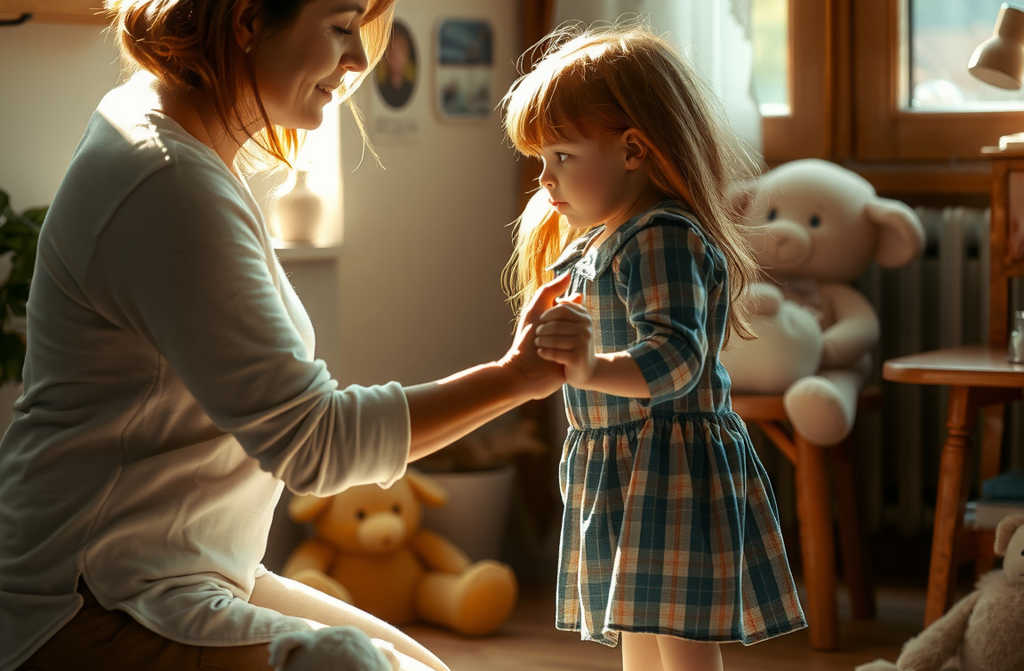
Libby spent a silent moment considering it, thenunexpectedlyreached out for Lucy. Not for the toy, but her hand. A small warm palm curled round Lucys finger. The lightest, most beautiful touch, sending shivers through Lucys body.
My dollys scared of the dark, Libby said solemnly, clutching her tattered toy. Shell need a night lamp.
Shell have one, Lucy nodded, barely holding back tears. And you, too, if you want.
The headmistress, watching with an approving sigh, said, Well, Libby, say goodbye to Swallows Nest. Now you have a mother.
Libby looked back at the home, at the swings, at the window of her old room. Her eyes were steadynot especially sad or glad, but fixed with quiet resolve. She waved at the door, where other children peeped out, then turned to Lucy.
Shall we go?
Not shall we? Not shall we go, please?just shall we go? As if theyd already been a family from the start. Lucy nodded, speechless. They walked, hand in hand, through the gates and into the world, and then climbed into the waiting taxi. Libby pressed her nose to the window, watching the city roll by. She didnt ask questions. She only watched. Lucy sat enchanted by her profile, the lashes, the freckles, the uncanny seriousness. The realisation that this was her own flesh and blood, her little girl, lost and now, impossibly, returned, sent her stomach spinning. She clenched her hands so they wouldnt shake.
Whats your dollys name? Lucy asked, to break the silence.
Rosie. Libby answered, not taking her eyes from the window. Im five and a half now. My birthdays in winterin January. Eighteenth.
Lucys breath caught. The eighteenth of Januarythe day of her daughters birth. She shut her eyes, hot tears streaming.
I know, she whispered. Its a wonderful date.
Libby finally looked properly at her, puzzled but not scared. She hesitated, then reached out and gently wiped away a tear with her tiny finger. The touch was instinctive and deeply kind.
Youre crying? Libby asked.
These are tears of happiness, Libby, Lucy managed, covering Libbys hand with her own. Ive been looking for you such a long time. A very, very long time.
Libby studied her, then nodded, as if that sufficed, and went back to her view of the city streets.
The flat greeted them with stillness and the scent of new paint. Lucy showed Libby the kitchen, the bathroom, and at lastthe bedroom. Sunlight filled the room. Bookcases waited; the bed was made up with sheets decorated with stars and planets. There was a soft rug, art supplies in a big box.
Libby circled the room in wonder, laying her doll and bear on the bed.
All for me? she whispered.
All yours, Lucy said, standing in the doorway. Your room. Your kingdom.
Wheres your room?
Next door. If you ever need anything, just come inor knock.
That night, after a warm bubbly bath (Libby splashed to her hearts content), they settled in the childs room. Lucy read a story aloud, voice trembling at first, but finding its rhythm. Libby listened, still as a statue, lost in the illustrations. When the story ended, she asked softly:
Did my first mummy read to me too?
Lucys heart missed a beat. She put down the book.
Your first mummy, Libby… she was very young, and very afraid. She couldnt look after you then. But she did love you, more than anything. She just… wasnt able to stay. But now Im here. And Ill read to you every night, if you like.
Libby stared at her in the soft light of her new moon-shaped night lamp.
Will you go away? she asked.
Never, Lucy said firmly. It took me years to find you. Im never leaving again.
Libby seemed to weigh this on invisible scales, then nodded, yawned, and snuggled into her pillow. Night-night, she murmured.
Good night, darling, Lucy whispered, kissing the soft copper head. Itll be a happy morning when you wake.
She left the door ajar and stood in the hallway, listening to her daughters steady breatha sound more precious than any she had ever heard.
At last she sat on the settee, took out her phone and scrolled to the contact “Mum.” She composed a long message of accusation and grief, deleted it, started again, deleted that too. Finally, she typed one plain line:
Libby is home. Were safe. Please dont call.
She didnt block the number. That was enough. For now. The futurewhether of forgiveness or silencecould wait. What mattered was here, behind a thin wall bathed in nightlight and hope: her little girl. The lost piece she thought was gone, restored to make her whole again.
Every life is marked by choicessome made in love, some in fear. Yet no matter the mistakes in our past, courage and the chance for connection can heal wounds we thought would never mend. In the end, love is never lost forever; sometimes, it just waitspatientlyuntil were ready to find it again.