A Chance Agreement
Emily, you have to understand, were not enemies, said Andrew, his tone patient, as if he were explaining something straightforward to someone struggling to grasp it. The flat was bought during the marriage. Thats just a fact.
Emily Mary Thornton stood gazing out the window at the communal garden. There, the old apple tree shed planted herself twelve years before swayed gently in the wind, its trunk thicker now, leafy branches rising. Shed brought the sapling back from her aunts cottage in Kent, wrapped tenderly in a plastic bag.
In the marriage, she echoed quietly.
Well, yes. Which means, by law, half is mine.
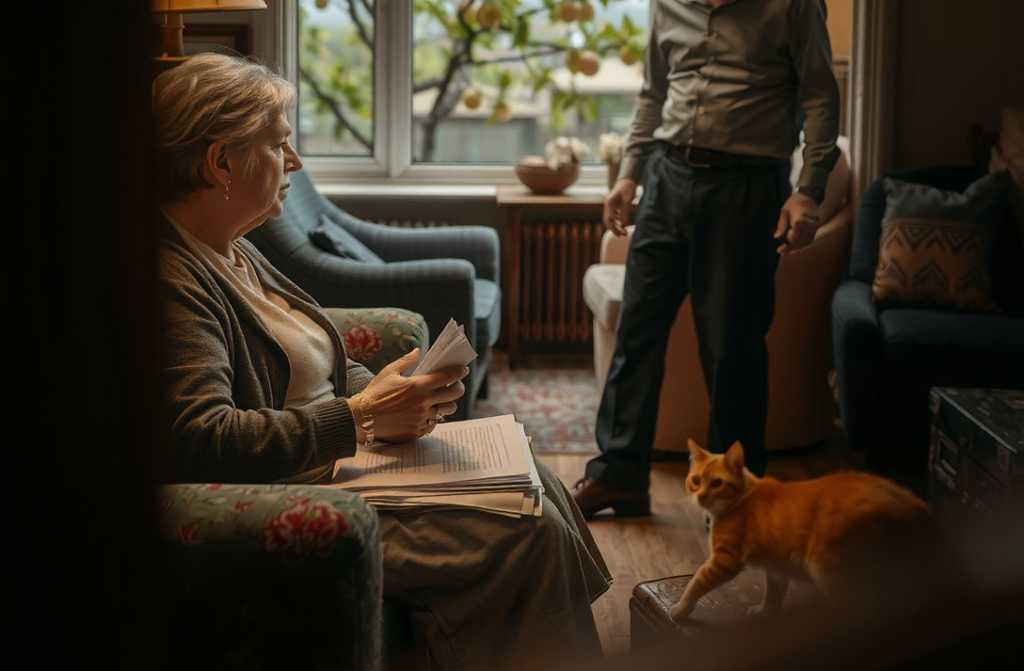
Emily turned. Andrew, fifty-two, stood in the middle of her kitchen, his hair neatly brushed, wearing the same grey shirt shed bought for his birthday three years back. He spoke about his half of the flat with the calmness of someone commenting on the weather.
Do you remember where the money came from for this flat? she asked.
The money wasnt all from one place.
Andrew. I sold my grandmothers cottage. All the funds were mine. You even said at the timeEmily, its your money, your decision.
I dont recall saying that.
A dull, heavy feeling pressed beneath Emilys ribs. Not fury, not precisely. Something else.
Alright, she murmured. Go on, then.
This isnt personal, Emily. Its just the law.
I said, go.
He left. The door shut softly, with a curious politeness. Emily remained alone in the kitchen, coffee lingering on the air, mingled with something bitter she couldnt name.
She was fifty-eight. Twenty-three years with Andrew Thornton. And all those years, Margaret Thornton, his mother, had always been just nearbyfirst in the next road, then the next neighbourhood, always within reach.
Emily poured a glass of water, drank it all, and stepped into the living room. There on the sofa sprawled Marmalade the cat, ginger and supremely indifferent to the unfolding drama. Emily sat, resting her hand on Marmalades warm side.
Outside the apple tree swayed.
They had begun the divorce proceedings in February. Emily filed; she could no longer delay nor did she wish to. Since learning last autumn that Andrew had been transferring money quietly to his mother for months, something inside her had shatterednot over the money itself, but the look on his face when she asked, as if he were only faintly interested.
There had been no screaming; in fact, barely any conversation for the past two years. Andrew existed beside her: home, away, meals, television. But he, really, had been absent for some timea fact shed realised in increments, like the slow dimming of eyesight. You didnt notice at first. One day, you simply saw that you hadnt seen.
She filed for divorce on a Friday. On Monday, Margaret Thornton rang.
Emily, we need to talk, Margarets voice was hard and clear, unchanged in twenty-three years.
To talk about what, Margaret?
The flat. And what you intend to do about our Andrew.
Our Andrew. Andrew was fifty-two.
I have nothing to discuss with you on that, said Emily.
Emily, Ive always treated you well.
That wasnt true, but Emily let it go. She made her farewells and hung up. Sitting, she considered what treated you well might mean: perhaps those twenty years Margaret had shown up unannounced, rearranged Emilys kitchen, decided where Andrew would spend Christmas and why Emilys shepherds pie was incorrect.
Her friend, Caroline Adams, an accountant in a small firm and Emilys neighbour for thirty years, turned up that evening with an apple tart and cut straight to it:
So, what did the woman want?
The flat, Emily answered simply.
Caroline set the tart down, looked hard at Emily. Seen a solicitor yet?
Not yet.
Emily. Go. Tomorrow.
I know I should. Honestly, Caroline, I just dont have the strength.
I get it. But see a solicitor first. Then you can rest.
Emily booked an appointment two days later. The solicitor, Rachel Margaret Sullivana woman in her mid-forties with a tidy office above a coffee shopgreeted her as the scent of ground coffee mingled with paper. A small cactus on Rachels desk bore a label: Survivor.
Tell me everything from the beginning, Rachel said, opening her notebook.
Emily complied: her grandmothers cottage in Kent, sold in 2012. The inheritance was undisputedly hers, with all documents to prove it. How she and Andrew chose the flat together, Emily paying while Andrew just nodded. How, being married, the flat entered both their names without her ever imagining that would matter.
Rachel listened, jotting notes.
Do you have paperwork showing the source of funds?
Yes. The cottage sale, bank statements. Ive kept it all.
That helps. But divorce settlements are complex. Sole funding is important, but not always decisive, especially if the other side claims joint contributions.
He contributed nothing. He hardly worked that year.
Well still need to show that clearly. Do you have his earning records?
Emily thought. I can find them. Statements, possibly.
Gather everything.
They spoke for another forty minutes. Rachel explained, plain and gentle, how dividing assets takes time, particularly when the other partys likely to have a solicitor. Court would be slow, rarely straightforward.
Emily listened, everything inside her tightening. Not from fearjust exhaustion. The story that ought to have ended was becoming a long, arduous path.
One thing, Rachel added, closing her notebook. Before court, review all your documents. Pre-nuptial or post-nuptial agreements, if there were any. Deeds, records, anything. People forget papers that can change everything.
Emily nodded, not truly taking in the last bit. Theyd never had any kind of marital agreement.
She returned home by six. Caroline was waiting on the bench outside her building.
How was it?
Difficult, Emily admitted. But not hopeless. Need to collect documents.
Where are they?
Some in the file, some in that old drawer I havent opened in years.
Well start tomorrow, said Caroline decisively.
The next day, side by side, they emptied the old wardrobe. Emily hadnt opened the bottom drawer in at least five years. Inside: old photographs, letters, receipts, yellowed paperwork, an expired passport, and several envelopes tied with string.
What are these? Caroline asked, lifting the bundle.
No idea. Something old.
They sorted for a long time. Caroline stacked what was needed in one pile, the rest in another. Emily leafed through photographs, trying not to notice how every other one included Andrew.
One envelope, tied tight, contained a handful of papers: a faded utility bill, a letter in looping handwriting from a cousin, and a heavy sheet folded over, bearing a solicitors stamp.
Emily opened it.
Read the first line. Then the next.
Caroline she said.
What is it?
Emily didnt reply, just read the letter throughonce, twice, every word.
Emily, whats the matter? Caroline leaned close. Read it to me.
Its a post-nuptial agreement, Emily replied, hearing her own voice from far away.
Caroline grabbed the sheet, scanned it.
When was this signed?
March 2018, Emily murmured.
What does it say?
It says that the flat at 12 Churchill Road belongs solely to me. No matter what happens.
They fell silent. Outside, cars droned by. Marmalade leapt from the sofa, brushed past Emilys knees, and stalked off to the kitchen.
Emilys memory of 2018 was fragmented. It had been a hard yearher mother was ill, and shed often travelled to Tunbridge Wells. Andrew was caught up in some business mess, restless, often locked away on the phone. Shed ask what was wrong; hed reply, Just work.
Months later, hed said offhand, Remember when I had to sign those papers at the solicitors? My mum insisted, something just needed to be sorted with the flat. You signed too, didnt you?
Me? she had asked, surprised.
Well, you were thereyou dont remember?
She hadnt. The details of that time were blurred; her mind preoccupied with her mother. In truth, she must have signed something without really paying it heed.
Now, faced with the page, she understood.
Emily, Caroline said slowly. Do you know what this means?
Yes.
This changes everything.
I know.
To the solicitor, first thing tomorrow. With this.
Emily refolded the document with care, slid it into a file, and left it on the table. Suddenly, she felt something strangeneither elation nor relief. Something subtler, quieter.
She began recalling snatches of that year. Andrew entangled in debt; Margaret showing up unannounced, fussing in the kitchen, Emily in another room on the phone to her mother. Margaret coming in, urgent: Emily, love, you need to sign some papers. Its to protect the flat. Emily, distracted and tired, nodded. Shed gone, signed. The solicitor was a woman with a cropped haircut, new-paint scent in the office. Margaret had orchestrated the whole move, to shield the flat from Andrews creditors. Temporarily, of coursejust until things settled.
But time passed. Life calmed. No one raised the topic again. Andrew, perhaps, forgotor didnt care. Margaret, likewise. And the document lingered, tied in string, buried in an old drawer.
When Emily showed the post-nuptial agreement to Rachel, the solicitor examined it carefully, twice, then looked up.
Officially witnessed?
Yes. Solicitors seal, both our signatures.
Its original?
Yes.
Rachel was thoughtful. Emily, this is a very robust document. Properly executed, it makes the flat solely yoursno contest.
What does that mean for court?
It means contesting the flat would be very difficult for Andrews side. Theyd have to challenge the agreement itselfa tough, lengthy process, demanding proof of coercion, fraud, incapacity, or some crucial fault.
It was all voluntary. His mother arranged everything. It was her idea.
Thats highly relevant.
Shes probably forgotten.
Rachel allowed herself a tiny smile. It happens.
They agreed on next stepsRachel to examine things further; Emily to find any other property-related documents.
As Emily headed out, she bumped into a stranger at the entrance. He nodded; she nodded. It was just an uneventful encounter, but it stood outperhaps the first time that day someone simply looked at her as she was, nothing more.
Andrew rang a week later, one eveninghis voice less certain than usual.
Emily, can we meet? Talk properly.
About what?
Well the flat. Maybe theres a way forward.
Andrew, I have a solicitor. If you want to discuss the flat, go through her.
Emily, its us. Do we need lawyers?
You saw a solicitor first.
A pause.
It was mums idea.
Emily thoughtthere it was. Twenty-three years of decisions that never really came from him. Always someone elses.
Andrew, Im tired. If theres something to discuss, ask your solicitor to ring Rachel.
Mums terribly upset.
I hear you.
Emily
Goodbye, Andrew.
She hung up and put the kettle on. Her hands didnt shake. Inside, there was no anger or regretjust that gentle tiredness that arrives at the journeys end, when you finally see lights in the window.
Caroline rang half an hour later.
How are you?
Fine.
He called, didnt he?
How did you guess?
Lucky guess, Caroline laughed. What did he want?
To say his mums upset.
Caroline was silent a moment.
Emily, I wanted to ask youwhen did you realise things were truly broken? Not when you filed, but inside. When did you know?
Emily considered. You know, it was years ago. Seven, at least. Wed planned a holidayId picked everything, paid the deposit. Then his mum said, We always spend August with Aunt Joan in Torquay. Andrew came home and said, Emily, maybe another time? I cancelled the holiday. We went to Torquay.
And?
And nothing. We never went anywhere else again. Every year, Torquay, Aunt Joan, dinner tables where Margaret told me Id made the gravy wrong.
Caroline was quiet.
Seven years ago. And you stayed another seven.
Yes. Because I thought, maybe its just me. Maybe I expect too much. Other people do it, live like this.
People all do things differently.
I know. Now, at last, I know.
The following week, Rachel informed Emily that Andrews solicitor wanted a meetinginformal, not via the court. Rachel was hesitant.
These rarely resolve much. More often, theyre feeling you outto gauge what you know.
I want to go, said Emily.
Why?
Emily paused. Because I want to see his face when he sees the agreement.
Rachel considered. Alright. Ill join you.
The meeting was set for Friday, at Rachels office. Andrews solicitor, Stephen Clifford, was a large man, not much younger than Emily, with a trimmed moustache and the confident air of someone accustomed to winning.
Andrew attended, standing awkwardly in the hallway with his phone when Emily arrived. He seemed anxious, just a bit.
They filed into the meeting room. Clifford spread out his documents.
Wed like to discuss a settlement, he began. Dividing assets is costly and time-consuming for both parties. Were open to alternative arrangements.
What arrangement? Rachel asked.
For example, my client would consider a lump sum in exchange for relinquishing his share of the flat.
How much?
Clifford named a sum. Emily didnt flinch. It was much less than half the real valueand moot now.
Before we discuss figures, Rachel said evenly, wed like you to review a document that changes the case substantially.
She placed the agreement on the table.
Clifford scanned it. Emily watched Andrew, who studied the paper. When he looked up, there was something close to bewildered sadness in his eyesa sort of childish confusion.
Whats this? he asked.
A post-nuptial agreement you signed in March 2018, Rachel explained. It names No. 12 Churchill Road as belonging solely to Emily Mary Thornton.
Andrew stared at his solicitor. Clifford re-read, hands stilled.
Well need to go through this document carefully, Clifford said.
Of course. This is the original; we can provide a copy.
There was a pause.
Andrew, Emily said abruptly, wanting only to speak it aloud, do you remember why you signed it?
Andrew was quiet.
It was your mothers idea. To protect the flat from your debts. She was frightened.
Andrew stared at the table.
I remember, he said at last. Softly. I remember that day.
Id forgotten. Only found it by chance, in a drawer.
Silence.
Alright, Clifford said, gathering his things. Well need time to review this.
They left. Rachel and Emily remained.
You did well, Rachel said.
Im just tired, Emily replied. When youre tired, you stop being afraid.
That evening, Margaret rang. Emily saw her name on the screen, felt almost nothing, and picked up.
Emily, Margarets voice was uncharacteristically unsteady. Andrew told me about the agreement.
Yes.
Emily, it was only ever meant to be temporary. You see? It was protection. None of us thought it would last forever.
Margaretsolicitors dont make temporary documents. It was a formal deed.
But wed agreed
We didnt agree anything. You were desperate, you were afraid the flat would be seized, I signed because you asked. I trusted you.
A pause.
Emily, I always saw you as a sensible woman.
I am. Thats why things will remain as they are.
Youll leave us with nothing.
You? Margaret, you have your own flat. Andrews an adult; hell cope.
Youre heartless.
Emily heard the word. Once it would have stung. Tonight, it passed straight through her.
Goodbye, Margaret.
She made herself a strong mug of tea, with mint from the little pot on the sillmint shed planted two years ago, having realised Andrew couldnt care less about living things in the house.
The weeks that followed blurredforms, phone calls, appointments. Rachel warned that Andrews side might try to contest the agreement, and so Emily prepared, producing documents, fielding questions, visiting the solicitor, the court, then back again. Sometimes Caroline went with her, just for company.
One night, over tea, Emily asked, Caroline, do you think he knew? About the agreement?
I dont know. What do you think?
I think he genuinely forgot. It was years ago, his mothers idea. He was never really present. As usual.
And?
And thats probably the hardest thingthat it wasnt malice, just apathy. It just didnt matter to him.
Caroline nodded. Could be.
Twenty-three years. He didnt remember where the money came from, didnt recall signing the agreement. I suspect he forgot much more. Not out of spite. He just never noticed.
Maybe he never really noticed you.
I reckon thats the truth.
The words werent bitterjust somehow matter-of-fact, long understood.
Some more time passed. Andrews solicitor never challenged the agreement. As Rachel had explained, contesting required grounds they simply didnt have. The agreement was clear, witnessed, both parties presentnext to impossible to invalidate.
The rest was sortedcar, accounts, furniture. Andrew took the car, Emily the contents of a savings account; the furniture divided amicably enough.
The divorce completed in April. Emily Mary Thornton became Emily Mary Ford again, her maiden namea decision shed made months before, told no one, just did.
On the last day, as she left the court, Rachel at her side, Emily paused on the steps, blinking in the April sun. Rachel said something about the paperwork, the next stepsEmily nodded.
Rachel departed and Emily stood, quietly observing the rhythm of people passing by.
Her phone rang.
Howd it go? Caroline asked.
Its done. All over.
Im coming. Wait there. Dont disappear anywhere.
Im going nowhere, Emily smiled.
Emily tucked her phone away and lingered. Then she remembered to ring her son, James. James lived up in Manchester; they spoke weekly, but visits werent frequent. He knew about the divorce, not every detail. Shed tried not to burden him.
She called.
Mum? Well?
Its all sorted, love. Officially divorced.
Mum. You alright?
I am, honestly. Dont ask with that voice like I should be sobbing.
I dont imagine youre sobbing.
Im alright, James. Truly.
And the flat?
Its mine. Fully.
A pause.
How?
Found an old document. The agreement. Didnt even remember it myself.
Blimey, Mum. And?
And thats that. Legal; they couldnt do a thing.
James went silent.
Are you alright, though?
I am. More than that, actuallyfor the first time in a long while, I really am. Not that everythings wonderful, but I feel like Im back on my own ground.
Thats good, Mum.
Yes. Maybe it is.
Ill try to come down next week.
Dont come just for this. Only if you fancy.
I do.
Alright, then. Ill make stew.
Deal.
Emily put the phone down and smiled, thinking about stew. She made good stew, always had. Margaret used to say she did it wrong, but Andrew always had a second helping. It was a small, silly memory, but it made Emily smile with no particular regret.
Caroline came bustling up, coat open, shopping bag swinging.
Whats in the bag? Emily asked.
Cherry tart. We need a tart.
We always need a tart.
They drove home, Caroline at the wheel, Emily watching the city slide byfamiliar and just a touch different, or perhaps it was merely she who was changed.
Caroline, Emily began.
Hmm?
Do you remember when we met?
Of course. Nineteen ninety-four. Youd just moved in, came round to borrow salt and bumped into me at number fours.
I remember. Your hair was hilarious.
My hair is always hilarious, grinned Caroline.
No. Its normal now.
They pulled into the courtyard. The apple tree was in leaf, delicate green tips catching the sun, flushed with growth. Emily gazed at it, quietly confident the tree would reach the clouds if simply left to its own devices.
Up in the flat, Emily opened her own front door, walked through to the kitchen window, and stood gazing out.
Caroline fussed about, putting the kettle on, plates and cups clattering.
Emily, sit down, Caroline ordered. Enough standing.
Im just looking at the apple tree.
Its not going anywhere.
I know.
Emily left the window, sat at the table. Marmalade the cat immediately claimed her lap, Emilys hand coming to rest on her soft ginger fur.
You know, said Caroline as she sliced the tart, what now? I mean, whats next?
I dont know, Emily answered, honestly. For the first time in a long time, I dont know. And you know what? Its almost pleasant.
Almost?
Its a bit scary. But mostly pleasant.
Caroline poured tea, set the mugs down. They sat in companionable silence, the apple tree swaying gently outside, childrens laughter in the distance. Marmalade purred.
You know what Im thinking? Caroline spoke suddenly.
What?
If your mother-in-law hadnt panicked in 2018, insisted on that agreement, youd be out of a flat now.
Emily considered.
Yes. Probably.
Lifes a strange old business.
Strange indeed, agreed Emily. But sometimes it gets it right.
They drank tea. Caroline chatted about work, the new boss who always muddled the figures. Emily listened, laughed at times, nodded at others. Marmalade hopped up onto the windowsill, ears twitching as she watched the garden.
Emilys phone buzzed. A message from Andrew: Emily, Im sorry. Not sure it means anything to you. Nothing more.
Caroline stretched over. Whats that?
Emily showed her.
And?
I dont know. Maybe it matters, maybe it doesnt.
She set her phone face down, took her mug. The tea was hot, with mint, just as she liked.
Caroline.
Mm?
Another cuppa, please.
Caroline filled both mugs. They sat there, light fading, the kitchen growing still and dima gentle April night, in the flat on Churchill Road. Emilys flat.
Later, Caroline got ready to leave, rummaging in her pockets for keys.
Emily, she said softly at the door.
What?
Are you really alright?
I am.
Caroline regarded her for a moment, longer than usual.
I believe you, she said finally.
Good.
Call me tomorrow.
I will.
The door closed. Emily stood a while, then settled on the sofa. Marmalade curled up beside her. The last glimmer of daylight faded from the garden; the apple tree beyond, just a dark silhouette.
Emily picked up her phone again, reading Andrews message once more. Im sorry. Not sure it matters to you. Should she reply? Stay silent? Say something real, or nothing at all?
She didnt know yet. That answer could wait.
Emily set her phone aside, leaned back and closed her eyes. Marmalade, warm and purring, pressed close. The flat was quiet. Her quiet. Her walls. Her apple tree in the garden below.
Everything else could wait for tomorrow.






