Two friends, two fates
Valerie stares at her reflection in the hallway mirror, a hint of melancholy in her eyes. Old age, old age, she mutters. Her face has begun to sag, a double chin and a map of wrinkles spreading across it. At sixtysix, life has taken its toll, she sighs, and she tries to clip the loose curlers her daughter tangled for her that morning. The curlers are part of the preparation for todays celebration: the halfcentury anniversary of the villages secondary school. Valerie was among the first cohort to graduate from the little school in Little Harlow.
The school is being spruced up for the occasion; officials from the nearby market town of Marketford will attend, and the whole village is gathering. Former classmates promised to travel in from the city, though most will never make the tripmany have long since passed, the years having erased them from memory.
A bark erupts from the yard as the familys old terrier, Scout, yaps. Valerie peers out the window and sees a figure lingering by the gate. She throws on a threadbare cardigan and goes to welcome the guest. At first she does not recognise her, but when the woman speaks, the voice triggers a memory: it is her schoolfriend, Gwen.
Got the invitation and thought Id come home for a change, Gwen says, clutching her coat tighter. I might not get another chance. Ive got nowhere to staymy own familys long gone. Will you let me crash for the night?
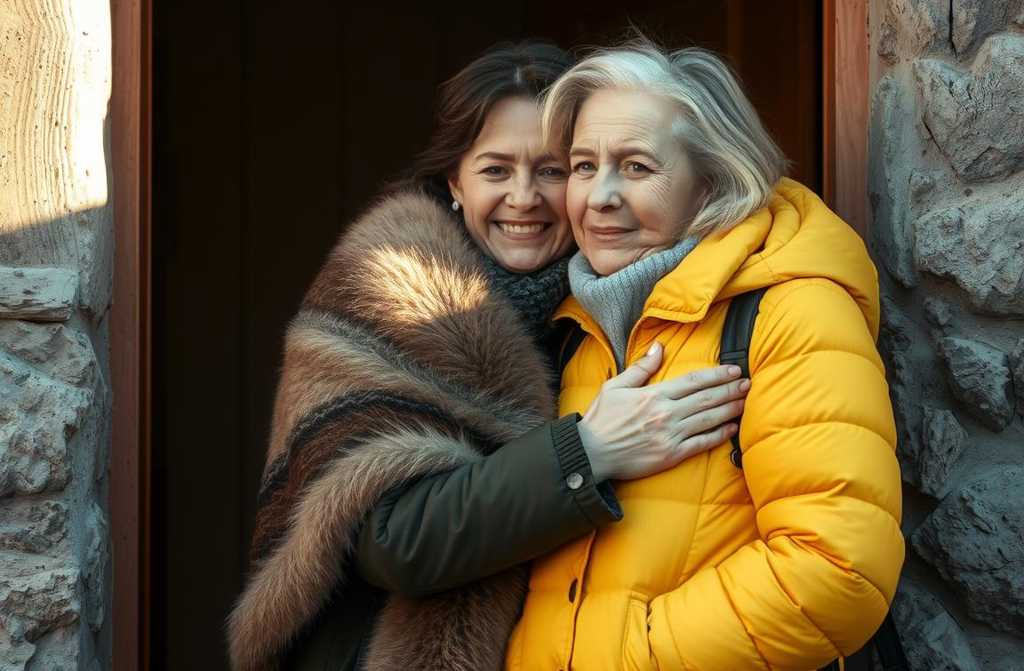
Of course, Valerie replies, and the two women hug, a soft tear slipping from each eyeperhaps from joy, perhaps from sorrow.
You look radiant, Valerie says, admiring her friend.
Living in the city kept me on my toes, Gwen answers, smiling. My husband was a respectable man, a senior manager. I had to keep up, but if Id stayed in the village Id be a lot like you! Sorry if I sound critical.
No offense taken, Valerie laughs. I can see the difference. You look at least fifteen years younger, even though were the same age.
In the evening, the village women, dressed in their best, file into the school. Only eight city folk have arrived, and many strangers struggle to recognise each other after decades apart. After the formal programme, they set tables, raise a glass of cider, and reminisce. Laughter fills the room as old stories surface. By midnight they part ways, each heading home.
Gwen stays over at Valeries modest cottage; neither feels the pull of sleep. They talk deep into the night. Gwen shares her city life: she had a good husband, and they were inseparable until three years ago he died. Their only daughter lives in London, a university graduate who is happily married. Gwen proudly declares that they are childfree, a term that puzzles Valerie, who explains that it describes couples who consciously choose not to have children.
Gwen sighs at the thought. Her daughter visits only a few times, always on her own agenda, and even missed her fathers funeral because of a demanding job. Though Gwens mother never visits, she does send money, which allows Gwen to afford a spa break and to live without worrying about every penny. Her own pension is modest; she never built a career because her late husband discouraged her from working.
Did you also lose your husband? Gwen asks, recalling the gossip that Valeries late husband, Nicholas, was a heavy drinker. What happened to the kids?
Just the usual rural hardships, Valerie replies. When the timber works collapsed, the whole village went quiet. Men turned to the pub, and drinking became a way of coping. My husband was a temperamental sortcalm when sober, a raging bull when drunk. I fought his moods like a fish against ice. I kept a piggery, sold piglets, tried to keep a roof over my head, but in the end his drinking took him.
She continues, My daughter Lucy finished school, now teaches primary pupils here. My soninlaw, Mr. Carter, runs the school and also sits on the parish council. He even stopped the councils plan to cut the school down to nine grades by lobbying in London. My twins, Tom and Tim, serve together in the Royal Engineers; they now work on offshore rigs and bring home a decent wage. We have six grandchildren, each with two children of their own. They all love having kidshow could they live otherwise? The boys only drink on special occasions, having learned from their fathers mistakes.
The next morning, Valerie walks Gwen to the bus stop, handing her a bundle of smoked bacon and a jar of raspberry jam. Outside, the chill makes Valeries modest coat look even more outofdate beside Gwens sleek down jacket, glossy fur hat and lowheeled boots. Gwens appearance is crisp, her lipstick bright; Valeries coat is decidedly out of fashion, her feet clad in sheepskin slippers and a woollen shawl wrapped around her shoulders.
The bus arrives. The friends hug tightly, promising to call each other often. Gwen hops aboard with ease; Valerie shuffles home, her steps heavy but her heart lighter.
Both women started from almost identical beginnings, yet life has drawn them down very different roads. Is it chance? Luck? Some hidden force that steers womens destinies? Perhaps the answer is not as simple as it first appears, and the question of who is truly happier remains open.