After Fifty
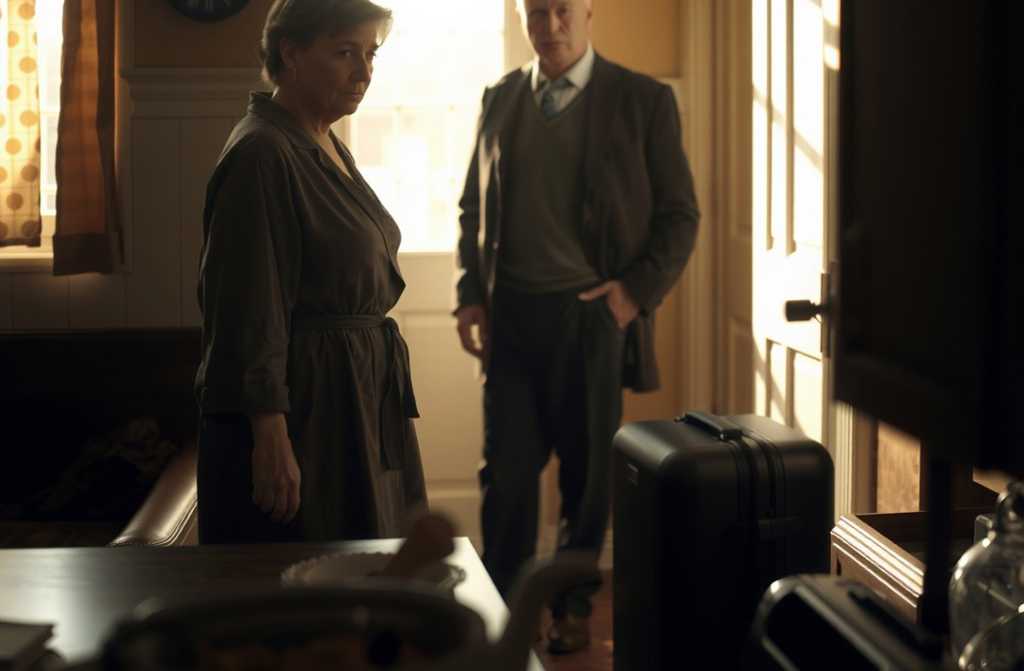
“Claire, we need to talkseriously,” Michaels voice echoed from the hallway, distant and muffled as if he were speaking from behind a wall of cotton wool.
She stood at the cooker, gripping the edge of the kitchen table. The test with its two fateful lines was burning a hole in her dressing gown pocket. Her heart thudded somewhere up in her throat.
“Go on, I’m listening.”
“Ive met someone else. Shes expecting a child. Im leaving.”
Claire said nothing. The potatoes were boiling on the hob; the lid rattled from their bubbling, a small domestic cacophony. Michael stood in the doorway, as though afraid to set foot on that familiar patchwork of linoleum, worn almost clear by twenty years of marriage.
“When?” she asked, her voice even, unnervingly calm.
“In a week. Annas renting a flat, Ill move in there. Well do the paperwork later.”
Anna. So that was her name. Twenty-eight, as Claire would later learn. Young, of course. Her own place, her own womb, her own future.
“Okay,” Claire said, switching off the gas. “Go and pack your things.”
Michael lingered for a moment, as if he expected her to shout or weep or beg. Instead, Claire reached into her pocket, pulled out the still-damp pregnancy test, and placed it in the centre of the table between the salt and the sugar bowls.
“There. Im pregnant too. Two weeks late. I see the doctor tomorrow.”
Michaels face went ashen. He opened his mouth, closed it. Then he turned and walked out. The door closed silently, carefully. Claire sank onto a stool and placed a trembling hand on her belly. Inside, where there had been only emptiness for years, despite all the procedures, all the hope, all the heartbreaknow, suddenly, there was a fragile, pulsating life. And this miracle happened now, when joy after fifty felt not just unlikely but impossible, when she had long since surrendered to the idea that she would never be a mother.
The doctor confirmed it the following day. Late pregnancy, she saideight weeks, Claire would need special monitoring. Claire was forty-eight, with chronic concerns, hormonal imbalances, scars on her soul from a decade of failed attempts. Yet now, as if out of the clear blue, the impossible had happened.
Michael packed his things three days later. He folded his suits and shirts with care, took his books, didnt meet Claires gaze. As he left, he said only, “Ill send some money. If you need anythingring me.”
She nodded. The door clicked softly behind him, and the flat suddenly seemed enormous, empty, and still.
Those first weeks, Claire walked through life in a daze. She went to work, stared at rows of muddled numbers, barely speaking. In a small English town, every tragedy becomes public property. Colleagues eyed her with sympathy but kept their questions to themselves. At lunch, Mrs Goddard from accounts poured Claire a cup of tea and pushed a plate of biscuits her way.
“Hang in there, Claire, love,” she murmured. “Itll come right. Youre still young, and strong too. That little one of yours will be healthy.”
Claire nodded, though she felt anything but young. She was tired. Lost. But somewhere, deep inside, something else had taken rootstubbornness, a refusal to wilt.
Her belly grew slowly. No real morning sickness, just a touch of queasiness. Claire kept up her appointments, did her blood tests, swallowed her vitamins. She tried not to dwell on Michael. True to his word, he sent half his salary each month. He called once a weekhis voice always guilty, always distant.
“You alright?” hed ask.
“Yes, all fine.”
“If theres anything”
“Ill call.”
And then hed hang up. Claire listened to the dial tone and knew she could never forgive his betrayal. Not yet. Perhaps never. It wasnt anger, not even bitterness, really. Just something inside had snapped, and it wouldnt fit back together.
By six months, she knew it was a boy. The sonographer showed her the grainy scan, pointed out the head, the tiny hands, the throbbing heart. Claire watched those blurred outlines and, for the first time in months, truly smiled. A boy. Her boy. She would name him Matthew, after the father she lost ten years back.
How to begin again, at her age? There is no such thing as a clean sheet, Claire decidedjust an old one where you start writing a new story, layer upon layer, over all the marks that came before.
Labour began in January, during a blizzard. Claire gripped the bedrails in the delivery suite, convinced she could go no further. Her body, though, knew what to do. A seasoned midwife with kind eyes stroked her hand.
“Nearly there, duck. Breathe. Thats it, love. Nearly done.”
When they finally laid Matthew on her chestwet, warm, wailingClaire understood what maternal love truly was. Not the pretty words from novels, but this: the desire to splinter into pieces, just to keep this scrap of life safe and whole.
“Strapping lad,” said the midwife, “Eight pounds four, healthy as anything. Well done, you.”
Claire was placed in a ward by the window. To her right, a young woman with enormous brown eyes lay in the next beda girl herself, really, whod delivered a daughter, tiny, barely five pounds. The baby had gone to the nursery for observation. The young woman cried quietly into her pillow.
“Its alright,” Claire said, gently. “Theyll sort her out. Shell be fine.”
“But what if she isnt?” the girl whispered.
“She will be. Hang on in there.”
Next day, the girl had no visitors. Mrs Goddard came to see Claire, bringing a bag of apples and baby blankets.
“Isnt he lovely?” she cooed, smiling at sleeping Matthew. “Looks just like you, Claire.”
“Really?”
“Absolutely. Has his father been to see him?”
“No,” said Claire quietly. “He doesnt need to.”
Mrs Goddard wisely said nothing more, just gave Matthews cheek a gentle stroke before departing.
That evening, the nurses brought the other baby back to her motherso tiny, with a shock of black hair, staring wide-eyed into the world. The girl hugged her daughter to her chest and wept with relief.
“Maisie,” she whispered. “My Maisie.”
Claire listened to them as Matthew snuffled by her side, milk-sweet and warm. She wondered what it meant, becoming a mother after forty. Her life would never be the sameand that, finally, was a good thing.
On the third day, everything changed. The ward sister came in, her face pinched and pale, and asked Claires neighbour to step outside. Claire heard muffled voices in the corridor, then a wail and sobbing. The sister returned alone.
“What is it?” Claire asked, dread pooling in her stomach.
“Terrible news,” the sister sighed. “Annathe young mum in the bed next door, her mother died last night. Car accident in the ice. The grandfathers been contactedGeoffrey Thomas, retired colonel. Hes coming.”
Anna. Twenty-eight. So that was Michaels new womanthe one who had lured him away. Now dead. Her daughter, Maisie, left behind. Was it possible? In one day, a life begins and another ends.
Geoffrey Thomas arrived that evening. Tall, grey, straight-backed, with a stern face twisted in pain. Claire passed him in the corridor as she came out with Matthew in her arms. He stood at the window, staring at the snow swirling under a dull January sky, fists clenching and unclenching.
A nurse led him to the nursery, pointed out Maisie through the glass. He watched her silently, for a long time, then turned and strode away.
Back in the ward, Matthew needed feeding. Claire settled him at her breast. Just then, a nurse entered carrying Maisie.
“Mrs Jenkins, would you mind…? Maisie wont take a bottle, poor thing. Theres no mothers milk for her now. Could you? Just until we find a donor.”
Claire looked at the baby. Maisie was quiet, lost. Without knowing why, Claire nodded.
“Bring her here.”
Maisie latched on immediately, desperate, sobbing as she fed. Claire stroked her downy hair and felt something shift deep inside. This was Michaels daughterthe child of the woman who had broken her marriageand yet: now only a helpless, hungry infant remained. For hungry babies, questions of belonging simply dont matter.
Later Claire thought, lying awake: true kindness isnt about sainthood or self-sacrifice. When a starving child is before you, you dont ask whose it is. You feed them.
Next day, Geoffrey Thomas appeared again, stopping at the ward door. Seeing Claire nursing Maisie, he hesitated.
“IIm sorry,” he said. “I dont wish to intrude.”
“Youre not. Please, come in.”
He sat awkwardly by the window, gaze fixed on the floor.
“Youre Maisies grandfather?”
“Yes. Geoffrey Thomas. And youyoure looking after her?”
“For now. The nurses asked. She cant stomach formula.”
He nodded, ran a hand over his tired face.
“Thank you,” he croaked. “I dont know what to do. Anna was my only child. Her husband left when she was small; I raised her alone. My granddaughterIm meeting her for the first time. And now Annas gone, and I cant even feed her baby. How will I manage?”
“And the father?”
“In hospital. Concussion, fractured bones. Hes come round today, but hes in no state to care for her. Dont know if he ever will be.”
Claire said nothing. She knew exactly who the father was, but Geoffrey Thomas, mercifully, did not know who she was.
“Whats your name?” he asked finally.
“Claire. Ive just had a son, thats him, Matthew.”
Geoffrey Thomas glanced over at Matthew, sleeping in his cot, nodded.
“Strong boy.”
“Tough as old boots.”
They lapsed into silence. Maisie finished feeding; Claire burped her gently.
“Will you take her home?” Claire asked softly.
“I havent decided. I’m sixty-eight. My wifes gone. How can I raise a baby on my own? And yetshes Annas child. My own blood.”
“What do the doctors say?”
“Shell go home in a week, if she gains weight.”
Claire gazed at Maisies perfectly tiny face. Motherhood without boundaries, she thoughtwhat did it really mean? That love could stretch wide enough to include even those not your own?
That evening, Michael phoned. His voice was hollow.
“Claire, youve heard?”
“I have.”
“I I dont know what to say.”
“Then dont.”
“I have a daughter, Maisie. I havent even seen her yet.”
“I know.”
“The hospital says Ill be discharged in a week. Ill come and collect her.”
“And where will you take her? That rented flat? Youre working all day. Wholl look after her?”
Michael was silent.
“Geoffrey Thomas wants to, but its hard at his age. I thought perhaps a nanny. Or maybe foster care, until I get sorted.”
“Foster care?” Claires insides clenched. “Really?”
“I cant do it alone. Ive broken bones, a concussion. I need help myself.”
“Right.”
“Youre angry?”
“No. Shes not to blame for any of this, thats all.”
“I know. I do, Claire. But what do I do?”
Claire hung up. Matthew woke and began to wail; she picked him up and rocked him. The snow outside had subsided, stars emerging from behind the clouds.
Next morning, she asked the nurses to bring Maisie again. She fed her, changed her, spoke softly to her. The little girls enormous eyes searched her face, wise beyond reason. Geoffrey Thomas visited every day. He sat quietly, feeling helpless. Once he asked:
“Isnt it hard for you? With your own son?”
“It isnt,” Claire replied.
“Butwhy?”
She considered. Why, indeed? Maybe because after years of emptiness she finally understood anothers desperation for a child. Maybe because, once youve yearned for this much, you can only respond with open arms. Maybe because motherhood isnt about bloodlines, but about an open, sheltering heart.
“I dont know,” she admitted. “I just couldnt do anything else.”
Geoffrey Thomass eyes gleamed.
“Youre a good woman, Claire.”
A week later, Michael was discharged. He came to the hospital looking pale, his arm in plaster. He gazed at Maisie through the nursery window, then entered Claires ward.
“Hello,” he managed.
“Hello.”
“Youre feeding her?”
“I am.”
“Thank you.”
Claire shrugged. “Thank Geoffrey Thomas. Hes here every day.”
“I have. Hell take her. Hes got a house on the outskirtsbig, empty since his wife died. But he wont cope alone. Hell need help.”
“Will you help?”
“Ill hire a nanny. Or pitch in when I can.”
Claire looked at him. Michael kept his eyes down.
“Michael,” she said quietly, “do you understandMaisie and Matthew are siblings now. Brother and sister.”
He flinched, looked up.
“I know.”
“So what happens now?”
“I dont know. Im sorry, Claire. I never meant all this.”
Claire nodded. Forgiveness would take timemaybe forever. But the rage had faded, replaced by tired resignationand pity. For Michael, for Anna, for these two children, born days apart, bound by tangled lives.
Geoffrey Thomas came for Maisie in his old Morris Minor the same day Claire and Matthew were discharged. Mrs Goddard helped Claire gather her things, and they met Geoffrey in the car park. He held Maisie nervously, awkward but careful, staring at her as if she might vanish.
“Mr Thomas,” Claire called softly.
He turned, recognised her.
“Claire. Going home yourself?”
“Yes. With my son.”
He glanced at Matthew, swaddled in a blue blanket.
“All the best,”
“And to you. And Maisie.”
He hesitated. “Would you mind if I rang you? If I need advice. Im out of practiceits been what, thirty-odd years since I held a baby?”
Claire thought, then dictated her number. He wrote it down and shuffled away.
Back at home, the flat was musty and lonesome. Claire aired the rooms, unpacked Matthews tiny things. He slumbered in his pram. She sat in her kitchen sipping tea, struggling to reconcile this new life with the emptiness shed once expected.
Three days later, Geoffrey rang.
“Claire, sorry to bother you. Maisies been crying for hours, nothing helps. Shes been fed, changed, rocked Maybe its tummy ache?”
“Try laying her on your chest, with a warm towel over her belly.”
An hour later, he called back.
“It worked. Thank you. Shes dozed off.”
Next day, twice; then again, the following. One evening he asked timidly:
“Would you come round? Just to look her over? Im terrified Im missing something.”
Claire hesitated, then agreed.
Geoffreys house stood at the far end of town by the railway. Two storeys, old brick, surrounded by bent fences and towering poplars. Claire arrived by bus, Matthew in a sling. Geoffrey met them at the gate.
Inside, it was orderly, but spareold furniture, faded wallpaper, family photos. The kitchen smelled of stewed vegetables and baby soap. Maisie slept in a vintage wooden cot. Claire peeked inshed filled out a bit, plumper cheeks now.
“She looks grand,” said Claire.
“Really? I worry about everything.”
“Youre doing brilliantly.”
He made them tea; they perched at the kitchen table. Matthew woke and Claire breastfed him, Geoffrey watching in awe.
“Its hard,” he admitted. “I thought old age would mean cricket on the telly and the garden on weekends but now its bottles and nappies and sleepless nights.”
“At least youre not alone.”
He gazed out at the garden.
“My Vera,” he said, “dreamed of grandchildren. Now shes gone. Anna too. Just Maisie and me, and Im not sure Im up to it.”
Claire briefly squeezed his hand.
“Youre stronger than you think.”
He gave a weary smile. “If you say so.”
Now she came weekly, sometimes twice. She helped with feeds, changed both babies, washed, cooked. At first Geoffrey was shy, but Claire saw through ithe was exhausted, his heart tablets never far away.
“Why not move in, at least for now?” Claire suggested one day. “Its lonely in my flat. I can help with Maisie, and you could use the help.”
He regarded her carefully.
“Are you serious?”
“I am. Youve two empty rooms, havent you?”
He nodded.
“But, Clairewont people talk? Im a stranger.”
She shrugged. “We arent teenagers. I need help, you need help. What does it matter what people think?”
He considered, then, “And your job?”
“Im on maternity leave.”
“Alright then. Id very much like that.”
Claire moved in late February. Mrs Goddard helped shift her things, and said little, only, “You sure about this? Hes nothing to you.”
“Im sure.”
Geoffrey met them with daffodilsbright and cheerful. “For you,” he said, shy. “My Vera loved them, with Mothering Sunday nearly here.”
The upstairs room was sunny. Wallpaper a bit faded, but neat. A bed, a chest of drawers, a cot Geoffrey had fetched from the loft and cleaned.
“That was Annas,” he explained. “If you want to move it”
“Its perfect.”
The first days, they were shy and formal, but soon fell into rhythm. Geoffrey was up by six, heating coffee, sometimes lighting the fire on cold mornings. Claire joined him at seven to feed the children. He fetched water, boiled kettles, rocked Maisie as she changed Matthew. They talked little at first, but in time, conversation came.
He spoke little about the army, though his medals hung above his chair. He told her about Vera, their wedding, building the house together. He mentioned Anna with difficulty, and Claire didnt press.
“I couldnt blame her,” he said one night as they sat by the kitchen fire. “Anna wanted to be happy. She fell for Michaelknew he was married but thought hed leave, thought theyd build something. I was cross about it, but when she fell pregnant, I thought hed finally do right by her. Then the crash. Both gone. Leaving Maisie”
Claire listened in silence. She never revealed that Michael was her own estranged husband, not wanting to dig up old pain. But Geoffrey found out, eventually.
It was March, the snow beginning to melt, when Michael arrived unannounced, clutching flowers.
“Claire. Can I come in?”
She let him inside. Geoffrey was in the kitchen.
“Geoffrey Thomas,” he greeted, “Michael Smith. Im Maisies father.”
“I know,” Geoffrey said coolly.
They sat at the kitchen table. Michael handed over an envelope.
“For Maisie. Ill keep sending money each month.”
“Thank you,” Geoffrey replied and tucked the envelope away.
“May I see her?”
“Shes sleeping, but go on.”
Michael climbed the stairs. Geoffrey regarded Claire. “Hes your ex-husband?”
“Yes.”
“And Maisie?”
“Michaels daughter. Matthews half-sister.”
Geoffrey sat back, stunned.
“Is that why you help? Because of the children?”
Claire went to answer but instead just shook her head. First, she helped Maisie out of pity. Now, she no longer thought about who belonged to whom. Maisie was just Maisie.
“Youre a remarkable woman,” was all Geoffrey managed.
Michael reappeared, tearful.
“Shes so little. I didnt realise babies were so small.”
Claire poured him tea. They drank in silence till Michael asked:
“You feed them both? Matthew and Maisie?”
“I do.”
“But how?”
“Its enough,” she replied gently.
Michael nodded, staring unseeingly out the window.
“I thought everything with Anna would be perfect,” he said. “Now shes gone. Youre here with Matthew. Maisies just a day old and motherless. Its like a nightmare.”
“No its life,” Geoffrey said quietly.
Michael left. From then on, he popped in monthly, bringing money, sitting quietly with Maisie, then departing. Claire saw the strain on him, the awkwardness. For the first time, perhaps, he understood something of the pain he’d caused.
The first leaves appeared, late and uncertain. Geoffrey dug the garden. Claire bundled the children onto the veranda. Matthew and Maisie lay together on a quilt, grasping at grass, stuffing dandelions into their mouths. Claire watched them, feeling winter thawing, inside as well as out.
Geoffrey was a quiet presencepractical, considerate. He noticed when she was tired and insisted she rest, made her herbal tea, never pressed her to speak. Simply was there. In time, Claire realised it wasnt grand passion she craved. After fifty, love was a slow, steadfast warmtha surety, as sturdy as the house they shared.
What about forgiveness? Sometimes, late at night, Claire wrestled with the idea. Michael betrayed her, yes; but there was so much pain in the world alreadywhat was the use of holding more? Anna was gone, Michael was lost, two children would always connect them. Everyone, in the end, is guilty and innocent all at once.
By summer, both children learned to turn, to laugh, to babble. Claire spread a blanket among the apple trees. Geoffrey sat on the bench, smiling softly.
“What are you thinking, Geoffrey?” she asked.
“That life is peculiar. I thought it was over, that nothing mattered. Nowlook at them. And Im glad I lived to see this.”
They sat long together, Geoffreys arm around her shoulder. She didnt pull away; his hand was big, warm, callused.
Autumn arrived and Mrs Goddard came to visitladen with cakes and questions.
“So, Claire, you alright here? Its not too much for you?”
“No, its wonderful.”
“And Mr Thomas Hes good to you?”
“Good as gold.”
Mrs Goddard shook her head. “Bit of a funny sort of happiness youve found, love. Living with someone elses granddad, raising someone elses child, your ex popping round for tea. Like something from the telly.”
“Maybe it is,” Claire smiled, “but it feels right.”
Mrs Goddard left bemused; Claire finished the washing up, thinking, happiness is a strange thing. It comes when youve stopped chasing it, and never quite looks as you imagined.
Maisie fell ill that winter. The fever reached one hundred and twocried, wouldnt eat. Claire spent three sleepless nights with her on her chest; Geoffrey fetched doctors and medicine, held Matthew and tried to hide his own panic. On the third night, Maisies fever broke. Geoffrey collapsed into the armchair and whispered:
“Thank you. I couldnt have done it alone.”
Claire leaned on his shoulder, closed her eyes. The strength of maternal love, she thought, isnt about biology. Its measured in sleepless nights and dried tears and a hundred checks that your child is still breathing.
By the twins first spring, Claire realised she loved Geoffreynot as shed loved Michael, stormy and fierce, but deep down, quietly. She loved his patience with Matthew, the way he chatted to Maisie, fussed over their porridge, snoozed over the paper in the afternoons. His silver hair, big hands, rare smiles. Real love, she saw, in later life is like an old house, gentle and safe.
Geoffrey began calling her simply Claire. He placed an arm around her on the veranda. One evening, when the children were down, he said:
“Claire, may I? Ilove you. Im grateful for everything. I know Im nearly seventy, not long left, but these have been the best years Ive ever had. With you.”
Claire squeezed his hand.
“I love you too. Dont talk nonsense about dying soon. I need you here for another hundred years.”
He laughed quietlya robust, chesty laugh.
“A hundred years! Now theres wishful thinking.”
They married quietly, no fuss, just a registry office, then home. Geoffrey brought a bottle of champagne; Claire baked a Victoria sponge. They toasted in the kitchen, just the two of them. And Claire thoughtthis is happiness: a cup of tea, a homemade cake, two sleeping children, and a soul beside you who asks nothing and is everything.
Michael kept visiting, and when he heard of their marriage, he just nodded and said:
“Im glad for you, Claire. You deserve your happiness.”
Claire nodded. They were no longer enemies. Their bond was gone but the children would always connect them.
The years passed. Matthew and Maisie grew as siblingsinseparable. Geoffrey installed a swing and a sandpit. Claire returned to work part-time; Mrs Goddard often stayed to help, bringing jam tarts.
One spring evening, when the children were eight and ten, Maisie asked, “Claire, why did you feed me when I was little?”
Claire put down her spoon.
“Who told you that?”
“Papawell, Michaelsaid when Mummy died, you fed me yourself. Is it true?”
Claire nodded.
“Why? You had your own Matthew.”
Claire sat beside her.
“Maisie, when a baby cries from hunger, you dont care whose baby it is. You just want them to be alright.”
“You love me?”
“Very much.”
“As much as Matthew?”
“Just the same.”
Maisie considered, then hugged her tightly, whispering, “I love you too, Claire. Youre the best.”
Geoffrey listened at the door, blinking away tears. He joined them, wrapping both in a hug.
“My girls,” he murmured.
Time turned gently onward. Maisie and Matthew became teenagers, noisy and kind. Geoffrey turned seventy-five; his heart tired. He was stubborn, refusing to slow down.
“Come on, Geoffrey,” Claire protested. “No more climbing on the shed roof. We need you.”
He smiled and promised not to “pop off” just yet.
Yet one May night, with the apple blossom perfuming the air, Geoffrey died in his sleep. No warning, no pain. He kissed Claire goodnight, whispered “I love you,” and was gone.
Claire sat by his bed, holding his hand. The tears would come later, alone in the night. For now, only gratitude.
At the funeral, the house was crowdedneighbours, old friends, retired officers. Michael came with flowers, silent. Maisie sobbed into Matthews shoulder while Claire stared at the coffin, remembering every moment.
Afterwards, the days crept back into order. She returned to work full-time; the children kept up with school, grew stronger. Michael came more oftenfixing broken things, splitting logs, helping where needed. He spoke little but was there.
Years slipped gently by. Maisie tall and serious with her mothers dark eyes. Matthew fair and sunny, a flush of Michael in his expressions. Claire, older now, her hair silvering, looked in the mirror and saw the history etched on her face: loss, pain, and joy.
One damp spring evening, Claire sat on the old bench under the apple trees, gazing across the garden. Maisie arrived and nestled beside her.
“Thinking about life?” Maisie asked.
“I am.”
“Do you do you ever regret?”
Claire smiled softly.
“My life didnt go how I planned. But I have you and Matthew. This house. The memories. I wouldnt change a thing.”
Maisie leaned against her. “Are you happy, Claire?”
Claire hesitated. Michael had left, Geoffrey had died. Life hadnt been easy. But here she was, surrounded by the fullness of lovechildren to care for, the warmth of family, the peace of having done her best.
“I am,” Claire said. “In my own way.”
Matthew appeared. “You two having a deep chat again?”
Maisie rolled her eyes. “Just talking about life.”
“Oh, Ill wait for dinner then, shall I?”
“Alright, both of yougo wash up. Ill put the kettle on,” Claire called.
Inside, the children bickered over chores, laughter echoing up the stairs. Claire lingered at the doorway, watchingher heart full. How strange and glorious, this life. Not what shed expected. But wholly hers.
After dinner, once the house was silent, Claire slipped out to the old apple tree. She sat, her back against the bark, and let the tears flowsoft and steady, for Geoffrey, for lost youth, for all the pain and the triumphs.
When she rose, lighter for the crying, she knew she would cope. She had weathered every storm, raised two children, kept this home alive.
“You did it, Claire,” she whispered into the quiet.
She entered the house and paused at the bottom of the stairs. She could almost hear Geoffreys voice: “How lucky we were, to have found each other.”
“Yes, Geoffrey,” she murmured, “we were very lucky.”
Dawn crept gently over the houses, English robins chattering. Claire bustled into the kitchen and made tea. Soon, the children would wake, breakfast would scatter crumbs everywhere, and the day would begin. And she would keep goingstep by ordinary step. Quietly, simply. Because everyday happiness is a collection of moments: a cup of tea, a childs laughter, the scent of apple blossom.
And so, after fifty, Claires story rolled onnot a tale of new beginnings, for they never truly wipe the slate. But a story layered over old joys and heartbreaks, a tale of ordinary courage, resilience, and a boundless, unconditional love.





