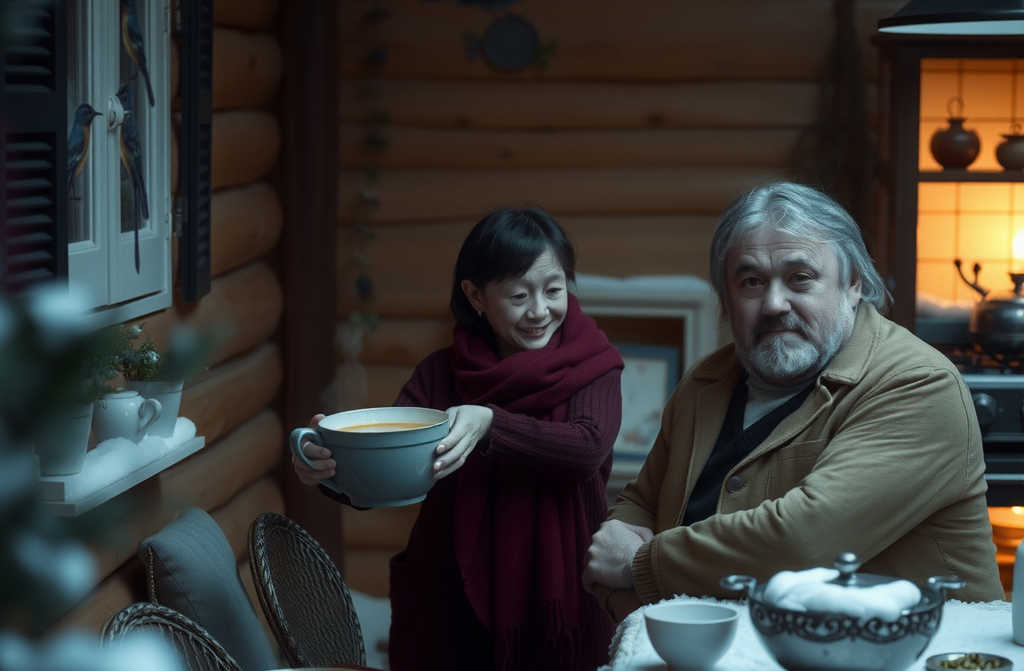
An Unwanted Thing
Eleanor stood before the mirror, holding first one dress, then another, up against her. The blue one, which she’d bought three years ago, still fit well at the waist, but Oliver had said it looked country. The black one was smarter, but a little tight, its zip at the back pinching slightly. In the end she settled on the blue, smoothing her hair and plaiting it into a loose, simple braid.
Oliver stepped from the bathroom, crisp in a snowy white shirt, knotting his tie with care. He glanced at her reflection, his brow creasingnot suddenly, but the way clouds creep in across an open sky.
You wearing that then? he asked.
In what, exactly? Eleanor didnt turn; her fingers busied themselves with her hair.
That dress. The blue one.
Whats wrong with it?
He crossed to the wardrobe, silent for a while as he adjusted his cuffs.
El, therell be important people tonight. Partners, the directors from London. Its the White Hart on High Street, not a village Sunday roast in the garden, you get me?
I know, she replied evenly. I thought I looked fine.
Fine, he echoed, with that half-laugh, as if the word itself were just a joke beneath comment. Do you actually have anything decent to wear?
Eleanors hands dropped. Her braid hung forgotten, uneven. She turned to look at her husband. Over their twelve years together, shed seen him many ways: tired, joyful, uncertain. But thisthis cool, faintly disgusted impatienceshed only met in the last six months, since hed become Head of Sales at ThamesTech, along with the big money annual bonus they used to laugh about.
Oliver, I am dressed appropriately, she said.
You look like He broke off and waved his hand, dismissive. Never mind.
No, come on, say what you were going to.
He turned, and in his eyes was something shed learned to fear more than fury: not anger, not annoyance, but a cold sort of calculation, as if she were a product in a shop window, to be judged and perhaps left on the shelf.
You look like a provincial teachers wife, he said. That plait. Baggy dress. And your shoes
Theyre new.
He sighed, weary as someone repeating themselves for the fifth time. El. Im at a different level now. My colleagues wivesthey know how to look after themselves, how to match up. They can talk about more than recipes or whos trimming the hedges two doors down.
The room fell into silence. From the street, the drone of passing cars; further away, someoneor somethingsounded the clanging whoosh of a bus gate.
Eleanor laid the hairbrush carefully on the bedside table.
Youre saying this to me. To me, Oliver. Am I right?
Im telling it like it is. You always said you wanted honesty.
Honesty, she repeated. Alright. Honesty.
She was quiet for a while. Then she returned to the mirror, peeled off the blue dress in the middle of the room and hung it away. Took the black. Put it on, zipped the stubborn fastening. Pulled on her shoes. Picked up the clutch her friend Harriet had given her for her last birthday.
Im ready, she said.
Oliver glanced her up and down. The black dress did fit better, that couldn’t be denied. But he said nothingonly nodded and checked his phone.
They rode in silence through the city, past the shop windows and damp pavements, an October darkness hanging heavy. Eleanor watched the glowing streetlamps flick past, thinking how they were side by side, almost touching, yet the distance between them could not be measured in miles.
Theyd met in halls, third year at Bristol. She was studying fine art for teaching; he, business management at the polytechnic. Their blocks adjoined; they crossed in the communal kitchen. Shed fry potatoes, hed boil the kettle and borrow her salt. Later, his excuses to visit never endedtextbooks, the odd mug, its warmer in yours. Within half a year, they both knew neither was going anywhere. Fifteen years had passed. Twelve as husband and wife. All that time, shed never considered distances. Now, it filled her mind.
The White Hart was as Oliver describedhigh ceilings, soft lights, long tables laid out for forty. Waiters in matching waistcoats. The wives of colleagues, some familiar, but changed, it seemed, since a year or so ago. Or maybe that was just her.
He quickly slipped into his crowdshaking hands, grinning, that wide, charming smile he wore at these events. Different from his smile at home. He knew how to perform when it mattered. She kept a little apart by the wall.
Harriet arrived, wife to Paul from accountsa friendly, straightforward woman whom Eleanor used to find easy company.
El, love, not seen you in ages! Harriet greeted her with a sound embrace, the scent of familiar perfume and warmth lingering. Looking well.
Me? Ive been run off my feet todaydont let the face fool you. How are you?
Im fine. Honestly, alls well.
They chatted: Harriet shared news about her daughter; Eleanor mostly listened. Oliver glanced across the hubbub, their eyes met. His look wasnt angry; just appraising, as if checking she was in the right place, saying the right things, not letting the side down. She turned away.
The evening dragged: speeches, toasts, laughter. Oliver, installed further down with the management, laughed the loudest, his confidence unshakeable. It was a skill of hispublic speaking, commanding the room. She used to feel proud of that.
They drove home in silence. She slipped off her shoes in the hall and made straight for the kitchen for a glass of water.
Oliver took off his jacket, hung it precisely, followed her.
How was it? he asked.
What do you mean?
The evening. Was it alright?
It was fine.
He stood behind her, silent for a while. Then: Pauls wife had a new dress on, did you see? And Maddy too.
She set the glass down.
No, Oliver. I wasnt checking what everyone wore.
Im just sayingthey look after themselves. You cant help but notice.
She turned to him, studied him calmly, as you might look at something youve seen a thousand times and can no longer find any curiosity in.
I heard you at the table tonight, she said quietly. You told everyone about the flat. The redecorating. Told them how we did it all ourselves, just the two of us.
Oliver shrugged.
So?
Ourselves, Oliver. You said ourselves. Who painted those walls? Who tiled the bathroom? Who spent three bank holidays on their knees grouting it all?
He said nothing.
Youre exaggerating.
Im not. Just stating the facts.
Eleanor
Goodnight, Oliver.
She went to bed, closing the door gently, not slamming, not locking it; just shutting it in utter silence. She lay in the darkness, staring up at the ceiling as rain whispered on the window beyond. She heard Oliver moving cup and plate, then that fell quiet too.
She didnt cry. She lay and thought. Thought about how, at dinner, she couldnt recall the last time hed simply asked her about her day. Not for a purpose, just because. She tried and couldnt.
The next few days passed quietly. Oliver left early, came home late. Eleanor cleaned, cooked, ironed his shirts for the week ahead, lining them up on hangersa habit since shed left the printing firm three years earlier. Oliver had said it wasnt worth her pittance of a wage, there was enough at home already, and besides, he could handle the finances alone. Shed agreed. She thought it would be temporary. Three years had flown.
Her routine now followed his: breakfast for seven as he woke at a quarter to; dinner at eight, because before that he was never home. Washing Tuesdays and Fridays. Cleaning on Wednesdays. Shop on Thursdaysbuying everything he loved: buckwheat, chicken breasts, Greek-style yoghurt. She never forgot his blood pressure tablets; lined them up by his mug each morning. Made his doctors appointments because he never would.
She did it not because she must, but because its how she was made. Because she loved. Or perhaps, got used to loving? The border between love and habit blurs until you cannot tell them apart.
The staff do was on a Friday. The next Friday, it all began again.
Oliver arrived home earlier than usual, around six. She heard the door bang, his shoes flung into the hallwaynot on the mat, just anywhere; a new habit, too. He came into the kitchen, where she was tending a bubbling pot of stew.
Eleanor, were going to the Wilkinsons at the weekend, Saturday.
Wilkinson was one of his new business contacts from a conference.
Alright, Eleanor nodded.
Onlylisten, he leaned against the doorframe, could you do something about your hair? Not that plait. Their daughter-in-law is only twenty-six, all the women will be sharppop in to see a hairdresser, will you?
I was there three weeks ago.
Well, youll need to go again.
She stirred the stew, slowly. Again.
Oliver, she said, do you remember when wed catch two buses and a train from halls to your parents place? I was twenty-three, always in jeans and battered trainers, my hair in this exact plait. You held my hand the whole way.
He said nothing.
You want me to be someone else, she stated.
I want you to keep up, he replied. Thats all. Lifes moved on.
Lifes changed, she echoed him flatly.
She switched off the hob. Dried her hands on a tea towel. Turned to face him. He stood there impatiently now, expecting her to say alright or fine as usual.
But she didnt say either.
Im not the person you want beside you, she said. I see that now. Ive thought about it, a lot.
Oh, for heavens sake, Eleanor, not this again
I havent started, Oliver. Ive finished. Im done pretending everythings fine.
He brushed past her to the fridge, took out a bottle of water and drank straight from itanother new habit.
Youre just bored, he said. You never go out, thats your problem, you overthink.
I go out. I go to the shop, I meet Harriet
Eleanor, he replaced the bottle and gave her that weary, condescending look she hated, youre a good woman. A good housekeeper, everythings in order. But youre a bit behind the times, love. I need someone beside me people arent embarrassed by.
That word. Embarrassed. It clanged and rolled across the kitchen tiles, ringing and echoing like dropped change.
Eleanor felt something catch in her throatnot tears. Something else. As though an internal lock, silent and sure, had just clicked.
Alright, she said, voice steady. I understand.
And left the room.
She barely slept that night, lay listening to Olivers even breathing, undisturbed. Turned the word embarrassed over in her head. Her, Eleanor Jane Brook, thirty-six, who could paint a wall mural neighbours took selfies with, whod grown a lemon tree on the windowsill from a pip, who had sat by him through a fevered night swapping compresses every twenty minutes, who checked his first big pitch deck late into the night, silently correcting his typos, whod sewn the button on his left shirt cuff before his first negotiations and hed never noticed.
Embarrassed.
She rose quietly, not waking him, and went to the kitchen for tea. Sat at the window, the city silent and steaming outside. Scrolled through old hall photos on her phone: her and Oliver ages ago, laughing at a single plate of overcooked pasta, herself at twenty-three, long braid, him in a sweater shed later mended.
She shut her phone.
Saturday morning was normal. Oliver up at nine, in good spirits, as though last night never happenedhe always did that, closing conversations inside himself like browser tabs. She brought him breakfasteggs, tomatoes, hot toast.
Spot on, he muttered, eyes glued to his mobile.
She cleared the hob. Went to the bedroom and stood before her clothes, staring a long while. She pulled an old navy holdallher student duffelfrom the top shelf and laid it on the bed.
She packed only the essentialsclean clothes, a jumper, her battered warm socks, a slouchy cardigan Oliver had never seen, her beloved worn collection of poetry, a sketchbook and pencils, her favourite small bottle of scent, her phone charger.
Then, from the kitchen drawer beneath the bread bin, she took her bank cardthe one shed been tucking a spare bit of housekeeping into, not much, but something. She took it.
Oliver sat, buried in his phone.
Ill pop out for a bit, she said.
He barely nodded.
She left in her coat, grabbed her bag, and stepped outside.
It was cold, October biting. She walked to the bus stationtwenty minutes from the house, one end of the estate. Almost unconsciously, her feet carried her.
There she bought a coach ticket for Newfield. The only morning departure was in three hours, with a change at Bransby and another rideshe knew the journey by heart from summers as a child. Granny Adas cottage was there, her familys for generations. Shed kept it, paying the taxes, checking the windows each year since Ada passed, the house left silent but whole. Oliver had been only once, hated it then, the rotten air of old timbers.
She sat in the draughty station café, clutching hot tea. Rang Harriet.
El? What is it at this hour?
Im leaving, Hatty.
A pause.
Where?
Newfield. Grannys old place.
Eleanor. Your grans been gone for years.
I know. But I can live there. Its peaceful. And its mine.
Harriet was silent, then gently, Have you two argued?
No. Not really. But… Hatty, he said hes embarrassed to be seen out with me.
A sharp breath down the line. Silence.
Do you want me to come?
No, Hatty, please. I need to be there on my own. Its quiet. Its good for me.
Does Oliver know?
Hell find out.
Eleanor
Hatty, Ill call you when Im there. I promise.
She finished her tea and waited for her coach. It was an old National Express, the seats faded and familiar. She savoured sitting alone by the window, sketchbook in hand, bus rumbling past grey estates towards green.
Her phone vibrated. Oliver. She watched the call until it rang out, then texted: Gone to Newfield. Dont look for me. I need space.
He called again, but she ignored it.
The bus pulled out. The city melted into fields and copses, villages with smoking chimneys. Eleanor pressed her forehead to the cold window, staring into the rain. The word embarrassed still echoed softly.
But gradually it faded, replaced by the remembered smell of Adas kitchen: cabbage pie, logs burning on the Rayburn, the croched cloth covering the old table. Granny used to say, Eleanor, youve good hands. Youll always find your wayjust dont keep them in your pockets.
The bus rolled on.
***
It was evening by the time Eleanor reached Bransby for her connection. The waiting room smelt of damp coats and ancient dust, the TV sighed out some noisy gameshow. She took out her sketchbook, drew the pattern of the opposite window, a mum with bags, her muddy wellies. Her hands remembered what to do despite three years since her last serious picture.
She arrived in Newfield at nine. The track to Adas cottage was familiar as breathing. The little house still stood by the old birch treebigger and stronger now.
The key hung on her ring, always had. Oliver once asked why she still carried it. She’d said it was just in case. He never pressed.
The door was stiff, swollen in the damp. Inside, dust coated everything like a new layer of paint. Her grandmothers dresser, the jug in the corner, the table with its worn clothall exactly where they always had been, waiting.
She set down her bag and checked every room. The patchwork quilt still lay on the bed, hidden under a faded sheet. She shook it out; dust spun in the light, and she sneezedthen laughed for the first time in months.
She slept that night like the dead, under Adas blanket, chill air scratching at the window while the stone walls held her fast.
In the city, Oliver paced their flat, baffled.
He assumed shed be home by evening, then night. Called three times; she ignored him. He read her message again: Gone to Newfield. I need space. Dont look for me. The word space annoyed himit was so vague, so final.
He warmed the stew shed left, ate in silence, then sat in front of the telly, not really watching. Went to bed, lay awake. The flat was quietnot in sound, but in atmosphere, as though someone had turned off a background hum hed never been conscious of until it was gone.
In the morning, he made his own coffeetoo strong. Remembered to boil eggs, forgot them on the hob, overcooked them. Dressed in his favourite pale-blue shirtbecause her ironing had lasted, justthen left.
In the office, nothing was said. Only Paul, from his team, asked quietly, You alright, boss? Fine, why? Paul shrugged.
By Monday, there was nothing left in the fridge but cheese, eggs, and half a pack of butter. Eleanor would have topped up the shop. He ordered a takeawaysushiand ate standing at the window.
A week passed. No word. He texted: How are you? She replied, hours later, simply, Fine. He waited for more. There was none.
The flat started to change. Dishes stacked up, never quite clean. Shopping bags mulched into a pile on the kitchen table. Free papers built into a small hill in the hallway; usually Eleanor threw them out instantly. The ironing ran out after a week and a half. He fumbled with the machine, but couldnt figure out the irons settings; one shirt came out with a lopsided sleeve. He wore another, crumpled, to work. It would do.
Colleagues noticed, subtlythose small, unspoken things that shift others regard. He let his blood pressure tablets run out, only realised when his head pounded. Eleanor usually kept him in supply, each morning with his tea. He booked a GP appointmentshe used to do it for himthen waited a week for his prescription.
Around then he met Victoria.
It was at a client dinner, hosted by his mate James Wilkinsonthe one whose house he and Eleanor never visited. Victoria was the PR agent for a guest firm. Tall, sharp haircut, smart trouser suit, brimming with self-assurance: exactly the type of woman Oliver had come to admire. Stylish, articulate, unflappable.
They talked. Victoria was clever, quick, boldly direct. She asked about ThamesTechand seemed genuinely engaged, or so he thought.
He offered her a lift home. She accepted. She later asked for his number, suggesting a new project where their paths might cross again.
For the first time in weeks, Oliver found himself thinking about something other than his empty flat. About Victoria: her cut-glass confidence, her respect, her interestthe thing he craved.
She texted him first: a coffee emoji and Ready to continue our chat? He replied, Absolutely.
They met again in a café. Then, a day later, outside of work. Suddenly there was something light and fresh in his world.
Meanwhile, Eleanors days in Newfield found their rhythm.
She spent the first three days cleaningscrubbing windows with vinegar, knocking rugs, scrubbing down shelves, emptying ashes from the stove. Setting the Rayburn going took some fiddling, but the heat billowed through the house, slow and sure.
On the third day, Mrs Timms, the seventy-four-year-old neighbour whod watched Eleanor grow up, came by with a jug of milk and a loaf of bread.
Saw the lights, wondered who, Mrs Timms observed, surveying Eleanor. Youre thinner. Under your eyes too.
Its good to see you, Mrs Timms.
Sit down, dear. Fresh milk, more than I need. Breads yesterdays, but soft still.
Eleanor set the jug aside.
Are you staying long? Mrs Timms asked, settling on a stool.
Im not sure.
Your husband know?
He does.
Thats all right, then. Youll know when its time to go back.
She asked nothing more, simply pressed her hand and went. Sometimes, Eleanor thought, company that says nothing out loud can be more comforting than any words.
In Adas old trunk, Eleanor discovered, miraculously, some ancient paintbrushes shed brought herself eight years back and a few pots of gouache still good under their lids. She dug out her sketchbook and painted the birchs branch outside, a rook perching and watching. It came to life before her, and she was startled to realise: she hadnt painted properly in three years.
The next day, she walked two miles to the hardware shop in the next village. Bought acrylics, a broad brush, a tin of basic white paint after the manager, Mrs Zoe, said it’d take well to wood.
Back home, she stood looking at the old cottage shutters: flaking grey, but the wood solid beneath. She sanded and primed them. Then she started to paint: scrolls of wildflowers, leaves, birdspatterns that were part Cotswold, part all her own. She worked wrapped in an old coat, the cold biting her cheeks, but the paint set beautifully.
Mrs Zoe wandered by and gaped.
You did those yourself?
I did.
Theyre beautiful. Would you paint my gate sometime? Theyre a fright.
Of course, Eleanor smiled.
Back in the city, Oliver saw Victoria a few more times. She was brisk, witty, fashionable. Beside her he felt successful, distinguisheda man worth something. They went out to dinner, once even to the theatre (not his thing, unless with her it was bearable).
She eventually texted him a sprawling message about a work projectclient lists, potential investments, people she wanted introductions to. She finished by telling him what she admired in him. Oliver read the text three times, then called James Wilkinson.
Jameswhats Victorias angle? The PR woman.
A pause, then: Shes smart, yes. But, mate, be careful. Sheswellpracticals not the word. Always looking for the best deal, if you get me.
After the call, he read her message againtop to bottom, through their earlier thread. Suddenly, it was clear: her interest was in his business contacts, not him as a person.
He lay that night staring at the ceiling, the flat in a mild state of wreckage: ironing piled on the chair, a mug on the bedside, a blown lightbulb yet to be changed in weeks, drain slow in the sink, water standing.
Meanwhile, in Newfield, Eleanor laughed aloud at a rooster.
Mrs Timms had asked her to feed her chickens while she visited her daughter. The hens were bossy but gentle; she scattered grain for them and they bustled over. The cockerel, Percy, circled her with suspicion.
You dont trust me, do you? she chuckled, knee-deep in morning mud.
Percy gave her a long, orange-glazed stare. She shrugged, tossing grain anyway.
She surprised herselfcontent in the middle of a rural November, in muddy boots, finding satisfaction here. She had not come expecting happiness, only relief. But here was something else: a different rhythm, a different air. Mornings, she woke with the light, shovelled logs onto the fire, tended chores. Evenings, she read poems or sketched beneath a lamp. Nobody appraised her, nobody measured her.
Harriet rang midway through the second week.
How are you?
Better, Hatty. Really.
Oliver called. Asked after you. I said you were alivethats all I know.
Right.
You staying long?
Eleanor glanced at the shutters outside: now blue birds and scarlet berries scampered across their white.
I dont know, she answered truthfully.
Are you thinking about divorce?
Im not thinking about anything in particular. Im just alive.
Harriet sighed.
At least youre eating?
Well enough. Mrs Timms brings milk. I cook fine, HattyIm really alright.
After the call, Eleanor went into the garden under the birch. The leaves had long since fallen; overhead, an evening sky as deeply blue-green as London never saw, a first star flickering above the chimney.
She thought of Olivernot angrily or sadly, just steadily. Fifteen years you cant simply sweep away. She remembered him at twenty-six in that moth-eaten old jumper; the first time hed introduced her to his parents, his mums anxious hope. Their first flat: peeling wallpaper, neighbours on all sides, Oliver thumping a nail into the wall to hang her sketch, smashing his own thumb. She had laughed till she cried.
All that was real. It didnt vanish because of one ugly word.
But that word didnt disappear either.
After a while, she returned inside, set the fire, boiled porridge for tea. Life in Newfield didnt allow endless mulling. There was always something needing to be doneand to her surprise, that was a mercy.
In London, Oliver began to notice things slipping at work. He missed a key client meetingEleanor once set reminders for him. Now, his phone had died overnight, and the meeting passed by unnoticed. The client left after half an hour. Apologies were accepted, but his boss, Daniel Freeman, eyed him sharply.
A week later, a spreadsheet mistakePaul caught it in time, but Olivers cheeks burned.
At home, the mess deepened. He tried to clean; it took three hours yet achieved little. Tidiness was, he realised, maintained little by little, every day. Hed always taken the shine of the table, the stretch of clean shirts, the constant groceriesas basic as hot water. Never wondered who kept it so.
He texted Eleanor: How are you?
She replied: Fine.
He asked: Shuttersthe ones at Newfieldhave you mended them?
She wrote back: Painted them.
He didnt quite understand. Pressed: Meaning?
There was no answer.
Days trickled by. Victoria followed up on her project; he replied curtly, Bad timing. She got the message. Things fizzled out between themthe sort of nothing that always had been nothing.
He was alonecompletely, in the flat that theyd chosen together, every curtain and shelf, the kitchens striped blinds, all them. Now, only him. It wasnt right.
***
December crept in, sudden as ever. Oliver looked out with coffee far too weak, the streets under fresh, untouched snow, that frozen ache coiling in his chest.
Work was in overdrive, everyone tense with the end of quarter. Outwardly, Oliver steered meetings, signed papers, called clients. He moved as if his batteries were flat, every action harder than before. Paul picked up the workload, never complaining.
Freeman called him in on Wednesday.
All well, Oliver?
Yes.
Decembers crucial, mate. If we lose Samuels, thatll hurtkeep tabs on him.
Of course.
Freeman watched him for several seconds, like he had something else to say, but let it slide. Oliver went back to his desk. Glanced at the photoa summer shot of Eleanor, laughing at Harriets garden party, hair down, not facing the camera. She didnt know he still had it. He stared, then put it away.
That evening, standing in Tesco, he bought the things he could remember: chicken, potatoes, frozen veg. Tried to make soup the way she used to; it was bland and watery. He drank half, nibbled bread and cheese, and went to bed.
He sat in her old armchair, the one indented where she would curl up. Looked at her books: poetry, art historyher books two-thirds, his one-third, his still wrapped in cellophane; hers battered from constant reading.
He picked one at randomCollected Poems. Skimmed a passage about a craftsmans hands, making beauty, putting soul into every task. Closed it, placed it back.
Late November, before Christmas, his mother called, as always on a Sunday.
Shes still at your grans?
He wasnt surprised she knew.
Yes, about a month now.
Is she coming back?
I dont know.
Pause.
Ollie did you hurt her?
Mum, its complicated.
You hurt her, she said, not asking at all. Your voice goes different when youre guiltyyou’re the same as a child, when you’d knocked over my best jug but wouldn’t confess.
He said nothing.
Shes a good wife, Ollie. A good woman. I’ve told you that, haven’t I? And did you listen?
Mum
Im talking. Your dad, God rest him, was the sametook everything for granted. But he always apologised in the end. You hear me? A man must know how to say sorry. That isnt weakness, its wisdom.
He stared at the floor.
Ill think about it, Mum.
See you do. And dont leave it too long. A woman who goes to a country cottage alone in November is already halfway to a decision.
Afterwards he sat on the balcony, with the cold nipping his shoulders, staring at the city. Something unstoppable was happening; he couldn’t understand it, like trying to hold water in his hand.
In Newfield, December brought frost, the comforting blue dusk, and snug routines. Mrs Timms taught her how to thaw the water pipe in a snap freeze, how to keep potatoes in the cool larder. But most of all, Eleanor lost herself in art.
It happened almost by accident. After the shutters came Mrs Zoes gate, then Mrs Parkers kitchen boards (theyll make a perfect Christmas gift for my daughter), then a cot, and then more. She painted wild hares and blue tits, holly and snowher own motifs. Each day she worked with pleasure.
When the young mother from the next village paid generously for the painted cot, Eleanor realised: there was something worth saving here.
Hatty called in early December.
El, Ive been onlinedid you know people buy this stuff? Painted boards, nursery panels, anything. Some people make a living at it.
Ive enough as is.
Its not just the money. Youve got gold in your hands, El. You know that, right?
I do.
Did Oliver?
Eleanor paused. He saw. I don’t know that he ever looked.
Harriet sighed heavily.
He called again. Wants to visit you. Asked me if youd let him in.
What did you say?
That I dont know. That its not my call. She paused. Eleanor have you thought about it?
I have, Hatty.
And?
Eleanor looked out at snow-capped fields and the stark white birch.
Im angry with him. And I miss him. At the same time. I cant make sense of it.
You dont have to. Thats normal.
You sound like a therapist.
Ive read everything since you left. They both laughed. Take your time, El. Dont rush, either way.
Im not.
Day by day, she lived: warmed by her fire, working at her paintings, reading at night, chatting in wordless comfort with Mrs Timms. She started painting bigger panelsvillage scenes, winter woods, women at wells, horses in snow. They felt honest, warm, right. She looked at them and realisedthis, from her own hands, would last.
And a quiet, sturdy self-confidence grew in her, something long missing or muffled by someone elses constant voice, telling her she couldnt keep up, or that she was an embarrassment.
She remembered that word, embarrassed. It hadnt vanished, but it was different now, a stone settled at the bottom, no longer cutting.
One day, Mrs Timms daughter, Sally, arrived with her husband, both exclaiming over the painted shutters.
You must be Eleanor, Sally said, stepping inside. Mum told us about your handiwork, but I didnt expect its wonderful.
Sally suggested an art shop in town might stock her things. Eleanor promised to consider.
That night, she thought over itnot about money, though that was welcome for someone with a shrinking savings pot. She pondered how she could just be here, doing what she loved, and people wanted it, paid for it. Not because she was somebodys wife or daughter, but because she could.
Granny Ada had always said, Dont keep your hands idle. She didnt.
In the new year, Oliver finally considered going.
It started with an absurd incident: finding her grey scarf behind the fridge, still faintly scented with her perfume. He carried it to the bedroom, then left it on the windowsill. It was just a scarf, but
He rang his mother.
I reckon Ive got to go.
You do, son. High time.
What if she wont see me?
Doesnt matter. Youve got to go anyway. Not for a guarantee, but so she knows what you feel. Thats all you can do.
What if she says no?
Then youll both know. Better than this silence.
After that call, Oliver took his timedidnt contact Eleanor, not out of fear of refusal but needing to find the right words, real words, not the rehearsed ones he used in meetings.
He remembered the incident with the buttona left cuff, a shirt Eleanor had mended, with him boasting how well the meeting had gone and she only smiling, letting him bask, never mentioning her quiet, necessary work. How many other buttonsthose million background taskshad he never noticed, never thanked her for?
He went to Pauls office.
Paul, Im taking a few days next week. Its personal.
Paul nodded, understanding.
Good luck, mate. With itwhatever it is.
Thank you, Paul.
Oliver checked his sat-nav: Newfieldjust under two hundred miles, three to four hours drive. A tiny dot where she existed now, fires burning, paint and wood chippings scattered across Adas old table.
He finally tapped out a message: Eleanor, I hope its alright, but Id like to come and see you.
Waited.
Twenty minutes later, her reply: Alright. Come.
He read it several times. Not no, not call me, not stony silence. Just come.
He packed slowly, stuffing warm clothes into a holdall. Had the car serviced; bought her favourite proper tea, honey, clementines, chocolate with almonds. Added a set of good wood paintsforeign ones, expensive, from the art shop. Worried for a minute, then settled: it was right.
He set off on Saturday at dawn, city snow swirling around, roads empty. The miles flew by in a kind of hush. Fields, woods, villages. All the while, he kept rehearsingthen stopped himself. Eleanor deserved the real words, not the pressed and polished phrases.
The road north led him through familiar country. He stopped once by a hedge, breathing in the sharp, wild cold, realising he couldn’t remember the last time he’d heard such silence.
He found Newfield by the birch trees at the lanes bend. Smoke trailed from the cottage chimney; painted shutters gleamed, blue birds, red berrieshe almost doubted it was the same place.
He stood, staring, luggage in hand, uncertain.
The cottage door swung open.
Eleanor emerged, wrapped in her grandmothers ancient coat and thick scarf, a mug in her hand. She stood at the threshold, staring.
They looked at each other over the snowy yard and the old garden wall. A long moment.
You made it, she saidnot a question, just a fact.
I did.
She nodded at the gate: Its open. Come in.
He picked his way along the cleared path toward the door. She stood quietly, unreadable. Once, he would have known her thoughts at a glance.
She glanced at his carrier bag.
Brought something?
Tea. Clementines. Paintsgood ones, for wood. Dont know if you need any.
Something subtle shifted in her facenot a smile, but close.
I do, actually. Im running out of ochre.
She let herself inside; he followed, closing the chill out.
Inside, it was snug, smelling of woodsmoke and something resinous, and vaguely of paint. Her brushes were arrayed in jam jars on the kitchen table, more panels drying on the side. Over the door hung two large paintingsvillage scenes, snowy fields, lively and bold.
He stood in front of one, studying it.
You did this? he asked.
I did.
Been painting long?
Here, yes. Not in the citytoo long.
He nodded. She busied herself boiling the kettle, laying mugs out. He took off his coat and sat, glancing round: small but homely, plants at the sill, granary jars on a shelf. Her old patchwork quilt on the bed.
How are you, here? he asked.
Im good.
Not too cold?
I manage the fire well. Learned quick.
He nodded again. Silence spun out. The kettle began to rumble.
Eleanor, he said.
She turned from the hob.
Im listening.
He stared at his hands, then looked at her.
I remember that word I said. Embarrassed.
She didnt answer, just held his gaze.
I dont know how I got herenot really. I mean, I do. I started thinking of myself as a man apart, earning everything solo, with you just tagging along. That was wrong.
Yes, she said.
It hit me, little by little. First the ironing. Then the medicine. All the little things I never noticed, never counted. I added it upbadly, roughlybut I saw how little of what I thought was mine actually was.
The kettle whistled. She poured tea, set his mug before him, took her own. Silently, easily, as if it were second nature.
He watched her move, wordless.
You want me to come home, she stated plainly.
Yes. I do.
I need to ask you something.
Ask anything.
She cupped her mug, looked into it, then at him.
At the staff partyHarriet and Maddy. You looked at them as an example. Like they were what I should be. Am I right?
He paused. Yes.
And Maddys just filed for divorce, you know?
He said nothing.
I only mention it because theres no such thing as the perfect wife. There are just people, living side by sidesometimes noticing each other, sometimes not.
I didnt see you, he admitted.
No. You didnt.
Outside, snow blanketed everything, blue tits flitted about the feeder, smoke rising into the dusk.
Im not good with words, he said after a while. Im better with tasks, with actions. But I drove here. I could have phoned, or messaged. But Ive come myself.
I know. I can see that.
She sipped her tea.
I havent decided anything, she said. You understand?
I do.
Im content here. Ive found something, something I lost in London. I cant just give that upnot instantly, not as if it never existed.
Im not asking you to, he said. I only ask to talk. Today, tomorrow, as long as it takes. I dont want an answer now. I wanted to see you. Just see you.
She looked at him a long time.
Are you hungry? she asked.
A bit.
Ill make soup. Sit tight.
She stood, fetched a pot, chopped vegetables, the knifes rhythm soothing. Steam and woodsmoke mingled.
He gazed at her handsred from the cold, a spot of blue paint by her thumb.
Eleanor, he whispered.
Yes? She didnt look up.
The shutters are beautiful.
She paused, knife still, then continued.
Thank you, she said, simply.
The winter dusk crept in, the stove crackled, the cottage blanketed by blue shadow. He sat, cradling his mug, watching her prepare their food. Words hung between them, things still unsaid, choices to be made, the sting of that word embarrassed not gone but softer, down among the quiet.
But there was also hot tea, the smell of broth, blue birds on white shuttersand her hands, moving as they always had.
He had no idea what would come next. Neither did she. That uncertainty was new for hima man used to planning every move. Not knowing. Just sitting in a cottage, two hundred miles from his old life, not knowing.
She set a bowl in front of him.
Eat before it goes cold.
He picked up his spoon.
The soup was simplepotato, leeks, parsley; nothing fancy. Hot and honest.
They ate quietly. She gazed out the window, twilight deepening to night.
Afterward, she said, Theres space in the outhouse, an old camp bedif you want to stay. Itll be cold, Im afraid, but Ive spare blankets.
He understood: not an invitation to her bed, but a beginning, cautious, testing thin ice.
Thank you, he said.
She fetched extra blankets, showed him the little stove. He would manage.
They stepped into the yard together, snow crunching. The sky above Newfield glimmered with starsthe kind unseen in the city. Oliver stared upward.
So many stars, he murmured.
She looked up, standing next to him for a moment.
Then, Oliver.
Yes?
I havent a clue what happens now. Im telling you honestly.
He nodded. Me neither.
After a moment: Come in for breakfast tomorrow.
She walked back inside. He watched until the door shut. Then, standing alone in the frosty air, bedding beneath his arm, he lifted his gaze to the stars, and breathed.
Behind the curtained window, the light glowed on, steady.