The hallway smells of damp shoes and a jacket that still isnt completely dry, hanging on the lower hook where my sons coat would hang. Helen, his mother, leaves that spot empty and watches the door as James slips in almost silently, his shortcropped hair neat, his dark uniform crisp. She notices his stare has changedno longer hard, more wary. She quickly smooths the rug by the entrance and offers a small smile.
Come in everythings ready. Ive aired your room and put fresh sheets on the bed, she says.
James nods, halfthankful, halfpolite, its hard to tell. He sets his suitcase against the wall, pauses at the doorway, eyes the familiar faded diamondpattern wallpaper and the shelf of his childhood books. It feels as if nothing has moved, except the air is cooler now that the central heating was turned off a week ago.
In the kitchen Helen lines up plates, puts out the pea and ham soup he asked for and potatoes with fresh garden herbs from the market. She tries to keep her voice even:
You could have called earlier I was hoping to meet you at the station.
James shrugs.
I wanted to get there on my own.
A silence stretches; only the soft clink of a spoon against the bowl can be heard. He eats slowly and almost without speaking, giving brief answers about the road, about his unitthe sergeant was a decent man. Helen catches herself looking for a reason to ask about his future, but she doesnt dare bring up work or plans directly.
After dinner she starts clearing the kitchenher familiar movements soothe her more than any conversation could. James retreats to his room, leaving the door ajar; from the hallway only the back of a chair and the edge of his suitcase are visible.
Later he steps out for a glass of water and pauses by the livingroom window. A light draught from the slightly cracked kitchen window reminds him of early summer; the sun sets late, casting a gentle glow on the windowsill where a few potted herbs sit.
The next morning Helen wakes before James. She hears his quiet breathing through the thin bedroom wall and tries not to clatter dishes needlessly. The flat feels tighter now: Jamess belongings have reclaimed their spots in the hallway and bathroom; his toothbrush beside her old mug looks oddly bright.
Most of the day James spends at his desk, either on the computer or scrolling his phone, emerging only for breakfast or lunch. Helen attempts small talk about the weather or the neighbours; he answers vaguely or slips back to his screen after a couple of sentences.
One afternoon she returns from the market with fresh dill and spring onions.
Look, your favourite herbs, she says.
James glances, distracted.
Thanks maybe later?
The herbs wilt quickly on the tableby evening the flat grows warmer, and Helen is hesitant to open the windows for long; James has never liked drafts.
Evenings are spent at the dinner table, the awkward pauses stretching longer than the conversations. James rarely compliments the food; more often he eats in silence or asks to leave the plate for the next morninghe has no appetite. Sometimes he forgets to put his mug back or leaves the bread tin open after a midnight snack.
Helen notices these little changes. He used to clear his place without prompting; now she feels uneasy correcting a grown man, so she quietly wipes crumbs herself.
Minor mishaps multiply unnoticed: the towel from the bathroom disappearsJames has taken it to his room; someone misplaces the postbox keyboth of them end up rummaging through bags and bills.
One morning she finds the bread tin empty.
We need to buy some bread, she remarks.
James mutters something unintelligible from his room.
Alright he replies.
She plans to go out after work, but a long queue at the chemist delays her, and she returns home exhausted by early evening.
James stands by the fridge, phone in hand. Helen opens the bread tin automatically; its empty. She sighs wearily.
You said youd get some bread, didnt you? she asks.
James snaps around, his voice louder than usual.
I forgot! Ive got other things to do!
Helens cheeks flush; irritation leaks out despite her fatigue.
Of course you always forget everything! she snaps.
Their voices rise, each trying to prove a point, while the cramped kitchen feels suddenly suffocating. Beneath the shouting lies a deeper breathlessness: tiredness of each other, the inability to find common ground, a fear of losing the closeness that once seemed so simple.
When the argument ends, the flat falls quiet, as if the energy of the fight has dissolved into the night air. The desk lamp flickers weakly over the empty bread tin, casting a long shadow. Helen lies on her back, listening to occasional soundsa switch clicking, water humming in the bathroom. James moves cautiously, as if afraid to disturb the fragile peace that now feels both familiar and foreign.
She remembers their chats before his servicethings were clearer then; she could ask directly, scold him for forgotten rubbish or a late dinner. Now every word feels risky, as if she might unintentionally hurt the delicate balance between them. The fatigue behind the argument is hers from a long workday and his from months of confinement behind bars.
Its almost twoa.m. when she hears soft footsteps in the corridor. The kitchen door creaks; James pours water from a jug. Helen lifts herself onto her elbow, torn between staying in bed and getting up. She decides to rise, slips into a robe and walks barefoot on the cool floor.
The kitchen still smells of the damp cloth she used to wipe the countertop the night before. James stands by the window, back to the door, shoulders slightly slumped, a glass clenched in his hand.
Cant sleep? she asks quietly.
He flinches a fraction, then turns slowly.
Cant either
Silence hangs thick between them; only a droplet slides down the glass of the jug.
Sorry about this evening I raised my voice for nothing, Helen says. Youre tired and I am too.
James looks at her, his voice hoarse from the long quiet.
Im to blame everything just feels odd now.
He avoids her eyes.
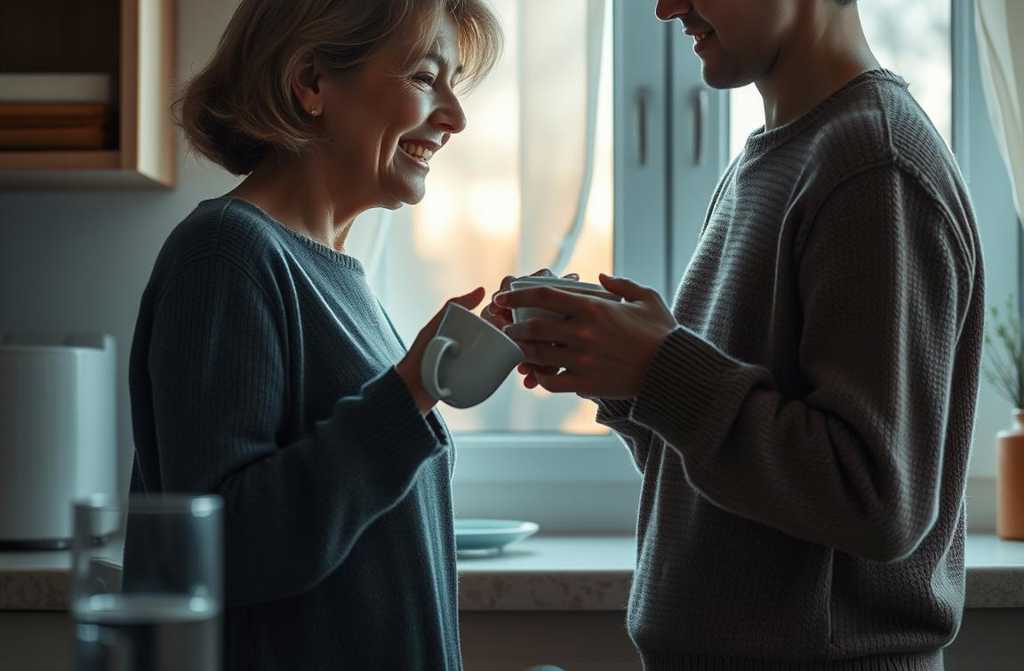
They sit again in silence, but the tension eases with those simple words. Helen pushes a box of tea toward himan automatic, soothing gesture.
Youre an adult now, she says gently. I need to learn to let you go a bit I keep worrying Ill miss something or do it wrong.
James meets her gaze.
I dont know how to act here yet back in the unit it was simple: you get the order, you do it. At home everythings different. It feels like the rules have changed without me.
Helen smiles faintly.
Were both learning to live together again maybe we should agree on a few things?
James shrugs.
Can try.
She feels a small relief at his willingness to find common ground. They decide aloud that James will buy bread every other day, that theyll both clear the dishes after dinner, and that each will have a quiet evening to themselves without the constant where are you going? questions. Both understand its only the first step, but the honesty feels important.
Helen cautiously asks about his work plans.
You wanted to look for something? Do you still have your discharge papers? she asks.
James nods.
Yes. I got the discharge certificate right after leaving the service; its in my backpack with my service record I just dont know where to start.
She mentions the local Jobcentre, briefly describing the free advice and programmes for veterans. James looks uneasy.
Do you think its worth going? he asks.
Helen shakes her head.
Why not? If you want, I can go with you in the morning for support or just help sort the paperwork.
He thinks for a while, then says, Lets try together first.
The kitchen feels a little warmerperhaps because the overhead light is off and only the soft lamp glows, perhaps because they finally managed a calm, honest conversation. Outside, the neighbouring houses flicker with latenight lights; some people are still awake in the small flats of this earlyspring evening.
When they finish talking, they clear the cups and wipe the countertop with the damp cloth.
Morning breaks with gentle light through heavy curtains; the city outside wakes slowly, schoolchildrens voices and birdsong drift in through the open kitchen window. Ventilating no longer feels frightening. The air is milder; the nights chill leaves with the lingering anxiety.
Helen puts the kettle on and pulls a packet of biscuits for breakfast in place of the missing loaf. She spreads Jamess documents on the table: the redcovered service record, his discharge certificate, and his passport. She looks at them calmlynow they signal a new chapter of his life, beginning here and now.
James steps out of his room, still a little groggy but no longer distant, sits opposite his mother and offers a brief smile.
Thanks, Mum, he says.
She replies simply.
Shall we go out together today?
He nods. That yes means more to her than any promise she ever made.