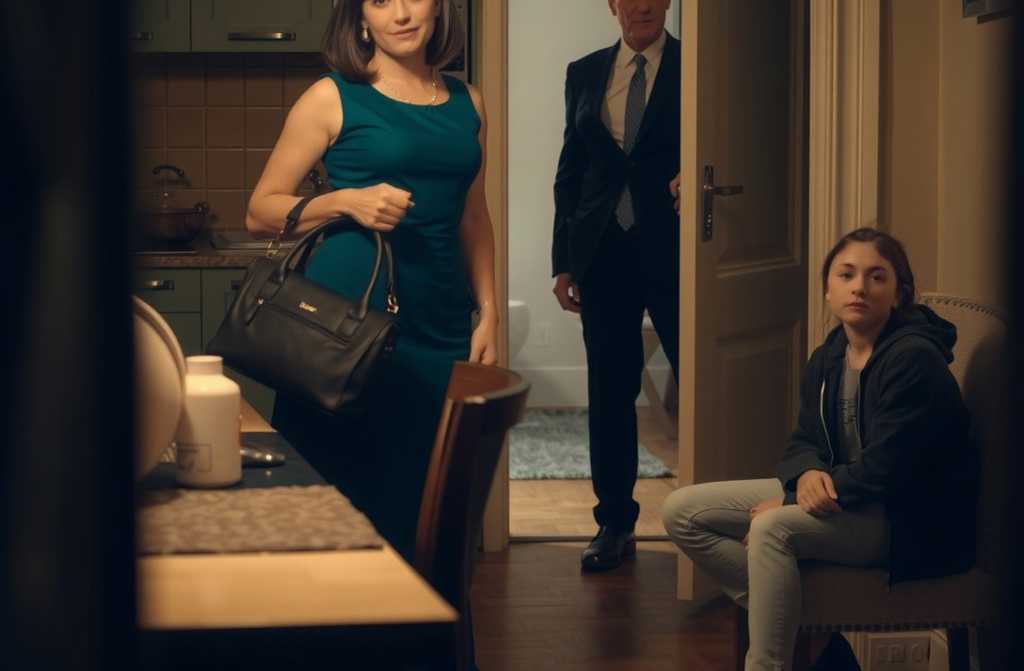
She Wasnt There
I remember the aroma of fried onions when he came in. Thats what truly stays with me from that evening: not his words, not the look on his face, not even the way he flung his suit jacket over the back of the armchair Id restored myself, reupholstering it in midnight blue velvet. I remember the smell of onions because Id just lifted the frying pan from the hob, and he walked in at that very second, and something inside me tightened and fell quiet.
Listen, news, he said, still in his coat. Briefcase thudded to the floor, tie already loosened. Tomorrow Jennings will announce it officially, but I know already: theyve hired me as Head of Development. You get that? Head. Proper position.
I get it, I replied.
Its different money now, Ruth. New level. Theyll want me at the board meetings. Ill have to get a decent suitnot some cheap Mark & Spencer, but something proper.
I set the pan down on the trivet. Turned off the second ring and faced him.
Its my forty-fifth birthday today, I said, steady as I could. And our tenth wedding anniversary.
He stared for three, maybe four seconds.
Ruth, I told you. Im Head of Development. Its serious.
I heard you.
Right. Are you eating? Im not hungry; there were sandwiches at the meeting.
He vanished to the bathroom. I heard the tap run, then him humming something, so quietly you could barely catch a tune. The sort of thing he hummed whenever he was in high spirits.
I stayed by the cooker, looking at the onions softening and caramelising, already almost see-through. I was preparing chicken with roasted veghis favourite. Not mine. I didnt bother with my own that night.
The cake was in the fridge: a Red Velvet, which Id ordered from Sweet Violet three days before and collected myself, since my husband had left unexpectedly early that morning. The box of candlesforty-five, shaped like starswas tucked in the sideboard drawer. Id put them there myself that morning, while he got dressed. Thought Id set them out in the evening.
Ellie came in around half past seven, dumped her rucksack by the front door, and walked straight past me to her room. Past the kitchen, thick with the scent of lemon cake and cinnamon. Past me. Didnt even stop. She was fifteen then, Ellie. The age where a mother becomes a function, not a person.
I didnt yell. Didnt cry. Didnt even feel aggrieved in the usual sense. I just stood there, understandingcrisp and clear like the seven times tablethat I was invisible in this house. Not in a row with someone, not a misunderstanding, justnot there. There was a function. Hands that cooked chicken, moved rucksacks, checked maths homework, gave lifts to pottery class. A voice that said, Dont forget your jacket. But meRuth BennettId not existed here in quite some time.
I realised that with a calm that nearly frightened me.
When Simon came out of the bathroom, Id already set a plate for him.
Theres chickenhelp yourself if you want.
Told you, not hungry.
All right.
Listen, shall we talk about new suits tomorrow? We need to get to Silhouette, theyve got a good selection there.
Fine.
He took his phone and went into the lounge. I heard him ring someone, voice bright and lively. A mate, maybe. Or a colleaguesharing the Head of Development news.
At half ten, when the house was quiet, I took the cake from the fridge. Cut myself a slice, set it on the kitchen sill, lit a single white candle Id found in the desk drawer. Sat in the dark, watching it burn. Made a wish. For the first time in years, I had a real one, clear and undiluted.
I wanted to leave.
Not run or vanish in a fit of passion. Just go. Quietly. Decently. For good.
The candle burnt down. I threw away the stub, rinsed the plate, put the rest of the cake back in the fridge.
In the morning I was up first, as ever. Woke Ellie, put the kettle on, sliced bread. Simon emerged in a maroon tie Id never seen before, fine print. Clearly bought himself. When did he do that?
Its official today, he said, buttering toast. There might be journalists. Theyll update the company website. Ruth, can you fix that white shirt by Friday? The buttons hanging by a thread.
I can.
Great. Ellie, dont be late.
Dad, Im never late.
You have been.
Once. Last year.
I listened to them chat, buttered a second round of bread even though the first lay untouched. Needed something to keep my hands busy.
That evening, I opened up my old laptopthe one Id stashed above the wardrobe, behind Ellies childhood drawings and the interior design magazines Id stopped buying in 2012. Before Ellie, Id worked as an interior designerthree years at Space Studio. Then Simon had said, We need a child, not two salaries. He said, You want that yourself, dont you? And I really had. Or thought I did. Or thought it was what you did.
I wrote to Helen Taylor. Wed studied together at the College of Applied Arts. Helen stayed on in design, set up her own firm. Id occasionally come across her work onlinealways elegant, with a sense of space. We hadnt spoken for seven years.
Helenits Ruth, now Bennett. Not sure if youll remember. I wondered: do you have any vacancies at your firm? I havent practised in a long time, but I have my student portfolio, and I did a few personal projects. I know its a strange question after so many years.
I sent it. Shut the laptop. Went to check on Ellies history homework.
Helen wrote back two days later. Brief: Ruth! Of course I remember. Pop by for tea, lets chat. She gave me the address.
I went in on Wednesday, told Simon I had a beauty appointment. First little white lie in ten years. Neat. Unobtrusive.
The firm was in an old townhouse on Rose Street, upstairs, wood floors, three offices and a shared studio. Smelled of coffee and paper. Architectural drawings and fabric swatches pinned up everywhere. Something in my throat tightened at the scent.
Ruth, Helen said, rising from her desk. You havent changed a bit.
She had, though: more self-assured, shorter hair, delicate glasses. Together.
Changed, I replied. But quietly.
We drank coffee and I talkednot everything, none of the anniversary or candle. But about design: that Id never totally left, that Id redone our place three times, that I kept up with the trends. That I felt I could come back, if given some time.
We have a vacancy, Helen said, stirring her mug. Not a lead role, not straight awayassistant designer. Pays modest, but the projects are strong. Three months probation.
Ill take it, I said, mouth running ahead of my head.
Helen studied me.
Are you all right?
Not really, I admitted. But I will be.
She nodded. Didnt interrogate. I was grateful for that.
On the way home I dropped by Homely Lets, the estate agent Id passed for years but never noticed. They showed me a few rental flats. Bedsit on Willow Lane: third floor, windows to the back, fresh paint, simple but enough furniture. Faint hint of another life in the air, but that would fade.
I collected the keys four days later. Paid with savings Id skimmed from the housekeeping budget over three yearsnever too much at once, £20 here, £30 there, sometimes a bit more. Simon never paid attention to the receipts for bread and milk.
The Willow Lane flat became my secret. Id visit once a week at first, just sit on the window ledge with a flask of tea, looking out at the courtyard. Eventually, I brought things across: books that remembered me from before marriage, art albums, the mugs I loved but which at home were hidden at the back of the cupboard. The green throw my mum gave me at thirtyId said it was lost in the wash. Simon never asked twice. Drawing tools, pattern templates.
It was methodical, almost meditative. Each item shifted between houses was a tiny decision. A little yes to myself.
I started at Helens firm two weeks after our chat. Told Simon I was doing top-up training, to keep my brain sharp. He shrugged. If you like. Ellie asked what I was studying. Design, I replied. Cool, she said, and went back to her phone.
That first week at the firm, I was so tense my shoulders ached by evening. Software had moved on, some lingo changed, new tools appeared. But spatial sense hadnt left meit had waited, boxed away for thirteen years like winter clothes.
Ruth, look at this plan, said Sophie, the young designer I was teamed with. What do you think about the layout?
Id look, Id comment. Sophie would nod, sometimes seeming surprised. I had experience of how people actually lived in flatsa lived-in skill young folks hadnt yet acquired.
Slowly, something grew in me, something unnamed until I found it later: a sense of my own weight. Like after months in water, you finally feel the ground under your feet. Uncomfortable at firststrange, even a little painfulbut real.
At home I was unchanged. Cooking. Cleaning. Listening to Simons boardroom tales. Checking Ellies progress. Asking about their day. No one noticed a thing. Perhaps because, long ago, theyd stopped really seeing me at all.
Some nights, lying awake, I questioned what I was doing. Leaving a marriage. Walking out on the man Id spent ten years with. Leaving my daughter. That, most of all, pressed in on my chest, enough that sometimes Id get up, stand quietly at Ellies door and listen for her breathing. Think: I cant do this.
Then Id remember the onions in the pan. The Red Velvet in the fridge. The white candle burning just for me on an empty kitchen sill.
And Id realise: I already had. The decision happened that night; the words came after.
Ellie wasnt a bad kid. Its important to sayshe was a normal teenager, lost in her own world, her phone, her friends. She wasnt cruel or deliberately cold. She just grew up in a house where her mother was airnecessary, unnoticed. Who thinks much about air?
One evening, in October, Ellie wandered in late as I sat at the table with my laptop, sketching the layout of a clients city flat.
Mum, what are you doing?
Working.
I thought it was just courses?
I looked up. She glanced from my screen to my face.
Im a designer, I said. Interior. Used to work, then stopped. Im back now.
She paused.
Thats lovely, she said, of my sketch. Whos it for?
A young couple. Their first home.
Is it hard?
Interesting.
She poured herself water and left. But I could sense something had shifted, ever so slightly. Shed seen me differently.
By November, most of my me was at Willow Lanepassport, diploma, my professional files. Books and objects that remembered me as a person, not a role. In the house, everything left was communal: furniture, plates, family photos. I didnt contest any of it. That belonged to another life.
By then I had a history at Helens firm: three projects over probation, good feedback from clients, even had one flat published under the studios name in Home & Life magazine. Small things that were mine. Real.
Helen made me staff at the end of November. The pay rose a little, enough for rent and living. I calculated: if I left now, I could make do. No luxury, but enough. Enough to exist.
I didnt worry about divorce lawyers or child support. Not because I didnt know my rightsI did. I just wanted to keep what was mine and take only what I needed. No bargaining, no explanations that wouldnt be heard anyway.
Helen put me in touch with her solicitor friendMrs. Sarah Green, brisk, precise, about fifty. I met her mid-November, folder of papers in hand.
Children? she asked.
Daughter, fifteen.
Will you seek custody?
Not straight away. Let her choose. I just need her to know I have a home, and shes welcome, always.
Sarahs look held something close to respect rather than pity.
I understand, she said, and wrote quickly in her notebook.
The paperwork was ready by early December. I hid it at Willow Lane.
The date Id leave kind of picked itself. Simon said, in late November, he wanted to mark his promotioninvite colleagues, Jennings, a couple of friends. Twenty or so, at home. Id handle the food, of coursewhy else was I here?
Then I decided: that dinner would be my last.
Not for drama, not to make a splash. Simply because it fit. Id leave as Id entered: after feeding everyone, tidying up, making sure all were cared for. Final party. Final bow.
And I would say what needed saying. Not for the audience. For myself. Because in ten years, Id never once told my truth aloud, for all to hear.
The Friday before the dinner, I asked Simon:
Give me the guest listhow many do you want and whos coming?
Twenty-twowill send you the list.
Do send it.
Are you sure youll manage? Should we order some things in?
Ill be fine, I told him.
And it was true. I always managed. That was one thing he never doubted.
Dinner was Saturday. Friday night I started on the slow dishesmarinades, pastry for the tartlets. Ellie came in at ten, poked her head into the kitchen.
Mum, whenll all this be eaten?
Tomorrow. Dads party.
I know. Am I joining?
If you want. You can go see Sophie if youd ratheradults, boring chats.
Ill see.
She went to her room. I went on prepping and chopping, working by hand, thinking of nothing. It was almost soothing, the last time.
Saturday, I was up at seven and launched into cooking. Roast duck with oranges (Simon’s uni favourite), baked salmon with herbs, three starters, pumpkin soup for vegetarians (Jenningss wife doesnt eat meatnobody had told me to remember, but I did). Two puddings: chocolate fondant and my apple cinnamon tart. Fresh bread from Good Loaf, crusty and warm.
Once everything was underway, I showered, did my hair, dug out the emerald dress. Bought it three years before, on a whim, shoved it in the wardrobe, waiting for an occasionalways one that never arrived. Now it had.
The dress fit perfectly. Ive always looked good in green; Simon used to say so too, years ago, though hed long since stopped commenting on how I looked.
I put on my emerald earringsreal ones from Mum for my thirty-fifth. For the first time in ages I reached for the perfume Id hidden away: Evening in the Garden, French, citrus with white florals.
I regarded myself in the mirror for a long time. No criticism, no measuring against my twenty-five-year-old self. Just looked. Forty-five. A woman. Designer. Me.
Guests started arriving at seven. Simon greeted them in the new Silhouette suit wed picked out together three weeks agoor, rather, Id helped him, offering opinions, getting sizes, guiding choices. Hed try things on, Does this work?Looks great, Id say. As always.
I took coats, offered glasses of wine, showed folks to their seats. Smiled, answered questions. Ruth, you look wonderful, said Mrs. Jennings, the vegetarian. Sweet woman, wed met four times ever.
Thanks, Marianne. You look lovely as well.
That dress! Simon, look how Ruth shines!
Simon glanced my way, glass in hand.
Yes, he said. Nice dress.
And turned right back to Jennings.
I tucked my smile away. Headed to the kitchen.
Ellie arrived just before dinner, jeans and a neat jumper. She took a slightly longer look at me in my green dress but said nothing. I didnt expect her to.
The meal went well. Everyone complimented the dishes, asked for recipes, called me a culinary genius. I smiled, cleared plates, put out each course. Simon was in his element: leading the banter, sharing company strategy. He was good at it. Id always known that.
After the main, Jennings stood up with a toast.
FriendsId like to say a few words about a man our company is proud to see step up. Simon Bennett, Head of Development. Over five years, hes gone from junior manager to leader, energising the whole team. Lets raise a glass.
Everyone toasted, applauded. Simon stood, beaming.
Thank you, all. Thanks especially to Jennings for believing in me, to the team, to every one of you for sharing this moment. And special thanks to my mum, always saying, Work honestly, youll be noticed. She was right. Thank you all.
He sat. More applause.
I sat opposite in my emerald dress, glass of water untouched. Listening. Waiting. Not one mention of me. Not a word. Not even a hint. The woman whod cooked for twenty-two today, whod scrubbed twenty plates between courses, whod spent three days preparing the spread, whod kept house ten years so he could build a career and get promoteddidnt exist in his speech.
I set my glass down.
Id like to say something, I said, voice level.
Simon looked surprised.
Ruth, honestly
Just a minute, I said, scanning the table.
Twenty-two pairs of eyes on me. Jennings polite and expectant. Marianne, watching. Simons friend Tom, eyebrow raised. Ellie, at the end, gazing at me like she had the night she saw my design work: intent, as if she was seeing me for the very first time.
Id like to share something, I said, my voice unwavering. A month agoOctober 19thwas my forty-fifth birthday. It was also our tenth wedding anniversary. I always thought the coincidence rather beautiful.
Silence. I could hear Simon tap the stem of his wine glass, an almost imperceptible clink.
That night, I made chicken and vegetables. There were candles on the kitchen table. Cake in the fridge. I didnt say anything out loudthought perhaps youd remember. But you didnt. Which only confirmed what Id known for some time: that I do not exist in this house. Theres a cook, caretaker, driver, homework helper. But Ruth hasnt lived here for years.
I spoke steadily. No drama. Simply telling the truth to people whod never heard it, even myself.
I left my career thirteen years ago. Voluntarily, yesbut voluntary meant, at the time, because it was expected, because someone had to keep things ticking, because I thought my time would come later. It never did. And I never asked for itI truly thought youd see without being prompted. But you didnt.
Simon sat stone-still. I caught the muscle in his neck tense. Ellie watched me, unwavering.
I want you all to knowbecause you are witnesses to this lifethat my things are already out of this house. My documents are with my solicitor. Im living on Willow Lane now, where Ive rented for the past two months. Im working as a designer at Helen Taylors firm. And there, I actually exist.
The silence was thick, ringing.
This is my farewell dinner as lady of this house. Im glad you enjoyed it. It was delicious.
I picked up my handbag, poised for this moment beneath my chair. Stood.
Elliedarling, you know my address and number. Im here for you, wherever you are.
She looked at me, face unreadableso much at once.
I walked out. In the hall, I took my coatleft on a hook, not in the cupboard, deliberately. Picked up my bag. Took out my new keys, Willow Lane, with a little blue bird keyring Id bought at a corner shop. No symbolism; it just cheered me.
I stepped outside. Closed the door. Twenty-two people remained inside, and ten years behind that door. Simon, still lost for words. Ellie, perhaps beginning to understand.
It was Decemberbitter and clear, snow just starting, fine and hesitant. I walked to my car, mind already on what lamp to buy for the living room. That flat needed more light in the evenings.
I focused on the lamp, because if I let myself think of Ellie, Id stop. Not turn backjust stop, frozen in the falling snow. But I needed to keep moving.
I bought the lamp two days later. White, fabric shade. Put it in the corner of my little living room. Switched it on. The room felt different straight away.
The next few days felt strangenot bad, not heavy, just odd: like the early days of a new job, where everything feels unfamiliar and yet yours. I woke without an alarm. Well, I set one for the firm, but when I woke now, I didnt immediately think: Did Ellie eat? Wheres Simons jacket? What should I cook?
I thought: Coffee. Then: Get ready. Then: Work.
A straightforward routine. Simple. But it was mine.
Simon rang next morning. I answered.
Ruth, what was that?
You heard me.
You made a scenein front of everyone. Jennings. All of them.
I told the truth to people. That’s not the same.
What truth? If you had issues, couldnt we have talked? Like grown-ups, without the theatrics.
I waited.
Simon, we were married for ten years. In that time, you asked how I really feltwhat I wantedmaybe three times. If Id known such a conversation could happen, Id have marked the dates.
Youre exaggerating.
Possibly.
Is there someone else?
I closed my eyes. Opened them.
No, Simon. Theres no one else. I left to be with myself. Thats not something youll grasp, I know. My solicitor, Sarah Green, numbers in the folder I left in the right-hand drawer.
Ruth
Is Ellie with you?
Yes. In her room.
Fine. If she wants to visit, Ill be delighted. Dont keep her from me.
Ruth, this isnt normal.
Perhaps not, I said. Goodbye, Simon.
I put the phone down. Poured another cup of coffee. Opened my laptop.
I had a project: a small country house for a young couple, wanted space and warmth. Id worked at it for three weeks. I knew what to do.
The first month was up and downintense, unfamiliar, sometimes lonely in that sharp way you get on a November Sunday. More than once I picked up my phone to call Ellie. I didnt. I waited for her to come to me. She needed time.
Ellie called three weeks later, on a Sunday morning.
Mum.
Ellielove. How are you?
Pause. I could hear her breathing.
Mum, Dad cant make soup.
A smile almost escaped me.
Hell learn.
He bought one in a packet. The sort you pour boiling water over.
That works too.
Pause.
Mum, can I come on Sunday?
Of course. Ill be in.
Will you cook?
This time I did laugh, quietly.
Ellie, I cook every day. Come round.
She turned up next Sunday with her little rucksack. Rang the bell, even though Id said, Youll have a key. I opened the door. She stood there taking in my homey trousers and jumper, not an emerald dress, just me. She looked as if she expected someone else.
Come in. Hang your coat up.
She stepped inside, looking round. The Willow Lane flat was small: a hallway, a kitchen window to the back, a room with my corner lamp and bookshelves. Id hung prints from my favourite albumsmade it feel a bit like a workshop.
Its cosy, she said, almost surprised.
I try.
That lampyou chose it?
I did.
Its lovely.
We drank tea, eating apple tartmy signature. Ellie ate quietly, then asked:
Mum, why didnt you say you were unhappy?
I paused, determined to answer honestly.
Because I wasnt sure anyone was listening. And because at first, I didnt really know what was wrong myself. When you only see a bit at a time, its hard to say.
She nodded. No protest or denial. Just acceptance, like someone taking in facts.
Dad reckons there was someone else.
Thats his version, I said evenly. Not mine.
I know.
You do?
She looked straight at me.
I saw you. Last months. You changed. It wasnt someone elseit was inside.
I was forty-five, and my fifteen-year-old had just said something truer than anything Simon had in a decade.
Yes, I said. Inside.
That year sped past yet felt slow all at oncethe way time works when youre living for real, not just ticking boxes on someone elses schedule. By spring, Id been promoted to senior designer at the firmHelens idea, not mine. I had two major projects of my own, another with Sophie. Clients were pleased. One project, a riverside flat for an elderly couple, made the finals of the Space of the Year awards. We didnt win, but got to the last round. That was enough.
I got to know my new neighbours: a man with a ginger dog called Biscuita funny name for such a serious dog. Old Mrs. Parker from downstairs, who took her cat out on a lead every evening, saying Well, they want their walkies, dont they? A student upstairs, who played guitar and once asked my advice about her rooms layout. I moved her desk by the window; she was thrilled for a week.
I found I was happy with little things. Good coffee on a lazy morning. Reading a book just because I fancied it. A hot Saturday bath. A new plant on the windowsilla young, glossy ficus.
Ellie and I met every Sunday. Not always at minesometimes at the Bean & Grain, sometimes at the pictures. Shed tell me about school, mates, plans to study architecture. Thats a bit like what you do, isnt it, Mum? she said once. Sort of, I agreed. Do you enjoy it? I like it, yes. She stared at the menu and thought. Then said, Good. Im thinking right, then.
The legal divorce took six months. At first, Simon dragged his feet, Think about itits a big step. Sarah Green handled his solicitor kindly but firmly; I stayed clear of the negotiations. By summer, it was done. I got the car and my share of the joint account. He kept the house and its contents.
He rang once, after everything was signed. I picked up, out of courtesy.
RuthI want to understand. Did I do something wrong?
Genuine questionhe truly didnt see it.
Simon, you did nothing terrible. You just didnt see me. Not for ages. Not at all.
I was providing. For us.
I know.
So whats the problem?
I took a few seconds.
The problem is, I was working too. Inside the home. And no one saw me. No days off, no celebrations, no promotions. And even on the day when it was both my birthday and our anniversary, I wasnt there for you. Not even that day.
Ruth, I was tired. That doesnt mean
I know you were tired, I said. I was tired toothirteen years. Every day. No holidays.
He was silent.
Take care, Simon. Really.
I put the phone down. Opened the windowAugust, warm evening, someone watering flowers in the courtyard below. Earthy air. I stood, thinking: thats it. End of this chapter. The next one begins tomorrow.
No triumphno grief, either. Something like the honest relief after a hard exam, knowing theres still plenty ahead to learn.
By the end of summer, Ellie would stop by more oftennot just Sundays; sometimes Friday after school, a bowl of soup or some pasta. Shed help with the washing up, not because I asked, but because she understoodtheres no one else here. Once, she started clearing cups the minute she walked in. Watching her do it, I thoughtnow she gets it.
Mum, she said one autumn weekend, almost a year later. Dad doesnt know where to put things. He tries, but then cant find them again.
Hell learn.
Hes hired a cleaner now, once a week.
Thats sensible.
He pays her more than he used to give you for the housekeeping.
I looked up. She gazed at me with gentle irony, almost fond.
Thats normal, Ellie, I said. Its how it works.
I know. It justmakes me laugh.
A little bit.
October nineteenth, a year to the day since that night, I woke early. Made coffee, opened the window. The courtyard was stirring: Mrs Parker with her cat, man with Biscuit, student dashing with her rucksack. Same as ever.
Id ordered a Red Velvet again, for old times sake. Put it on the windowsill. Forty-six candles this year, bought from the corner shop. Lit them all. Waited till each one was properly alight.
Made my wish.
The phone rangEllie.
Mum, happy birthday.
Thank you, love.
You know today would be your eleventh anniversary, well, officially.
I remember.
How are you?
Im good. Ive got cake.
Already? Its only eight.
Perfect time. Nobody to interrupt.
She laugheda real laugh.
Mum, Ill come by this evening, yeah?
Course you can.
Need anything?
Just you.
Pause.
Mum?
Yes?
Are you happy? I meanreally?
I looked at the cake, all forty-six candles flickering gently. Outside, the courtyard buzzed. In the room, my own corner lamp, chosen by me. Prints on the walls I loved. The project waiting for me after breakfast.
Yes, I said. Yes, Ellie. I am.
Good, she said simply. Good, Mum.
And it was true. Without a but or if. Just true.
I blew out the candles, all forty-six.
Outside, snow was fallinglight and tentative, as it had a year before. Only this time I stood by my own window, in my own place, keys with a blue bird keyring hanging by the door. And I didnt go anywherejust stood and watched the snow settle on branches, on benches, on the shed roof someone had built ages ago, one I saw every morning.
Then I went back to the table. Poured another coffee. Opened my laptop.
There was work to do.