Time to get married, I suppose.
Emily was lucky she landed a job cleaning the marble hallways of a posh apartment block. It happened quite by chance; shed only dropped by to enquire about a cleaning vacancy in the estate next to the nurses accommodation by Queen Marys Hospital, but ended up here instead.
At first, she didnt even consider she might get the job. Now, she knew every pale crack and chip in the marble floors by heart. Her hands swelled and blistered from the cold water, red and sore after scrubbing away the stains left by her mop. After a day or two, the pain would subside, at least until the next time. The caretaker never let her near the tap with hot water. Emily blamed herself shed gone and scrubbed all four entrances in a single weary afternoon, when really she couldve spread the work over four days. She just wanted a couple of days respite to focus on her studies. The following time, she only swept and cleaned patches here and there, doing the deep clean once a week.
She badly needed the work. The pay here was far better per square foot than the drab red-brick flats down the road.
“Morning, thank you for keeping things so tidy,” smiled an elegant woman, tiptoeing around the freshly washed floor only to leave her muddy footprints in the shining wet surface.
“Morning,” Emily grumbled, immediately scrubbing away the tracks.
One day, Emily thought, shed find herself on the other side, leaving muddy footprints on someones hard work. Shed thank the cleaner then shed be sure to. One day that would come. But for now
Shed break herself against these walls before ever going home again. She had to study. Shed swallow her pride, nurse her sore hands, but she wouldnt go back to her mother. She needed to make a life of her own.
Mum had tried to sort things out for her the old-fashioned wayby marrying her off right after school. Emily didnt get into university that first year, so she went home and worked as a shop assistant in the village co-op, quietly deciding to spend the year revising and try again.
She managed it the following year.
The university awarded her a spot in a student hall. She quickly befriended Alice, and they shared a small room together. Alice was a good soul, and that made it even more mortifying when Emily had to borrow money or eat the food Alices parents sent up from Kent.
Meanwhile, Emily wore her ancient wool coat and a pair of felt boots that embarrassed her terribly.
“Mum, I know youve not got much, but please, could you send me some potatoes and a bit of meat if theres any spare?” she wrote home at the end of November, when shed run out of money.
“Emily, come home. Stop making life so difficult for yourself. The local shop will always take you back. Weve no extra money; we buy the tiniest potatoes from the Parsons. As for meat, dont even ask,” her mother replied.
Emily spent her scholarship money on pork bones. No actual meat, just three bones in a packetone large, two smaller, mostly gristle. Still, they made a hearty broth. She cooked her meagre fare in the communal kitchen, filling the corridor with a slightly sour, unpleasant smell.
Winter arrived, and Emily realised she couldnt survive on her scholarship alone. Not that her pride allowed her to ask for more handouts. She set off to find a cleaning job.
“You wont keep up with your studiesjust think of all that Latin!” Alice tried to talk her out of it.
“Ill manage,” Emily insisted.
She wrapped her Latin notes in newspaperfirst day on the job taught her if she grabbed them with wet, filthy hands shed ruin them. On the landings, shed sneak out her exercise book, memorise a few words, then scrub the stairs, mumbling grammar rules to herself. Sometimes, shed get lost in thought, forgetting where she was; memories of the university flooded her mind.
There were plenty like her at university those scraping by, and those not.
“Em, fancy a look at Vogue?” called down the girls from the year above. One wore a leather gilet and flared trousers, the other offered her a magazine in her denim pinafore as if to say, “Wont change your life, but at least youll see how people are supposed to look.”
Emily didnt feel ashamed before these girls, but before Aliceshe did.
She lost weight, got one cold after another, her nose always running, throat perpetually sore. She attended lectures even with a fever and sat her first set of exams whilst properly ill, but scraped through, earning her scholarship.
“Whatevers the matter with your hands?” asked a professor, staring at her red, cracked knuckles.
“Allergies,” she lied.
She just needed to make it through her first year. There was no one to help.
***
Meanwhile, Tom brought stock from the factory for the warehouse. He kept the inventory, and though he wasnt required to, he always helped the lads unload the vans. The weather had turned grim a slushy mess of snow, mud, and rain.
Suddenly, someone called his name. He turnedthere, at the gate, stood a slim girl who looked barely out of school. Thin coat, skinny legs in fabric boots, hair askew under her hat, grey as dusk feathers.
“Emily?” he handed off a box and hurried to her. “Emily! Blimey! What brings you here?”
“Just working,” she replied, waving vaguely.
She smiled. He doubted their brief acquaintance a year ago had left any great impression, but still, seeing a familiar face from their little village in a huge city was a kind of comfort.
Tom found himself grinning.
“Mum said youd made it into medicine,” he said.
“I did,” she nodded, “and Im doing well. This cleaning jobs just a sideline, reallysomething to keep busy.”
Tom recalled her circumstances.
“Your mum helping out?”
She paused; her face changed. He regretted the questionobviously a sore point. Yet she worked to keep up the cheerful façade.
“Of course. Anyway,” she said, “its just nice to see someone from Staveley. Ill be off now, need to catch the bus.” She turned and nearly skipped over the puddles light as a frostbitten bird.
Tom lingered a bit, and when he glanced back through the warehouse window, Emily was gone from the bus stop alreadyflown away. The image stuck with him: the birdlike girl, slight and pale, with wind-ruffled hair and blue hands from the cold.
He found himself thinking about her more and more. Determined young thingshed made it in, after all. Still, he doubted her mum was helping much.
Toms own life had shifted that year. Hed found himself seeing someonenot the right girl for a lasting marriage, truth be told. It started when a woman from work came running to him about her heavy-drinking husband. Somehow, Tom got caught up in her cycle of leaving and forgiving said husband. Their own involvement went nowhere, but he never quite managed to break things off, even when she went back to her husband.
After seeing Emily again, Tom could think of little else. At the weekend, he decided to acthe set out to find the medical colleges student halls. There turned out to be several near each other. He started asking about.
“Excuse me, does Emily Watson live here?”
The receptionists werent always helpful, but luck was on his side.
“She does. And you are?”
“Were from the same village,” he grinned.
The matron rang up, but it was Alice, not Emily, who appeared.
“Hello. Emilys out at work,” she said.
“Work? Whereabouts?”
“Um why do you ask?”
Tom laughed. “Back home, people once whispered Id end up with herwe were supposed to marry, you know. Just hoping to see how my fiancée is getting on with her studies.”
He meant it as a joke, but Alice didnt smile. She looked straight at him, making him feel a little awkward.
“Her studies are going well. Weve just passed our exams. In fact, Emily got a mark higher than I did. Shes determined to be a doctor and, honestly, it suits her perfectly!”
Tom felt a faint challenge, a touch of resentment in Alices words.
“Thats really good to hear. Will she be back soon?”
“Dont know. Different every day” Alice seemed to waver.
Tom decided to be honest.
“I know her mum didnt approve of her studying. Does she help at all? No? I figured as much,” he said, sinking onto a nearby bench.
Alice sat beside him.
“Emily gets no help whatsoever.”
“Youll catch your death, sitting here in this weather,” he said, noticing Alices thin cardigan.
“Wait,” she hesitated. “Youre right. Emilys struggling. Thats why she works weekends. And she shouldntshes been properly ill lately, barely made it out of bed this morning. I told her not to go, but shes stubborn well, Ill tell her you came. Sorry, what was your name?”
“Tom. Ill be back. Is she in tomorrow?”
He popped back earlier than planned, swinging by the shop to buy a chicken, some sweets, and a few expensive groceries, handing them to Alice.
“This is too much. She never accepts anything, not even from me,” Alice said.
“Make up a storysay someone from Staveley sent it. Ill drop by tomorrow night.”
“Best be in before nine after that, they wont let you in.”
He finally caught Emily the next day. She looked dreadful scarf wound around her throat, eyes red, feverish. The corridor was freezing; he sent her off to bed without much chat and dashed to the chemist. He spent a third of his wages on medicine and honey, leaving it all with Alice, who thanked him profusely.
He was shocked to learn, only a couple of days later, that Emily was back at her cleaning job.
“I tried to stop her,” Alice said, clearly agitated. “Shes so stubborn. The minute she feels a little better, shes off again. Shes terrified of losing the job. Yet shes barely strong enough to lift a bucket.” Alice bit her tongue, then confessed, “She never wanted you to know.”
“Tell me where. Please, Alice, shell work herself to death. You have to let me help.”
Alice relented and gave him the address. Tom didnt wait for the bus; he jumped in a cab, muttering to himself the whole way about Emilys stubbornness.
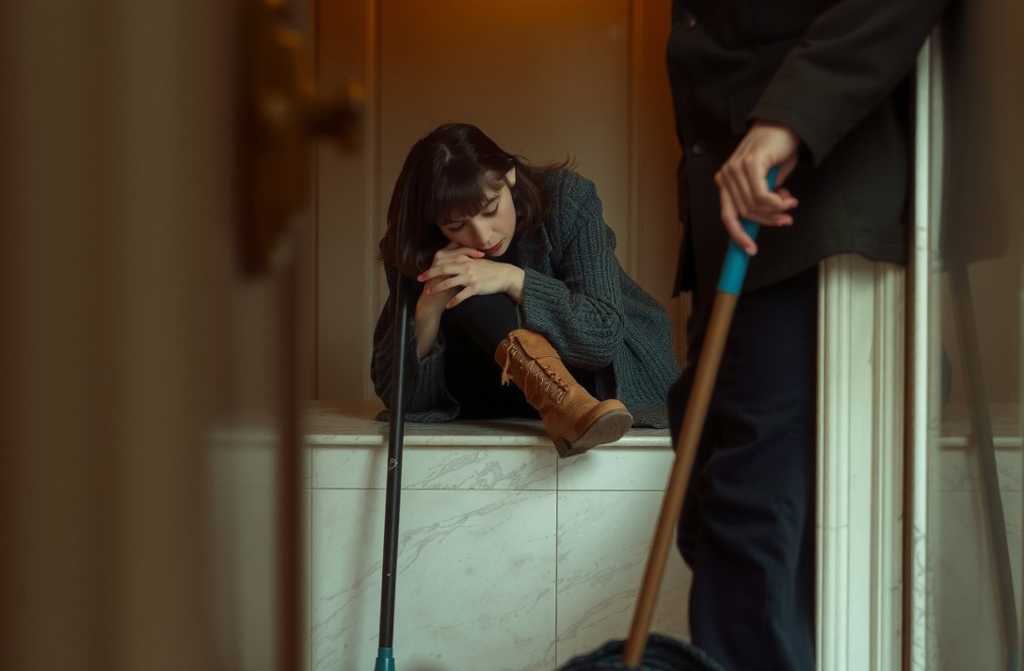
He dashed through one entrance, then another, quickly finding her in the third. From down below, he heard the swish of her mop. He slowed his pace, climbing the steps quietly. Emily, absorbed in her work, habitually shifted aside for him as if he were just another resident. Her eyes were half-closed, resting in snatched moments, and when he walked past, she resumed her mopping, red and exhausted.
She looked on the verge of collapse.
So, Tom grabbed the mop from her hands.
“Come on, give it over! Youre just smearing the place. Take off your gloves. Go sit by the radiator, and dont move till I tell you!”
Something in his tone must have struck home, because Emily didnt argue. She wiped her brow and slid off her gloves, surrendering the mop. Tom was shocked by how icy the water was as he rinsed the cloth and started scrubbing the stairs himself.
After five minutes he glanced over at Emily. She was slumped on a ledge, eyes closed, head resting against the wall. Good enough. He took off his jacket and covered her legs, then went off in search of hot water.
“Whats the story with the hot tap?” he demanded of a man crossing the hall.
“Ask old Mr. Carter in flat eighteen,” was the reply.
Tom found Mr. Carter and pressed him politely but firmly. The old man, gruff at first, relented in the end after Tom explained Emily was washing communal floors in freezing water despite being ill. In the end, no money changed hands, but Mr. Carter promised to let the cleaner use the hot tap.
“Tom, no need Ive rested now, honestly!”
But Tom refused to budge, scolding her and not letting her touch the mop. He finished up the job himself. Emily had no energy left to argue.
On the way back home, Tom practically bundled her into another cab.
“Emily, youve not finished recuperatingAlice said you coughed all night. Do you want to make yourself even more ill?”
“Im fine Dont you see? There are so many after this cleaning job. I”
“You really shouldnt be working at all you should be studying. Is your mother really?” He stopped. It wasnt right to criticise someone elses mother, after all.
Emily looked at the floor.
“I used to be hurt, Tom. But Ive realised she just cant help, truly. Shes like a child herself. Some people have enough trouble just looking after themselves. It was my gran who really raised me. Mum always expects me to manage on my own she wants help from me, not the other way round.”
“Alright. So, youre barely through your first year, yet youre running yourself ragged and youve five more years to go.”
“No, no the first years the hardest. After this, I can work in clinics. I just need to get through now, patch myself up,” she said, breaking into a fit of wheezing coughs.
Tom racked his brains for a way to help. She wouldnt take his money or groceries, but at least student medics were well looked after by their teachers. He bought her every medicine prescribed, and Alice never seemed to mind passing them on.
He and Alice cooked up a plan: shed ring Tom every time Emily set out to clean the flats. Tom had phone lines both at home and at work, so he was always able to swoop in and help. They got a second mop and split the work. Tom fetched buckets of hot water, making the job twice as quick and almost enjoyable. Theyd chat, laugh a little, andwithout really realisinggrew closer.
“Doesnt this clash with your own job, Tom? Dont they mind?”
“Im a delivery driver. Taking a couple of hours off once a week doesnt hurt no one ever notices.”
“Picture it: a delivery driver cleaning stairwells. Why do you do it, Tom?” shed ask sadly.
“Consider it a little village solidarity. Ive got every right to help a fellow Staveley girl.”
One day after such a cleaning session, Tom suggested she come over to his flat. She declined. So, he invited both Emily and Alice over for Sunday tea, and they brought a cakethough hed already had one waiting for them.
It was a cheerful afternoon, full of laughter.
“Em, do you know what Tom said when we first met?” Alice giggled. “He told me he was your fiancé!”
“Theres a tale!” Emily smiled. “Though I make a poor bridemy only dowrys a mop and a bucket.”
“Well, Id take you for a wife with nothing but that mop,” Tom blurted out.
They all fell silent. Tom tensed. Perhaps hed gone too farEmily was very serious about her independence. But Alice saved the mood:
“Right, so Im the matchmaker. Tom, would you take Emilymop and allfor your bride?”
Alice was joking, but her eyes were solemn as she looked at Emily.
Emily took a deep breath and glanced at Tom. For a moment, he realised this was more than a joke. It was now or never.
“Emily,” he said, taking her tiny hand, “marry me. I cant promise mansions, but youll have every chance to finish your studies. Ive a steady jobbut that isnt the main thing. I just cant stop thinking about it, about us. You see?” He felt embarrassed by his earnestness, so he smiled. “And, besides, its high time I got married. Mumll be thrilled.”
Emily smiled at last.
“Thats a yes, then, Em?” prompted Alice.
“Well Ill think about it.”
Tom was delighted. It was a small victory. He understood they hadnt really bared their hearts words werent the main thing; actions spoke more loudly.
A month later, Emily agreed. A delicate, skittish bird, independent but alone, shed finally found a place to nest. Thats how Tom saw it and, God, he hoped their home would feel like a true haven for her. He loved her fiercely.
He pictured them reminiscing in the kitchen about their Staveley childhood, telling stories to their future children, taking them back to those two grandmothers in the village.
“You know, Emily,” Tom said, “if I hadnt gone back to Staveley all those years ago, and if folk hadnt teased us about marrying, would you even have noticed me when we met in London? Probably not youd have just walked on by. So maybe that matchmaking gossip did us a good turnour mothers were right!”
Emily smiled. “Yesterday I couldnt bring myself to step on the wet floor at the shopit was being mopped. I suppose Ill never stop thinking about it, will I?”
“Probably not. Thats just who you are. And I always wanted to marry a village girl. Lets call that old gossip back home a stroke of genius. Our mothers did us proud!”
Reflecting on all of this, I realise now how stubborn determination and the quiet support of friends can shape a life. Love isnt just about words or grand gestures its the mopping of a stairwell together, the sharing of everyday burdens, and the simple promise to make one another a home.