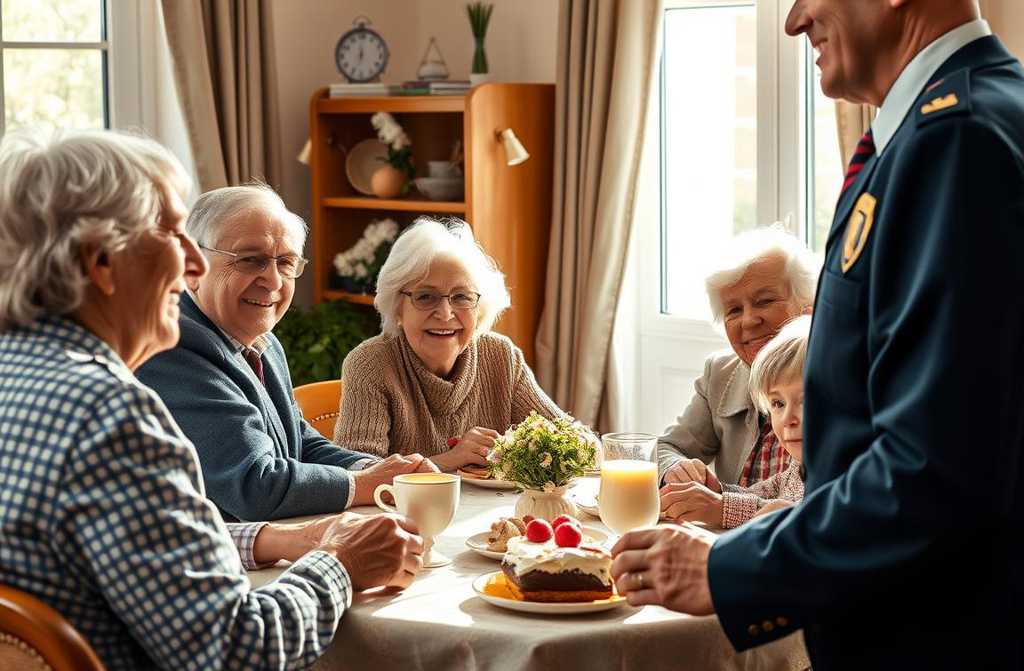
A brisk March morning found Simon Victor Ivan on the polished glass doors of the Bright Garden Nursing Home, just outside the limestone town of Ripley. A thin layer of frost still clung to the chestnut branches that lined the driveway, while a custodian in a navy coat pushed a bucket of meltoff water over the flagstones. Simon slipped on his security glove, checked the badge in his breast pocket, and nudged the warm door open.
Forty years earlier he had marched out of the academy as a fresh cadet; now, at fiftyfive, he entered the upscale care facility as the new security officer. His army pension kept the lights on, but a hefty mortgage on his sons new flat and his wifes prescription costs ate at the balance. The refresher course, the medical exam, the cleanslate background check all behind him. Today marked his first shift.
The receptionist, Grant, a slender young man in an impeccably pressed blazer, escorted Simon down a hallway adorned with reproductions of Constables pastoral scenes and bathed in soft amber light from recessed lamps. Your post is by the doctors office, Grant explained. Log every entry, and make sure no strangers disturb the residents.
Simon settled at a compact desk surrounded by CCTV monitors. The screen showed a spacious lounge that resembled an aquarium of comfort: leather sofas, a coffee vending machine, and a plastic figure of a smiling elderly lady at the entrance. He ran his finger over the laminated map three residential wings, physiotherapy, a heated pool. The luxury was undeniable, yet the hum of human life was almost a whisper.
At noon, while escorting Nurse Lily Parker on her rounds, Simon met a few of the residents. Retired Colonel Arthur Miles, a fellow veteran a decade his senior, stood by the window. Margaret Sinclair, a former university dean, clutched an ereader. Both offered polite nods, their eyes wary as if awaiting an order that could change everything.
The dining room smelled of fresh dill and the faint steam from sterilisers. Welltodo occupants dined on dietitianapproved salmon, plating each bite with the precision of surgeons. Behind a glass partition, grandchildren in pricey puffer jackets waved, slammed their smartphones shut, and hurried out.
On his second day, Simon stepped into the inner courtyard. Weak sunlight glittered on the damp tiles, and Margaret, wrapped in a long woolen scarf, gazed down the path. Im waiting for my granddaughter, she said with a wry smile. The university is nearby, but the walk feels like a trip to the moon. By evening the nightwatch log noted that nobody had visited the Litvinova wing.
The scene reminded Simon of the country clinic where his mother once lay. No marble floors, no imported equipment, yet the ache of loneliness rang with the same hollow echo. Wealth, it seemed, could not shield a heart from isolation.
From the thirdwing camera, he watched Colonel Miles sit for long periods by the window, his tablet switched off. The day before his son had dropped off a box of dried fruit, signed some papers, and driven off fifteen minutes later. Now the colonel stared at the grey sky, calculating trajectories as if plotting an artillery barrage, though there was no target.
In the staff smoking room, orderly Andy shared a quiet fact: Residents can ring the bell anytime, but most of their phones have gone dead the relatives have changed numbers. Simon nodded, noting another piece of the puzzle of quiet rupture.
That evening he carried a tin of tea his son had sent, labeled for everyone, and set it beside a crystal carafe. No one reached for a cup. A familiar professional anxiety settled over him: the urge to intervene, tempered by the limited authority of a guard.
During his night patrol of the third floor, a muffled sob caught his ear. In a modest sitting room, flickering with a latenight drama, Mrs. Tamara Davison her hand adorned with a large emerald ring dabbed her eyes with a tissue. Shall I call my daughter? Simon offered. No need, she replied, eyes fixed on the screen. Shes on holiday by the sea.
By dawn a plan had formed. He imagined the communal evenings he used to organise for his regiments mess. Why not try it here? At eight hundred hours he briefed Grant: We should hold a Family Day music, tea, a photo corner. Grant gave a quick nod and directed him to the director.
Director Lorna Vaughan sat behind a glasstop desk, tapping a pen against the surface. Simon stood, breathing steady. Budget? she asked. Ill sort the suppliers; the local school band will play free of charge. Ill handle the security. His voice was firm, though his stomach churned.
Permission granted, he printed invitations within the hour. Bright flyers reading Sunday, 31 March Family Day appeared on the reception desk. He then rang through the old contact list answering machines, fax numbers, dead silence. The first voice to break the quiet belonged to Margarets granddaughter, Blythe. If you really set this up, well be there, she said. Mission accepted.
Sunday arrived. Early light streamed through sheer curtains, bouncing off polished tiles. Potted hyacinths stood in the corners, their sweet scent mingling with the aroma of fresh scones from the kitchen.
Simon surveyed the hall. Chairs formed a semicircle around a small stage, a portable speaker poised for background music. Tea steamed on trays, next to pastries generously donated by the local bakery. He inhaled deeply; everything now rested on the guests.
Relatives began to filter in as the clock struck noon. First through the doors came Blythe, clutching a photo album and a towering chocolate cake. Margarets face lit up as if she were delivering a lecture to fresh undergraduates again.
Next arrived Colonel Miless son. The colonel straightened his tie, posture as crisp as a marching order. They embraced, and the conversation fell into an easy rhythm, shedding the usual tension.
Each new family melted the frost of March. Grandmothers debated jam recipes, grandfathers boasted about wartime photographs. Those who had come alone were invited to the communal table, offered tea and sweets, while Simon subtly nudged chairs closer together.
By evening, as the sun stretched shadows across the garden, Simon took a final sweep of the room. Not everyone had arrived, but enough had, and a quiet confidence blossomed the belief that community could revive even the most solitary hearts.
Laughter lingered between the tables when he spotted Mrs. Davison. Beside her sat her younger sister, newly arrived on an early flight. The two held hands, leafing through an old family album. The tremor in the emerald ring had steadied.
The shift drew to a close. Simon helped the nurses clear dishes, wheeled a chair to the lift, logged names in the register. Inside, a simple, sturdy assurance grew: a happy life need not be lavish, only a touch of perseverance and respect.
At the doorway he lingered a moment longer. In the modest garden, rose buds pushed through the gravel, finding their way toward the light. He smiled, feeling for the first time that his new post placed him exactly where he was needed.