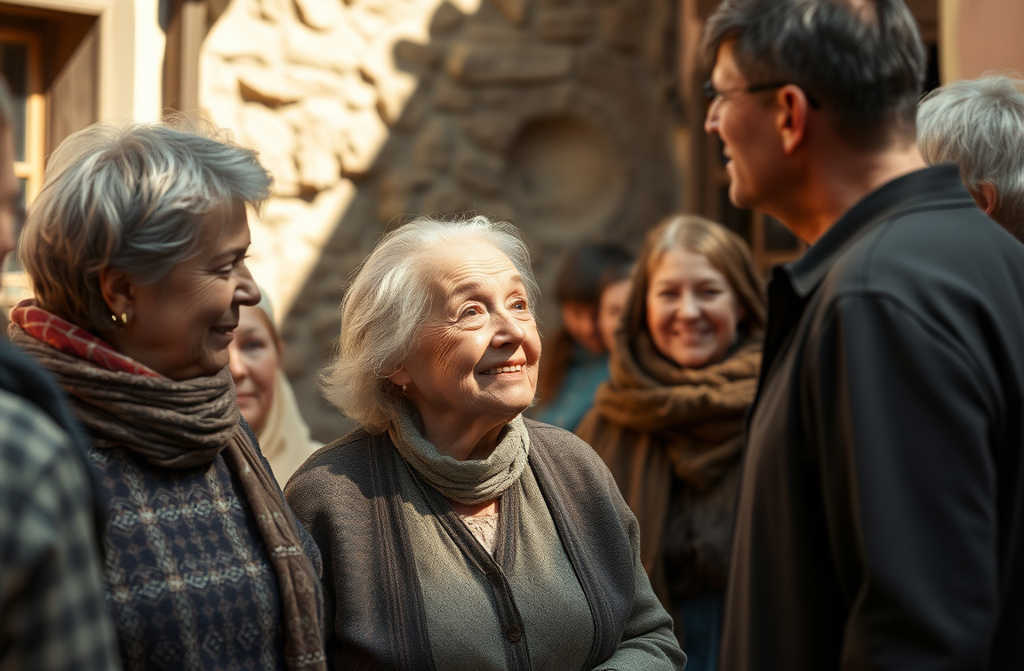
Everyone called her Silent Milly. No one meant any malice by the nickname; it was just the way the few remaining folk of the dwindling hamlet of Littleford had always referred to the quiet old woman. No one ever wondered why she bore such a strange sobriquet. Milly was far from mute; she had a voice, though it was timid and soft, like leaves rustling in a breeze. The villagers rarely heard her speak, but they learned to read every flicker in her faded blue eyes and the creases of her weatherworn face. So Silent was a nod to her habit of keeping to herself.
How many solitary old women spend their days in forgotten villages, halfburied in the earth, their ages unknown and their passing unmarked? No one weeps when their lives end, and even the neighbours keep their distance, gossiping not a word. They are as unnoticed as the weeds that line the lane. Milly could have drifted away in the same quiet way, leaving behind only an empty cottage and a neglected knoll.
That would have been her fate, if not for one extraordinary day by village standards. An elderly gentleman in a sleek motorcar pulled up to her gate. They stood there for a long whilehe talking, Milly listening, her halfblind eyes fixed on his face. Then she fell to the ground where she stood and let out a scream so fierce it seemed to rattle every roof in Littleford.
Milly had been born in the same village long before the war, in the hardtimes of the 1920s. The village centred around the countys largest cooperative farm, where everyone worked side by side for the same meagre wages. There was no cash for a day’s labour; the workers had no papers, lived in poverty and often went hungry. Milly was the second of six children and the eldest daughter. She was twelve when tuberculosis claimed her father. He fell ill, but there was no sickpay, so he kept tending the herd until the disease finally laid him low in the fields.
Her father had been gentle, never raising his hand at his wife or children. He carved little wooden toys and whittled clay whistles for the youngsters. When he died, Milly collapsed with grief and wept for nearly two days, refusing food. Her mother wept with her at first, aware that she now had to raise all the children alone. After a while, however, she snapped Milly hard with a rod and sent her off to the farm.
By twelve, Milly could do everything an adult woman was expected toshe spent every summer working alongside her mother on the coop. In winter she attended school, only while her father was alive. After the school term, she helped her mother with the younger siblings, cooking and keeping the house tidy. She was not a copy of her father; she was quicktongued and mischievous, and the villagers often saw her mother chase her down the lane with a sturdy stick for her pranks.
The hungry 1930s hit hard. The Milly family survived only because they kept a goat, whose milk they bartered for potatoes or used to thicken oat porridge. Their little safety net disappeared when a neighbour poisoned the goat. Milly never forgot how her mother sobbed that nightshe had never wept so bitterly for a husband.
One by one, Millys three younger brothers died, then her mother followed. Her eightyearold sister was taken to a nearby orphanage, and her youngest brother, without any papers, drifted off to find work and vanished. Milly was placed with a thirdcousin aunt, Maud, and her adult life truly began.
Accustomed to her mothers endurance, Milly tried to answer Aunt Mauds harshness with the same cheeky spirit, but she was beaten so badly that she lay on her back for a week, left with thin white scars on her back, legs, and sometimes her face. From that moment on she earned the nickname Silent because she would not speak after each attempt to draw her out. Aunt Maud was content: a quiet girl who worked hard was all she needed. The villagers grew used to Millys silent submission, and each one felt entitled to pile more chores on her thin shoulders. Milly endured, never defending herself, merely watching her tormentors with her blue eyes, shedding tears in silence.
She stayed mute when Aunt Maud sold her off in marriage at fifteen. She kept quiet when her husbands mother beat and mocked her. When war broke out and her husband went to the front, she said nothing. She remained silent even when she gave birth to her only son, Billy, whom she loved more than life itself. She raised her voice just once, when soldiers came to take Billy away as a enemy of the people during the war years.
The war never truly touched their remote West Country village; people kept planting wheat that would soon be shipped to the front. The cooperative fields lay next to Aunt Mauds barren garden, and a hand stretched out to gather the wheat that had been trampled into the mud. Milny (as they still called her) gathered a handful of stalks to make a loaf. Good folk saw her effort and reported it. She was sentenced to ten years in prison; her motherinlaw refused to look after Billy, and the boy was taken from Millys arms and placed in a childrens home. Millys cries, pleas, and crawling sobs were met with silent stares; the villagers turned away, ashamed.
When Stalin died, Milly was released, but she did not mourn the ruler who had taken her son and her freedom, nor did she rejoice at regaining her liberty. With nowhere else to go, she returned to Aunt Mauds cottage, now occupied by a frail, partially paralyzed woman. After the war, Billys husband, a Polish veteran, met a new woman and started a fresh life, leaving no room for the ailing mother or the criminaltainted wife.
Milly, still silent, slipped back into her routinewashing, cooking, tending the garden, caring for Aunt Maud until the old womans death. She received no gratitude, only the whining and accusations of the sick woman who blamed Milly for her own illness and for Billys abandonment.
Years passed, and Silent Milly lived out her days alone. She never remarried, never bore more children, and kept a modest homestead of a single goat and a dozen chickens. One crisp morning, the story truly begins. Milly had just endured another tirade from her neighbour, Mrs. Mathews, who complained that Millys chickens had slipped through a hole in the fence and pecked at her garden. Milly, feeling guilty, was about to fetch a jug of milk as a peace offering when a massive black limousine barreled down the village lane, splashing mud at the central crossroads.
It was obvious someone important had arrived, and Mrs. Mathews, forgetting the milk, sprinted to warn the others. Such a vehicle was a rare event in the deserted outskirts of Littleford, and every resident gathered to watch. The limousine eased to a halt at Millys gate. The door opened and a man in his sixties, silverhaired, welldressed and athletic, stepped out. He removed his spectacles, stared down the lane for a moment, then approached Milly. At first she could not grasp what he wanted and simply listened.
He asked question after question, calling out familiar names, and gradually Milly began to understand. Billy, my Billy! she shouted, collapsing onto the ground and clinging to the mans knees. Tears streamed down her face as she repeated her sons name over and over. Neighbours rushed over; Mrs. Mathews wailed alongside her, while the stranger tried in vain to lift Milly from the ground, his own eyes brimming with unspent tears.
A farewell feast was laid out in the village hall, the largest building in Littleford, so that everyone could attend. As glasses were raised and food passed, people listened to the long tale of the mans search for information about his birth mother. Many wept, others smiled at the quiet neighbour they had known all their lives.
When the ceremony ended, each person felt it their duty to hug and kiss Silent Milly and shake Billys sons hand. Milly only stared, her blue eyes wide and unfocused, and managed a faint smile. Her goat and chickens were handed to Mrs. Mathews, who, in gratitude, left a large jar of local honey at the gate. At last the doors closed, the car tipped dangerously as it backed away, and it carried Milly forever from Littleford. The villagers watched the engines rumble fade into the distance.
What became of her after that? In the final chapter of her life she finally found ordinary happiness: a spacious house, a son with a kind wife, three grandchildren and five greatgrandchildren. No one called her Silent Milly any more. She could no longer stay silent, for little fiveyearold Ellie loved it when greatgrandma told her bedtime stories.






