23 October
I walked through the old municipal park in York, a polished oak cane in my hand. The crisp October wind brushed against my back, and the ground crunched underfoot with the dry, browned leaves that had long since given up their green. I had returned to the town of my childhood after many decades, summoned by affairs that mattered to no one but myself. The park was recognisable, though the trees now towered higher and the benches, the very ones that had cradled my teenage self, were warped and flaking with paint.
I made my way to the little pavilion by the pondthe one we used to call our secret spotand stopped. My heart, accustomed to a measured rhythm, began to pound as it had when I was sixteen. The air there still smelled of lilac and fresh rain, just as it did the day I first took Ethel Harringtons hand.
Ethel. She was a girl with a braid and laughing eyes, whose voice could read Yeats and make the verses catch fire in my chest. We spent endless evenings on that bench, sketching plans for the future. I, a budding physicist, dreamed of venturing beyond the atmosphere. She, a delicate illustrator, yearned to bring my imagined galaxies to life on paper. Our love felt as timeless as the stars we gazed at.
But life, as it often does, took us down different lanes. Ethels practical parents saw her talent as a ticket to a better life and sent her to the Royal College of Art in London. I stayed in the north, enrolling at the local polytechnic. At first, letters flew between us like swallows, thick with promises and yearning. Then they grew sparse. Her world filled with exhibitions, canvases, and new acquaintances. Mine filled with equations and lab work. In one of her last letters she wrote, Mike, everything changes. So do we. Lets stop torturing each other with waiting. I did not argue. A stubborn, masculine pride stopped me from buying a train ticket to London. I burned the letters in the old iron stove and threw myself into science.
Life moved on in a steady, almost monotonous fashion. I defended my dissertation, took a post at the research institute, married a kind woman whose picture now hangs alone in a dusty album, and lived a quiet life. No children. Occasionally, when I looked up at the night sky, I thought not of constellations but of Ethels eyes, and felt like an old fool.
I exhaled, ready to turn away, when I noticed a woman sketching in a notebook on a distant bench by the water. The wind lifted her silver hair, neatly coiled. Something clicked the tilt of her head, the angle of her shoulder.
I took a few hesitant steps, hardly believing my eyes. It was her. Ethel. Not a ghost, not a mirage, but a living woman in a warm coat, her cheeks lined with gentle wrinkles that brightened when she smiled at her drawing.
Ethel? I whispered, my voice trembling.
She lifted her gaze. At first it was distant, then surprised, and finallyher eyes sparked with that familiar light Id carried in my mind all these years.
Michael? Good heavens, is that really you?
We sat on the same bench where we once kissed, talking about the decades that had passed. Her marriage to a fellow artist had ended; the great love shed hoped for turned out to be a fleeting fancy. She had a son, now living far away but dutifully checking on her health every weekend. Shed returned to her hometown over a decade ago to care for her ailing mother and never left. She spent her days painting local landscapes and teaching art to schoolchildren.
Ive heard of your achievements, your dissertation, through friends, she said, eyes on the water. Ive always been proud of you.
I once found an old copy of Young Artist in a newsagent, I admitted. On the cover was a small watercolour titled Autumn Park signed M. Harrington. I bought it without looking, as if it were treasure. Its still in my old file folder with my most important documents.
Silence fell, then I could no longer hold back:
Ive always regretted, Ethel. Regretted not coming back then, not trying to mend what we lost. I never told you that your Autumn Park meant more to me than any masterpiece in the National Gallery.
She turned to me, her gaze free of blame, filled only with a quiet, wise sorrow.
We were young and foolish, Mike. We thought love was loud and eternal. In truth, its soft, like this autumn light.
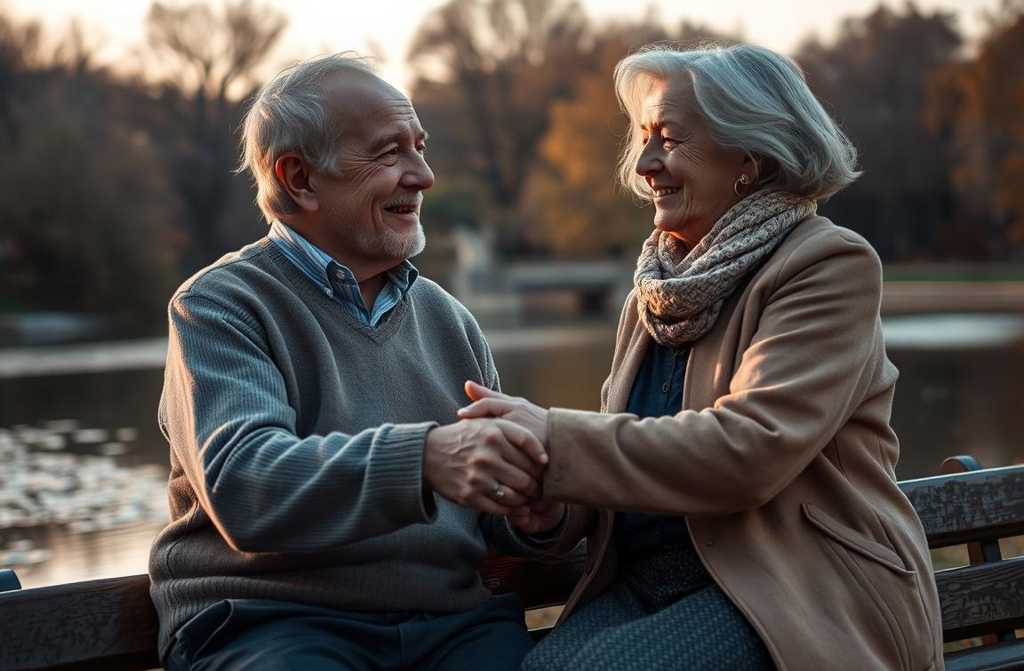
I placed my hand over hers, feeling the chill but also the familiarity. Suddenly time seemed to contract, like a spring snapping back, erasing grey hair, wrinkles, and forty years of separation. Only we, our conversation, and the bench remained.
We stayed there until dusk, hand in hand, while the ponds last amber glimmer faded, reflecting in our eyes like two solitary stars that had finally found each other again in the vast sky of life.
Night fell. Lamps along the promenade flickered on, casting long, trembling shadows on the damp grass. The cold grew sharper, yet neither of us wished to leave. It felt as if any movement would shatter the delicate enchantment of the evening.
Shall we go? Ethel said, shivering from a gust. I live just down the road. Lets warm up with a cup of tea.
We walked slowly, my cane tapping a new rhythm on the cobblestonesa rhythm of returning home. Her house was a modest twostorey Victorian with high ceilings and ornate cornices. Inside, the scent of oil paints mingled with dried lavender. In the living room stood an easel with a halffinished landscape; the walls were lined with studies of local scenery, all familiar to me.
Nothings changed, I said, smiling at a small canvas of our pavilion. You still love this park.
Its my most faithful companion, she replied, filling the kettle.
We drank tea from fine crystal glasses set in saucers, the conversation flowing easily, picking up the frayed threads of our past. We recalled university mischief, mutual friends, forgotten films and songs. Laughter rang through the room once more, light and carefree.
Yet beneath the chatter lingered a palpable sense of time lost, drifting in the air like dust motes in a beam of lamp light.
You know what I often think about? Ethel asked, setting her cup down. The night we watched a shooting star. You said youd made a wish.
And you never asked what it was, I recalled. You said it didnt matter, lest it not come true.
Now perhaps it does. What did you wish?
I paused, gazing at her face lit by the soft glow of the bedside lamp.
I wished that we would always be together. Simple and naïve, I know.
She smiled. I wished the same. It never happened. Perhaps the stars werent in the mood that night.
I reached across the table, and her hand, now warm, rested in mine.
Maybe they were waiting for us to grow wiser, I whispered.
The next morning I took the train back to the station and cancelled my return ticket.
We began to make up for lost years in the smallest ways. I attended her sketching sessions, bringing a folding stool and a thermos of tea. I sat beside her, watching her confident hand bring familiar outlines to life on canvas. Occasionally she handed me a brush: Add a cloud here. You always liked improvising with colour. I laughed, laying down strokes that were clumsy yet tender.
We rediscovered the town togetherweathered stone façades, the winding canal, the tiny market where stalls sold apples from nearby farms. All became the backdrop of an unexpected romance. Our conversations often consisted of halfsaid phrases, each understanding the others meaning with just a word.
A week later, while sorting books in her parents cottage, I found my old school notebook, filled with youthful, awkward poems dedicated to her.
I handed it to her shyly. Dont laugh.
She read each line without blinking, then looked up, eyes bright with surprise.
Theyre wonderful, Mike. Why never read them to me before?
I was shy. Thought they were nonsense.
Theyre not, she said, pressing the notebook to her chest. Its the most precious thing Ive heard in years.
That night we sat on the sofa, sharing a single blanket, watching the sleeping town through the window. The fire of youthful passion had long since faded, replaced by a deeper, calmer, more serene feelinglike finding a safe harbour after years of stormy seas.
I dont want to go back, I whispered in the dark.
She leaned against my shoulder. Neither do I. Ive lost so many years. I want you to stay here forever.
Dawn broke, painting the roofs and trees in soft gold. Fear no longer haunted us; ahead lay an entire life together, not the one we had once imagined on that lilacscented bench, but a real one that we had earned.
Believe, I tell myself. Always believe. Even when it seems the best chapters of life have been turned, and there is nothing left to write. The most astonishing chapters often begin where we thought the story had ended.
Do not stare at the past merely to drown in nostalgia; instead, search for the forgotten keys. The key to the old pavilion where laughter once echoed. The key to the heart that once beat faster. Dust it off, and try the door. Youll be surprised to find not phantoms, but a living life waiting for you all these years.
Your story isnt finished. It merely paused, waiting for a new, stronger voice. Love that you thought had fled does not truly disappear. Like a wise river, it can slip underground, gather fresh waters, and burst forth where you least expect.
Seek. Do not linger behind closed doors waiting for fate to knock. Walk to the park of your youth. Flip through an old album. Write the letter you never dared send half a century ago. Life favours the bold, even if boldness is simply a quiet step across your own fear.
Remember: grey hair is not the ash of a dying fire, but the frost of wisdom on the branches of the soul.
Your time has not run out. It simply waited until you stopped racing and began gathering, piece by piece, the most valuable fragments scattered along the way. Collect them, and you will rediscover your lost love, your forgotten calling, your second breath.
Life is not a straight line. The best things have a habit of returningespecially to those who keep believing.