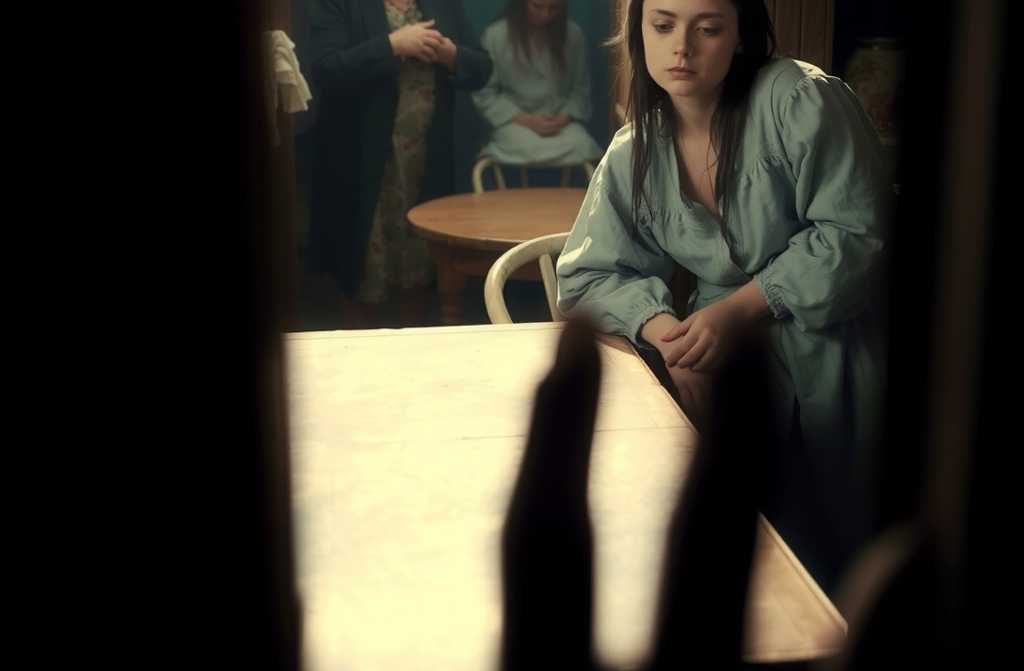
A Mother Shields Her Sapling
There was a time, many years ago, when word swept through the whole of Cotswold Green before the school bell had even stopped ringingJane was expecting. The news spread like the soft spring rain outside, finding its way into every home, every heart.
It began quite unremarkably. The school nurse visited one Tuesday and lined up every class, boys first, then the girls. Outside the medical room, whispers travelled faster than footsteps, and in a moment, Mary Samuelson and Alice Walkers voices carried to Jane herself as she stood in front of the nurse.
Jane, are you pregnant? Mary piped up, her dress halfway over her head, while Alices eyes widened as she bit her upper lip.
Perhaps, Jane answered quietly, her eyes lowered.
The nurse looked up sharply, mouth forming an unspoken question.
By the time the girls had left the medical roomAlice still fussing with her skirt, Mary gawping in the hallwaythe news had become common knowledge, hurled into the corridor as easily as one might mention the rain.
Later that afternoon, the tidings had taken root in every corner of the village. Older women, market-goers and postmen, everyone suddenly greeted Janes mother, Margaret, with unusual warmth as she walked home from her shift at the factory and stopped to buy a pint of milk. The neighbours, even the usually reserved, called their hellos from across the green.
How friendly everyone is today! Margaret thought, glancing down to check whether her skirt had twisted or her cardigan was askew. What was going on? Why was everyone watching her as though she were centre stage at the village fete?
Unlocking the door, Margaret found the house empty except for the faint smell of the days tea. Her partner George was on night duty with the fire service, and Jane was almost certainly at her beloved art class. Jane would spend every spare minute there, painting countryside scenes or still lives, no matter the time of day.
Margaret hadnt always been so understanding. Shed scolded Jane for spending too long at the easelso many chores waited at home, and schoolwork left much to be desired. But, Margaret eventually realised, Janes talent with a paintbrush might prove her ticket to the art school in Bath, where the competition was daunting but the entrance exams creative. Lately, Janes pictures had won school and county prizes, hanging in local exhibitions for all to see.
Jane, it was clear, was nothing like her mother, always lively and eager with a laugh for everyone. No, Jane was a quiet onetrapped in her own world most days, words pulled from her like pearls from a shell. Except for art. In that sphere, she belonged.
Even Mr. Andrew Maxwell, her teacher, praised her efforts. Margaret respected himan accomplished artist from London, hed returned to Cotswold Green to care for his mother after his own marriage ended. Shell get into Bath, he assured Margaret. Just watch her.
Jane finally returned as dusk fell, carrying easel and portfolio. Margaret, ever eager, met her in the kitchen.
Well, at last. Where have you been wanderin? she asked, drying her hands.
Out in the woods, Jane replied, putting her things down.
Bit early in the season, isnt it? Everythings still soggy out there. Will you show me what youve got?
Lately, Margaret had learned to cherish these glimpses into Janes world, watching sketches grow into paintings.
Jane peered at her motherhad the news not reached her yet? Just hours earlier, a cluster of girls had cornered Jane by the school gates, asking, Jane, is it true what theyre saying?
Let them talk, Jane shrugged, her arms full of her painting gear, and hurried away.
Is it true or not? they shouted after her, but Jane did not look back.
Why, then, did no one tell her mother? Simple, reallythe nurse and the school matron were both out-of-towners and departed before Margarets workday ended, and Janes form tutor, Ms. Ellen, though she lived nearby, always moved slowly, needing time to process.
The villagers, if theyd heard, would only whisper, never ask Jane to her face. It wasnt like dealing with the brash girls from second form.
Jane retrieved her latest sketch and handed it over. In the foreground, a single birch tree, not yet leafed, stood at the edge of a pinewood, looking back at the darkness it had left behind, its uppermost branches catching the sunlight. Beneath, in the shade, nestled a tiny sapling, shielded like a treasure under the birchs protecting boughs. There was no colour on the page yet, but the lines were alive with promise.
Is that round here? I dont recall a birch just like that, mused Margaret.
Nowhere in particular, Jane replied with a gesture. We painted out by the gulley, theres lots of birches, thats all.
She edged away to hang her school dress and change. Jane knew she needed to tell her mother, to beat Ms. Ellen to it, but she decided there was timeone peaceful supper first. Let her mother keep that lightness a while longer.
Just as Jane pulled off her dress, she caught sight of Ms. Ellens bobbing head passing the low garden gate.
Oh, too late now! Bare-legged in vest and tights, Jane dashed through the kitchen.
Mum, Ms. Ellens here. Please, dont yell, all right? Ill explain it alljust, well, I am. Im expecting.
Margaret froze, dishcloth in hand, while Jane shrugged on an old garden jacket and went to open the door.
Does your mother know? Ms. Ellen asked Jane quietly.
Jane nodded.
Good evening! trilled the teacher, face long as a funeral directors.
Evening, Ms. Ellen, Margaret managed, hastily clearing the kitchen table and moving to block the sink. Come through?
They sat in the loungeMargaret beside Ms. Ellen on the sofa, Jane opposite, coat still buttoned. She would gladly have changed, but the closet held all her things; three rooms were all they had: kitchen, lounge, and a box-room for sleeping.
Im not stopping. No decisions have been made, Ms. Ellen began. Ms. Baker just asked me to speak with you. Thoughts, Margaret?
Margaret looked helplessly at Jane before rebuking her, Why are you sitting in that grubby coat? Go and change, please.
Jane fetched her dressing gown and took refuge in the box-room, listening as the adults spoke.
So, whos the father? Margaret asked when Jane returned.
Thats what I came to ask, Ms. Ellen said, her voice taut. Jane is still underagedyou understand what this means? Its a police matter if an adult is involveda disgrace for the school. Were just weeks from exams… Surely you must know who the boy is. Jane, love, if hell marry you, perhaps this can all be smoothed overtell us, who was it?
Jane was silent. Ms. Ellen stood abruptly, sighing, I thought so. Quiet as ever.
Shes never had a chap, not really, Margaret muttered, barely believing this had happened. Has she?
Thats the trouble, isnt it? Ms. Ellen tugged on her boots. If thered been someone, itd all be clear. As it is What if its a grown man? Is it, Jane? Is it?
Jane said nothing.
Ms. Ellen departed with Margaret, and the two women talked long in the yard under the bruised twilight. Jane stayed inside, watching her motherthin, bare-legged, dressing gown barely concealing her, old overcoat thrown round her shoulderstry to explain and nod along with Ms. Ellen.
What Jane felt most in those days was pity for her mother. Thats why she found it so hard to confess. In the past half year, Margaret had finally come alive. She had found happiness with George, ten years her juniorshe seemed younger, wore bright dresses, laughed, cut her hair, and permed it for the first time.
Their little part of the farmhouseone of four families sharing the building, thanks to the old estates arrangementswas cheery, bustling. Jane had been pleased for Margaret, and George had, in his way, fitted right in. But jealousy had begun to poison her mothers mood; every late night from George was met with suspicion, every trace of flirtation a source of bitter words.
Now, Janes pregnancyjust as Margarets happiness seemed finally secure. Jane wished she hadnt let her mother down.
Margaret, pulling off her battered slippers, finally rounded on Jane.
Well? Lets hear it then. How did this come about? What now? Ms. Ellen says weve to go to the doctor. Whos the father? What happened? How could you?
The torrent of questions went on, but Jane, shivering, turned away and said, Mum, please, not now. Im going to sleep.
She climbed onto her sofa-bed, facing the wall. Margaret shook her, forcing her to sit up.
Who is it? Ill wring his neck!
Leave it. Its my own fault.
Margarets mind circled roundwas it the art teacher? Jane never went out, never met boys, always at Mr. Maxwells class, where she was one of the oldest. Could it be him? The thought curdled in her stomach. She decided, as dusk closed in, to go and confront the man herself.
She set out, cutting through gardens to avoid village gossips, boots thick with clay after the recent rains. The wind tugged at her coat, and every step towards the house behind the school seemed heavier.
The little house, thick with syringa, looked peaceful enough. As she hovered on the gate, unsure, the door openedMr. Maxwell appeared, shirt half-buttoned, still chewing his tea.
Sorry to intrude, he said, drawing his coat over himself. Care to come in?
No, outsides quite nice yet, she managed. Bit of air wont hurt.
I take it this is about Jane? he asked.
Margaret nodded, blushing at her own suspicions, her voice stumbling. Shes a good girl
She is, he answered easily, and I think the world of hermuch respect.
Margaret glanced up, puzzled. Did he mean? She blushed more deeply.
Shes got a talent, that one. Always in class or at home, never gallivanting, she went on, awkward.
I know. I doubt shed confide in me, but I always hope shell speak to someone, he said gently. Shes a closed book, but giftedfeels everything deeply. If she doesnt talk, there will be reasons. Let her have her time.
Zina, Mr. Maxwells mother, appeared with a tray. Everythings better with tea. You mustnt be too hard on the girl, Margaret.
Darkness drew in. Margaret took her leave, her heart lighter for feeling the man had no hand in Janes predicament.
On her walk home, though, fear crept inwhat if George? Could it? The thought sent her stumbling down the lane. Logic told her Jane would never say, not about such a thing. She reckoned with herselfthere would be a reckoning with George, but not now, not with her head so full.
In the morning, avoiding Janes gaze, Margaret packed them off to the surgery before George returned from his shift. At the GPs, everything became officialJane was registered, bloods drawn, questions asked about the school, reassurance that the authorities would be informed. Baby was due at the end of September, just as the first of the trees began to turn golden.
Police came, and Mrs. Taylor from the local education committee. Each girl in Janes form was quizzed, cheeks blazing with embarrassment as village boys snickered.
Perhaps its big, gentle Gray, they joked about an affable but slow-witted classmate, unease only thinly covered by banter.
Two boys, Tom and Oliver, avoided the laughter. When Oliver managed to catch Toms eye, he muttered, Werent you two close at Christmas? You went walking
Dont talk rot, Tom retorted sharply. Think before you start rumours. Im your mate, arent I?
CourseI wont say anything. Its all mad.
Both were headed for the Royal Military Academy once exams were done.
Later, Mrs. Taylor and the police dropped by Janes house, catching only George, who knew nothing and was plainly shaken by the news. Talk of tenancy, morality, and who had rights to live where left him rattled.
When Margaret and Jane returned home, the inquisition began. Margaret banged around the kitchen, wept, and could make no sense of herself, while Jane stayed calm, soothing her mother and sending her off to attend to laundry. The officials questioned Janewho was the father? Hes not around, she said with a painted-on smile, refusing to let them draw blood from her stone.
Be honest, Jane. Was it forced, or did you agree? they pressed.
Nothing happened. Must be the wind, or maybe its Holy Ghost business, Jane replied, raising her eyebrows.
The adults, out of ideas, left Margaret to sign that no complaint would be made. Not the way, Jane. Were all trying to help you, sighed Ms. Ellen on her way out. Youll sit your exams privately. Well do what we can. Just work from home, and only come in for the real thing, love.
After the officials left, the storm inside the house brokea useless one. Margaret accused George; George began to pack his suitcase. Voices rose, tears flowed. Jane, retreating to the scullery to wring the washing, tried to block out the shouts and doors slamming.
She understood, even as Margaret apologised too latethis row was only the last excuse for George to leave. Hed been drifting for months.
Jane watched them from the windowher mother chasing George down the lane, desperation dogging every step.
Old wounds haunted Margaret as she wandered back home. She, too, had been turned out for being unmarried and expecting. She had left her husband, Janes father, after too many blows and too much drink. Happiness, when it had finally come round, seemed always to slip through her fingers.
She hurried home with a fright, realising only now what she might have said or done to Jane in her panic. The house was emptyJanes boots and coat gone. There was nowhere she would go. Perhaps, Margaret fretted, to the artist? Her eyes fell upon Janes picture: a birch shielding a sapling, so vulnerable, so young.
Oh, dear God, what a fool shed been! She snatched her scarf and rushed out.
Jane! she called into the dusk, but only the neighbours curtains twitched.
She ran toward the river, catching sight of Jane in the distance, laundry basket in hand.
Jane! she cried, sprinting after her, boots slipping on the wet grass.
Jane turned, surprised, as Margaret caught up. Where are you off to with that? she gasped, grabbing the basket.
To the river, to rinse the clothes. What is it, Mum?
Margaret steadied herself, then grumbled, Youre in no condition for this. Let me help.
Its warm enough, Mum. Youll get cold.
Nonsense. Ill do the rinsing. You just help wring them out, all right? Margaret spoke so the washerwomen on the bank could hear.
The women watched, nodding at the two, seeing not scandal but the bond between themmother and daughter, laughter and care threading through their work.
As they walked home, Margaret said, Mr. Maxwell reckons you might still get a placehell go with you to Bath before babys due, he promises. Hes a good man, worth listening to.
***
Epilogue
That night, as Margaret dozed and the church bell tolled midnight, Jane heard a gentle tap on her window. She opened it to the cool spring air and found Oliver, balancing on the sill.
Hello, he whispered.
What are you doing here at this hour?
I couldnt sleep. I just wanted to check you were all right.
Whatever youre worrying about, dont. I havent told anyone.
He fidgeted with the curtain. Will you be in for exams?
I will. Im working hardI want that certificate as much as anybody.
He hesitated. Are you sure youre all right? Can I help with anything?
No, Im fine, truly. You should just worry about Sandhurst.
He smiled briefly, swung out over the hedge, and strode away with the determined step of someone chasing a dream.
And as the first light touched the wet lawns, the village nestled deeper into sleep, mother and daughter curled around the hope that, whatever storms had passed, the sapling still stood, shielded by the birchs gentle arms.