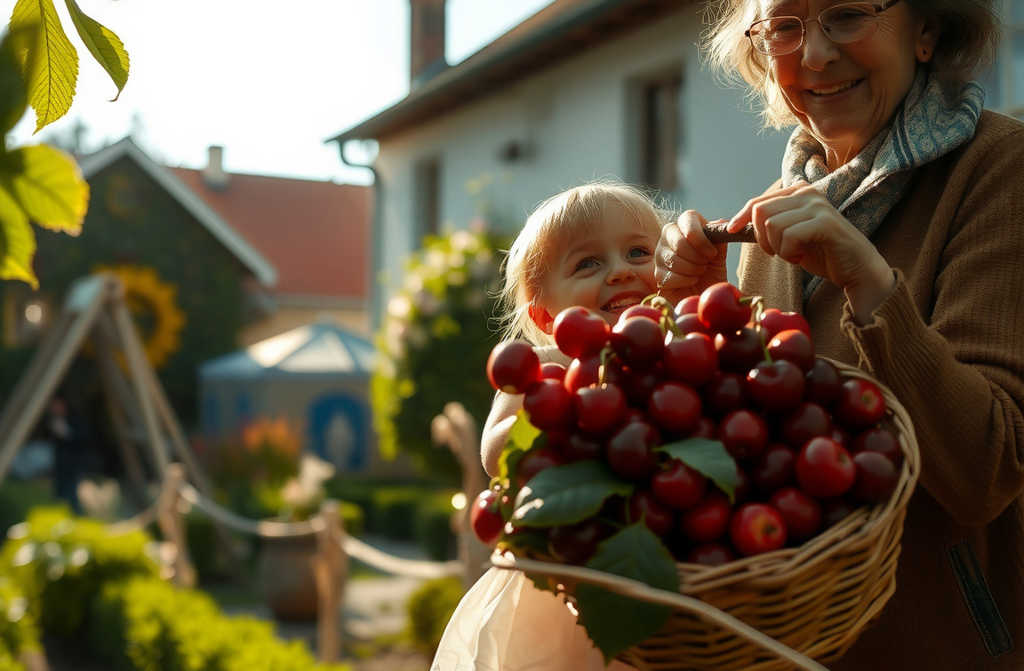
The Basket of Cherries
Valerie, if you dont trim those cherry branches leaning over my fence, Ill go ahead and pick the fruit myself and make a whole batch of jam! The words hung in the air, swelling like thunderclouds. Ann stood, hands on hips, glaring at her neighbour.
Oh Ann, do as you please! Theres so much fruit this year, I couldnt possibly manage it alone. And well, Ill have to wait for either Michael or Victor to come round and help with the branches. Whoever arrives first, I suppose.
Your menfolk are all so dreadfully busy, arent they? If I wait for your lot, my fence will be flat on its face!
Why are you getting in a flap? That cherrys been here for years and never troubled you. And the branches dont even touch your fence. Is there something else bothering you, Ann?
Im not giving you explanations! Ann added a few choice phrases that would make any proper English breakfast go cold. Suddenly youre the queen of the garden!
Valerie lifted her eyebrows with surprise as she watched her neighbour and, until now, her friend, stomp off. What had got into her? Theyd never quarreled before their little houses standing side by side for years, separated only by an ancient rickety fence Anns father had hammered together to keep out Valeries dogs. Valeries mother had doted on dogs; never less than two snuffling about the house at any one time.
The two cottages had gone up at the same time, both their parents receiving their plots together. Valerie and Ann were only three when the houses started to sprout, and soon enough, the girls found each other under the old honeysuckle, playing endless summer games with battered tin pans and dolls waiting patiently for their leaf-and-flower “soup”. As the years turned, those girls wandered village lanes arm in arm, swapping secrets about boys and sharing their first kisses beneath the weeping willow by the sluggish brook.
Their friendship never faded. Even when Valerie moved away with her husband, letters and weekly phone calls kept them close. She returned thirteen years later, with a teenage son and a bump soon to be a daughter. By then, Ann had two more sons and a house full of muddy boots.
First meeting again after all that time, Valerie was struck silent. Where had her lively, cheeky Ann gone? The woman before her was shabby and washed out, the sparkle dulled by a thousand cares.
Whats with the staring? said Ann, with a flash of the old spirit. You try wrangling three boys and a husband
She spat out the last word, her eyes sparking and then collapsing again. Valerie said nothing. If Ann wanted to talk, she would.
Come on, lets go, Valerie said, getting up from the cafe table.
Go where? Ive not got the time for traipsing about. The boysll be back from school soon and Ive got to fetch the little one from nursery.
Dont fuss. Youll manage. Come along.
With that, Valerie all but bundled her into a bus, chuckling at Anns grumbling, asking about the boys all the way. The bus rumbled over the bridge, trundling towards the town centre. Ann looked out the window, confused.
This is our stop! Valerie took Anns elbow as she stepped off, steadying her.
Oh, its nothing. Just dizzy spells blood pressure.
Valerie steered her towards the towns best salon.
Val, what are we doing here? I cant afford any of this, and besides, you need an appointment!
Valerie just grinned and pushed open the door. Minutes later, Ann was sitting in the chair and Valerie was running gentle fingers through her tired hair.
Now you know where I work, said Valerie, frowning at her friends brittle strands.
And the science? All those years at university for nothing?
Not for nothing. Im still a chemist, just in a different field! After we moved, the factory nearly finished me off. The doctors said I needed a change. And I found one. My mother-in-law dragged me into this salon for her birthday. I watched how hair dye was mixed and thought, well, heres a place for my skills. I took some courses, got the knack for scissors. The manager hired me right away, good references and all. Wait till you see yourself after Im done.
Val, I havent got the money
Sit still and hush! This is my birthday present to you.
My birthday isnt for months.
Or call it last years! If you squirm, Ill dye your hair green and see how your husband likes that!
Hed have a fit as it is Ann surrendered, closing her eyes.
Whats going on at home, Ann? You know you can trust me.
Ann was silent, holding tight to her secrets. But it was too much now, the ache spilling out in a whisper.
Hes got a lady friend, Val For a year now. Wont leave, but hes worn me down. Ive nothing left.
Valeries fingers paused a moment, then got back to work.
Why dont you toss him out?
To where? Hell make splitting the flat a war, and Ive nowhere to go. Not with the children.
So what about them?
They only ever listen to their dad. Hes quick to tell the boys a real man doesnt listen to a womans nonsense. Even the youngest just copies his brothers.
Their eyes met in the mirror, and Valerie swept her sympathy from sight. That wouldnt help.
One minute.
Valerie fetched something, Ann turning to the mirror. Where had the old Ann gone? Just a few years, and lines, tired eyes, dry hands, and that broken look. Like a whipped dog, she thought with a rush of anger. Should she run now, with dye on her head? Well, at least shed be bald!
Valerie returned, pulling Ann to her feet.
Come with me.
Manicure, face masks, pedicure, and at last, a brand-new haircut.
Well? Valerie spun her round. Arent you a sight?
Ann gazed at her reflection. Her lips trembled. Who was this? She was all right, actually.
She hugged Valerie fiercely.
Thank you! How much do I owe? I cant pay it all now
Oh hush! You can call me whenever you need a tidy-up, and thats that.
I cant!
You can and you will. I need you too, you know. Mothers poorly, and though Im a dab hand at injections, Im hopeless with drips. Youll help?
Of course you didnt need to ask.
Ann rode home with a new flutter inside half song, half scold. She caught her own smile in the bus window and then told herself off for being so soft. Shed always sorted herself: trained as a nurse, worked her way through every rank, raised her sons without help her mother gone, her mother-in-law cold.
No one helped me, youll manage, was all she got.
And she did. It was only her husband that let her down. Enough! No more brooding.
She arrived home, packed her husbands things every last sock and put them by the door. The boys sensed something, whispering between themselves in their bedroom. Ann fixed them a meal and had just sat them down when the key turned in the lock. Her husband, muttering curses, stumbled over the bag.
Whats this?! Ann!
Selling sunflower seeds, is she? Ann closed the kitchen door gently. Do stop shouting.
Since when are you so chatty?
You havent heard the half of it. And this is the last conversation well have. Take your things and go.
Where to?
Anywhere. I dont care. Im filing for divorce. Ive had enough.
You mad? Whos going to allow that?
Im not asking for permission. Youve made a fool of me long enough.
Youll leave the children! You wont manage!
Take them with you, if youre so proud. Your new lady will be delighted to have three ready-made.
He was angry, angrier than ever. She wasnt afraid. Not anymore. When he lunged, she hissed softly:
Just you dare. Youll end up behind bars. And the children wont pity you.
The kitchen door cracked open and the youngest, Billy, poked out his head.
Mum, can I have a biscuit?
Of course, love.
Ann stared her husband down. He hesitated, then slunk back to the door.
Well see! Youll regret this!
She was silent. When he was gone, she slid down the wall, laughing and crying at once. The boys tumbled from the kitchen, hanging on her. She gathered them close.
Listen to me, boys. Your father and I arent together anymore. If you want to stay with me, youll mind me from now on, without question. If you dont like that, go with your father. But then forget you ever had a mother.
The boys stayed. Not a single one left with him. Why? Ann didnt know. But she saw her eldest, Alex, keep the others in line. The house tidied, dishes washed, Billy picked up from nursery, and a hot meal waiting.
The one blessing: her ex disappeared and didnt bother them again.
It wasnt easy. Ann picked up every bit of work injections, drips, anything to make a pound stretch. She could barely keep track of their studies. If Alex managed, in the middle son, Eddies class, Ann sat at the backs of meetings, blushing with shame.
When will your conscience wake up, son? she sighed at Eddie in the kitchen. I wont be here forever.
Oh mum, Ill try
She never guessed Eddie had found rough company. Fresh out of school, he got himself in trouble, and Ann found herself delivering parcels to him far too soon.
Alex qualified as an engineer, found work up north, and phoned home once in a blue moon. Ann saw her first grandchild when the boy was three. Billy, by contrast, was a gentle soul, and in her heart Ann began to hope he might be there to keep her company in old age.
But fate had other plans. One steaming July, Billy went to the river with friends. A girl new to the group waded out too far, showboating, and started to drown. No one moved except Billy. He pushed her back towards the shore, went under, surfaced once, twice and the rescuers arrived too late. They found him only the next day.
Ann was hollowed out with grief. She couldnt cry, couldnt think. Valerie handled everything, called Anns colleagues at the hospital and arranged for a nurse to help. Even when Alex flew in to say goodbye to his brother, Ann barely realised her son had thrown his father out the door.
Dont come here again! Say one more word about mum and Ill do something I regret.
Valerie, hearing, gasped.
Shes to blame, is she? Because of her our sons gone?! her ex blurted out.
Valerie dragged Alex away, hugging his grief.
Let him go! Your mother needs you now.
Aunt Val, how could he? Where was he? Why does life go like this?
I dont know, love Its cruel and makes no sense at all, but we dont choose our fate.
Alex brought the family back from the city. His wife, Jenny, tried to settle but eventually strained under Anns distant ways.
Alex, I cant. She either ignores me or picks holes in everything. The children flinch when she enters. We have to separate. We cant raise them like this.
Id like to, but I cant leave her alone. You see how broken she is!
Only work kept Ann afloat. She left the hospital and began nursing at a care home, tending to the elderly as though it might atone for Billys loss the years he would never live.
Ann, your hands are magic! No one else gives injections like you.
The old folks loved her, the solemn nurse who rarely smiled but carried out every task with a soft kind of kindness.
At home, she locked herself away, ignoring the grandchildren and jumping whenever Jenny entered the kitchen. Sometimes Ann caught herself wondering who all these people were, except Alex, who now shared her home.
Valerie came often, trying to help, but nothing really made a difference. Going to the cottage, Valerie suggested a trip together at the start of spring.
Lets go! Youve not been in ages.
Theres nothing left, Val. The place will have fallen to bits.
Its still there. Needs a bit of love, but its waiting for you.
After much persuading, Valerie packed everything up and told her own family:
The gardens mine this weekend, no interruptions! I mean it!
That Friday evening, the friends arrived, unpacked, ate quickly, and went to bed. Valerie was exhausted after a long day at the salon.
Tomorrow, Ann, well do everything tomorrow.
Ann lay awake, tracing memories over the old house, thinking of Alex, Eddie soon due home, how theyd all squeeze together in that tiny flat. Then sleep crept up, and she woke at dawn disoriented, surprised by the lush, rain-washed air and the scent of the earth. She all but collapsed on the steps outside, overcome with the beauty. She sat, savoring the clear, bright pain of being alive for the first time in years.
Valerie peeked in next morning, surprised to find Ann already out in the garden, pruning branches, taking stock of all that needed doing.
Valerie smiled secretly, then set about making breakfast. Something had shifted thank goodness.
Within a week, Ann and Eddie had moved to the cottage. She told Alex:
This is better. Well be here, you can keep the house. The cottage is just right for two. Itll take a bit of effort to fix up, but well manage. And you can all come down on weekends.
Jenny watched as Ann, for the first time since moving back, scooped up her youngest grandchild. Maybe things could come right after all?
With Alexs help, Eddie put the house and garden in order, fitted it out with modern comforts, and soon found his feet doing odd jobs for neighbours fixing this, mending that, tending to gardens. Ann saw her son settle at last, even laugh again.
Six months later, Eddie introduced Daisy. Anns heart jangled with warning but she kept it to herself. Daisy was new in the village, renting a small place nearby. Her children a quiet boy of about six and a younger girl who looked barely eighteen months, though it was three years followed her everywhere, shy-eyed, silent.
Ann invited them for tea. When she returned from the porch, she found the boy quietly pocketing a biscuit. She said nothing, but fetched some toffees and a jar of honey instead. After that, the children came every morning, sitting waiting for her on the step until she appeared.
Ann soon worked out the situation. The boy, George, stammered badly and Daisy seemed resigned, unwilling to pursue help. Ann got consent and brought them both to town.
The girl just needs letting out. The boys case is more complicated, the doctor said.
Ann wrote everything down with brisk determination for the first time in years, feeling the old clear-headed resolve.
Within months, Eddie announced that he and Daisy would get married and move in, not keen to keep renting. Ann wasnt thrilled about it, but at least the children were safe. She followed the doctors advice to the letter, and found the children were healthy enough, just behind in a few things. When the little girl, Pippa, called her “gran” for the first time, Daisy sulked:
Why cant she say “mum”? Not “gran”!
Pippa shyly buried her face in Anns skirt.
Shell call you mum soon enough. Dont frighten her.
When have I ever frightened her? Daisy huffed. Pippa, go on to your room! Did you hear me?
George led his sister out obediently and came back, gathering up plates after supper. This had become their unspoken ritual: George clearing, Ann washing up, words of praise soothing out his shyness.
Good boy! Trust you with the china! Not a chip in sight. Well done.
George would manage a shy smile, working hard to speak, and Ann was endlessly patient.
But not tonight.
What are you doing that for? Daisy snapped. Dishes are womens work. None of that for you go watch your sister.
Ann felt a bolt of anger. Womens work! Where had she heard that before?
If thats so, Daisy, come and do it yourself. Im not a skivvy. Im up early for work and if the children cant help, its down to you. Goodnight!
Ann tossed her apron on a chair and stalked out. Thered be an argument, but so be it.
Unexpectedly, the next morning the dishes shone, and Daisy prepared dinner in silence. But it didnt last. Two weeks on, Daisy vanished. Eddie searched everywhere, went to town, not knowing where to look. Word came, finally, from a passing acquaintance. Daisy had left to seek work.
Shes abandoned them! We were never even married! What now?
I dont know, Ann looked out at the children, playing in the sandpit Eddie had made.
She waited a few more weeks, but Daisy didnt return. Eddie, restless, announced one day:
Im going, mum.
Where?
Signed up to work in Scotland. I cant stay under your roof forever.
But what about the children? What if Daisy comes back?
I dont care anymore. If she cared, shed have come back by now. And the children Im sorry, mum. Theyre not mine.
The day after Eddie left, Ann went to the council. She wouldnt drag things out. When she came home, she feared the worst that theyd soon take the children away.
Her nerves snapped at Valerie the next time she saw her. Not that shed meant to quarrel, but the bitter words tumbled out. Envy, perhaps; Valerie always seemed to have everything good children, cheerful grandchildren. While Anns luck was always crooked, tangled and rough-edged.
Slumping on the step, she listened to Pippas babbling as she played with George. What would become of them? Would everything shed done come to nothing?
Valerie settled beside her.
No need to flinch! Valerie smoothed her skirt. Tell me whats happened. Have we become strangers now?
Ann sighed and spilled out the whole story about Eddie, Daisy, and the children.
Valerie listened quietly, then asked:
What do you want?
I want to keep the children from being taken away.
Can you manage?
I dont know, Val. But as long as I can, Ill do my best. Maybe its the only good thing Ill ever do.
Oh Ann! Why are you always so hard on yourself? Valerie put an arm round her. Youre a good woman. Dont blame yourself for everything. Fate chooses us, not the other way round. Tell you what Ill use a few of my fancy contacts from the salon. Do you have any documents for the children?
I do, said Ann, hope rising. All the papers from the medicals are with me.
Pack a bag; well go to town tomorrow. Ill make some phone calls. Lets get something sorted.
One year later.
Georgie, pick those cherries from the high branch, thats it well fill half a bucket if were lucky! Ann stood beneath the tree, watching the boy.
Gran, theyre lovely and sweet!
Thats good! Less sugar for jam. Tomorrow, Valeries coming and well make jelly and compote. And you get all the froth on top!
Is the froth nice? Pippa, cherry juice smudged across her face, grinned up, wiping her mouth with her hand.
Youll see! Now, take this little basket and help George well go in and get washed up for supper. School tomorrow, and youre a right mess. Take the basket, darling.
Pippa took the basket, brimming with the best fruit. She popped a cherry in her mouth, spat out the stone, and skipped along the garden path.
Dont drop it, you little monkey!
I wont! Will Aunt Val come alone?
No, shell bring the kids and Alex is driving down with his two as well. But only in the evening. Youll all have plenty of time to play.
Thats very good! Pippa laughed, her words nearly clear, except for rolling her r. Not long now and shed catch up with George, whose stammer had nearly disappeared. Ann had enrolled him in music lessons, and he could sing almost better than he could talk. Pippas turn would come, just a little more growing.
Pippa glanced back, saw George leap to the ground and called out, running home full-pelt:
Ill be first!





