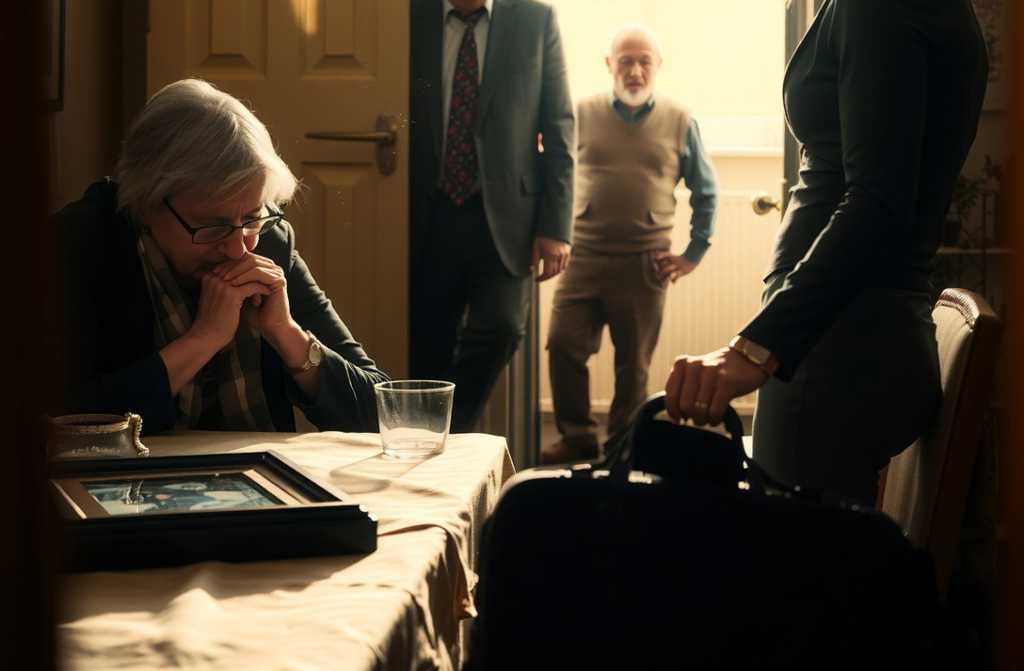
Silence Together
“Grace, why are you shouting? I told you, Ill bring it in a moment.”
Richard stood in the doorway, holding onto the frame for support. An old white vest with a splash of tomato sauce, worn pyjama bottomshe looked at his wife as if she were making a fuss for no good reason.
“Ive been asking for an hour,” Grace replied, struggling to turn her head on the pillow. “It hurts lying like this. I need to roll over. I cant do it myself.”
“Alright, alright,” he waved a hand and disappeared into the hallway.
She listened and heard the front door slam. Hed left. Simply walked out, without helping her. Grace closed her eyes and started counting to ten, as the hospital nurse had taught her. She couldnt get upset. Her spine needed to heal straight, any tension could undo everything. Still, hot tears crept down her cheeks, stinging her skin with resentment. She lay there for another twenty minutes before she heard his footsteps again. He returned, dropped a pint of milk and a loaf of bread on the kitchen side, then came back in.
“Do you want to turn over now?” He asked wearily, as though shifting her was a Herculean task.
She nodded wordlessly. He approached, awkwardly slipped his hands under her arms. Pain shot like a needle through her back and Grace gave a gasp.
“What are you doing?” Richard panicked. “Im being careful!”
“Not like that,” she murmured through clenched teeth. “Your hand needs to go under my back, like the nurse showed you.”
“What nurse? I didnt remember any of that. If you know how, say so next time.”
He tried again, barely better this time. Grace managed to settle on her side and the pain eased a little. Richard sighed heavily and sat at the edge of the bed.
“How long is this meant to go on?” he asked. “Its been a month already.”
“At least three, the doctor said,” Grace whispered.
He walked out to the kitchen. She heard him clattering dishes, then the TV blaredthe volume up full, the flat filled with game show chatter and canned laughter. Grace stared at the wintry November light beyond the window, wind teasing the bare branches in the communal garden. She remembered walking here with Richard forty years ago, when they first moved in. The trees had been saplings then, planted collectively by the residents. Richard hauled buckets of water, and she held the roots steady. Theyd climbed uphed carried her across the threshold just for luck, to make their new life happy, though it wasnt their first home. Now, he couldnt even turn her properly in bed.
Another fortnight went by. Grace learned to shuffle a little on her own, grasping at chair backs and the wall. The doctor allowed her five minutes upright each day, no more. Richard cooked, but badly: over-boiled pasta with tinned stew, eggs either half-raw or charred. Grace ate quietly, knowing he was trying but feeling a dull sadness take root inside. She used to cook elaborate meals, pies, and fresh salads with love. Now, food had become a burden for him and a torment for her.
One night, Richard took to sleeping on the lounge sofaher bedroom needed quiet. She asked him for water, but he gave no reply. Louder, she called. Silence. Grace managed to shuffle as far as the door, peering in. He lay sprawled, snoring, telly still on, lights blazing. She knew shed never make it to the kitchen, so she crept back to bed. The thirst gnawed, but what hurt most was how hed simply forgotten her.
Richard finally woke about ten. He checked in. “Sleep alright?” he asked.
“Not really,” said Grace. “You didnt get me water.”
He shrugged. “I fell asleep. Sorry, Ill get you some now.”
He handed her a glass and watched, befuddled, as she drank it in great gulps.
“Why are you in a mood?” he asked.
“Im just tired,” she replied softly.
“Tired? What about me? You think its easy chasing round after you? Im seventy-two, you knowsupposed to be retired.”
She said nothing, too weary to argue. She turned to the window as he clattered off to the kitchen. After a while, he called her in for breakfast. She dragged herself to the kitchen table, each step aching. Hed made porridge, overcooked and glueyshe tasted it and her stomach twisted with nausea.
“Not to your liking?” Richard sounded wounded.
“Its fine. Im just not hungry,” she lied.
He snatched up his coat. “Im off to sit with Peter on the benches a bit,” he said, and left.
Grace was alone. Gripping the counter, she dumped the porridge in the bin, found a yoghurt, and ate standing upafraid to try reaching the bedroom. She settled by the window and watched Richard and his mate Peter, laughing on the benches beneath the poplars, smoking and chatting. He looked animated, satisfied. Grace realised he preferred it there to being here with her.
A week later, what she feared most happened. One evening Grace developed a fever. At first, 37.5, then 38, and by nightfall 38.7. She shivered uncontrollably, her head pounding, back crying out with pain. Richard gave her paracetamol, tucked her in, and said hed call the ambulance if things got worse. He retreated to the lounge, telly on again. Grace tried to sleep, but her fever raged on. At 2 a.m., she called for him. Silence. She called again, louder. Nothing. Hed fallen asleep and couldnt hear her. Terror seized herwhat if it was a complication, an infection? The doctor had warned them. She struggled up, tried to reach the phone on the bedside table, but instead fell painfully to the floor. She cried out, nearly blacking out with pain. Richard never came.
The next morning their neighbour Ruth found her, after noticing the door was left unlatched, as Richard often forgot it. Ruth heard the groans, came in, and found Grace crumpled on the bedroom floor. She rang for an ambulance and called Graces daughter, Emma, whose number she found in the address book. Richard slept on the sofa, oblivious, and was only woken by the paramedics.
Emma arrived, face ashen with fury. She pushed past her father without a glance and went straight to her mother, already back in bed after the fever had been subdued by an injection.
“Mum, how are you?” Emma sat beside her, taking her hand.
“Ill be alright, love. Dont worry,” Grace whispered.
“Dont worry? You were on the floor all night!”
“Not all night a few hours.”
“And where was he?” Emma looked back at the door, where Richard hoveredconfused, apologetic.
“I was asleep,” he muttered. “I didnt hear.”
“You didnt hear your wife, post-surgery, crying out for help?” Emmas words were cold. “You just didnt hear?”
“Im tired,” he tried, “Im not young anymore. Its hard for me too, Em.”
Emma stood upa strong, capable woman of forty-five, an accountant, mother of two boys, youngest only ten. She faced her father.
“Do you know what being tired truly is?” she asked, voice steely. “You know what its like starting at six, getting the kids up, school run, working all day, back home, cooking, sorting homework, laundry? And worrying about Mum all the whilehere alone, with you, who cant even bring her water?”
“Emma, please” Grace pleaded softly.
“No, Mum, he needs to hear this,” Emma shot back. “You cant manage, Dad. You dont want to learn how. Mums coming with me.”
Grace tried to protest, but Emma silenced her. “No argument. Youll stay in your old roomwell set your bed up, and youll recover there.”
“But youve got your work, and the boys and”
“Youre my mother. Youre my family too. I wont let you fade away here because he cant be bothered to look after you properly.”
Richard stood quietly, then turned away and wandered off to the kitchen. Emma set to packing Graces things: clothes, tablets, important documents, beloved family photos. Watching her daughter act swiftly and decisively, Grace felt grateful and ashamed all at oncea crushing emptiness gaping inside. She was leaving her home of forty years. Her husband of nearly fifty. It was right, she knew. Still, it hurt beyond words.
Emma arranged a special taxi for people who couldnt walk. She and the driver helped Grace down. Richard watched from the landing, but said nothing as they left.
The first few days at Emmas were hard. Grace was aware she was a burden. Her room, small and filled with Dimas old computer kit, meant her grandson now worked in the living rooma hassle for everyone. Emma was up at six, seeing to the boys, dashing to work, visiting home at lunch to check on Grace, bring medicine, heat up her lunch. Evenings, though exhausted, Emma always helped Grace wash, change, and gently coaxed her through the exercises the physiotherapist had set.
Emmas husband, Mark, was gentle and steady. He was an engineer, working late, but always popped in to Graces room, bringing her tea and checking in. At first, her grandsons Dima and Charlie were nervous around their frail, bed-bound grandmother, but gradually warmed up. Fourteen-year-old Dima started helping her as best he could, and little Charlie brought her books, chattering about school.
Slowly, Grace improved. Emma found her a good physiotherapist who came twice a week. She bought a walking frame, and Grace learned to walk againthe process humiliating, painful, but made endurable by Emmas inspiring presence. They talked for hours about life, the past, Emmas childhood, how Grace married Richard, the memories and fears, work-life balance, how close to breaking Emma sometimes felt. Grace realised how much her daughter sacrificed.
After three months, Grace could manoeuvre around the flat on her frame, get herself tea, use the bathroom unaided. The doctor proclaimed the recovery steady, but warned shed always have pain; should avoid heavy lifting, sudden movement. The main thingshe was alive, independent.
Richard rang several times. At first, oftensaying he missed her, checking in. Emma would answer curtly, never letting him speak to Grace. She had not forgiven him. Grace overheard enough to understand, felt a dull, cold ache. Richard was her husband. Nearly fifty years together. She couldnt forget the young, strong man shed loved, the laughter, the familyhad it all meant nothing?
One evening, with Emma putting the boys to bed, the doorbell rang. Mark opened it. Richard stood there, in a fresh shirt and jumper, holding a box of cream and cherry slicesGraces favourite.
“Evening, Mark,” Richard said softly. “May I see Grace?”
Mark hesitated. “I Emma didnt say”
“I know. Please, just five minutes,” Richard implored.
Mark nodded, letting him in. Richard stepped into Graces room. She was reading by the window, froze at the sight of him; her book landing with a thump.
“Rick,” she murmured.
“Grace,” he knelt by her chair, offering the patisserie box. “I brought you these.”
She took them with trembling hands. He gazed up at her, tears brimming in his eyes.
“Forgive me,” he rasped. “I dont know how to look after someone. You always did everything, and I got used to it. When you got ill I just panicked. I was scared, Grace. I failed you. Im not much of a husband.”
She stroked his thinning, silver hair.
“You probably wont forgive me. Im lost without you, Grace. The flats so empty. Like a crypt without you there.”
She didnt wipe her tears away.
“We dont have much time left. Who do we have except each other? Emmas been brilliant but she has her own life. Its hard, us depending on her. We know each other. Youre mine. Im yours. Thats how its always been.”
Grace saw the loneliness in himthe same fear in herself. She imagined ending alone in some small room, a burden, unremembered. Yes, Emma cared now, but for how long? Eventually Emmas life would wear her out. But Richardhe was her husband. They belonged together. That mattered.
“Ill think about it,” she said softly.
Richard nodded, kissed her forehead, and took his leave. As the door closed, Emma burst in.
“He was here, wasnt he?”
“Yes,” Grace replied.
“What did he want?”
“He asked for forgiveness.”
Emma sat on the bed, tense. “Mum, youre not thinking of going back?”
Grace was silent, gazing into the night outside.
“I dont know, Emma,” she said eventually.
“How can you not know?” Emmas voice rose. “He left you helpless! I dropped everything to take you inIve cared for you, paid for doctors, given up sleep, my energy, time! And he brings cake and youll just go back?”
“Its not that simple, Emma.”
“Its very simple, Mum! He wants a housekeepernot a partner!”
“Hes my husband,” Grace whispered.
“So thats his right, to treat you this way?”
“Weve been married nearly fifty years. Thats my life. Without him, I dont know who I am.”
Emma was pacing. “I love you, Mum, but youre making the wrong choice. Youre choosing someone who doesnt value you over your daughter whos sacrificed months for you. Its not fair.”
“Im not choosing between you. I just want to go home.”
“Home?” Emma said, incredulous. “Where you suffered? Where your cries went unheard?”
“My life is there, my memories. And hes there. I know youre right, but Im afraid. I dont want to die alone.”
“Youre not alone!” Emma cried. “Youre with me, the boys, Mark”
“Thats your family, love. Not mine.”
Emma turned pale, hands shaking. Then she stormed out, slamming the door. Grace sat alone with the paper box on her lap, crying. She knew shed hurt Emma, but couldnt help itfear trumped everything.
Two weeks later, Grace returned to her flat. Emma helped pack and arrange the taxi, but barely spoke. When they parted, Emma hugged her mother stiffly.
“Call me if you need anything,” she said.
“Thank you, Emma. For everything. Im sorry.”
“Nothing to forgive,” Emma replied coolly.
Grace realised their rift might never heal.
Richard greeted her at the door. The flat was spotless, flowers on the tablefake, but still colourful. He helped her settle in, brought tea. Grace studied his kind, hopeful face, searching her own feelings. Shed come home. It shouldve felt like relief, but only exhaustion and sorrow remained.
The initial days were manageable. Richard tried. He cooked, albeit poorly, brought her pills, helped around. Gradually, though, old habits crept backhed forget milk, stay out with Peter on the benches for hours, leaving her unattended. Grace made no complaint. She learnt to wait.
A month passed. Emma didnt call. Grace phoned a few times, but Emmas replies were curt and brisk. Busy, shed say, will call back, but never did. Grace realised shed lost her daughter. The pain was immense, but she had made her choice, now lived with the consequences.
One evening, Grace sat by the window. Richard watched his shouty game shows on TV. She glanced at him, slouched in a battered t-shirt, belly scratched, laughing from the sofa. He was present, but they barely spokeexcept when he asked about tea. She remembered chatting with Emma in her flatabout books, films, the boys, funny work stories. Here, only silence and television filled the air.
Grace took her frame and shuffled to the sideboard. She picked up a photo of her grandsons at Brighton Beach. When had she last seen them? Two months ago. They must have grown. She brushed the photos glass with a finger. She had chosen Richard and lost them.
“Grace, come watch this! Its hilarious!” Richard called from the lounge.
She ignored him, placed the photo back, lay down staring at the ceilingfinding the lightning-shaped crack, from a leak years ago. Her life, she thought, had split the same waybefore and after. Before, she was a wife, mother, nanneeded. She cooked, gardened, saw friends. After, she became a burden. First to Richard, then Emma. And nowshe simply existed. Waiting. For what, she didnt know.
The next day, she rang Emma again. No answer. She left a message.
“Emma, its Mum. Please ring. I miss you. I want to hear how the boys are. I miss you, love.”
There was no replynot that day, not the week after. Emma had cut their connection off completely.
Two more months passed. Grace began walking unaided, with a stick. She could go alone to the Co-op on the ground floor for shopping. Richard seemed pleasedhe could stop trying so hard. He spent his time watching telly, or nattering with Peter out back. Grace cooked, cleaned, did the washing. Her back ached, but the doctor had said it would, for ever. She got used to living with pain, loneliness, the silence.
One morning, while washing up, the doorbell rang. Grace dried her hands and opened the door. Emma stood on the step, drawn and tired, a large bag in hand.
“Emma,” Grace breathed. “You came.”
“May I come in?” Emma asked.
“Of course, darling. Come through.”
Emma took off her coat and sat in the kitchen. Richard hovered in the living room, unsure. Grace made her a tea. Emma drank in silence, cup clutched tightly. Grace sat opposite, waiting.
“Mum,” Emma started. “I havent called for two months. I was angry. I couldnt forgive you for going back to him. After everything he did. After everything I did.”
“I know. Im sorry.”
“Let me finish,” Emma said, her gaze steady. “I thought youd betrayed me. That you chose him over me. That you didnt need my love or effort. But then I realisedits fear. Youre just afraid. Of being alone, of being a burden, of old age, of dying. You picked what seemed safe. Him. Familiarityeven if its not good. I felt sorry for you, Mum.”
“Emma” tears threatened.
“But then I stopped feeling sorry,” Emmas voice hardened. “Because you know what he is like. That he wont look after you as he should. That hes selfish, just wants things his own way. And yet you still chose him over the person who was willing to give up everything for you. You erased all my efforts.”
“I didn’t mean to”
“You did. You made a choice. And you must live with it. I came to say, Im stepping back. If its him you want, have him. But please understandI wont rescue you again if you end up in trouble. Im tired, Mum. Im tired of being there when you want and shut out when you dont.”
“Dont talk like that,” Grace said, trying to reach for her. Emma withdrew.
“Im only telling the truth. You chose him, knowing all you did, over my love and hard work. I dont know if Ill ever forgive you. Maybe in time, but not now.”
Richard, listening in, tried to interrupt but Emma cut him off.
“And you” she said icily, “Youre pathetic. You dont deserve her. But she chose you. Good luck in your little bubble of silence and lies.”
Emma stood, pulled an envelope from her bag, and laid it on the table.
“Thats money for your medication and doctors. You wont want for those. But I cant give you anything else. Goodbye, mum.”
She got up, put on her coat and left, not looking back. As the front door closed and her footsteps faded, Grace stood in the kitchen, unable to move. Richard tried to comfort her, but she brushed him off.
“Dont,” she said quietly.
“Shes just angry, love. Shell calm down and call.”
“No,” Grace replied. “She wont. Ive lost her. For good.”
She went to her bedroom, lay down and closed her eyes. Wet tears streaked into her hair. She could hear Richard bustling about, the TV going on in the lounge. She thought, bitterly, that Emma was right. Shed betrayed her. Chosen safety over love, ease over dignityand paid the highest priceshed lost her daughter.
Another half year slipped by. Grace and Richard lived as they always had. Shared breakfast, he vanished to see friends or the benches, she stayed home. Cooking, cleaning, staring out at the close. Occasionally, Grace called Emma, but her daughter never answered. Sometimes, Mark would replyEmmas busy, everythings fine, hed pass on the message. Emma never called back. Grace sent cards to the grandsons on their birthdaysgot nothing in return.
In late summer, Grace sat in her chair gazing at the close. Richard was dozing, the TV humming away. Children played in the communal gardenboys kicking a football, girls swinging under the poplars. The shadows of evening reached across the path. Grace remembered Emma there as a child, playing, laughing, cyclingwith Richard running behind, letting go as Emma wobbled off, squeals echoing in the bright air. Then, theyd been a true family. Now? She and Richard were just two old people, cohabiting, but not togetheralone in the same flat, worlds apart.
Grace rose, found the photograph of Emma and the grandsons at the sea three summers backsmiling, wrapped in each others arms. The last time theyd all been truly happy. Grace caressed the glass.
“Im sorry, Emma,” she whispered. “Im sorry.”
But Emma would never hear, nor forgive.
Grace replaced the photo and returned to her chair. Richard woke, stretching, and looked at her.
“Grace, why so glum?” he asked.
“Nothing,” she answered.
“Fancy a cuppa? Ill make some.”
“Alright.”
He pottered off, put the kettle on. Soon after, he returned with two mugs, pushing hers toward her and settling back, watching the television. They drank in silence. He promptly flicked to his detective show, setting the volume high. Grace stared at the screen but didnt register a thing. Richard was there, but she felt desperately alone.
When he finished his tea, Richard piped up, “Lets pop out to the Saturday market tomorrowget some tomatoes and cucumbers, pickle them for winter like old times?”
“I cant carry anything heavy, you know my back hurts,” she reminded him.
“Ill help. Ill carry everything.”
She studied himcontent, cheerful at the prospect. He didnt understand what shed lost. For him, life was as it always had beenwife at home, routines unchanged.
“Alright,” she replied quietly. “Well go.”
Richard beamed. “Thats the spirit! Some fresh air will do us good.”
He turned back to his show. Grace gathered up their empty mugs, washed and dried them in the kitchen. She stood at the window a long time. Night had fallen outside, warm and silent. Lights glowed in neighbours windows, music and laughter drifting from the flats. Life carried on. She remembered standing at Emmas window six months agothe same view, but with Emma bustling about, the boys bickering, Mark cracking jokes at tea. Shed had family around her thenonly, shed been too frightened to stay, too afraid of losing Richard or abandoning old habits. Now she was back in her old flat, with her old life. But happy? Not even close. Merely existingwaiting for it to end, and wondering if anyone would truly care when it did. Richard? Or would he just sigh with relief, free from pretending?
Grace shut her eyes, weighed down by a fatigued sadness. She stared at her reflection in the glassan old woman, lined and tired, grey and hollow. Once, shed been young and loved. Now, just a shadow in a flat shared with another ghost. She drifted back to her bedroom. Richard had already nodded off in the lounge, snoring gently, as he always did since her illness. He found the lounge more comfortable; she tossed in pain at night. So she slept alone. He, in his world. She, in hers.
Grace lay in the darkness, listening. Somewhere outside, a dog barked. A door slammed. The world moved on. In here, there was only silencethe silence she had chosen. Silence for two.
Morning came. They went round to the market, Richard carrying a bag, Grace leaning on her stick. They hardly spoke. At home, she started prepping the pickles, Richard soon wandering off to watch telly. Grace sliced cucumbers, wondering if Emma and the boys were shopping now too. Laughing, alive, choosing fresh fruit togethera proper family. Here, she was just alone, slicing for a man who wouldnt notice or care whether the pickles tasted of anything. Tears slid down her cheeks. She wiped them away and chopped on. For this was her life. Her choice. And she’d have to live with it, to the very endin silence. Together.