The Mystery of Her Job
The door clicked open just as Helen was about to whisk away her pile of printouts. Shed only just snapped her laptop shut and turned around when plastic shopping bags rattled in the hallway, followed by a voice she knew all too well.
James, honestly, this staircase of yoursIve said it a thousand times, you simply must move to the ground floor. Five flights with no lift, its just absurdity, thats what it is.
Mrs Margaret Taylor appeared in the kitchen, still wearing her coat, two heavy bags hanging from her arms. Round-faced, sturdy, with a no-nonsense chestnut bob, she looked around like she was here to conduct an inspection rather than just pop by.
Mum, let me help you, James emerged from the bedroom in a football shirt and joggers, kissing his mother on the cheek and taking the bags off her. Where did you get all this?
From the allotment, of course. Cucumbers, courgettes, onions, new potatoes. I wanted to bring tomatoes, but theyre still green. Margaret Taylor finally unzipped her coat, hung it up in the hall, and marched back to the kitchen. She caught sight of Helen, clutching a mug of tea at the table. Hello, Helen.
Hello, Mrs Taylor. How was your journey?
Fine. The train was rammed, as usual. Everyone lugging all sortsat least I only had my bags. One woman had half a greenhouse of seedlings, goodness knows how she managed. Margaret Taylor prattled on whilst she unpacked her bags onto the table. Cucumbers wrapped in old newspaper, tangled dill, onions in a carrier. Are you working today, or staying homeagain?
Helen took a small sip of tea. Im at home, she replied evenly.
Right-o.
The entire brevity of that word was loaded, enough to fill a parliamentary speech. James started emptying cucumbers into a bowl, eyes fixed anywhere but on his mother or his wife.
Mum, are you hungry? We can cook something now.
Is your fridge even alive? Without waiting for an answer, Mrs Taylor opened the fridge. Inside: a bottle of milk, a wedge of cheddar, three eggs, half a butter packet, and a bag of leftover pearl barley. Helen, when did you last pop to the shop?
Couple of days ago, Helen said.
Couple of days. Three eggs and a bit of milk? Is that what counts these days?
Mum, James put the bowl on the table, a bit louder than necessary.
What? Its a simple question. If someone is at home all day, perhaps they could see to the house, no? Your wifes not working, she could at least make sure the cupboards arent bare.
I am working, Helen said, softly but firmly.
Oh Helen, come now. Mrs Taylor flopped onto a wobbly stool by the table. Three years youve been out of the office. Three years! I know, maternity, illness, life happensbut no kids, youre fit as a fiddle, and here you are at home, tap-tapping on the computer, while James keeps both of you afloat. Do you think thats fair?
Mum, well sort our own lives out, James said, but his voice had wilted instead of strengthening.
Yes, yes, youre adults, I know. Im only saying. Now look at Carolynyou remember Carolyn from Mums office? Shes thirty-two and already head of department. No man, no help, just elbow grease. And you, Helen, youre clever, youve got a degree. Why didnt you stay at the paper? Just left, and that was that.
I never stopped working, Mrs Taylor, Helen replied, her tone taking on a new quality that finally drew Jamess gaze from the bowl to her. Just changed the way I work, thats all.
Changed the way. Mrs Taylor repeated the phrase as if she were chewing on a particularly unpleasant sprout. Ive spent my life in accounts, thirty-six years. Clocked in, clocked out, deadlines, ledgers. You know, back in 92, they didnt pay us for half a year and still, I came in. Because it was a job, Helen. Not just something thats convenient.
I understand, said Helen.
Well then. I think you should get back out there. Doesnt have to be high-powered, just something. Bit of proper worka little assistant, half days! At least have some money of your own, feel human.
James disappeared from the kitchennot with a huff, just quietly. Both women noticed. Helen set her mug down, rubbed her temples, then offered a smile that meant nothing and promised less.
Mrs Taylor, would you like me to do you some eggs? Fresh dill, and your own cucumbers.
Margaret Taylor stared at her, silent for a moment. Go on then, she finally said. And dont be stingy with the butterI cant stand a dry omelette.
Whilst Helen cooked, Mrs Taylor shuffled the cucumbers into spare bags, muttering about fertiliser prices, the neighbour pilfering strawberries, and how the trains were bloody hopeless these days. She spoke into the air, not really expecting answers. It was her waymaking noise was better than letting silence get at her.
Helen listened as she flipped the eggs and sliced cucumbers. Under the closed laptop, out of sight, lay print-outs covered in red-pen, brittle scans of yellowed letters, photos from Edwardian England. She had a client deadline in four days, and hadnt made it to the shops because shed been up until three AM last night, cross-referencing dates and names in a labyrinthine post-war archive.
But Mrs Taylor knew none of this. And Helen saw no reason to enlighten her.
Mrs Taylor left half past seven, lugging home empty bags and her firm belief that her daughter-in-law was squandering her life. On the stairs, she murmured something to JamesHelen couldnt hear. He nodded, came back up, and loitered in the hall, not quite knowing where to put his hands.
You shouldnt have kept quiet, he said, eventually.
I wasnt quiet, called Helen from the kitchen. I was frying eggs.
You know what I mean.
I do. She joined him, pausing nearby. James, I care that you understand. Your mum, well shes set in her ways. No need to try and change her.
But shes so unfair.
She doesnt mean harm. Its how she sees the world: job or no job, and nothing in between. Its not malice, its just her map of things.
He hugged her, tucking his chin into her hair.
Tired?
A bit. Ive got more to do.
Go on, then. Ill tidy up.
Helen returned to the laptop, flipped up the lid. The screen came to life, lines shed reworked half a dozen times glowing before her, striving for that elusive pulse when old stories feel newly alive. It was tricky work. A well-heeled client from Bath wanted a book about his family, and not some glossy vanity project either; he wanted a genuine chronicle, archive photos and all, letters, proper biographies. Living memory, not a brochure. Jobs like that were Helen Whitbys bread and butter.
The name on the title page always read the same: Helen Whitby, Family Archive Editor and Restorer. Her real surname, Miller, never appeared. It was her choicenot desperate, not random. When shed left the magazine three years ago to work solo, shed known she needed her own quiet corner, without endless questions and explanations. Whitby was free; Miller was the daughter-in-law who sat at home.
Both names belonged to her, just lived in separate rooms.
The money Helen earned as Whitby went straight into a separate account. James knew. Between themselves, they called it the Safety Fundhalf-joking, half-serious. In that fund, they quietly collected a buffer, a hedge against the surprises of life, so they wouldnt be caught out. James earned well, but not lavishly. Together, they managed, at a pace that suited them.
Mrs Taylor had no clue about the fund.
A year and a bit ago, Jamess fatherDavid Taylorwas found to have a heart condition, not immediately life-threatening but needing a procedure. The NHS waitlist was endless, time was short. James picked up overtime, skipped holidays. It still wasnt enough. Helen quietly transferred the needed sum from the Safety Fund. Saying nothing. James knew. Mrs Taylor thought her son had managed it on his own, borrowed somewhere, saved up perhaps.
It was simpler for everyone that way.
David Taylors operation was in October, in a good private clinic. Now he took brisk morning walks and only complained about the no-salt regime.
The Taylor family gathered for Uncle Arthurs eightieth birthday at the start of August: a very round number, as Margaret Taylor declared, with a big lunch spread at the eldest cousins house out in Surrey. Arthur Taylor was a gentle man, soft-eyed, with the endearing habit of laughing at his own jokes before anyone else twigged. Hed been a history teacher all his life, and even at his own birthday couldnt resist lecturing about some obscure civil skirmish near Shrewsbury.
It was a full houserelatives James saw once every few years and had to be reminded who was whose cousin, whod married off where. Mrs Taylor arrived in a blue dress, new perm, spirits highuntil she was seated next to Cousin Geoffs wife (whom she considered flighty).
Helen found herself opposite, next to James, observing proceedings with the quiet, attentive eye shed honed through years spent untangling other peoples memories. Faces, gestures, scraps of chat. She could listen so well, people forgot they were being listened to at all.
About three hours in, after the toasts had faded into gentle nattering, a familiar voice boomed from the door.
Terribly sorrytrain delays! Rotten luck as always!
In strode Uncle Alberta robust, bearded chap in his mid-sixties, oddly reminiscent of stern Victorians in sepia photographs. Hed come down from Manchester, where he lived, collecting an endless hodgepodge of documents, letters, postcardsanything with a whiff of the past. The family regarded him as an eccentric, but one who was respected for it.
Uncle Albert embraced Arthur, downed his belated drink, worked the room, then settled into an empty chair with that look of someone who always has something to say and every intention of saying it at the first whiff of opportunity.
The opportunity arrived.
Arthur, my dear fellow, he announced, rummaging in a battered canvas bag. I have a gift for youa proper event, not just a present, I promise. Timed especially for this auspicious occasion.
He produced a hefty hardback, dark green with gold lettering: The Taylor Family. A History. 18122024. Arthur accepted it with the care of someone handed a rare artefact.
Albert, what on earth is this?
Our story, Albert said, brimming with pride. Two years work, digging through archives and family documents, calling favours. And I found an absolute marvel of an editorone of natures wonders. Helen Whitby. Anyone heard of her?
Blank looks went around the table. Mrs Taylor watched Albert with polite curiosity.
No, someone mumbled.
Well you wouldnt haveshe doesnt do adverts, all word of mouth. I found her through an acquaintancehe commissioned a book about his father. Still reads it every Christmas. Not just something for the shelfthats real work.
Arthur opened the book. A few people stood to peer over his shoulder.
There are photos! he said, surprised. Where did these come from?
She found them, said Albert, matter-of-fact. I gave her everything I had. She went digging, sent off to local museums, managed to locate things Id never even heard about. Look here, your great-great-grandfatherlook, Timothy Taylor, born 1882. Never seen this photo before in my life, and yet here it is. How does she do it? Witchcraft, I tell you, honest.
Mrs Taylor craned over to get a better look. She had that animated look she reserved for topics ripe for her opinion.
My word, she sniffed. Thats beautifully done. How much does a book like this set you back?
Not really dinner table talk, Albert smiled. Ill only say it was worth every last penny. You cant put a price on memories.
Too right, agreed Arthur, thumbing through the pages. Albert, this is… well, its real, this. Whole biographies, letterseven the letters are printed.
All sorted and annotated, nodded Albert. Some of the handwritinghonestly, I wouldnt have made head nor tail. But she deciphered it all, explained everything, the context, what was going on, why they wrote as they did. Its not just publishing, its understanding. Very clever woman.
Mrs Taylor swept an appraising look along the table, settling on Helen. Helen braced herself. Here it comes.
Helen, you ought to listen in, Mrs Taylor began. What a job, eh? Editing archives. I wonder if this Whitby woman has any assistants? Youre at home anyway, you could take it upa new skill, useful work, even in a junior role.
The table fell just a few decibels quieter. Not all at once, just as if other conversations recognised that something interesting was happening next door.
James set his wine glass down.
Helen paused, then looked straight at Uncle Albert.
Uncle Albert, she said, do you remember the company through which you sent your materials?
Albert raised his bushy eyebrows.
No company. Direct contact. She works under a pseudonym, its not a secretsaid so herself. Her real surnames different.
Yes, said Helen. It is different.
Something in her voicethe kind of undercurrent you sense even before you grasp itbrought the whole table to a hush. Albert stared at her, glanced at James, then back again.
Hold on, he said slowly.
I am Whitby, said Helen. Plainly, as if giving her street address.
Albert froze, clutching his napkin in the air.
Silence hung heavy and real. Arthur looked up from the book, gaze flickering between Albert and Helen. Some distant cousin whispered to their neighbour, got a baffled headshake in reply.
Mrs Taylor sat utterly still. At first her face showed no understanding, but then the blood rose to her cheeks and her expression shifted gradually, as if a passing cloud was changing the light across a garden.
What do you mean she started, voice not quite its usual steady self. You, as in the one Albert
Yes, Helen said.
But why havent you ever
Margaret, James interrupted, with a sudden backbone hed lacked in the kitchen three years running. Mum, not now.
Albert rallied himself first; he was the sort never to flounder for long.
Helen, he said, with a newfound respect, genuine and wordless. Weve been emailing for two years and it never clicked. Your married names Miller, and there are heaps of Millers in the family.
I never thought itd be so coincidental, Helen replied.
What do you mean, coincidental? asked the birthday boy.
That youd turn out to be Jamess relatives. I didnt know the connections on his side when I took on the project. Later I worked it out, but by then I was half-way through. Didnt seem to matter for the work itself.
And it doesnt, not for the project, agreed Albert. But it does for, wellthis. He gestured at the family stillness around the table.
Mrs Taylor had gone silent, gazing fixedly at the tablecloth in front of her. Someone tried to chat. She didnt answer.
Gradually, the hubbub resumeda new story was passed around, compliments went to the book, Uncle Albert described his archival pursuits, Arthur lost himself in a passage mentioning his father and clutched the book for some time, reading nothing, just holding it.
Helen sipped her tea and hardly joined in.
When Mrs Taylor left the table, she almost knocked over a wine glass, catching it at the last minute. She apologised, and went out onto the patio.
James looked at Helen. She nodded, folded her napkin, and followed.
The patio was old wood, a little rickety, with red geraniums wilting on the ledge. Mrs Taylor leaned against the railing, looking out at the garden. The apple trees, overgrown and heavy with fruit, seemed neglected. It was a warm evening, fragrant with grass and something a little melancholymaybe damp earth, maybe distant smoke.
Helen stood near, not quite touching.
They were silent for a long time.
I didnt know, Mrs Taylor said at last. Her tone was differentnot the usual certainty, just ordinary confession.
I know you didnt.
Ive said so much to you. Even today, and before that.
You said what you thought.
What I thought was wrong. Mrs Taylor turned, looking older in the evening light, stripped of her usual sharpness. Helen, where did the money for Davids operation come from?
Helen didnt reply straight away. Then said, James found it.
James couldnt have, not that much. I know what were like. Mrs Taylor shook her head. It was you, wasnt it?
We worked it out together.
But the money was yours.
Mrs Taylor
Dont interrupt, she saidtired, not sharp. I want to understand. Youve worked for three years, you save, you say nothing. I call you a layabout right to your face, and you say nothing. Then you pay for Davids op
Her voice brokenot with tears, just ran out of steam halfway through.
Hes my father-in-law, Helen said simply. What more needs saying?
Mrs Taylor gazed at her for a long time. Then turned to face the garden again, her shoulders uneven, as if she was quietly gathering herself.
Why didnt you tell me? About your workwhy hide it?
I didnt hide it. You never asked.
I said you sat at home.
You did.
And you said nothing.
I did.
Mrs Taylor smoothed her hand along the rail, caught a splinter, winced.
I see, now. You stayed silent to avoid a row. To avoid explaining. So you could just work.
In part.
And in the other part?
Helen looked at the apple trees.
In the other partits hard to explain to someone who doesnt feel it. What I do isnt just editing. I work with memorywith other peoples pain, joy, things stuffed away in drawers and kept through decades. When it comes alive in a book, its so intimate. I dont know how to talk about that between omelettes and cucumbers.
Mrs Taylor listened, quietly for once.
Ive been unfair to you, she said at last. I see that now. I didnt see it before.
You werent given a reason to.
Its not an excuse.
No, agreed Helen. But it does explain.
They sat in silence again, distant laughter and clinking plates from indoors.
Helen, Mrs Taylor began, more slowly than usual, searching for words she didnt often use. Id like to ask your forgiveness. Not because I should, but because I am ashamed. Really ashamed. I looked at you and saw only what I wanted to, never what was really there.
Helen said nothing.
Will you forgive me?
Margaret, Helen said softly, were family now. Stuck with each other, whether we like it or not. Figure wed better just get on.
Thats not really an answer.
No. Helen managed a little smile. I forgive you.
Mrs Taylor nodded. Rubbed her hands, as if cold, though it was warm outside.
I wanted to run something by you, she said after a pause. Its a bit late and all, butat home, with David, weve boxes of letters from the war. My mums dad wrote them, years of stuff. Ive kept them all my life, couldnt throw them out, but didnt know what to do either. Would you would you look at them?
Helen looked up, and something in Mrs Taylors request was so real, so natural, it needed no explanation.
Of course I can.
Mrs Taylor noddednot smiling, but visibly different.
Ill bring them round. Whenevers good.
Anytime. Ill be here.
Mrs Taylor gave a short, harmless grunt. Here, yes. At home, she echoed. Exactly. Youre at home.
The letters arrived a week later, in a battered shoebox tied with knicker elastic, envelopes slotted into yellowed paper bags, a stray photo in a frame. Helen handled the box as if it might shatter, set it by the window. Mrs Taylor hovered, as tense as someone entrusting an heirloom to a stranger.
I wont change a thing, said Helen, not looking up. Just preserve, transcribe, put them in order. Its yours, itll stay yours.
I know.
They sat together at the table; Helen opened the box, pulled out a letter, eyed the postmark. 1942, field post. She slit it open with care.
The handwriting was bold, neata man used to writing well.
Helen read silently, then paused.
Waitlisten to this: Theres a woman on our team, Barbara, from Yorkshire. Shes a teacher, writes beautifully, helps with the lists. Together were boxing up papers you cant just burn, because memories shouldnt be burnt, even if the worlds on fire round you.
Mrs Taylor stared at her. Helen kept reading, did a bit of mental maths, then looked back at Mrs Taylor, her face bright with the thrill of old facts connecting.
Yorkshire, said Helen. My great-grandmother was from Yorkshire. Barbara. She taught school, worked with archives in the war. My mum always said she believed, If the paperwork burns, so does part of the truth. Family legend, always knew it.
And my granddad wrote about a Barbara from Yorkshire, said Mrs Taylor.
Yes.
They looked at each other over the shoebox, and while it might have been just a coincidencethere are plenty of Barbaras in Yorkshirethe connection had a weight, a feeling that was impossible to dismiss.
I can try to check, said Helen. War archives, records of civilian workers. If her names there, and the right year
Will you try?
I will.
Mrs Taylor ran a finger around the box edge.
I always thought these were just relics to be hoarded. Had no idea there were living stories inside.
There always are, Helen replied. Thats the only reason I stay in this line of work. When you read, theyre alive again.
Mrs Taylor nodded. Then, to both their surprise: Can I help? I mean, not as a job, I know nothing about it, but justsit with you, read, ask questions?
Helen considered.
Yes, you can.
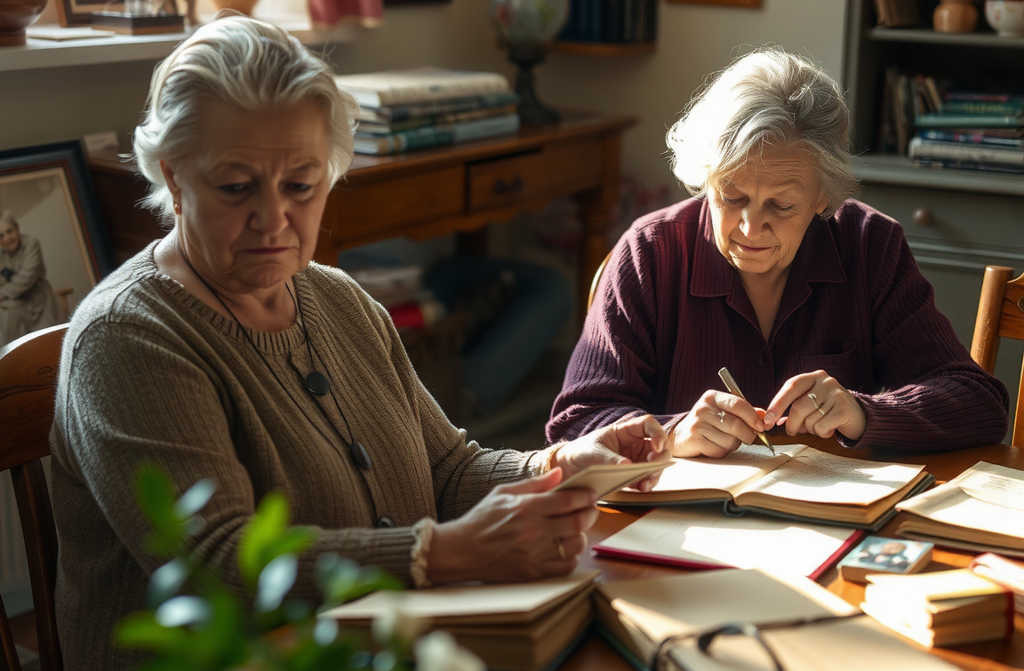
Thats how it began. Not with a grand reconciliation, not with dramatic apologies, but simply: two women at a kitchen table, one reading, one listening, old family letters between themboth their ancestors, unknown to each other, fighting the same fight: saving what couldnt be thrown away.
Autumn passed in quiet work. Mrs Taylor started coming over twice a week, sometimes three times. At first she just satobserving, asking questions. But soon enough, she was bringing treasures of her own: birth certificates, faded photographs, random notes. Her memory for family ties was remarkablewho married whom, when people moved, key dates. Real memory, not just stuff written down.
Helen took notes.
James watched all this with an expression part wonder, part disbelief.
Mums been here three hours, hed say of an evening. Heard her chatting about your great-nans village. Shes not driving you mad?
No, Helen replied. Shes helping.
James was silent for a long moment.
You know, a year ago
I know.
And youre not I mean
James, Helen smiled. She didnt know what she was saying, back then. People can change, if you let them.
Youre defending her.
I understand her. Its not quite the same.
The link with Barbara was confirmed in November. Helen found an entry in a digitised war archive: Barbara Jane Sykes, teacher from Yorkshire, attached to a support company in 1942, in charge of document preservation during retreats. Right age, right initialsodds of it being someone else were slim.
When Helen showed Mrs Taylor the printout, she read it slowly, both hands gripping the page, eyes growing wet but never quite crying.
They were in the same group, Mrs Taylor said.
Looks like they were.
So they knew each other.
Almost certainly.
Mrs Taylor gazed at her. So what does that make usdoes that mean we go back a long way?
It means, Helen replied, our families saved the same things, once upon a time. Maybe its coincidence. Or maybe not. I dont know what to call that.
Me neither. But it helps. Somehow.
The idea of a museum came from David Taylor, wandering into Helens workspaceshelves lined with folders, a desk scattered with photo printouts, a hand-drawn family tree pinned to the wall.
It looks like a little museum in here, he said.
They laughedthen all went quiet, and exchanged a knowing look.
So they cleared the old box room at Margaret and Davids flat, painted the walls, bought a simple bookcase. Helen framed and labelled photos; Mrs Taylor found a jewellery box with family rings and clipped war medals, set it on its own shelf; David brought in his dads battered brown leather satchel, whichsurprise!was stuffed with a notebook jammed full of scribbles.
They spent three evenings deciphering it.
There was no grand opening. Just one December weekend, James entered the old flat and saw the room done, photos on the wall, shelves with files, a box of things that once had nowhere to belong.
Mum, he said.
Yes, love? Mrs Taylor emerged, dish towel in hand.
Its beautiful.
She shruggedmodestly, though she was chuffed. Helen did it all. I just helped.
You did it together.
After a moment, Mrs Taylor agreed, quietly: Together. Yes.
That same day, Helen turned down a proposal from an old business contact. A London entrepreneur wanted her to found a small publisher, churning out family histories, with posh staff and an officebig money, fat prospects.
She wrote back, polite but firm. James asked why.
Because if I become a business, Ill have to take every job, not just the ones that move me, Helen said. Id have to manage people, chase profits, worry about the market. Its a fine job, but not mine. I need to choose. Otherwise, its just business. And business doesnt keep anyone alive.
James nodded. Any regrets?
No. Only about things I never tried, she said. Not this.
Mrs Taylor learned about her decision later, in passing. Said nothingjust moved the best-loved photo frame so the light hit it better.
Late December, one short winter day, Helen arrived early at the museum. She traced a finger along the folder spines. Not just other peoples stories anymoretheir family story, still unfolding, was there too.
Mrs Taylor followed twenty minutes later, bearing tea on a tray. Cups clinked by the window, snow lying thinly outside.
I found more letters, Mrs Taylor announced, settling in. Bottom of my mums bureau, never unpacked everything after well. Different handwriting this time, not Granddads.
Whose?
Dont know. Maybe written to her. My mums mum. She was Mary.
Bring them?
I will. Mrs Taylor gazed at the snow. Helen, dont think I suddenly understand all that you do. I dont. But I see that it matters. That people need it.
Thats enough, Helen replied.
Perhaps. I always used to think that what mattered was for work to be visiblea finished report, the numbers tidy, someone senior saying Well done. Visible work. And youyoure at home, staring at that laptop. But inside, theres something else going on.
Helen nodded.
Took me a while to see it, Mrs Taylor continued, voice softer. A long while, and I needed a big shove to get there.
Important thing is, you did.
We mightve kept bumbling along otherwise. If it hadnt been for Arthurs birthday, or Albert and that book
Maybe. Maybe not. Life doesnt really like being predicted.
Soft snow kept falling outside, patient as time. Mrs Taylor looked out, her face stripped of tension or defencejust tired, and at peace, as if shed finally worked out where to go.
You got another order lined up? she asked.
Yesa family from Bristol wants a book about three generations. First an artist, then all engineers, now the grandchildren are painting again. Circle coming round.
I like that, Mrs Taylor said. If you do something about usour familyyoull let me know what you need?
I will.
Alright. Ive always had a good memory. Mrs Taylor straightened a photo frame, looking at the faces. On one, a young man in army khaki, 1942: Peter Nicholls, field post. Next to him, a blurry woman with a bookBarbara Sykes, date unknown, probably late 1930s.
On the shelf, they stood side by side, as perhapsonce in a cold building long agotheyd stood, boxing up papers that wouldnt be lost.
Lovely tea, said Mrs Taylor, coming back to the table.
Its from that loose leaf shop in Camden, Helen said. No teabags in sight.
Write me down the address next time.
I will.
Outside, the world was turning quietly white, the hush of city snow falling as patient and faithful as memory itself.






