Mum, Give Us a Smile Arina never liked it when the neighbours popped over and begged her mum to sing a song. “Come on, Annie, sing! You’ve such a lovely voice—and dance for us too, you’re wonderful at it,” they’d plead, and her mum would begin, neighbours joining in, sometimes all dancing together right in the garden. Back then, Arina lived with her parents in a small English village, in their own cottage, her younger brother Tony running about. Her mother, Ann, was warm and cheerful. When the neighbours left, she’d always say: “Do come again soon, that was lovely, really enjoyed myself,” and the neighbours would promise to return. Still, Arina felt uneasy about her mum singing and dancing—she almost felt embarrassed. She was in Year 5 and eventually told her: “Mum, please don’t sing and dance… I get embarrassed,” though she couldn’t really explain why. Even now, as an adult and a mother herself, Arina can’t quite put her finger on it. But Ann simply replied, “Don’t be ashamed, darling—rejoice when I sing! I won’t always be young enough to sing and dance, you know…” Of course, Arina didn’t understand at the time; life isn’t always full of joy. By the time Arina was in Year 6 and Tony was in Year 2, their father left. He packed his things and walked out for good. Arina never found out just why—when she finally asked as a teenager, “Mum, why did Dad leave us?” “You’ll understand when you’re grown,” Mum would say. Ann couldn’t bring herself to tell her daughter that she’d caught her husband at home with another woman—Vera, who lived just down the lane. Arina and Tony were at school; Ann had come home early for a forgotten purse, and found the bedroom door open. Her husband was supposed to be at work, but instead… That evening, Ann confronted her husband: “Your things are packed; go. I’ll never forgive you.” Ivan tried to make excuses for his actions, but Ann would have none of it; he took his bag and left as Ann watched from behind the corner of the cottage, heartbroken but resolute. “I’ll get by with my children—somehow…” she thought, tears falling. “I’ll never forgive him.” She never did. Left alone with two young children, Ann found things far tougher than she’d imagined—working two jobs, cleaning floors by day and working at the bakery by night. She barely slept; her smile vanished. Although their father had moved out, Arina and Tony saw him still—he lived just four doors down, with Vera and her own son, who was Tony’s classmate. Ann never forbade her children from seeing their father—they’d visit, play there together. But when it came time to eat, they’d head home. Vera never fed them. Sometimes Vera’s son would come with Arina and Tony to their home, with neighbours looking on in surprise. Ann would feed all the children, never begrudging her own husband’s stepson. But Arina never again saw her mother smile—she was still kind and caring, but distant and withdrawn. After school, Arina longed for her mum to talk to her, so she’d share her day’s news, trying to spark a smile. “Mum, guess what? Glen brought a kitten to class; it meowed throughout lessons. Our teacher had no idea where the noise was coming from—she even told Glen off, thinking it was him! But we told her it was the kitten in his bag, and she sent him (and the kitten!) out of class and called his mum in.” “Mm, I see…” was all her mum would say. Arina saw that nothing could cheer her. At night, she heard her mum weeping; standing at the window for ages, staring out at nothing. It was only as an adult that she understood. “Mum must have been so tired, working two jobs and never sleeping… She must’ve been run down, lacking vitamins. But she always made sure Tony and I were tidy, our clothes clean and ironed,” Arina would remember. Back then, she’d ask, “Mum, give us a smile—I haven’t seen your smile in so long.” Ann loved her children deeply, though not one for frequent hugs—she’d praise them when they did well at school, delighted in their good behaviour, cooked wonderful meals and kept a tidy home. Arina felt the depth of her mum’s love whenever she’d plait her hair—Ann’s touch soft but sad, her shoulders drooped with weariness. Poor dental health meant she lost her teeth early and didn’t replace them. After leaving school, Arina never considered going off to study—she didn’t want to leave her mum alone, and knew college would cost money. Instead, she took a job at the village shop nearby, doing what she could to help; Tony was growing fast and always needed new shoes. One day, a man named Michael came into the shop—visiting from another village, eight miles away. He liked Arina, though he was nine years older. “What’s your name, love?” he smiled. “I don’t recall seeing you here before.” “Arina. I haven’t seen you, either.” “I’m Michael—from the next village up,” he said. That’s how they met. Michael began visiting often after work, taking Arina for drives, introducing her to his home and ailing mum. He was recently divorced; his wife had left for town, taking their daughter, unable to care for his mother. Michael’s home was welcoming, the table loaded with fresh cream, meat, and sweets. His mother stayed in her room, resting, and Arina enjoyed his generosity. “Let’s get married, Arina,” Michael eventually proposed. “I warn you—caring for Mum is part of the deal, but I’ll help.” Arina hesitated, then agreed. “Why not? I’ll have proper meals, fresh cream and meat,” she thought to herself, though outwardly she simply nodded. “I’m so glad, Arina! I love you. I doubted you’d want to marry a divorced older man, but I’ll never hurt you—I promise we’ll be happy.” He kept his promise; she never regretted saying yes. After their wedding, Arina moved to Michael’s village. She didn’t much miss her old home—Tony was off training to be a mechanic in college, home only for holidays. Time went on. Arina was truly happy—she and Michael had two boys in quick succession. She didn’t work outside the home; there was plenty to do looking after children, animals, and the house. Michael’s mother passed away after two years together, but with a big farm to run, there was never a dull moment. Michael tried to spare Arina from heavy chores, insisting he’d handle them. Arina knew she was loved and cherished. Michael doted on their children, delighted in her domestic skills, and never hesitated to share their bounty: “Let’s take your mum some meat, fresh cream and milk. She has to buy everything, but we have our own.” Ann was always grateful, but her smile never returned. Even with her grandchildren, she remained solemn. They visited Ann often; Arina longed to bring joy back to her mother’s life. “Maybe you should talk to the vicar,” Michael once suggested. “He might have some advice.” The vicar said he would pray for Ann. “Ask God to send your mum a good companion,” he advised. Arina did, praying earnestly. One day, Ann asked Arina for some money—she wanted to get dental work done. “Of course, Mum. Let me pay for it all,” Arina exclaimed, delighted that her mum was finally doing something for herself. Ann only borrowed what she needed, promising to repay it. Not long after, Arina didn’t visit for a while—Michael was busy helping his Uncle Nick, recently moved to their village after being kicked out by his wife. Nick needed help settling in. Once or twice, Arina visited Nick’s new house with Michael. One day, Michael came home and said, “Reckon Uncle Nick’s got romance on the cards. I heard him on the phone and he sounded very cheerful…” “Good for him,” Arina said. “He’s not old—no point living alone in that lovely house.” Soon after, Nick himself invited them over. “My old school sweetheart and I reconnected. She’ll be moving in tomorrow—come see us both the day after.” When Arina arrived, she stood in shock—her own mother, Ann, was there, beaming with happiness. She’d blossomed, and her smile was back. “Mum! I’m so happy for you… But why keep it secret?” “I didn’t want to say anything—what if nothing came of it?” “Uncle Nick, why didn’t you tell us?” “I was scared Ann would change her mind… But now, we’re happy.” Arina and Michael were overjoyed for them—at last, Ann was radiant, her smile returned for good. Thank you for reading, subscribing, and supporting. Wishing you happiness always.

Mum, Give Us a Smile

Emily never liked it when the neighbours dropped by and asked her mum to sing a tune.

Come on, Mary, sing! Youve got such a lovely voice, and you dance so well too, theyd say. Then Mum would start a song, the neighbours would join in, and sometimes everyone danced right there in the garden.

Back then, we lived in our own cottage in a little English village. It was just me, my younger brother Thomas, and our parents. Mum was always cheerful and friendly. When the neighbours left, shed say, Come round next time! I had a lovely time. They always promised they would.

But I never liked how Mum sang and danced for everyone. I even felt a bit embarrassed, though I couldnt really explain itnot even to myself. I was in year five when one day I said, Mum, please dont sing or dance it embarrasses me. Even now I cant say why, and Im a mother myself.

Mary just said gently, Dont be embarrassed when Im singing, Emily. Be happy. I wont always be young enough to sing and dance

Of course, I didnt understand at the time. Life doesnt always stay cheerful.

When I was in year six and Thomas was only in year two, our dad left us. He packed his bag one day and was gone for good. I never knew what happened between Mum and Dad. It was only when I was a teenager that I finally asked:

Mum, why did Dad leave us?

She only replied, Youll understand when youre older.

She couldnt bring herself to tell me what really happened: that shed found Dad with another womanCaroline, who lived down the road. Thomas and I were at school, and Mum had come home earlyshed forgotten her purse.

The front door wasnt locked, and she was surprised, since Dad was meant to be at work. It was only about eleven in the morning, after all. But when she went inside, she found them together in the bedroom. She was stunned. Dad and Caroline just looked at her, as if to say, What are you doing here?

That evening, when Dad finally came home, there was a terrible row. Thomas and I were playing outside and didnt hear anything.

I packed your suitcase. Take it and go. Ill never forgive you for betraying me, Mum told him.

Dad tried to make it up to her, saying, Come on, Mary. It was a mistake. Cant we just forget it? Think of the children!

But Mum just said, I told you to go, and walked out into the garden.

Dad took his things and left. Mary watched from round the corner, determined never to see him again after what hed done.

Well manage somehow, the children and I, she thought, crying alone. But Ill never forgive his betrayal.

And she never did. She was left alone, raising the two of us. She knew it would be hard, but she never realised quite how hard. She had to take two jobscleaning during the day, and working night shifts at the local bakery. She never had enough sleep, and her smile faded for good.

Even though Dad had moved out, Thomas and I still saw himhe lived just four doors down with Caroline. Caroline had a son about Thomas age; they were in the same class. Mum never forbade us from seeing Dad, and we went round to his house sometimes. Wed play in his garden or living room, but always came home to eat. Caroline never gave us as much as a biscuitplaying was fine, but hospitality ended there.

Occasionally, Carolines son would come over to our place, and the neighbours would look on in surprise. Mum would feed us allshe never bore a grudge against Dads stepson. But I never saw my mother smile again. She was kind and caring, but had closed up inside herself.

Sometimes Id come home from school, longing for Mum to talk with me. So Id chatter about my day and tell her the latest news.

Mum, guess whatBen brought a kitten in his satchel, and it started mewing in class! The teacher couldnt tell who it was, and thought Ben was making noises himself. We all said, Hes got a kitten in his bag! Then she sent Ben and the kitten outside, and called his mum in for a talk!

Mum would only reply, Hmm, I see

I knew nothing made her happy anymore. At night, Id hear her crying for hours, just standing by the window, staring out into the darkness. When I grew up, I understood.

Mum must have been so tired, working two jobs and going without sleep. She probably wasnt getting enough vitamins either. She tried so hard for Thomas and me. We were always neat and tidy, our clothes pressed and clean, I often remembered.

Back then, though, I used to beg her, Please, Mum, just smile Its been so long since I saw you smile.

Mary loved us dearly, but in her quiet, English way. She rarely hugged us, but sometimes praised us for keeping out of trouble and doing well in school. She was a wonderful cook and always kept the house spotless.

I always felt Mums love most when she did my hairshed plait it gently, her hands sad and her shoulders slumped. Her teeth started falling out when she was still quite young; she had them removed but never replaced them.

When I finished school, I didnt consider universityI couldnt leave Mum on her own. I knew it would cost too much for me to study far away, so I took a job at the village shop. I did my best to help Mum; Thomas was growing fast and always needed new clothes and shoes.

One day, Peter walked into the shopa newcomer from another village, nine years older than me. He smiled and asked, Whats your name, love? I haven’t seen you before, are you new here?

Im Emily. And no, I havent seen you either.

Im from a village about five miles up the roadPeters the name.

Thats how we met. Peter started stopping by the shop whenever he was in the area, and would greet me after work in his car. Wed go for walks or just sit in his car talking. Once, he took me to his place. He lived with his mum, who was very ill; hed separated from his wifeshed moved away to the market town with their daughter and hadnt wanted to look after his mother.

Peters place was lovely, with a big house and plenty of land. He laid on a generous spreadcream, meat, chocolates. I enjoyed my visits. His mother stayed in her room.

One day, Peter said, Emily, will you marry me? I really like you. But I should say, I need help looking after my mumIll help too.

I was pleased, but tried not to show it. Caring for his mum didnt bother me in the slightest. Peter waited tensely.

Maybe I shouldat least Ill get to eat good meat and cream, I thought. Out loud I said, Alright then, I will. Peter was delighted.

Im so glad. I love you, Emily. Honestly, I wasnt sure a young girl like you would marry a divorced bloke like me. I promise Ill never treat you badly; well have a happy life.

Peter worked hard and helped with the house and garden. After the wedding, I moved in with him. By that time, to be honest, I didnt want to live at home anymore. Thomas had grown up and was doing a course in car mechanics at the college in town, coming home at weekends and holidays.

Time went on. I really was happy with Peter. We had two sons, one right after the other. I didnt work outside the homethere was plenty to do with the house, the children, and looking after Peters mum, who passed away a couple of years after Id moved in. With such a big house, there was always something needing done. Peter did most of the heavy work.

Dont lug those heavy buckets, Ill do it, hed say. Just milk the cow and see to the chickens and ducks; Ill feed the pigs.

I knew Peter loved us dearlyhe poured all his affection into the children. Mum and I had never had a farm like this, but I managed fine, and he was always generous.

Emily, lets take your mum some meat, cream, and milk. She has to buy everything from the shop, and weve got plenty.

Mary took the food gratefully but never smilednot once. Even with her grandchildren, she was always so serious. We visited often, and I felt sorry for her, not knowing what I could do to bring her back to life.

Emily, maybe you should visit the vicar? Peter suggested. He might give you some advice.”

The vicar promised to pray for Mary and told me, Pray that your mother meets someone good. So I didover and over, I prayed.

One day Mum called me, Love, can you lend me some money? I want to get my teeth done.

My dear Mum, Id pay for it all, I said quickly. But I knew she wouldnt let me. I gave her what she needed, and she promised to pay me back.

Some time went by, and I hadnt visited Mum in person, though we spoke on the phone. Peter had been busy, helping his Uncle Colin move from the market town to a cottage nearby after his marriage broke down and his wife threw him out. Peter helped him sort the paperwork for his new place, which was a lovely, sturdy home.

Peter and I visited Uncle Colin now and again. Then, one evening, Peter came home and said, You know, I think Uncle Colins planning to remarry. I dropped round and overheard him chatting to someone on the phone.

Well, why not? I replied. Hes still young. That house needs a good woman in it.

Soon after, Colin came to invite us over. I want you round for a visit. Ive met my first love againyou know, we were at school together. Shes moving in tomorrow, so come over in a day or two.

A couple of days later, Peter and I arrived at Colins with a few presents. When I walked in, I could hardly believe my eyes. There, standing in front of me, was my mum. She blushed when she saw me, but her face was wreathed in smiles. Mary looked wonderful; shed changed so much for the better.

Mum! Im so happy for you But why didnt you tell us?

I didnt want to say anything until I was sure it would work out.

Uncle Colin, why didnt you tell us?

I was afraid Mary would change her mind But were happy now.

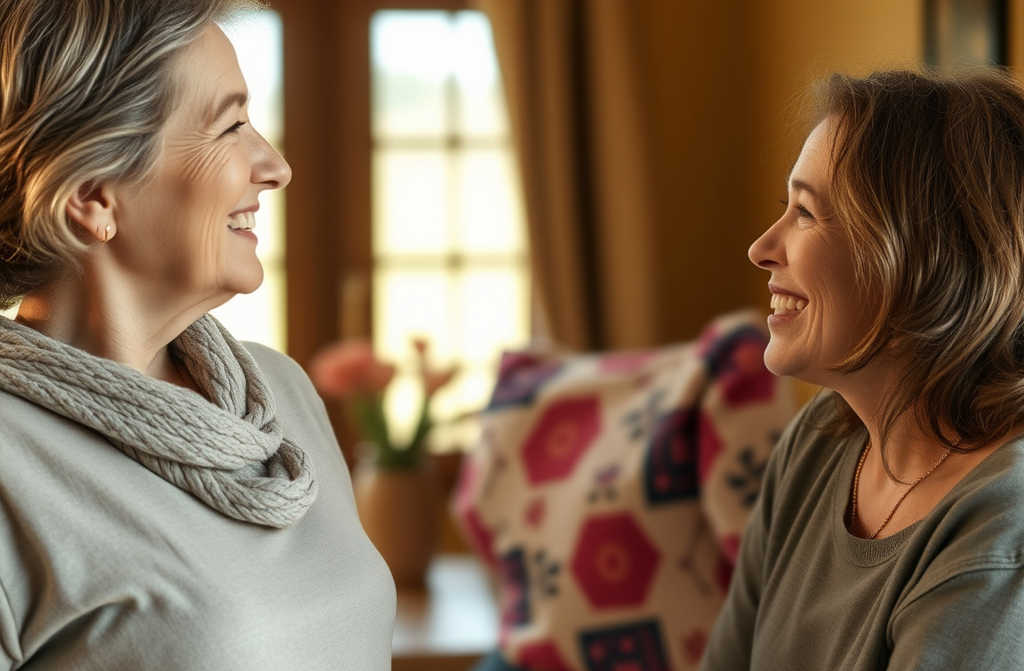
Peter and I were truly glad for them. For the first time in years, Mum was beamingand she smiled all the time.

Thank you for reading, for supporting and following. Wishing you every happiness in life.

Rate article
Add a comment

;-) :| :x :twisted: :smile: :shock: :sad: :roll: :razz: :oops: :o :mrgreen: :lol: :idea: :grin: :evil: :cry: :cool: :arrow: :???: :?: :!:

Mum, Give Us a Smile Arina never liked it when the neighbours popped over and begged her mum to sing a song. “Come on, Annie, sing! You’ve such a lovely voice—and dance for us too, you’re wonderful at it,” they’d plead, and her mum would begin, neighbours joining in, sometimes all dancing together right in the garden. Back then, Arina lived with her parents in a small English village, in their own cottage, her younger brother Tony running about. Her mother, Ann, was warm and cheerful. When the neighbours left, she’d always say: “Do come again soon, that was lovely, really enjoyed myself,” and the neighbours would promise to return. Still, Arina felt uneasy about her mum singing and dancing—she almost felt embarrassed. She was in Year 5 and eventually told her: “Mum, please don’t sing and dance… I get embarrassed,” though she couldn’t really explain why. Even now, as an adult and a mother herself, Arina can’t quite put her finger on it. But Ann simply replied, “Don’t be ashamed, darling—rejoice when I sing! I won’t always be young enough to sing and dance, you know…” Of course, Arina didn’t understand at the time; life isn’t always full of joy. By the time Arina was in Year 6 and Tony was in Year 2, their father left. He packed his things and walked out for good. Arina never found out just why—when she finally asked as a teenager, “Mum, why did Dad leave us?” “You’ll understand when you’re grown,” Mum would say. Ann couldn’t bring herself to tell her daughter that she’d caught her husband at home with another woman—Vera, who lived just down the lane. Arina and Tony were at school; Ann had come home early for a forgotten purse, and found the bedroom door open. Her husband was supposed to be at work, but instead… That evening, Ann confronted her husband: “Your things are packed; go. I’ll never forgive you.” Ivan tried to make excuses for his actions, but Ann would have none of it; he took his bag and left as Ann watched from behind the corner of the cottage, heartbroken but resolute. “I’ll get by with my children—somehow…” she thought, tears falling. “I’ll never forgive him.” She never did. Left alone with two young children, Ann found things far tougher than she’d imagined—working two jobs, cleaning floors by day and working at the bakery by night. She barely slept; her smile vanished. Although their father had moved out, Arina and Tony saw him still—he lived just four doors down, with Vera and her own son, who was Tony’s classmate. Ann never forbade her children from seeing their father—they’d visit, play there together. But when it came time to eat, they’d head home. Vera never fed them. Sometimes Vera’s son would come with Arina and Tony to their home, with neighbours looking on in surprise. Ann would feed all the children, never begrudging her own husband’s stepson. But Arina never again saw her mother smile—she was still kind and caring, but distant and withdrawn. After school, Arina longed for her mum to talk to her, so she’d share her day’s news, trying to spark a smile. “Mum, guess what? Glen brought a kitten to class; it meowed throughout lessons. Our teacher had no idea where the noise was coming from—she even told Glen off, thinking it was him! But we told her it was the kitten in his bag, and she sent him (and the kitten!) out of class and called his mum in.” “Mm, I see…” was all her mum would say. Arina saw that nothing could cheer her. At night, she heard her mum weeping; standing at the window for ages, staring out at nothing. It was only as an adult that she understood. “Mum must have been so tired, working two jobs and never sleeping… She must’ve been run down, lacking vitamins. But she always made sure Tony and I were tidy, our clothes clean and ironed,” Arina would remember. Back then, she’d ask, “Mum, give us a smile—I haven’t seen your smile in so long.” Ann loved her children deeply, though not one for frequent hugs—she’d praise them when they did well at school, delighted in their good behaviour, cooked wonderful meals and kept a tidy home. Arina felt the depth of her mum’s love whenever she’d plait her hair—Ann’s touch soft but sad, her shoulders drooped with weariness. Poor dental health meant she lost her teeth early and didn’t replace them. After leaving school, Arina never considered going off to study—she didn’t want to leave her mum alone, and knew college would cost money. Instead, she took a job at the village shop nearby, doing what she could to help; Tony was growing fast and always needed new shoes. One day, a man named Michael came into the shop—visiting from another village, eight miles away. He liked Arina, though he was nine years older. “What’s your name, love?” he smiled. “I don’t recall seeing you here before.” “Arina. I haven’t seen you, either.” “I’m Michael—from the next village up,” he said. That’s how they met. Michael began visiting often after work, taking Arina for drives, introducing her to his home and ailing mum. He was recently divorced; his wife had left for town, taking their daughter, unable to care for his mother. Michael’s home was welcoming, the table loaded with fresh cream, meat, and sweets. His mother stayed in her room, resting, and Arina enjoyed his generosity. “Let’s get married, Arina,” Michael eventually proposed. “I warn you—caring for Mum is part of the deal, but I’ll help.” Arina hesitated, then agreed. “Why not? I’ll have proper meals, fresh cream and meat,” she thought to herself, though outwardly she simply nodded. “I’m so glad, Arina! I love you. I doubted you’d want to marry a divorced older man, but I’ll never hurt you—I promise we’ll be happy.” He kept his promise; she never regretted saying yes. After their wedding, Arina moved to Michael’s village. She didn’t much miss her old home—Tony was off training to be a mechanic in college, home only for holidays. Time went on. Arina was truly happy—she and Michael had two boys in quick succession. She didn’t work outside the home; there was plenty to do looking after children, animals, and the house. Michael’s mother passed away after two years together, but with a big farm to run, there was never a dull moment. Michael tried to spare Arina from heavy chores, insisting he’d handle them. Arina knew she was loved and cherished. Michael doted on their children, delighted in her domestic skills, and never hesitated to share their bounty: “Let’s take your mum some meat, fresh cream and milk. She has to buy everything, but we have our own.” Ann was always grateful, but her smile never returned. Even with her grandchildren, she remained solemn. They visited Ann often; Arina longed to bring joy back to her mother’s life. “Maybe you should talk to the vicar,” Michael once suggested. “He might have some advice.” The vicar said he would pray for Ann. “Ask God to send your mum a good companion,” he advised. Arina did, praying earnestly. One day, Ann asked Arina for some money—she wanted to get dental work done. “Of course, Mum. Let me pay for it all,” Arina exclaimed, delighted that her mum was finally doing something for herself. Ann only borrowed what she needed, promising to repay it. Not long after, Arina didn’t visit for a while—Michael was busy helping his Uncle Nick, recently moved to their village after being kicked out by his wife. Nick needed help settling in. Once or twice, Arina visited Nick’s new house with Michael. One day, Michael came home and said, “Reckon Uncle Nick’s got romance on the cards. I heard him on the phone and he sounded very cheerful…” “Good for him,” Arina said. “He’s not old—no point living alone in that lovely house.” Soon after, Nick himself invited them over. “My old school sweetheart and I reconnected. She’ll be moving in tomorrow—come see us both the day after.” When Arina arrived, she stood in shock—her own mother, Ann, was there, beaming with happiness. She’d blossomed, and her smile was back. “Mum! I’m so happy for you… But why keep it secret?” “I didn’t want to say anything—what if nothing came of it?” “Uncle Nick, why didn’t you tell us?” “I was scared Ann would change her mind… But now, we’re happy.” Arina and Michael were overjoyed for them—at last, Ann was radiant, her smile returned for good. Thank you for reading, subscribing, and supporting. Wishing you happiness always.
You Are My Son




