You wont come, said David, not looking at her. He stood in the narrow hallway before the old gilt mirror, adjusting his new navy silk tie the sort of Italian silk she would never have been able to name, not really. Ive decided already.
What do you mean, I wont come? said Florence, emerging from the kitchen with a tea towel scrunched in her hands. She had only just finished washing up from dinner, hands red from the water. David, its the companys anniversary. Twenty years. Ive been beside you for twenty years.
Thats exactly why you neednt be there, he replied, voice steady and officious, the same voice shed heard in the recordings he sometimes insisted she listen to, so she could assess the delivery.
Therell be people there, serious people, Flo. Investors. Partners from London. You see what I mean?
No, she said. Explain it.
At last, he turned to face her, eyes flat, as if glancing at an old armchair or a faded tablecloth grown a little dull with time.
You dont fit the format. Therell be a dress code, certain conversations, a context youll struggle to maintain. I dont want you feeling out of place.
Florence set the tea towel down on the cabinet, careful and deliberate, as if the towel were glass.
You dont want me uncomfortable, she echoed.
Yes.
Or you dont want to feel awkward.
He turned back to the mirror.
Dont start, Flo. My car is here in an hour.
She watched his back, the jacket shed coaxed him into buying three months before, not the dull grey hed eyed, but this one which shed found in a catalogue, written down the number, explained why this colour suited him better. Hed been pleased with it then.
Alright, said Florence, quietly.
Back in the kitchen, she filled the kettle, set it down, and sat at her usual place by the window. Lights drowsed across the city below. Novembers rain collapsed into sleet, puddling on ledges, making the lamps outside glimmer like watchful amber eyes.
Twenty minutes later, the front door slammed.
She sat there for a long time, the kettle having long since boiled and cooled again. She did not pour the tea.
Three weeks ago, she had set a password on a document named Growth Strategy. TechnoPulse. 20252030. Four months work. Nights, while David slept. Data gathered, trends modelled, rewritten and revised. He gave her scraps, scatterings of his thoughts, scribbled on notepads, and she spun it into gold analysts applauded the clarity, never knowing why.
The password was Asheldene. The name of a village that no longer existed.
Asheldene had lain a hundred miles from the city, curling round a thin river called Little Tern, though on maps it went by some other name. Two hundred-odd cottages, a village hall whose step had always cracked, a school meant for a hundred but ending at fifty, a shop run by Dottie, who knew every name and their parents. The village breathed slow and gentle. In summer, it smelt of hay and pine, and in winter, of smoke and baking bread.
When Florence was seven, shed tumbled from an apple tree and broken her arm. Mrs Clover carried her all the way to the surgery, telling her that old apple trees deserved respect, for they knew the earths secrets. Florence hadnt understood, but she remembered the warmth of her voice.
Seven years ago, Asheldene vanished. The land was bought for an industrial estate. Residents moved out, compensated in pound notes. Even the graveyards relocated. The apple trees hacked down. A couple of years on, a warehouse and concrete gate, barbed wire coiled on top.
Florences mother had died before the demolition. Her father moved in with Florences aunt, lived three more years, and then faded away as well. Florence returned once, after the village was gone, stood by the wire, unable to tell where her street had been. All was flat, anonymous.
David had said: Youre being dramatic. The village wouldve withered anyway. At least it serves a purpose now.
It was the moment she would remember, wondering later why she hadnt put a stop to things then.
But she hadnt stopped. Their daughter, Clara, was sixteen. The mortgage barely three years gone. She told herself that people could be understood, if you bothered with their story. David had grown up with nothing but ambition: his father taught English, his mother sang in the local choir; a family educated but broke. From boyhood, hed known connections and degrees were the only ticket out. Hed always been awkward about money. Florence understood, and forgave him.
They had met at university. She was twenty-two, he twenty-five, struggling with finances for his economics thesis. Their mutual friend introduced her as the clever girl wholl sort it for you. She had sorted it. He was handsome then, articulate, with a gaze that seemed to listen.
Turned out, he listened only when it suited him. That realisation crept slowly and quietly over decades.
In the early years, both worked. David climbed the ladder in slow but steady steps. Florence did well at an auditing firm, respected and well paid. Then Clara was born. David landed his first substantial corporate job, and there were meetings past nursery hours, illnesses, school runs. Someone had to be home.
You know its a crucial moment, hed said. If I miss this, there wont be another shot. Its only short term, till weve settled.
She went part time, then left altogether when Claras health demanded months at home. By the time Clara recovered, Florence tried returning, but too much had changed; her job was gone, newcomers regarded her coolly. David was earning enough. Dont stress, he suggested, just focus on the home.
She did and more. She worked on his presentations, caught errors, fixed them. At first she asked permission, later she simply did what had to be done. He received it as his right.
By the time hed become Director of Strategy at TechnoPulse, she had authored half his signature deliverables.
She didnt protest, not aloud. Thought: one family, one success. The name on the front isnt what matters. Results matter. Thoughts that kept her moving.
Then, three weeks ago, he had brought home a plain grey dress. Cotton, high-neck, long sleeves. Comfortable for around the house, hed said. Shop bag, no ribbon or box. Just the bag.
That same day, shed glimpsed the receipt for his suitworth more than her entire months salary at her assistants job, a minor position agreed upon long ago.
She stood, drank a glass of cold water, then opened her laptop.
The password: Asheldene. The name of a village that was only a memory now.
She pictured Asheldene as it was: a slow river, a cracked hall, the shop, the summer smell of hay, the pressed hush of winter bread.
When Florence was seven, shed tumbled from an apple tree and broken her arm. Mrs Clover carried her to the nurse, talking soothingly about the wisdom of apple trees, their knowledge of earth. Florence hadnt caught the meaning, but shed felt the warmth.
The village was bulldozed for progress. Compensation, silent removals, concrete where memory should be.
Her mother died before. Father lingered elsewhere three more years. Florence returned once, after the land was leveled. She couldnt see where shed lived. The place was erased.
Davids line then: Youre being melodramatic. The village would have faded anyway. At least its of use now.
That, perhaps, was the fork she should have taken.
She hadnt, because Clara was sixteen. The flat in the city centre only recently theirs. And shed believed if you know someones story, you can forgive anything.
Davids parents, poor but cultured; hed always anxiously chased status. Florence understood, forgave. There was kindness in that, but also the first doors closing on herself.
Theyd met at university, him struggling with maths, her the clever friend brought to help. Hed listened, looked attentive. Later, it became clear: only when he needed.
Twenty years passed in this way.
When Clara was born, Florence dwindled from professional to housekeeper. David flourished at work, and she watched unseen from behind the curtains of their home life.
Her skills decayed in secret. She was the mind behind many documents. Never the name.
She kept telling herself: it doesnt matter.
But after the grey dress, something shifted. Not noisily the earth simply gave a little, the way it does when you walk a damp field and suddenly your step sinks deeper.
The morning after the anniversary party, David returned long past midnight. She lay awake, watching the window-shadowed ceiling for hours.
At breakfast, he seemed bright.
Went well, he said, buttering toast. The CEO was pleased. London investors took interest. Januarys set for a meeting.
Glad for you, Florence murmured, then caught herself, using glad instead of glad for youthe old slip when the mind moves faster than the tongue.
He didnt notice, or pretended not to.
There was one bit awkward. Sir Jeremy asked after you. I said you were ill.
Sir Jeremy, Florence repeated. He was the Chairman, known to her only from afar. Smart, substantial man. Did he believe you?
Of course. Why wouldnt he?
Florence refilled her coffee mug, pausing.
David, theres something you need to understand.
This early in the morning? he checked his watch.
Yes, this early. I want you to understand I wont work anonymously anymore. I want my name on the documents I produce.
He set down the knife, visibly jolted by the suggestion, as if it were both absurd and tasteless.
Flo, are you serious?
Yes.
Youre saying you want to be co-author on my official materials? In the company where I head strategy? Where no one knows you? Where youve never worked?
Where no-one knows its my material, yes. Thats what Im saying.
He stood, took his cup to the sink, back to her.
Dont make this a problem. You help me the way any normal wife helps her husband. Thats what marriage is.
Marriage is when two people matter, she said. When one is hidden, it is something else.
Youre exaggerating. You have everything. Flat, car, bank card. Claras at university for free. Is there something specific you want?
She looked at him for a long time.
I want to be treated like a person. Not a lamp or a piece of furniture.
He sighed, the sigh of an expert at making conversations end.
Im late. We can speak this evening.
That evening, and the next, and the next, he avoided the topic, with the practiced art of non-discussion. She worked on the strategy all the same, because she did not know how to leave unfinished business. The job was interesting enough to outweigh the wound. And because she already knew what she would do, just not quite when.
The idea arrived one night, sitting with her laptop in the semi-dark kitchen, snow drifting behind the glass. She finished the section on diversification, checked the author line Davids name, since the file was created on his work laptop, left home for his business trips.
She closed the lid. Stood, looked out at the snow, the city lights far and star-like.
She thought of Asheldene. Of fishing trips with her father beside the winding reed beds. The hush was never empty: whispering reeds, an unseen ducks quack, the thick smell of water, weed, and earth. Her father once told her, Flo, remember: whats yours is yours, even if someone else has grabbed hold, its still yours in the end.
At the time she thought he meant a fishing rod a neighbours boy had pilfered. Now she was sure he meant something else.
The anniversary party was Friday a riverside venue called The Northern Star, three floors up in the city centres most glass-fronted block. Florence remembered finding the place herself, producing the selection list for David, whod later presented the chart as his own discovery.
Three days before, David brought her the menu printout.
Opinions on the canapés? Not enough vegetarian options need to add something.
David, she said. Youll ask my advice about starters, but not invite me to the actual party.
Its not the same.
No. Its really not.
She pencilled in three corrections, and slid it back. He barely looked up in acknowledgement.
Friday morning, David was tense, checking his tie twice, buttons, cufflinks.
Do I look alright? he asked.
You look good, Florence said.
Are you sure?
Quite sure.
He left at four (“need to set up, check the kit”) and called over his shoulder, Dont wait up. Itll be late.
Florence showered. She brushed her hair, put on not the grey dress, but the green one shed chosen herself two years before, cut neat and straight, a dress for someone worth knowing. Low heels. Silver earrings, a gift from Clara in London. A hint of Artemis from the little bottle she rationed.
She watched herself in the mirror, thinking of old Mrs Clover and her apple trees. The earth remembers more than we know.
Bag in hand, she stepped out.
The Northern Star looked exactly as it should: soaring ceilings with crystal drops scattering rainbow flecks, linen-covered tables with three glasses apiece, live jazz padding from a corner, scents of expensive perfumes tangled indistinguishably overhead.
She handed in her coat, scanned the crowd.
Eighty people, at least. Suited men, women in gowns. Clusters with fixed but false intimacy. Four by the bar, dominant as only those who own things can be. She recognised their kind shed read their histories buried in annual reports.
David was across the room, talking to two pale-jacketed men. He hadnt seen her yet.
Florence took a glass of water, settled beside a column, and watched.
He was charming. Confident stance, timely smiles, the air of someone who belonged. Hed learned that she had taught him that, briefing him for countless meetings, coaching him on presentation and poise.
His eyes flicked over the room, caught hers, wavered only a second before he returned to his companions. And then, abruptly, he excused himself and crossed to her in brisk, measured steps.
What are you doing here? His voice was a thread. Barely more than a breath. I told you.
I came, Florence replied, as softly. You said I didnt belong. I wanted to know for myself.
Not now. Dont. Go, please. Im asking.
That word please. Usually followed by I need you to do something. What do you need from me, David?
I need you not to spoil this night.
It isnt spoilt yet, said Florence.
At that moment, a tall older man approached Sir Jeremy, unmistakable from his portrait in the annual report.
David, he said, introduce me to your wife. Ive yet to have the pleasure.
There was a pause. David managed a smile.
Sir Jeremy, this is Florence, my wife.
Delighted, said Sir Jeremy, shaking her hand. David tells me you used to do analytical work?
I did, Florence said. I still do.
In what field?
The same as David, strategy, market analysis, data.
David cleared his throat, quietly, but she felt it.
Florence helps me, he said. Just small things.
Not small, said Florence, voice pleasant but firm. I wrote the strategy for the next five years. The document being presented tonight.
Sir Jeremy looked from her to David, back to her.
Thats… intriguing, he said. Well talk more later.
He bowed away.
David rounded on her, eyes now stripped of all polite veneer.
Do you realise what youve just done? His voice a tight whisper.
Yes, she said calmly. I do.
Leave. Now. Im not joking.
Ill stay for the presentation, she told him.
He left, walking quickly, not looking back.
Florence picked up a blank name card, tucked it into her purse. She drifted to a group of women other directors wives who looked at her with a kind of polite curiosity.
Are you with TechnoPulse? asked one, large and expensively earringed.
No, said Florence. Im David Sinclairs wife.
Oh, the woman replied, expression changing. He always said you were… always at home.
I was, Florence said. Tonight I fancied a change of air.
The woman laughed, surprisingly warm, and extended her hand.
Margaret my husbands Finance Director.
Florence.
They talked quietly. Margaret told her shed left a bank when her first child was born, then another, then life just filled up. Sometimes I wonder where the woman went, the one who could scan a balance sheet and see the whole picture, Margaret admitted. Not bitter. Simply truthful.
Shes still there, said Florence.
Margaret looked at her.
You think so?
I know so.
The speeches began. Chairs scraped, the small screen readied. Florence took a seat with a clear view, not at Davids side.
TechnoPulses CEO spoke well about two decades, teamwork, overcoming. Then he announced that strategy director David Sinclair, architect of the companys next five years, would now present the big new vision.
David ascended the stage. Suave. Suit, stance, smile. Florence gazed at the man she had, in part, made. The confidence the mastering of the crowd and the clarity some seeds planted by her.
He clicked through the first three slides with ease. Market context, competitor analysis, broad trends. He was in command.
Then he reached the main document. The one needing the password.
The projector flashed up a box: Enter password.
Silence: the weird, weighty sort. David typed; Incorrect password. Tried again. Incorrect password.
The room began to shuffle, whispers spreading, tech staff flitting up.
Florence watched, knowing the code, knowing he knew.
David stared into the glare of the screen. Then his gaze sought and found her. She saw that instant of understanding traverse his face.
A technician murmured at his shoulder. David nodded, took the microphone.
A brief technical pause, he said, voice level. He could keep a mask, that man. Apologies.
He left the stage, straight for her. The audience watched, discreetly, as only English people can.
The password, he said. Soft as snowfall.
Asheldene, Florence replied.
He closed his eyes for a breath.
You did this on purpose.
I put a password on my own work, she said. Thats not improper.
Flo, not now. Please.
Please, then. But this time, use it properly.
She stood.
The onlookers pretended conversation, but eyes slid toward them beneath the hum of the party.
Florence took the microphone from his hand. He did not resist.
She walked to the front, stopped at a clear patch, and addressed the room.
Apologies for the interruption, she began. Her voice did not tremble. The password is the name of the village where I grew up. Asheldene. I wrote this strategy. Four months work. I am happy to give the code and show the work. But I wish first for everyone here to know whose name deserves to be on the front cover.
The hush was comprehensive. Only the distant hum of the ventilation remained.
My name is Florence Sinclair. I have a degree in economics and fifteen years practical work in strategy, though lately, that work has been invisible. The password is Asheldene, with a capital A. Thank you.
She set the microphone down, picked up her bag, paused at David.
Im leaving, she said. This isnt a performance. I simply dont want to be unseen any longer.
She walked towards the exit. Not fast, not slow. Just as someone who knows their direction.
At the cloakroom, she waited. The attendant glanced her way, perhaps curious, perhaps not. She donned her coat, stepped into the cold.
Snow fanned down, soft and unhurried, whitening the pavements. She inhaled the city air, and felt something quiet and faintly sad, the way you feel standing on the site where a house once was.
That night, she rang Clara.
Clara answered on the third ring. It was nearly midnight.
Mum? Is everything alright?
Yes. Everythings fine.
You sound… off.
Im just happy to hear your voice.
Mum, are you and Dad alright?
There was a pause.
No, Florence said. Not really. But that can wait. When you visit. Just know that I am okay.
Are you sure?
Absolutely sure.
Clara hesitated. Then said,
I wanted to tell you I see what you do, I know you arent asleep at night. I recognise your touch in Dads reports. You think I dont notice?
Florence said nothing for a moment.
You do notice, she admitted.
Yes. And I want you to know: Im on your side. Always.
Florence gripped the phone. Outside, snow drifted quietly.
Thank you, love. Get some sleep. Well talk soon.
She went to bed, not waiting for David.
He came in around 2am. His footsteps in the hallway, pausing at the bedroom door, then past, settling on the living room sofa. Not a word.
In the morning, nothing was said between them. He left early, she sat with her coffee, deep in thought but not of him. Of what needed doing next.
Two weeks drifted by, awkward, not in a stormy way but like unpacking boxes after a move knowing youll have to sort and shed, but not yet feeling able.
David never mentioned the party. Not once. That alone spoke volumes. No apology, no questions. Nothing.
Florence wrote to Sir Jeremy. A brief letter: who she was, what had happened, attached files showing her authorship. She offered to meet.
He replied in a day. Would be pleased to meet with you on Wednesday, if you are free.
She wore the same green dress. His office was spacious, the window showing the river and bridge. He received her personally.
Ive read your documents, he said. Double-checked a few points. Its indeed your work.
Yes.
Does David know about this discussion?
No. But this isnt about him. Its about me.
He looked at her. There was attention there, and a certain weariness, as if from many years.
Youre right, he said. Tell me your plans.
She told him.
She told more people, more times. Meetings spanned months; she explained who she was and what she could do. It wasnt easy. Fifteen years in the shadows leave marks, not in skills but in the way you speak of yourself. She caught herself saying I just helped a bit and my experience is only small, but taught herself new lines.
The divorce came six months later quietly, with help from Claras solicitor friend, a sharp young woman with a calm voice. David offered her the flat; she agreed, but also claimed her share. He accepted, knowing it was fair.
A year on, Florence opened a consulting practice. Small, just her and two staff. Strategy for mid-sized firms, never more than she could handle well. The first contract an engineering company just outside town, a market analysis and three-year plan. She did the work well. They renewed.
Then another, and another.
Sir Jeremy recommended her to his contacts. Margaret, from The Northern Star, rang after eight months. Shed been thinking of that balance-sheet woman. Asked Florence to guide her first steps back into work.
I dont advise on careers, Florence warned. I advise businesses.
And if the business is me? Margaret asked.
Florence considered.
Then come by Wednesday.
Florences office was modest: two desks, a bookcase, the old sofa draped with a knitted throw her fathers sister had posted from elsewhere. The only picture a river morning, found online and printed, like early hours on the Tern.
She didnt put up certificates. Too much like pleading ones right to be in the room.
David called once, in March, almost a year on. Florence was reviewing a financial model.
Flo, his voice was changed, uncertain. Id like a word.
Go ahead.
I have a new project complicated, needs an experienced planner. I thought, maybe…
No, Florence said gently.
You havent even heard me out.
Ive heard enough. No.
I pay well. Official, contracted. I know before…
David. She straightened. I dont work with people I dont trust. Its not a principle, just easier that way.
A long pause.
Understood, he said at last.
Hows Clara?
Passed her exams, brilliantly.
I know. She told me. Thats wonderful.
Yes, wonderful.
There was another pause, softer.
You looked well, he said. Saw you in town last week, you were busy.
Must have been.
Yes, mustve.
He hesitated.
I wanted to say I was wrong. Not just that night in general. I see it now.
Florence studied the river print, the Terns curve, the sedge on the bank.
Im glad you do, she said. Thats what matters.
Thats all?
Thats all.
She hung up. Waited till the knot in her stomach faded hot and close then returned to her numbers.
One more thing lingered, not often but sometimes.
Asheldene.
Some nights, Florence opened online maps and stared at that empty square the same flat rectangle of tarmac and concrete. Nothing remembered physically, only if you knew to look for where the river curved, and guess where cottages once were.
She thought: Some things vanish not because theyre weak, but because someone else found them inconvenient. Villages. People. Years.
But as long as you remember the scent of Julys hay, or June at the rivers edge, those things still exist, somewhere inside. In a name used as a password to keep your work your own.
Asheldene. With a capital A.
In April, a new client arrived. Young, thirty-five, owner of a small logistics firm, jumpy and sharp-eyed. He unpacked a file onto her desk, immediately listing competitors, investors, need for growth. Florence listened, and then stopped him.
Show me this section, she said. Is this your current asset list?
Yes.
Youve done the depreciation wrong. Youre down about twelve percent on your base.
He stared at her.
How did you spot that so quickly…?
I read figures, Florence said. Ive done so for a long time.
He paused. Then, first time, he smiled.
Alright. Im listening.
Florence picked up her pencil.
Lets start from the beginning.
April was warm for England, true spring. Outside, her window overlooked a small courtyard. Three birch trees, still bare but buds swelling. Soon theyd open, and a subtle scent would drift newness on the breezethat only appeared at the start of spring.
Florence studied the numbers. Her coffee had cooled. In the next room, her assistant Anna murmured softly into the phone. Someones step echoed in the corridor. An ordinary day. An ordinary job.
And that was the true thing.
Not that night under crystal chandeliers. Not even the password, Asheldene, bold on a screen. All that had mattered it was needed, the shift. But the truth lived here, in her modest room, bookcase, old green throw, cold coffee, pencil in hand, and a client across the desk who had listened.
Twenty years. She sometimes counted. Not with regret, simply accounted for. Twenty years. Nearly half a life. Years you can never retrieve and shouldnt have lost in the first place.
But here she was, with her pencil. With her numbers, with the soft hush of April beyond the glass.
She would never reclaim the lost years. The next twenty, whatever they held, she would live differently.
So, Florence said, leaning over the folder. Assets first.
***
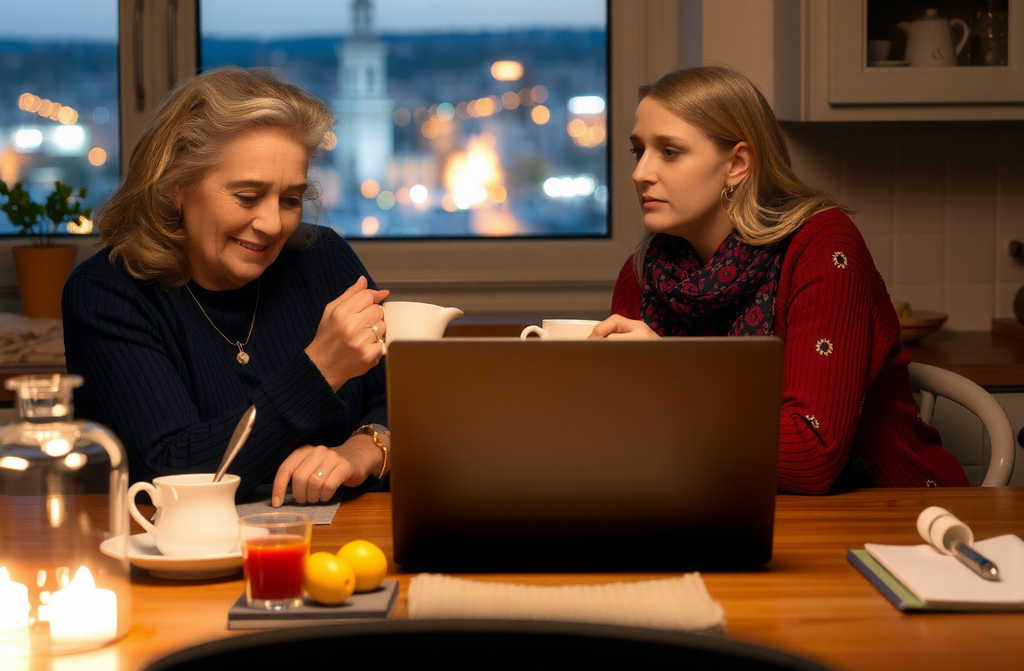
Months later, Clara came home for the holidays. They sat in the kitchen, tea cooling, Clara looking at her with the sort of searching intent that means something important is coming.
Mum, Clara asked, finally. Are you happy?
Florence thought honestly, without rush.
I dont know if thats the right word, she said. But I respect myself. And I think that matters more.
Clara nodded thoughtfully, clutching her mug.
Maybe that is happiness. It simply looks different than in the films.
Yes, Florence agreed. It looks different.
Behind them, the city breathed in low, softened hum. Claras mug of mint tea was growing cold, the sharp scent spread cleanly through the kitchen. Somewhere, miles away, where Asheldene once stood, there was only earth and sky. No lights, no people. Just the land under night.
Florence topped up her tea, warming her hands around the cup. The heat travelled gently through the china.
Tell me about your studies, she said. Hows the economics?
Tricky weve been given a case study to break down and I hit a dead end.
Let me see, said Florence.
Clara pulled out her laptop, set it between them.
Here, look.
Florence gazed at the screen, picked up her pencil the one always close by and moved nearer.
Here, she said. Watch closely.






