Sunday Captivity
Today was Sunday, and as I set a second stack of hot crumpets on the kitchen table, I let out a sigh so gentle that George, settled in his armchair by the window with the Times, didnt even bother to look up. I watched him for a momenthis hair silvered with age, his shoulders gently hunched as alwaysand I thought: this is the moment. Right now. I should say itfinally let out the words that have been swirling in my head for months, robbing me of sleep and souring my mood the moment I wake each Sunday.
George I called softly, taking the seat across from him.
He set aside the paper and looked over his glasses at me. Yes, Jenny?
Lets tell her today that we wont be expecting them for dinner.
He was quiet for a moment, then took off his glasses, cleaning them with the corner of his shirt before putting them back ona gesture I knew by heart, always signalling his discomfort.
Who exactly should we tell? he asked gently.
Fiona. Your sister. Shell come again, like always. With the kids. Shell eat everything Ive prepared, hand out another batch of helpful suggestions for running our lives, and her two will upend my books again.
Jenny, shes family, said George, ever the peacemaker. Shes all on her own since Rob left
He left three years ago! My voice wavered; I could feel the old, resentful tide mounting. Shes been here every single Sunday for three years, waltzing in without so much as a real invitation, ringing the bell and treating our flat as her own. Meanwhile Im slogging over the oven for hours, spending groceries we scrape together from your pension and my salary
George gazed out of the window, where a pale, persistent October drizzle blurred the red-brick courtyard below. The shouts of children drifted upfaded, but constant.
I know its awkward for you, I continued, quieter now, shes your sister. But its difficult for me as well, George. Six days a week Im at the library, putting shelves to rights and answering the same questions. Sundays our only day off togethera proper chance to just breathe, watch a film, chat a bit. And instead, there I am baking pies for your sister and her two, who cant even be bothered to say thank you.
Theyre just young, George mumbled.
Ollies twelve. Grace is eight. Theyre old enough to behave. But Fiona lets them do whatever comes to mind. Last Sunday Ollie smashed my vasethe one Mum gave us for our wedding, remember? Fiona just laughed and said, Oh, kids will be kids.
George winced; I could tell he remembered. He remembered how I, on my knees, picked up the bits of glass, stifling the tears while Fiona flitted about unfazed. That vase was the last memory of Mum, gone these five years.
So, he sighed, what do you want me to do?
Ring her. Tell her weve got plans. Say were off to visit your mate David or something.
You want me to lie?
Well, not lie, exactly, but The word stuck in my throat. Of course it was a lie. Just this once. To have a proper rest.
George shook his head. Jenny, I cant. Shes my sister. My own blood.
I bit my lip. It was always the same: family first, some mystical amnesty for trampling boundaries, helping herself to our hospitality without so much as a murmur of appreciation; as if kinship entitled her to a free meal every Sunday.
Then tell her directly, I pressed once the silence bore down. Say its too much. Say wed like some peace on Sundays, too.
Shell be upset.
What about me, George? My voice shook as I stood to start clearing up; my hands trembled. Is it not upsetting for me, when she strides in and points out the dust on the shelves or the wallpaper we still havent updated? When she rifles through my creams, brings the kids into the bedroom, and lets them jump on our bed?
Alright, alright George raised his hands. Ill say something. Ill try and drop a hint.
I didnt reply. I knew these promises: Ill hint meant nothing would change. Fiona would come, as she always did, and next week too. George just couldnt say no; for him, the peace of the family always took precedence over any personal comfort.
But whose peace, exactly? Fionas, forever on the take, happily leaning on us as a matter of course? Or ours, mine and Georges, gobbled up each week by the noise, the mess, the critique, the sense that our own flat is no longer ours?
***
At half-past five, right as I was taking out the roast chicken with potatoes, Fiona rang. The aroma was mouthwateringand for a second an irrational pang of sorrow took me, knowing this meal wasnt really for me and George at all.
Were just heading out! Fiona bellowed down the phone. She always shoutedprobably at every call. Be there in twenty! Ive picked up cabbage pasties from the shop on the way, so Ive not come empty-handed!
I wanted to say thirty pence pasties hardly seemed a fair trade for a proper dinner for four, but kept it in.
Alright, well be waiting, I replied, placing the phone down.
George sat in the front room, TV humming with the BBC News, feigning indifference. But I could see the tension in his shoulders. He didnt want this either; he simply didnt know how to stop it.
I set the table with our best white lace cloth, the decent plates we reserved for birthdays. Laid out a salad, sliced up crusty bread, arranged the chicken and potatoes, stewed some apples into a compote for puddingthe works.
And all the while, the same thought circled my mind: How do you assert boundaries with family? How do you make them see that even relatives arent entitled to your time, your energy, your home?
The doorbell rang on the dot of six. When it was dinner, Fiona was never late.
Hello, hello! She breezed through the hallway, coat tumbling to the floor. The kids tumbled afterthe ever-dishevelled Ollie and spritely Grace, who shouted, Hiya! before dashing off to the living room.
Oh, it smells divine! Fiona burst into the kitchen, shoes still on, leaving sodden prints across my lino. Chicken! Jenny, youre a star, honestly, you always do such a feast!
She said so every time, as if my main talent in life was to feed her family for free.
Do sit down, I said, forcing a smile.
Fiona claimed Georges seat, as ever, and plonked the kids on either side. George wandered in, murmured a greeting, managing a half-hug for his sister. I sat silently, the usual pound of fatigue settling in.
Mum, wheres the pasties? Grace asked.
Oh! Left them in my bag. Never mind, theyll keeplets have the hot food while its hot, Fiona laughed.
I watched, silent, as Fiona loaded her plate first, then the childrens, then Georgesacting as if she were the hostess and I the maid.
Hows everything? Fiona enquired, mouth full of chicken. Work alright? Life trundling on?
About the same, George replied cautiously.
Well, you know how it is for me. Rob barely pays support, my jobs a nightmare; constantly budgeting, its a right struggle.
I said nothing. Saving money by showing up to Sunday dinner, yesId noticed.
You dont know where I might find cheap curtains, do you? Fiona pressed. The lounge is looking embarrassingly shabbydidnt you lot redecorate last year?
Theres a textiles place on the high street with decent sales, I said, trying to keep my tone even.
Oh, but thats ages away. You havent got any old ones lying about? You must do.
A sharp twinge ran through me. Curtains now, then crockery, next a tenner just till paydaynever to return.
No, theyve all gone to the charity shop, I lied, firmly.
Her lips pursed but she let it go. The children wolfed down seconds, with Fiona shovelling out more before George or I had a chance to protest.
When the main dish was cleared, I took the plates to the sink, hands shivering. In the lounge, the TV boomed, Grace shrieking while Ollie hollered back. Fiona chatted with George about her boss and her misfortunes.
shes a right cow. Ten minutes late and youd think Id committed murder. Honestly, with kids to get to school, what does she expect?
I watched the rain thicken against the window, tears threatening. I just couldnt live like this. But what could I doconfrontation? A candid conversation? It all felt impossible with someone like Fiona, who simply didnt hear, didnt see anything outside her own needs.
Jenny, are you daydreaming? Fiona called. Come, have a cuppa! Ill get the pasties out
I turned. Fiona rifled through her bag, producing a battered carrier with three greasy pasties. Three pasties, for a meal for four. Some exchange.
No, thanks, I said quietly and slipped away.
***
Fiona and the kids didnt leave until half-past ten. Id retreated early to the bedroom, pretending to read, but truly just staring at a spot on the wall.
When the front door finally shut, George came in and perched on the bed, his eyes apologetic.
Sorry, he said softly.
What for?
Well for all of it. I know its hard for you. But I just dont know how to turn her away.
I put the book aside.
George, you do see that this isnt normal? Every week, no breaks. She acts as if its her own flat, finds fault, dispenses advice no one asked for. Her kids trash everything. And we just let it go. Why?
Because shes family, he said wearily.
Family isnt a free pass to use people, George. Im family tooyour wife. But somehow, I dont get a say.
He sat in silence, nothing to add.
Well, I said after a pause. Ill figure something out. But promise me you wont interfere, alright?
What are you planning?
I dont know for certain yet. But something must change.
He nodded and left. I sat on the bed, watching the glow of the city through rain. Out there, somewhere, Fiona lay warming her feet after a full supper in comfortable surroundings that werent even her own.
And I wondered: how far does patience go before it snaps? And how do you make things change when words alone mean nothing?
***
The idea came to me that Wednesday at work, as I shelved another trolley of books at the library, listening absently to an elderly lady commiserating to her friend:
The doctors put me on an awfully strict diet. Just porridge, no salt, no sugarnothing for months! Its dreadful, but what can you do?
Her friend clucked in sympathy. And suddenly, I realisedI had my answer.
That evening I told George, As of this Sunday, were starting a special diet.
He looked at me wide-eyed. Diet? Why?
This is the plan. I took his hand. We tell Fiona that we both have serious tummy troubles. The doctors prescribed an extremely plain diet for monthsjust porridge and nothing else. When she comes round and finds porridge on the table, do you think shell keep coming?
He blinked, then broke into a slow smile. Are you serious?
Completely. Its not a liewell actually eat it, once. For the demonstration. After that, shell decide for herself. Were not refusing her outright, not rudejust setting terms.
Shell cotton on.
I doubt it. She rarely hears anything except what affects her. So can you play along?
He pondered before nodding. Lets try.
***
Come Saturday, I bought the blandest porridge oats I could find, fished the chipped old bowls from the back of the cupboard, laid a faded cloth on the table, and hid our good plates.
On Sunday, the phone rang at a quarter past five.
Were en route! Fiona barked.
Right, I replied, just so you know, things will be very plain tonight. Were both on a special diet.
A pause. A diet? What sort of diet?
Doctors orders. Both of us. We can only have porridge with water, no extras, for a few months. Youre welcome to join usplenty of porridge.
Another awkward pause. Then, Oh right. Well. See you soon, then.
George, hearing the exchange, raised an eyebrow.
Will this work?
Well see.
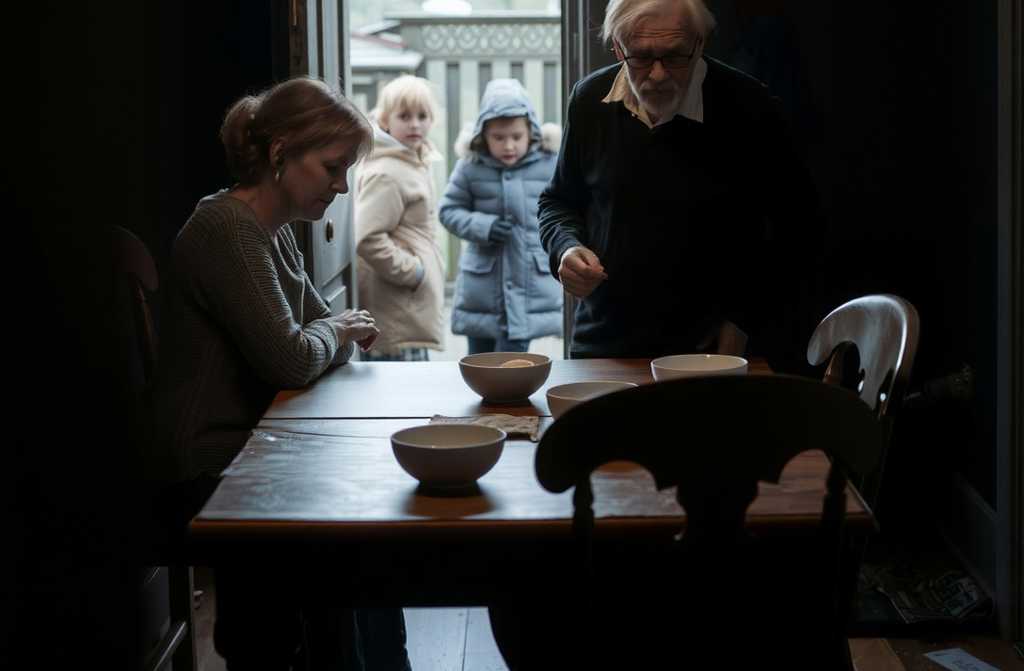
I made a big pot of porridgeno salt, no milk, just oats and water, boiled to hospital food consistency. I ladled it into the old bowls. No salad, no bread, no compotejust a jug of tap water.
When Fiona and her two walked through the door, George and I were already at the table, picking at our bowls of slop.
Er hi, Fiona ventured uncertainly, the kids hanging back in confusion.
Hi, I said, gesturing to the seats. Its still warm.
She peered at the bowls, lips thinning.
This is all?
Thats right, George replied, keeping up the act. Doctors strict. Only plain porridge, nothing tempting. Its the only way.
But the kids
What about them? I fixed my eyes on her. Porridge is healthy. Theyre free to join in.
Grace recoiled in horror. Ew, yuck! Im not eating that!
Suit yourself, I said, shrugging.
Fiona hovered, clearly at a loss for words. Shed expected the usual spreadroast chicken, pies, apple compote. Instead: gruel.
Surely youve got something else? For the children, at least?
Were on the diet, Fiona. Nothing in the house except porridge, water, and an apple, I smiled thinly, opening the fridge to show her the bare shelves.
Ollie muttered, Mum, can we go? Im starving.
Fiona turned helplessly to George. George, seriously is this how youre living now?
What choice do I have? he shrugged. Stomach ulcers arent worth it.
Fiona stared between us, cheeks reddening. Come on, kids. Theres nothing here for us.
She bundled them out, muttering all the while, fuming.
George looked up at me, a grin spreading slowly over his face.
I think this just might have worked.
We ate the porridge, and the taste was as dismal as Id anticipatedbut for the first time, I ate with a certain satisfaction. The cost of freedom, for once, was small.
***
Fiona didnt ring next week. Nor the week after. A month passed, and our Sundays, finally, belonged to us again. We cooked what we fancied, watched films, strolled through the park. Id forgotten how blissful quiet could be; how wonderful it felt to live on our own terms.
Yet at times, unexpectedly, I felt a peculiar pang. Regret? Guilt? Something softer. Perhaps sadness, knowing Fiona was probably offended. Between us now, a gulf too wide to cross. For all her faults, Fiona was a person with troublesleft with two kids, holding things together. Maybe coming round every Sunday wasnt just a free meal, but somewhere she could feel part of a family.
Id never know for sure; wed never had an open conversation, only grimaces and forced politeness.
One blustery November evening over tea, George told me, Fiona rang the office. Wanted to know if were well. If were still on the diet.
And what did you say?
I told heryes. Doctors extended it. She sounded rather put out.
I put my cup down quietly.
Was she upset about the diet or losing the Sunday dinner?
Maybe both.
We sat in silence, rain streaking the window, the distant shouts of children in the road below.
Do you feel bad? I whispered.
About what?
That we deceived her.
He was quiet for a long while. A little bit, I suppose. Shes my sister. But mostly? I feel relief. The relief of coming home to my own home. For once, I think its alright to protect our own peaceeven from family.
I squeezed his hand.
I didnt hate her, George. I simply couldnt go on. Every Sunday was like an exam. Cook. Smile. Endure. All for what? No gratitudeonly criticism and demand.
Do you think shell ever learn we staged a little drama?
Perhaps. I smiled faintly. But whats to change? I cant go back now. I wont.
George nodded. Rain spattered the glass; our small flat, packed with the warmth of our shared silence, felt more like home than it had in years.
***
At Christmas, Fiona phoned me, her voice strained.
Jenny? Its meFiona.
Hello.
LookI was wondering, could we pop around for New Years? Not for dinnerif youre still on that diet. Just to see you.
I shut my eyes. There it was. She wanted back in, needed an opening, a way to return to the table.
Fiona, I said levelly, George and I are planning a quiet New Years, just the two of us. At our age, noisy parties wear us out. Perhaps another time.
But were family, she protested. Who spends Christmas apart from their own brother?
Fiona, were allowed to spend holidays how we choose. It doesnt mean we dont careyou have your life now, and we have ours. Its not personal.
Silence on the other end, then, frostily, I see. So you dont need us anymore, then. Right. Fine. Goodbye.
She hung up before I could reply.
I stood there a moment, phone in hand, feeling an unpleasant twist of guilt. Fiona wasnt just a nuisanceshe would now be somewhere, perhaps in tears, feeling shut out.
Yet I knew: back down now, and everything would resume as before. No, this freedom had been hard-won.
When George returned home, I told him about Fionas call.
Shes upset, he murmured as he slipped off his coat.
Yes.
He looked hollowed out, guilt and resolve at war. So what now?
Nothing. She can be upset if she likes. But we cant exchange our comfort for her convenience. Not anymore.
He nodded without protest; the message had finally settled. These months without Fionas intrusions had put things into perspective for both of us.
***
We celebrated New Years Eve togetherjust us. I prepared everything we loved: prawn cocktail, roast duck, apple crumble. George brought home English sparkling wine and a box of clementines. We laid the table, lit candles, watched old films.
At midnight, we toasted gently, laughed, and I felt a lightness that caught me off guard. Happiness, in the quiet. Contentment, no longer making endless allowances for others.
When the film ended, George said, I always thought Id feel terribly guilty about Fiona. Oddly, all I feel is relief.
So do I, I confessed. Its not selfishness. Its self-respect.
He hugged me tightly. Thank youfor coming up with the plan. For not letting it descend into a row, for not putting me in a position to choose between you and her. You handled it so wisely.
I smiled. Perhaps it was cunning, rather than wisdom. But sometimes, with people who dont listen to words, only actions will do.
Fiona liked the privileges of Sunday dinners while they lasted. When the food dried up, she left. Simple, really. Not pleasant, but true. And I didnt regret a thing.
***
Winter faded, then spring. Fiona didnt call. George caught her in town now and again, or dealt with practicalities over the phone, but always in a cool, civil way. The family connection remained, but differently, and I knew she still bore a grudge. This, too, was her choiceshe could have reflected, apologised, tried to build something new. Instead she clung to her hurt.
One afternoon in May, George said, Fionas planning to move.
Where to? I frowned.
To Shrewsbury, to our mother. Its easier with Mum there, and the cost of livings lower.
I see. A flash of guiltwould things have been different if wed kept Sunday dinners going? Was our boundary her undoing?
Dont, George said, catching my mood. Fionas made her choices for her own reasons.
I nodded, trying to believe it.
***
Mid-June, Fiona left. George helped her load boxes into a hired van, but I kept my distance; any goodbyes would have only been awkward. Her resentment lingeredshe barely spoke to me at all.
When George returned that evening he was weary.
All done, he sighed, tugging off his boots. Shes gone.
How was it?
Quiet. She didnt say goodbye properly. The kids looked glum.
I embraced him.
Sorry, I said, not knowing what else to offer.
What for? We didnt do anything wrong. Fionas a grown woman. She made her bed.
We sat in the kitchen, sipping builders tea in the fading English light, listening to the neighbours children playing outside. Life had its own rhythm again.
Do you think things might ever heal? I ventured.
Maybe. Perhaps not. But at least we can breathe again.
***
That summer, our garden was lush with gooseberries and raspberries; our Sundays our own at last. We did as we pleasedpottering about in the flowerbeds, tea on the terrace, evenings lost in conversation. Sometimes, watching the sun dip over the apple trees, Id reflect: we made the right choice. Maybe not the prettiest, maybe a touch underhand. But the right one for us.
George sometimes spoke of how the whole affair had taught him to say nohow, for years, hed believed keeping peace meant swallowing discomfort. But peace isnt about who shouts loudest, or whos related to whom, but about mutual respect.
Do you miss her? I asked one evening.
Yesbut not the weekly invasions. Thats different.
I took his hand.
Were a good team, arent we, George? We worked through it togetherno drama, just teamwork.
He smiled. We did.
The dusk was long and lilac that evening; the house at peace.
***
Then, in the blustery autumn, the phone rang.
George? Its me, Fiona.
He put her on speaker, and I listened as she told us about work, kids, her new flat. Then she said, Would it be alright if we came up for a day at the November half-term? Not a mealIll bring cake. Just to visit.
We exchanged a glance.
Of course, Fiona, George said. But just so its clearwed love to see you. Only, lets keep it simple. No big feasts, no heavy expectation. Just tea and a natter.
A pause.
I understand, she said, much quieter. Ive been thinkingI took advantage. I was selfish. I used you, and I suppose I felt like you had to put up with me because were family. Im sorry, George. Sorry to you too, Jenny. I didnt see it at the time.
Her words caught me off guarda rare and real apology.
I shouldnt have put up walls either, I said. I shouldve said something clearly. Instead, I resorted to theatrics.
No, actually, I needed that lesson, Fiona said softly. Thank you for it.
When she came the next month, it was different. She brought flowers, a homemade cake, and, for the first time, asked if she could help with anything. The kids were mannerly, respectful. We sat, sipping tea, talking honestly about life.
Fiona lingered over her tea, then quietly added, I know I clung on too hard. I know I crossed boundaries. For what its worth, thank you for showing me where to stop.
We hugged as she lefttentatively, but genuinely.
***
Thats how things remainedquiet, mutual, with respect each side never quite managed before. Fiona still visited occasionally, never without asking first, always with a contribution in tow, only ever staying as agreed. The children grew polite and helpful, always thanking, never demanding. Bit by bit, what felt impossibly tangled became manageable.
Years on, I look through old family photoscrowded Sunday tables, strained smiles. And I wonder how long I would have kept on, had we not dared to change. I learned, late in life, that kindness can mean saying nothat my Sunday is worth something, that my home is sacred not because its open to everyone but because its where I belong.
If others complain about intrusive family, I share the only real advice: Speak plainly. Set your boundaries. Say no if you mustand dont let guilt take root. It is not selfishness. Its self-preservation.
My battle was won with porridge, in chipped bowls and awkward silences. Thats what it took. And despite the discomfort, Id do it again; I gained not only my Sundays, but the right to my own peace.
Even family should know where the limits are. Thats lovenot the endless toleration of demands, but the confidence to carve out a small, quiet happiness for yourself. And for George, and for us together.
That, in the end, was our small, worthy triumph.