Slow Healing
Thursday, October 29
Lunch breaks in the marketing department always bring a sense of routine comfort. Today, rain was gently tracing patterns on the window, the grey October afternoon giving way to the soft light of ceiling lamps. Our break room isnt grand just a couple of armchairs, a low table, and the old blue sofa tucked against the wall but in that small space, theres something familiarly safe. Outside, Londons autumn rain falls steadily upon the pavements, yet inside, colleagues chat about deadlines over soup and sandwiches, someone types on a laptop, and theres this hum of weekday bustle.
I nestled into a chair with my Tupperware salad and asked the others, Has anyone seen the latest film with Richard Daniels? The one about the avant-garde painter?
Across from me, James perked up, setting down the mug of tea hed been absentmindedly swirling. Absolutely. He was extraordinary so intense, so real. I’d never realised he could play with such depth.
Sophie, pouring herself Earl Grey from her thermos, joined in, His social media is adorable, honestly. That daughter of his and his wife what a gorgeous family! And how does he have time for all that? Acting, poetry, and family trips to Cornwall
The conversation rolled on, everyone marvelling over Richards talent, remembering his past roles, and wondering how anyone could do so much so brilliantly. At someones suggestion, Sophie found a clip of him reciting his poems to acoustic guitar. Someone flicked it onto the screen, and the room quieted as his distinctly husky, gentle voice played out. We listened, some nodding to the musics rhythm, the conversations fading into attentive silence.
I sat further back, stirring my tea, hoping to blend into the background. I thought Id moved on three years had passed since everything changed, and surely this talk about Daniels wouldnt wound me now. But the moment his voice broke through, old memories pressed at the seams of my thoughts. I tried to focus on the rain and the taste of peppermint tea, the casual office chatter around me, but the familiar cadence from the laptop was persistent, determined to drag me back.
James, oblivious to the storm behind my quiet expression, carried on, He even writes his own scripts. Youve got to admire that, right?
My throat tightened as pictures from my past flashed in my mind. I saw myself and Tom, huddled on a bench outside the National Theatre by the Thames. He was nervous, talking non-stop about his first real role and how long hed waited for this chance. Then he told me about an audition he didnt get disappointment tinged with hope. Id sit with him at night as he scribbled away at the desk, jotting ideas, sometimes looking up with a smile: Maybe this scripts the one.
I gripped the edge of the table, trying to will the memories away, but they crashed relentlessly: warm, painful, impossibly close after all this time.
Alice, are you all right? Sophies voice sliced through the swirl inside.
Blinking, I realised she was watching me, worry clear in her eyes. She leaned in, gently searching my face. I wanted to explain, to say I was fine. But the words stuck, the room swam, and hot tears spilled over before I could stop them.
I jolted to my feet, grabbed my bag, and almost fled the room. I could hear colleagues calling after me, but my only thought was, Dont let anyone see me like this.
The rain had grown heavier, fat droplets smashing onto the embankment as I stepped outside. The cold air stung, and as I wandered, I lost track of streets and faces and the pulse of city life around me. My tears merged with rain, but I didnt even try to wipe them away. Everything was blurred, distant, unreal.
Suddenly, a screech of brakes jolted me. A man in a dark coat had emerged from his parked Ford, confusion and concern etched on his face. Whoa there, careful! You nearly stepped out in front of my car. Are you all right?
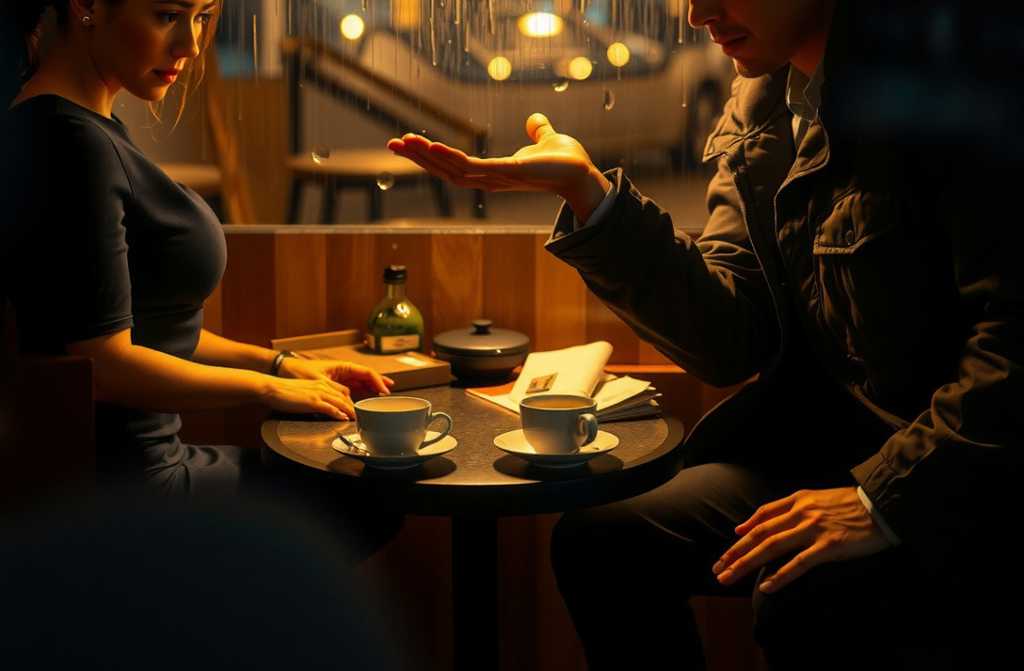
I sobbed, feeling utterly vulnerable and exposed. The man glanced around, noticed the little café nearby with its yellow lights glowing and suggested, Come on. Lets get you out of the rain. You need to catch your breath.
Not really waiting for my consent, he guided me gently towards the café. Inside was warmth the smell of strong coffee and fresh scones. Only a few were there: an elderly lady with a paperback, a couple near the barista. The man ushered me to a window seat and without fuss, ordered tea from the waitress.
As we waited, I tried to compose myself: dabbing my eyes, smoothing my hair. My hands shook, but eventually the panic dulled.
Im so sorry, I mumbled. I didnt mean to cause so much trouble.
Dont apologise, he replied, his calm voice steady. Everyone has bad days, its perfectly natural. Im Michael, by the way.
Alice, I answered, attempting a smile that probably came out crooked.
Michael didnt try to prod, didnt ask what happened. He simply poured tea when the pot arrived, his tone easy as he started chatting about the neighbourhood: how the little café only opened in the spring but already had the best coffee in the area, how their almond croissants sell out by mid-morning. He pointed out that the rain today was relentless coming down like stair-rods but at least we were dry and the tea was hot.
Something about his voice, low and unhurried, dissolved the fear I carried in. My breath steadied and thoughts started to clear. I took a sip strong tea with a hint of mint, warming from the inside out.
How had I ended up here with a stranger, in a random café, sharing a table? But it didnt matter. He was just a kind soul who appeared at the right time, quietly compassionate.
Thank you, I said after draining my cup. My voice was softer, steadier. Youre very kind.
Michael smiled not boastful or smug, just kindly. Couldnt just leave someone in distress, could I?
I nodded, something warm and true igniting inside. Id been running so long from my own past, keeping everything beneath the surface, never noticing how heavy Id become with all that silent pain, the constant sprint just to keep functioning.
Memories drifted in. Tom, the boy with the wild hair and bright eyes, had shown up in my life at fifteen, new to our class. Not striking in the ordinary sense, but remarkable because he never stopped talking about films and the stage. At first, we were partners by accident; soon, by choice. Wed spend afternoons in Hampstead Heath, debating the best Shakespeare adaptation, grumbling about teachers, and laughing about life. Those walks were everything with Tom, even the ordinary shone.
Hed planned drama school from the start. He prepared all summer, pacing and practicing late at night. I rooted for him, even when our parents wondered if he was wasting his time. But I knew: the stage lit him up from inside.
After drama college, it was hard. Tom bounced from job to job, walk-ons in minor plays, kids parties in Croydon, a gig as a tour guide. He kept writing scripts, mailing them to studios, multiplying rejection letters. I, meanwhile, landed in advertising, grateful for the security if not exactly thrilled by the work. To keep things going, I took extra freelancing: web copy, translations, anything. It was worth it just to share our rented bedsit and fill the fridge.
I remember evenings home, exhausted, where Tom greeted me vibrant with new plots or a rumoured casting. His hope was infectious. Wed nurse herbal tea, planning futures hed get his breakout, wed move to a flat with actual curtains, maybe even travel.
Things started changing slowly. At first, Tom was just home later, always at rehearsals or meetings. He called less, brushed me off busy, later, cant talk. I blamed the workload; the acting world, after all, devours time.
Then a small TV drama landed. Tom was overjoyed and soon after, a lead in a film. Glowing reviews, festivals, agents. Suddenly, our imagined life was replaced by red carpets and contract clauses. He cared for his image, eyed the next big offer, spoke less about cinema and more about industry parties.
One evening, he came home late, still wearing his suit, and announced, quiet and firm, Alice, I think we should part ways.
Why? I whispered, not trusting my voice.
He looked away, fiddling with his sleeve. My lifes changed. I need different things now. Youre too ordinary for the world Im in.
I almost protested: wed survived so many lean years, surely that counted for something? But there was no use. He was already packing, clinical, forgetful of the tears he left in his wake. Not a month later, he was arm-in-arm with an actress on the cover of the Sun, both dazzling and unaffected.
I get it hurts, Michael said, after listening to my halting story, his tone gentle but not pitying, But the past is the past; it cant be different now. You dont have to keep looking over your shoulder.
I know, I nodded, almost exhaling relief. I just feel like the years I gave him none of it counted. All that hope was it naïve?
Nothings wasted, he countered softly. Every bit of it shaped you, and every ending clears space for something new.
I watched the rain slow out the window. The citys edges sharpened in the post-storm glow. For the first time in years, I felt something not unlike hope not an elation, but a quiet willingness to at least try to step into tomorrow.
We lingered in the café for another hour. Michael spun road stories he was a delivery driver for a logistics company full of cheerful mishaps and weird roadside cafés, the sorts of tales that fill lonely hours on motorways. He described weekends rambling through the Lake District, bringing back sticky gingerbread for his little niece, who put on living room shows to thank him. There was no affectation, just stories and laughter.
Slowly, a weight Id hardly noticed began to lift. The world softened teacups clinked, wet pavements sparkled beneath a clearing sky, and for a short while, being alive didnt feel so hard.
When we left the café, the rain had stopped. The city sparkled in the weak sunlight, and the air was bright and tender. People bustled anew, and somewhere a childs laughter threaded through the traffic.
I should head back, I said, checking my phone. There was a glimmer of regret that our time was ending but deep inside, a lightness I hadnt known in years.
If you ever want to talk, give me a ring, Michael said, scribbling his number on a napkin. Really, anytime.
I pocketed the scrap and made my way to the bus stop, surprised to find myself walking tall, not shrinking beneath burdens. I carried the warmth home, and for the first time in three years, it felt possible to start again.
***
A week later, I made myself call Michael. The nerves built would it be awkward? Would conversation dry up? but meeting again in our new sanctuary, the café, was comfortable. We talked over coffee like old mates. Later, we strolled through Regents Park; leaves in a thousand golds and reds crunched underfoot.
We spoke of everything: storybooks from childhood, favourite films, holidays we dreamed of, never lingering on the wounds of the past. Michael listened with patience; he didnt push, didnt offer tired advice or unwelcome sympathy. He was simply present solid, gentle, letting me reveal myself at a pace I could stand.
As weeks slid by, I realised thoughts of Tom no longer hurt. I stopped replaying the betrayal, imagining if only. Instead, I learned to cherish the small goodnesses: carefully brewed tea in the mornings, Michaels laugh so genuine it made people look round and autumns dazzling leaves.
Every day I noticed more: sunlight in the puddles on the pavement, how the bakerys cinnamon bread beckoned with its warmth, the feeling of Michaels hand, strong and reassuring, as we walked together through the brisk chill of October. The world, bit by bit, became bright and new.
One evening, months after we first met, we found ourselves back in our café nook as the sun dipped outside. The room was a cocoon of lamplight and quiet chatter.
Michael took my hand. His touch was gentle, measured, every gesture full of quiet meaning.
Alice, I know its not been easy, he began softly. Ive seen the pain you carry. But Id like to share my future with you, if youll let me.
Looking into his eyes, I felt no fear. Just honesty. No need to pose, to hide or perform. In that gaze, I found the courage I thought Id lost.
I want that, too, I answered, a warmth spreading through me, richer than any springtime sun.
He squeezed my hand. We fell into a gentle silence, the world outside slipping away.
In that moment, I felt the stubborn, careful sprouting of hope, a trust that perhaps happiness really is possible after heartbreak not as a blank canvas, but as someone whos survived every brushstroke.
***
Two years after Michael and I married, word came that Toms career had begun to unravel.
At first, all looked glamorous. The film with the painters part made him a star, and the offers poured in. He demanded higher fees, special riders, a personal assistant. Producers caved at first.
But ego wants feeding. Tom became impossible: rewritten scripts, quarrels on set, and one famous blow-up with a director on a period drama. They sued him for breach, and he paid out only by selling the flat hed bought in his heyday.
A run-in with a critic at a film festival went viral. You know nothing about art! hed barked, his face tight with fury. Comments were brutal: Lost touch. Used to have talent; now just a poser.
His wife, the actress, told a glossy magazine, He stopped seeing people. It was all ambition, all ego. I left because he made me invisible.
Movie roles dried up. The public, once in his palm, turned. Overrated, One good film thats it. His social media, a shrine to likes, filled with scorn.
He tried to apologise in heartfelt videos creative crisis, he said. But no one watched. Soon after, he vanished, with rumour only to say if hed moved to Europe or checked into a retreat in the Cotswolds.
I glimpsed him once, in an online article Where Are They Now? Fallen Stars. The photo caught him outside a corner shop, hair unkempt, beard patchy, as if time itself had worn him down. His eyes, blurred in the shot, looked hollow the look of someone trying to wake from a bad dream.
I looked for a long time, feeling only a soft, profound sadness. He wasnt the dazzling young actor or the ambitious dreamer I once loved. Just a man who rose too far, too fast, and couldnt hold on.
I shut the laptop and crossed to the window. Snow was swirling outside, a hush across our road in North London, and warmth filled our flat Michael in the kitchen, humming as he baked bread. I smiled, bathed in a deep and gentle peace.