You didnt just hurt me. You betrayed me. Thats something else entirely, she says to her husband.
The phone rings at half past seven, right as Jean Clifton is standing by the hob, stirring porridge. She glances at the screen, sees her daughters name, and immediately senses something is wrong. Emma never rings this earlynot without a reason.
Mum, you in?
Im here. Where else would I be? Getting breakfast ready. Whats happened?
Theres a pause. Jean turns the heat down under the porridge.
Mum… is Dad with you?
No. He left last night, said hed be running late at Andrews. They had plans for the garage.
Another pause, longer this time, heavy as treacle.
Mum, hes not at Andrews. He called me an hour ago. Said he isnt coming back. That he well, that hes been living another life for ages. I dont know how to explain.
Jean puts the spoon down carefully on the trivetotherwise itll mark the tablecloth. Always does it that way. Cant help herself.
What do you mean, not coming back?
Mum, he says theres someone else. Has been for two years. He wants a divorce.
The porridge on the hob is starting to bubble quietly. Jean watches the bubbles, thinking she ought to turn the hob off before it catches. She does so. Then she picks up the phone again.
Emmy, hang on. Are you sure you heard him right?
Mum.
What do you mean, mum? Maybe hes you know what your father can be like. Says things he doesnt mean sometimes.
He was calm. Very calm about it. Said hes already got a flat. On Oakmere Roadyou know that area. Hes been there since November.
November. Its March now. Four months.
Jean walks over to the window, looks out. The street is grey and wet, as it so often is in Manchester at the start of March: snow long gone, no sign of real warmth yet. Opposite, outside the bakery, a woman is waiting with a pushchair. Jean watches the pushchair and thinks about how Victor always loved the spring. Said he could breathe easier this time of year.
Mum, are you listening?
I am, Emmy.
Ill come over this evening. Do you want me today?
No, theres no need. Youve got work.
Work can wait.
I told you, dont worry. Im fine.
Its not true. But Jean says it so firmly that she nearly believes herself.
After the call, she stands at the window several minutes more. Then wanders into the bedroom and looks at the bedat Victors side, where the pillows rumpled, still, because he rushed out last night. She picks up the pillow, holds it in her hands, then puts it back down. Then she returns to the kitchen, tips away the porridge, and puts the kettle on.
Thirty-seven years. Thirty-seven years together.
Jean worked as head accountant at a construction firm for twenty-two years, and if she learned one thing, its this: when you havent a clue what to do, start with the thing you know for certain has to be done. Make a list. Set priorities. Even now, shed probably be making a list if her mind werent as empty and silent as the office after closing time.
Molly the cat strolls in from the hallway, winds round her legs, and mews. Jean pours her some food.
There you go, Molly. There you are.
The cat tucks into her bowl. Jean watches her, thinking how Victor brought Molly homefive years ago, birthday present. Said a cat makes a house a home. Molly is ginger and lazy, always slept on Victors side of the sofa.
Now whats that supposed to mean?
Emma turns up anyway, that evening, unannouncedjust buzzes the door. Jean opens up and sees her daughter, who has Victors eyes and her own cheekbones, a combination that feels especially painful tonight.
I said you didnt need to come.
Mum, please. Let me in.
They sit in the kitchen. Jean puts the kettle on, brings out the gooseberry jam she made last August. Emmas studying her mother, not sure where to start.
Mum, how are you, really?
Im fine. Had food. Havent fainted, my heads fine.
I mean it.
I mean it too. What do you want to hear, Emma? That Im sobbing? Im not. Not yet.
Emma clasps her mug in both hands, like she did as a child.
Hell probably call you, you know. Wants to talk.
He can call.
Dont you want to know who she is?
Jean looks at her daughter.
I do. Just not now. Right now, I cannot listen to that and pretend it doesnt hurt.
Mum, hes a complete bastard.
Emma.
Isnt he, though? Thirty-seven years and its a phone call to your daughter!
He probably didnt know how else. You know your fatherhes never been able to say horrible things to your face. Never could.
Emma falls quiet. Then, softly:
Mum, youre defending him.
Im explaining him. Not the same.
They sit a while longer. Jam untouched. The cat comes in, hops up onto a stool and stares out the window.
Are you going to live alone?
Mollys here.
Mum, Im being serious.
So am I. Emma, Im fifty-eight, not thirty. Ill manage. Ive lived in this flat thirty years. I know every pipe, every switch. Ill manage.
Emma leaves late. Jean washes the mugs, wipes the table, feeds the cat again, and goes to bed. She lies there, stares at the ceiling. Hears the television muttering through the wallMrs Thompson next door, whos lived alone for eight years since her husband died, always leaves it on, says it makes the place feel less quiet. Jean understands that now in a way she didnt before.
Victor rings two days later, in the morning, while Jeans sorting papers she brought home from workstill on the books until the end of April, finishing reports from home. When she sees his name on the screen, she hesitates, then answers.
Jean.
Yes?
How are you?
Victor, are you ringing for news on my wellbeing, or for something particular?
Pause.
I wanted to explain.
So go on.
Jean, you know its been a long time weve been like neighbours for ages. You know its true. We hardly say two words, we just move round each other. I dont blame you. I dont blame myself either. It just happened.
Jean looks at the stack of paperwork. All neat, all marked with Post-its.
Whats her name?
Jean
Whats her name, Victor?
Val. Valerie. Shes forty-four. Shes a widow. Two children.
I see.
Jean, I didnt want to hurt you.
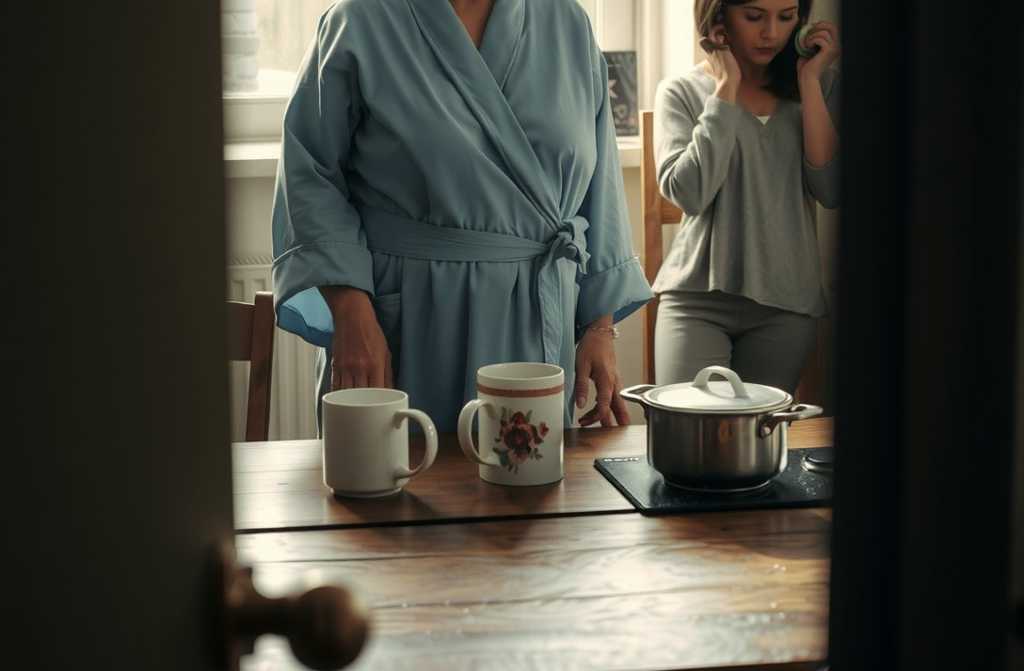
You didnt hurt me. You betrayed me. Thats a different thing.
She surprises herself by how calm she sounds. As if she were reading out something shed written earlier.
Jean, I understand
No, Victor. You dont. But thats fine. As for the paperwork, call your solicitor, or however you want to do it. No fuss, no rows over tablecloths. The flats in my name, you know that. The pension will see me through. Ill manage.
Jean, you
Thats all, Victor. Im busy.
She ends the call. Places the phone gently on the table. Puts the kettle on. Her hands dont shake. Shes slightly taken aback by her own steadiness.
A week later, out for a loaf, Jean meets Mrs Thompson coming in with a bulging chemists bag.
Jean! You look palefeeling alright?
Im fine, Mrs Thompson. Just one of those days.
Mrs Thompson, three years Jeans senior, broad, with copper hair she keeps dying even at sixty-one, saying grey hairs arent for her. Theyve known each other two decadeschats on the stairs, the occasional cuppanot quite proper friends.
Pop in for a slice of yesterdays cabbage pie, says Mrs Thompson, inspecting Jeans face as only someone whos seen it all can.
Oh, I couldnt
Dont be daft. Come in.
They sit in Mrs Thompsons kitchen, so different from Jeansshapes, colours everywhere, photos on the walls, trinkets on the shelves, geraniums in pots on the windowsill. Jeans never liked clutter, but finds herself comforted by it today.
Victors left, she says, out of nowhere. Its too heavy to keep in.
Mrs Thompson doesnt gasp, doesnt fuss. Just pours tea and cuts a generous piece of pie.
How long ago?
Since November, it turns out.
And you didnt notice?
I didnt. He was off at the garage, seeing friends, business trips He was commercial director before retirement, always meetings. I trusted him.
Happens, says Mrs Thompson, simple and unaffected.
What about you when you were first alone, how was it?
First month, I cried. Second, I was angry. Third, I dont remember. After that, you get used to it. Not better, just different.
I dont feel like crying.
Thats normal too. Maybe hasnt hit home yet. It will.
Im frightened of when it does.
Mrs Thompson looks at her.
Youre fifty-eight?
Fifty-eight.
I was fifty-nine when I was left alone and thought it was the end. Wasnt. Not saying its good, not saying Im glad. But not the end.
The pies goodcrispy on the top.
What do you do when you just cant bear it?
Go to the market. People, buzz, life. Its easier, looking at folk, lets you breathe.
Ive always hated the market. I like a list, supermarket, home again.
Maybe nows the time to try things you didnt like before.
Its said offhand, but for some reason Jean remembers it.
Come April, Jean officially retires. It happens to coincide with the court date for the divorce, set for early May. Solicitors recommended by Emmas friend, says itll be straightforwardflat already in Jeans name, little else shared, Victor not contesting, just wants it over and done.
If he wants it quick, hes keen to start over, Emma says over the phone.
Emma, dont.
Mum, youre defending him again.
I just wont waste anger on things that cant be changed.
Are you angry, then?
Probably. Hard to tell. Its all muddled.
It gets harder after retirementnot due to money: the pensions £700 a month, tight but Jeans always managed, the pantrys full, shell be alright till summer. Its the lack of routine thats hardest. For years, work at eight kept her steady. Now theres nothing fixed in the day, and its unsettlingas if the ground beneath her isnt solid.
She tries to plan: jotting sticky noteseight a.m., breakfast; nine, walk; ten, reading or chores. But she keeps rewriting because she cant keep to it. She sits with a book, but after twenty minutes finds herself staring out the window, wondering where Victor was that November when he said he had a meeting.
Emma phones:
Mum, you need to do something. Join a group or something.
What kind of group, Emma?
I dont know. Yoga?
Emma.
Why not? Other women your age do. Youd have company.
Youre joking? Me, yoga?
Or classes. Or volunteer at the libraryyou used to love books.
Ill think about it.
She doesnt. Instead, she sorts cupboards and finds an old box of photosreal, printed ones, some with faded edges. Theres Victor young, about twenty-five, laughing, thick dark hair. Here they are at some holiday cottage, mustve been 89 or 1990. Theres Emma, three years old, on Victors lap, stretching for an ice cream. Jean looks at the photos a long time, then puts the box away.
She only realises shes angry when she drops a plate. It falls off the edge, smashes, and she thinks she should never have bought such a fragile set, shouldve gone for something sturdier. She bends to pick up the bits, but then just sits for three minutes on her haunches, breathing heavily, throat tight. No tearsjust sits, collects herself, tosses out the shards, then pops to the shop for buckwheat and cooking oil.
The divorce is swift as the solicitor said. Victor, in the blue jacket Jean bought him for his birthday five years ago, says nothing. Only as they leave does he say quietly,
Jean, I never meant to hurt you.
I know.
And its truehe never meant her harm, he just wanted something else for himself. Different matters. She knows that in her head, but it doesnt help in her heart.
Afterwards, she goes to a café nearbyalone, for the first time, which once wouldve seemed odd. Orders coffee and a slice of honey cake, sits by the window. At the next table, two older women debate medicine pricesone complains her blood pressures up and the new tablets cost four hundred pounds a box.
Try a different pharmacy, my friend got them for two-eighty.
Where?
On Chapel Street, tiny pharmacy, much cheaper.
Jean listens, thinkingthis is real life. What remains when everything falls away: prescription prices, finding the cheapest chemist.
She finishes her cake and walks home through the sunshine, slow and steady, past shop windows and trees and people. In the park, an old man is feeding pigeons. A woman walks by with a small dog. Life goes on, and somehow, thats how it should be.
In June, an unexpected call. Vera, Vera Simmonsschool friend, not seen for five years, only ring each other now and again. Vera lives over in Prestwich, her own lifehusband, grandchildren, veg patch near Bolton.
Jean! You alright? I heard from Linda Taylor about you is it trueVictors left?
Vera, your grapevines impressive.
How are you? No Im finethats just coping.
Im coping.
Means you are putting up with it. Listen, come to mine for the weekend. Lovely at the allotment. Itll do you good.
Vera, Ive never been useful on an allotment. Victor loved it. I just put up with it.
Well dont. Just come, chat, relax. Ill make cold soup. You used to love it.
Ill think about it.
Jean arrives by train on Saturday, with a small bag and a book shed meant to read for ages. Vera meets her at the gateolder, but with the same big smile she had at fifteen.
Jean, you look the same.
Oh, stop it.
Well, maybe a bit thinner. But your eyes look alive.
They sit out on the veranda, eat soup, then drink tea with cherry jam. Veras husband (just Simmons, everyone calls him) stays in the garden and leaves them to it.
Tell me everything, says Vera.
For the first time, Jean talkstruly talks: about last November, when Victor claimed he had a cold and she brought him tea as he read in bed. About noticing in February how he dressed better but thinking he was just taking pride in himself. How, for the past two years, dinner was silent, each of them in their own worlds, and she thought it normal for a long marriage.
Its not normal, Vera says.
Are you sure? You and Simmons must
We bickereven about films, because our tastes clash. But at least its alive.
We hardly ever argued.
Maybe you should have.
Jean reflects.
Do you think if wed argued more he wouldnt have left?
I dont know. But at least youd have known something was alive. Silence can be deadly.
I thought ours was a mature relationshipgrown out of fighting, into peace. Grown-up.
That isnt maturity, its when youre both so used to each other, you stop noticing.
Jean surveys the gardenstrawberries, courgettes, something green and healthy.
Vera. Honestly. Do you think its my fault?
Vera pauses, pours more tea.
I think you both are, and you both arent. Some couples make the effort to keep at it, some drift. You both drifted. But he chose to sneak off, thats on him. You didnt choose this ending.
I didnt realise there was anything to fix. Thought thats just how it is.
We were taught: dont fight, dont drink, work hardthe rest follows. But it doesnt.
It doesnt.
Jean returns home Sunday night, slightly tanned, a jar of Veras jam clutched in her bag. The flat is quiet. Molly meets her at the door, looking put out from a weekend on the auto-feeder.
You survived, though, Jean tells her, stroking her soft fur.
July brings the unexpected. Jeans passing the local community centre, spots a flyer: Watercolour Club. Fridays 5pm. All welcome, materials provided. She reads it twice, walks on, then returns to take a snap on her phone.
Later, she shows Emma on video chat.
Thats brilliant! Go!
Emma, I cant draw. Not at all.
It says all welcome.
All welcome who can at least do something.
Mumjust go! Whats to lose?
Jean almost protests, then stops. What has she got left to lose, really?
That first Friday, she arrives, climbs to the first floor. Seven people in the room, all either retired or close to it. Papers, jars, watercolours on the table. The teacher, a young woman in her thirtiesKatiegives her a warm smile.
Welcome! Were painting apples today.
Jean sits, picks up a brush, eyes the blank page. The lady next to her, older, bespectacled, leans over.
First time? Wasnt so long ago for me. You get used to it.
Im Jean.
Im Margaret Collins. Used to be a factory supervisornow an artist, apparently.
She grins; Jean does too. Margaret already holds her brush with practiced confidence.
Jeans apple is lopsided and too dark on one side. Katie comes over, looks.
Great start. Try a bit more water here, see how it lets the colour bloom?
Jean adds waterand the colour softens, unexpected and satisfying.
After the class, Jean and Margaret leave together.
Which bus you on? Margaret asks.
Seven. You?
I walk, just up by Allerton Road. Shall we walk together part way?
They wander through warm Manchester, talking. Margaret shares that shes been widowed six years, no kidsniece in Liverpool who phones at Christmas.
Dont you get lonely?
Miss my husband. Not the loneliness though. You get used to it. I’ve found things to do: this, book club on Wednesdays, and Mrs Barclays dog when shes poorly. Life moves on.
Dont you feel like youve missed something? That things couldve been different?
Margaret thinks.
I do. Realised I havent been to the seaside in over twenty years. Always seemed too busy, or John was ill, or some reason. Might go now. Slowly, but its a thought.
On your own?
Why not?
Jean doesnt answer. They part at the crossroads.
See you next Friday? Margaret asks.
Ill be there.
Jean walks to the bus stop, thinking of the sea. She and Victor took one seaside holiday, to Brighton, back in the ninetiesEmma was two, terrified of waves. Never went again: always short of time, or money, or Victor wanted something else. She rarely insisted.
August. Emma rings:
Mum, can you come over next Saturday? Its Arthur’s birthdayhes five.
ArthurEmmas boy, Jeans grandson: restless, bright, big grey eyes. Jean adores him but doesnt see him as much as shed like. Emma lives across town in Salford with her husband, Tom, who works in construction.
Of course. What should I get him?
He wants a construction set. Anything with cars in it.
Alright. Erm will Dad be there?
Pause.
Mum, I asked him. Hes his granddad. Are you alright with that?
Im fine. I wont pretend he doesnt exist. Arthur needs his granddad.
Mum, are you sure?
Emma, its been long enough. Im not going to make a fuss at a childs party.
You know hes not bringing her?
I know. Thats for the best.
At the party, Jean turns up with the construction set and a homemade honey cakeArthurs favourite. Victors already there, chatting with Tom. They exchange nods. Jean heads to the kitchen to help Emma. Everything goes smoothly.
Victor sits opposite at the table. Jean notices hes lost weight, looks a bit lost. Not with any satisfactionjust notes it. Arthur sets to work on his set, Tom helps him, Emma fusses over the food. It’s noisy and warm.
After a while, Victor quietly says, You look well, Jean.
Thank you.
No, really. Somethings different about you.
Ive started watercolour painting.
Seriously?
Every Friday.
He looks truly surprised.
Youre amazing.
I know, she says simply.
Its not arrogance; its just the truth. She understands and values that, and doesnt need his approval to know itthough, truth be told, its nice he noticed.
In September, Jean joins a book group. The Wednesday club at the library Margaret mentioned. Theyre in the same groupabout a dozen people, most retired, a couple of men: one ex-history teacher, one ex-doctor, both quiet and thoughtful.
They discuss books, and Jean discovers she has opinions. That she can share them and people actually listen. At work, it was all numbersright or wrong and nothing more. Here, you can say I think, I feeland youre not just dismissed.
Jean, thats an interesting take, says Mr Grant, the history teacher, bony and precise. Youve read that quite differently to the rest of us.
I dont know if I read it right.
In literature, theres no right or wrongjust what speaks to you.
Afterwards, Jean walks home with Margaret, sometimes with others tooa bit of a ritual now. They might stop at the coffee shop, talknot just about books: about life, prices, health, children.
One day Margaret says:
Jean, youve changed a lot these past months.
How do you mean?
In a good way. Youre more yourself. Like you were always waiting for something or someone, and now you just live.
Youre poetic.
Im a technologist by trade. We see things clearly.
Jean laughsa proper, unrestrained laugh.
You know, Margaret, I feel it myself. These Fridays and Wednesdays, reading, walking, Im not bored, not down. I thought Id be lost after work, after Victor. But Im not lost.
Thats cause youve made your own space.
I never realised it wasnt there before. Work, family, homeI thought that was my space. But it was everyones, and I was just a part in it.
Spot on.
Bit late to realise at fifty-eight.
Better fifty-eight than seventy-eight.
October brings a surprise: at the watercolour club, Katie passes around flyersplans for a little exhibition in December at the community centre. Nothing grandjust a board with works for people to see.
Who wants to join, let me know by November, Katie says. Totally optional, but would be wonderful.
Jean looks at her sketches. She has quite a pile nowapples, pears, then still lifes, and even her view from the window. Its not bad, Katie had said she had a good sense of composition.
Jean, you should submit your window view, Margaret says.
Do you reckon?
Its got life. Its not just practiceits really your view, something you care about.
Jean thinks it over for a long time, then brings the painting in.
In November, Jean goes to the seaside. By herself. Just for a week at Scarboroughaffordable and not far. Emma is startled at first.
Mum, on your own? In November?
Why not?
Bit nippy, isnt it?
Im not going for a swimjust to see the sea. First time in twenty years, Emma.
Mum
What is it?
Youve changed.
In a good way?
Long pause.
Good way. Just different. You used to always ask what I thought.
I used to. Now I decide, then tell you. A bit different.
Jean buys her train ticket, packs light, heads off. In her carriagea family with a toddler and an old lady instantly starts knitting. Jean gazes out as countryside flickers by, thinking she hasnt taken a train in years. Always something important that stopped heror that seemed important at the time.
Scarborough, in November, is emptyish, a bit melancholic, the sea grey and foamy, smell of seaweed and mist. She takes long walks, bundled in her scarf, staring at the water. Thinks of lotsof past, present, what might come. Not worryjust mulling, as you do with all the time in the world, no explanations needed.
She goes to a little café, eats fish stew, sips her tea, chats with the landlady, a sunburnt, wrinkled-faced woman.
On your own, dear? the owner asks, no hint of judgement.
On my own. First time.
And?
Weird at first. But good. I please myself.
Good for you, says the landlady, bringing more bread. My mate started doing that after her divorcebest holidays of her life, she reckons.
I can believe it.
She buys three watercolour postcards from an old man on the promseaside views, amateurish but full of heart. One for Margaret, one for Mrs Thompson, one for herself. Painting, something shed thought odd, has turned out to be the most her thing of all the last few months.
Back home Sunday night, weary but full of something quiet and sure. Molly waits at the door, sniffs the bag, then struts off like she doesnt care.
Missed me? Jean says.
The cat doesnt answer, just curls up on Jeans feet while she unpacks.
December and the exhibition opens. Jean brings Margaret, Mrs Thompson, Emma and Arthur. Arthur races round, jabbing at picturesthis ones nice!as onlookers smile.
Jeans paintingher window, with the birch and climbing frameis central. Emma studies it a long while.
Mum, thats our old playground?
Our playground.
You painted our playground?
Thats the climbing frame you used to be scared of.
I remember. Emma keeps looking. Mum, its really lovely.
Katie says Ive got potential. I dont know about that, but I love the process.
It suits you. Painting, I mean.
Thats what counts.
Mrs Thompson inspects, fixes her glasses.
Jean, that ones yours?
Mine.
Well I never. Didnt know you had that in you.
I didnt know, either.
Then they pile into the caféArthur eats two cakes, proud of himself, Emma feigns crossness but laughs. Margaret talks about book club, Mrs Thompson interrupts with her own tales. Surrounded by that jumble of warmth and noise, Jean finds herself reflectingthat year ago, in March, stirring porridge in the kitchen, she could never have imagined sitting like this in December. Couldnt have imagined not happy, exactly, but right. Just right.
Just before New Year, Vera rings.
Jean, how are you? Heard about that exhibition! Emma said in our school group chat.
Oh, Vera, I didnt know about your chat!
All the old classmates, nearly. You should join.
Maybe I will. Verawas your invite for me to spend a week in winter still going?
Of course! Come straight after New Year, spend a week! Its lovely.
Ill do it. Promise.
Thats the spirit!
Jean spends New Year at Emmas, just the four of themEmma, Tom, Arthur and her. Victors elsewhere, with Valerie, no doubt, and thats as it should be. Arthur stays up till midnight watching fireworks, then dozes on the sofa. Emma covers him with a blanket and returns.
Mum, honestly, how was your year?
In all honesty? Both good and bad. Plenty of bad. But good, too.
What was good?
The exhibition. The sea. Margaret. Mrs Thompsons pies. Book club. And you lot. All of it.
And the bad?
Whats the point listing those? Most of its over.
Emma looks at her.
Mum… do you miss Dad?
Jean pauses.
I miss the Victor he used to be. When we were young. I miss what we had when you were little. That was real. Whats been these last yearsno, dont miss that. There was nothing there, Emma. I only see that now.
That doesnt hurt to admit?
A bit. But its better to be hurt by the truth than comforted by a lie.
Tom brings Champagne, they toast, and move on.
In January, Jean goes to see Vera. They wrap up warm on the verandaVera insists winter air is goodand drink tea with Veras homemade raspberry jam.
Vera, you know whats funny? I used to know exactly what was comingwork, pension, grow old with Victor. All mapped out. Now, theres no map. But I find it less frightening than I expected. In fact Im a bit curious. Whatll be next.
Thats good, Jean.
Im not sure. Maybe Im too daft to be frightened now.
Noyoure not clinging to the past, thats all.
I still cling, sometimes. To old photos. I cant throw them out.
Dont. It happened, its realyou dont have to pretend it wasnt.
Do you think hes happy? With Valerie?
I dont know. Should you care?
Jean considers.
I suppose I used to. Would have infuriated me. Now if hes alright, good. Him being miserable doesnt help me.
Youve grown, Jean.
Fifty-eightlittle late for it.
Not by the calendar, by the heart.
They laugh. Veras husband pops out, asks if they’re coldVera says no, and he wanders off.
Vera, do you ever regret not choosing a different path?
Sometimes. I wanted to study architecturedidnt get in, became a teacher, married, got on. Maybe theres a little architect in me, seeing how much I love drawing with you now.
Too late.
Jean, dont be silly. Too late is only when youre not here. And were still here.
Jean looks over the snowy veg patchlabelled courgettes, clear that something grew and brought joy in summer.
You know what surprises me? she says, That right now, this very moment, sitting here, tea in hand, in January, Im content. A year ago, Id never have believed it.
Shows whats possible.
Shows it.
They sit in companionable silencethe kind thats as natural as breathing.
Jean, you thought about what youll do long-term?
I have. Katies asked if Ill help out with the beginners painting groupteach the basics. Apparently, I explain things well.
Seriously?
Not teaching as such. But helping.
Thats wonderful!
I havent said yes. But Im thinking about it.
Thats your answer right there.
February, when Jean gets home, theres a newcomer at watercolours: Irene, about sixty-three, tall, upright, but with that bewildered look of someone dropped into somewhere new, not quite sure she belongs.
Jean remembers her own first class, so sits closer.
First time?
It is. My daughter made mesaid I needed to get out. So I came.
Daughters have the right ideas, sometimes.
You too?
I saw the flyer. She did encourage me, though.
Irene relaxes a fraction, glancing at the blank sheet.
Ive never painted. Ever. Always thought it was for talented people.
So did I. Turned out, not quite.
Katie begins, and Jean patiently shows Irene how to hold the brush, mix paint, and not to worry when it ‘goes wrong’, because in watercolour, wrong can be beautiful.
Afterwards they leave together. Irene says,
You explain well. Used to teach?
No, accountant. Used to be.
Youve a knack for sharing knowledge.
Thank you. Thats nice.
They walk through rainy February, and Jean remembers that March a year ago: stirring porridge, her world shattering, picking up the pieces all this time, some just now, in February, and maybe some still to find. But it isnt as frightening now.
Irene asks, You been coming long?
Since July last year.
And you like it?
I do. You will too, I think.
Suspicion in Irenes eyes, but a little hope, too.
You probably think its too late, Jean says.
I do.
I did, too. Turns out, it doesnt matter much.
Irene is quiet, then asks, Do you live alone?
I do. With Mollythe cat.
Im alone now, too. Husband died last yeartwo years, actually. Kids away. Its very quiet.
Its hard, that quiet. But you begin to see it differently, eventually. It stops being empty.
Irene is silent, then says, Im glad I came.
So am I. See you next Friday?
Ill be here.
At the crossroads, they part. Jean walks home, snow drifting, street lamps glowing amber. She thinks of calling Emma, checking on Arthurhas he been ill? She must visit Mrs Thompson for the cabbage pie recipe. And shell have to decide about helping with the painting classprobably say yes.
At home, Molly waits in the kitchen doorway, face saying both hungry and grumpy, but clearly glad Jean is back. Jean feeds her, puts the kettle on, and fetches a mug.
On the fridge, held by a magnet, is Arthurs drawing: a big-headed stick figure, labelled Granny Jean. The figure grins. Jean looks, then texts Emma:
Call me when you get a moment. Fancy a chat.
Emma calls in fifteen minutes.
Mum, is everything alright?
All fine, love. Listen, would you three like to have a break together over Easter? I checked, Yorks good, Arthur would love the museums. I could come.
Mum.
Yes?
Youre suggesting York. For all of us.
I am. Good deals on accommodation. Three or four days: castle, museums, all that. Arthur would love it.
PauseJean can hear Emmas smile.
Mum, youve changed.
Im still me.
Noyoure yourself, finally.
Jean glances outside. Snow drifts down. Under the birch in the courtyard, a lamp pools soft light, calm and still.
Emma, think about York with Tomlet me know.
We will. Well go, most likely.
Good.
Mum?
Yes?
Im glad youre like this.
Me too, love. Me too.
She hangs up. Molly curls near her, the kettle whistles. Jean pours her tea, picks up the book she wants to finish before next Wednesdays club, and finds her page.
Outside, the snow keeps falling.